ACCOUNT OF HASHIM IBN ‘ABD MANAF

medina
He (Ibn Sa`d) said: Hishám Ibn Muhammad Ibn al-Sŕ’ib al-Kalbi informed us on the authority of his father, he on the authority of Abu Salah, he on the authority of Ibn ‘Abbas; he said:

Hashim’s name was `Amr and to him is the reference in the taming of the Quraysh (Cf. Al-Qur’an, 106:1). The taming of the Quraysh was a custom of the Quraysh; and the person who introduced two journeys for the Quraysh was he. The first journey during winter was made towards Yaman and Abyssinia; (its ruler) al-Najáshi (Negus) honoured them and they loved him. (The other) journey during summer was towards Syria and Ghazzah, and sometimes they reached Anqirah (Ankara). They were admitted before the Caesar who honoured them and they loved him. (Cf. al-Tabari, Vol. II. p. 180; Ibn Hishám, p. 85).

Once the Quraysh had to face a famine which lasted for several years, and all that they had exhausted. Then Háshim went to Syria and ordered for bread which was baked in large quantity for him. He loaded it in bags on camels till he reached Makkah, and broke them into small pieces and dipped them in soup. He slaughtered these camels and then ordered them to be cooked; then he emptied those kettles into plates. The people of Makkah ate to their satisfaction, and then after years of affliction the first showers came to them. So he received the appellation of Háshim. (One who breaks bread and other things into pieces) `Abd Allah Ibn al-Ziba’rŕ writes concerning this:“The lofty `Amr broke into pieces al-tharid (bread soaked in soup) for the people of Makkah, who were suffering from famine and had become weak”.

medina
He (lbn Sa`d) said: Hisham Ihn Muhammad informed us; he said: Ma`ruf Ibn al-Kharrabudh al-Makki related to me; he said: A person of the tribe of `Adi Ibn al-Khiyar Ibn ‘Adi Ibn Nawfal Ibn `Abd Manŕf related to me on the authority of his father; he said:  Concerning this circumstance Wahb Ibn `Abd Qusayyi said: “Hashim bore (that burden) which had exhausted the people of high birth and they were unable to bear it.
[P. 44] He brought for them bags full of wheat from Syria, which people covet.
He entertained the people of Makkah on hashim (pieces of bread) and soaked them in (the soup of) the meat of fat animals.
The people began to eat from wooden cups which were brimful, on the verge of overflowing”. (Cf. al-Tabari, Vol. II, p. 180)
He (Ibn Sa`d) said: Umayyah Ibn ‘Abd Shams Ibn `Abd Manŕf Ibn Qusayyi became jealous of him (Háshim). Since he was a wealthy person he tried to imitate Hashim’s action but he failed. Thereupon the people of the Quraysh taunted him; he became angry and abused Hŕshim and challenged him for munáfarah. (To secure the verdict of superiority of one person over another from one who was considered competent.) Háshim would not accept the challenge because of his advanced years and the respect (which he commanded), but the Quraysh did not permit him to do so, and forced him to accept it. Then he (Hŕshim) said (to Umayyah): Verily, I shall accept it, provided you agree that (in case of defeat) you will offer fifty camels of black pupils for being slaughtered in the valley of Makkah and go into banishment from Makkah for ten years. Umayyah agreed. They approached the sooth-sayer of Khuzá’ah who declared Hashim to be superior. Thereupon (Háshim) took possession of the camels and slaughtered them. Those who were present ate the meat. Umayyah went to Syria where he stayed for ten years. This was the first demonstration of enmity between Hishim and Umayyah. (Ummayyah’s father ‘Abd Shams and Háshim are stated to be twins. Hashim died at the early age of twenty; it is therefore improbable that his nephew could have challenged him to munafarah Cf. al-Tabari, Vol. II, p. 180)

medina
He (Ibn Sa`d) said: Muhammad Ibn ‘Umar al-Aslami informed us; he said: `Ali Ibn Yazid Ibn `Abd Allah Ibn Wahb Ibn Zam’ah related to me on the authority of his father: Verily Hashim, ‘Abd Shams, al-Muttalib and Nawfal, sons of `Abd Manaf, joined hands to seize what was in the possession of Banu `Abd al-Dar Ibn Qusayyi which Qusayyi had bequeathed to `Abd al-Dár, namely, al-hijábah, al-liwa, al-rifádah, al-siqáyah, and al-nadwah; they had done this, because they considered their right to be stronger on account of their superiority and excellence among their people. The person who acted as their leader was Háshim Ibn ‘Abd Manaf but the Banu ‘Abd al-Dar rejected the demand of surrendering to them their right; their leader was `Amir Ibn Hashim Ibn ‘Abd Manaf lbn `Abd al-Dar. The Banu `Abd Manáf Ibn Qusayyi were supported by the Banu Asad Ibn ‘Abd al-`Uzzŕ Ibn Qusayyi Banu Zuhrah Ibn Kilŕb, Banu Taym Ibn Murrah and Banu al-Harith Ibn Fihr. With Banu `Abd al-Dar were the Banu Makhzum, Sahm, Jumah and Banu ‘Adi Ibn Ka`b. Banu `Amir Ibn Luwayyi and Muhárib Ibn Fihr were neutral; they did not side with any party. The various tribes pledged their support on oath that they would not desert nor surrender their men to the enemy till the wool could be drenched in sea-water (that is, for all time).

Then the Banu `Abd Manáf and their supporters came out and filled a jafnah (a large sized bowl) with perfume and placed it near the Ka`bah; the people dipped their hands in it and then they promised, pledged, took oaths and touched the Ka`bah with their hands to confirm their swearings. They were known as al-Mutayyibin (the perfumed).

(On the otherhand) the Band `Abd al-Dar and their supporters came out with a bowl full of blood. They dipped their hands in it and pledged and swore not to desert till the sea could drench wool, they were called al-Ahlŕf (sworn allies), and La`agat al-Damm (the Lickers of blood). They made preperations for fighting; each tribe was ready to meet the other. In the meantime [P. 45] people intervened to make peace on the turns that al-siqayah and al-rifadah should be entrusted to the Banu `Abd Manaf and Banu ‘Abd al-Dar should retain al-hijabah, al-liwa and dar al-Nadwah as it was at the moment. They agreed, and the people who wanted to come to blows avoided it. The dŕr al-Nadwah remained with the Banu ‘Abd al-Dar till `Ikrimah Ibn `Amir Ibn Háshim Ibn ‘Abd Manáf Ibn `Abd al-Dar Ibn Qusaayyi sold it to Mu`awiyah Ibn Abu Sufyán, who converted it into Dár-al-Amárah (Government House). The same is in the possession of the Khalifs till today.

medina
He (Ibn Sa`d) said: Muhammad Ibn `Umar al-Aslami informed us; he said: Yazid Ibn `Abd al-Malik Ibn al-Mughirah al Nawfal related to me on the authority of his father; he said:

They made peace that day on the terms that Hŕshim Ibn `Abd Manáf Ibn Qusayyi should take over charge of al-siqayah and al-rifadah. He was a man of means and when the time of pilgrimage approached he stood among the Quraysh and said: 0 people of the Quraysh ! verily, you are the neighbours of Allah and custodians of His house, pilgrims come to you during the season, they show respect to His House; they are the guests of Allah and are entitled to the hightest honour among the guests. Verily Allah has chosen you for this, and has honoured you with it; He protects your rights more than any other neighbour does; so respect His guests and pilgrims who come with dishevelled hair, covered with dust from every city on camels as lean as the arrows (of gambling), and have crawled, and stink, have lice in their clothes, and have exhausted their provisions; so entertain them and supply them with drink. Consequently the Quraysh used to entertain them to such an extent that the people living there sent the smallest thing that they could spare.
Hashim Ibn `Abd Manŕf Ibn Qusayyi used to allot a large portion of his wealth for this purpose and the wealthy from among the Quraysh supported him by sending one hundred Heraclian mithqals (of gold).
Hashim constructed cisterns near the well of Zamzam and filled them with water drawn from the other wells of Makkah. The pilgrims drank water from them. He commenced feeding them from the day of tarwiyah (8 Dhu al-Hijjah) at Makkah and Mina and on the day of Jam’a (assembling on 9 Dhu al-Hijjah) at ‘Arafah. He soaked the crumbs of bread in the soup of meat mingled fat, sawiq (gruel of parched barley) and dates. He supplied them with drinking water in Mina, when water in the cisterns became scanty. When people returned from Mina the entertainment came to an end, and then they returned to their homelands.

medina
He (Ibn Sa’d) said: Muhammad Ibn `Umar al-Aslami informed us; he said: al-Qasim Ibn al-`Abbas al-Lahabi related to me on the authority of his father, he on the authority of ‘Abd Allah Ibn Nawfal Ibn al-Harith; he said:

Hashim was a noble; and he secured a guarantee from the Caesar for the Quraysh that they would travel safe and would be allowed to carry their merchandise duty-free; Caesar had given him this in writing and had written to Negus to admit the Quraysh into his country. They were traders; Hŕshim started with a caravan of the Quraysh with merchandise, he passed by Madinah and halted at Suq al-Nabt [P. 46] where a market was held every year, and a number of people assembled. They (Quraysh) sold and purchased commodities. Here they noticed a woman on an elevated place commanding another woman to sell and purchase on her behalf. This woman appeared to be prudent, persevering and pretty, so Hŕshim inquired about her, if she was a spinster or a married woman. He was told that she had been married to Uhayhah Ibn al-Julah, and `Amr and Ma`bad were born to her as a result of this wedlock; then she got separation. Since then she has not married because of her high position among her people; and (she would now marry on the condition) that she would be at liberty to leave her husband if she disliked him.

Her name was Salmŕ Bint `Amr Ibn Zayd Ibn Labid Ibn Khidŕsh Ibn `Amir Ibn Ghanm Ibn `Adi lbn al-Najjar. Hŕshim made a proposal to her, and she married him after knowing about his noble descent and excellence. He consummated the marriage, and gave a feast to his Qurayshite companions who were forty in number and were from among the descendants of `Abd Manŕf, Makhzum and Sahm. He also invited some people of the (Banu) Khazraj (to the feast). He lived with her for some time, and she became pregnant. Her child, `Abd al-Muttalib, had some grey hair on his head at the time of his birth; so he was named Shaybah (old). From there Hŕshim travelled to Syria till he reached Ghazzah where he fell ill. They (his companions) remained there with him; when he died they interred him at Ghazzah, and returned with his belongings to his children. It is said that the person who had brought his belongings was Abu Ruhm Ibn `Abd al-`Uzzŕ al-`Amiri a descendant of `Amir Ibn Luwayyi. He (Hashim) was only twenty years of age (at the time of his death).

medina
He (Ibn Sa’d) said: Hisham Ibn Muhammad Ibn al-Sa’ib al-Kalbi informed us on the authority of his father; he said: Hŕshim Ibn `Abd Manaf made a will in favour of his brother al-Muttalib Ibn ‘Abd Manŕf, so the Banu Hŕshim and Banu al-Muttalib form one unit till today; while the descendants of ‘Abd Shams and Jawfal, sons of ‘Abd Manaf, form another unit.

medina
He (Ibn Sa’d) said: Hisham Ibn Muhammad informed us on be authority of his father; he said:

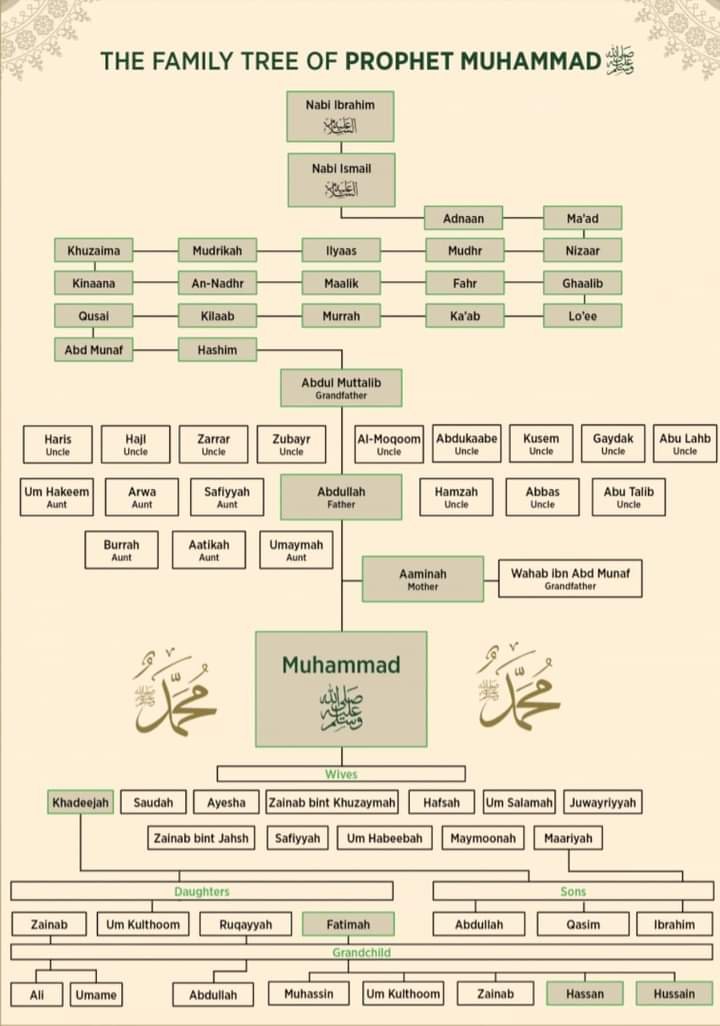
Hŕshim Ibn `Abd Manaf ad four sons and five daughters, namely, (1) Shaybat al-Hamd, nown as ‘Abd al-Muttalib; he was the Chief of the Quraysh till’s death; (la) Ruqayyah Bint Hŕshim who died before she had stained puberty and (their) (There is a misprint in the text; The statement it may be added, appears to be incorrech because Ibn Sa’d has narrated above that Háshim set out for Syria when ‘Abd al-Muttalib’s mother was pregnant with him and that he (Háshim) died on reaching Ghazzah. It appears therefore that the mother of Ruqqayyah was not Salma.) mother was Salma Bint ‘Amr Ibn Layd Ibn Labid Ibn Khidash Ibn `Amir Ibn Ghanm Ibn ‘Adi Ibn al-Najjar; their uterine brothers were ‘Amr and Ma`bad, sons of Uhayhah Ibn al-Julah Ibn al-Harish Ibn Jahjaba Ibn Kulfah Ibn `Amr Ibn `Awf lbn al-Aws (Háshim’s other children), (2) Abu Sayfa Ibn Hŕshim whose name was ‘Amr and who was the eldest of them, and (3) Sayfayya; their mother was Hind Bint ‘Amr Ibn Thalabah Ibn al-Harith Ibn Malik Ibn Salim Ibn Ghanm Ibn ‘Awf Ibn al-Khazraj; their uterine brothers were Makhramah Ibn al-Muttalib Ibn `Abd Manŕf Ibn Qusayyi; (Hŕshim’s sons), (4) Asad Ibn Háshim whose mother was Qaylah surnamed al-Jazur Bint ‘Amir Ibn Malik Ibn Jadhimah; Ibn Jadhimah was also called al-Mustaliq which became the name of a branch of Khuza’ah, (Hashim’s son), (5) Nadalah Ibn Hashim, and (2a) al-Shifa and (3a) Ruqayyah, and their mother was [P. 47] Umaymah Bint `Adi 1bn ‘Abd Allah Ibn Dinar Ibn Malik Ibn Salaman Ibn Sa’d of the tribe of Quda’ah; their uterine brothers were Nufayl Ibn `Abd al-‘Uzza al-‘Adawi and `Amr Ibn Rabi`ah Ibn al-Harith Ibn Hubayyib Ibn Jadhimah Ibn Malik Ibn Hisl Ibn `Amir Ibn Luwayyi; (Hashim’s daughters) (4a) al-Da’ifah Bint Hashim and (5a) Khŕlidah Bint Hashim, and their mother was Umm `Abd Allah who was also known as Waqidah Bint Abi ‘Adi; it has been said that it was ‘Udayyi and not `Adi, and that his name was ‘Amir Ibn ‘Abd Nuhm Ibn Zayd Ibn Mazin Ibn Sa`sá’ah; (Hŕshim’s daughter), (6a) Hannah Bint Hashim, her mother was ‘Udayyi Bint Hubayyib Ibn al-Harith Ibn Malik Ibn Hutayt Ibn Jusham Ibn Qasi who was also known as Thaqif. (The number of daughters has become six instead of five because Ruqayyah has been mentioned twice (la and 3a)
He (Ibn Sa`d) said: Hashim’s kunyah was Abu Yazid and some say that he had his patronymic name after his son Asad Ibn Háshim.
When Hashim died his offspring composed elegies containing a large number of verses. Muhammad Ibn `Umar informed us on the authority of his people that Khalidah Bint Hashim composed an elegy of her father; there are, however, slips in the verses: “The announcer of death announced at an early hour the death of the best among those who tread on the pebbles; and he was of noble actions and pure mind.
The announcement related to a chief of noble disposition; he (possessed) sagacity, generosity and fortitude; he was not of weak intellect and mean disposition.
He was the ornament of his family during the season of drought and famine.
Verily the most polished of all the family of Luwayyi is covered with dust and stones of Syria; so weep bitterly for the loss of one who was generous and respected.
Thou hast suffered the bereavement of one who was the chief of Fihr and who was considered their superior in all affairs”.
Shifa Bint Háshim composed the following elegy: “0 my eye ! shed tears for the loss of a generous and noble person. For Hashim who was a man of exalted excellence, mighty, generous and sincere.
0 my eye ! weep on the breavement of my father who was a noted chief, of elegent figure, and continue weeping for him.
He was experienced, of great fortitude, like an eagle; and among the nobles of the earth his family is the oldest.
He was strong, of great height, polished, eloquent, lion-hearted, a chief with numerous qualities and of charming physique.
He was one of the descendants of Ghálib, experienced and mighty, whose tree of excellence was very strong; and he himself was a man of generosity and forbearance.
He proved his valour by his deeds and he commanded great respect; he had no blemish of weakness”.

Ali AlahisSalam THE MIRACLE OF Nabi Pakﷺ part 23

The Wisal Of Nabi Pakﷺ

img-20210912-wa00035898286753296631180.jpg

From Saturday, the Prophet (S.A.W)’s health began to deteriorate further but he continued to lead the
prayers till Monday morning when he could come to the mosque with the support of Ali (A.S.) and Fazl
Ibne Abbas. When he returned home after the prayers he was completely exhausted. But he asked his
daughter Fatema (S.A.) to bring her sons Hasan (A.S.) and Hussain to him. When Hasan (A.S.) and
Hussain came he kissed them and embraced them. He then said in a feeble voice, “Call my friend” and
somebody brought Hazrat Abu Bakr before him. The Prophet (S.A.W) raised his head and seeing Hazrat  Abu Bakr
said, “Go away I will call you when I need you.” Hazrat Abu Bakr went away. The Prophet (S.A.W) again said
“Call my friend.” This time Hazrat Umar was brought and the Prophet (S.A.W) seeing Hazrat Umar said, “Go away I
will call you when I need you.” Hazrat Umar too went away [Riazun Nazra, page 180]. The Prophet (S.A.W) then
told Fatema (S.A.) to call Ali (A.S.). Fatema (S.A.) said, “Perhaps you have sent him for some work he
will come soon.
When Ali (A.S.) came the Prophet (S.A.W) took him in his chaddor and embraced him. Then he asked Ali
(A.S.) to take him in his arms. Ali (A.S.) took the Prophet (S.A.W) in his arms. The Prophet (S.A.W)
resting his head of Ali (A.S.)’s shoulders said, “My end is near now O Ali. You are my brother, my Vazir
and the payer of my debts. You know I have a loan from a Jew for the expedition of Osama, you repay
it.” Ali (A.S.) promised to pay the loan. The Prophet (S.A.W) further said, “Pay all those creditors who
come to you saying that they owe me money.” Ali (A.S.) promised him that he will pay all such people.
The Prophet (S.A.W) then said, “Fulfil the promises I have made to the people.” Ali (A.S.) promised to
fulfil the promises of the Prophet (S.A.W). The Prophet (S.A.W) then said, “After my death wash my
body and lay me in my grave with your hands. Turn my face towards Kaaba and offer my funeral
prayers. O Ali don’t leave me till you bury me. You will be harassed a lot after my death but bear with
patience. You will see the people running after the lust of this world but you choose the life hereafter.
Ali you will be the first to meet me at Kausar.” The Prophet (S.A.W) continued to talk with Ali (A.S.) till
he breathed his last. His last words were Assalat Assalat Assalat (Namaz Namaz Namaz) saying this, he
became silent and the saliva from mouth fell on Ali (A.S.) [Madarejun Naboova, Vol. 2, page 511].
The ladies behind the curtain began to weep. Ali (A.S.) too could not control himself, and with the help
of his uncle Abbas he removed the head of the Prophet (S.A.W) from his chest and laid it on the bed. He
then closed the eyes of the Prophet (S.A.W) and covered the body with a sheet, and started making
preparations for the burial.
As the news of the Prophet (S.A.W)’s death spread, Hazrat Umar 
was moving around the Prophet (S.A.W)’s house rushed in a raising the sheet from the Prophet
(S.A.W)’s face watched it for sometime, then came out shouting, “The Prophet is not dead but has gone
to meet the Lord as Moses had gone. Allah will soon send him back and on his return the Prophet will
cut the hands and legs of every one.” Umar then pulled his sword and came to the mosque where many
people had gathered on hearing the news of the Prophet (S.A.W)’s demise. Warning everyone he said,
“Whosoever says that the Prophet is dead will be cut into two.”
Hazrat Abu Bakr rushed to the
house of the Prophet (S.A.W) after being informed by his daughter Hazrat Aisha. He saw Hazrat Umar threatening the
but did not stop him and came to the room where the Prophet (S.A.W) was lying. Removing
the sheet from the Prophet (S.A.W)’s face he lifted it looked at it carefully, then kissing the forehead he
said, “Yes thou were, and sweet thou art in death. Alas my master thou art dead indeed.” He then kept
the head down covered it with the sheet and came to the mosque where Umar was still shouting and
threatening the people.
“Be quiet Umar and cool down,” said Hazrat Abu Bakr to him.
Hazrat Abu Bakr then turned towards the Muslims gathered in the mosque and said, “Have you forgotten the
verse which was revealed to the Prophet after the battle of Ohad that, “Mohammad is but a man with a
mission, verily other Prophet died before him. What then if he were to die or to be killed. Would ye turn
upon your heels” and do you not know the verse (of Quran) “O Mohammadthou shall die and verily
they shall die”. Whosoever worshippeth Mohammadlet him know that Mohammadis indeed dead but
whosoever worshipeth Allah let him know that Allah is immortal. He liveth and dieth not.”
The people began to cry and Hazrat Umar dropped down. Somebody then from behind the house of the
Prophet (S.A.W) called, “O Ibnal Khattab (Umar) come out.” Umar shouted back, “Go away we are busy
with the Prophet’s burial”. The caller (who could not be identified by any historian or researcher till
today) shouted, “Some very serious thing is happening, don’t lose a moment and come out soon.”
Hazrat Umar taking Hazrat Abu Bakr with him immediately went out of the house where the unidentified man informed
them that the Ansars have assembled at Saqifa Bani Saeda and are contemplating to make Hazrat Saad Bin
Obaada as their leader. If they decide
anything today it will be difficult to challenge it afterwards. Hazrat Umar and Hazrat Abu Bakr immediately left for
Saqifa Bani Saeda. On the way they met Hazrat Abu Obaida whom they took with them.

wp-16289288039936588467310139018663.jpg
Soon after the death of the Prophet (S.A.W), Ali (A.S.), Fazl Ibne Abbas and all the Hashmis began
preparing for the burial of the Prophet (S.A.W). As per the wishes of the Prophet (S.A.W) Ali (A.S.) dug
his grave at the very place where the Prophet (S.A.W) had breathed his last. Then Ali (A.S.) washed the
body and Fazal Ibne Abbas and Osama supplied water. Ali (A.S.) then shrouded the body with his own
hands and offered Namaz-e- Janaza (funeral prayer) alone. Then he came to the mosques and asked
the Muslims to offer prayers in groups. First the family members of the Prophet (S.A.W) went and
offered the prayers, then went immigrants followed by Ansars [Tabaqate Ibne Saad, Vol. 2, page 61].

When the prayers were over, burial arrangements started. Ansars requested Ali (A.S.) that they should
also be allowed to participate in the burial. Ali (A.S.) invited Aws Bin Khooli a very respectable member
of their clan to help him. Ali (A.S.) entered the grave from one end and asked Aws Bin Khooli to enter
the grave from the other end. Then both of them lowered the body into the grave. Ali (A.S.) then asked
Aws to go out of the grave. Ali (A.S.) then opened the shroud and turned the face of the Prophet
(S.A.W) towards Qibla. Then lifting his hands he prayed, “O Allah he is Your first creation. His apparent
death is not a sign of his mortality. He lifted the gloom prevailing before the creation started. He was
proof of Thy glory and benevolence. He had come to us from the realm of Thy love and glory and was
our guide towards that realm. His soul was the semblance of Thy Supreme Might. His body was the
masterpiece of Thy creation and his mind was Thy treasure house.
Saying these prayers Ali (A.S.) came out of the grave and closed it. He then gave the grave the shape of
a square and put a stone on the upperside of the grave. Then Bilal poured water on it [Mudarijun
Naboova, Vol. 2, page 525]. The Prophet (S.A.W) was buried after three days [Sahih Bukhari, Vol. 6,
page 4]. The Prophet (S.A.W) lived for sixty-three years. Out of which ten years were spent in Madina. In
these ten years he fought about sixty five battles big and small.
The death of the Prophet (S.A.W) was a big shock to his daughter Fatema (S.A.) who was very dear to
him. She was not allowed to weep on his grave and had to
go to the graveyard of Jannatul Baqi to mourn her father. They complained that her cries disturb their
peace. Ali (A.S.) had to erect a shed behind Jannatul Baqi where Fatema (S.A.) sat and cried for her
father. This shed was called as Baitul Huzn (the house of grief) which was recently destroyed by the
accursed Wahhabi government. Wailing on the grave of her father she said, “When somebody dies the
feeling of sorrow and his remembrance decreases slowly day by day. But by Allah who knows no
diminishing that the remembrance of my father is increasing day by day. From the day when death
created distance between us, I am remembering him and consoling myself saying that death is the only
way for us. One who has not died today will die tomorrow. Till these who have disappeared under the
heaps of mud. That only if you could hear my cries, my weeping and my sighs. I have suffered such
hardships that had they befallen on bright days they would have turned into black nights. I was safe
under the shadow of Mohammadﷺ . And when the dove weeps sitting on the tree in the night, I too cry with it till
morning. I have made friendship with sorrows and the tears that fell from my eyes are my swords. To
smell the dust of Mohammadgrave is now a must for me. If I don’t smell I will die. I am living because
of its essence that I am feeling.

बाग ए फ़दक

बाग ए फ़दक, शिया और सुन्नी के बीच बनी खाई में सबसे बड़ा इख़्तिलाफ़ है। बड़े से बड़े आलिम भी इस मसले पर कहने से बचते हैं। एक ओर, कुछ लोगों को लगता है कि इससे सहाबा राज़िअल्लाह की बेहुर्मती होगी तो वहीं दूसरी ओर, कुछ लोगों को लगता है कि इससे अहलेबैत की बेहुर्मती होगी। बाकि ज्यादातर लोगों को तो पता ही नहीं है कि बाग ए फ़दक क्या है या अहलेबैत और सहाबा किन्हें कहते हैं?

हमने दुनिया कमाने के चक्कर में दुनियावी इल्म तो खूब हासिल किया लेकिन हम, दीन से दूर हो गए. बाग ए फ़दक का मसला अपने आप में बहुत इख्तिलाफ़ समेटे हुए है। सुन्नियों की अपनी दलील हैं, शियाओं की अपनी दलील हैं हालाँकि सबसे पहले तो मैं बात करूँगा, कुरआन की, जब नसारा ने कुरआन की दलीलों को तक झुठला दिया था, तब रब ने पंजतन को आगे कर दिया था, आयते मुबाहला, खुद देख सकते हैं।

मैं तारीख़ और दलीलों से हटकर कहूँ तो भी ये ही कहूँगा कि फ़दक, फातिमा सलामुल्लाह अलैहा का था। ये कहने के लिए इतना काफी है कि जिसने माँगा था वह रसूलुल्लाह सल्लललाहु अलैहे वसल्लम की बेटी थीं और उससे भी बढ़कर बात ये कि वह जुज़ ए रसूल थीं। अब मैं ये नहीं

मान सकता कि जुज़ ए रसूल से ज़्यादा किसी सहाबा को पता होगा कि हक़ क्या है, क्या नहीं?

अब तारीख़ में जो हो गया, उसे बदला तो नहीं जा सकता लेकिन हक़ कह देने, उसे मान लेने से, कोई छोटा नहीं हो जाता। बेशक, हम सबको ये मानना चाहिए कि फ़दक, फातिमा सल्लललाहु अलैहा का ही था और उन्हें इसके हक़ से दूर रखना, ग़लत था, है और ग़लत ही रहेगा।

आइए, देखते हैं कि फ़दक का मसला दरअसल था क्या, फिरकों से खुद को आजाद करके, इस्लाम की जमीं पर, कुरआन के साए में बैठकर, खुद पढ़िए और सोचिए कि “मसला ए फ़दक” , दरअसल है क्या?

सबसे पहले तो ये बता दूं कि इसे बाग़ ए फ़दक कहा जाता है लेकिन हकीकत में फ़दक एक बड़ा सरसब्जो शादाब इलाके का नाम था जो यहूदियों की मिल्कियत में था। फत्ह ए खैबर के बाद यहूदियों ने इसे पैगम्बर सल्लललाहु अलैहे वसल्लम को दे दिया था।

इस्लाम की शरीयत ये भी कहती है कि अगर कोई माल ए गनीमत, बिना जंग किए, दुश्मन की तरफ़ से मिल जाए तो उस पर सिर्फ नबी का हक़ है यानी दूसरों का उस मामले में दख़ल नहीं। इस बात में किसी को भी इख्तिलाफ़ नहीं है कि ये फ़दक, सिर्फ रसूलुल्लाह का था यानी उनकी जाती मिल्कियत में था।

ये फ़दक भी बड़ा अजीब था, कभी छीना गया तो कभी लौटाया भी गया, कभी फातिमा सलामुल्लाह अलैहा, दरबार से खाली हाथ लौटीं, तो कभी औलाद ए फातिमा सलामुल्लाह अलैहा को खुद दरबार बुलाकर लौटाया गया।

सबसे पहले तो ये जनाब ए फातिमा सलामुल्लाह अलैहा से छीना गया, कई सालों बाद, उमर बिन अब्दुल अजीज़ ने फ़दक, इमाम बाकिर

को लौटा दिया। इसके बाद ये सादात के पास ही रहा, काफी दिनों बाद यजीद बिन अब्दुल मुल्क बिन मारवान ने इसे फिर छीना, जब अब्बासी हुकूमत का दौर आया तो अहमद सफ्फाह ने खौफ ए खुदा की बुनियाद पर फ़दक, फिर फातिमा सलामुल्लाह अलैहा की औलादों के हवाले कर दिया।

इसके बाद फिर फ़दक, औलाद ए फातिमा सलामुल्लाह अलैहा के पास रहा लेकिन मंसूर दवानकी के ज़माने में फिर छीना गया। मंसूर के बेटे मेंहदी अब्बासी ने खौफ ए इलाही की बुनियाद पर, फिर से फ़दक लौटा दिया। इसके बाद जब उसके बेटे हादी ने हुकूमत पाई तो फिर से फ़दक छीन लिया।

जब मामून की हुकूमत का वक्त आया तो उसने बड़े-बड़े आलिमों को इकट्ठा करके बहस करवाई, सबूत देखे और फैसला लिया कि फ़दक, फातिमा सलामुल्लाह अलैहा का ही है लिहाजा उसने इमाम अली रजा को सौंप दिया।

आख़िरकार, मुतवक्किल ने एक बार फिर, फ़दक को छीना लेकिन फिर कभी दोबारा फ़दक को वापिस नहीं दिया गया।

सोचने वाली बात ये है कि कुछ लोगों का दावा है कि फातिमा सलामुल्लाह अलैहा का फ़दक पर हक़ ही नहीं था। तो फिर क्यों बार-बार हुकूमत में बैठे लोग खौफ ए खुदा के डर से, फ़दक वापिस लौटाते थे, एक शायर ने फारसी में बड़ा गहरा शेर कहा है

ख़श्त अव्वल चूंनहद मेमार ए कज तासिरयाई रूद ए दीवार एकज

यानी जब मेमार की पहली ईंट ही टेढ़ी रख देता है तो अगर दीवार आसमान तक भी जाए तो टेदी ही रहती है। यानी अगर बुनियाद ही सही

ना रखी हो तो इमारत सही बन ही नहीं सकती।

अब कोई मुझ पर इल्जाम लगाने के पहले ये याद रखे कि सबको अपनी सोच रखने का इतियार है। अगर आप मानते हो कि फातिमा सलामुल्लाह अलैहा का फ़दक पर हक नहीं था तो भी आप ये याद रखो कि कई हुकूमतों ने बार-बार, फ़दक लौटाया यानी वह भी मानते थे कि फ़दक बिन्ते रसूल का ही है।

फ़दक सिर्फ रसूलुल्लाह की ही मिल्कियत था। जैसा कि मैंने पहले बताया कि चूंकि वह जंग करके नहीं मिला था इसलिए वह रसूलुल्लाह की मिल्कियत था, आप चाहते तो अपने पास रखते और आप चाहते तो बाँट सकते थे। बहरहाल आपने फ़दक, अपने पास ही रखा।

शियाओं की सारी ही किताबों में ये बात मौजूद है लेकिन अहले सुन्नत में भी इब्ने कसीर, इब्ने हष्शाम, हलबी वगैरह ने ये माना है कि फ़दक सिर्फ रसूलुल्लाह की ही मिल्कियत में था।

सबसे बड़ा सवाल ये उठता है कि फ़दक, मिल्कियत ए ज़हरा था या फिर मीरास ए रसूल था?

मीरास वह माल या जायदाद है जो मालिक के दुनिया से जाने के बाद उसके अपनों में तक्सीम हो जाती है और मिल्कियत के मायने, मालिकाना हक़ से है। फ़दक के मामले में अगर देखें तो दोनों ही हालात में फ़दक, फातिमा ज़हरा को ही मिलता।

हमारे अकीदे के मुताबिक, फ़दक, रसूलुल्लाह की मिल्कियत थी लेकिन उन्होंने अपनी हयात में ही इसे, फातिमा सलामुल्लाह अलैहा को दे दिया था यानी रसूलुल्लाह जब दुनिया में थे तब ही वह मालिकाना हक, फातिमा सलामुल्लाह अलैहा को दे चुके थे।

कुरआन में जब ये आयत नाज़िल हुई, “जातल कुर्बा हक्कहु वल मिस्कीन व इब्नुल लैल” यानी, “और ऐ पैगम्बर! क़राबतदारों और मिस्कीनों और मुसाफिरों को उनका हक दे दीजिए.”

जब आयत में ये हुक्म आया कि कराबतदारों को उनका हक़ दे दीजिए, रसूलुल्लाह सल्लललाहु अलैहे वसल्लम ने फातिमा सलामुल्लाह अलैहा को फ़दक दे दिया।

अम्मा फातिमा सलामुल्लाह अलैहा की सदाकत पर किसी को शक नहीं है और ना ही होना चाहिए क्योंकि अगर जुज़ ए रसूल की सच्चाई पर ही शक है तो मतलब आप फिलहाल मुहम्मदुर्-रसूलउल्लाह तक ही नहीं पहुंचे हैं।

कुरआन की आयत ए ततहीर इस बात की गवाह है कि अहलेबैत अलैहिस्सलाम हर ऐब ओ बुराई से पाक हैं यानी ना आप झूठ बोलते हैं, ना ही कोई नाहक़ बात, ना ही आप में किसी तरह का लालच है और ना दुनिया को पाने कि ख़्वाहिश।

जाहिर-सी बात है कि जिसके सदके में दुनिया बनी हो वह दुनिया से कुछ नहीं चाहेगा। अगर आप हदीसें भी उठाकर देखेंगे तो फातिमा सलामुल्लाह अलैहा की फजीलतें इतनी मिलेंगी कि खुद रसूलुल्लाह भी आपको आता देखकर, आप सलामुल्लाह अलैहा की ताजीम और मुहब्बत में खड़े हो जाया करते थे। रसूलुल्लाह सल्लललाहु अलैहे वसल्लम, आपको उम्मे अबीहा कहा करते थे। ये कम है क्या?

बीबी, बार-बार दरबार में फ़दक माँगने जाती रही लेकिन आपको नहीं मिला। जहाँ तक मैं समझ पाया हूँ कि इसमें भी बहुत गहरा राज छिपा है, जो बहुत कम लोगों को समझ आएगा।

ये कह देना आसान है कि फ़दक फातिमा सलामुल्लाह अलैहा का नहीं था लेकिन हकीकत में आप फातिमा सलामुल्लाह अलैहा ने कुरआन की दलीलों से साबित करके अपना हक़ वापिस माँगा था, वह फ़दक जिसे रसूलुल्लाह सल्लललाहु अलैहे वसल्लम के दुनिया से जाते ही के साथ मुसलमानों ने, आपकी बेटी से छीनकर, अपने कब्जे में कर लिया था।

आपको ये जानकर भी ताज्जुब होगा कि इल्म ए शहर की बेटी और इल्म के दरवाज़े की जौजा ने, दो मुकदमे दर्ज करके अपना हक़ वापिस माँगा था। जी हाँ एक मुकदमा खारिज़ होने पर भी आपने अपने इल्म से दूसरा मुकदमा दायर किया लेकिन अफसोस दूसरा भी खारिज कर दिया गया।

मुझे आज तक ये ही समझ में नहीं आया कि अम्मा फातिमा सलामुल्लाह अलैहा, दरबार में कुछ माँगने गईं थीं या फिर हमारे लिए कुछ सबक और तारीख़ छोड़ने के लिए दरबार गईं थीं क्योंकि मैंने जितनी बार भी फ़दक के मसले को सोचा, मुझे कुछ ना कुछ सीख ज़रूर मिली और तारीख़ भी खुलकर सामने आई।

जब अम्मा फातिमा सलामुल्लाह अलैहा, दरबार में आईं और अपना हक़ तलब किया तो हज़रत अबु बक़र रज़िअल्लाह ने कहा कि ये रसूलुल्लाह की मिल्कियत में है लिहाजा ये उम्मत का होगा।

_फातिमा सलामुल्लाह अलैहा ने कुरआन की आयत पढ़कर, दोबारा सवाल किया कि अल्लाह ने जब फरमाया, “ऐ रसूल! अपने कराबतदारों को उनका हक़ दे दीजिए.” , तब ये फ़दक मुझे, रसूलुल्लाह सल्लललाहु अलैहे वसल्लम ने दे दिया था।

जवाब में हज़रत अबु बक़र रजिअल्लाह ने हदीस बयान करके फरमाया कि “मैंने रसूलुल्लाह सल्लललाहु अलैहे वसल्लम को ये कहते हुए सुना कि हम गिरोहे अम्बिया ना वारिस होते हैं, ना ही वारिस बनाते

फातिमा सलामुल्लाह अलैहा ने इसे हदीस मानने से इंकार करते हुए ये कहा कि मेरे बाबा सल्लललाहु अलैहे वसल्लम, कुरआन के खिलाफ़ एक बात भी नहीं बोल सकते। इसके बाद आपने कुरआन से ही कई आयतें पढ़ीं जो साबित करती हैं कि अंबिया के वारिस होते हैं।

यहाँ दो-चार बातें बड़ी ताज्जुब वाली हैं, पहली तो ये कि रसूलुल्लाह ने अपने घरवालों को ये नहीं बताया कि उनके घरवाले उनके वारिस नहीं बल्कि एक सहाबा रज़िअल्लाह को बताकर गए, क्या ऐसा हो सकता है?

दूसरी बात ये कि इस हदीस को भी चुपचाप से एक सहाबा को बताया, सारे सहाबियों के सामने इतनी बड़ी बात बताना ज़रूरी नहीं समझा?

तीसरी सबसे ज़रूरी बात ये कि अगर कोई हदीस पेश करे और सामने वाला कुरआन की आयत, अगर हदीस, कुरआन की आयत पर सही नहीं बैठती तो उसे रद्द कर दिया जाता है यानी जाली हदीस मान लिया जाता है।

और चौथी बात ये कि कुरआन में वाकई में अम्बियों के वारिस पर आयतें आई हैं, अगर आपने कुरआन पढ़ा है तो आप समझ रहे होंगे।

अगर फ़दक फातिमा सलामुल्लाह अलैहा का ना होता तो आप कभी फ़दक माँगने दरबार या मस्जिद नहीं जाती। आपका दरबार में जाना ही मेरे ये मानने के लिए काफी है कि फ़दक पर सिर्फ आपका हक़ था। जाहिर-सी बात है कि आप जैसी पाक़ खातून, अपने शौहर से इजाज़त लिए बगैर नहीं जाएगी, आपको मौला अली अलैहिस्सलाम ने नहीं रोका ये दूसरी दलील है कि आप ही हक़ पर थीं।

आप बार-बार हक़ माँगने आती रहीं, आप कुरआन की आयतें सुनाकर हक़ तलब करती रहीं बदले में आपको वही एक हदीस बयान की जाती रही।

एक रोज़ जब आप अपना हक़ माँग रहीं थीं तो ख़लीफा अबुबकर रजिअल्लाह ने फरमाया कि मैंने रसूलुल्लाह को ये कहते हुए सुना था कि, “जहरा सिर्फ मेरी जिन्दगी में ही फ़दक तसरूफ़ करेंगी, लेकिन मेरे बाद ये मुसलमानों का हो जाएगा।”

ताज्जुब की बात है कि ऐसी अजीब ओ गरीब-सी वसीयत कैसे की गई और अफ़सोस को बात ये है कि ये भी रसूलुल्लाह सल्लललाहु अलैहे वसल्लम ने तसर्रुफ़ करने वाली या उसके शौहर से ना कहकर, हज़रत अबुबकर रज़िअल्लाह से कही।

मैंने पूरी तारीख़ पढ़कर देखी लेकिन मुझे ऐसा कहीं नहीं मिला कि हज़रत अबु बकर रज़िअल्लाह ने किसी और को पेश करके कहा हो या कोई खुदसे निकलकर सामने आया हो और ये दावा किया हो कि हाँ मैंने भी रसूलुल्लाह को ऐसा कहते सुना है।

अगर ऐसी कोई बात होती तो रसूलुल्लाह सल्लललाहु अलैहे वसल्लम अपनी बेटी से साफ़ कहते कि मैं ये कुछ वक्त के लिए आपको दे रहा हूँ, यूँ ना कहते कि यह फ़दक तुम्हारी मिल्कियत है।

“कालन नबी बा फातेमता लका फ़दक” , ताज्जुब है कि रसूलुल्लाह ने अपनी बेटी से “लका फ़दक” बस कहा। अगर सिर्फ अपनी हयात तक के लिए देते तो आप आगे, “एला फी हयाती”, ज़रूर जोड़ देते।

जब हज़रत अबुबकर रज़िअल्लाह ने कहा कि अम्बिया के वारिस नहीं होते तब हज़रत अली, इमाम हसन, इमाम हुसैन, उम्मे ऐमन, असमा और इब्ने अब्बास ने, मस्जिद आकर गवाही दी कि हमारी

मौजूदगी में रसूलुल्लाह सल्लललाहु अलैहे वसल्लम ने फ़दक, फातिमा ज़हरा को दिया लेकिन एक बार फिर अफ़सोस कि इनकी गवाही भी कुबूल ना हुईं।

सबसे पहली बात तो ये कि अल्लाह के रसूल, ऐसी ज़रूरी बातें, किसी एक शख्स को नहीं कहते बल्कि आपकी हिदायतें और हदीसें तो सबके लिए होती हैं। फिर जमीन और वारिस का मसला, सिर्फ सोचने वाली बात ये है कि इतने बड़े मसले सिर्फ एक सहाबा रजिअल्लाह को ही क्यों बताएँगे?

अगर अंबिया के वारिस नहीं होते तो क्या अम्मा फातिमा सलामुल्लाह अलैहा, झूठा दावा करती थीं, ‘मआज़ अल्लाह’ रसूलुल्लाह का जुज़ झूठा नहीं हो सकता भले ही सारी दुनिया भी मुकाबिल में आकर उन्हें ग़लत कह दे।

हज़रत अली, जिनकी गवाही हजारों कि गवाही से अफ्ज़ल थी, उस गवाही को ये कहकर रद्द कर दिया कि अगर फातिमा सलामुल्लाह अलैहा को ज़मीन मिलती है तो अली का भी फायदा है।

जनाबे असमा की गवाही रद्द कर दी और उम्मे ऐमन जो उम्मेहातुल मोमिनीन हैं, जिनकी गवाही को रसूलुल्लाह ने दो के बराबर बताया था, उसे भी रद्द कर दिया गया। क्या शान है मेरे आका कि आप रसूलुल्लाह ने उम्मे ऐमन की गवाही को पहले हीदो के बराबर बता दिया, आपको ख़बर होगी आगे क्या कुछ होने वाला है।

हसनैन अलैहिस्सलाम की गवाहियाँ, बच्चा कहकर कुबूल नहीं की हालाँकि रसूलुल्लाह ने तो बचपने में ही उन्हें जन्नत की सरदारी मिलने की खुशखबरी दे दी थी।

इस सब से हटकर, मुझे तो ये ही बात चुभती है कि कोई भी शखस, रसूलुल्लाह सल्लललाहु अलैहे वसल्लम की बेटी से गवाह लाने की कैसे कह सकता है?

मेरे हिसाब से तो रसूलुल्लाह सल्लललाहु अलैहे वसल्लम की बेटी से गवाह लाने की कहना भी एक बड़ी गलती थी। ताज्जुब होता है कभीकभी कि अब लोगों को ये बोलने में भी सोचना पड़ता है कि फातिमा सलामुल्लाह अलैहा एक पल के लिए भी हक़ से दूर नहीं हो सकी क्योंकि वह जुज़ ए रसूल हैं।

बाकि अगर फातिमा सलामुल्लाह अलैहा को फ़दक मिलने से अली अलैहिस्सलाम को फायदा होता, तो ये भी हक़ है कि फ़दक, खलीफा के पास रहने से ख़लीफा को फायदा होता लेकिन ना कोई ये कहने वाला था और नाख़लीफा से गवाह लाने की किसी ने तलब ही की।

रिवायतों में ये भी मिलता है कि जब फातिमा सलामुल्लाह अलैहा के गवाहों को झुठला दिया गया तो आप ततहीरा बतूल ने दूसरा मुकदमा किया और एक बेटी की हैसियत से बाप की जाँगीर में हिस्सा माँगा, सुन्नियों की रिवायत में ये भी मिलता है कि हज़रत अबु बकर राज़िअल्लाह से जब ये कहा गया कि आपकी विरासत में तो आपकी बेटी को हिस्सा है पर रसूल की बेटी को उनके बाप की जाँगीर में कोई हिस्सा नहीं तो आपने फ़दक, बीबी के नाम लिख दिया जिसे बाद में हज़रत उमर राज़िअल्लाह ने फाड़ दिया।

हालाँकि मुझे इस हदीस पर उतना यकीन नहीं लेकिन तारीख़ और हदीस उठाकर देखो तो ये एहसास ज़रूर होता है कि चाहे जानबूझकर किया गया हो, अनजाने में किया गया हो, किसी के बहकावे में किया गया हो या दुनिया की गिरफ्त में आकर किया हो लेकिन अहलेबैत अलैहिस्सलाम के साथ हर दौर में ग़लत ज़रूर हुआ है।

शायद लड़ाई और इखख्तिलाफ़ की एक बड़ी वजह ये भी है कि एक तबका तो ये तक साबित करने की कोशिश करता है कि अहलेबैत पर जुल्म हुआ ही नहीं है। कुछ तारीखों में मैंने खुद पढ़कर देखा है, यजीद को इतना नेक बताने की कोशिश की जाती है, जिसकी हद नहीं।

यजीद का जिक्र इसलिए करता हूँ क्योंकि जिस तारीख़ ने इब्ने अली को कत्ल करवाने वाले को नेक लिखा हो, उससे कितनी सच्ची तारीख की उम्मीद की जा सकती है?

भी आज के दौर में चारों तरफ़ से फित्ने भी बढ़ रहे हैं और दुश्मन हमारे खिलाफ़ साजिश रच रहे हैं, आपस में लड़ने-भिड़ने से बेहतर है कि हम एक दूसरे को समझने की कोशिश करते रहें और हक़ को हक़ कहना सीखें।

फातिमा सलामुल्लाह अलैहा यानी रसूलुल्लाह सल्लललाहु अलैहे वसल्लम की प्यारी बेटी। जिन्हें रसूलुल्लाह सल्लललाहु अलैहे वसल्लम उम्मे अबीहा कहा करते थे। आप रसूलों के सरदार की बेटी हैं। हमारे अकीदे के मुताबिक, आप फातिमा सलामुल्लाह अलैहा, बाद ए रसूल, सबसे अफ्ज़ल हैं। आप बतूल हैं, पाक़ हैं, ततहीरा हैं और नेक खातून हैं।

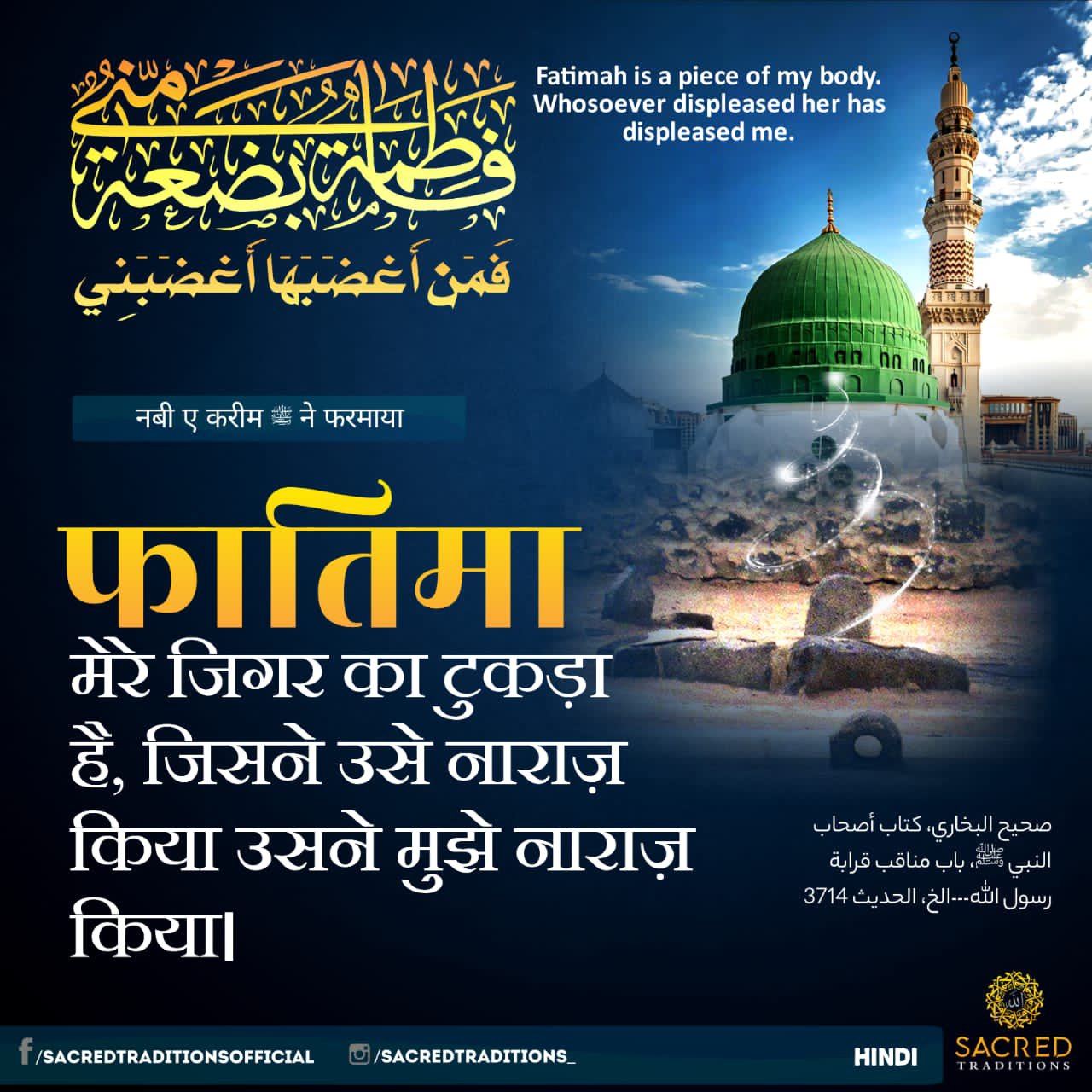
आप जन्नत की औरतों की सरदार हैं और आपके लिए रसूलुल्लाह ने फरमाया कि खुदा उससे राजी है, जिससे फातिमा राजी हो। रसूलुल्लाह सबसे ज्यादा मुहब्बत अपनी बेटी से किया करते थे और आपके बेटों को अपना बेटा कहा करते थे। आपके दोनों बेटे, जन्नत के जवानों के सरदार हैं।

जब रसूलुल्लाह ने आपका निकाह किया तो, अली से किया यानी आपके शौहर वलियों के सरदार हैं। आप कुल्ले ईमान के निस्फ़ ईमान की मालकिन हैं। आपके मर्तबे और बुलंदी का अंदाजा लगा पाना, ना मुमकिन है।

आप फातिमा सलामुल्लाह अलैहा की शान में मैंने कुछ लिखने की कोशिश की थी। आप सबके सामने रख रहा हूँ।

दो रकात की नमाज़ में शब सारी गुजार दी ऐसा भी रब से इश्क करती हैं फातिमा । जन्नत से जिसके वास्ते, रब ने भेजा है जोड़ा हुस्न ओ जमाल , पर्दगी में पाक फातिमा । उम्मत के लिए रहमत बन के आए मेरे नबी नबी के घर की रहमत बनके आईं फातिमा । अली कुल ए ईमान , शुजाअत के फर्द हैं तू उनकी मोहब्बत, निफ्स ए ईमान फातिमा । जन्नत के जवाँ सरदार हसन हैं और हुसैन कदमों में उनकी जन्नत रखती है फातिमा। वो खुश्क हवाओं में भी मुरझाते नहीं कभी सब फूल हैं गुलशन के तू है बाग फातिमा । ख्वाजा की नज़र में हक “हुसैन” दीन हैं हैराँ की तूने दीन को पाला है फातिमा।