रमज़ान महीने में एक रात ऐसी भी आती है जो हज़ार महीने की रात से बेहतर है जिसे शबे क़द्र कहा जाता है. शबे क़द्र का अर्थ होता है ” सर्वश्रेष्ट रात ” ऊंचे स्थान वाली रात ” लोगों के नसीब लिखी जानी वाली रात, शबे-क़द्र बहुत ही महत्वपूर्ण रात है जिस के एक रात की इबादत हज़ार महीनों की इबादतों से बेहतर और अच्छा है। इसी लिए इस रात की फज़ीलत कुरआन मजीद और प्रिय रसूल मोहम्मद( सल्लल्लाहु अलैहि वसल्लम) की हदीसों से प्रमाणित है।
निम्नलिखित महत्वपूर्ण वाक्यों से क़द्र वाली रात की अहमियत मालूम होती है।
(1) इस पवित्र रात में अल्लाह तआला ने कुरआन करीम को लोह़ महफूज़ से आकाश दुनिया पर उतारा फिर 23 वर्ष की अविधि में अवयशक्ता के अनुसार मोहम्मद (सल्लल्लाहु अलैहि वसल्लम) पर उतारा गया। जैसा कि अल्लाह तआला का इरशाद है। ” हम्ने इस (कुरआन) को कद्र वाली रात में अवतरित किया है।.. ” (सुराः कद्र)
(2) यह रात अल्लाह तआला के पास बहुत उच्च स्थान रखता है।
इसी लिए अल्लाह तआला ने प्रश्न के तरीके से इस रात की महत्वपूर्णता बयान फरमाया है और फिर अल्लाह तआला स्वयं ही इस रात की फज़ीलत को बयान फरमाया कि यह एक रात हज़ार महीनों की रात से उत्तम है। ” और तुम किया जानो कि कद्र की रात क्या है ? क़द्र की रात हज़ार महीनों की रात से ज़्यादा उत्तम है।” (सुराः कद्र)
(3) इस रात में अल्लाह तआला के आदेश से अन्गीनित फरिश्ते और जिबरील आकाश से उतरते है। अल्लाह तआला की रहमतें, अल्लाह की क्षमा ले कर उतरते हैं, इस से भी इस रात की महत्वपूर्णता मालूम होती है। जैसा कि अल्लाह तआला का इरशाद है। ” फ़रिश्ते और रूह उस में अपने रब की अनुज्ञा से हर आदेश लेकर उतरते हैं। ” (सुराः कद्र)
(4) यह रात बहुत सलामती वाली है। इस रात में अल्लाह की इबादत में ग्रस्त व्यक्ति परेशानियों, ईश्वरीय संकट से सुरक्षित रहते हैं। इस रात की महत्वपूर्ण, विशेष्ता के बारे में अल्लह तआला ने कुरआन करीम में बयान फरमाया है। ” यह रात पूरी की पूरी सलामती है उषाकाल के उदय होने तक। ” (सुराः कद्र)
(5) यह रात बहुत ही पवित्र तथा बरकत वाली है, इस लिए इस रात में अल्लाह की इबादत की जाए, ज़्यादा से ज़्यादा अल्लाह से दुआ की जाए, अल्लाह का फरमान है। ” हम्ने इस (कुरआन) को बरकत वाली रात में अवतरित किया है।…… ” (सुराः अद् दुखान)
(6) इस रात में अल्लाह तआला के आदेश से लोगों के नसीबों (भाग्य) को एक वर्ष के लिए दोबारा लिखा जाता है। इस वर्ष किन लोगों को अल्लाह तआला की रहमतें मिलेंगी? यह वर्ष अल्लाह की क्षमा का लाभ कौन लोग उठाएंगे? इस वर्ष कौन लोग अभागी होंगे? किस को इस वर्ष संतान जन्म लेगा और किस की मृत्यु होगी? तो जो व्यक्ति इस रात को इबादतों में बिताएगा, अल्लाह से दुआ और प्राथनाओं में गुज़ारेगा, बेशक उस के लिए यह रात बहुत महत्वपूर्ण होगी। जैसा कि अल्लाह तआला का इरशाद है। ” यह वह रात है जिस में हर मामले का तत्तवदर्शितायुक्त निर्णय हमारे आदेश से प्रचलित किया जाता है। ” (सुराः अद् दुखानः5 )
(7) यह रात पापों , गुनाहों, गलतियों से मुक्ति और छुटकारे की रात है।
मानव अपनी अप्राधों से मुक्ति के लिए अल्लाह से माफी मांगे, अल्लाह बहुत ज़्यादा माफ करने वाला, क्षमा करने वाला है। खास कर इस रात में लम्बी लम्बी नमाज़े पढ़ा जाए, अधिक से अधिक अल्लाह से अपने पापों, गलतियों पर माफी मांगा जाए, अल्लाह तआला बहुत माफ करने वाला, क्षमा करने वाला है। जैसा कि मोहम्मद (सल्लल्लाहु अलैहि वसल्लम) का कथन है। ” जो व्यक्ति शबे क़द्र में अल्लाह पर विश्वास तथा पुण्य की आशा करते हुए रातों को तरावीह (क़ियाम करेगा) पढ़ेगा, उसके पिछ्ले सम्पूर्ण पाप क्षमा कर दिये जाएंगे” ( बुखारी तथा मुस्लिम)
यह महान क़द्र की रात कौन सी है ?
यह एक ईश्वरीय प्रदान रात है जिस की महानता के बारे में कुछ बातें बयान की जा चुकी हैं। इसी शबे क़द्र को तलाशने का आदेश प्रिय रसूल (सल्लल्लाहु अलैहि वसल्लम) ने अपने कथन से दिया है। ” जैसा कि आइशा (रज़ी अल्लाहु अन्हा) वर्णन करती हैं कि ” रसूल (सल्लल्लाहु अलैहि वसल्लम) ने फरमाया ” कद्र वाली रात को रमज़ान महीने के अन्तिम दस ताक रातों में तलाशों ” ( बुखारी तथा मुस्लिम)
एक हदीस में रमज़ान करीम की चौबीसवीं रात में शबे क़द्र को तलाशने का आज्ञा दिया गया है। और प्रिय रसूल (सल्लल्लाहु अलैहि वसल्लम) ने इस मुबारक रात की कुछ निशानियाँ बताया है। जिस के अनुसार वह रात एकीस रमज़ान की रात थीं जैसा कि प्रिय रसूल के साथी अबू सईद अल खुद्री (रज़ी अल्लाहु अन्हु) वर्णन करते हैं। प्रिय रसूल के दुसरे साथी अब्दुल्लाह बिन अनीस (रज़ी अल्लाहु अन्हु) की रिवायत से पता चलता कि वह रात तेईस रमज़ान की रात थीं और अब्दुल्लाह बिन अब्बास (रज़ी अल्लाहु अन्हुमा) तथा उबइ बिन कअब (रज़ी अल्लाहु अन्हु) की रिवायत से पता चलता कि वह रात सत्ताईस रमज़ान की रात थीं और उबइ बिन कअब (रज़ी अल्लाहु अन्हु) तो कसम खाया करते थे कि शबे क़द्र सत्ताईस रमज़ान की रात है, तो उन के शागिर्द ने प्रश्न किया कि किस कारण इसी रात को कहते हैं? तो उन्हों ने उत्तर दिया, निशानियों के कारण, प्रिय रसूल मोहम्मद (रज़ी अल्लाहु अन्हु) ने भी शबे क़द्र को अन्तिम दस ताक वाली(21,23,25,27,29) रातों में तलाश ने का आदेश दिया है। शबे क़द्र के बारे में जितनी भी हदीस की रिवायतें आइ हैं। सब सही बुखारी, सही मुस्लिम और सही सनद से वारिद हैं। इस लिए हदीस के विद्ववानों ने कहा है कि सब हदीसों को पढ़ने के बाद मालूम होता है कि शबे क़द्र हर वर्ष विभिन्न रातों में आती हैं। कभी 21 रमज़ान की रात क़द्र वाली रात होती, तो कभी 23 रमज़ान की रात क़द्र वाली रात होती, तो कभी 25 रमज़ान की रात क़द्र वाली रात होती, तो कभी 27 रमज़ान की रात क़द्र वाली रात होती, तो कभी 29 रमज़ान की रात क़द्र वाली रात होती और यही बात सही मालूम होता है। इस लिए हम इन पाँच बेजोड़ वाली रातों में शबे क़द्र को तलाशें और बेशुमार अज्रो सवाब के ह़क़्दार बन जाए।
शबे क़द्र की निशानीः
प्रिय रसूल मोहम्मद (सल्लल्लाहु अलैहि वसल्लम) ने इस रात की कुछ निशानी बयान फरमाया है जिस के माध्यम से इस महत्वपूर्ण रात को पहचाना जा सकता है।
(1) यह रात बहूत रोशनी वाली होगी, आकाश प्रकाशित होगा , इस रात में न तो बहुत गरमी होगी और न ही सर्दी होगी बल्कि वातावरण अच्छा होगा, उचित होगा। जैसा कि मोहम्मद (सल्लल्लाहु अलैहि वसल्लम) ने निशानी बताया है जिसे सहाबी वासिला बिन अस्क़अ वर्णन करते है कि रसूल ने फरमाया ” शबे क़द्र रोशनी वाली रात होती है, न ज़्यादा गर्मी और न ज़्यादा ठंढ़ी और वातावरण संतुलित होता है और सितारे को शैतान के पीछे नही भेजा जाता।” ( तब्रानी )
(2) यह रात बहुत संतुलित वाली रात होगी। वातावरण बहुत अच्छा होगा, न ही गर्मी और न ही ठंडी होगी। हदीस रसूल (सल्लल्लाहु अलैहि वसल्लम) इसी बात को स्पष्ट करती है ” शबे क़द्र वातावरण संतुलित रात होती है, न ज़्यादा गर्मी और न ज़्यादा ठंढ़ी और उस रात के सुबह का सुर्य जब निकलता है तो लालपन धिमा होता है।” ( सही- इब्नि खुज़ेमा तथा मुस्नद त़यालसी )
(3) शबे क़द्र के सुबह का सुर्य जब निकलता है तो रोशनी धिमी होती है, सुर्य के रोशनी में किरण न होता है । जैसा कि उबइ बिन कअब वर्णन करते हैं कि रसूल (सल्लल्लाहु अलैहि वसल्लम) ने फरमाया ” उस रात के सुबह का सुर्य जब निकलता है तो रोशनी में किरण न होता है।” ( सही मुस्लिम )
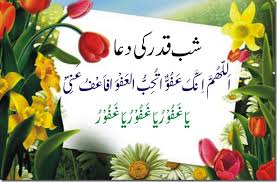
हक़ीक़त तो यह है कि इन्सान इन रातों की निशानियों का परिचय कर पाए या न कर पाए बस वह अल्लाह की इबादतों, ज़िक्रो- अज़्कार, दुआ और कुरआन की तिलावत,कुरआन पर गम्भीरता से विचार किरे । इख्लास के साथ, केवल अल्लाह को प्रसन्न करने के लिए अच्छे तरीक़े से अल्लाह की इबादत करे, प्रिय रसूल मोहम्मद (सल्लल्लाहु अलैहि वसल्लम) की इताअत करे, और अपनी क्षमता के अनुसार अल्लाह की खूब इबादत करे और शबे क़द्र में यह दुआ अधिक से अधिक करे, अधिक से अधिक अल्लाह से अपने पापों , गलतियों पर माफी मांगे जैसा कि आइशा (रज़ी अल्लाहु अन्हा) वर्णन करती हैं कि, मैं ने रसूल (सल्लल्लाहु अलैहि वसल्लम) से प्रश्न क्या कि यदि मैं क़द्र की रात को पालूँ तो क्या दुआ करू तो आप (सल्लल्लाहु अलैहि वसल्लम) ने फरमाया ” अल्लाहुम्मा इन्नक अफुव्वुन करीमुन, तू हिब्बुल-अफ्व,फअफु अन्नी” अर्थात: ऐ अल्लाह ! निःसन्देह तू माफ करने वाला है, माफ करने को पसन्द फरमाता, तो मेरे गुनाहों को माफ कर दे।”
अल्लाह हमें और आप को इस महिने में ज्यादा से ज़्यादा भलाइ के काम, लोगों के कल्याण के काम, अल्लाह की पुजा तथा अराधना की शक्ति प्रदान करे और हमारे गुनाहों, पापों, गलतियों को अपने दया तथा कृपा से क्षमा करे। आमीन…
Month: May 2019
HOW GREAT SUFIS AND THEIR KHANQAHS WERE THE REFUGE OF HUMANITY
The company of Great Sufis imbued masses with excellent humanitarian ideals and generated in them an earnest solicitude for humanity and to render whatever service they could to fellowmen without regard to their race or creed. They believed in and fashioned their conduct on the Prophet’s advice that “God’s creatures are His family, and among His slaves He loves him most who serves His family with the greatest devotion.”
Khwaja Nizamuddin Aulia is reported to have said about himself that “when a person comes to me and rclafes his troubles I feel twice as much distressed as him”.1 Another of his favourite dictums was : “On the Day of Judgement, nothing will carry greater weight than the desire to serve and to please.”2
Many soul-weary and broken-hearted persons would find refuge in the Khanqahs of the saints. The arms of the revered Sufis were ever open to welcome those whom fate had jilted or who had been forsaken by their kinsmen or the society. The dejected, the anguished and the outcast would come to them and find shelter, food, love and recognition. They would find the balm for their broken hearts and wounded spirits.
When the spiritual guide and mentor of Khwaja Nizamuddin Aulia was sending him off finally to settle in Delhi, he had bestowed this blessing upon him : “You will be like a huge, shady tree under which God’s creatures will find comfort.”3 History bears witness to the fact that for full seventy years people came from far and near to find shelter and protection under his benevolent shadow. Thanks to the Sufi ascetics, there existed at hundreds of places in India such ‘huge, shady trees’ under whose merciful shade broken-down travellers used to find new life and freedom.
1. Siar-ul-A’rifeen (Manuscript)
2. Siar-ul-Aulia, p. 28
3. Ibid
Base-19
Numeral system that proves the Quran was preserved.
The Quran mentions number 19 and insists on counting them so we looked at the Quran from this perspective and found that the Quran is coded with base-19.
Some chapters start with letters that have no meaning in Arabic:
[Quran 26.1-4] Ta, Seen, Meem, these are verses of the clarifying book. Maybe you are frustrated that they don’t believe. If We wish We can send down from heaven a sign their necks remain for it subdued.
“Ta, Seen, Meem, these are verses of the clarifying book” this verse is referring to the three letters Ta, Seen, Meem. We know that the Quran has 6236 verses however this is in base-10. In base-19 the Quran has H54 verses. 1400 years ago the Arabs knew and used base-10 correctly however nobody knew base-19 at that time.
When we replace those letters by their count we get the number of verses in the Quran in base-19 H54.
These are the letters and how many times they appear in those chapters:
And this is their count in base-19:
Ta, Seen, Meem turned out to be H54 in base-19. This is 6236 in base-10 (17x19x19 + 5×19 + 4) the exact number of verses in the Quran.
If a single verse was added or removed from anywhere in the entire Quran this code would have been broken.
This chapter starts with the exact number of verses in base-19 then the very next verse “these are verses of the clarifying book” and talks about a sign for disbelievers. This sign for disbelievers turned out to be base-19.
What is al-lawh al-mahfooz and Qalam


Praise be to Allaah.
1. Ibn Manzoor said:
Al-Lawh: every wide, flat surface or sheet of wood.
Al-Azhari said: al-Lawh is a flat surface of wood, and a shoulder-blade [of an animal], if it is written on, may be called a lawh.
Al-Lawh is something that is written on.
Al-Lawh: al-Lawh al-Mahfooz, as in the aayah (interpretation of the meaning), (Inscribed) in al-Lawh al-Mahfooz (the Preserved Tablet) [al-Burooj 85:22] means, the place where the decrees of Allaah are kept.
Every wide bone is a lawh.
The plural form is alwaah.
(Lisaan al-Arab, 2/584).
2. Ibn Katheer (may Allaah have mercy on him) said:
in al-Lawh al-Mahfooz (the Preserved Tablet) means, It is among the higher group (i.e., angels), preserved and protected from anything being added or taken away, or any alteration or changes.
(Tafseer Ibn Katheer, 4/497, 498).
3. Ibn al-Qayyim (may Allaah have mercy on him) said:
Preserved: most readers recite this with a kasrah, i.e., it is a description of the Lawh. This indicates that the shayaateen are not able to bring it down, because its location is protected and they cannot reach it. And it is itself protected, so the Shaytaan cannot add anything to it or take anything away from it.
Allaah, may He be glorified, has described it as protected or guarded in the aayah (interpretation of the meaning):
Verily, We, it is We Who have sent down the Dhikr (i.e. the Quraan) and surely, We will guard it (from corruption). [al-Hijr 15:9]. And its location is also described as being guarded in this soorah.
Allaah, may He be glorified, is protecting its location, and protecting it from having anything added or taken away, or being distorted. He is protecting its meanings from being twisted, just as He is protecting its words from being changed, and He is protecting its letters so that nothing is added or taken away
(al-Tabyaan fi Aqsaam al-Quraan, p. 62).
4. As for the reports in some books of Tafseer, that al-Lawh al-mahfooz is on the forehead of Israafeel or that is was created of green chrysolite, etc., none of these reports have been proven. It is part of the Unseen (al-ghayb) of which we cannot accept any reports except from the one who received Revelation concerning it.
And Allaah knows best.
An Introduction to Ramadan
Ramadan is the ninth month in the Islamic calendar. It is a time for Muslims to submit themselves further to Almighty Allah whole-heartedly by way of fasting and worship. It is ultimately the month of divine guidance and mercy. The Arabic term ramadan literally means heat & dryness, which could be attributed to the struggle of fasting or sawm. Sawm of Ramadan was first prescribed in the second year of hijri.
Allah says: “Fasting is prescribed to you as it was prescribed to those before you, that you may attain righteous.” [Qur’an 2:183]
And He, Most High, says: “That whoso of you find this month, necessarily, he should fast in it…” [Qur’an 2:185]

Ramadan is also the month wherein the first revelation or wahi of the Qur’an was sent down to the Beloved Messenger of Allahﷺ, thus assigning the duty of Prophethood to him so the truth of la ilaha illallah, ‘there is no God but Allah’, could be established.
“The month of Ramadan in which was revealed the Qur’an…” [Qur’an 2:185]
The first verse to have been revealed is: “Read, in the name of your Lord who created.” [Qur’an 96:1] It is interesting to note how the first word revealed of the Holy Qur’an was ‘Iqra’ meaning, ‘Read’. In this is a command for the people to read, to seek, to obtain knowledge. In this word alone is a great command of faith, and the verses following it confirm the guidance of Allah upon mankind:
“Read, in the name of your Lord, Who created; Created man, out of a clot of congealed blood: Read, and your Lord is Most Bountiful, He Who taught you to write, Taught man that which he knew not.”[Qur’an 96:1-5]
In this blessed month also comes that night of excellence i.e. Laylat al Qadr, or the Night of Power, which is the actual night when the firsr wahi was sent down to the Messenger of Allah whilst he meditated in the cave of Hira.
Allah says: “Indeed, We sent the Qur’an down during the Night of Decree.” [Qur’an 97:1]
The significance of this night is so immense that it excels in virtue even a thousand months. Allah Most High says:
“We have indeed revealed this in the Night of Power, And what will explain to you what the Night of Power is? The Night of Power is better than a thousand months.” [Qur’an 97:1-3]
This is part of the spiritual treasures of the blessed month of Ramadan. The gates of Allah’s Mercy are opened to the believers in a way unlike any other time of year. Allah’s love for His servants is so apparent in Ramadan that goodness is merited in abundance; with the duration of the believer’s fast, with the beginning of the fast (suhoor), with the breaking of the fast (iftaar), and even in the breath of the fasting believer. Anyone who ponders upon the love for Allah towards His believing servants should reflect upon the manifestations of this love during Ramadan.

The Messenger of Allahﷺ said, “By Him in Whose Hands my soul is, the smell emitting from the mouth of a fasting person is better in the sight of Allah than the smell of musk. (Allah says about the fasting person): He has left his food, drink and desires for My sake. The fast is for Me. So I will reward (the fasting person) for it and the reward of good deeds is multiplied ten times.” [Muslim]
Ramadan is ultimately a time for reflection, forgiveness and seeking Allah’s Pleasure. It is a time to clear the heart of the distractions and weaknesses which have accumulated over the year, and renew the strength of the believer’s faith. Ramadan also brings communities together in a truly loving and harmonious way, strengthening the brotherhood of the Muslim Ummah. It is the time of year when every masjid is full, and every pure heart is quenching its thirst to please Allah. The believers share with each other in not just food and gifts, but in faith, in love and in good-hearted company.
The aspect of self-restraint during Ramadan is not just from food and drink. Sayyidina Abu Hurayra (May Allah be pleased with him) reports that the Beloved Messenger of Allah, may Allah’s peace and blessings be upon him, said: “Fasting is a shield (or a screen/shelter). So the person observing fasting should avoid sexual relation with his wife and should not behave foolishly and impudently, and if somebody fights with him or abuses him, he should tell him twice, ‘I am fasting (Arabic: inni sa’im, inni sa’im).’” [Muslim]
Ramadan is a time for, as the above hadith indicates, sincere striving towards goodness and away from wrongdoing. Sawm or fasting screens us from ills, as it increases our awareness of Allah and inclines us towards only doing that which is pleasing to Him. This is why we are advised to react calmly to one who provokes us especially when we are fasting, by saying: “I am fasting.” This reminder is first and foremost for ourselves when we are being provoked into anger, as a way to restrain our temper and keep our fasting pure from evil.
A catalyst for personal development and the strengthening of community ties, Ramadan is also a huge asset for the believer striving for both external and internal purity. The act of sawm, packed with great spiritual virtue, is also a great medical aid which allows the body to detox and cleanse itself of excess and impurity. The 13th century Islamic scholar and sufi, Mawlana Jalal uddin Rumi (Alaihi Rahma) said, “Fasting is the first principle of medicine.”
Sawm also allows us to empathise with the struggle and difficulties of our impoverished brothers and sisters around the world, many of whom barely manage a meal a day due to circumstances. During Ramadan, many of us fast and look forward to a lavish iftaar yet the same cannot be said for those in deprived circumstances who cannot even break their fast at all. Sawm addresses us with the harsh reality of those less fortunate than us, causing us to humble ourselves and reflect upon how utterly dependant we are upon the generosity of Allah towards us. It opens our eyes to the truth of suffering and poverty which we are otherwise so oblivious to, commanding us to undergo a small share of this struggle first-hand. Through it, we may be humble before our Creator, and through it, we may be grateful to Him for our sustenance.
Due to the generosity of our Creator, this struggle does not go unrewarded. His kindness upon the fasting believer extends, as mentioned above, to meriting even the breath of the one observing sawm. The Messenger of Allah ﷺ said, “By Him in Whose Hands my soul is, the smell emitting from the mouth of a fasting person is better in the sight of Allah than the smell of musk.” [Muslim]
This is usually interpreted as: Allah’s love for his fasting servant is so immense that even the smell of his breath is sweeter and more fragrant to Almighty Allah than the scent of musk. It is also interpreted in two other ways; the second interpretation is that Allah will reward the fasting servant with breath as fragrant as musk, and the third interpretation is that Allah will cause the fasting servant to rise with breath as fragrant as musk on the Day of Judgement.
Sayyidina Abu Hurairah (May Allah be pleased with him) reports that the Beloved Messenger of Allah, may Allah’s peace and blessings be upon him, also said: “When there comes the month of Ramadan, the gates of Mercy are opened, and the gates of Hell are locked and the devils are chained.” [Muslim]
The hadith above elaborates further on the other favors bestowed upon us by our Lord in the month of Ramadan, mainly:
“The gates of Mercy are opened…”: indicates that, for those seeking forgiveness and mercy from Allah, is the opportunity to ask for it and to strive towards it so that they may be blessed with it through the open gates. Therefore, mercy and forgiveness is granted to those in search of it.
“…the gates of Hell are locked and the devils are chained”:indicates that the devils are locked up during this month so that the believer is protected from their evil. Some scholars say that the major devils are chained; others believe that all the devils are chained.
However this point often raises a curious question; if the devils are chained, why is evil still committed during this holy month? This is easily explained; those who have acquired the characteristics and ways of evil are not chained themselves. The ego or nafs is still present within each person, so the evil of it is still present. This is the battle which remains for each believer, the only battle which he must fight during the auspicious month. This struggle is completely within oneself. The devils may be locked up but the character and the ways of the people are still present with them.
This month should be spent in sincere effort to better ourselves, abandon bad habits and to improve our characters in accordance with the sunnah of the Prophet of Mercy, may Allah’s peace and blessings be upon him. True, this striving is not just for Ramadan, yet Ramadan is a perfect opportunity with which Allah has favoured His servants so that they may use it as a means to strengthen their faith further and turn their lives completely towards His Pleasure. It is up to us, as individuals, to accept this Divine Gift.