TAZKIRA E IMAME HASSANE MUJTABA ALAIHISSALAM

WILADAT E MAULA HASSANE MUJTABA ALAIHISSALAM

IMAME HASSANE MUJTABA AS KI WILADAT BA SADAT 15 RAMZAN UL MUBARAK HIJRI 3 KO MADINA MUNAWWARA ME HUI.HAZRATE JIBRIL AS JANNAT KE RESHMI KAPDE PAR LIKHA HUWA APKA NAM MUBARAK TOHFA KE TOR PAR LEKAR HUZUR S A W KI KHIDMAT ME HAZIR HUWE.HAZRATE ASMA:A BINTE UMAIS RA FARMATI HE KI IMAME HASSAN AS AUR IMAME HUSAIN AS KI VILADAT KE WAQT ME MA FATIMA ZAHERA SA KE PASS DAYA THI.JAB IMAME HASSAN AS KI VILADAT HUI TO ITNA NUR NIKLA KI MAULA ALI AS KA GHAR ROSHAN HO GAYA.AUR KOI BHI ALUDGI MAINE NAHI DEKHI.AUR PAKIZGI KA YE ALAM THA MA FATIMA ZAHER SA KA KI DONO SHAHEZADO KI WILADAT KE ADHA GHANTA(30 MINAT)BAAD MAINE DEKHA MA FATIMA ZAHERA SA NE NAMAJ ADAA FARMAYI

SHAWAHIDUN NABUWWAH RUAZAT UL SHOHADA
JILD
SAFAH NO 396

JAB HUZUR S A W KO YE KHUSH KHABRI JIBRIL AS NE DI.TO AAP USI WAQT TASHRIF LE GAYE.APNI BETI KE GHAR AUR FARMAYA E ASMA:A RA 👉🏻MERE BETE KO LE AW.HAZRATE ASMA:A RA NE HUZUR S A W KI GO’D MUBARAK ME IMAME HASSANE MUJTABA AS KO DIYA.HUZUR S A W NE BAYE KAN ME AZAN KAHI NAMAJ WALI AUR DAYE KAN ME TAKBIR KAHI.AUR PUCHHA E ALI AS TUMNE SHAHEZADE KA NAM KYA RAKHA HE.MAULA ALI AS NE ARZ YAA HUZUR S A W ME APSE PAHELE NAM KAISE RAKH SAKTA HU.TA HAM AGAR AAP IJAJAT DE TO ME APNE CHACHA KE NAM PAR HAMZAH RAKHNA CHAHTA HU.HUZUR S A W NE FARMAYA HAM IS SHAHEZADE KA NAM TAZWIZ KARNE ME RABKE HUKM KA INTAZAR KARENGE.USI ASNA ME HAZRATE JIBRIR AS NE AKAR ARZ KI.YAA RASULULLAH S A W ALLAH NE APKO SALAM PESH KYA HE.AUR FARMAYA HE KI ALI AS APKO HARUN AS KI TARAH HE.JIS TARAH WO MUSA AS KE LIYE THE.LIHAZA IS BACHE KA NAM HAROON AS KE BETE KE NAM PAR RAKHE.HUZUR S A W NE FARMAYA E JIBRIL AS HAROON AS KE BETE KA NAM KYA THA.JIBRIL AS NE ARZ KI HAROON AS KE BETE KA NAM SHABBAR THA.HUZUR S A W NE FARMAYA JIBRIL SHABBAR IBRANI ZABAN KA LAFZ HE AUR HAM ARABI HE.JIBRIL AS NE KAHA ARABI ME ISKA MANA HASSAN HOTA HE.HUZUR S A W NE SHAHEZADE KA NAM HASSAN AS RAKHA.7 WE DIN SHIYAH DHABBO WALE SAFED RANG KE 2 MENDHE ZABAH KIYE.AUR IMME HASSAN AS KA AQIQAH KYA. AUR MENDHE DAYAH KE HAWALE KARDIYE.BAAD AZA SHAHEZADE KE SAR MUBARAK KE BAL UTAR KAR UN BALO KE SATH CHANDI VAZAN KARKE KHAIRAT KARDI

RAUZAT UL SHOHADA
JILD 1
SAFAH NO 398

IMAME HASSAN AS SAR MUBARAK SE LEKAR SINAH MUBARAK TAK HUZUR S A W SE KAMAL TAR MUSHBIHAT RAKHTE THE.HAZRATE ANAS BIN MAALIK RA FARMATE HE KI KOI SHAKHSH IMME HASSAN AS KE ALAWA SABSE ZIYADA HUZUR S A W SE MUSHABIHAT NAHI RAKHTA THA.HUZUR S A W KE MARZ KE DINO ME JAB MA FATIMA SA HAZRAATE HASNAIN KARIMAIN AS KO LEKAR HUZUR S A W KI BARGAH ME LAYI AUR ARZ KI YE DONO APKE BETE HE.INHE APNI VIRASAT SE KUCHH ATAA FARMAYIYE.HUZUR S A W NE FARMAYA HAMARI SIRAT W SIYADAT HASSAN AS KA HISSA HE.AUR HAMARI SAKHAWAT W SHUJA:AT HUSAIN AS KA HISSA HE

RAUZAT UL SHOHADA
JILD 1
SAFAH NO/399

JAB MAULA ALI AMIRUL MOMININ AS KI SHAHADAT HO GAYI.APKI SHAHADAT KE BAD IMAME HASSANE MUJTABA AS MIMBAR PAR TASHREEF FARMA HUWE.AUR EK FASIH W BALIGH KHUTBA IRSHAD FARMAYA.👉🏻E LOGO IS RAAT TUMHARE DARMIYAN SE WO HASTI WO BUZRUG TASHREEF LE GAYE HE.JINKI MISAAL NA PAHELO ME KAHI DEKHI HE.AUR N BAAD WALE UN JAISA KISI KO PAYENGE.👈🏻WO IS RAAT KO RABBUL IZZAT KI BARGAH ME QASIDE BARGAH KI TARAF MUTAWAJJA HUWE HE.JIS RAAT HAZRATE MUSA BIN IMRAN AS NE INTAQAL FARMAYA HE.AUR HAZRATE ISA:A ALAIHISSALAM NE AASMAN KI TARAF URUJ FARMAYA HE.MAULA ALI AS NE IS UMMAT KO DAWATE HUQ DI.AUR ME BHI TUMHE HIDAYAT KE RASTA KI TARAF BULATA HU.APNE KHUTB PURA KYA TO LOGO NE APKI BAIAT KARNA SHURU KARDI.SBSE PAHELE APKI BAIAT KARNE WALE QAIS BIN SA:AD BIN ABADAH RA THE.BAAD AZA DUSRE LOGO NE APKI BAIAT KI JINKI TADAT 40 HAZAR KI THI

RAUZAT UL SHOHADA
JILD 1
SAFAH NO/406

AB MOLVI BATAYE KI IMAME HASSAN AS NE JO KHUTBA DIYA WO HUQ THA YA NAHI AGAR HUQ HE TO MANANA PADEGA MAULA ALI AS SE AFZAL PAHELE YA BAD ME KOI NAHI YE APKE ALFAZ HE AUR MOLVIO NE JO AAJ GINTI YA NO SHURU KARDIYE HE ME KAHENA CHAHUNGA KI MOLVIO KO KISNE HUQ DE DIYA HE YE KI TUM TARAZU ME MAULA ALI AS KO TOLNA SHURU KARDIYA HEAUR FESLA KARNE LAGE HO JB KI MAULA HASSAN AS FARMA RAHE HE KI INSE AFZAL KOI NAHI HE KYA US WAQT SAHABA NAHI THE YA SAHABA MAULA IMAME HASSAN AS KE DAUR KE BAD HUWE HE UNSE PAHELE BADE BADE SAHABA KA DAUR GUZRA HE KYA IMAME HASSAN AS KO PATA NAHI THA JO APNE AFZA UL BASHAR FARMA DIYA MAULA ALI AS KO TO FIR HAMARA AISE MOLVIO SE BAYCOT HE KYUNKE HAMARE FARAMINE AHELE BAIT AS HI AQIDA W IMAN W NIJAT HE 2 KITAB KE LIKHNE PADNE WALE MOLVI KI KOI ZARURAT NAHI HE

AMIRIL MOAMININ MAULA ALI AS KI SHAHADAT KI KHABAR MUAWIYA LANATI KO PAHONCHI TO WO IRAQ KE ILAKO KO FATEH KARNE KE LIYE 60 HAZAR KA LASHKAR LE KAR CHAL PADA.IMAME HASSAN ASKO IS BAT KI KHABAR MILI TO AP BHI 40 HAZAR KA LASHKAR LEKAR KUFA SE BAHAR TASHREEF LE AYE.AUR DERE ABDUR RAHMAN PAR NUZULE AJLAAS FARMAYA.IS MAQAAM PAR APNE MUQADDAMATUL JAISH KE TOR PAR 12 HAZAR NAMWAR SAWARO PAR QAIS BIN SA:AD RA KO AMIR MUQARRAR KYA

RAUZAT UL SHOHADA
JILD 1
SAFAH NO/407

ज़िक्र ए हज़रत इमाम हसन अलैहिस्सलाम

  •  हज़रत इमाम हसन (अ) हज़रत अली इब्ने अबी तालिब (अ) और सैयदतिन निसाइल आलमीन हज़रत फ़ातेमा (स.) के बेटे हैं। इमाम हसन 15वीं रमज़ानुल मुबारक सन् 3 हिजरी में मदीना ए मुनव्वरा में पैदा हुए। इमाम हसन (अ) को ख़ुदा वंदे आलम ने हज़रत अली (अ) व हज़रत फ़ातेमा (अ) की पहली औलाद क़रार दिया। रसूले इस्लाम (स) ने पैदाइश के फ़ौरन ही बाद अपनी गोद में लेकर आपके दाहिने कान में अज़ान और बायें कान में इक़ामत कही। आपके बाल कटवाकर उसके बराबर चाँदी जो एक दिरहम के लगभग बनती थी, ग़रीबों में बटवाई। पैग़म्बरे इस्लाम (सल्लल्लाहो अलैहेवसल्लम ) ने हुक्म दिया कि सर पर ख़ूशबू लगाई जाए। उसके बाद से ही अक़ीक़ा और बच्चे के बालों के बराबर चाँदी सदक़ा देने की सुन्नत क़ायम हो गयी। पैग़म्बरे इस्लाम (सल्लल्लाहो अलैहेवसल्लम ) ने इस बच्चे का नाम हसन रखा। यह नाम इससे पहले किसी का नही रखा गया था आपकी कुन्नीयत अबू मुहम्मद रखी और यह कुन्नीयत भी सिर्फ़ आपसे मख़सूस है आपके अलक़ाब सिब्त, सैयद, ज़की, मुज्तबा हैं। लेकिन इन सब में मशहूर मुज्तबा है
  • पैग़म्बरे इस्लाम (सल्लल्लाहो अलैहेवसल्लम ) को इमाम हसन और इमाम हुसैन से एक ख़ास लगाव था जिसकी वजह से आपने कई जगह पर फ़रमाया: यह हसन व हुसैन मेरे बेटे हैं। इस मौक़े पर हज़रत अली (अ) ने अपनी दूसरी औलाद के लिये फ़रमाया: कि तुम लोग मेरी औलाद हो और हसन व हुसैन पैग़म्बर (सल्लल्लाहो अलैहेवसल्लम ) की औलाद हैं। इमाम हसन ने सात साल और कुछ महीने की ज़िन्दगी अपने नाना की मुहब्बत भरी आग़ोश में ही गुज़ारी। लेकिन उनकी वफ़ात और जनाबे फ़ातिमा (अ) की शहादत- जो कि पैग़म्बरे इस्लाम (सल्लल्लाहो अलैहेवसल्लम ) की वफ़ात के दो या तीन महीने के बाद हुई उसके बाद इमाम अली ने इमाम हसन की तरबीयत को अपने हाथों में ले लिया।
  • इमाम हसन अपने वालिदे बुज़ुर्गवार की शहादत के बाद हुक्मे ख़ुदा और हज़रत अली की वसीयत के मुताबिक़ इमाम बने और आपने ज़ाहिरी ख़िलाफ़त की बाग डोर संभाली। इस तरह तक़रीबन छ: महीने मुसलमानों के तमाम उमूर अंजाम दिये थे। इसी दौरान मुआविया जो अली और ख़ानदाने अली का सख़्त का सख़्त दुश्मन था और बरसों से ख़िलाफ़त के लिये (शुरु में ख़ूने उस्मान का बहाना लेकर और आख़िर में ख़िलाफ़त के दावेदार के रूप में खुल कर) जंग की थी। इराक़ में जो कि इमाम हसन की ख़िलाफ़त की केन्द्र था उसने एक फ़ौज तैयार की और जंग शुरू कर दी। इमाम हसन अख़लाक़ी, जिस्मी और बुज़ुर्गी के ऐतबार से अपने नाना की तरह थे। आप के हुलिये की तारीफ़ लोगों ने इस तरह से की है: आपके रुख़सारे मुबारक सुर्ख़ी माएल आख़ें स्याह, घनी दाढ़ी और बाल काले, गर्दन लम्बी, जिस्म मुनासिब, बाज़ू चौड़े, हठ्टीयाँ मज़बूत, क़द दरमीयाना, नक़्श व नुक़ूश जाज़िब ख़ूबसूरत और चेहरा पुरकशिश था। इंसानी कमालात: इमाम हसन कमालाते इंसानी में अपने बाप की निशानी और अपने नाना के कामिल नमूना थे जब तक पैग़म्बरे इस्लाम (सल्लल्लाहो अलैहेवसल्लम ) ज़िन्दा थे इमाम हसन और इमाम हुसैन को अपने पहलूओं में बिठाते कभी, अपने काँधों पर सवार करते तो कभी चूमते गले से लगाते थे।आपने इमाम हसन व इमाम हुसैन के बारे में फ़रमाया: यह दोनो मेरे बेटे और इमाम हैं चाहे जंग करें या सुल्ह करें (इससे मुराद यह है कि बहरहाल यह इमाम व रहनुमा हैं)
  • इमाम हसन ने 25 मर्तबा पैदल हज किया, इस तरह से कि घोड़े की लगाम आपके हाथ में होती थी जब भी मौत और क़ब्र को याद करते रोते, रोज़े हिसाब को याद करते तो बेसाख़्ता चीख़ उठते और बेहोश हो जाया करते थे। जब वुज़ू करते और नमाज़ के लिये खड़े होते थे तो बदन काँपने लगता और रंग ज़र्द हो जाया करता था। तीन बार अपनी सारी जायदाद को अल्लाह की राह में ख़ैरात कर दिया। और दो बार अपना हक़ लोगों पर माँफ़ कर दिया। मुख़तसर यह कि इमाम हसन अपने ज़माने के आबिद तरीन और शरीफ़तरीन लोगों में से थे इमाम की फ़ितरत व तबीयत में इंसानीयत के बेहतरीन नमूने पाये जाते थे। जो भी उन्हे देखता उनकी कामों पर फ़िदा हो जाता था। जो भी आपसे मुलाक़ात करता था आपका शैदाई हो जाता था, जो भी आपका ख़ुतबा सुनता चाहे दोस्त हो या दुश्मन, ख़ुतबा ख़त्म होते होते आपके चाहने वालों में से हो जाता। मुहम्मद इब्ने इसहाक़ बयान करते हैं: अल्लाह के नबी (सल्लल्लाहो अलैहेवसल्लम ) के बाद कोई इंसान इज़्ज़त व क़द्र व बुज़ुर्गी में इमाम हसन (अ) के मक़ाम तक नही पहुच सका। जब इमाम हसन अपने घर के बाहर बैठ जाया करते थे तो रास्ता बंद हो जाता था आपके ऐहतेराम का यह आलम था कि आपके भाईयों में से कोई उधर से गुज़रता नही था। आप समझ जाते थे और उठ कर घर के अंदर चले जाते थे तब सब लोग आना शुरु करते थे। एक बार मक्के के रास्ते में घोड़े से नीचे उतर कर पैदल चलने लगे तो क़ाफ़िले के तमाम लोगों ने पैदल चलना शुरु कर दिया यहाँ तक कि सअद इब्ने अबी वकास भी पैदल हो कर आपके साथ चलने लगे। इब्ने अब्बास जो कि इमाम हसन व इमाम हुसैन (अ) से बड़े थे, घोड़े की लगान थामे हुअ फ़ख्र से यह कहते चले जा रहे थे कि यह अल्लाह के रसूल(सल्लल्लाहो अलैहेवसल्लम ) के बेटे हैं। इस शान व मर्तबे के बावजूद उनकी सादगी का यह आलम था कि एक दिन ग़रीबों के एक गिरोह की तरफ़ से गुज़र रहे थे जो ज़मीन पर बैठे हुए थे,जिनके सामने रोटीयों के कुछ टुकड़े ज़मीन पर रखे हुए थे जब उन्होने आपको देखा तो कहा ऐ नबी के लाल क्या आप हमारे साथ खाना पसंद करेगें। आप फ़ौरन घोड़े से उतरे और फ़रमाया अल्लाह तकब्बुर करने वालों को पसंद नही करता और इनके साथ खाने में शरीक हो गये। उसके आपने उन लोगों को अपने घर आने की दावत दी। और आपने उनके खाने का इन्तेज़ाम भी किया और उनके लिबास का भी।इमाम हसन(अ) के हाथ पर लोगों पर बैअत:जिस वक़्त वह वहशतनाक वाक़िया पेश आया जिसमें हज़रत अली(अ) के मुबारक सर पर तलवार लगी और इमाम हसन(अ) को हुक्म दिया कि बेटा तुम नमाज़ पढ़ाओ और अपनी ज़िन्दगी के आख़री वक़्त में आपको अपना जा नशीन क़रार दिया। ऐ मेरे बेटा, मेरे बाद तुम मेरे जानशीन और मेरे ख़ून का इन्तेक़ाम लेने वाले हो। इस हुक्म से इमाम हुसैन(अ) और दूसरे तमाम बेटों, बुज़ुर्गाने शिया और ख़ानदान के सारे बुज़ुर्गों को आगाह किया और किताब और तलवार इमाम हसन के हवाले किया और उसके बाद फ़रमाया: ऐ मेरे बेटे अल्लाह के नबी(सल्लल्लाहो अलैहेवसल्लम ) ने मुझे हुक्म दिया है कि मैं तुम्हे अपना जानशीन बनाऊँ और अपनी किताब और तलवार तुम्हारे हवाले कर दूँ। जिस तरह अल्लाह के रसूल(सल्लल्लाहो अलैहेवसल्लम ) ने मुझे अपना जानशीन बनाया। और अपनी तलवार और किताब मेरे हवाले की। और साथ ही मुझे इस बात का भी हुक़्म भी दिया गया है कि मैं तुम से कह दूँ कि तुम भी अपनी ज़िन्दगी के आख़री वक़्त में इन तमाम चीज़ों को अपने भाई हुसैन के हवाले कर देना। इमाम हसन(अ) मुसलमानों के दरमीयान आए और अपने बाप के मिम्बर पर खड़े हुए ताकि हज़रत अली(अ) पर होने वाले हादसे की लोगों को ख़बर दें। अल्लाह और उसके रसूल(सल्लल्लाहो अलैहेवसल्लम) की हम्द व सना के बाद फ़रमाया: वह शख़्स आज रात हमारे दरमीयान से चला गया जिस गुज़रे हुए लोग आगे न बढ़ सके और आगे भी कोई उसके बुलंद मर्तबे और मक़ाम तक नही पहुच सकेगा। हज़रत अली(अ) ने दीने इस्लाम की राह में जिस हिम्मत व शुजाअत व बहादुरी व कोशिश का मुज़ाहिरा किया और जंगों में जो उन्हे कामयाबी नसीब हुई थी, आपने उसका भी तज़किरा किया। और इस बात की तरफ़ भी इशारा किया कि आख़री वक़्त सिर्फ़ सात सौ दिरहम आपके पास था वह भी बैतुल माल से मिलने वाला आपका हिस्सा था कि जिससे वह अपने घर वालों की ज़रुरतों को पूरा करना चाहते थे। उसी वक़्त जब मस्जिद लोगों से भरी हुई थी, अदुल्लाह इब्ने अब्बास ने खड़े होकर लोगों से हज़रत इमाम हसन की बैअत के लिये अपील की और लोगों ने शौक़ व ख़ुशी से इमाम हसन की बैअत की। यह हज़रत अली(अ) की शहादत(यानी 21 रमज़ान 40 हिजरी) का दिन था। कूफ़ा व मदाएन, इराक़ व हिजाज़ और यमन के तमाम लोगों ने ख़ुशी ख़ुशी इमाम हसन(अ) की बैअत की सिवाए मुआविया के, जो दूसरी राह इख़्तियार करना चाहता था। वही रास्ता जो उसने हज़रत अली(अ) के ज़माने में इख़्तियार किया था।जब लोग बैअक कर चुके तो आपने एक ख़ुतबा दिया और लोगों को अहले बैत(अ) जो दो क़ीमती चीज़ों(क़ुरआन व अहतेबैत) में से एक थे, की इताअत का हुक्म दिया और उनको शैतान और शैतान सिफ़त लोगों से बचने का हुक्म दिया
  • इमाम हसन(अ) की ज़िन्दगी के तौर तरीक़े:कुफ़े के क़याम के दौरान इमाम हसन(अ) लोगों के नज़दीक़ बहुत महबूब थे। रहबरी की तमाम शर्ते आपके मुबारक वुजूद में पूरी तरह से मौजूद थीं इसलिये कि आप नबी(स) के बेटे थे। आपके हर काम ईमान की शर्तों पर पूरे उतरने वाले थे। दूसरी बात यह कि बैअत का तसव्वुर यह था कि लोग आपकी इताअत व फ़रमानदारी करें।इमाम(अ) ने तमाम उमूर को मुनज़्ज़म व मुरत्तब किया हाकिमाने शहर को मुअय्यन किया और तमाम इन्तेज़ामात को अपने हाथ में ले लिया। लेकिन अभी थोड़ा अर्सा भी नही गुज़रा कि लोगों नें जब इमाम हसन(अ) अपने बाप की तरह अदालत व इस्लामी अहकाम व सज़ाओं पर सख़्ती से अमल करते देखा, तो एक गिरोह ने अंदर ही अंदर साज़िशें रचना शुरु कर दीं। यहाँ तक कि उन्होने मुआविया को चुपके से एक ख़त लिखा जिसमें उसे कुफ़े की तरफ़ बढ़ने पर उकसाया और साथ ही इस बात की भी गारंटी दी कि जैसे ही तुम्हारी फ़ौज इमाम हसन(अ) की छाँवनी के क़रीब पहुचेगी, हम इमाम हसन(अ) के हाथ बाँध कर तुम्हारे हवाले कर देगें या उन्हे क़त्ल कर देगें। ख़वारिज भी जो हाशिमी हुकूमत के दुश्मन थे, आपसी इत्तेहाद की वजह से उनकी इस साज़िश में शरीक हो गये। मुनाफ़ेक़ीन के इस गिरोह के मुक़ाबले में, अली(अ) के मानने वाले शिया और मुहाजेरीन व अंसार की एक जमाअत थी जो कूफ़े आकर बस चुकी थी, दूसरी तरफ़ वह अख़लाक़ की बुलंदी पर पहुचे बुज़ुर्ग और अटल इरादे वाले लोग थे जिन्होने हर मौक़े पर चाहें वह बैअत की शुरुवात हो या जिहाद का ज़माना जब इमाम ने जिहाद का हुक्म दिया हर मौक़े पर डटे रहे। इमाम हसन(अ) ने जब अपने मुक़ाबले में मुआविया की ज़्यादतीयों और बग़ावत को देखा और उसके ख़तों को पढ़ा तो उसको साज़िशों और ख़ून ख़राबे से रोकने की दावत दी लेकिन मुअविया इमाम हसन(अ) के जवाब में हमेशा सिर्फ़ एक ही बात को दलील बनाता कि मैं हुकूमत में तुम से पहले से हूँ और इस मामले में तुम से ज़्यादा तजरबेकार और उम्र में तुमसे बड़ा हूँ और बस। मुआविया कभी अपने ख़तों में आपकी क़ाबिलीयत का ऐतराफ़ करते हुए लिखता था: मेरे बाद ख़िलाफ़त के हक़दार आप हैं इसलिये कि आपसे बेहतर और मुनासिब कोई नही है और आख़िर में इमाम हसन(अ) के दूतों को जो जवाब दिया वह यह था कि वापस चले जाओ। हमारे और तुम्हारे दरमीयान तलवार फ़ैसला करेगी। इस तरह से ज़्यादती और दुश्मनी मुआविया की तरफ़ शुरु हुई यानी इमाम के ख़िलाफ़ क़त्ल व साज़िश की शुरुवात हुई और मुआविया अपनी साज़िश में कामयाब होते हुए जिस मौक़े की तलाश में था वह उसे हाथ आ गया। उसने ज़मीरफ़रोश और कमज़ोर ईमान वालों को ख़रीदना और उन्हे फ़ायदा पहुचाना शुरु कर दिया। दूसरी तरफ़ उसने अपनी फ़ौज को जंग की तैयारी का हुक्म दे दिया। इमाम(अ) ने भी इन हालात को देखते हुए मुआविया की मक्कारी के मुक़ाबले में बहुत तेज़ी से क़दम उठाया और बाक़ायदा तौर पर जंग का ऐलान कर दिया। अगर मुआविया की फ़ौज में सोने और जवाहिर के लालची और हुकूमते शाम के पिठ्ठू जंग के लिये तैयार हुए तोदूसरी तरफ़ इमाम हसन(अ) की फ़ौज में भी नूरानी चेहरे के मालिक अली(अ) के शियाँ मौजूद थे। जैसे हुज्र इब्ने अदी, अबू अय्यूब अँसारी, अदी इब्ने ख़ातम वग़ैरह ऐसे लोग थे जो इमाम हुसैन(अ) के क़ौल के मुताबिक़ एक एक इंसान पूरी पूरी फ़ौज पर भारी था। लेकिन जहाँ बुज़ुर्ग और अज़ीम शख़्सीयतें थी वहीं कुछ सुस्त व अपाहिज लोग भी थे जिन्होने जंग से हाथ खैच कर भरपूर तरह से साज़िशें करने में लग गये और दुनिया की चमक पर फ़िदा हो गये। इमाम हसन(अ) को पहले से ही इन हालात का शक था। इराक़ी फ़ौज की कुल तादाद 3 लाख बयान की गयी है। इमाम हसन(अ) ने मस्जिदे कूफ़ा में एक ख़ुतबा दिया और सिपाहीयों को मज़बूत इरादे के साथ नुख़ैला की तरफ़ बढ़ने का हुक्म दिया। अदी इब्ने ख़ातम इमाम को हुक्म को मानने वाले पहले शख़्स थे जो सबसे पहले घोड़े पर सवार हुए और बहुत से लोगों ने उनकी तरह हुक्म की इताअत की। इमाम हसन(अ) ने अब्दुल्लाह इब्ने अब्बास को, जो आपके रिश्तेदारों में से थे और जिन्होने सबसे पहले आपकी बैअत के लिये लोगों को तैयार किया था, 12 हज़ार फ़ौज के साथ मसकन नामी जगह जो हाशिमीयों के वफ़ादार थे, की तऱफ़ रवाना किया। लेकिन मुआविया की साज़िशों और मक्कारीयों ने उन्हे अपने घेरे में ले लिया। इमाम(अ) के वफ़ादार और भरोसेमंद कमाँडर को दस लाख दिरहम की पेशकश देकर अपनी फ़ौज में शामिल कर लिया। इसके नतीजे में 12 हज़ार सिपाहीयों में से 8 हज़ार सिपाही उबैदुल्लाह इब्ने अब्बास के साथ मुआविया के पास अपने दीन को दुनिया के बदले बेच कर चले गये। उबैदुल्लाह के बाद फ़ौज के क़ैस इब्ने सअद हो गये, मुआविया के सिपाहीयों और मुनाफ़िक़ो ने उनके क़त्ल होने की अफ़वाह उड़ा कर इमाम हसन(अ) के सिपाहीयों की रूही ताक़त को कमज़ोर कर दिया। मुआविया के एजेन्टों का एक गिरोह मदाएन से इमाम हसन(अ) के पास मिलने आया उसने भी इमाम हसन(अ) से कहा कि इस वक़्त लोगों की राय यह है कि आप सुल्ह कर लें। दूसरी तरफ़ ख़वारिज में से एक ज़ालिम शख़्स ने आपकी रान पर बल्लम मारा जिससे उसका असर उनकी हठ्ठी तक हुआ और आपकी रान में एक बहुत बड़ा ज़ख़्म हो गया। बहरहाल इमाम(अ) के साथ ऐसे हालात पेश आ चुके थे कि सुल्ह के अलावा और कोई रास्ता नही था। जब मुआविया ने मुनासिब हालात देखे तो उसने फ़ौरन इमाम हसन(अ) के सामने सुल्ह का प्रस्ताव दे दिया। इमाम हसन(अ) ने अपने सिपाहीयों से राय व मशविरे की ख़ातिर एक ख़ुतबा दिया और उन सब को जंग व सुल्ह जैसी दो राहों में से एक का इख्तियार दिया। ज़्यादा लोग सुल्ह के तरफ़दार थे। एक गिरोह ने अपनी ज़बान के ख़ंजर से इमाम(अ) को तकलीफ़ भी पहुचायी। आख़िरकार मुआविया ने जो सुल्ह की पेशकश की थी इमाम हसन(अ) ने कबूल कर ली, लेकिन इस सुल्ह का मक़सद यह था कि उसमें क़ैद व शर्त व पाबंदी हो, इसलिये कि यह मालूम था कि मुआविया ज़्यादा दिन तक अपने वादे पर बाक़ी रहने वाला नही रह सकता और आईन्दा एक के बाद एक करके शर्त को अपने पैरों तले रौदेंगा। जिसके नतीजे में उसके नापाक इरादे, वादाख़िलाफ़ी और बेईमानी लोगों पर वाज़ेह हो जायेगी। सुल्ह कबूल करने की एक वजह यह भी थी कि इमाम हसन(अ) चाहते थे कि मुआविया जिसका अस्ल मक़सद यह था कि ज़्यादा से ज़्यादा लोगों को क़त्ल करे, नाहक़ खून बहाये। और अली(अ) के शियों को ख़त्म करे दे, सुल्ह के ज़रीये वह महफ़ूज़ रहते। इस तरह इमाम हसन(अ) का चेहरा फिर निख़र कर सामने आ गया जिस तरह पैग़म्बरे इस्लाम(सल्लल्लाहो अलैहेवसल्लम) ने इस सिलसिले में पहले ही भविष्यवाणी की थी कि जिस मुस्लेहे अकबर(सर्वश्रेष्ठ शाति प्रिय) के रूप में इस्लाम में उभर कर सामने आयेगें। मुआविया ने जो सुल्ह की पेशकश की थी उसकी मक़सद दुनिया पा लेने के सिवा कुछ भी नही था और वह यह चाहता था कि हुकूमत पर क़ाबिज़ हो जाये। लेकिन इमाम हसन(अ) इस वजह से राज़ी नही हुए बल्कि वजह यह थी कि अपने मज़हब ओर अपने फ़िक्री उसूल को ख़त्म होने से बाक़ी रख सकें और अली(अ) के शिया भी क़त्ल होने से महफ़ूज़ रहें।सुल्ह की शर्तें:मुआविया इस बात का ज़िम्मेदार है कि अल्लाह की किताब, रसूललुल्लाह (सल्लल्लाहो अलैहेवसल्लम) की सुन्नत और ख़ुलाफ़ा की नेक सीरत पर अमल करेगा। और अपने बाद किसी को ख़लीफ़ा नही बनायेगा। इमाम हसन(अ) और अली(अ) की दूसरी तमाम औलादों और उनके शियों पर मुल्क में कहीं भी उनके ख़िलाफ़ कोई साज़िश नही करेगा। और हज़रत अली(अ) पर होने वाले गाली गलौच पर पाबंदी होगी। किसी भी मुसलमान पर ज़ुल्म व ज़्यादती नही करेगा। आपने इन कसमों व वादों पर अल्लाह, उसके रसूल और बहुत से लोगों को गवाह बनाया। मुआविया बहुत से लोगों के साथ कूफ़े आया ताकि सुल्ह की शर्तें इमाम हसन(अ) के सामने पेश हों और तमाम मुसलमानों को इस बात का इल्म हो जाये। लोगों का एक सैलाब कूफ़े की तरफ़ उमड़ पड़ा।मुआविया ने मिम्बर पर जाकर यह तक़रीर की: ऐ अहले कूफ़ा क्या तुम समझते हो कि मैंने तुम से नमाज़, रोज़ा व हज व ज़कात के लिये जंग नही की थी, बल्कि मैंने जो तुम से जंग की वह इस वजह से कि तुम पर हुकूमत करू, तुम्हारी हुकूमत की बागडोर अपने हाथों में ले लूँ। ख़ुदा ने मुझे इस मक़ाम तक पहुचा दिया है जबकि तुम इस बात पर ख़ुश नही हो। अब तुम यह बात कान खोल कर सुन लो कि हर वह ख़ून जो इस लड़ाई की वजह से ज़मीन पर बहा है, बे फ़ायदा है और हर वह वादा जो मैंने किसी से किया है, मेरे दोनों पैरों के नीचे है। इसी तरह वह संधि प्रस्ताव जो उसने लिखा था, जिसकी पेशकश की थी, जिस पर अपनी मोहर लगाई थी उसे अपने दोनों पैरों तले रौंदा और इतनी जल्दी उसने अपने आपको बेइज़्ज़त कर लिया। उसके बाद इमाम हसन(अ) इमामत के अज़मत व वक़ार के साथ जो लोगों की आख़ों को चकाचौंध और उनके ऐहतेराम पर मजबूर कर रही थी, मिम्बर पर आये। और एक इतिहासिक़ ख़ुतबा देते हुए अल्लाह की हम्द व सना और पैग़म्बरे अकरम(स) पर सलवात व सलाम के बाद इस तरह फ़रमाते हैं: ख़ुदा की क़सम मैं यह आरज़ू कर रहा था कि मैं लोगों में सबसे ज़्यादा उनकी भलाई चाहने वाला हूँ। और ख़ुदा का शुक्रगुज़ार हूँ कि मेरे दिल में किसी मुसलमान के लिये कोई नफ़रत नही है। और न ही मैं किसी मुसलमान को बुरा समझता हूँ। उसके बाद फ़रमाया: मुआविया यह समझता था कि मैं उसे ख़िलाफ़त का हक़दार समझता हूँ और ख़ुद को उसके लायक़ नही समझता, वह झूट बोलता है। मैं क़ुरआन मजीद और अल्लाह के रसूल(सल्लल्लाहो अलैहेवसल्लम) के फ़ैसले के मुताबिक़ हुकूमत के लिये सारे लोगों से बेहतर हूँ लेकिन जिस वक़्त पैग़म्बरे इस्लाम(सल्लल्लाहो अलैहेवसल्लम) की वफ़ात हुई। उस वक़्त से मैं लोगों के ज़ुल्म व सितम का शिकार हो गया हूँ। उसके बाद आपने ग़दीरे ख़ुम और अपने बाप की ख़िलाफ़त छिने जाने और ख़िलाफ़त की गुमराहीयों की तरफ़ इशारा किया और फ़रमाया: यह गुमराही सबब बनी कि हक़ छिनने वाले आज़ाद हो गये और उनकी औलादें यानी मुआविया और उसके सिपाहीयों ने ख़िलाफ़त के मसले में लालच के काम लिया।चुँकि मुआविया ने अपनी बातों में हजरत अली(अ) को बुरा भला कहा था लिहाज़ा इमाम हसन(अ) ने अपना तआरुफ़ कराने के साथ साथ अपने ख़ानदान की शराफ़त बयान करने के बाद मुआविया पर लानत भेजी और मुसलमानों की एक बड़ी तादाद ने मुआविया के सामने आमीन कहा। इमाम हसन(अ) कुछ दिनों के बाद मदीने चले गये और मुआविया इस्लामी हुकूमत को अपने क़ब्ज़े में लेने के लिये इराक़ पहुच गया। उसने अहले बैत(अ) और उनके शियों पर सख़्त तरीन पाबंदीयों व सज़ाओं को जाइज़ क़रार दे दिया।
  • इमाम हसन(अ) ने अपनी दस साला इमामत के दौरान बहुत सख़्त और मुश्किल ज़िन्दगी गुज़ारी जिसमें किसी तरह का कोई सुकून नही था हद तो यह है कि घर में चैन व सुकून नही था। आख़िरकार 50 हिजरी में मुआविया के कहने पर आपको ज़हर देकर शहीद कर दिया।

मुआविया का कभी पेट न भरा।

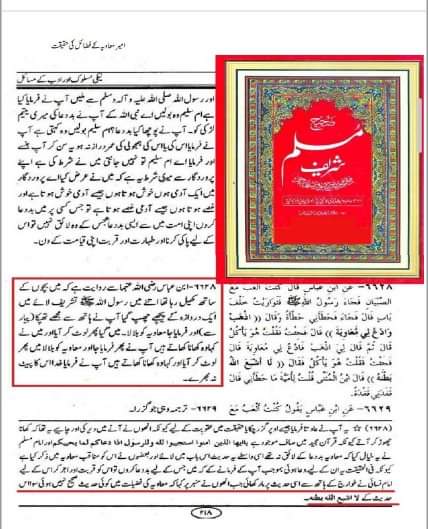
रसूलल्लाह सल्ललाहो अलैहि वसल्लम ने फ़रमाया “अल्लाह, मुआविया का कभी पेट ना भरे”

– सही मुस्लिम हदीस न. 6628

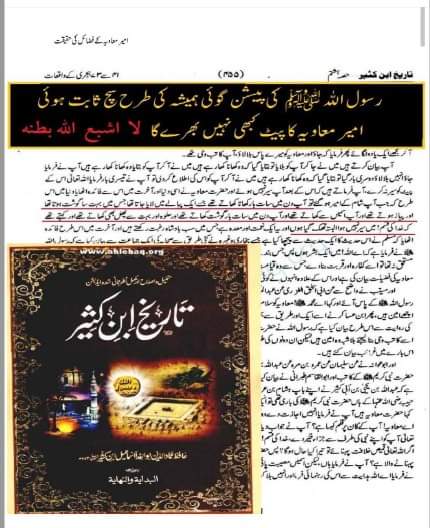
और रसूलल्लाह सल्ललाहो अलैहि वसल्लम का ये फरमान हमेशा की तरह सच साबित हुवा और मुआविया का कभी पेट न भरा।

– तारीख इबने कसीर हिस्सा 8, सफा न. 455
73504751_2444109389020275_5222788314788003840_n75439350_2444109375686943_9157803902177902592_n

Hadith 29:Translation of Sahih Bukhari, Book 29: Penalty of Hunting while on Pilgrimages

cropped-image21-1024x341

Volume 3, Book 29, Number 47:

Narrated ‘Abdullah bin Abu Qatada:

My father set out (for Mecca) in the year of Al-Hudaibiya, and his companions assumed Ihram, but he did not. At that time the Prophet was informed that an enemy wanted to attack him, so the Prophet proceeded onwards. While my father was among his companions, some of them laughed among themselves. (My father said), “I looked up and saw an onager. I attacked, stabbed and caught it. I then sought my companions’ help but they refused to help me. (Later) we all ate its meat. We were afraid that we might be left behind (separated) from the Prophet so I went in search of the Prophet and made my horse to run at a galloping speed at times and let it go slow at an ordinary speed at other times till I met a man from the tribe of Bani Ghifar at midnight. I asked him, “Where did you leave the Prophet ?” He replied, “I left him at Ta’hun and he had the intention of having the midday rest at As-Suqya. I followed the trace and joined the Prophet and said, ‘O Allah’s Apostle! Your people (companions) send you their compliments, and (ask for) Allah’s Blessings upon you. They are afraid lest they may be left behind; so please wait for them.’ I added, ‘O Allah’s Apostle! I hunted an onager and some of its meat is with me. The Prophet told the people to eat it though all of them were in the state of Ihram.”

Volume 3, Book 29, Number 48:
Narrated ‘Abdullah bin Abu Qatada:

That his father said “We proceeded with the Prophet in the year of Al-Hudaibiya and his companions assumed Ihram but I did not. We were informed that some enemies were at Ghaiqa and so we went on towards them. My companions saw an onager and some of them started laughing among themselves. I looked and saw it. I chased it with my horse and stabbed and caught it. I wanted some help from my companions but they refused. (I slaughtered it all alone). We all ate from it (i.e. its meat). Then I followed Allah’s Apostle lest we should be left behind. At times I urged my horse to run at a galloping speed and at other times at an ordinary slow speed. On the way I met a man from the tribe of Bani Ghifar at midnight. I asked him where he had left Allah’s Apostle . The man replied that he had left the Prophet at a place called Ta’hun and he had the intention of having the midday rest at As-Suqya. So, I followed Allah’s Apostle till I reached him and said, “O Allah’s Apostle! I have been sent by my companions who send you their greetings and compliments and ask for Allah’s Mercy and Blessings upon you. They were afraid lest the enemy might intervene between you and them; so please wait for them.” So he did. Then I said, “O Allah’s Apostle! We have hunted an onager and have some of it (i.e. its meat) left over.” Allah’s Apostle told his companions to eat the meat although all of them were in a state of Ihram.”

Volume 3, Book 29, Number 49:
Narrated Abu Qatada:

We were in the company of the Prophet at a place called Al-Qaha (which is at a distance of three stages of journey from Medina). Abu Qatada narrated through another group of narrators: We were in the company of the Prophet at a place called Al-Qaha and some of us had assumed Ihram while the others had not. I noticed that some of my companions were watching something, so I looked up and saw an onager. (I rode my horse and took the spear and whip) but my whip fell down (and I asked them to pick it up for me) but they said, “We will not help you by any means as we are in a state of Ihram.” So, I picked up the whip myself and attacked the onager from behind a hillock and slaughtered it and brought it to my companions. Some of them said, “Eat it.” While some others said, “Do not eat it.” So, I went to the Prophet who was ahead of us and asked him about it, He replied, “Eat it as it is Halal (i.e. it is legal to eat it).”

Volume 3, Book 29, Number 50:
Narrated ‘Abdullah bin Abu Qatada:

That his father had told him that Allah’s Apostle set out for Hajj and so did his companions. He sent a batch of his companions by another route and Abu Qatada was one of them. The Prophet said to them, “Proceed along the sea-shore till we meet all together.” So, they took the route of the sea-shore, and when they started all of them assumed Ihram except Abu Qatada. While they were proceeding on, his companions saw a group of onagers. Abu Qatada chased the onagers and attacked and wounded a she-onager. They got down and ate some of its meat and said to each other: “How do we eat the meat of the game while we are in a state of Ihram?” So, we (they) carried the rest of the she-onager’s meat, and when they met Allah’s Apostle they asked, saying, “O Allah’s Apostle! We assumed Ihram with the exception of Abu Qatada and we saw (a group) of onagers. Abu Qatada attacked them and wounded a she-onager from them. Then we got down and ate from its meat. Later, we said, (to each other), ‘How do we eat the meat of the game and we are in a state of Ihram?’ So, we carried the rest of its meat. The Prophet asked, “Did anyone of you order Abu Qatada to attack it or point at it?” They replied in the negative. He said, “Then eat what is left of its meat.”

Volume 3, Book 29, Number 51:
Narrated ‘Abdullah bin ‘Abbas:

From As-Sa’b bin Jath-thama Al-Laithi that the latter presented an onager to Allah’s Apostle while he was at Al-Abwa’ or at Waddan, and he refused it. On noticing the signs of some unpleasant feeling of disappointment on his (As-Sab’s) face, the Prophet said to him, “I have only returned it because I am Muhrim.”

Volume 3, Book 29, Number 52:
Narrated ‘Abdullah bin ‘Umar:

Allah’s Apostle said, “It is not sinful of a Muhrim to kill five kinds of animals.”

Volume 3, Book 29, Number 53:
One of the wives of the Prophet narrated:

The Prophet said, “A Muhrim can kill (five kinds of animals.)”

Volume 3, Book 29, Number 54:
Narrated Hafsa:

Allah’s Apostle said, “It is not sinful (of a Muhrim) to kill five kinds of animals, namely: the crow, the kite, the mouse, the scorpion and the rabid dog.”

Volume 3, Book 29, Number 55:
Narrated Aisha:

Allah’s Apostle said, “Five kinds of animals are harmful and could be killed in the Haram (Sanctuary). These are: the crow, the kite, the scorpion, the mouse and the rabid dog.”

Volume 3, Book 29, Number 56:
Narrated ‘Abdullah:

While we were in the company of the Prophet in a cave at Mina, when Surat-wal-Mursalat were revealed and he recited it and I heard it (directly) from his mouth as soon as he recited its revelation. Suddenly a snake sprang at us and the Prophet said (ordered us): “Kill it.” We ran to kill it but it escaped quickly. The Prophet said, “It has escaped your evil and you too have escaped its evil.”

Volume 3, Book 29, Number 57:
Narrated ‘Aisha the wife of the Prophet:

Allah’s Apostle called the salamander a bad animal, but I did not hear him ordering it to be killed.”

Volume 3, Book 29, Number 58:
Narrated Said bin Abu Said Al-Maqburi:

Abu Shuraih, Al-‘Adawi said that he had said to ‘Amr bin Sa’id when he was sending the troops to Mecca (to fight ‘Abdullah bin Az-Zubair), “O Chief! Allow me to tell you what Allah’s Apostle said on the day following the Conquest of Mecca. My ears heard that and my heart understood it thoroughly and I saw with my own eyes the Prophet when he, after Glorifying and Praising Allah, started saying, ‘Allah, not the people, made Mecca a sanctuary, so anybody who has belief in Allah and the Last Day should neither shed blood in it, nor should he cut down its trees. If anybody tells (argues) that fighting in it is permissible on the basis that Allah’s Apostle did fight in Mecca, say to him, ‘Allah allowed His Apostle and did not allow you.’ “Allah allowed me only for a few hours on that day (of the conquest) and today its sanctity is valid as it was before. So, those who are present should inform those who are absent (concerning this fact.” Abu Shuraih was asked, “What did ‘Amr reply?” He said, (‘Amr said) ‘O Abu Shuraih! I know better than you in this respect Mecca does not give protection to a sinner, a murderer or a thief.”

Volume 3, Book 29, Number 59:
Narrated Ibn ‘Abbas:

“The Prophet said, ‘Allah has made Mecca, a sanctuary, so it was a sanctuary before me and will continue to be a sanctuary after me. It was made legal for me (i.e. I was allowed to fight in it) for a few hours of a day. It is not allowed to uproot its shrubs or to cut its trees, or to chase (or disturb) its game, or to pick up its luqata (fallen things) except by a person who would announce that (what he has found) publicly.’ Al-‘Abbas said, ‘O Allah’s Apostle! Except Al-ldhkhir (a kind of grass) (for it is used) by our goldsmiths and for our graves.’ The Prophet then said, ‘Except Al-idhkhir.’ ” ‘Ikrima said, ‘Do you know what “chasing or disturbing” the game means? It means driving it out of the shade to occupy its place.”

Volume 3, Book 29, Number 60:
Narrated Ibn ‘Abbas:

their blacksmiths and for their domestic purposes).” So, the Prophet s

Volume 3, Book 29, Number 61:
Narrated Ibn Abbas:

Allah’s Apostle was cupped while he was in a state of Ihram.

Volume 3, Book 29, Number 62:
Narrated Ibn Buhaina: The Prophet, while in the state of Ihram, was cupped at the middle of his head at Liha-Jamal.

Volume 3, Book 29, Number 63:
Narrated Ibn ‘Abbas:

The Prophet married Maimuna while he was in the state of Ihram, (only the ceremonies of marriage were held).

Volume 3, Book 29, Number 64:
Narrated ‘Abdullah bin Umar:

A person stood up and asked, “O Allah’s: Apostle! What clothes may be worn in the state of Ihram?” The Prophet replied, “Do not wear a shirt or trousers, or any headgear (e.g. a turban), or a hooded cloak; but if somebody has no shoes he can wear leather stockings provided they are cut short off the ankles, and also, do not wear anything perfumed with Wars or saffron, and the Muhrima (a woman in the state of Ihram) should not cover her face, or wear gloves.”

Volume 3, Book 29, Number 65:
Narrated Ibn ‘Abbas:

A man was crushed to death by his she-camel and was brought to Allah’s Apostle who said, “Give him a bath and shroud him, but do not cover his head, and do not bring any perfume near to him, as he will be resurrected reciting Talbiya.”

Volume 3, Book 29, Number 66:
Narrated ‘Abdullah bin Hunain:

Abdullah bin Al-Abbas and Al-Miswar bin Makhrama differed at Al-Abwa’; Ibn ‘Abbas said that a Muhrim could wash his head; while Al-Miswar maintained that he should not do so. ‘Abdullah bin ‘Abbas sent me to Abu Aiyub Al-Ansari and I found him bathing between the two wooden posts (of the well) and was screened with a sheet of cloth. I greeted him and he asked who I was. I replied, “I am ‘Abdullah bin Hunain and I have been sent to you by Ibn ‘Abbas to ask you how Allah’s Apostle used to wash his head while in the state of lhram.” Abu Aiyub Al-Ansarl caught hold of the sheet of cloth and lowered it till his head appeared before me, and then told somebody to pour water on his head. He poured water on his head, and he (Abu Aiyub) rubbed his head with his hands by bringing them from back to front and from front to back and said, “I saw the Prophet doing like this.”

Volume 3, Book 29, Number 67:
Narrated Ibn ‘Abbas:

I heard the Prophet delivering a sermon at ‘Arafat saying, “If a Muhrim does not find slippers, he could wear Khuffs (but he has to cut short the Khuffs below the ankles), and if he does not find an Izar (a waist sheet for wrapping the lower half of the body) he could wear trousers.”

Volume 3, Book 29, Number 68:
Narrated Abdullah:

Allah’s Apostle was asked what sort of clothes a Muhrim should wear. He replied, “He should not wear a shirt, turbans, trousers, a hooded cloak, or a dress perfumed with saffron or Wars; and if slippers are not available he can wear Khuffs but he should cut them so that they reach below the ankles.

Volume 3, Book 29, Number 69:
Narrated Ibn Abbas:

The Prophet delivered a sermon at ‘Arafat and said, “Whoever does not get an Izar can wear trousers, and whoever cannot get a pair of shoes can wear Khuffs.”

Volume 3, Book 29, Number 70:
Narrated Al-Bara:

The Prophet assumed Ihram for Umra in the month of Dhul-Qa’da but the (pagan) people of Mecca refused to admit him into Mecca till he agreed on the condition that he would not bring into Mecca any arms but sheathed.

Volume 3, Book 29, Number 71:
Narrated Ibn ‘Abbas:

The Prophet fixed Dhul-Hulaifa as the Miqat (the place for assuming Ihram) for the people of Medina, and Qaran-al-Manazil for the people of Najd, and Yalamlam for the people of Yemen. These Mawaqit are for those people and also for those who come through these Mawaqit (from places other than the above-mentioned) with the intention of (performing) Hajj and Umra. And those living inside these Mawaqit can assume Ihram from the place where they start; even the people of Mecca can assume Ihram from Mecca.

Volume 3, Book 29, Number 72:
Narrated Anas bin Malik:

Allah’s Apostle entered Mecca in the year of its Conquest wearing an Arabian helmet on his head and when the Prophet took it off, a person came and said, “Ibn Khatal is holding the covering of the Ka’ba (taking refuge in the Ka’ba).” The Prophet said, “Kill him.”

Volume 3, Book 29, Number 73:
Narrated Ya’li:

ame as you do in your Hajj.” A man bit the hand of another man but in

Volume 3, Book 29, Number 74:
Narrated Ibn ‘Abbas:

Volume 3, Book 29, Number 75:
Narrated Ibn ‘Abbas:

While a man was standing with the Prophet at ‘Arafat, he fell from his Mount and his neck was crushed by it. The Prophet said, “Wash the deceased with water and Sidr and shroud him in two pieces of cloth, and neither perfume him nor cover his head, for Allah will resurrect him on the Day of Resurrection and he will be reciting Talbiya.”

Volume 3, Book 29, Number 76:
Narrated Ibn ‘Abbas:

A man was in the company of the Prophet and his she-camel crushed his neck while he was in a state of Ihram and he died Allah’s Apostle said, “Wash him with water and Sidr and shroud him in his two garments; neither perfume him nor cover his head, for he will be resurrected on the Day of Resurrection, reciting Talbiya.”

Volume 3, Book 29, Number 77:
Narrated Ibn ‘Abbas:

A woman from the tribe of Juhaina came to the Prophet and said, “My mother had vowed to perform Hajj but she died before performing it. May I perform Hajj on my mother’s behalf?” The Prophet replied, “Perform Hajj on her behalf. Had there been a debt on your mother, would you have paid it or not? So, pay Allah’s debt as He has more right to be paid.”

Volume 3, Book 29, Number 78:
Narrated Ibn ‘Abbas:

A woman from the tribe of Khath’am came in the year (of ,Hajjat-ul-wada’ of the Prophet ) and said, “O Allah’s Apostle! My father has come under Allah’s obligation of performing Hajj but he is a very old man and cannot sit properly on his Mount. Will the obligation be fulfilled if I perform Hajj on his behalf?” The Prophet replied in the affirmative.

Volume 3, Book 29, Number 79:
Narrated ‘Abdullah bin ‘Abbas:

Al-Fadl was riding behind the Prophet and a woman from the tribe of Khath’am came up. Al-Fadl started looking at her and she looked at him. The Prophet turned Al-Fadl’s face to the other side. She said, “My father has come under Allah’s obligation of performing Hajj but he is a very old man and cannot sit properly on his Mount. Shall I perform Hajj on his behalf? The Prophet replied in the affirmative. That happened during Hajjat-ul-wada’ of the Prophet .

Volume 3, Book 29, Number 80:
Narrated Ibn ‘Abbas:

The Prophet sent me (to Mina) with the luggage from Jam'(i.e. Al-Muzdalifa) at night.

Volume 3, Book 29, Number 81:
Narrated ‘Abdullah bin ‘Abbas:

I came riding on my she-ass and had (just) then attained the age of puberty. Allah’s Apostle was praying at Mina. I passed in front of a part of the first row and then dismounted from it, and the animal started grazing. I aligned with the people behind Allah’s Apostle (The sub-narrator added that happened in Mina during the Prophet’s Hajjat-ul-wada.)

Volume 3, Book 29, Number 82:
Narrated As-Sa’ib bin Yazid:

(While in the company of my parents) I was made to perform Hajj with Allah’s Apostle and I was a seven-year-old boy then. (Fatch-Al-Bari, p.443, Vol.4)

Volume 3, Book 29, Number 83:
Narrated Al-Ju’aid bin ‘AbdurRahman:

I heard ‘Umar bin ‘Abdul Azlz telling about As-Sa’ib bin Yazid that he had performed Hajj (while carried) with the belongings of the Prophet

Volume 3, Book 29, Number 84:
Narrated Aisha (mother of the faithful believers):

I said, “O Allah’s Apostle! Shouldn’t we participate in Holy battles and Jihad along with you?” He replied, “The best and the most superior Jihad (for women) is Hajj which is accepted by Allah.” ‘Aisha added: Ever since I heard that from Allah’s Apostle I have determined not to miss Hajj.

Volume 3, Book 29, Number 85:
Narrated Ibn ‘Abbas:

The Prophet said, “A woman should not travel except with a Dhu-Mahram (her husband or a man with whom that woman cannot marry at all according to the Islamic Jurisprudence), and no man may visit her except in the presence of a Dhu-Mahram.” A man got up and said, “O Allah’s Apostle! I intend to go to such and such an army and my wife wants to perform Hajj.” The Prophet said (to him), “Go along with her (to Hajj).”

Volume 3, Book 29, Number 86:
Narrated Ibn ‘Abbas:

When the Prophet returned after performing his Hajj, he asked Um Sinan Al-Ansari, “What did forbid you to perform Hajj?” She replied, “Father of so-and-so (i.e. her husband) had two camels and he performed Hajj on one of them, and the second is used for the irrigation of our land.” The Prophet said (to her), “Perform ‘Umra in the month of Ramadan, (as it is equivalent to Hajj or Hajj with me (in reward).”

Volume 3, Book 29, Number 87:
Narrated Qaza’a, the slave of Ziyad: Abu Said who participated in twelve Ghazawat with the Prophet said, “I heard four things from Allah’s Apostle (or I narrate them from the Prophet ) which won my admiration and appreciation. They are:

1. “No lady should travel without her husband or without a Dhu-Mahram for a two-days’ journey.

2. No fasting is permissible on two days of ‘Id-al-Fitr, and ‘Id-al-Adha.

3. No prayer (may be offered) after two prayers: after the ‘Asr prayer till the sun set and after the morning prayer till the sun rises.

4. Not to travel (for visiting) except for three mosques: Masjid-al-Haram (in Mecca), my Mosque (in Medina), and Masjid-al-Aqsa (in Jerusalem).”

Volume 3, Book 29, Number 88:
Narrated Anas:

The Prophet saw an old man walking, supported by his two sons, and asked about him. The people informed him that he had vowed to go on foot (to the Ka’ba). He said, “Allah is not in need of this old man’s torturing himself,” and ordered him to ride.

Volume 3, Book 29, Number 89:
Narrated ‘Uqba bin ‘Amir:

My sister vowed to go on foot to the Ka’ba, and she asked me to take the verdict of the Prophet about it. So, I did and the Prophet said, “She should walk and also should ride.”

Volume 3, Book 29, Number 90:
Narrated Abu-l-Khair from ‘Uqba as above.

ACCOUNT OF THE PREGNANCY OF ‘AMINAH WITH THE PROPHET (MAY ALLAH BLESS HIM)

medina
He (Ibn Sa’d) said: Muhammad Ibn `Umar Ibn Waqid al-Aslami informed us; he said: `All Ibn Yazid Ibn ‘Abd Allah lbn Wahb Ibn Zam`ah relateŕ to me on the authority of his father, he on the authority of his paternal aunt; she said:

We used to hear (related) that when ‘Aminah Bint Wahb was pregnant with the Prophet (may Allah bless him), she used to say: I did not feel as if I was pregnant and I experienced no heaviness as other women do, except that my periods stopped; but I had a vision when I was in a state between sleep and wakefulness, that a visitor came in and said: Do you know that you are pregnant? I felt as if I answered: No, Then he said: You are bearing the chief of this nation and its Prophet; that was on Monday. She (‘Aminah) said: This fact assured me of my pregnancy. Then he allowed me a respite till the time of delivery approached, and the same visitor came to me and said: Say, I place him under the protection of the One, to Whom people resort in important matters (critical situations) to guard themselves against those who envy. She said: I was repeating these words and I related the circumstances to the women of my (family). They advised me to suspend a piece of iron with my arms and neck. She (‘Aminah) said: I did accordingly, but after a day only it was broken to pieces, so I gave up suspending it.

medina
He (Ibn Sa`d) said: Muhammad Ibn ‘Umar Ibn Waqid informed us; he said: Muhammad lbn ‘Abd Allah related to me on the authority of [P. 61] al-Zuhri, he said:’Aminah said: I became pregnant with him (the Prophet) but I experienced no discomfort .

medina
He (Ibn Sa`d) said: `Amr Ibn `Asim al-Kilábi informed us; Hammam Ibn Yahya informed us on the authority of Ishaq Ibn ‘Abd Allah; he said:The Prophet’s mother said: I became pregnant with children, but no lamb was heavier than him.

medina
He (Ibn Sa`d) said: Muhammad Ibn `Umar al-Aslami said: This version (referring to the above narration by `Amr) is not known to us nor to the learned because neither ‘Aminah Bint Wahb nor `Abd Allah Ibn `Abd al-Muttalib had any other child except the Prophet.

medina
He (Ibn Sa`d) said: Muhammad Ibn `Umar informed us; he said: Qays the mawlŕ of `Abd al-Wahid related to me on the authority of Salim, he on the authority of Abu Ja`far Muhammad Ibn `Ali; he said:When ‘Aminah was pregnant with the Prophet, (may Allah bless him), she was asked to name him Ahmad.