

Month: October 2021
Short Intro Hazrat Imam Malik Rehmatullah alaih.

Ashab al-Qaryah

Ashab al-Qaryah
According to some tafseer expert, Ashab Al-
Qaryah (a country) is about the people of
Antakiya (now known as Antioch). It’s about
three servants of Allah who were tortured,
killed and imprisoned by the wicked
inhabitants of a place somewhere in Syria
today. Its about a King named Anticus bin
Anticus Bin Anticus (3rd generation, the King’s
name were the same) who worshiped
idols. Antioch was originally located in the
territory of Turkey during the Ottoman Empire
but was later became Syria territory
after World War I.
If you read the Tafsir of Baidhawi Jamal
(Sheikh Abdul Rauf Fansuri), this event is said
to occur in Rome. It should be noted that
Rome means the province of the Eastern
Roman Antakiyah which was part of Eastern
Roman Empire region based in Constantinople.
God sent three envoys (Prophets of Allah),
named Saiq, Saduq and third prophet named
Shalom. There are also reports which say that
their name is Syamu’n (Samson) and Yohana
and his assistant named Paul. In Arabic the
name is pronounced as Syamu’n, Juhana and
Baulush. But the second story is more told
by Christians in the New Testament (Bible).
In the book of Imam Ghazali Muqasyafatul
Quloob, related that the Prophet gathered his
companions in the holy month of Ramadan to
give his usrah. In the usrah the Prophet told
them about the Prophet of Allah SWT named
Syamu’n. Prophet Muhammad named him
as Sam’un Ghazil. Prophet Syamu’n was not
told anywhere in the Qur’an but his name had
been narrated in the book Qisasul Anbiya ‘(the
story of the Prophet). In the old books, it was
mentioned how suddenly the Prophet smiled so
invited strange feelings by the companions.
Then a companion of the Prophet asked: “Why
are you smiling, O Prophet of Allah?” Prophet
immediately replied I was shown during our
Judgement day in Padang Masyhar, a prophet
with a sword (who does not have even a single
follower), go into heaven. He is Syamu’n
(Samson).
According to Jewish teachings, Prophet
Syamu’n was not a prophet but only Qadi
(Judge) of those being associated with the story
of Samson and Delaila. According to the study
of history, the events of the Prophet
on presence ground of Antakiya occurred in 39
AD. Even Christian historians believe that the
presence of the messenger is to spread the
teachings of Christians led by Barnabas and
Paul. If true, Antakiyah Barnabas was sent
to spread the teachings of monotheism, there
might be some logic as to the present
teachings of Barnabas associated with uni-
divine teachings of a single god that keeps the
original teachings of Prophet Isa (Jesus).
However, the teachings of Paul were
dubious, because he was amongst individuals
who mixed original Christian teachings with the
teachings of paganism (idolatry) when leading
the Christians during the Roman civilization.
Clear contradiction existed in the teachings of
Paul and we as Muslims should names
mentioned by Christian scholars but it is
enough to know that there was a messenger
sent to spread the gospel of God to people
of Antakiyah. Sources says that one of the
messenger was Paul was from Ibn Juraij (Ben
Gregory). Ibn Juraij born from a family with
Christian tradition. Descendants named
Gregory (in Arabic called Juraij) are Romans
who are also Christians. His father converted
to Islam and was named Abdul Aziz, is a
scholar. According to Imam Ahmad, said that
he was the first person to write religious texts.
He died in 767 AD. Ibn Juraij very close to the
tradition of Christian due to his family lineage.
Perhaps this influence led him to interpret that
one of the three envoys was Paul.
For the messenger named Barnabas, he was
Joseph but was called by the apostles as
Barnabas (according to Christian sources).
Barnabas meaning is “young artist”. Barnabas
was a Jew descended from the tribe of Levi
who came from Cyprus. Barnabas first saw
Paul (Paul) when Paul traveled to Jerusalem.
Along with Paul, Barnabas was sent by the
seniors to Antokiya to preach the gospel to
non-Hews. Then John (Juhana) together
join them to preach the Gospel to Cyprus.
Coming back to the story of three Prophets
aabove, this event was said to occur
approximately 9 years after the Prophet Yahya
was killed by King Herod II in Palestine. King
Herod II was the son of King Herod the Great
who loves his niece, the daughter of
Aristobulus IV and cannot accept non-married
nephew fatwa issued by the Prophet Yahya.
Also note that attitude Antakiah when receiving
missionary;
Yasin (36: 13-14)
Yasin (36: 15-16)
Yasin (36:17)
Yasin (36:18)
In verse 18, it was clear that the people
there rejected the truth, and will try to find
the reasons and arguments against the truth.
Like Today, we also see similar things
happening, those who preaches the true about
Islam are being defamed, accused of breaking
the communities and so on. Antakiya race
slammed the messenger of Allah by associating
their difficulties like natural disasters, loss of
crops, etc. due to the presence of the
Prophets which coincides with the calamity
that they faced
11. The people of Tubbas
Ad Dukhan – The Smoke (44:37)
Al Qaf – The letter Qaf (50:14)
Taken from tafsir ibn kathir :
The Tubba` were Arab descendants of Qahtan,
just as these people (Quraysh) were Arab
descendants of `Adnan. Among the people of
Himyar — who are also known as Saba’ — when
a man became their king, they called him
Tubba`, just as the title Chosroes was given to
the king of Persia, Caesar to the king of the
Romans, Fir`awn to the disbelieving ruler of
Egypt, Negus to the king of Ethiopia, and so on
among other nations.
But it so happened that one of the Tubba` left
Yemen and went on a journey of conquest until
he reached Samarkand, expanding his kingdom
and domain. He is the one who founded Al-
Hirah. It is agreed that he passed through Al-
Madinah during the days of Jahiliyyah. He
fought its inhabitants but they resisted him;
they fought him by day and supplied him with
food by night, so he felt ashamed before them
and refrained from harming them.
He was accompanied by two Jewish rabbis who
advised him and told him that he would never
prevail over this city, for it would be the place
to which a Prophet would migrate towards the
end of time. So he retreated and took them
(the two rabbis) with him to Yemen. When he
passed by Makkah, he wanted to destroy the
Ka`bah, but they told him not to do that
either. They told him about the significance of
this House, that it had been built by Ibrahim
Al-Khalil, peace be upon him, and that it would
become of great importance through that
Prophet who would be sent towards the end of
time. So he respected it, performed Tawaf
around it, and covered it with a fine cloth.
Then he returned to Yemen and invited its
people to follow the religion of guidance along
with him. At that time, the religion of Musa,
peace be upon him, was the religion followed
by those who were guided, before the coming
of the Messiah, peace be upon him. So the
people of Yemen accepted the religion of
guidance along with him. `Abdur-Razzaq
recorded that Abu Hurayrah, may Allah be
pleased with him, said, “The Messenger of Allah
said “I do not know whether Tubba` was a
Prophet or not.) It was narrated that Tamim
bin `Abdur-Rahman said:” `Ata’ bin Abi Rabah
said, `Do not revile Tubba`, for the Messenger
of Allah forbade reviling him.”’ .
After his death the people went astray and
reverted to idolatry and fire-worship. This
brought down on them the Divine wrath, the
details of which are available in Surah Saba’.
And Allah knows best
Youtube version:
The People of Tubbas
Story about the people of Tubba’
12. People of Sheba
An authentic hadith of Ibn ‘Abbas explained
that Allah’s Messenger asked someone, “What
is Saba, a state or a person’s name?” The
Prophet said, “He is a man who begets ten
children. Six lived in Yemen and four in Syria.
In Yemen were Mudzhij, Kindah, Alazad,
Asa’ariyum, Anmar and Himyar while in Syria
were Lakham, Judzam, Amilah and Ghassan. “
Their ancestors are said to derive from the
Arab tribes of Yemen. The origin of their
residence named Saba, later became the name
of the state or government to the capital of
Maarib.
Saba government was led by a queen named
Sheba. This showed, even during the old days,
a woman can involved and play a role in
managing the countryy. Saba was mentioned
in the Qur’an (Surah Saba: 15) has bestowed
land with very fertile land.
Allah bestowed the people of Saba by giving
them two gardens that were very fertile. But
because they do not appreciate the blessings
that have been given by God, God replaces the
trees in the garden with bitter fruit trees, the
tree of Asl and Sidr. Asl is firmly rooted tree
so hard to plug. As for the Sidr, the fruits are
not suitablel to eat.
Allah blessed their land but yet they denied
Allah. The people of Sheba were punished by
big flood.
Al Naml – The Ants (27:44)
The Christian archaeologist Werner Keller,
writer of ” Und Die Bible Hat Doch Recht ” (The
Holy Book Was Right), accepted that the flood
of Arim occurred according to the description
of the Qur’an and wrote that the existence of
such a dam and the destruction of the whole
country by its collapse proves that the
example given in the Qur’an about the people
of the garden was indeed true.
After the disaster of the Arim flood, the region
started to turn into a desert and the Sabaean
people lost their most important source of
income. Their lands, which had been
agricultural havens of prosperity and financial
strength, disappeared. The people, who had
not heeded the call of Allah to believe in Him
and to be grateful to Him, were in the end
punished with this disaster.

CARAVAN OF THE CAPTIVES


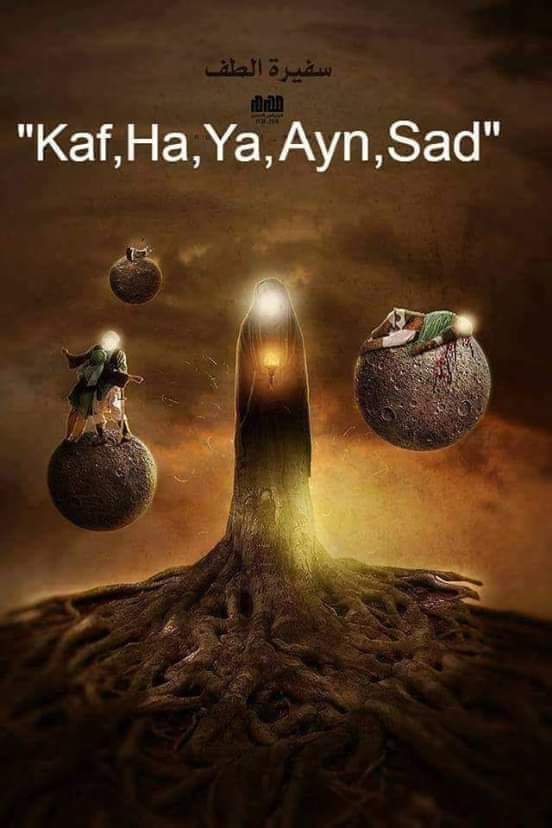
O. n the 11th of Mohurrum, 61 Hijri the plundered caravan of Ahle Bait started its journey to Kufa. This caravan of the captives was taken to from one city to another in the most dreadfully grievous and piteous condition. Such a distressed caravan had never before been seen.
The soldiers of Ibne Ziyad’s army carried the heads of the martyrs atop lances with arrogance and aplomb, boasting of their might. When they finally reached Kufa at night, the gates of Ibne Ziyad’s palace were closed.
This caravan comprised of two small sons of Hasan Bin Ali, who escaped slaughter due to their tender age. Their third brother, Hasan Musanna, had with innumerable injuries fallen down in the bloody field. He too was with the caravan. Besides them, amongst the children of Husain, was his ailing son, Zainul Abedin, who escaped the jaws of death by the determined effort of his aunt Zainab. In the offsprings of genealogy of Imam Husain he was the only son, who was saved from being martyred.
Along with Zainab, was her sister Umme Kulsoom and Sakina, daughters of Husain. There were other purdah
nasheen ladies of Bani Hashim who were imprisoned and made captives. They spent the night in the same open plain where the battle had raged in the day.
On the 11th of Moharrum when the despoiled caravan proceeded towards Kufa, they passed through the battle field strewn with the agonising sight of dead bodies of the martyrs: unwashed, uncovered and besmeared with blood and dust, while those killed amongst Yazeed’s army had already been buried with full Islamic rites. Noticing this heart breaking sight, Ali bin Hussain was moved to such distress that Zainab called out, “O beloved, reminder of the dear departed ones, how is it that you seem to be on the verge of collapse?” And Ali bin Hussain replied, “How can I endure looking at my father, uncles, and brothers, indeed all my relatives lying dead, bathed in their blood, their dead bodies unprovided with shrouds and graves and lying uncared for?” Zainab, while consoling her nephew at this critical moment could not help remonstrating to her grandfather, PBUH.
“O Mohammad! The angels of the sky pay salutation and blessings to you and this is Husain, lying on the ground covered with blood on the hot sand, parts of whose body have been torn into pieces, scattered in the dust and these are your daughters who have been rounded up as captives! O Mohammed! These are your children who have been martyred and are strewn on the ground. Warm winds are throwing sand and clouds of dust on them.” After listening to Zainab’s lamentation, all the ladies and friends of the caravan started crying uncontrollably. All the friends and even enemies started shedding tears.
The grieving caravan reached Kufa thus: Hussan’s head raised on a spearhead, his noble forehead bearing the mark of supplication having placed his pious head on the ground for
years and years in adoration of God and the pure ladies of his family riding on camels without saddles, their faces bereft of veils and heads deprived of chadars, facing the multitude of hostile strangers. Ahead, their captors gleefully carried the severed head of their loved ones.
At the head of caravan was the ailing Ali ibne Hussain, protector of the ladies and orphaned children followed by Zainab and her sister Kulsoom. Imagine the strength of their courage, spirit and firmness of their purpose as they braced themselves to face the ignomity of being captives amidst the overpowering surging crowd of jeering enemies.
Thus, while waiting, Zainab’s mind swept back to her glorious past. Once, not very long ago, Zainab and Umme Kulsoom’s father Hazrat Ali Ibne Ali Talib was the Caliph and his capital city was this very same Kufa. She and her sister were princesses of the palace. The noble ladies of Kufa used to consider it a great honour if they could get a chance to meet them. Today, they had come, once again, to the city of their dreams, this time as captives. Undoubtedly, for them, this was a calamitous loss of trust, respect and esteem traditionally enjoyed by them. She and other ladies of the family were shorn of their headgear, their hair disheveled unkempt, covered with dust and their hands tied unceremoniously with rough ropes. Night had fallen when they arrived in the city. The doors of the palace were closed. They were made to camp outside the city.
It is said that a person who was carrying the head of the revered leader took it to his house and kept it in a corner and told his wife that he had brought the entire wealth of the world for her. This is the head of Husain which is in your house.
She shivered and shouted, “Curse be on you. People bring gold and silver and you have brought the head of son of the daughter of Messenger of God’s? By God! I will never live with you in this house.” After saying that, she stormed out of the house weeping and wailing.
Ibne Ziyad was informed about the arrival of the prisoners next day. He ordered a huge function to be organized to which all and sundry were to be invited without distinction. The people of Kufa were blatantly misinformed. They were told some tribes had committed grievous aggression against Muslims. They had been thoroughly vanquished and this was the reason for the grand celebrations.
Festively dressed in anticipation of joyful celebrations, people merrily poured into the streets and market place. The triumphant sound of trumpets and cymbals resonated in the air as the captives arrived. To make a tamasha of the prisoners of Karbala, the markets were specially decorated and beautified. Huge crowds of spectators were invited to witness the lamentable exhibition of the enslaved Ahle Bait. When the plundered caravan reached the bazaar it was bursting with pitched noise. Nothing could be heard.
Even a heart of stone would have melted at the sight of the ravaged friendless caravan of Mohammed’s family drearily passing through Kufa. From some places lamentation and from others shrieks were soon heard. There were a few who looked on with down cast eyes. The women of Kufa had soon torn their clothes and were shrieking, lamenting, and wailing. All the spectators on beholding the prisoners were crying bitterly, inconsolably. The plundered caravan of the members of Prophet’s household was thus finding its gloomy way towards the palace. One woman upon recognizing Zainab and her retinue of unveiled women ran to her house and
brought them headcovers with which to cover their bodies. But they were not allowed to preserve their modesty and guards violently snatched them away.
Zainab could not endure to see those same kufians weeping who had not helped her father and her brother and had surrendered her cousin Muslim bin Aqeel to Ibne Ziyad. They had called her brother Husain by fraud and deceit. By the time he arrived, they had sold their conscience in the hands of Yazeed.
Of course, Zainab could not endure the sight of the Kufis. They were directly responsible for murdering Husain and his children. They were now offering condolences to her. She could not stop herself from weeping and crying, “We, the daughters of the Messenger of God PBUH have been made prisoners by you all.” She remembered how her father used to condemn the abysmal lack of loyalty of the people of Kufa and often used to be annoyed by their behavior towards them. Zainab in her mind’s eye cast a glance on the far off battle ground of Karbala where the bodies of her martyred relatives were strewn in the jungle unattended, whence there was not a drop of water and not a blade of grass. She again looked at the Kufians weeping copiously and she gestured them to become quiet. The Kufians in repentance and shame lowered their heads. Now, Zainab turned towards the large gathering and started addressing it.
“Praise be to Allah and blessing be upon my grandfather Mohammed the messenger of Allah PBUH and his purified and chosen progeny.”
There are significant points concerning her sermon. The first point is that the speaker is a captive woman who is surrounded by the victorious soldiers and high ranking a
a a officers. She speaks fearlessly, notwithstanding that the enemy’s anger may cause a cruelly terrible backlash upon the captives. Furthermore, since the people of kufa knew Imam Ali (a.s.) and the exalted position of his children, Syed a Zainab’s sermon compellingly reminded the people of Kufa of Hazrat Ali and reinforced her message in such a compelling manner, that people of Kufa could now finally understand the full import of such a tragedy.
“O people of Kufal Are you crying on our condition? May your weeping never stop. Your condition resembles that of the woman who twists her rope with great strength then, she herself breaks it. You also have broken your covenant and returned to infidelity. Yes, by God you must weep more and laugh less. You have adopted sin, shamelessness and deceit as your manners and customs. You swear falsely in which there is no trace of sincerity or truth. Now you can not wash this treason and remove it. Beware that your only possession is boasting arrogance, malice and grudge. Remember that you have embarked on a dastardly mission. You have prepared a despicable provision for the hereafter. Now you can not wash this blemish and remove it. How will you wash the blot of the murder of the son of the last Messenger of God PBUH? That son who was the towering pillar of spiritual light. The leader of the young man of Paradise. He represented the evident proof of guidance. He was the beacon of light to illumine for your paths. He was the haven of shelter, guidance and protection. Aah! How badly you have treated him. It is ascertained that you have committed a grievous crime. Are you surprised that blood has fallen from the sky? It proves the extreme annoyance of God to you,
“O Kufis, do you know whose blood you have shed? Whose son you have torn into pieces? Whose venerated 132 – The Lion Heart Lady of Karbala
lineage you have made veil less? You have committed such a terrible crime that it appears, soon sky and earth will get cleaved and mountains will be torn into pieces.”
“O people of Kufa, this is not disgrace in which you find us, it is because of shame and agony of your actions, the actions of infidels. The hearts of the distressed will never forgive.”
Remember that the torment of the hereafter will be dreadful. There will be no one to help you. Do not regard time and opportunity given to you by God as small and unimportant. And do not be satisfied with it because if Allah is not quick in acting, it does not apply to him that he is unable. For him, there is no fear that the time of vengeance is passing. He will strike when He will. He is keeping a watch on you.”
“God is enraged with you and his wrath and fury will descend on you soon. Your hearts are full of enmity and rancor. You are like vegetation which grows on filthy soil and is yet green, or like mortar applied on grave.’
A person who had himself heard the oration of Hazrat Zainab said, “God is my witness, I have never heard such an elegant, polished address in my life. It appeared as if she was speaking in the accent and pronunciation of Ali. By God she had not finished her lecture that men were lamenting, wailing weeping and caused to agitate. They were not in their senses, whatever was in their hands fell down.” After that Zainab turned her head away from them and she rejoined the other captives of the family of the Prophet.
When she reached the palace, Zainab was almost overpowered by extreme grief and felt suffocated. She knew each and every corner of the palace. During the period of Hazrat Ali’s Khilafat, this was his abode in the universe.
eyes filled with tears, but she resisted the feeling of humiliation. When she was passing through the sprawling ground, her eyes fell on fields in which twenty years ago her son Aun and Mohammed used to play. That was a time when her brothers Hasan and Husain commanded honour and respect in the hearts of people. She with utmost courage tried to control herself. When she reached the vast hall and saw Ubaidullah sitting in the place which her father used to occupy, she kept her right hand pressed against her heart so that it may not burst.
She was going again to the palace after having lost her father, brothers and other dear relatives. At that moment she wanted to relieve herself of the torment by crying but how could she ever in her life, go in the presence of the tyrant weeping and crying? Now Obaidullah Ibne Ziyad had directed Hussains survivors to attend his durbar. The members of Prophet’s family were, therefore, made to stand as prisoners.
Today as never before she needed the courage and strength to guard her honour, nobility of her family and retain the majesty of her lineage.
She could discern that she must equip herself with the eminence which was in keeping with her status as the Aqeela Bani Hashim and granddaughter of the Prophet PBUH. Her deportment should be appropriate and worthy of her exalted lineage when appearing before Obaidullah. (In these tragic grievous and trying times she must start her role) Although Zainab was wearing a torn dress, she entered with great dignity and grandeur and without paying attention to the insolent ruler, she sat down. Natural eminence and dignity could not be concealed. There was an aura around her. The attention of Ubaidullah was especially diverted towards this
dignified exalted lady. He inquired “Who are you”? She did not reply.
He repeated the same question not once twice but thrice, but Zainab considered him too wretched and base and did not deign to reply. Finally, one of the maid servants answered while he was still repeating his question again and again.
“She is Zainab, daughter of Fatima.”
Ibne Ziyad who was drunked with success and victory addressed her, “A thousand thanks are to the God who disgraced and dishonoured you and murdered your menfolk. It belied your traditions and the lie is obvious, i.e. it has shown the hollowness of the prophethood.” “
Zainab looked at him with a glance which was full of contempt and scorn and said.
“We have to thank the benevolent God who gave us excellence because of Hazrat Mohammed and made us chaste, clean and undefiled from every imaginable impurity and uncleanliness. Of course, the adulterer is put to shame and disgraced, the unchaste is exposed in his lie. We thank God that we are not one of them on the contrary they are others”.
“How do you find the treatment meted out to your family by God?”
“It was the will of God that they be martyred. They very valiantly went to their resting place. Very soon, God the great and supreme, will make you stand at the place for interrogation and our people will petition God for justice.”
These words humiliated the tyrant and he felt trifled. But in order to heal himself of the wounds which Zainab’s word had inflicted he hastily said,
“God has granted me salvation by the murder of your selfwilled and defiant brother and similarly willed relatives.”
Zainab controlled her tears and said, “Yes, you have certainly put my kith and kin to death and have driven out the family members of the Messenger of God out of their houses. You have cut the branches and roots of our family. If this has healed your heart, then you have healed yourself.”
The Son of Zaid said tauntingly, “This woman talks in rhythm prose like her father.”
“How can I have anything to do, with rhythmic speech? I am in no condition to think of rhyming. It was the voice of my heart which escaped my lips.” Zainab returned the reply.
Son of Ziyad deflected his gaze away from Hazrat Zainab, glanced at the other captives and locking eyes with Ali Ibne Husain and asked,
“What is your name?”
He replied, “I am Ali Ibne Husain.”
Son of Ziyad was surprised and asked, “Has Ali Ibne Husain not been murdered by God?”
Ali remained quiet.
Son of Ziyad again inquired, “Why this silence?”
Ali said, “I had a brother whose name was also Ali, you people murdered him.”
Ali remained quiet but son of Ziyad wanted a reply. Ali recited this ayat from the holy Quran
“Allah takes away the souls at the time of their death.” The Quran Para -24 Surat Zumr Ayat 42, Para 4 Surat Ale Imran)
Son of Ziyad shouted and said, “Woe to you! By God! You are also one of them who should be murdered.” He turned his attention towards his soldiers and asked, “Is this boy an adult? By God, I think this boy is an adult!” Then he gave the orders for his murder. Zainab encircled his neck with her hands and said.
“O son of Ziyad, you are crossing the limit. Even now you are not tired of sipping our blood. You have not spared any one amongest us. I will not leave him until you murder me along with him.” Zainab’s anguished restlessness forced the cruel tyrant to relent and ordered Ali Ibne Hussain to be spared.
a Son of Ziyad broodingly looked at them for a while and then told those who were present in his court. “Such strong feelings of affinity are surprising. By God, in my opinion she wants with all her heart to be murdered along with him.”
“Leave the boy so that he can remain with his relatives.” The sick young man who would triumph over death said with great composure. “Son of Ziyad! Do you not know that it is our way to get slain and that martyrdom is our distinction?” This composed reply echoed in the hall of audience of Obaidullah Bin Ziyad and was heard with awe by everybody. Obaidullah felt ashamed and dismissed the court.
Next day, the son of Ziyad ordered the sublime head of Husain be placed on the lance’s point and be circulated in the city of Kufa. Hands of Ali Ibne Husain were put in handcuff and a yoke was put in his neck. He followed the heads on foot.

Benefits and successful treatment with Quince Fruitin Tib-e-nabvi

Importance of Quince Fruit (Bahi, Safarjal) in Islam
Ahadith with references:
1:
Hazrat Talha رضي الله عنه says that he went to Nabi صلى الله عليه وسلم & Nabi صلى الله عليه وسلم had Quince (Safarjal) (السفرجل ) in his hand & said Take it, oh! Talha for it soothes the heart.
[Ibn Ma-jah: 3494: Book. 29; English vol. 4; Book. 29, Hadees. 3369]
2:
Hazrat Jabir Bin Abdullah رضي الله عنه says that Nabiصلى الله عليه وسلم said “Eat Safarjal (السفرجل ) (Quince) because it heals cardiac problems & removes heaviness from chest.
[Kanz al-Ummal: 28258]
3:
Hazrat Anas Bin Malik رضي الله عنه says that Nabiصلى الله عليه وسلم said “By eating Safarjal (السفرجل ) (Quince), heaviness in Qalb (heart) reduces.
[Kanz al-Ummal: 28261]
4:
Hazrat Auif Bin Malik رضي الله عنه says that Nabiصلى الله عليه وسلم said, “Eat Safarjal (السفرجل ) because it prevents Cardiac Problems & strengthens the heart.
[Kanz al-Ummal: 28260]
How To Eat Quince Fruit (Bahi, Safarjal) :
5:
Hazrat Anas Bin Malik رضي الله عنه says that Nabiصلى الله عليه وسلم said, to eat Quince (Safarjal) (السفرجل ) early morning on empty stomach.
[Kanz al-Ummal: 28259]
Quince Fruit (Bahi, Safarjal) in Pregnancy :
6:
Hazrat Abdullah Ibn Masood رضي الله عنه says Nabiصلى الله عليه وسلم said, that “Give your pregnant to eat Quince (Safarjal) (السفرجل ) (Quince) & Hazrat Auf Bin Malik رضي الله عنه adds, it prevents Cardiac Problems & makes the baby son beautiful.
[Al-Aasaar: 70 (Abdullah Ibn Masood) & Jamiul Ahadees: 15779 (Auf Bin Malik)]
Quince Fruit (Bahi, Safarjal) is praised by HOLY PROPHET MUHAMMAD MUSTAFA (S.A.W)
It is said that to eat Quince Fruit (Bahi, Safarjal) on an empty stomach is good for the soul cold and dry, Quince Fruit (Bahi, Safarjal) is astringent to the stomach and it checks menstrual flow.
The HOLY PROPHET (S.A.W) said eat Quince Fruit (Bahi, Safarjal) for it sweetens the heart.
ALLAH has sent no PROPHET as his messenger without feeding him Quince Fruit (Bahi, Safarjal) of PARADISE.
Quince Fruit (Bahi, Safarjal) is the plumber for your heart.
Quince Fruit (Bahi, Safarjal) pleases/strengthens the heart & opens the coagulation (if available), is meant for darkness, like clouds or a sand storm cover the clear sky which is then unseen, so Quince Fruit (Bahi, Safarjal) will do the same job for the heart, it will remove the blockage & the heart will be clear & healthy INSHA ALLAH.
The most important thing is that if one person eats Quince Fruit (Bahi, Safarjal) he gets energy of 40 persons.
Quince Fruit (Bahi, Safarjal)slow the aging process, it also helps to prevent cardiovascular diseases & strokes too.
Quince Fruit (Bahi, Safarjal) reduces high blood pressure & cure / remedy for respiratory diseases.
Quince Fruit (Bahi, Safarjal) soothe and strengthen the heart prevents and heals cardiac problems, removes heaviness in the chest.
HEALTH BENEFITS OF Quince Fruit (Bahi, Safarjal) IN MODERN MEDICAL SCIENCE:
Cancer Prevention:
Quince Bahi SafarjalIt seems as though cancer is one of the most frequently discussed diseases in recent history. Therefore, anything that can reduce the chances of developing cancer usually becomes quite popular. The high level of antioxidants, including phenol and phytonutrient compounds, found in quince is very effective in neutralizing or eliminating free radicals in the body. Free radicals are the dangerous byproducts of cellular metabolism than can cause healthy cells to mutate or die. The antioxidant compounds found in Quince Fruit have been directly connected to reduced chances of developing various types of cancer.
Weight Loss Aid:
Quince Bahi SafarjalOne of the best ways to keep your weight down and guarantee a speedy metabolism that will keep your system running optimally is to improve your digestion. Quince Fruit is high in dietary fiber, as are most fruits, but the significant levels mean that your gastrointestinal system works more efficiently and regularly. You will have more energy and keep your excess waste weight down by improving your digestive health.
Gastrointestinal Diseases:
Beyond the general functioning of the digestive tract that dietary fiber facilitates, it can also help to prevent certain gastrointestinal conditions like Inflammatory Bowel Disease (IBD), various cancers, or diverticulitis. The catechin and epicatechin contained in the fiber will bind with certain cancer-causing toxins that are found in the colon, thereby protecting the mucus membrane of that important organ system.
Skin Health:
Quince Bahi SafarjalThe high level of antioxidants and vitamins found in Quince Fruit are very beneficial for keeping your skin looking healthy and young. Antioxidants eliminate the damage that free radicals due to skin cells, thereby reducing the appearance of wrinkles, eliminating blemishes, and helping to defend your skin against the effects of UV radiation.
Blood Pressure Monitor:
Quince Bahi SafarjalPotassium is one of the most important minerals in the human body, because it is essential for maintaining blood pressure and facilitating effective fluid transfer in the body’s cells. In terms of blood pressure, potassium causes the blood vessels and arteries to relax, thereby reducing the strain on the cardiovascular system. This can decrease the chances of developing conditions like atherosclerosis, which can lower your risk for coronary heart diseases, heart attacks, and strokes.
Heart:
Quince Bahi Safarjal
The magic fruit Quince (Bahi Safarjal) cures many heart problems that can occur as one ages. Blood pressure is one of the main issues that heart patients have which is caused by a higher level of LDL and lower level of HDL in the blood. LDL are the lipids that are harmful as they clog the artery and cause obstruction. HDL however is good for you. Quince Fruit (Bahi Safarjal) shows its magic by lowering the unwanted LDL and increasing the HDL levels. It also relaxes the heart and releases the tightness from the chest making a person less susceptible to heart related issues.
Immunity:
Immunity is a main feature of a healthy body. Like every organization, city, and nation, human body is a collection of system that needs good immunity to function well. Quince contains vitamin C which helps in building immunity.
A good immune system helps to keep one away from infections and diseases.
Weight loss:
Fiber stimulates your weight loss mechanism, and Quince (Bahi Safarjal) is full of fiber. The fiber will keep you full for a longer time making you less hungry. It makes your intestines healthy and strong, and because it’s also low in fat as well calories, it makes for a great weight loss fruit.
Dry Cough:
It is said that Quince (Bahi Safarjal) seeds should not be thrown away as they are extremely useful. These seeds are known for their cure in dry cough and soreness of throat. Soak the seeds in boiling water and drink it like tea, sipping small amounts every so often.
Liver:
Quince Bahi SafarjalQuince (Bahi Safarjal) is a cooling fruit and it is well known that cooling foods are great for the liver. Other than that, quince helps the body in getting rid of free radicals that can often be poisonous and make the liver over work. Hence the removal of such radicals causes the liver to function well.
Quince Fruit (Bahi, Safarjal) OTHER USES:
Helpful in tuberculosis
Anorexia (lack of hunger)
Constipation
Cardiac problems
Cough cold
Helps in bleeding
Diabetes injury
Reduce inflammation
Acts as an antibiotic
Anti oxidant
Anti septic
Diuretic (increase urine output) tonic alkaline etc
Quince (Bahi Safarjal) is astringent to the stomach and it checks excessive menstrual flow.
Excellent remedy for cough and sore throat.
Quince (Bahi Safarjal) juice is known to have tonic, antiseptic, analeptic, astringent and diuretic properties.
It is believed that eating Quince (Bahi Safarjal) is good for maintaining the optimum cardiovascular health of an individual.
Quince (Bahi Safarjal) is good for those suffering from anemia, cardiovascular diseases, respiratory illnesses, diseases of the gastrointestinal tract and even asthma.
Quince (Bahi Safarjal) boasts of antioxidant properties, which helps the body fight against free radicals and reduces the risk of cancer and Cardiovascular diseases.
Researchers have revealed that Quince (Bahi Safarjal) might be rich in various anti-viral properties.
Being rich in dietary fiber, Quince (Bahi Safarjal) is good for those people who are trying to lose weight and maintain a healthy body.
Consumption of Quince (Bahi Safarjal) has been found to be beneficial for people suffering from gastric ulcer.
Regular consumption of Quince (Bahi Safarjal) not only aids in digestion, but also helps lower cholesterol.
The presence of potassium in Quince (Bahi Safarjal) helps the body keep high blood pressure in check.
The vitamin C present in Quince (Bahi Safarjal) helps reduce the risk of heart disease in individuals.
If consumed on a regular basis, Quince (Bahi Safarjal) proves beneficial for those afflicted with tuberculosis, hepatic insufficiency, diarrhea and dysentery.
Those suffering from liver diseases and eye diseases would surely benefit from regular Quince (Bahi Safarjal) consumption.
Being rich in antioxidants, Quince (Bahi Safarjal) is believed to be helpful in relieving stress and attaining calm.
Quince (Bahi Safarjal) is low in saturated fat, cholesterol and sodium, while having lots of vitamin C, dietary fiber and copper.
Quince. (Safarjal) (السفرجل)
Names:
1. In Hadis it is called as Safarjal (السفرجل)
2. In Urdu & Hindi it is called as Bahi, Bihi.
3. In English it is called as Quince.
4. In Persain it is called as Shul.
5. In Sanskrit it is called as Amritphala.
6. In Latin it is called as Cydonia oblonga.
Rasool Allah صلی اللہ علیہ وسلم’s guidance about it:
Arabic words written in below references are the words mentioned in
respected Hadees. You can confirm the references of Hadees at
sunna.com & Al-Maktab al-Shamilah (المكتبة الشاملة) also.
Benefits of Safarjal (Quince) on Qalb, breathe, Chest &Heart: –
1. Hazrat Talha رضي الله عنه says that he went to Nabi صلی اللہ علیہ
وسلم & Nabi صلی اللہ علیہ وسلم had Safarjal (السفرجل) in his hand &
said Take it, oh! Talha for it soothes the heart. : Reference Ibn
Ma-jah: 3494: Book No. 29; In English volume no. 4 Book 29, Hadees no
3369.
2. Hazrat Jabir Bin Abdullah رضي الله عنه says that Nabi صلی اللہ علیہ
وسلم said “Eat Safarjal (السفرجل) (Quince) because it heals cardiac
problems & removes heaviness from chest : Reference Kanz al-Ummal:
28258.
3. Hazrat Anas Bin Malik رضي الله عنه says that Nabi صلی اللہ علیہ
وسلم said “By eating Safarjal (السفرجل) (Quince), heaviness in Qalb
(heart) reduces . : Reference Kanz al-Ummal: 28261
4. Hazrat Auif Bin Malik رضي الله عنه says that Nabi صلی اللہ علیہ
وسلم said, “Eat Safarjal (السفرجل) because it prevents Cardiac
Problems & strengthens the heart. : Reference Kanz al-Ummal:
28260.
Best Time to eat Safarjal (Quince): –
5. Hazrat Anas Bin Malik رضي الله عنه says that Nabi صلی اللہ علیہ
وسلم said, to eat Safarjal (السفرجل) early morning on empty stomach .
: Reference Kanz al-Ummal: 28259.
Safarjal (Quince) in Pregnancy: –
6. Hazrat Abdullah Ibn Masood رضي الله عنه says Nabi صلی اللہ علیہ
وسلم said, that “Give your pregnant to eat Safarjal (السفرجل) (Quince)
& Hazrat Auf Bin Malik رضي الله عنه adds, it prevents Cardiac Problems
( يجم دالفوءا) & makes the baby son beautiful (ويحسن الولد ). :
Reference Al-Aasaar: 70 (Abdul Ibn Masood) & Jamia ul Ahadees: 15779
(Auf Bin Malik)
Part used is seeds, fruits.
Content of it: –
Carbohydrates, sugar, dietary fibers, fats, protein, water, zinc,
vitamin A, vitamin B2, B6, B12, follic acid, calcium, iron, vitamin C,
magnesium, sodium, phosphorus, malic acid, pectin & etc.
1. Helpful in tuberculosis, anorexia, constipation, cardiac problems,
coughs, cold.
2. Helps in bleeding, diabetes, injury, reduce inflammation.
3. Acts as an antibiotic, anti oxidant, anti septic, diuretic, tonic,
alkaline & etc.
4. Can be eaten by all, all season in mild quantity.
Scientific benefits of Safarjal (Quince)
Science & Hadees regarding Quince:-
Quince is said that to eat Quince on an empty stomach is good for the
soul. Cold and dry, Quince is astringent to the stomach, and it checks
excessive menstrual flow. A few seeds placed in water will, after a
few minutes, form mucilage which is an excellent remedy for cough and
sore throat, especially in the young. Quince is also excellent for
pregnant woman, gladdening their heart. The holy Prophet صلی اللہ علیہ
وسلم said, “Eat Quince, for it sweetens the heart. For ALLAH has sent
no Prophet as HIS messenger without feeding him on the Quince of
Paradise. For Quince increases the strength.
The best way to eat the quince is broiled or cooked in honey. The
seeds of Safarjal help against dryness in the throat, the windpipe and
several other ailments. Its oil stops sweating and strengthens the
stomach. Safarjal jam strengthens the stomach and the liver and
relieves the heart and the soul.
تجم الفؤاد means that Quince pleases / strengthens the heart, &
opens the coagulation (if available). والطخاء للقلب is meant for
darkness, like clouds or a sand storm cover the clear sky which is
then un-seen, so Quince will do the same job for the heart, it will
remove the blockage & the heart will be clear & healthy Insha’Allah.
Conclusion: –
1. Quince soothes & strengthens the heart, prevents & heals cardiac
problems, removes heaviness in chest, Qabl, Eat it on empty stomach
early morning.
2. There are 6 Hadees
 Aal-e-Qutub Aal-e-Syed Abdullah Shah Ghazi