
Biwi ke sath humbistari karne ki dua parhiye. Ek chhoti si aur asan biwi ke sath hambistari ki dua Hindi, English, Urdu mein. Hambistari ki chhoti si dua padhkar hambitari ka bhi azeem sawab kamaye. Insha ALLAH aulad nek saleh aulad paida hogi. ALLAH Ta’ala ki amaan mein rahegi.
﷽
Bismillah hirRahmaan nirRaheem
SallALLAHU ‘Alayhe WasallamBismillah ALLAHumma Jannib-nash-Shaytaana Wa Jannibish-Shaytaana Maa Razaqtanaa
Biwi Se Humbistari Ki Dua in Roman English/Urdu
Islam mein har ek kam ko karne ka sahi tariqa batlaya gaya hai. Aur isi tarah se biwi ke sath hambistari ke bhi kuch tariqe hai. Aur sath-sath dua bhi hai jo bahut chhoti hai. Magar iski sawab bada hai.
Agar is dua ko padhkar biwi ke sath hambistari ki jaye. To iska bhi sawab hasil hoga. Aur jo aulad hogi wo nek aur saleh paida hogi. ALLAH Ta’ala uski ta-umr hifazat karenge.
Hamein chahiye ke ham is dua ko padhne ka mamool bana lein.
Biwi Se Humbistari Ki Dua in Hindi English Urdu
Is dua ko intercourse se pehle ki dua bhi kaha jata hai. Yahan Pair Dard Ki Dua-Pairon Ke Dard ka Ilaj dekhiye!
Jab bhi biwi ke sath hambistari karein to hambistari ki is asan si aur chhoti si dua ko padh lijiye. Bas, sawab apko zarur mil jayega.
Biwi ke sath jima (hambistari) karein to bismillah padhiye. Bismillah padhna mustahab hai. Aur afzal to ye hai ke wuzu bana liya jaye.
Jima (Hambistari) Kab Nahi Karni Chahiye Aur Kuch Ghaur Karne Wali Batein?
Yu to biwi ke sath hambistari yani jima kabhi bhi kiya ja sakta hai. Lekin kuch auqat-e-waqt makrooh qaraar diye gaye hai. Makrooh ka se murad napasandeeda se hai.
-Ek shohar apni biwi se har qism ki lazzat hasil kar sakta hai. Aur ye uska sharaih haq bhi hai. Lekin iska matlab ye qatayi nahi hai ke wo jima ke dauran yani biwi ke sath hambistari ke dauran chahe jaise haram kare.
-Biwi ke sath piche ke raste se jima yani dakhil hona haram hai. Sath-sath haiz/maahwari ke dauran bhi jima karna haram hai.
-Agar biwi ki sharmgah ko shohar choomta hai. Aur iske dauran sharmgah se nikalne wali ratubat yani pani shohar halaq se neeche utaarna qatayi jayaz nahi hai.
- Jab suraj grahan ho ya phir chand grahan ho. Ese waqt mein biwi ke sath jima (hambistari) nahi karni chahiye.
- Dopahar ke zawal ke waqt. Sirf Jummerat ke roz zawal ke waqt makrooh nahi hai.
- Ghuroob e Aftaab yani Suraj doobte waqt.
- Fajr ke bad se lekar Suraj nikalne se pahle-pahle tak.
- Hambistari ke waqt Kaaba Sharif taraf rukh ya pusht karna.
- Jism par bila kapdo ke jima karna yani nange jism jima karna.
- Ehtilaam hone ke bad bila wuzu kiye jima yani hambistari karna.
- Biwi ke sath hambistari karte waqt biwi ki sharmgah ko dekhna makrooh hai.
Ikhtimam
Shaitan ka kam hai insan ko bargalana. Shaitan ko dafah karne ke liye is dua ko padhiye. Apni biwi ke sath hambistari karne mein bhi ek sawab hasil karna hai. Chhoti-chhoti baton par agar ham ghaur karein to. Insani hawas hamesha badti jati hai kabhi kam nahi hoti. Apni had Sunnat aur Shariat ke dayre mein muqarrar kar lijiye.
Aur ALLAH Jalla Jalaaluhoo ke hukm ke mutabiq zindagi guzariye aur ALLAH Subhanahu Wata ‘Ala ki beshqimti niamaton ka lutf halal tariqe se uthayiye.
Jab bhi biwi ke sath hambistari karein to is upar di hui chhoti si dua ko to parhna hi hai. Sath-sath biwi ke peshani ke balon par sidha hath rakh kar niche di hui dua ko bhi padhiye.
Insha ALLAH apke azeem sawab milega. Aur jo bhi aulad hogi chahe ladka ho ya phir ladki, nek aur saleh hogi aur shaitan uska kuch nahi bigad payega.
Biwi Se Humbistari Ki Dua in Hindi
बीवी से हमबिस्तरी की दुआ हिंदी में
जब भी बीवी के साथ हमबिस्तरी करें तो इस छोटी सी दुआ को बस एक मरतबा पढ़ लीजिए| एक मस्जिद तामीर करने का सवाब हासिल होगा इंशा अल्लाह|
इसका सवाब आपको ज़रूर मिलेगा, बीवी के साथ जिमा यानि हमबिस्तरी करने से पहले बिस्मिल्लाह शरीफ भी पढ़ लेना चाहिए| बिस्मिल्लाह पढ़ना मुसतहब है|
सबसे अफज़ल तो ये होगा के वुजू बना लिया जाये और फिर हमबिस्तरी की जाए|
बीवी के साथ हमबिस्तरी कब नहीं करनी चाहिए और कब करनी चाहिए? कुछ गौर करने वाली बातें|
यूँ तो बीवी के साथ हमबिस्तरी कभी भी की जा सकती है| लेकिन फिर भी कुछ औक़ात-ए-वक़्त करार दिए गए है जो बेहतर बतलाए गए है|
मकरूह से यहाँ मुराद न पसंदीदा से है|
अल्लाह त’आला ने शौहर को अपनी बीवी के साथ हर तरह की लज्ज़त हासिल करने का हक अता फ़रमाया है| और साथ-साथ उसे ये शरई हक भी दिया है|
लेकिन इसका मतलब ये क़तई नहीं है के वो हमबिस्तरी के दौरान कोई हराम कम करे| यहाँ कुछ कामों की सख़्त मनाही फरमाई गयी है|
-बीवी के साथ पीछे के रास्ते से दाख़िल होना हराम है|
-साथ-साथ हैज़/माहवारी के खून के बहाव के दौरान हमबिस्तरी करना भी हराम है|
-अगर शौहर बीवी की शर्मगाह को चूमता है| और इसके साथ शर्मगाह से निकलने वाली रतुबात यानि पानी शौहर के हलक़ से नीचे उतारना क़तई जायज़ नहीं है|
-जब सूरज गहन हो या फिर चाँद गहन हो| ऐसे वक़्त बीवी के साथ हमबिस्तरी या जिमा नहीं करना चाहिए|
-सिर्फ जुम्मेरात के ज़वाल के वक़्त मकरूह नहीं है| बल्कि दोपहर में ज़वाल के वक़्त हमबिस्तरी के परहेज़ करना चाहिए|
-गुरुब-ए-आफ़ताब यानि सूरज डूबने के वक़्त हमबिस्तरी से परहेज़ कीजिये|
-फज्र के बाद से लेकर सूरज निकलने तक|
-हमबिस्तरी के दौरान काबा शरीफ की तरफ रुख या पुश्त करना|
-जिस्म पर बिला कपड़ों के जिमा करना यानि नन्गे जिस्म हमबिस्तरी करना|
-एहतिलाम होने के बाद बिला वुजू किये हमबिस्तरी करना|
-बीवी के साथ हमबिस्तरी करते वक़्त शर्मगाह को देखना मकरूह है| इससे आँखों का नूर उड़ जाता है|
मकरूह में गुनाह नहीं है और परहेज़ करने की सलाह में फायदा है| कहीं न कहीं ये सब हमारे ही फायदे के लिए बतलाई गई है|
Dua Before Having Sexual Intercourse Between Husband and Wife in English
This dua is also known as dua for having sexual relations between husband and wife. A husband should recite this lovely and very short dua before having sexual intercourse with his wife. See Wuzu Se Pehle Aur Baad Ki Dua here.
Insha ALLAH he will definitely get a reward for this relation.
When Not To Have Intercourse in Islam? Precautions To Be Taken During Sexual Relations With Wife
In Islam, there are times when it is disliked (Makrooh) to have a sexual intercourse with wife. And there are few precautions that need to take.
-In Islam, a husband can enjoy with his wife in any way he wants. And this is his Shariah right too. Whereas, this doesn’t mean that a husband can act unlawfully towards his wife in every way including having sexual intercourse. See Dua to Get Beautiful Baby Child-Aulad e Narina here.
-A husband is not allowed to enter his wife from the back. Which is commonly known as anal sex. And, it is not permissible for a husband to have a sexual relationship with his wife during her menstruation periods while she is bleeding.
-If a husband is kissing the vagina of his wife. It is not permissible for him to do so. As there is a risk of swallowing impurities.
- It is disliked to have a sexual intercourse with the wife while solar eclipse or lunar eclipse.
- Zawal time during the daytime. Zawal time during the daytime of Thursday is not disliked.
- At the time of sunset. See Surah Yasin Ayat 36 For Marriage Problems here.
- After morning prayers before sun rise.
- Facing towards Kaaba Sharif during sexual intercourse with the wife.
- Getting entirely nude during the sexual intercourse with a wife.
- Having sexual intercourse with the wife without having an ablution after ejaculation. See Wazifa for Daughter Marriage-Beti Ki Shadi Ke Liye Dua here.
- Seeing the vagina during the sexual intercourse with the wife. This weakens the eyesight and erases the light (Noor) of the face.
Conclusion
Having physical relations with the wife is deed a reward. Always try to earn this. And stay away from the act of Satan. The human lust never ends. Define your limits according to Sunnah and Shariah and enjoy the life and gifts of ALLAH Subhanahu Wata ‘Ala.
Day: March 5, 2020

Hazrat Umar Bin Khattab Quotes And Sayings In Roman Urdu Hindi English

Khalifa E Doum(दौम – Second Khalifa), Amirul Mu’minin, Khalifatul Muslimeen, Imamul Aadileen, Gaizul Munafiqeen, Wazeer E Risalat Ma’ab, जां नीसारे रसूल, Adalat Ke Taajdar, Aasmani Sahabiyat Ke Darkhsha Maahtaab, Nizam E अद्ल Ke Aaftab E Aalamtaab, Hazrat E Sayyedna Sarkar Umar Farooq E Azam رضی اللہ عنہ
Hazrat Sayyadina Farooq-E-Aazam رضی الله عنہ Ke Kuch Zaruri Farmaan:
- Jo Khud Ko Aalim Kahe Wo Sabse Bada Jaahil Hai.
- Budhaape Se Pehle Jawaani Ko Aur Mout Se Pehle Budhaape Ko Ganeemat Jaano.
- Sab Se Buri Do Aawazein He.
1. Raag Ki Aawaaz (Gaano Ki Aawaaz).
2. Noha ( Yaani Maatam ) Ki Aawaaz
- Kam Bolna Danaai (Aqalmandi) He, Kam Khaana Sehat Aur Tandrusti He, Kam Sona Ibaadat He, Aur Logo Se Kam Milna Isme Aafiyat He.
- Kisi Musalmaan Ke Liye Munaasib Nahi Ke Rizq Ki Talaash Me Baith Jaaye Aur Dua Kare Ke “Ay Allah ! Mujh Ko Rozi De” Kyunki Tum Jante Ho Ki Aasmaan Se Chaandi Sona Nahi Barsta.
- Momin Allah Aur Rasool عزوجل و ﷺ Ke Dushmano Se Dosti Nahi Karte Agarche Woh Unke Maa Baap Hi Kyu Naa Ho.
- Maal Se Duniya Me Izzat Milti He Aur Nek Aamaal Se Aakhirat Me.
- Bura Chahne Waalo Ki Dosti Se Parhez Kare Kyunki Agar Wo Kabhi Bhalai Bhi Karna Chahega To Usse Buraai Hi Sarzad Hogi.
- Jo Aapko Aapke Aib ( Buraai ) Se Waaqif ( Aagaah ) Karaaye Wo Sachcha Dost He Aur Muh Par Tareef Karna Aisa Hi Jaise Dusre Ko Zibah Karna.
- Zyada Hasne Se Umar Kam Hoti He Aur Rua’b Aur Dabdaba Jaata Rehta He, Zyada Hasnaa Mout Se Ghaafil Hone Ki Nishaani Bhi He.
[Hawala Kitab – Shaan E Umar Ibne Khattab]
Hazrat Umar Bin Khattab Radiallahu Anhu Ki 6 Anmol Naseehatain:
- Jo Aadmi Zyada Hasta Hai Us Ka Roab Kam Ho Jata Hai.
- Jo Mazaak Zyada Karta Hai Log Usko Halka Aur Be-Haisiyat Samajhte Hai.
- Jo Baatein Zyada Karta Hai Uski Lagzishain Zyada Ho Jati Hai.
- Jis Ki Lagzishain Zyada Ho Jati Hai Uski Hayaa Kam Ho Jati Hai.
- Jis Ki Hayaa Kam Ho Jati Hai Uski Parhezgari Kam Ho Jati Hai.
- Jis Ki Parhezgari Kam Ho Jati Hai Uska Dil Murda Ho Jata Hai.
[Hayat E Sahaba, Jild-3, Safa-562]
Also Read: Best Imam Hazrat Ali Quotes
Hazrat Umar Bin Khattab Quotes And Sayings In Roman Urdu Hindi English:
- Hazrat Umar Radiallahu Taala Anhu Ne Farmaya Ki Aadmi Ki Sanaakhat Ke Teen(3) Mawake Hain,
(1) Safar Mein Uske Sath
(2) Ya Uske Pados Mein Rehta Ho
(3) Ya Uske Sath Len-Den Ya Karobar Ka Mu’amela Ho.
[Muslim]
- Hazrat Umar Radiallahu Anhu Se Riwayat Hai Ke Mene Suna, Rasoolallah Sallallahu Alaihi Wasallam Farmate Hain: “Agar Tum Allah Par Tawakkal Karo Jis Tarah Allah Par Tawakkal Karne Ka Haq Hai, To Woh Tumhe Is Tarah Rozi Dega Jis Tarah Wo Parindo Ko Rozi Deta Hai, Wo Subha Bhuke Nikalte Hai Aur Shaam Ko Pait Bhar Kar Waapas Laut-Te Hain”.
[Tirmizi]

Ilm Aur Rizq Mein Barkat ki Dua | Dua For Knowledge And Success
Ilm Aur Rizq Me Barkat Ki Dua | Ilm Mein Izafa Ki Dua | Rojgar Me Barkat Ki Dua | Dua For Knowledge And Success:
Mafhoom-e-Hadees:

Umme Salma (RaziAllahu anha) se Rivayat hai ki Rasool’Allah (SallAllahu Alaihi Wasallam) jab Subah ki Namaz me Salam Pherte to uske baad ye dua padhte:“Allahumma inni As-aluka ilman Naafi’an, Wa Rizqan Tayyiban, Wa-Amalan Mutaqabbalan”
Tarjuma: Aye Allah! Main Tujhse Nafa Dene Wale Ilm aur Pakiza Rizq aur Qubul hone wale Amal ka Sawal karta hun.
[Sunan ibn Maja, Jild 1, 925-Sahih]

18 Islamic Hadees In Hindi Roman Urdu English
बिदआत व मुनकिरात हिन्दी/Hinglish | हदीस शरीफ इन हिंदी – 18 Islamic Hadees In Hindi Roman Urdu English
- मर्द का कांधे तक बाल रखना सुन्नत से साबित है मगर इससे ज़्यादा बढ़ाना हराम है.
[अहकामे शरीयत, हिस्सा 1, सफह 127]- खुत्बे की अज़ान के बाद खुत्बे से पहले या बाद में उर्दू में उसका तर्जुमा बयान करना खिलाफ़े सुन्नत है.
[रद्दे बिदअत व मुनकिरात, सफह 298]- जिस निक़ाह में मीयाद तय हो मसलन कुछ दिन या महीने या साल के लिए निकाह होता हो ये हराम है.
[फतावा अफ्रीका, सफह 51]- एक हाथ से मुसाफा करना नसारा का तरीक़ा है मुसाफ दोनों हाथों से करना ही सुन्नत है.
[बुखारी, जिल्द 2, सफह 926]- ईमान और कुफ्र में कोई वास्ता नहीं मतलब ये कि या तो आदमी मुसलमान होगा या काफ़िर बीच की कोई राह नहीं.
[बहारे शरीयत, हिस्सा 1, सफह 54]- मर्द को 4.3 ग्राम से कम चांदी की एक अंगूठी एक नग की पहनना ही जायज़ है औरतों के लिए सोने चांदी में कोई क़ैद नहीं.
[फतावा रज़विया, जिल्द 9, सफह 56]- आलिम की तारीफ़ ये है कि अक़ायद का पूरा इल्म रखता हो और उस पर मुस्तक़िल हो और अपनी ज़रूरत के मसायल को किताबों से बग़ैर किसी की मदद के निकाल सके अगर ऐसा नहीं है तो वो आलिम नहीं और ऐसे को तक़रीर करना हराम है.
[अलमलफूज़, हिस्सा 1, सफह 7]- मर्द या औरत का नसबंदी करा लेना हराम और सख्त हराम है.
[फतावा मुस्तफवियह, सफह 530]- अगर मुसलमान किसी काफिर या मुनाफिक़ के मरने पर उसे मरहूम या स्वर्गवासी कहे या उसकी मग़फिरत की दुआ करे तो खुद काफिर है.
[बहारे शरीयत, हिस्सा 1, सफह 55]- जो ये अक़ीदा रखे कि हम काबे को सजदा करते हैं काफिर है कि सजदा सिर्फ खुद को है और काबा इमारत है ख़ुदा नहीं.
[फतावा मुस्तफविया, सफह 14]- ग़ैर मुस्लिमों के त्योहारों में शामिल होना हराम है और अगर माज़ अल्लाह उनकी कुफ्रिया बातों को पसंद करे या सिर्फ हल्का ही जाने जब तो काफ़िर है.
[इरफाने शरीयत, हिस्सा 1, सफह 27]- आखिर ज़माने में आदमी को अपना दीन संभालना ऐसा दुश्वार होगा जैसे हाथ में अंगारा लेना दुश्वार होता है.
[कंज़ुल उम्माल, जिल्द 11, सफह 142]- आखिर ज़माने में आदमी सुबह को मोमिन होगा और शाम होते होते काफिर हो जायेगा.
[तिर्मिज़ी, जिल्द 2, सफह 52]- फरिश्ते ना मर्द हैं और ना औरत वो एक नूरी मखलूक़ हैं मगर वो जो सूरत चाहें इख़्तियार कर सकते हैं पर औरत की सूरत नहीं इख़्तियार करते.
[तकमील उल ईमान, सफह 9]- जब हज़रत ईसा अलैहिस्सलाम चौथे आसमान पर जिंदा हैं और हज़रत इदरीस अलैहिस्सलाम जन्नत में जिस्म के साथ मौजूद हैं तो फिर मेराज शरीफ में मेरे आक़ा सल्लललाहो तआला अलैहि वसल्लम के जिस्मे अनवर के साथ सफर का इंकार क्यों.
[मदारे जून नबूवत, जिल्द 2, सफह 391]- उल्माये अहले सुन्नत ने अगर किसी को काफिर या बेदीन या गुमराह का फतवा दिया तो बेशक रब के नज़दीक भी वो वैसा ही ठहरेगा उस पर तौबा वाजिब है.
[फतावा मुस्तफविया, सफह 615]- कोई ग़ैर मुस्लिम मुसलमान होना चाहे तो उसे फौरन कल्मा पढ़ाया जाए कि जिसने भी उसे कल्मा पढ़ाने में ताख़ीर की तो खुद काफिर हो जायेगा.
[फतावा मुस्तफविया, सफह 22]- उसूले शरह 4 हैं क़ुरान हदीस इज्माअ और क़यास,जो इनमें से किसी एक का भी इंकार करे काफिर है.
[फतावा मुस्तफविया, सफह 55]Islamic Hadees Sharif In Roman Hindi Urdu English
-
Mard Ka Kaandhe Tak Baal Rakhna Sunnat Se Saabit Hai Magar Isse Zyada Badhana Haraam Hai.[Ahkam E Shariat, Hissa 1, Safa 127]
-
Khutbe Ki Azaan Ke Baad Khutbe Se Pahle Ya Baad Me Urdu Me Uska Tarjuma Bayaan Karna Khilaf E Sunnat Hai.[Radde Bidat Wa Munkirat, Safa 298]
-
Jis Nikah Me Meeyad Tai Ho Maslan Kuchh Din Ya Mahine Ya Saal Ke Liye Nikah Hota Ho Ye Haraam Hai.[Fatawa Africa, Safa 51]
-
Ek Haath Se Musafa Karna Nasaara Ka Tariqa Hai Musafa Dono Haathon Se Karna Hi Sunnat Hai.[Bukhari, Jild 2, Safa 926]
-
Imaan Aur Kufr Me Koi Waasta Nahin Matlab Ye Ki Ya To Aadmi Musalman Hoga Ya Kaafir Beech Ki Koi Raah Nahin.[Bahar E Shariat, Hissa 1, Safa 54]
-
Mard Ko 4.3 Gram Chandi Se Kam Ki Ek Anguthi Ek Nag Ki Pahenna Hi Jayaz Hai Aurton Ke Liye Sone Chaandi Me Koi Qaid Nahin.[Fatawa Razvia, Jild 9, Safa 56]
-
Aalim Ki Taarif Ye Hai Ki Aqayad Ka Poora Ilm Rakhta Ho Aur Uspar Mustaqil Ho Aur Apni Zarurat Ke Masayal Ko Kitabon Se Bagair Kisi Ki Madad Ke Nikaal Sake Agar Aisa Nahin Hai To Wo Aalim Nahin Aur Aise Ko Taqreer Karna Haraam Hai.[Almalfooz, Hissa 1, Safa 7]
-
Mard Ya Aurat Ka Nasbandi Kara Lena Haraam Aur Sakht Haraam Hai.[Fatawa Mustafviya, Safa 530]
-
Agar Musalman Kisi Kafir Ya Munafiq Ke Marne Par Use Marhoom Ya Swargwasi Kahe Ya Uski Magfirat Ki Dua Kare To Khud Kafir Hai.[Bahar E Shariat, Hissa 1, Safa 55]
-
Jo Ye Aqeeda Rakhe Ki Hum Kaabe Ko Sajda Karte Hain Kafir Hai Ki Sajda Sirf Khuda Ko Hai Aur Kaaba Imaarat Hai Khuda Nahin.[Fatawa Mustafviya, Safa 14]
-
Gair Muslimon Ke Tyoharon Me Shaamil Hona Haraam Hai Aur Agar Maaz Allah Unki Kufriya Baaton Ko Pasand Kare Ya Sirf Halka Hi Jaane Jab To Kaafir Hai.[Irfan e Shariat, Hissa 1, Safa 27]
-
Aakhir Zamane Me Aadmi Ko Apna Deen Sambhalna Aisa Dushwar Hoga Jaise Haath Me Angaara Lena Dushwar Hota Hai.[Kanzul Ummal, Jild 11,Safa 142]
-
Aakhir Zamane Me Aadmi Subah Ko Momin Hoga Aur Shaam Hote Hote Kafir Ho Jayega.[Tirmizi, Jild 2, Safa 52]
-
Farishte Na Mard Hain Aur Na Aurat Wo Ek Noori Makhlooq Hain Magar Wo Jo Surat Chahen Ikhtiyar Kar Sakte Hain Par Aurat Ki Surat Nahin Ikhtiyar Karte.[Takmeel Ul Iman, Safa 9]
-
Jab Hazrat Isa Alaihis Salam Chouthe(4th) Aasman Par Zinda Hain Aur Hazrat Idrees Alaihis Salam Jannat Me Jism Ke Saath Maujood Hain To Fir Meraj Sharif Me Mere Aaqa Sallallahu Taala Alaihi Wasallam Ke Jisme Anwar Ke Saath Safar Ka Inkar Kyun.[Madarij Un Nabuwat, Jild 2, Safa 391]
-
Ulmaye Ahle Sunnat Ne Agar Kisi Ko Kafir Ya Bedeen Ya Gumrah Ka Fatwa Diya To Beshak Rub Ke Nazdeek Bhi Wo Waisa Hi Thahrega Uspar Tauba Wajib Hai.[Fatawa Mustafviya, Safa 615]
-
Koi Gair Muslim Musalman Hona Chahe To Fauran Kalma Padhaya Jaaye Ki Jisne Bhi Use Kalma Padhane Me Taakheer Ki To Khud Kafir Ho Jayega.[Fatawa Mustafviya, Safa 22]
-
Usule Sharah 4 Hain Quran Hadis Ijma Aur Qayas, Jo Inme Se Kisi Ek Ka Bhi Inkar Kare Kaafir Hai.[Fatawa Mustafviya, Safa 55]

A Brief Case for Relevance
A Brief Case for Relevance
It is relatively easy to argue that the insights of Sufi ethicists about the heart and the stations to proximity with God have relevance today. Nothing that I know of has changed regarding the human being’s propensity to serve the lower self and be heedless. Any argument against the framework offered in Sufism would need to be theological or philosophical on a grander scale. One would need to think more broadly about one’s place in the universe and decide if, indeed, God created the human and did so with a purpose. Such arguments fall outside of this book’s purview, but, assuming that one takes a theistic position, surely Sufi writings about virtue have great worth. In fact, one might argue that if anything has changed, the field of reference for Sufi ethics has grown wider. While Sufis might have had a point that only the elite will strive for the highest reaches of ethical perfection, the circle of humanity has grown and with it perhaps the number of those willing to try. Moreover, while women were certainly engaged in the spiritual sciences, they will be increasingly more actively (or one might say “visibly”) engaged in the twenty-first century than they were in the tenth, writing about ethics and serving as leaders to a much higher degree than before. Today’s readers, reaching into premodern Sufi writings, can find examples confirming that anyone can join the ranks of the spiritual elite, whether male or female, rich or poor, privileged or underprivileged in virtually any way, so that such spiritual elitism can also be interpreted as an egalitarian elitism.
Philosophical virtue ethics, the way I have presented it, does have a harder case to make for relevance. The understanding of human traits held by these philosophers usually relied on the factuality of a humoral model. Modern medicine and humoral medicine simply do not agree, and it is the former that has the backing of scientific evidence. To make certain insights of Avicenna or Miskawayh meaningful, one would need to translate the language of humoral propensities to one of psychobiological propensities as understood today.
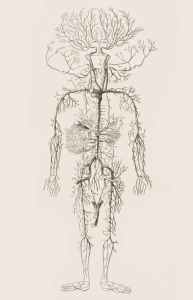 Noga Arikha makes such a case, arguing for the persisting significance of the humors, illustrating ways in which contemporary views of selfhood continue to rely on forces within the body. We have become more and not less interested in the influence of these forces on our emotions, now attributed to chemical changes in the brain.1 Moreover, the field of psychoneuroimmunology is a contemporary scientific acknowledgement that the mind affects the body, best illustrated in the case of the placebo effect.2 Arikha sees both humoral and contemporary medicine as telling us more than we realize about our most elemental yet self-defining concerns. Those concerns seem to change less over time than the means we forge to remedy them.3 By thinking of the soul as an incorporeal entity affected by its body, these philosophers left room for their version of virtue ethics to be adapted to what we know of the body and its relationship to ethical inclination. What they would have described as humoral traits influenced by one’s parents and place and time of birth we might describe as genetic traits also influenced by those factors. Moreover, to concentrate on desire (the appetitive faculty) and anger (the irascible faculty) as the two main sources of human moral corruption arguably works quite well when one considers the vices of our day, even if it does not fit as neatly into a biological scheme.
Premodern Islamic philosophical virtue ethics was premised on a psychology that envisioned the soul as coming to exist within the body, perceiving and knowing through the body, and cultivating virtues first by balancing the forces of the body. This was so even for those philosophers, such as Suhrawardī, who held a more Platonic view: Notwithstanding the soul’s ultimate origins elsewhere in an eternal all-soul, it still became an individual human soul from within the body. In this regard, philosophers presented a model of virtue that made sense of the body, its limitations, and the way those limitations might vary for each individual. Aware of these bodily limitations, aware even of the necessity of the brain and its segments for human cognition, they nevertheless argued that the human soul could achieve a mirroring of some transcendent reality.4 This marriage of embodiment and transcendence has great relevance for anyone interested in the relationship between body and self.
So much for the humors, but what about virtue, situatedness, and storytelling? This aspect of the way virtue ethics functioned, as part of a multidimensional and lived experience, might have the most to offer, especially when Islamic ethics becomes portrayed as monolithically rigid, scriptural, or motivated by political ends. At the time of this book’s composition, Islam is mentioned with frequent regularity—daily and even hourly—in the popular media, political debates, and almost every major form of public discourse. This in a country, the United States, in which the population of Muslims is around one percent of the nation’s total. Questions are being asked—questions about Muslim rituals and religious law that spring from assumptions about violence and misogyny. Fear across a wide segment of the population, here in the Americas and in Europe, has led to proposals and in some cases legislation that target Muslims and those very rituals and law that have come into question. The better-informed might dismiss the idea that Islam “is” this or that, and even the only moderately informed might know to separate the few from a much larger mass of people. Still, it sometimes seems that “The best lack all conviction, while the worst / Are full of passionate intensity.”5
There will be a tendency among some, therefore, to read Islamic virtue ethics as a more humanistic, perhaps even secular, alternative to the rigid legalism of traditional Islamic law, a law that cannot find its place in the modern world, a law that so refuses to change that it endangers the cultures of adherent and nonadherent alike. Indeed, many have made a case—and sometimes a very strong case—that Islamic philosophical virtue ethics was not only humanistic, but humanistic to the point that philosophers cared little about conforming to traditional interpretations of Islam. Scholars such as Lenn E. Goodman, George Makdisi, Marc Bergé, Mohammed Arkoun, and Joel Kraemer have contended that there was an Islamic humanism that prevailed among ethicists and philosophers such as Miskawayh and al-Tawḥīdī.6 The turn away from such humanism is sometimes described as a turn toward traditionalism or voluntarism, but it is almost always described as a turn away from revelation. It is also sometimes seen as a matter of regret, as expressed by Goodman, whose scholarship has been vital to this book:
Miskawayh has something precious that serious and committed Muslims and non-Muslims too would like to regain. Yet one cannot go back in time. If there is something to be recaptured in the humanism of Miskawayh, it will have to be recast once again, perhaps even re-created. Courtliness has had its say and its day, and if a new humanism is to emerge it will require new voices.7
Alexander Key has argued effectively, however, that “humanism” is an amorphous term. Humanism was not associated with the “secular” until religion and reason were seen to be at odds. The Italian humanists were, as Key indicates, focused on the human and on interiority, but they were also religiously committed. It was only later—after there appeared an Enlightenment notion of rationality that rejected religion’s truth claims—that humanism became secular.8 Efforts to fit premodern Islamic thought into a framework parallel to European intellectual history by locating secular “humanism” in the thought of these philosophers ultimately fail because they use “a post-Enlightenment European term for a pre-Enlightenment European movement to describe a tenth-century Islamic reality.”9 As we have seen, the world of scientific inquiry and the world of the spirit were inseparable for our authors. One might even say that “science” and “religion” were inseparable for them. Advocates of “Islamic humanism” certainly have a point in that philosophers often saw a more limited role for revealed truths. Nevertheless, while that might have been true for many philosophers, that was not necessarily always the case for philosophy. Pious and scripturally committed Sufi masters would also make use of philosophers’ teachings, especially their ethical teachings, just as some philosophers such as al-Tawḥīdī saw value in Sufism. A network of knowledge (and in our case ethical inquiry) was alive in a way that we can only try to know. It is a glimpse into that network that this book has aimed to offer.
Virtue ethics as studied here does not always fit well into certain alien molds, as much as we might hope—molds that are humanistic, secular, Western, or democratic. Rather, writings on virtue seem to have fit and to continue to fit into a much larger body of knowledge, a framework from which thinkers drew their own “Islamic” ethics. Evidence for this can be found in the stories that Muslims told, and those they still tell, which make use of various branches of moral learning more freely than what is observed in writings specific to one science or another. Those who advocated scripture or voluntarism cannot be excluded from this. Sciences such as philosophy and Sufism could be considered tools in almost any scholar’s toolbox, even if the overall epistemological architecture of that science contravened that scholar’s claims. Such was the case with Ghazālī’s use of philosophy. While he has been presented as appropriating humanistic virtue ethics, Ghazālī, like his later Shiʿi interpreter Fayd. Kāshānī (d. 1679), reminded Muslim readers that religious law and virtue ethics (both philosophical and Sufi virtue ethics) have a common goal, the achievement of ultimate happiness through the perfection of the soul.
For advocates of traditional Islamic law, Ghazālī’s intellectual mission typifies a recurring corrective in Islam, perhaps because of Islam’s rich and hermeneutically complex legal tradition: to caution readers not to lose sight of Islam’s larger ethical aims by becoming absorbed with ritual technicalities or divinely commanded limits. Such reminders can be found today to an even greater extent than in the past. New philosophical positions have meant that Muslim thinkers interested in “God’s law” often return to it with insights gleaned from the Western ethical traditions. Networks of ethical reasoning that exist today, moreover, mean that almost no moral decision can truly be made in a scriptural void, just as they could not in the past. The salience of certain single-minded interpretations of Islam often brings us to forget that on a day-to-day basis, a Muslim (like any moral agent) draws on multiple pools of knowledge and culture to make any decision or develop any habit.
Lastly there is the most glaring case for relevance, one perhaps so self-evident that it needs no discussion. Virtue ethics in both Islamic philosophy and Sufism responds to the profoundest of human desires, a desire that lies at the core of what it means to be human, the desire for self-perfection. The question of how to achieve self-perfection is so imperative that any calculated answer, and especially any collection of traditions that aims at this answer, merits deliberation. When Ghazālī tells us that “the soul of a human being is as a mirror,” he expects his audience to find “the Real” therein.10 Yet even if one looks for and finds something else, it seems a wasted opportunity not to look.
NOTES
1 Arikha, Passions and Tempers, p. 274.
2 Ibid., p. 291.
3 Ibid., pp. 286, 305.
4 Ikhwān al-Ṣafāʾ, Rasāʾil Ikhwān al-Ṣafāʾ, p. 2:397; Adamson and Pormann, “More than Heat and Light,” p. 502.
5 Yeats, “The Second Coming,” in The Collected Poems of W. B. Yeats, p. 187.
6 See Alshaar, Ethics in Islam, pp. 4–9 for a summary of their positions, as well as Alshaar’s counterarguments, which build on those of Key as mentioned below.
7 Goodman, Islamic Humanism, p. 121.
8 Key, “The Applicability of the Term ‘Humanism’ to Abū Ḥayyān al-Tawḥīdī,” p. 84.
9 Ibid., p. 85.
10 Ghazālī, Kīmīyā-yi Saʿādat, p. 1:47.
 Aal-e-Qutub Aal-e-Syed Abdullah Shah Ghazi