Ṣalāh and the Child’s Pose: The Meeting of Devotion and Stillness

■ Ṣalāh and the Child’s Pose:
The Meeting of Devotion and Stillness

Among the many ways the human body expresses reverence and surrender, few are
as profound as the act of prostration. In Islam, Ṣalāh the daily ritual prayer is both a physical and spiritual alignment with the Divine.

In yoga, the Child’s Pose (Balāsana) serves as a posture of rest, humility, and inward renewal. Though their origins differ, both gestures spring from the same universal language of the soul: the body’s yearning to bow before peace.

1. The Body in Reverence

In Ṣalāh, the believer’s entire body participates in dhikr the remembrance of God.

From standing in qiyām (upright posture) to bowing in rukū‘, and then descending into sujūd (prostration), each movement symbolizes a stage of surrender.

The forehead touching the earth is not only an act of worship but a declaration that

“Nothing remains of me before You.”

The physical act becomes the mirror of the inner state.

Similarly, the Child’s Pose in yoga invites the body into a gentle surrender.

By folding forward and resting the forehead upon the ground, one experiences a return to innocence a symbolic return to the “child state” of pure trust and dependency.

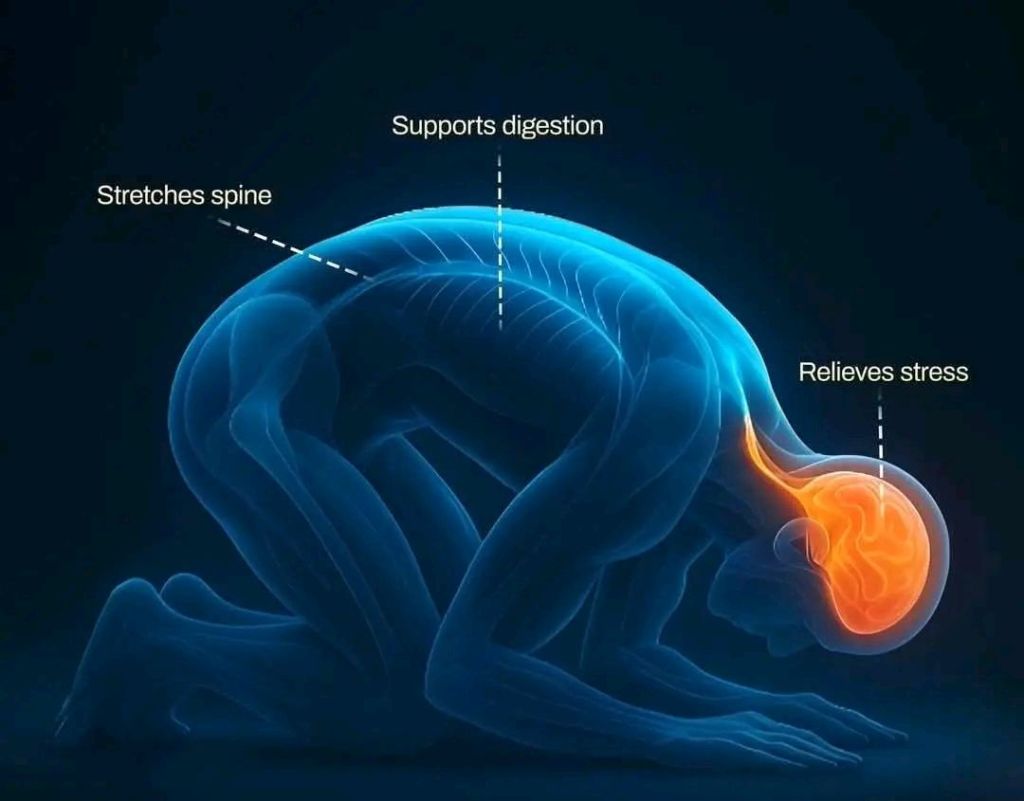
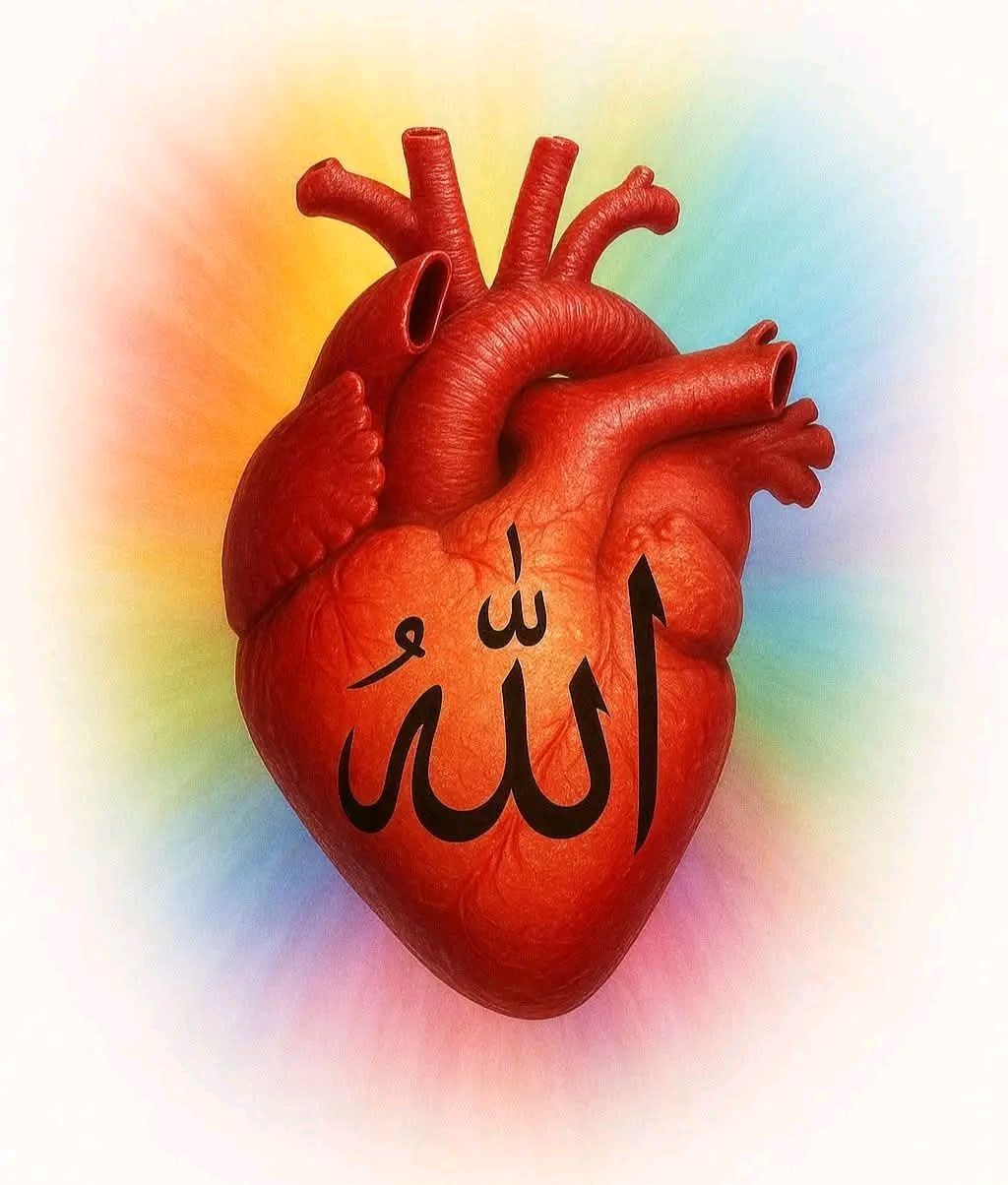
The spine curves inward, the Heart softens toward the earth, and the mind quiets. Just as sujūd reminds the Muslim of divine nearness

“And prostrate and draw near” (Qur’an 96:19)

The Child’s Pose reminds the practitioner that stillness itself is a form of closeness to the essence of life.

2. Stillness as Medicine

Both Ṣalāh and Balasana hold a profound healing potential. In the stillness of prayer,
the believer’s nervous system slows, the
breath deepens, and the Heart synchronizes with a rhythm of divine remembrance.

It is said that the Prophet ﷺ would find
rest in prayer, declaring,

“The coolness of my eyes is in Ṣalāh.”

The Child’s Pose mirrors this same tranquility  Resting in this posture for a few minutes daily releases tension from the back and hips the very regions where humans store emotional stress.

The compression of the abdomen gently massages the inner organs, fostering digestion and inner calm. In both practices, stillness becomes a form of movement, and silence a form of speech.

3. The Meeting of Body and Spirit

When seen through the eye of the Heart, both Ṣalāh and Balāsana dissolve the boundary between physical posture and spiritual meaning. In prostration, the Muslim’s body becomes a vessel for Divine remembrance a harmony of breath, motion, and intention.

In Child’s Pose, the yogi’s body becomes a sanctuary of release, a place where the burdens of the day melt into the ground.

The similarity is not coincidental but speaks
to a universal wisdom written in the body:
that humility, breath, and stillness are doorways to transcendence.

When the forehead touches the earth
whether in sujūd or in Balāsana the illusion of separateness softens, and one feels the pulse of life shared by all creation.

4. The Return to the Heart

At its essence, both acts are reminders to return to the Heart. Ṣalāh is not merely a ritual; it is a rhythmic purification of the Heart’s mirror, polishing it through repetition and sincerity.

Likewise, the Child’s Pose invites a return to
the child-like Heart free of pretension, soft,
and open to divine presence.

In a world driven by speed and noise, these moments of stillness are sacred. They whisper the same truth in different tongues: that peace is not found in external attainment but in the inward bow the turning of the soul toward its Source.

Whether through the divine choreography of Ṣalāh or the restorative posture of Balasana, the body becomes an instrument of spiritual remembrance. Each bow, each breath, carries
a silent message:

“I am not separate. I am in surrender.”

In this shared gesture of humility forehead to earth, Heart open the Seeker discovers that prayer and yoga, though born in different lands, lead to the same horizon of peace: the stillness where the soul meets the Divine.

अल्लाह के रसूल ﷺ के कराबत यानी ‘अहले बैत’ का मकाम

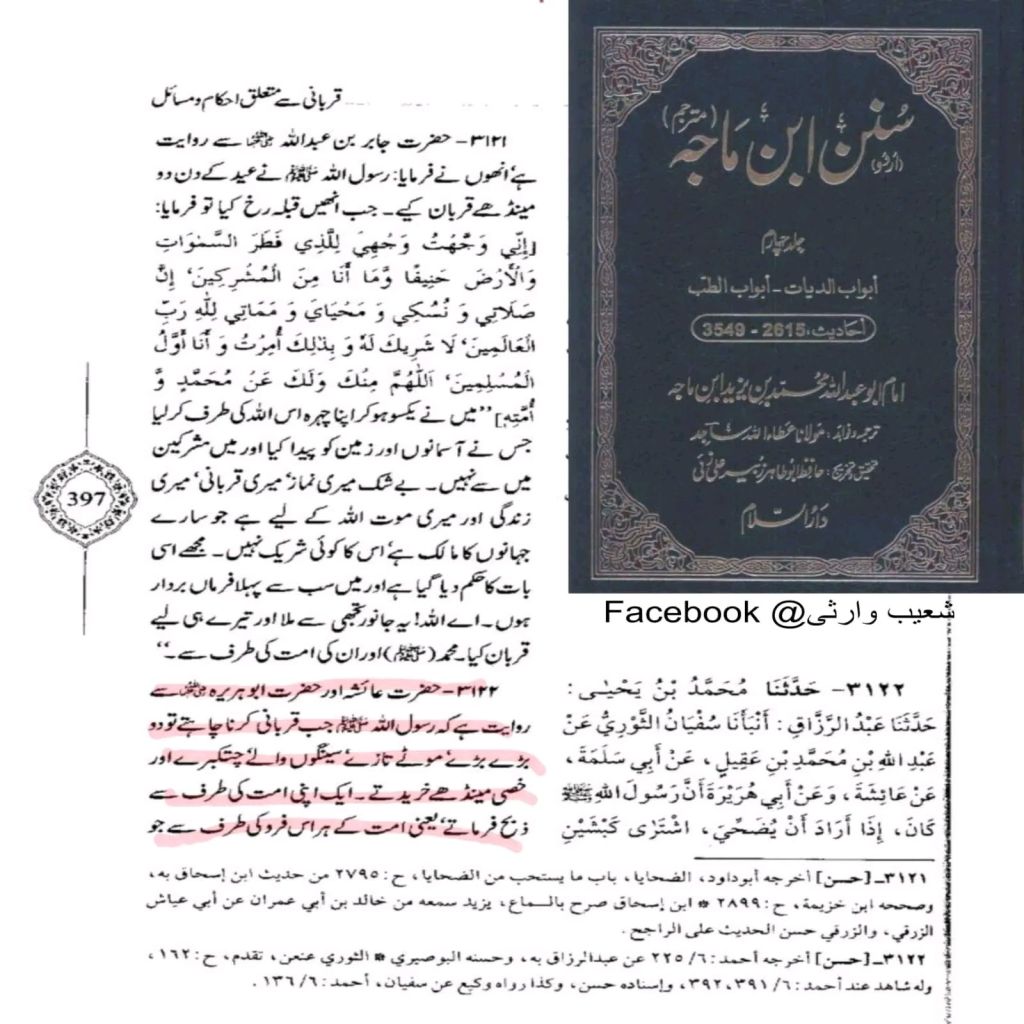
रसूलल्लाह ﷺ ने कुरबानी केसे की..👇

यह हदीस शरीफ (इब्ने माजाह: 3122) हमें एक बहुत ही गहरी समझ देती है कि अल्लाह के रसूल ﷺ के कराबत लोग यानी ‘अहले बैत’ का मकाम कितना बुलंद और अलग है।

हदीस का सारांश 👇
हज़रत आयशा सिद्दीका (रज़ि.) और हज़रत अबू हुरैरा (रज़ि.) रिवायत करते हैं कि जब अल्लाह के रसूल ﷺ कुर्बानी करना चाहते, तो दो बड़े और सींगों वाले मेंढे खरीदते:
👉🏻 पहला मेंढा: अपनी पूरी उम्मत की तरफ से ज़ब्ह करते (उन उम्मतीयों के लिए जो अल्लाह की तौहीद और नबी की रिसालत की गवाही देते हैं)।
👉🏻 दूसरा मेंढा: खास अपने लिए और अपनी ‘आल’ (अहले बैत) के लिए ज़ब्ह करते।

काबिले-गौर नुक्ता: अहले बैत और सहाबा के दरमियान फर्क 👇

यह हदीस साबित करती है कि रसूल्लाह ﷺ ने ‘उम्मत’ और ‘आल’ (खानदान) को दो अलग श्रेणियों (Categories) में रखा है:

👉🏻 उम्मत और सहाबा: तमाम सहाबा इकराम उम्मत का हिस्सा हैं। जब नबी ﷺ ने पहली कुर्बानी उम्मत के लिए की, तो उसमें तमाम सहाबा शामिल हो गए।

👉🏻 अहले बैत (आल-ए-मुहम्मद): दूसरी कुर्बानी खास सिर्फ अपने और अपने खानदान के लिए करके नबी ﷺ ने दुनिया को बताया कि ‘आल’ का मकाम उम्मत से अलग और विशिष्ट है।

यह फर्क क्यों अहम है?
👉🏻 खून का रिश्ता: सहाबा ने नबी ﷺ से दीन सीखा और आपका साथ दिया, लेकिन अहले बैत नबी ﷺ के खून का हिस्सा हैं।
👉🏻 खास दुआ: हम हर नमाज़ में ‘दरूदे इब्राहीमी’ में नबी ﷺ के साथ सिर्फ आपकी ‘आल’ (खानदान) पर सलामती भेजते हैं, जो उनकी सरवोपरिता (Superiority) को साबित करता है।
👉🏻 तहारत और पाकीज़गी: कुरान पाक (सूरा अहज़ाब, आयत 33) से साबित है कि अल्लाह पाक ने खास तौर पर अहले बैत को पाक व साफ किया और तमाम नापाकियों को उनसे दूर कर दिया। यह विशेषता सिर्फ अहले बैत की है, यह दर्जा किसी दूसरे को हासिल नहीं।

निष्कर्ष (Result)
सहाबा इकराम हमारे लिए चमकते सितारे हैं, लेकिन अहले बैत नबी ﷺ के बाग के वो फूल हैं जिन्हें नबी ﷺ ने हमेशा अपने साथ रखा और उम्मत से अलग दर्जा अता किया। यह हदीस इस बात की स्पष्ट दलील है।

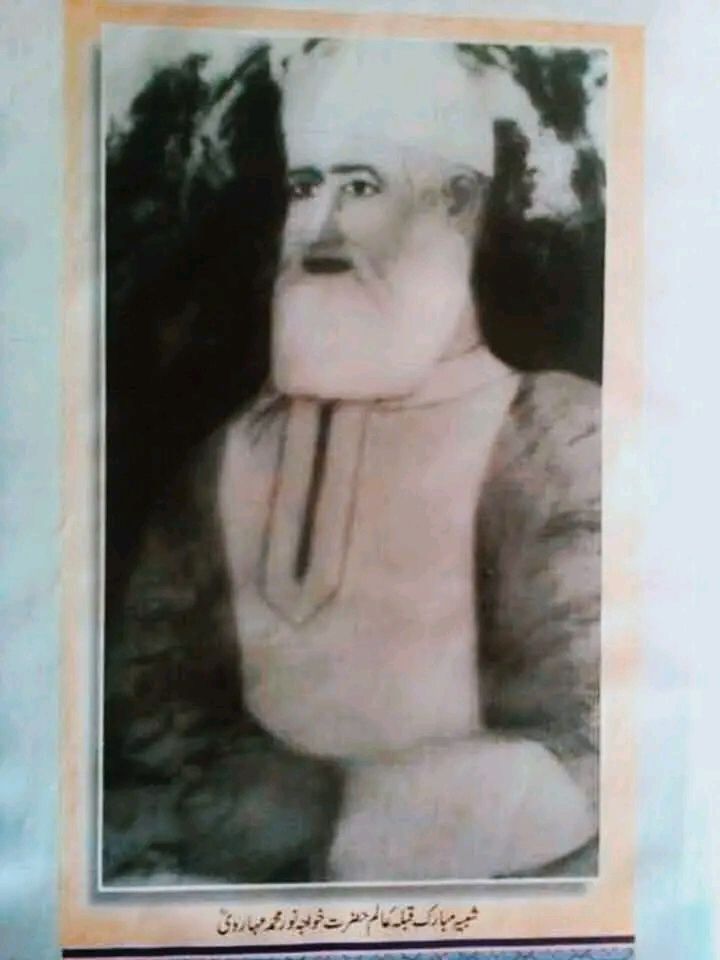
Khwaja Noor Muhammad Maharvi R.A

حضرت قبلہ عالم Khwaja Noor Muhammad  Maharvi
(Blessings and Mercy of Allah be upon him)
🌹❤️
A Blessed Biography of the Great Saint of the Illustrious Chishti Order
Special publication on the occasion of the annual Urs Mubarak
3rd Dhul Hijjah
Written by: Khalifah Madani Tunsvi
Name and Lineage
His blessed name was Bahal, and his title “Noor Muhammad” was granted by his spiritual master (Murshid).
His respected father’s name was Hindal, his noble mother was Aqil Bibi, his grandfather was Tatar, and his maternal grandfather was Mian Kamal Chhutta.
He belonged to the Kharal branch of the Panwar tribe, and his lineage is said to trace back to نوشیروان, the King of Persia.
Blessed Birth
حضرت قبلہ عالم Khwaja Noor Muhammad Maharvi was born on the 14th of رمضان المبارک 1142 AH, corresponding to 2 April 1730 CE, in the region of Chotala, Punjab.
Chotala is situated three kos east of Mahar Sharif. His ancestors lived there before his respected father migrated and settled in Mahar Sharif.
The book Manaqib al-Mahbubeen states that on the day of his birth, his grandmother saw in a dream that a magnificent lamp had been lit in her home, whose light illuminated the entire earth from the heavens to the ground. She also noticed a beautiful fragrance spreading everywhere. Upon awakening, she became fearful, thinking it might be some supernatural occurrence.
Around those days, Shaykh Ahmad arrived in the village. She narrated her dream to him. He comforted her and said:
“Do not fear. A lamp will be born in your home whose light shall illuminate the whole world.”
A Saint from Birth
It is narrated from Shah Muhammad Suleiman Tunsvi that once Shaykh Ahmad passed by a well where village women had gathered to fetch water. Among them was Aqil Bibi, the mother of Khwaja Noor Muhammad Maharvi.
As soon as Shaykh Ahmad saw her, he stared intensely and repeatedly said:
“Bahal, Bahal, Bahal…”
The women asked why he was staring at her and repeating those words. He replied:
“I am wondering in which Jat family the Ghawth of the age will be born.”
Another narration mentions that when Aqil Bibi was a child playing with her friends, Shaykh Ahmad arrived and respectfully stood whenever she stood and sat whenever she sat. When questioned, he said:
“I am honoring the jewel that is within her womb.”
Brothers
حضرت قبلہ عالم Khwaja Noor Muhammad Maharvi had four brothers:
Malik Sultan
Malik Burhan
Noor Muhammad
Malik Abdul
Education and Spiritual Allegiance (Bay‘ah)
He began his education with the memorization of the Holy Qur’an under Hafiz Muhammad Masood in Mahar Sharif.
For further studies, he traveled to:
Biblana (Pakpattan Sharif)
Dera Ghazi Khan
Lahore
Delhi
In Delhi, he studied under:
Hafiz Barkhurdar
Maulana Muhammad Fakhruddin Dehlvi
After recognizing the spiritual greatness of Maulana Fakhruddin Dehlvi, he pledged allegiance (Bay‘ah) to him.
He would spend six months in Delhi serving his Murshid and six months in Mahar Sharif. Later, upon the command of his Shaykh, he married.
Maulana Fakhruddin once told him:
“Allah will bless you with sons, and the first one belongs to us.”
Thus, his eldest son, Khwaja Noor-us-Samad Shahid Maharvi, was taken to Delhi and initiated by the Shaykh.
Khilafah and Establishment in Mahar Sharif
According to Khazinat al-Asfiya, one day Maulana Fakhruddin Dehlvi said to him:
“O Noor Muhammad, creation will benefit through you.”
Out of humility, he replied:
“I am merely a humble Punjabi. How can I deserve such a lofty rank?”
A few days later, the Shaykh granted him Khilafah (spiritual succession) and instructed him to settle in Mahar Sharif.
Although Maulana Fakhruddin had countless disciples and deputies, his special attention remained focused on Khwaja Noor Muhammad Maharvi. After granting him succession, seekers who came to Delhi were often directed toward him.
The Shaykh would recite:
“The Punjabi has taken away the butter,
while the world remains content with buttermilk.”
Advice of the Spiritual Master
When sending him back to Mahar Sharif, Maulana Fakhruddin gave him five important counsels:
If news of my death reaches you, do not come to Delhi.
Do not wear Indian clothing in that region.
If anyone harms you, forgive them and treat them kindly.
Honor the scholars, Sayyids, and descendants of Baba Farid Ganjshakar.
A ruler shall attach himself to you; protect him and his land.
حضرت قبلہ عالم رحمتہ اللہ علیہ accepted these counsels wholeheartedly.
Spiritual Guidance and Influence
After settling in Mahar Sharif, he devoted himself to spiritual reform and guidance. People from every walk of life flocked to him:
Scholars
Nobles
Rulers
Dervishes
The poor
All benefited equally from his company.
Shah Muhammad Suleiman Tunsvi used to say:
“There was a strange effect in the blessed hand of my Murshid. Whoever held his hand, their life changed forever.”
Statement of Maulana Fakhruddin Dehlvi
It is recorded in Seerat-e-Mahmood that someone once mentioned a sect in Lucknow claiming they could show people the vision of the Prophet ﷺ for money.
Maulana Fakhruddin smiled and said:
“We have a friend in Punjab named Noor Muhammad. He neither takes nor gives money — yet he shows God. Rather, he unites people with Him.”
Spiritual Orders (Silsilahs)
حضرت قبلہ عالم Khwaja Noor Muhammad Maharvi was authorized in numerous spiritual orders including:
Chishtiyyah
Suhrawardiyyah
Qadiriyyah
Naqshbandiyyah
Firdawsiyyah
Kubrawiyyah
Shattariyyah
Hamdaniyyah
and others.
Children
He had three sons and two daughters.
His sons were:
Khwaja Noor-us-Samad Shahid Maharvi
Khwaja Noor Ahmad Maharvi
Khwaja Noor Hasan Mangherovi Maharvi
Khulafa (Deputies)
He had countless spiritual deputies. Among the most famous were:
Shah Muhammad Suleiman Tunsvi
Qazi Muhammad Aqil
Noor Muhammad Narowala
Hafiz Muhammad Jamalullah Multani
and many others.
Selected Sayings
On Respecting Shrines
When asked about lighting lamps and holding gatherings at saints’ shrines, he replied:
“Do not stop anyone from coming to the khanqah. Since ancient times, people of all kinds have visited the shrines of saints.”
On Sincerity
Regarding a statement attributed to Abdul Qadir Gilani about disciples feeding their Shaykhs, he explained:
“Food offered merely from worldly desire is spiritually harmful. True service must be sincere for Allah.”
On Humility
He narrated that once Jalaluddin Rumi respectfully kissed the feet of a Jewish man after the latter showed him respect. When asked why, Rumi replied:
“He may be Jewish, but I am a Muhammadan man. I do not wish for a Jew to surpass us in humility.”
On Night Worship
He said:
“People stay awake all night operating wells for a few grains of harvest, yet few stay awake for the worship of Allah.”
Passing Away (Wisal)
حضرت قبلہ عالم Khwaja Noor Muhammad Maharvi passed away on 3 Dhul Hijjah 1205 AH, corresponding to 3 August 1791 CE, approximately one hour before sunrise.
After him, his eldest son Khwaja Noor-us-Samad Shahid Maharvi became the Sajjadah Nashin.
He lived for 63 blessed years.
Shrine and Annual Urs
His blessed shrine is located in Mahar Sharif Shrine near Chishtian Sharif, District Bahawalnagar, Pakistan.
Every year, his Urs Mubarak is celebrated with devotion and reverence on: 1st, 2nd, and 3rd Dhul Hijjah.
Sources
This biography has been compiled from:
Makhzan-e-Chisht
Manaqib al-Mahbubeen
Gulshan-e-Abrar
Khazinat al-Asfiya
Noor-e-Chisht
Taj al-‘Arifeen
and other traditional works.
Written by:
Khalifah Muhammad Hadi
Khalifah Madani Tunsvi

Al Fatiha