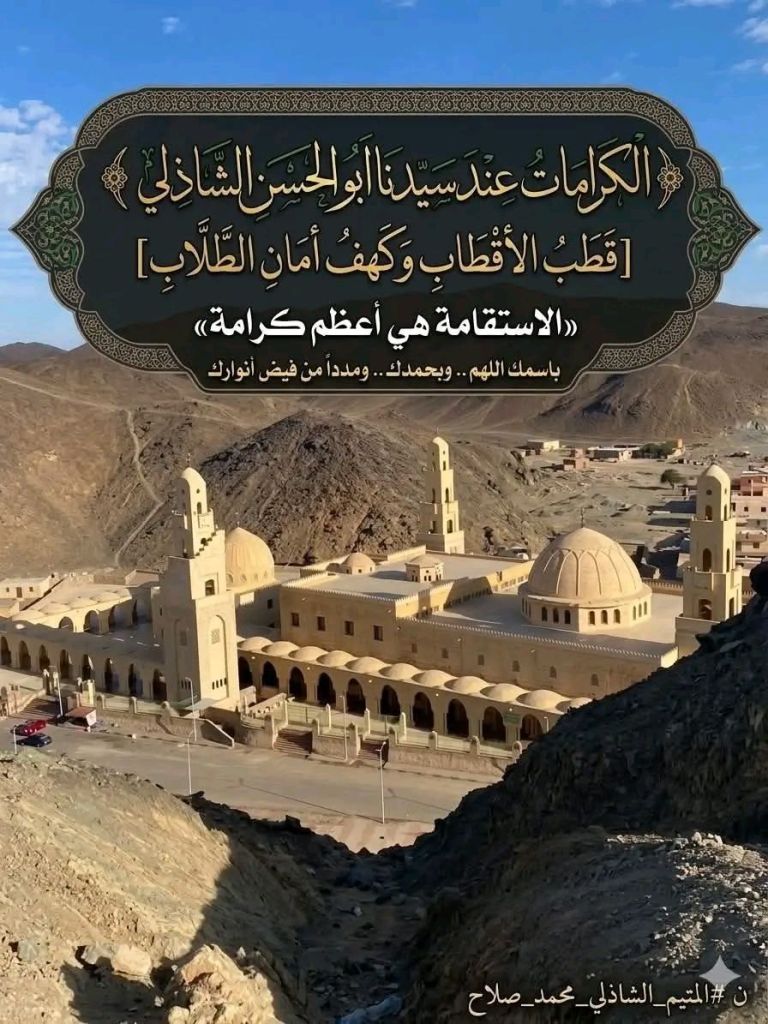
The Miracles (Karāmāt) of Sayyidī Abū al-Hasan al-Shadhilī, may Almighty Allāh

■ The Miracles (Karāmāt) of Sayyidī Abū al-Hasan al-Shadhilī, may Almighty Allāh

The Pole of Poles and Refuge of Seekers

“Steadfastness is the greatest miracle.”

In Your Name, O Allāh, with Your praise, and through the outpouring of Your radiant lights.

Know that miracles, in the eyes of the Shaykh may Allāh be pleased with him, were never sought for their own sake. Rather, he used to say:

“Steadfastness upon the Path is the greatest miracle.”

Yet despite this, Allāh manifested through his hands many extraordinary events that astonished minds, serving as signs of the truthfulness of his sainthood and the firmness of his spiritual station. Among the most famous transmitted accounts are the following:

▪︎ Part One: The Miracle at the Sea of ʿAydhāb and the Story of Hizb al-Bahr

This is among his most famous miracles.

It is related that while traveling through the
Sea of ʿAydhāb, there was with them a distinguished man whose ship became stranded when the wind ceased completely. Days passed without movement, and distress overtook the travelers.

The Shaykh, may Allāh be pleased with him slept and saw the Prophet ﷺ in a dream, who taught him the litany known as Hizb al-Bahr (“The Litany of the Sea”).

The Shaykh then ordered his companions:

“Raise the sails.” They replied:

“There is no wind.” He answered:

“Do as you are commanded.”

As soon as the litany was recited, the wind arrived, Allāh opened the way for them within
a single hour, and they were saved through the blessing of that remembrance.

▪︎ Part Two: His Knowledge of the Thoughts of Disciples and Hidden Matters

Shaykh Abū al-Abbās al-Mursī, may Almighty Allāh sanctify his secret, said:

“By Allāh, I never sat with our master Abū al-Ḥasan for even a single day except that he informed me of what was within myself before I spoke of it.”

It is also narrated that a man once came to him inwardly objecting to the Shaykh’s wearing of elegant clothing.

Before the man even spoke, the Shaykh turned to him and said:

“My son, these garments of mine say:
‘I am independent of you, so give me nothing.’
While your garments say:

‘I am in need of you, so give me something.’”

The man was left speechless and repented at the Shaykh’s hands.

▪︎ Part Three: His Command Over Beasts and Protection from Enemies

It is mentioned that during one of the Shaykh’s journeys in the mountains, a great lion appeared before them. His companions became terrified.

The Shaykh stepped forward, took the lion by its ear, shook it gently, and said:

“O Maymūn, we are servants of Allāh.”

The beast immediately submitted and retreated, overcome by the awe Allāh had clothed His saint with.

It is also narrated that a group once intended harm against the Shaykh and his companions on the road to the Hijaz. The Shaykh invoked Allah through Hizb al-Nasr (“The Litany of Victory”), whereupon their enemies’ sight was veiled.

They passed directly beside the Shaykh and his companions yet could not see them, as though they were concealed within the protected veil of Allāh.

▪︎ Part Four: The Multiplication of Food and Drink Through Blessing

It is reported that a group once stayed with the Shaykh during a time of hardship, while they possessed only a small amount of provisions.

The Shaykh ordered that his hand be placed upon the food. Everyone ate until satisfied,
and much still remained afterward.

The Shaykh said:

“This is spiritual aid from the Presence of the Most Generous. The blessing lies not in the food itself, but in obedience.”

▪︎ Part Five: His Miracle at the Time of His Passing in Humaythirah

Among his greatest miracles was his foreknowledge of the place and time of his death. While traveling for pilgrimage, he told
his companions:

“At Humaythirah shall the meeting take place.”

In another narration:

“At Humaythirah you shall witness.”

He instructed them to carry axes and digging tools. When they arrived at that desolate place, where there was no water, the companions became severely thirsty.

It is narrated that the Shaykh took an arrow from his quiver and cast it into a bitter salty well. Immediately, sweet pure water burst forth from it, the famous Well of Humaythirah, known to this day.

That same night, the Shaykh,  may Allāh sanctify his secret. passed away while in prayer, and it is also said while remembering Allah.

Thus ends what we intended to mention of his miracles. These accounts are but a drop from an endless ocean. The station of the Shaykh is greater than words can encompass, but these are signs for people of understanding.

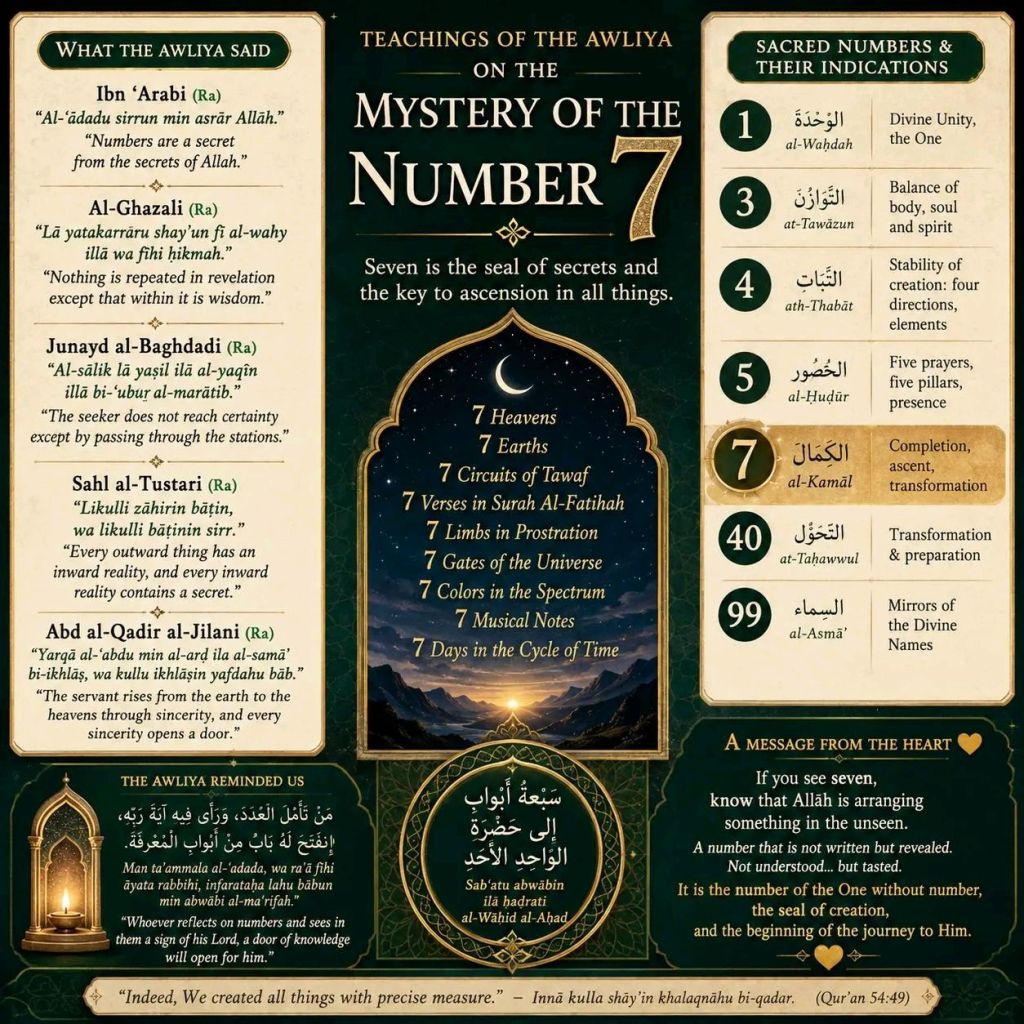
The Mystery of the Number Seven.

■ The Mystery of the Number Seven.

The Awliyā of Allāh did not look at numbers as mere symbols of mathematics or instruments of calculation.

To them, numbers were signs woven into the fabric of creation, carrying subtle indications
of Divine wisdom, balance, and order.

They believed that existence itself was built upon measure, proportion, and harmony, as Allāh says in the Qur’ān:

“Innā kulla shay’in khalaqnāhu bi-qadar.”
“Indeed, We created all things with precise measure.”

For this reason, the people of spiritual insight reflected deeply upon recurring numbers in revelation and in the universe, seeing them not as coincidences but as mirrors through which Divine realities become visible to the contemplative heart.

Shaykh Mūhyiddīn Ibn Arābi, may Almighty Allāh sanctify his secret, spoke of numbers as one of the languages through which existence reveals its hidden structure.

He taught that multiplicity flows outward from Divine Unity, and that every number ultimately points back toward the One. According to him, the many are nothing but manifestations of the One Reality appearing in different forms.

Thus, numbers were not independent powers, but signs revealing the order placed by Allāh within creation.

Likewise, Imām Abu Hamid al-Ghazali, may Almighty Allāh sanctify his secret, emphasized that repetition within revelation is never without wisdom.

When certain numbers recur throughout the Qur’an and sacred rites, this repetition carries meanings intended for reflection.

The Awliyā understood that numbers in revelation are not empty quantities, but symbols connected to spiritual realities,
states of the soul, and stages of ascent
toward Allāh.

Among the great figures associated with sacred numerical symbolism was Shaykh Ahmad al-Buni, may Almighty Allāh sanctify his secret who explored the relationship between letters, numbers, and Divine patterns.

He described numbers as lights and letters
as vessels carrying hidden meanings. In the understanding of many Sufis, letters form the body of sacred speech, while numbers represent the hidden rhythm and balance flowing beneath those forms.

The Awliyā often reflected upon the symbolic meanings of certain sacred numbers found repeatedly in revelation and creation.

The number one symbolized Divine Unity, at-Tawḥīd, the absolute Oneness of Allāh before whom all multiplicity disappears.

Three represented balance and harmony,
while four symbolized stability and completion within the created world, reflected in the four directions and four elements.

Five became associated with spiritual presence through the five daily prayers and the five pillars of Islam. Among all sacred numbers, seven occupied a particularly profound place
in Sufi contemplation.

▪︎ The Qur’ān speaks repeatedly of seven heavens and seven earths:

“Sab‘a samāwāt.”
“Seven heavens.”

Tawaf around the Kaaba is performed seven times, as is the walking between Safa and Marwa. There are seven verses in Surah al-Fatihāh and seven limbs placed upon the earth during prostration.

To the people of spiritual unveiling, this repetition indicated that seven symbolizes completion, ascent, and the full cycle of spiritual transformation.

The Sufis also reflected deeply upon the number forty, seeing it as the number of transformation and preparation.

Prophets and saints often passed through
forty days or forty years of spiritual discipline before receiving openings and responsibilities.

Through this, the Awliyā understood that spiritual growth unfolds according to Divine timing and measured progression.

▪︎ Shaykh Sahl al-Tustarī, may Almighty Allāh sanctify his secret, said:

“Likulli ẓāhirin bāṭin, wa likulli bāṭinin sirr.”

“Every outward thing has an inward reality,
and every inward reality contains a secret.”

And the people of gnosis used to say:

“Al-jāhil yarā al-a‘dād kamiyyāt.
Wa al-ḥakīm yarāhā ishārāt.
Wa al-‘āshiq lā yarā illā al-Wāḥid yatajallā fīhā.”

“The ignorant see numbers as quantities.
The wise see them as symbols.
The lover sees only the One manifested through them all.”

Yet despite their reflections on sacred numbers, the Awliyā never treated numerology as fortune-telling or magical control over destiny.

Their contemplation was not superstition but meditation upon Divine order. They sought to witness how Allāh placed harmony, rhythm,
and balance throughout creation.

Numbers, in their eyes, were signs pointing beyond themselves toward the wisdom of the Creator. Thus, sacred numerology in the tradition of Tasawwuf was ultimately a science of contemplation.

It was a way of reading the universe with the eye of the heart, seeing in every measure and pattern a reminder of Divine wisdom.

For the true Sufi does not worship numbers,
but worships the One who created measure, balance, and harmony in all things:

“Allāhu khāliqu kulli shay’.”
“Allāh is the Creator of all things.”

अर-रहीकुल मख़्तूम  पार्ट 76


ग़ज़वा मुरीसीअ के बाद की फ़ौजी मुहिमें

1. सरीया दयारे बनी कल्ब, इलाक़ा दूमतुल जन्दल

यह सरीया हज़रत अब्दुर्रहमान बिन औफ़ के नेतृत्व में शाबान सन् 06 हि० में भेजा गया । अल्लाह के रसूल सल्लल्लाहु अलैहि व सल्लम ने उन्हें अपने सामने बिठा कर खुद अपने मुबारक हाथों से पगड़ी बांधी और लड़ाई में सबसे अच्छी शक्ल अपनाने की वसीयत फ़रमाई और फ़रमाया कि अगर वे लोग तुम्हारी इताअत कर लें तो तुम उनके बादशाह की लड़की से शादी कर लेना ।

हज़रत अब्दुर्रहमान बिन औफ़ रज़ि० ने वहां पहुंचकर तीन दिन लगातार इस्लाम की दावत दी, आखिरकार क़ौम ने इस्लाम कुबूल कर लिया। फिर हज़रत अब्दुर्रहमान बिन औफ़ रज़ि० ने तमाज़र बिन्त असबग़ से शादी की। यही हज़रत अब्दुर्रहमान के सुपुत्र अबू सलमा की मां हैं। इनके बाप अपनी क़ौम के सरदार और बादशाह थे ।

2. सरीया दयार बनी साद, इलाक़ा फ़िदक

यह सरीया शाबान सन् 06 हि० में हज़रत अली रज़ि० के नेतृत्व में भेजा गया। इसकी वजह यह हुई कि अल्लाह के रसूल सल्लल्लाहु अलैहि व सल्लम को मालूम हुआ कि बनू साद का एक गिरोह यहूदियों को कुमक पहुंचाना चाहता है, इसलिए आपने हज़रत अली रज़ि० को दो सौ आदमी देकर रवाना फ़रमाया । ये लोग रात में सफ़र करते और दिन में छिपे रहते थे, आखिर एक जासूस पकड़ में आया और उसने इक़रार किया कि उन लोगों ने ख़ैबर की खजूर के बदले में सहायता जुटाने की बात कही है । जासूस ने यह भी बतलाया कि बनू साद ने किस जगह जत्थबन्दी की है।

चुनांचे हज़रत अली रजि० ने उन पर छापा मारकर पांच सौ ऊंट और दो हज़ार बकरियों पर क़ब्ज़ा कर लिया, अलबत्ता बनू साद अपनी औरतों-बच्चों समेत भाग निकले। उनका सरदार वब्र बिन अलीम था।

3. सरीया वादिल कुरा

यह सरीया हज़रत अबूबक्र सिद्दीक़ रज़ि० या हज़रत ज़ैद बिन हारिसा रज़ि० के नेतृत्व में रमज़ान सन् 06 हि० में रवाना किया गया। इसकी वजह यह थी कि

बनू फ़ज़ारा की एक शाखा ने धोखे से अल्लाह के रसूल सल्लल्लाहु अलैहि व सल्लम को क़त्ल करने का प्रोग्राम बनाया था। इसलिए आपने अबूबक्र सिद्दीक़ रज़ि० को रवाना किया।

हज़रत सलमा बिन अकवअ रज़ि० का बयान है कि इस सरीए में मैं भी आपके साथ था। जब हम सुबह की नमाज़ पढ़ चुके तो आपके हुक्म से हम लोगों ने छापा मारा और चश्मे पर धावा बोल दिया। अबूबक्र सिद्दीक़ रज़ि० ने कुछ लोगों को क़त्ल किया। मैंने गिरोह को देखा जिसमें औरतें और बच्चे भी थे। मुझे डर हुआ कि कहीं ये लोग मुझसे पहले पहाड़ पर न पहुंच जाएं, इसलिए मैंने उनको जा लिया और उनके और पहाड़ के बीच एक तीर चलाया। तीर देखकर ये लोग ठहर गए। इनमें उम्मे क़रफ़ा नामी एक औरत थी, जिसके ऊपर एक पुरानी पोस्तीन थी। उसके साथ उसकी बेटी भी थी जो अरब की सबसे खूबसूरत औरतों में से थी। मैं इन सबको हांकता हुआ अबूबक्र सिद्दीक़ रज़ि० के पास ले आया। उन्होंने वह लड़की मुझे दी, लेकिन मैंने उसका कपड़ा न खोला। बाद में अल्लाह के रसूल सल्लल्लाहु अलैहि व सल्लम ने यह लड़की हज़रत सलमा बिन अकबअ से मांगकर मक्का भेज दी और उसके बदले में वहां के कई मुसलमान क़ैदियों को रिहा करा लिया। 1

उम्मे क़रफ़ा एक शैतान औरत थी, नबी सल्ल० के क़त्ल के उपाय किया करती थी और इस मक़सद के लिए उसने अपने खानदान के तीस सवार भी तैयार किए थे, इसलिए उसे ठीक बदला मिल गया और उसके तीसों सवार मारे गए।

4. सरीया उरनी यीन

यह सरीया सन् 06 हि० में हज़रत कर्ज़ बिन जाबिर फ़हरी रज़ि०२ के नेतृत्व में भोजा गया। इसकी वजह यह हुई कि अक्ल और उरैना के कुछ लोगों ने मदीना आकर इस्लाम का इज़हार किया और मदीना ही में ठहर गए, लेकिन उनके लिए मदीना की जलवायु सही न साबित हुई और नबी सल्लल्लाहु अलैहि व सल्लम ने उन्हें कुछ ऊंटों के साथ चरागाह भेज दिया और हुक्म दिया कि ऊंटों का दूध और पेशाब पिएं ।

जब ये लोग तन्दुरुस्त हो गए तो अल्लाह के रसूल सल्ल० के चरवाहे को

देखिए सहीह मुस्लिम 2/89। कहा जाता है कि यह सरीया सन् 07 में पेश आया । यह वही हज़रत कर्ज़ बिन जाबिर फहरी हैं जिन्होंने बद्र की लड़ाई से पहले ग़ज़वा सफ़वान में मदीना के जानवरों पर छापा मारा था। बाद में उन्होंने इस्लाम कुबूल किया और मक्का विजय के मौक़े पर शहादत के दर्जे को पहुंचे।

क़त्ल कर दिया। ऊंटों को हांक ले गए और इलाम ज़ाहिर करने के बाद अब फिर कुन अपना लिया, इसलिए अल्लाह के रसूल सल्ल० ने उनकी खोज के लिए कर्ज़ बिन जाहिर फहरी को बीस सहावा के साथ रवाना किया और यह दुआ फ़रमाई कि ऐ अल्लाह ! उनींयों पर रास्ता अंधा कर दे और कंगन से भी ज्यादा तंग बना दे ।

अल्लाह ने दुआ कुबूल फरमाई। उन पर रास्ता अंधा कर दिया, चुनांचे वे पकड़ लिए गए और उन्होंने मुसलमान चरवाहों के साथ जो कुछ किया था, उसके बदले के तौर पर उनके हाथ-पांव काट दिए गए, आंखें दाग़ दी गईं और उन्हें हर्रा के एक कोने में छोड़ दिया गया, जहां वे ज़मीन कुरेदते-कुरेदते अपने नतीजे को पहुंच गए। इनकी घटना सहीह बुखारी वग़ैरह में हज़रत अनस रजि० से भी रिवायत की गई है। 2

सीरत लिखने वाले इसके बाद एक और सरीया का ज़िक्र करते हैं, जिसे हज़रत अम्र बिन उमैया ज़मरी रजि० ने हज़रत सलमा बिन अबी सलमा के साथ शव्वाल सन् 06 हि० में सफल बनाया था। इसका विस्तृत विवेचन यह है कि हज़रत अम्र बिन उमैया ज़मरी अबू सुफ़ियान को क़त्ल करने के लिए मक्का तशरीफ़ ले गए थे, क्योंकि अबू सुफ़ियान ने नबी सल्लल्लाहु अलैहि व सल्लम को क़त्ल करने के लिए एक देहाती बहू को मदीना भेजा था। अलबत्ता दोनों फ़रीक़ों में से कोई भी अपनी मुहिम में सफल न हो सका।

सीरत लिखने वाले यह भी कहते हैं कि इसी सफ़र में हज़रत अम्र बिन उमैया ज़ुमरी ने तीन काफ़िरों को क़त्ल किया और हज़रत खुबैब की लाश उठाई थी, हालांकि हज़रत खुबैब की शहादत की घटना रजीअ के कुछ दिन या कुछ महीने बाद की है और रजीअ की घटना सफ़र 04 हि० की है, इसलिए मैं यह समझने में असमर्थ हूं कि क्या ये दोनों दो-दो अलग-अलग सफ़र की घटनाएं हैं? मगर सीरत लिखने वाले गड़बड़ा गए और उन्होंने दोनों का एक ही सफ़र में उल्लेख कर दिया या यह कि सच में दोनों घटनाएं एक ही सफ़र में घटीं, लेकिन सीरत लिखने वालों से सन् तै करने में ग़लती हो गई और उन्होंने उसे 04 हिजरी के बजाए सन् 06 हि० में लिख दिया। हूं

हज़रत अल्लामा मंसूरपुरी रह० ने भी इस घटना को जंगी मुहिम या सरीया मानने से इंकार कर दिया है। (वल्लाहु आलम)

ज़ादुल मआद 2/122, (कुछ इज़ाफ़ों के साथ) सहीह बुखारी 2/602 वग़ैर

ये हैं वे सरीए और ग़ज़वे जो ग़ज़वा अहज़ाब और बनी कुरैज़ा के बाद पेश आए। इनमें से किसी भी सरीए या ग़ज़वे में कोई तेज़ लड़ाई नहीं हुई, सिर्फ़ कुछ-कुछ में मामूली क़िस्म की झड़पें हुईं, इसलिए इन मुहिमों को लड़ाई के बाजए झड़पें, फ़ौजी गश्त और ‘सिखाने वाली’ गतिविधियां कहा जा सकता है, जिसका मक़सद ढीठ बहुओं और अकड़े हुए दुश्मनों को डराना-धमकाना था । हालात पर विचार करने से मालूम होता है कि ग़ज़वा अहज़ाब के बाद स्थिति बदलनी शुरू हो गई थी और इस्लाम दुश्मनों के हौसले टूटते जा रहे थे। अब उन्हें यह उम्मीद बाक़ी न रह गई थी कि इस्लाम की दावत को तोड़ा और उसकी शौकत को पामाल किया जा सकता है, पर यह तब्दीली तनिक अच्छी तरह खुलकर उस वक़्त सामने आई जब मुसलमान हुदैबिया समझौते से फ़ारिग़ हो चुके। यह समझौता असल में इस्लामी ताक़त का मान लेना था और इस बात की पुष्टि थी कि अब इस ताक़त को अरब प्रायद्वीप में बाक़ी और बरक़रार रखने से कोई ताक़त नहीं रोक सकती।

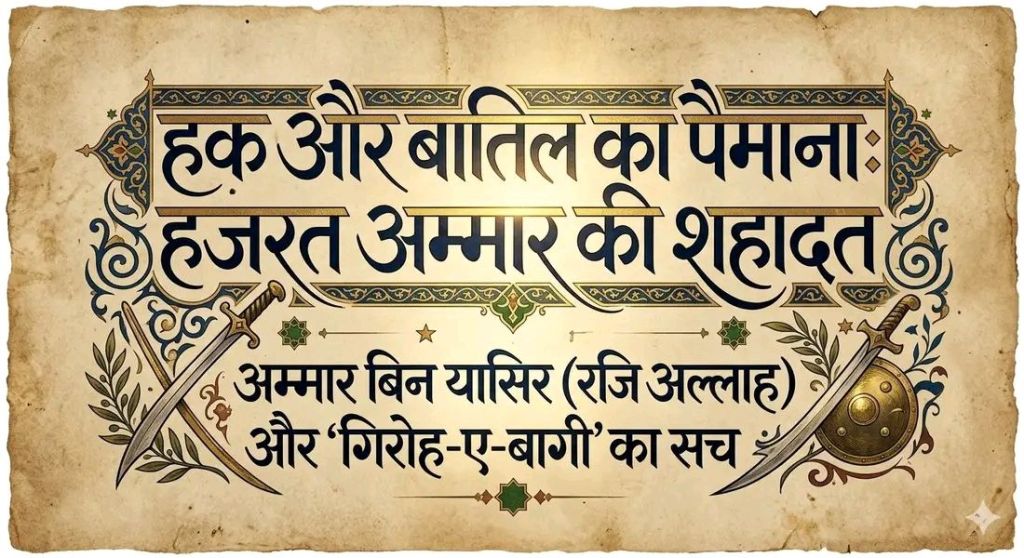
हक़ और बातिल के बीच लकीर – जंग-ए-सिफ्फीन

हदीस-ए-रसूल के आईने में इस्लामी इतिहास का वह मोड़ जहाँ हक़ और बातिल के बीच लकीर खिंच गई, वह जंग-ए-सिफ्फीन थी।

इस जंग के बारे में अल्लाह के रसूल ﷺ की एक पेशीनगोई (भविष्यवाणी) ने कयामत तक के लिए फैसला कर दिया था।

सहीह बुखारी में साफ अल्फाज मैं दर्ज हैं कि अल्लाह के रसूल ﷺ ने हजरत अम्मार बिन यासिर  के बारे में फरमाया:
“अफ़सोस! अम्मार को एक बागी गिरोह (फ़िआ-ए-बाग़िया) कत्ल करेगा। अम्मार उन्हें जन्नत की तरफ बुला रहा होगा और वह गिरोह अम्मार को जहन्नुम की तरफ बुला रहा होगा।”

यह 👆हदीस ‘मुतवातिर’ है, यानी इसे इतने सहाबा ने रिवायत किया है कि इसकी सच्चाई पर शक की कोई गुंजाइश ही नहीं।

1) बागी कौन? फैसला रसूलल्लाह का है.👇

जब जंग-ए-सिफ्फीन में हजरत अम्मार बिन यासिर  शहीद हुए, तो यह साबित हो गया कि जिस लश्कर की तलवार से उनकी शहादत हुई, वही लश्कर ‘बागी गिरोह’ है।
●हजरत अम्मार  हजरत अली के साथ थे।
●उन्हें शहीद करने वाला लश्कर मुआविया का था।

लिहाजा, खुद रसूलल्लाह ﷺ के फैसले के मुताबिक, उस वक्त का बागी गिरोह वही था जिसने हजरत अली  (जो वक्त के जायज खलीफा थे) के खिलाफ खरुज (बगावत) किया था।

जब अल्लाह के नबी ﷺ ने हक और बातिल के दरमियान लकीर खींच दी और साफ लफ्जों में “बागी” गिरोह की निशानदेही फरमा दी, तो फिर किसी भी शख्स या मौलवी की क्या हैसियत कि वह अपनी तरफ से तावीलें (explanations) पेश करके उस गिरोह के सरदार को “साफ-सुथरा” साबित करने की कोशिश करे?

2) मौलवियों की ‘सफेदी’ और असलियत.👇

आज के दौर में कुछ लोग ‘सियासी मफाद या अपनी खास विचारधारा को बचाने के लिए उस बागी गिरोह के सरदारों मुआविया को “साफ-सुथरा” दिखाने की कोशिश करते हैं। उनके लिए कुछ कड़वे सवाल और हकियाक:

●अदालत-ए-सहाबा का गलत इस्तेमाल:
सहाबा का एहतराम अपनी जगह, लेकिन जब रसूलल्लाह ﷺ खुद किसी को ‘बागी’ और ‘जहन्नुम की तरफ बुलाने वाला’ कह दें, तो फिर किसी मौलवी की क्या मजाल कि वह उन्हें ‘मुजतहिद’ कहकर उनकी खताओं को ढके?
●इल्मी दयानतदारी:
अगर हम बागी को बागी नहीं कहेंगे, तो हम रसूलल्लाह ﷺ के फरमान की तकजीब (झुठलाना) करेंगे। क्या किसी शख्स की मोहब्बत रसूलल्लाह के फरमान से बड़ी हो सकती है?

3) बागियों का अंजाम: कुरान की रोशनी में.👇

कुरान करीम (सूरतुल हुजुरात, आयत 9) में साफ हुक्म है:
“अगर मुसलमानों के दो गिरोह आपस में लड़ें… तो उस गिरोह से लड़ो जो बगावत (बगी) करे, यहाँ तक कि वह अल्लाह के हुक्म की तरफ लौट आए।”

हजरत अली  उस वक्त हक पर थे, और उनके खिलाफ तलवार उठाना सरासर बगावत थी। हजरत अम्मार की शहादत ने उस बगावत पर मोहर लगा दी।

हासिल-ए-कलाम (निष्कर्ष)

किसी भी शख्सियत को बचाने के लिए हदीस के मायनों को तोड़ना-मरोड़ना दीन के साथ खिलवाड़ है। हजरत अम्मार बिन यासिर  की शहादत कोई मामूली वाकया नहीं था, यह हक और बातिल का पैमाना था।
जो गिरोह अम्मार को शहीद करे, वो बागी है। यह मेरा फैसला नहीं, यह मौलवियों का फैसला नहीं, बल्कि यह तजदार-ए-मदीना ﷺ का फैसला है। और जिसके खिलाफ अल्लाह के रसूल गवाही दे दें, उसे दुनिया का कोई मुफ्ती या मौलवी “साफ-सुथरा” नहीं कर सकता।

इस्लाम हमें सच बोलने और हक का साथ देने का हुक्म देता है। चापलूसी और गलत तावीलों से तारीख नहीं बदली जा सकती। जो नबी ﷺ की नजर में बागी है, उसे दुनिया का कोई भी मौलवी “पाक-साफ” नहीं कर सकता।

“हक अली के साथ है, और अली हक के साथ हैं।”

“तारीख के पन्नों को ज़रा गौर से पढ़ो,
हक और बातिल का फर्क साफ नज़र आएगा।
अम्मार की शहादत ने वो लकीर खींच दी,
जिसे कयामत तक कोई मिटा न पाएगा।”