मुर्शिद (आध्‍यात्मिक गुरू) की जरूरत क्‍यों है?

मुर्शिद (आध्‍यात्मिक गुरू) की जरूरत क्‍यों है?

मुरशिद-ए-कामिल (सच्‍चे गुरू) की जरूरत इसी बात से पता चलती है कि कुरआन को कुरआन इसलिए मानते हैं क्‍योंकि उसकी सारी आयतें, बिना किसी शक के अल्‍लाह की बयानकर्दा मानते हैं, हज़रत मुहम्‍मद (सल्‍ल.) की हदीस को इसलिए मानते हैं क्‍योंकि वो मोअतबर सनदों (भरोसेमंद प्रमाणों) के साथ मौजूद है। ठीक इसी तरह किसी रूहानी मुर्शिद (आध्‍यात्मिक गुरू) का क़ल्‍ब (हृदय) वास्‍ते ब वास्‍ते हज़रत मुहम्‍मद (सल्‍ल.) से मिला होता है। सूफ़ीयों का गिरोह ही वो तीसरा गिरोह है जो हज़रत मुहम्‍मद (सल्‍ल.) के सच्‍चे वारिस हैं। इस गिरोह का सिलसिलाए रूहानी भी जंजीर की मजबूत कड़ीयों जैसा है जिसका सरचश्‍म-ए-तक़दीस (शुद्ध स्‍त्रोत) हज़रत मुहम्‍मद (सल्‍ल.) का दिल है।

जिस खुबसूरती से इमाम बुखारी व मुस्लिम ने हज़रत मुहम्‍मद (सल्‍ल.) के कलाम व सहाबियों की बातों को किताबों व तहरीरों में दर्ज किया, उसी खुबसूरती से हसन बसरी (र.अ.) व जुनैद बगदादी (र.अ.) ने अल्‍लाह के पोशीदा बातों, हज़रत मुहम्‍मद (सल्‍ल.) की चमक व सहाबियों के अमल से अपने सीनों (दिलों) को आबाद किया। एक तरफ बातें दर्ज हो रही थी सफीनों में तो एक तरफ मुन्‍तकिल (प्रवाहित) हो रही थी सीनों में। इन दोनों का तअल्‍लुक ज़ाते मुहम्‍मदी से ही है और सहा‍बी इन दोनों के दरमियान कड़ी हैं। सहाबियों में भी कुछ ख़ास के हिस्‍से में ये खुशनसीबी आई, उनमें हज़रत अबुबक्र, उमर फारूक, उसमान गनी, मौला अली, हारिसा, अबुजरगफारी, सलमान फारसी, अबुउबैदा, अबुदरदा, मआज इब्‍नेजबल, अबुहुरैरह, अबुमूसा अश्‍अरी, इमरान बिनहसीन वगैरह के नाम खासतौर पर जो पहले सूफ़ी हजरात हैं। सूफ़ीयों के सारे रूहानी सिलसिले (आध्‍यात्मिक शाख) हज़रत मुहम्‍मद (सल्‍ल.) से शुरू होकर इन्‍हीं नामों से गुजरते है।

Murśida (ādhyātmika gurū) kī jarūrata kyōṁ hai? Muraśida-ē-kāmila (saccē gurū) kī jarūrata isī bāta sē patā calatī hai ki kura’āna kō kura’āna isali’ē mānatē haiṁ kyōṅki usakī sārī āyatēṁ, binā kisī śaka kē allāha kī bayānakardā mānatē haiṁ, hazarata muham’mada (salla.) Kī hadīsa kō isali’ē mānatē Haiṁ kyōṅki vō mō’atabara sanadōṁ (bharōsēmanda pramāṇōṁ) kē sātha maujūda hai. Ṭhīka isī taraha kisī rūhānī murśida (ādhyātmika gurū) kā qalba (hr̥daya) vāstē ba vāstē hazarata muham’mada (salla.) Sē milā hōtā hai. Sūfīyōṁ kā girōha hī vō tīsarā girōha hai jō hazarata muham’mada (salla.) Kē saccē vārisa haiṁ. Isa girōha kā silasilā’ē rūhānī bhī jan̄jīra kī majabūta kaṛīyōṁ jaisā hai jisakā saracaśma-ē-taqadīsa (śud’dha strōta) hazarata muham’mada (salla.) Kā dila hai. Jisa khubasūratī sē imāma bukhārī va muslima nē hazarata muham’mada (salla.) Kē kalāma va sahābiyōṁ kī bātōṁ kō kitābōṁ va taharīrōṁ mēṁ darja kiyā, usī khubasūratī sē hasana basarī (ra.A.) Va junaida bagadādī (ra.A.) Nē allāha Kē pōśīdā bātōṁ, hazarata muham’mada (salla.) Kī camaka va sahābiyōṁ kē amala sē apanē sīnōṁ (dilōṁ) kō ābāda kiyā. Ēka tarapha bātēṁ darja hō rahī thī saphīnōṁ mēṁ tō ēka tarapha muntakila (pravāhita) hō rahī thī sīnōṁ mēṁ. Ina dōnōṁ kā ta’alluka zātē muham’madī sē hī hai aura sahābī ina dōnōṁ kē daramiyāna kaṛī haiṁ. Sahābiyōṁ mēṁ bhī kucha ḵẖāsa kē his’sē mēṁ yē khuśanasībī ā’ī, unamēṁ hazarata abubakra, umara phārūka, usamāna ganī, maulā alī, hārisā, abujaragaphārī, salamāna phārasī, abu’ubaidā, abudaradā, ma’āja ibnējabala, abuhurairaha, abumūsā aśarī, imarāna binahasīna vagairaha kē nāma khāsataura Para jō pahalē sūfī hajarāta haiṁ. Sūfīyōṁ kē sārē rūhānī silasilē (ādhyātmika śākha) hazarata muham’mada (salla.) Sē śurū hōkara inhīṁ nāmōṁ sē gujaratē hai.

Sufism Glossary

Glossary

A

Ahid: promise, commitment. (Turkish: Ahid)
Ahirat: the afterlife, the realm beyond the visible world (Turkish: Ahiret)
Ahl: people, adepts, members of a particular group (Turkish: Ehil)
Ahl al-Bayt: the “family of the house” or “household” of Hz. Muhammad (saws). Includes Hz. Ali, Hz. Fatima, Hz. Hasan, Hz. Husseyn. (Turkish: Ehl-i Beyt)
Alim: a scholar of ilm, of scientific knowledge. (Turkish: Alim)
Arif: a Sufi on the maqam of marifat (Turkish: Arif)
Asfiya: the pure servants of Allah (Turkish: Asfiya)
Ashab al-Qiram: Sahabah; the companionsdisciplesscribes and family of Hz Muhammad (saws). (Turkish: Eshab-i Kiram )
Awliya: (plural) the saints and friends of Allah. The singular form is wali. (Turkish: Evliya)

B

Barakat: grace and abundance, the grace of Allah (Turkish: Bereket)
Beitullah: a mosque, literally “house of God”; specifically means the Kaaba at Mecca. (Turkish: Beytullah)
Biath: Bay’ah; an oath of allegiance to a leader, specifically to a Sufi teacher. (Turkish: Biyat)

C

Caliph: successor for a position and/or responsibility. (Turkish: Halife)

D

Dhikr: ‘remembrance’; individual or collective meditation reciting the names of Allah. (Turkish: Zikir)

E

Ehl-i Beyt: (see ‘Ahl al-Bayt’)

F

Fana: a stage of mystical development in the journey to Allah; a cessation of the attachment to the personality which can be experienced in various degrees or depths. (Turkish: Fena)
Faqir: a dervish; a Sufi on the path of faqr. (Turkish: Fakir)
Faqr: having no being, no existence, no possession of self but Allah; giving up everything but Allah; seeing no existence in self and submitting all to Him, having realized this self is forever poor, empty, at mercy in the Presence of Allah. (Turkish: Fakr)
Fazilat: great virtue (Turkish: Fazilet)
Ferdaniyyat: individuality, specifically the indivisible individuality of Allah. (Turkish: Ferdaniyet)

G

Ghaws: Ghaws al-Azam; a great wali recognized as the great helper (Turkish: Gavs-ül Azam)

H

Halk: the crowd of people (Turkish: Halk)
Hadith: Hadith al-Sharif; the words and statements of Hz. Muhammad(saws) recorded by his companions. (Turkish: Hadis-i Şerif).
Hajj: the pilgrimage to Mecca.
Haqiqah: the truth of Allah (Turkish: Hakikat)
Haqq: divine truth, reality. Al-Haqq is one of the names of Allah. (Turkish: El Hakk)
Hirka: the symbol of the graduation of the murid given by his murshid. (Turkish: Hırka)
Hz.: the abbreviation of Hazrat: literally ‘Great Presence’, an honorific title used before the name of a person. (Turkish: Hz.; Hazret)

I

Ibadat: worship for Allah (Turkish: İbadet)
Ihlas: sincerety (Turkish: İhlas)
Ihsan: the kindness, favor, benevolence of Allah (Turkish: İhsan)
Ilm: scientific knowledge (Turkish: İlim)
Imam: a leader of a community of Muslims (Turkish: İmam)
Iman: belief without doubt (Turkish: İman)
Irfan: knowledge acquired through experience (Turkish: İrfan)
Irshad: guidance on the path of maturity (Turkish: İrşad)

J

Jabarrut: the realm between the visible world and the realm of ‘malaqut’. (Turkish: Ceberut)

K

Kafeer: a person denying the oneness and the existence of Allah. (Turkish: Kafir)
Keramat: the extraordinary manifestations performed by the awliya. Keramat only occurs by the will of Allah and the ‘wali‘ is not in control of them. (Miracles occur through the prophets while the keramat happens through the awliya.) (Turkish: Keramet)

L

La ilaha ill’Allah: a phrase which can be translated as ‘There is no god but Allah’, ‘There is no truth but Allah’ or ‘None has the right to be worshipped but Allah’

M

Maqam: a spiritual station which marks the long path followed by Sufis leading to communion with Allah. (Turkish: Makam)
Malaqut: the invisible realm of angels and divine souls. (Turkish: Melekut)
Marifat: the term used by Sufis to describe the mystical intuitive knowledge of spiritual truth attained through ecstatic experience (rather than rationally acquired). A level on the Sufi path. (Turkish: Marifet)
Massiva: The crowd of worldly concerns and occupations veiling one’s consciousness from the presence of Allah. (Turkish: Masiva)
Muezzin: the person on the duty of reciting the adhan, the call to prayer. (Turkish: Müezzin)
Muhabbat: the love and intimacy of Allah. (Turkish: Muhabbet)
Mumin: believer, specifically a believer of Allah (Turkish: Mümin)
Murid: a disciple committed to a murshid in a tariqah of Sufism. (Turkish: Mürid)
Murshid: a Sufi teacher fully ordained by the lineage of a tariqah to guide and instruct the murids on the Sufi path. (Turkish: Mürşid)

N

Nafs: the ‘false self’ or the individual personality which must be purified, refined and transcended on one’s path to Allah. (Turkish: Nefs)

Q

Qiblahthe direction Muslims face during prayer and salat. (Turkish: Kıble)
(qs): the abbreviation of ‘quddesa sirruhu’, which literally means: ‘May his resting place remain pure’. (Turkish:(ks))
Qull: a servant of Allah (Turkish: Kul)
Qutub: the perfect human being who leads the divine
hierarchy as an infallible and trusted spiritual leader. (Turkish: Kutub)

R

(ra): the abbreviation of ‘radiallahu anhum’, which literally means: ‘May Allah be pleased with him’. (Turkish:(ra))
Rabb: Lord, Sustainer. Al-Rabb is one of the names of Allah.
Ramadan: the month of fasting, coinciding with the date on which the Qur’an was first revealed. (Turkish: Ramazan)

S

Safa: purity, sincerety, clarity (Turkish: Safa)
Sahaba: the companions of Hz. Muhammad (sa).
Salaamat: the safety and protection of Allah (Turkish: Selamet)
Salat: the ritual prayer of Islam which is performed five times a day, also known as namaz. (Turkish: Namaz)
(saws), (sa): an abbreviation of ‘salla Allahu alaihi wa-sal-lam’, invoked whenever the name of the Prophet Hz. Muhammad is spoken or read. The translation is ‘May Allah’s peace and blessings be upon him.’ An alternative English form is (pbuh).
Sayyid (male), Sayyide (female): a descendant of a relative of Hz. Muhammad (saws). (Turkish: Seyyid, Seyyide)
Sema: dhikr accompanied by music and sometimes whirling.
Seyr-u Süluk: the Sufi path followed by a murid, with the guidance of a murshid, leading to communion with Allah. (Turkish: Seyrü Süluk)
Shariah: the ethical and moral code based on the Qur’an and the Sunnah. The first level on the Sufi path. (Turkish: Şeriat)
Sheikh: (see ‘Murshid’ for the meaning in Sufism) (Turkish: Şeyh)
Sırr: secret, precious knowledge (Turkish: sır)
Sirat: as-Sirat; the bridge which one passes through upon his or her death. (Turkish: Sırat)
Sohbat: conversation, specifically as a practice of exchange and guidance among the Sufis (Turkish: Sohbet)
Sunnah: the ‘path’ or ‘example’ of Hz. Muhammad (saws), i.e., what he did or said or agreed to during his life. (Turkish: Sünnet)

T

Taqwa: abstinence; piety: avoiding anything which does not lead one to Allah. (Turkish: Takva)
Tariqah: literally ‘way’ or ‘path’; a school of Sufism. Examples of the tariqah include the Rifa’i, the Qadiri and the Mevlevi. (Turkish: Tarikat)
Tasawwuf: Sufism; a way of life in which a deeper identity is discovered and experienced. This deeper identity, or the essential self, has abilities of awareness, action, creativity and love that are far beyond the abilities of the superficial personality. (Turkish: Tasavvuf)
Tawaqqul: the conscious state of surrendering to Allah (Turkish: Tevekkül))
Tawhid: the Oneness of Allah, or the belief in Divine Unity, one of the fundamental tenets of Islam. (Turkish: Tevhid)

U

Ummah: community, people; specifically the followers of Hz. Muhammad (sa). (Turkish: Ümmet)

W

Walayat: guardianship, friendship of Allah (Turkish: Velayet)
Wali: a saint and a friend of Allah. The plural form is awliya. (Turkish: veli)
Wird: daily practice of worship (Turkish: Vird)

Z

Zahid: a person who practices ‘zuhd’. (Turkish: Zahid, Zahit)
Zhikr: (see ‘Dhikr’)
Zuhd: asceticism for the sake of keeping the mind-body-soul clear for the presence of Allah. (Turkish: Zühd)

इश्क़ की ख़ुशबू है सूफ़ी Ishq ki Khushbu hai Sufi

इश्क़ की ख़ुशबू है सूफ़ी images

सूफ़ियों का जिक़्र होता है, तो सफ़ेद चोगे में, हाथ फैलाए घूमते लोगों का चित्र उभर आता है। लेकिन सूफ़ियों का सिर्फ़ यही परिचय नहीं। सूफ़ी का अर्थ जितना विस्तृत है, उतना ही रहस्यमय भी। संतों के इन जीवन-प्रसंगों से जानिए सूफ़ीवाद की शिक्षाएं क्या कहती हैं..

एक विख्यात सूफ़ी संत थे। उनका नाम था अबुल हसन। वे बहुत पहुंचे हुए इंसान थे। एक दिन एक भक्त उनके पास आया। बोला, ‘मैं सत्संग और उपासना करते-करते थक गया हूं, लेकिन मुझे कोई लाभ नहीं होता। हैरान हूं। क्या करूं?’ अबुल हसन ने पूछा, ‘क्या बात है?’ उसने कहा, ‘मुझे बहुत ग़ुस्सा आता है। चाहता हूं, वह दूर हो। मारे लालच के मेरा बुरा हाल है। दुनिया की मोह-माया मुझे सताती है। मैं बहुत दुखी हूं। आप ही मुझे कोई रास्ता बताइए।’

अबुल हसन ने उसकी बात बड़े ध्यान से सुनी। फिर कहा, ‘जिंदगी की एक बहुत बड़ी सच्चई है, उसे याद रख।’ आदमी ने जिज्ञासा से पूछा, ‘वह सच्चई क्या है?’ अबुल हसन ने जवाब दिया, ‘गंदे बर्तन में कोई चीज डालो, तो वह कैसी हो जाती है?’ ‘गंदी।’ आदमी ने तत्काल जवाब दिया। हसन बोले, ‘याद रख, बर्तन तेरा दिल है। जब तक वह साफ़ नहीं होगा, तब तक तू जो उसमें डालेगा, वह भी गंदा हो जाएगा। सत्संग और उपासना का फ़ायदा तभी पहुंचता है, जब दिल साफ़ होता है। मन में तरह-तरह की वासनाएं और दूसरे विकार भरे होते हैं, उन्हें त्याग करके ही इंसान कुछ पा सकता है।’
……………………….

सूफ़ी संतों में अबु मुहम्मद जाफ़र सादिक़ एक बड़े संत हुए हैं। एक दिन उन्होंने एक आदमी से पूछा, ‘अक्लमंद की पहचान क्या है?’ उसने कहा, ‘जो नेकी और बदी में तमीज कर सके।’ संत सादिक़ बोले, ‘यह काम तो जानवर भी कर सकते हैं और करते हैं। जो उनकी परवाह करते हैं, उन्हें वे नहीं काटते और जो उन्हें कष्ट पहुंचाते हैं, उन्हें वे काटते हैं।’ उस आदमी
ने कहा, ‘तब आप ही बताइए कि अक्लमंद कौन है?’

संत ने उत्तर दिया, ‘अक्लमंद वह है, जो दो अच्छी बातों में जान सके कि ज्यादा अच्छी बात कौन-सी है और दो बुरी बातों में यह पहचान कर सके कि ज्यादा बुरी कौन-सी है। यह पहचान करके जो ज्यादा अच्छी बात हो, उसे करे और अगर बुरी बात करने की लाचारी पैदा हो जाए, तो जो कम बुरी है, उसे करे और बड़ी बुराई से बचे।’
………………………………..

कश्मीर की प्रसिद्ध सूफ़ी संत ललद्यद या लल्ला देद एक बार एक दुकानदार के पास गईं। कपड़े की दुकान थी। लल्ला ने उससे कपड़ा मांगा। उसके समान भाग कर दो टुकड़े बनाए। एक टुकड़ा उन्होंने अपने एक कंधे पर तथा दूसरा दूसरे कंधे पर रखा। फिर वे बाजार में घूमने लगीं। रास्ते में उन्हें कोई गाली देता, कोई नमस्कार करता। जैसे ही कोई गाली देता, वे दाएं कंधे के कपड़े पर एक गांठ लगा लेतीं और किसी के नमस्कार करते व़क्त बाएं कंधे के कपड़े पर एक गांठ लगा लेतीं।

शाम को जब वे दुकानदार के पास पहुंचीं, तो उन्होंने दोनों कंधों पर रखे टुकड़ों को अलग-अलग तौलने के लिए कहा। दुकानदार ने उन्हें तौला, तो दोनों समान वजन के निकले, बराबर थे। तब लल्ला ने उसे समझाया, ‘देख, आज मुझे जितनी गालियां मिली हैं, उतना ही सम्मान मिला है। तो क्या फ़िक़्र करनी! कोई पत्थर फेंके या फूल, हिसाब बराबर है। अत: दोनों स्थितियों में समान रहना है, चाहे निंदा हो या स्तुति।’ इसीलिए कश्मीरी लोग कहते थे, हम दो ही नाम जानते हैं, एक अल्लाह, दूसरा लल्ला।

Singularity

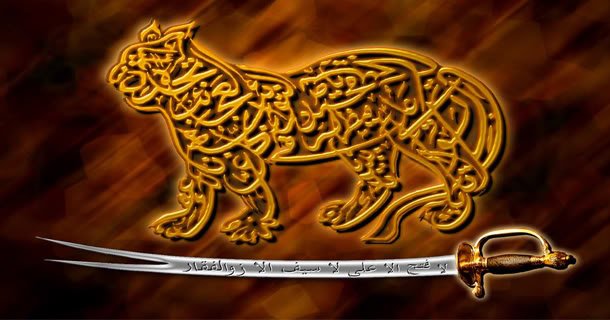
Carries God’s name in Arabic.

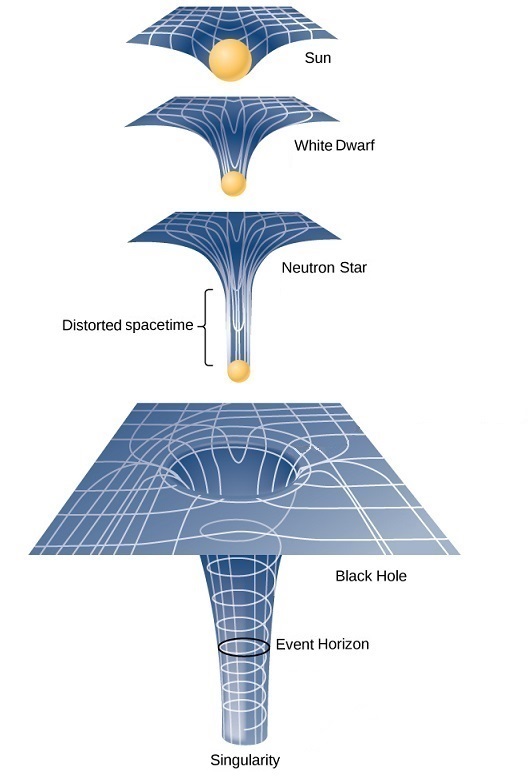
Mass distorts spacetime. As more matter falls into a star its mass increases and as its mass increases its density increases. The more dense a star becomes the more distortion it makes.

gravity_5

The longer a star lives the denser it becomes and the denser it becomes the more distortion it makes. However this distortion is pointing towards the singularity. So the longer a star lives the more it distorts spacetime towards singularity.

Singularity is a location in the future of stars. An observer far away from a black hole sees the events near a back hole in slow motion. If he shines a beam of light into this black hole he will have to wait forever but still this beam of light will never reach the singularity. The singularity is a location in the future of stars where gravity goes so mad that space and time become indistinguishable. From general relativity we know that this is a location where the structure of spacetime becomes singular (hence the name singularity). However singular (Ahad in Arabic أَحَدٌ ) is one of God’s 99 names. In the Quran God swears by the locations of stars which turned out to carry His own name:

[Quran 56.75-77] I swear by the locations of stars, it is a great swear if you knew, it is a noble Quran…

Here God swears not by the stars themselves but rather by their locations (mawakeh in Arabic). Today we know that stars distort spacetime in the direction of the singularity, which turned out to carry God’s own name: “Ahad أَحَدٌ “.

Big Bang & Big Crunch

Big Bang & Big Crunch

The universe was created by a Big Bang.

The Quran says that the heavens and the Earth were meshed together, tight and compact.

[Quran 21.30] Do not those who disbelieve see that the heavens and the Earth were meshed together then We ripped them apart? And then We made of water everything living? Would they still not believe?

In the Quran the heavens expanded from a single point.

How could an illiterate man who lived 1400 years ago have known that the universe came from a Big Bang?

The universe has been expanding ever since the Big Bang.

[Quran 51.47] And the heaven, We built it with craftsmanship and We are still expanding.

There are three possibilities to how the universe could end: Big Rip, Big Crunch or Big Chill. NASA recently ruled out the first scenario (No Big Rip; see also: Universe Today). This leaves the universe with only two possible endings: Big Crunch or Big Chill.

In the Quran God promises to make the Big Crunch:

[Quran 7.187] They ask you about the Hour, “When will it come?” Say, “Knowledge of it rests with my Lord. None can reveal its coming except He. It weighs heavily on the heavens and the earth. It will not come upon you except suddenly.” They ask you as if you are responsible for it. Say, “Knowledge of it rests with Allah,” but most people do not know.

The Quran used the term “weighs ثَقُلَتْ ” which means by gravity. But from General Relativity we know that gravity is curvature of spacetime. We also know that wormholes are equivalent to folding spacetime like a book.

[Quran 21.104] On the day when We will fold the heaven, like the folder compacts the books, and as We originated the first creation We shall return it; a promise (binding on Us); surely We will deliver.

Here God promises to make this Big Crunch however by folding the heaven like a book.

So in one verse God promises to make the Big Crunch by gravity and in another verse by folding spacetime like a book. Since both verses are the same then in the Quran gravity is curvature of spacetime.

How could an illiterate man who lived 1400 years ago have known that gravity is curvature of spacetime?

This Big Crunch will begin and end before you can blink:

[Quran 16.77] To Allah belongs the unseen of the heavens and the earth. The coming of the Hour is only as the twinkling of the eye, or even nearer. Allah has power over everything.

This Big Crunch will begin and end in a fraction of a second and will be by folding spacetime like a book. But this is the exact opposite of inflation in the Big Bang. Inflation was repulsive for a fraction of a second while in the Big Crunch God promises to make it attractive for a fraction of a second. “and as We originated the first creation We shall return it” so both are in a fraction of a second.

Also after this Big Crunch is over, God promises to recreate those heavens and Earth once more before Judgment Day:

[Quran 14.48] On the day when Earth will be swapped by another Earth and so will be the heavens; and all (creatures) will resurrect before the One Dominant God.

[Quran 36.81] Is He not, who created the heavens and the Earth, capable of creating others like them? Yes, indeed! He is the All-Knowing Creator. His command, if He wanted a thing, is that He only says to it, “BE” and it becomes! So glorified is He in whose hands is the dominion of all things, and to Him you shall be returned.