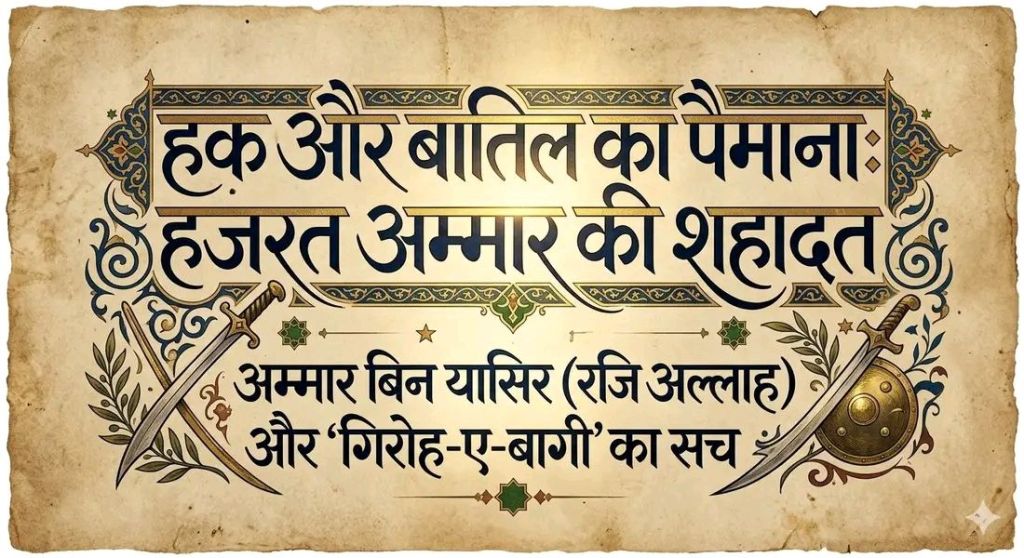
हक़ और बातिल के बीच लकीर – जंग-ए-सिफ्फीन

हदीस-ए-रसूल के आईने में इस्लामी इतिहास का वह मोड़ जहाँ हक़ और बातिल के बीच लकीर खिंच गई, वह जंग-ए-सिफ्फीन थी।

इस जंग के बारे में अल्लाह के रसूल ﷺ की एक पेशीनगोई (भविष्यवाणी) ने कयामत तक के लिए फैसला कर दिया था।

सहीह बुखारी में साफ अल्फाज मैं दर्ज हैं कि अल्लाह के रसूल ﷺ ने हजरत अम्मार बिन यासिर  के बारे में फरमाया:
“अफ़सोस! अम्मार को एक बागी गिरोह (फ़िआ-ए-बाग़िया) कत्ल करेगा। अम्मार उन्हें जन्नत की तरफ बुला रहा होगा और वह गिरोह अम्मार को जहन्नुम की तरफ बुला रहा होगा।”

यह 👆हदीस ‘मुतवातिर’ है, यानी इसे इतने सहाबा ने रिवायत किया है कि इसकी सच्चाई पर शक की कोई गुंजाइश ही नहीं।

1) बागी कौन? फैसला रसूलल्लाह का है.👇

जब जंग-ए-सिफ्फीन में हजरत अम्मार बिन यासिर  शहीद हुए, तो यह साबित हो गया कि जिस लश्कर की तलवार से उनकी शहादत हुई, वही लश्कर ‘बागी गिरोह’ है।
●हजरत अम्मार  हजरत अली के साथ थे।
●उन्हें शहीद करने वाला लश्कर मुआविया का था।

लिहाजा, खुद रसूलल्लाह ﷺ के फैसले के मुताबिक, उस वक्त का बागी गिरोह वही था जिसने हजरत अली  (जो वक्त के जायज खलीफा थे) के खिलाफ खरुज (बगावत) किया था।

जब अल्लाह के नबी ﷺ ने हक और बातिल के दरमियान लकीर खींच दी और साफ लफ्जों में “बागी” गिरोह की निशानदेही फरमा दी, तो फिर किसी भी शख्स या मौलवी की क्या हैसियत कि वह अपनी तरफ से तावीलें (explanations) पेश करके उस गिरोह के सरदार को “साफ-सुथरा” साबित करने की कोशिश करे?

2) मौलवियों की ‘सफेदी’ और असलियत.👇

आज के दौर में कुछ लोग ‘सियासी मफाद या अपनी खास विचारधारा को बचाने के लिए उस बागी गिरोह के सरदारों मुआविया को “साफ-सुथरा” दिखाने की कोशिश करते हैं। उनके लिए कुछ कड़वे सवाल और हकियाक:

●अदालत-ए-सहाबा का गलत इस्तेमाल:
सहाबा का एहतराम अपनी जगह, लेकिन जब रसूलल्लाह ﷺ खुद किसी को ‘बागी’ और ‘जहन्नुम की तरफ बुलाने वाला’ कह दें, तो फिर किसी मौलवी की क्या मजाल कि वह उन्हें ‘मुजतहिद’ कहकर उनकी खताओं को ढके?
●इल्मी दयानतदारी:
अगर हम बागी को बागी नहीं कहेंगे, तो हम रसूलल्लाह ﷺ के फरमान की तकजीब (झुठलाना) करेंगे। क्या किसी शख्स की मोहब्बत रसूलल्लाह के फरमान से बड़ी हो सकती है?

3) बागियों का अंजाम: कुरान की रोशनी में.👇

कुरान करीम (सूरतुल हुजुरात, आयत 9) में साफ हुक्म है:
“अगर मुसलमानों के दो गिरोह आपस में लड़ें… तो उस गिरोह से लड़ो जो बगावत (बगी) करे, यहाँ तक कि वह अल्लाह के हुक्म की तरफ लौट आए।”

हजरत अली  उस वक्त हक पर थे, और उनके खिलाफ तलवार उठाना सरासर बगावत थी। हजरत अम्मार की शहादत ने उस बगावत पर मोहर लगा दी।

हासिल-ए-कलाम (निष्कर्ष)

किसी भी शख्सियत को बचाने के लिए हदीस के मायनों को तोड़ना-मरोड़ना दीन के साथ खिलवाड़ है। हजरत अम्मार बिन यासिर  की शहादत कोई मामूली वाकया नहीं था, यह हक और बातिल का पैमाना था।
जो गिरोह अम्मार को शहीद करे, वो बागी है। यह मेरा फैसला नहीं, यह मौलवियों का फैसला नहीं, बल्कि यह तजदार-ए-मदीना ﷺ का फैसला है। और जिसके खिलाफ अल्लाह के रसूल गवाही दे दें, उसे दुनिया का कोई मुफ्ती या मौलवी “साफ-सुथरा” नहीं कर सकता।

इस्लाम हमें सच बोलने और हक का साथ देने का हुक्म देता है। चापलूसी और गलत तावीलों से तारीख नहीं बदली जा सकती। जो नबी ﷺ की नजर में बागी है, उसे दुनिया का कोई भी मौलवी “पाक-साफ” नहीं कर सकता।

“हक अली के साथ है, और अली हक के साथ हैं।”

“तारीख के पन्नों को ज़रा गौर से पढ़ो,
हक और बातिल का फर्क साफ नज़र आएगा।
अम्मार की शहादत ने वो लकीर खींच दी,
जिसे कयामत तक कोई मिटा न पाएगा।”

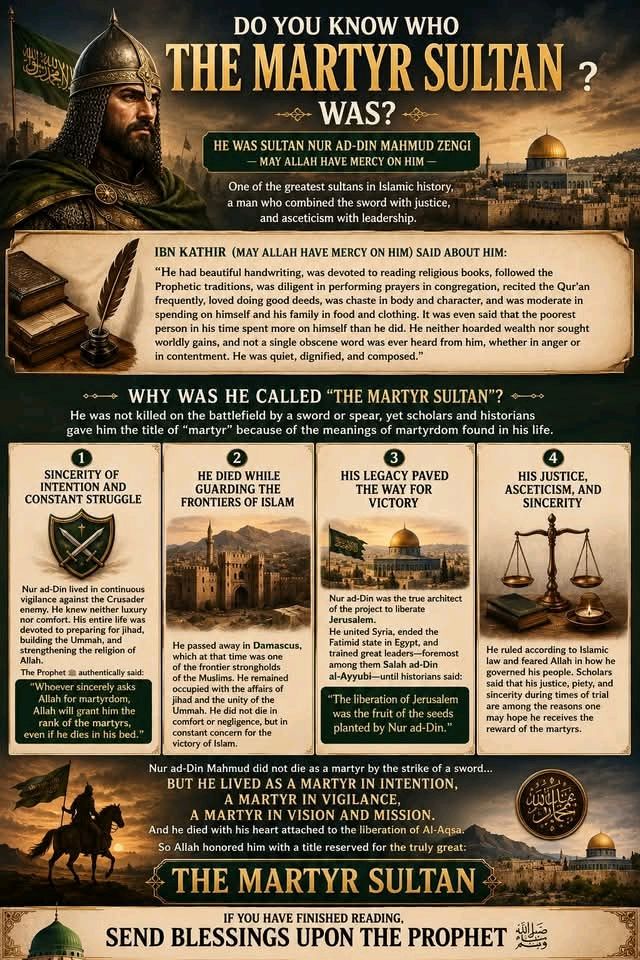
Do You Know Who “The Martyr Sultan” Was?

Do You Know Who “The Martyr Sultan” Was?

He was Nur ad-Din Mahmud Zengi — may Allah have mercy upon him — one of the greatest sultans in Islamic history, a man who combined the sword with justice, and asceticism with leadership.

Ibn Kathir said about him:
“May Allah have mercy on him—he had beautiful handwriting, was devoted to reading religious books, followed the Prophetic traditions, was diligent in performing prayers in congregation, recited the Qur’an frequently, loved doing good deeds, was chaste in body and character, and was moderate in spending on himself and his family in food and clothing. It was even said that the poorest person in his time spent more on himself than he did. He neither hoarded wealth nor sought worldly gains, and not a single obscene word was ever heard from him, whether in anger or in contentment. He was quiet, dignified, and composed.”

Why Was He Called “The Martyr Sultan”?
Nur ad-Din Mahmud Zengi was not killed on the battlefield by a sword or spear, yet scholars and historians honored him with the title of martyr because he embodied the true meanings of martyrdom. This was for several reasons:

First: Sincerity of Intention and Constant Struggle

Nur ad-Din lived in continuous vigilance against the Crusader enemy. He knew neither luxury nor comfort. His entire life was devoted to preparing for jihad, building the Ummah, and strengthening the religion of Allah.

The Prophet ﷺ authentically said:
“Whoever sincerely asks Allah for martyrdom, Allah will grant him the rank of the martyrs, even if he dies in his bed.”
Second: He Died While Guarding the Frontiers of Islam

He passed away in Damascus, which at that time was one of the frontier strongholds of the Muslims. He remained occupied with the affairs of jihad and the unity of the Ummah. He did not die in comfort or negligence, but in constant concern for the victory of Islam.

Third: His Legacy Paved the Way for Victory

Nur ad-Din was the true architect of the project to liberate Jerusalem.

He united شام (Greater Syria), ended the Fatimid state in Egypt, and trained great leaders—foremost among them Salah ad-Din al-Ayyubi—until historians said:
“The liberation of Jerusalem was the fruit of the seeds planted by Nur ad-Din.”
Fourth: His Justice, Asceticism, and Sincerity

He ruled according to Islamic law and feared Allah in how he governed his people. Scholars said that his justice, piety, and sincerity during times of trial are among the reasons one may hope he receives the reward of the martyrs.

Nur ad-Din Mahmud did not die as a martyr by the strike of a sword…
But he lived as a martyr in intention,
A martyr in vigilance,
A martyr in vision and mission.
And he died with his heart attached to the liberation of Al-Aqsa Mosque.
So Allah honored him with a title reserved for the truly great:

The Martyr Sultan
If you have finished reading, send blessings upon the Prophet Muhammad ﷺ.

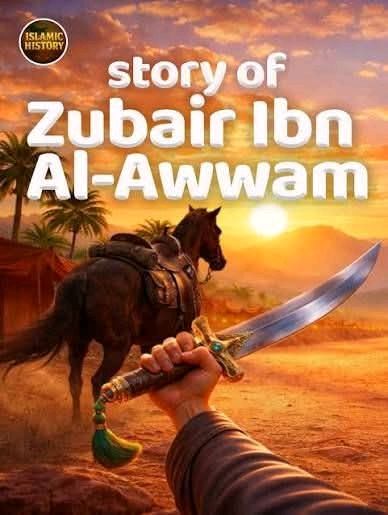
Companion Al-Zubayr ibn al-Awwam رضي الله عنها.

Do You Know Which Noble Companion Al-Zubayr ibn al-Awwam Was the One Whose Appearance Jibril Descended From Heaven Resembling, Along With an Army of Angels, During the Battle of Battle of Badr?
Do you know who was among the noblest of people in lineage?

He was the son of the Prophet’s aunt—his mother was Safiyyah bint Abd al-Muttalib رضي الله عنها.

His wife was Asma bint Abi Bakr رضي الله عنها, the daughter of Abu Bakr and sister of Aisha bint Abi Bakr رضي الله عنها.

His maternal uncle was Hamza ibn Abd al-Muttalib.

His cousins were Ali ibn Abi Talib and Abdullah ibn Abbas.

Do you know that he accepted Islam at only twelve years of age, and was among the first seven Muslims?

Do you know that he was the first man to unsheathe his sword in the path of Allah?
Do you know that he was among the finest horsemen of his age—matched in cavalry skill only by Khalid ibn al-Walid—and that both were famed for fighting with two swords while controlling their horses with their legs?

Do you know that he was one of the six members of the council of shūrā appointed by Umar ibn al-Khattab to determine the future leadership of the Ummah?
If all this honor is gathered in one man, then know that you are speaking of only one person:

The fearless hero…

The mighty knight…

The disciple of the best of creation…
You are speaking about Al-Zubayr ibn al-Awwam رضي الله عنه.

The Messenger of Allah ﷺ said:
“Every Prophet has a disciple, and my disciple is Al-Zubayr.”

The Boy Who Drew His Sword for the Prophet ﷺ

Travel back in spirit to the early years of Makkah…

People suddenly saw a young boy walking through the streets, sword drawn, sparks of determination flashing from his eyes like a young lion.

People cried out in astonishment:
“The boy has a sword! The boy has a sword!”

Then the Messenger of Allah ﷺ saw him and asked:

“What is the matter with you, O Zubayr?”
The young boy, breathing heavily, replied:
“O Messenger of Allah, I heard that you had been captured and killed.”
The Prophet ﷺ asked gently:
“And what would you have done?”
Al-Zubayr answered without hesitation:
“I came to strike with my sword whoever took you.”

At Battle of Uhud
Before the armies clashed, the fiercest warrior of the Quraysh stepped forward—
Talha ibn Abi Talha, known as The Ram of the Battalion.

He challenged the Muslims to single combat.

Then from among the companions emerged a young warrior—
Tall, broad-shouldered, powerful—
It was Al-Zubayr.
When he reached his opponent, he leapt onto the camel like a hunting leopard, dragged both rider and beast to the ground, overpowered him, and killed him.
Seeing this, the Prophet ﷺ raised his voice proudly:
“Allahu Akbar!”
At Battle of Yarmouk
The Romans watched in amazement as a masked horseman charged alone like an eagle.
In his right hand—a sword.
In his left hand—another sword.
He cut through the Roman ranks from right and left.
That rider…
Was Al-Zubayr ibn al-Awwam.
In Egypt at Babylon Fortress
For seven months, the Roman fortress of Babylon resisted the Muslim army under Amr ibn al-As.
Then Umar ibn al-Khattab sent reinforcements…
Among them was Al-Zubayr.
As soon as he arrived, the Romans watched in disbelief as a giant warrior climbed the fortress walls with astonishing strength.
Within moments he stood atop the highest point of the fortress.
He raised his sword toward the sky and thundered:
“Allahu Akbar!”
The earth itself seemed to shake.
He then descended into the fortress, opened its gates from within—
And the Muslim army stormed inside.
This was only a drop from the ocean of the true legend of Al-Zubayr ibn al-Awwam رضي الله عنه—
The heroic disciple of the Messenger of Allah ﷺ.
He is among the heroes whose lives deserve to be studied, remembered, and followed by the youth of this Ummah.