


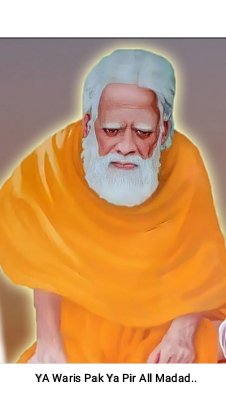
SARKAR WARIS ENCOUNTER WITH THE MENDICANT OF NANAK SHAHI SECT
During the last ailment days of Sarkar waris on the 25th of Moharram 1323 Hijrah an old mendicant of Nanak Shahi Sect came to meet him. His Guru had advised him to immediately meet our Saint saying that in Sarkar Waris eyes of lustre he would see the way of his salvation. The next day he was admitted into our Saint’s room where he made a profound bow. Sarkar Waris beckoned him to come near as he was bedridden with illness and made him his disciple.
He was given a mendicant’s tahband and instructed to proceed to the Holy Shrine to perform Hajj, never to have any connection with worldly things and never to beg food even if it meant starving for weeks.
MR. P.S. JOHN’S STATEMENT ABOUT SARKAR WARIS MAGNETIC EYES
The well known barrister of Bankipur Mr. P.S. John would always visit Calcutta whenever our Saint came there. One day Khan Bahadur Munshi Syed Fazal Imam Saheb asked him why he was not coming to his house whenever our Saint was residing there. Mr. John replied that after


 Aal-e-Qutub Aal-e-Syed Abdullah Shah Ghazi