
258 URS MUNEMI 2022



VERSE 3 OR “AYAT-E-MUBAHILAH”
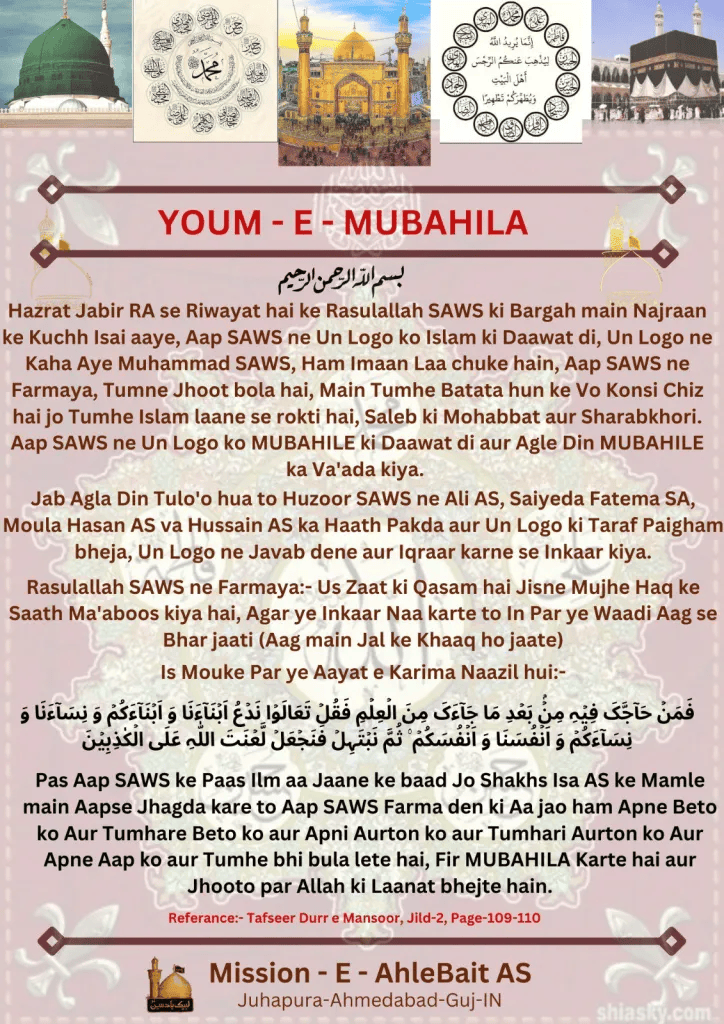
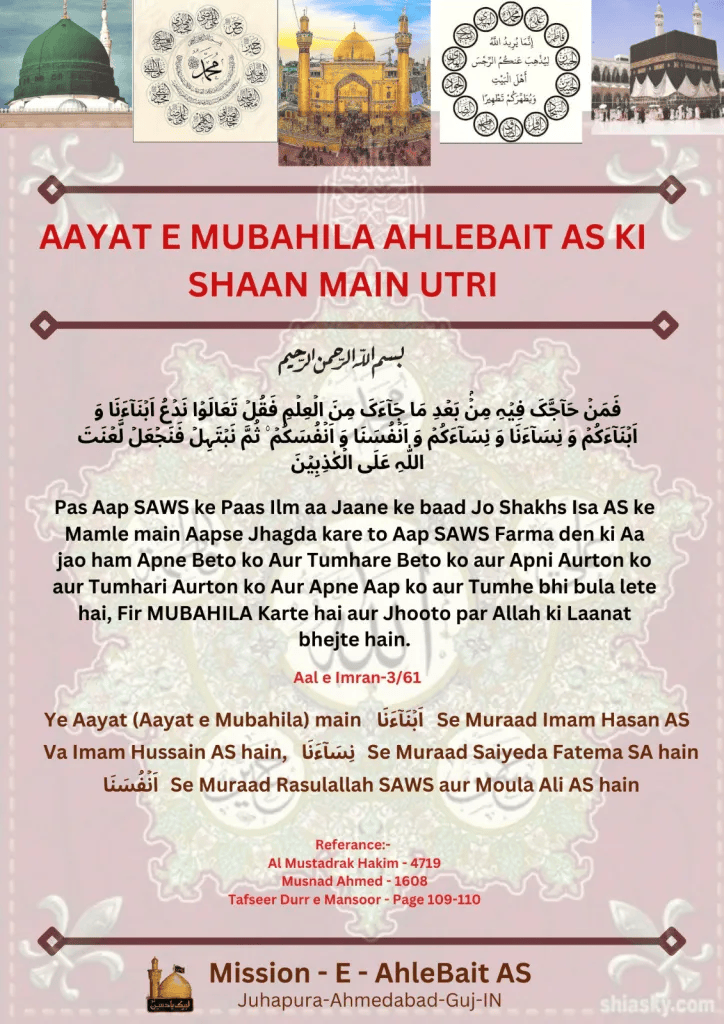
In Surah Ale Imran, verse 61, the Holy Qur’an declares:
فَمَنْ حَاجَّكَ فِيهِ مِنْ بَعْدِ مَا جَاءَكَ مِنَ الْعِلْمِ فَقُلْ تَعَالَوْا نَدْعُ أَبْنَاءَ نَا وَأَبْنَاءَكُمْ وَنِسَاءَنَا وَنِسَاءَكُمْ وَأَنْفُسَنَا وَأَنْفُسَكُمْ ثُمَّ نَبْتَهِلْ فَنَجْعَلْ لَّعْنَتَ اللَّهِ عَلَى الْكَذِبِينَ ]
“Therefore say to those who dispute with you (O Muhammad) concerning ‘Isa after the knowledge has come to you, “Come! Let us summon our sons and your sons, and our women and your women, and ourselves and yourselves – then pray humbly, thereby casting the curse of Allah upon the liars!”
There was once a group of Christians who arrived from Najran. They eventually agreed to have an oath to the death on what was false and what was the truth. Sayyiduna Rasoolullah Sallal Laahu ‘Alayhi Wasallam then appeared in front of them with Hadrat Sayyiduna ‘Ali, Sayyidah Fathima, Imam Hasan and Imam Husain Radi Allahu Anhum. However, when the heard Priest saw this delegation of Muslims, he quietly murmured to his followers, “Without doubt I can see such faces (in front of me) that if these people plead to Allah azza wajal to move the mountain from its place, then Allah azza wajal through their Du’a would move the mountain. For the sake of the Lord, do not have a Mubahilah against these people or else (we will) be destroyed and there will remain no Christians on the face of the earth until the Day of Judgement.” They then said, “O Abul Qasim! We are not performing a Mubahilah with you. You may remain on your religion and we will remain on our religion.” (Tafseer Kabeer, Tafseer Khaazin, Madaarijun Nubuwah)
Event of Mubaila in light of Quran and Hadith

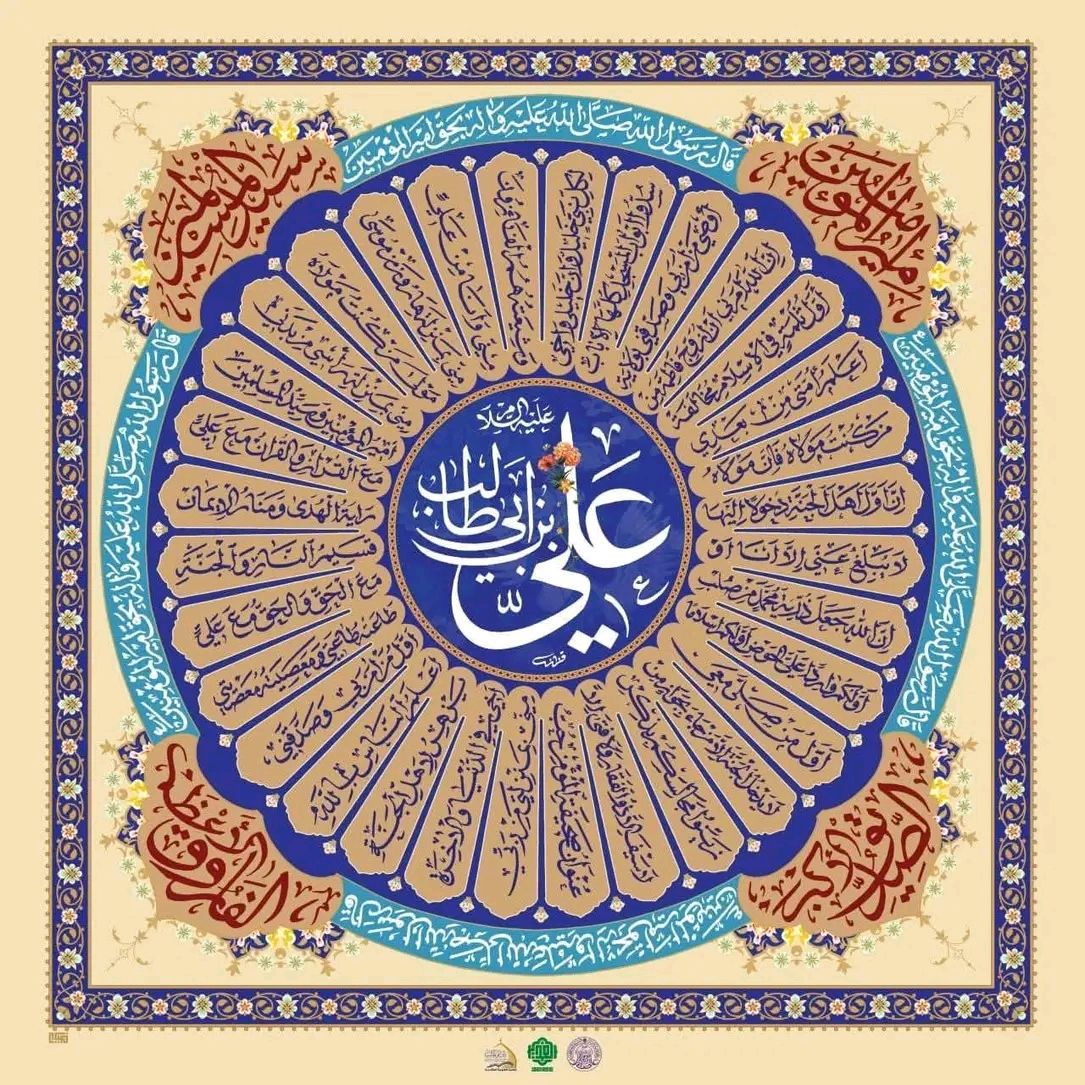
Hazrat Aliؑ Sirat-e-Mustaqeem hain:
Hazrat Ibn-e-Abbasؓ se riwayat hai, woh kehte hain:
Rasool-e-Allah ﷺ wa Aalehi ne Hazrat Ali bin Abi Talibؑ se farmaya:
“Tum hi wazeh (roshan) raasta ho, tum hi Sirat-e-Mustaqeem ho, aur tum hi momineen ke sardar ho.”
📚 Hawala:
Surah Aal-e-Imran: 101)
Shawahid-ut-Tanzeel, jild 1-2, safha 84
Iltimas-e-dua:
Al-Ahqar Al-Afqar Ibrahim bin Ashtar
⛔ Hazrat Aliؑ Sirat-e-Mustaqeem hain:
Hazrat Ibn-e-Abbasؓ se riwayat hai, woh kehte hain:
Rasool-e-Allah ﷺ wa Aalehi ne Hazrat Ali bin Abi Talibؑ se farmaya:
“Tum hi wazeh (roshan) raasta ho, tum hi Sirat-e-Mustaqeem ho, aur tum hi momineen ke sardar ho.”
✨ Hazrat Abdullah bin Abbasؓ se riwayat hai ke unhon ne kaha: Rasool-e-Khuda ﷺ wa Aalehi ne Hazrat Ali bin Abi Talibؑ se farmaya:
“Aye Aliؑ! Aap hi roshan raasta hain, aap hi Sirat-e-Mustaqeem hain, aur aap hi momineen ke sardar hain.”
Aur humein Abu Jafar ne khabar di, Muhammad bin Ali Alawi se, unke chacha Muhammad bin Abi-ul-Qasim se, Muhammad bin Ali Kufi se, Muhammad bin Sinan se, Mufaddal se, Jabir bin Yazid se, Abu Zubair se, aur Jabir bin Abdullahؓ se ke Rasool-e-Allah ﷺ wa Aalehi ne farmaya:
“Beshak Allah ne Aliؑ, unki zauja (Fatimaؑ) aur unke beton (Hasanؑ aur Husainؑ) ko apni makhlooq par apni hujjatein qarar diya hai, aur woh meri ummat mein ilm ke darwaze hain; jo shakhs unke zariye hidayat hasil kare, use Sirat-e-Mustaqeem ki taraf hidayat di jati hai.”
🌟 Hazrat Jabir bin Abdullahؓ se riwayat hai ke unhon ne kaha: Rasool-e-Khuda ﷺ wa Aalehi ne farmaya:
“Beshak Allah ne Aliؑ, unki zauja (Fatimaؑ) aur unke beton (Hasanؑ aur Husainؑ) ko apni makhlooq par apni hujjatein banaya hai, aur woh meri ummat mein ilm ke darwaze hain; jo unke zariye hidayat hasil kare, use Sirat-e-Mustaqeem ki taraf hidayat di jati hai.”
﴿Aur jo Allah ko mazbooti se tham le, to yaqeenan use Sirat-e-Mustaqeem ki taraf hidayat de di jati hai﴾
(Surah Aal-e-Imran: 101)
📚 Hawala:
Shawahid-ut-Tanzeel, jild 1-2, safha 84
Iltimas-e-dua:
Al-Ahqar Al-Afqar Ibrahim bin Ashtar

-: अक्सामे अहले बैत :-
अहले बैत की तीन किस्में हैं-
1-सकनी- यानी घर में कयाम करने वाले काबिले रिहाइश यानी हुजूर सल्लल्लाहु अलैह वसल्लम की तमाम अज़वाजे मुतहरात ।
2-निसबती व नस्ली- यानी जिन से हुजूर सल्लल्लाहु अलैह वसल्लम का निसबती व नस्ली तआल्लुक है यानी हज़रत मौला अली सइयदा फातिमा, इमाम हसन व इमाम हुसैन (अलैहिमुस्सलाम) ।
3-ऐज़ाज़ी- यानी वो हस्तियाँ जिनको हुजूर सल्लल्लाहु अलैह वसल्लम ने बतौर ऐज़ाज़ अपने अहले बैत में शामिल किया-जैसे-हज़रत सलमान फारसी (रज़ि०)।
हुजूर सल्लल्लाहु अलैह वसल्लम की तमाम अज़वाजे मुतहरात तो आपके निकाह में आने के बाद आप सल्लल्लाहु अलैह वसल्लम की अहले बैत में शामिल हुईं उन तमाम को अल्लाह तआला ने अपने महबूब सल्लल्लाहु अलैह वसल्लम के अहले बैत में शामिल किया और हज़रत मौला अली मुर्तज़ा, सइयदा फातिमा ज़हरा और इमाम हसन व इमाम हुसैन (अलैहिमुस्सलाम) को हुजूर सल्लल्लाहु अलैह वसल्लम ने अपने अहले बैत में शामिल किया और उनसे जो सिलसिला-ए-नसब चला वो सब आले रसूल आप सल्लल्लाहु अलैह वसल्लम के अहले बैत में शामिल हैं और आले रसूल की मुहब्बत राहे खुदा है और इस राह पर चलने वाला कभी गुमराह नहीं होता हत्ता कि
वो रज़ाये इलाही के बुलन्द मक़ाम पर फाइज़ हो जाता है और अल्लाह तआला की खुशनूदी उसका हासिल मुकाम होता है और वो अज्रे अज़ीम का मुस्तहिक हो जाता है।
अल्लाह तआला ने अहले बैत के मुताअल्लिक फ़रमाया-अल्लाह तो यही चाहता है कि ऐ नबी (सल्लल्लाहु अलैह वसल्लम) के घर वालो तुमसे हर तरह की नापाकी को दूर कर दे और तुम्हें कामिल तहारत (पाकीज़गी) से नवाज़ कर बिल्कुल पाक साफ
व खूब सुथरा कर दे। (सू०-अहज़ाब-33)
(यानी हर वो काम जो ख़िलाफ़ शरअ और बारगाहे खुदावन्दी में ना पंसदीदा हैं और हर तरह की बुराई व शर और गुनाह से अल्लाह तआला ने अहले बैत अतहार को पाक व महफूज़ रखा)
तसरीहः- इमाम जलालुद्दीन सयूती ने इस आयाते
करीमा की तफ्सीर में हज़रत उम्मे सलमा (रजिअल्लाहु तआला अन्हा) से रिवायत नकल की है कि हुजूर सल्लल्लाहु अलैह वसल्लम हज़रत उम्मे सलमा के घर में थे और आप पर खैबर की बनी हुई चादर थी और आप सल्लल्लाहु अलैह वसल्लम पर ये आयत नाज़िल हुई कि अल्लाह तो यही चाहता है कि ऐ नबी (सल्लल्लाहु अलैह वसल्लम) के घर वालो तुम से हर तरह की नापाकी दूर कर दे……. फिर हुजूर सल्लल्लाहु अलैह वसल्लम ने हज़रत मौला अली, सइयदा फातिमा ज़हरा और इमाम हसन व इमाम हुसैन (अलैहिमुस्सलाम) को बुलाया और अपनी चादर मुबारक से ढाँप लिया और बारगाहे खुदावन्दी मेंअर्ज किया ऐ अल्लाह ये मेरे अहले बैत (घर वाले) हैं इनसे हर तरह की रिज्स (नापाकी, पलीदी) को दूर फ़रमां दे और इन्हें पाकीज़ा बना दे ये कलिमात आप सल्लल्लाहु अलैह वसल्लम ने तीन दफा दोहराए हज़रत उम्मे सलमा ने कहा कि मैंने अपना सर उस चादर के अन्दर किया और अर्ज किया या रसूलुल्लाह मैं भी इनके साथ हूँ तो हुजूर सल्लल्लाहु अलैह वसल्लम ने फ़रमाया नहीं लेकिन तुम खैर की जानिब हो ये बात सल्लल्लाहु अलैह वसल्लम ने दो बार इरशाद फरमाई।
(दुर्रे मन्सूर-5/562) (तफ़्सीर इब्ने कसीर-22/672)
एक दूसरी रिवायत में इमाम तबरानी ने हज़रत उम्मे सलमा (रज़िअल्लाहु तआला अन्हा) से रिवायत नकल की है कि हुजूर सल्लल्लाहु अलैह वसल्लम ने हज़रत सइयदा फातिमा (अलैहस्सलाम) से फ़रमाया कि अपने दोनो बेटों व खाबिन्द को ले आओ तो आप उन सब को ले आयीं फिर हुजूर सल्लल्लाहु अलैह वसल्लम ने हज़रत इमाम हसन व हज़रत इमाम हुसैन (अलैहिमुस्सलाम) को अपनी गोद मुबारक में बिठाया और हज़रत मौला अली मुर्तज़ा (अलैहस्सलाम) को दाँयी जानिब और सइयदा फातिमा (अलैहस्सलाम) को वाँयी जानिब बिठाया और हुजूर सल्लल्लाहु अलैह वसल्लम ने इन सब पर अपनी चादर मुबारक डाल दी फिर दुआ की ऐ अल्लाह ये अहले मुहम्मद (सल्लल्लाहु अलैह वसल्लम) हैं इन पर अपनी रहमतें और बरकतें उसी तरह नाज़िल फरमां जिस तरह तूने आले इब्राहीम पर रहमतें व बरकतें नाज़िल फरमाईं हज़रत उम्मे सलमा (रजिअल्लाहु तआला अन्हा) ने कहा मैने चादर ऊपर उठाई ताकि मैं भी उसमें दाखिल हो जाऊँ तोहुजूर सल्लल्लाहु अलैह वसल्लम ने चादर को मेरे हाथों से खींच लिया और फ़रमाया तुम भलाई पर हो।
(दुर्रे मन्सूर-5/563) (मुअजम कबीर-तबरानी-3/53,54)
हज़रत अबू सईद खुदरी (रज़िअल्लाहु तआला अन्हु) से रिवायत है रसूले अकरम सल्लल्लाहु अलैह वसल्लम ने फरमाया कि ये आयत पाँच अफराद (पंजतन पाक) के बारे में नाज़िल हुई (यानी मैं, (हुजूर सल्लल्लाहु अलैह वसल्लम) हज़रत मौला अली, सइयदा फातिमा ज़हरा, इमाम हसन व इमाम हुसैन (अलैहिमुस्सलाम) (तफ़्सीर तबरी-22/10) (दुर्रे मन्सूर-5/563)
हज़रत उम्मे सलमा (रजिअल्लाहु तआला अन्हा) के दौलत कदाह में जब ये आयते करीमा अल्लाह तो यही चाहता है कि ऐ नबी सल्लल्लाहु अलैह वसल्लम के घर वालो तुमसे हर तरह की नापाकी को दूर कर दे…… नाज़िल हुई तो हुजूर सल्लल्लाहु अलैह वसल्लम ने हज़रत मौला अली, सइयदा फातिमा और इमाम हसन व इमाम हुसैन को बुलाकर चादर उड़ाई फिर दुआ की ऐ अल्लाह ये मेरे अहले बैत हैं इनसे हर तरह की नापाकी को दूर फरमां दे और इन्हें खूब पाक साफ व सुथरा कर दे हज़रत उम्मे सलमा (रजिअल्लाहु तआला अन्हा) ने अर्ज किया या रसूलल्लाह मैं भी इनके साथ हूँ आप सल्लल्लाहु अलैह वसल्लम ने फरमाया तुम अपनी जगह पर हो और खैर की जानिब हो । (तिर्मिज़ी-2/736)
उम्मुल मोमिनीन हज़रत आयशा सिद्दीका (रजिअल्लाहु तआला अन्हा) से रिवायत है आप फरमाती हैं कि हुजूर सल्लल्लाहु अलैह वसल्लम एक चादर ओढ़े हुयेथे जिस पर सियाह ऊन से कजाबों की सूरतें बनी हुई थीं इतने में हज़रत इमाम हसन (अलैहस्सलाम) आये तो आप सल्लल्लाहु अलैह वसल्लम ने उन को चादर के अन्दर कर लिया फिर हज़रत इमाम हुसैन (अलैहस्सलाम) आये उन को भी चादर के अन्दर कर लिया फिर खातूने जन्नत सइयदा फातिमा ज़हरा (अलैहस्सलाम) आयीं तो उन को भी चादर के अन्दर कर लिया फिर हज़रत मौला अली शेरे खुदा (अलैहस्सलाम) आये तो उनको भी चादर के अन्दर कर लिया फिर ये आयते करीमा पढ़ी (अल्लाह तो यही चाहता है कि ऐ अहले बैत तुमसे हर तरह की आलूदगी दूर कर दे और तुम को तहारत से नवाज़ दे) (सही मुस्लिम-6/103)

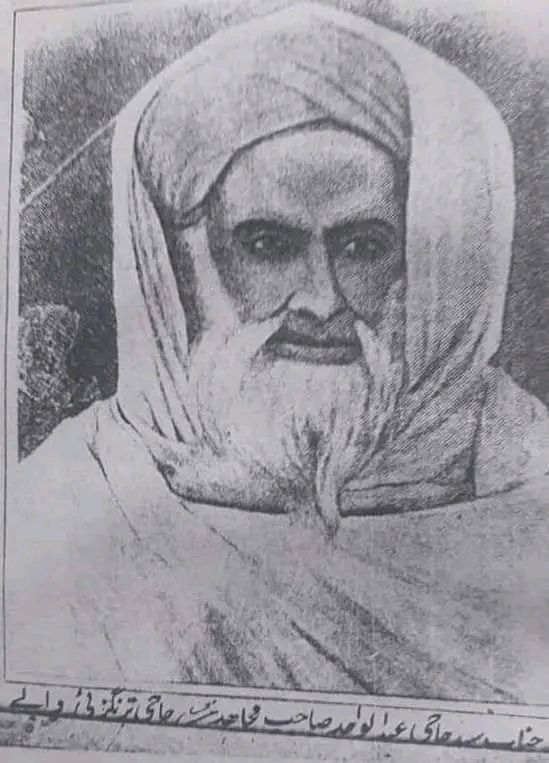
The British Feared Him, 40,000 Warriors Followed Him: Why Was This Freedom Fighter Erased From Our History Books?
In May 1930, the United Press reported:
“Mobile squadrons of British troops and bombing squadrons advanced today to attack the Afghan tribal leader Haji Turangzai who was encamped with his troops near Peshawar.”
In August of the same year, it was reported:
“The Indian frontier was menaced by the greatest invasion in years today as thousands of wild Afghan tribesmen gathered for an advance through Khyber Pass against Peshawar and other frontier cities. Led by the powerful rebel leader, the Haji of Turangzai, the wild warriors were gathering in great numbers in the hills above the plains of India.”
The United Press reported on 10 March 1932:
“Reports at Bombay today said 40,000 tribesmen commanded by the elderly chieftain, Turangzai, were marching on Peshawar to urge the government of India to release Mahatma Gandhi from jail, the Bombay correspondent of the Daily Herald reported. Reports said the tribesmen were firing on Royal Air Force planes from mountainous tracts near Peshawar.”
Who Was the Haji of Turangzai?
Who is this Haji of Turangzai? Why did the British fear him? Why do we not find his name in our textbooks?
Haji of Turangzai was born as Fazal Wahid in North West Frontier Province (NWFP) in 1842. His early education was at a local madrasa with ideological leanings towards Shah Waliullah. He went to Deoband (U.P) for further studies at Darul Uloom. Here, he became friends with Sheikh-ul Hind Maulana Mahmud ul Hasan and went on a Haj pilgrimage with him, Maulana Qasim Nanotvi and Rashid Ahmad Gangohi.
It must be kept in mind that Deoband was a centre of the Indian freedom struggle. Both of its founders, Nanotvi and Gangohi, took up arms against the British in 1857 under the leadership of Haji Imdadullah Muhajir Makki. Maulana Mahmud was also a freedom fighter and was kept as a prisoner of war in Malta during the First World War.
Haji of Turangzai met Haji Imadadullah in Arab and promised his allegiance to his mission. Imdadullah was a leader of the Indian revolutionaries in 1857 and his mission was to free India from English rule.
Haji of Turangzai also took lessons from Mulla Najmuddin of Hadda (Mulla Hadda) and promised his allegiance to him. Mulla Hadda was a well known anti-British scholar as well as a leader. He led several armed campaigns against the foreign rulers in his lifetime.
So, Haji of Turangzai took inspiration from two distinct yet converging ideologies of Islamic piety, sufism and anti-colonialism. It must be noted that while Sana Haroon, in her book, writes that Haji of Turangzai met Mulla Hadda after his return from Deoband, according to Altaf Qadir, an authority on Haji of Turangzai, allegiance to Mulla Hadda predates visit to Deoband and Haj.
The Silk Letter Conspiracy and Global Revolutionary Networks
Haji Turangzai acted as a link between Deoband based Indian revolutionaries and sufi revolutionaries, like Mulla Hadda, from the 1870s. When the First World War broke out, Maulana Ubaidullah Sindhi moved to Afghanistan as Haji Turangzai also moved there. The plan was to raise an army of tribals led by Haji Turangzai and other Islamic scholars like him who had a following among the tribes inhabiting these regions.
Raja Mahendra Pratap, an Arya Samaj revolutionary, and Maulvi Barkatullah, a Ghadar Party leader, also joined them in Afghanistan. A provisional government was formed with Mahendra as its President, Barkatullah as Prime Minister and Ubaidullah as Home Minister at Kabul in 1915.
The movement failed after the letters written by Ubaidullah were intercepted by the English intelligence agencies in 1916. Several people were arrested and the plan was called the Silk Letter Conspiracy.
A Shield for Minorities and Defender of National Unity
Haji of Turangzai would not stop his movement and kept organising tribals against the British. Understanding the need of national unity he wanted Hindu, Muslims and Sikhs to live together.
Altaf Qadir writes:
“In the very first jargah, convened in Ghaziabad, he denounced all raiders as enemies of Islam. The Kamali and Pandiali, two branches of the local Mohmandan, were asked to restrain their bad characters for the future. He asked them to release all Hindus abducted from the Peshawar district. Both the tribes protested but were compelled to settle the matter according to his directives. The Hindus comprised the wealthy class of the district of Peshawar and were an easy target for kidnapping, to be released on ransom. Not only Hindus, sometimes the wealthy Muslims were also the target of such kidnapping. As a true Muslim, Haji Sahib Turangzai was against such acts of the tribesmen. He did not want to harm the residents of the British territory, who were under British Imperialism.”
Altaf also points out:
“Evidences suggest that Haji Sahib was in touch with revolutionary movements, led by non-Muslims. They included Naujawan Bharat Sabha and Ghadar Party; the latter sent two of its members to Lakarai. To deceive the official informers, they pretended to be Sikhs who wanted to embrace Islam.”
Two Decades of Armed Guerilla Resistance and RAF Airstrikes
Haji of Turangzai organised an armed militia and attacked the British army at several posts from 1915 till his death in 1937. His impact was so much that the British Air Force dropped bombs on them to suppress them.
The Defence of India, an official journal of the British government, reported:
“In August (1915), Haji Sahib of Turangzai, a notorious anti-British Mullah, gathered several thousand men around him in the Ambela Pass, and prepared to invade British territory. The men he had assembled around him were not to be despised. The majority of them were Pathan hillmen, trained in fighting from boyhood. Scattered among them were a group of Hindu fanatics. Then there were fakirs of many kinds, reputed miracle workers, men of extraordinary austerity-fierce, lean, keen religionists.”
The movement led by Haji of Turangzai was a part of the movement led by Deoband based Ulema and linked to other revolutionary movements of Punjab, Bengal, NWFP etc.
Inspiring Frontier Gandhi and Netaji Subhas Chandra Bose
Many people don’t realise that Khan Abdul Ghaffar Khan was one of the followers of Haji of Turangzai. Ghaffar Khan and his Khudai Khidmatgars were part of the movement led by Haji of Turangzai.
Yusuf Meherally, a popular Indian leader from Mumbai, wrote in 1946:
“Way back in 1911, while Khan Saheb was studying medicine in England, the Haji Saheb of Turangzai had started a movement for national education, and established a chain of schools. Turangzai was only two miles from the village of the Khan brothers. Abdul Ghaffar Khan, who was then only twenty, enthusiastically identified himself with these beneficent efforts. The alien Government’s watchful eye noted the awakening that this new movement had brought. Their heavy hand fell right away on the Haji Saheb who, however, escaped in time to the tribal areas in order to avoid capture. Several of the other teachers were, however, arrested and the schools thereby suppressed. Surprising as it may seem, the Khan brothers were driven into politics only when they were convinced that it was impossible to do any nation-building work or conduct any activity, however beneficial and unobjectionable in itself, until the existing regime was basically altered.”
The armed movement which was initiated by Haji of Turangzai was also linked to Subhas Chandra Bose. Milan Hauner of the University of Wisconsin Madison writes:
“Bose indeed assigned the Tribal Territory an important role to play in his comprehensive ‘Plan for Cooperation Between the Axis Powers and India’, which he submitted immediately after his arrival in Berlin…. In his single-minded obsession with ousting the British from India, Bose was convinced that the mere appearance of a small force of 50,000 soldiers with modern equipment on the Frontier would have been sufficient to turn the British out of India.”

