

Day: October 8, 2023

Wearing a Ring(Anghuthi) in Islam.

When the Prophet (Sal-Allaahu ‘alayhi wa Sallam) wore a ring, the Sahaabah (RadiAllaahu ‘anhum ajma’een) saw this and they also began to wear rings.
There are authentic and strong reports that the Prophet (Sal-Allaahu ‘alayhi wa Sallam) wore the ring on both his right hand and his left hand so many of the ‘ulamaa said that it is Sunnah to wear the ring on both hands (i.e. sometimes on the right and sometimes on the left). Also, sometimes the Prophet (Sal-Allaahu ‘alayhi wa Sallam) did not wear a ring.
With regard to the stone, the Prophet’s ring (Sal-Allaahu ‘alayhi wa Sallam) had an Abyssinian stone (i.e. ‘aqeeq) on it and he would wear the ring with the stone facing his palm, so it is from the Sunnah to wear the ring with the stone on the underside of the finger and not the top!
The Sunnah is also to wear the ring on the pinky finger, so this is the best finger to wear the ring. The Prophet (Sal-Allaahu ‘alayhi wa Sallam) in an authentic hadeeth narrated from ‘Ali (RadiAllaahu ‘anhu) forbade wearing the ring on the forefinger or the middle finger, so rings should not be worn on these two fingers.
Inscription on the Ring
The inscription on the ring of the Holy Prophet Muhammad ﷺ was written in three lines:
- محمد – ‘Muhammad’ on a line,
- رسول – ‘Messenger’ on a line, and
- الله – ‘Allah’ on a line.
- Jami` at-Tirmidhi 1747

There are narrations from the Sunnah supporting the permissibility of wearing the ring on any hand:
“The Prophet (peace and blessings be upon him) wore his ring on his right hand” [Shamail e Muhammadiya].
“The Messenger of Allah (peace and blessings be upon him) wore a silver ring in his right hand, it had an African stone and he (peace and blessings be upon him) kept the stone towards his palm.” [Mishkaat Al-Masaabeeh]
“Anas (Allah is pleased with him) said the Prophet’s ring was in this and he gestured towards his small finger on his left hand.” [Saheeh Muslim]
“Ibn Umar (Allah is pleased with him) said the Prophet (peace and blessings be upon him) wore his ring in his left hand.” [Sunan Abi Dawood]
There is also a narration from Sayyiduna Ali (Allah is pleased with him) that the Prophet (peace and blessings be upon him) advised him to wear the ring on his left hand because he writes with his right hand.
This is why it says in Bahar e Shariat,
“A male is permitted to wear his ring on any hand.” [Bahar e Shariat]
Also as it has been mentioned above from the Sunnah,
“A man should keep the stone inwards facing towards his palm rather than outwards.” [Bahar e Shariat]
One must not wear the ring on the middle finger or the index finger as it is narrated from Sayyiduna Ali (Allah is pleased with him),
“The Messenger of Allah prohibited me to wear the ring in this finger of mine or this and he gestured towards the middle finger and the index finger.” [Saheeh Muslim]
One may wear the ring on his small finger as is mentioned above in a narration or the finger next to it.
A male must only wear one ring made of silver with only one stone of any type. The weight should be less than one “Mithqaal” – as mentioned in the narration of Sunan Abi Dawood after forbidding a ring made of brass and another made of iron, he (peace and blessings be upon him) said,
“Have it made from silver and ensure the weight does not complete a Mithqaal.” [Sunan Abi Dawood]
One Mithqaal is four and a half Maasha which has been calculated by some as approximately 4.365 grams and approximately 4.7 grams by others.
It is impermissible for a man to wear more than one ring or a ring made of gold, brass, iron or any other metal besides silver. [Bahar e Shariat]

How was the Prophet Muhammad Ring?
In The Name of Allah, Most Merciful and Compassionate

As for the ring of our beloved Prophet Muhammad, Allah bless and grant him peace; wore a silver ring on his right hand, in it was an Abyssinian stone and he used to make the stone face his palm.
Here is Hadiths gives us some information about how was the Prophet Muhammad Ring;
- ‘Ali bin Abi Taalib Radiyallahu ‘Anhu says: “Rasulullah Sallallahu Alayhi Wasallam wore his ring in the right hand”.
- Hazrat Hammaad bin Salamah says that he saw Hazrat Abdur Rahman bin Abi Rafe’ wearing a ring on his right hand. He asked him the reason and he replied, “I had seen Hazrat Abdullah bin Ja’far radiyallahu anhu wearing a ring on his right hand, and he said that he had seen the Prophet of Allah sallallahu alaihe wasallam wear a ring on the right hand.”
- It is related from Hazrat Abdullah bin Ja’far radiyallahu anhu from another source (another chain of narrators) that the Prophet of Allah sallallahu alaihe wasallam wore a ring on the right hand.
- Hazrat Jabir bin Abdullah radiyallahu anhu says, “The Prophet of Allah sallallahu alaihe wasallam wore the ring on the right hand.”
- Salt bin Abdullah says that Hazrat Ibn Abbas radiyallahu anhu wore a ring on the right hand, and as far as I can remember he used to say that the Prophet of Allah sallallahu alaihe wasallam also wore it on the right hand.
- Hazrat Ibn Umar radiyallahu anhu reports, “The Prophet of Allah sallallahu alaihe wasallam had a ring made of silver. The top portion remained towards the inside. On it was engraved ‘Muhammad the Rasoolullah’. The people were prohibited from making this inscription on their rings. This is the same ring which fell from the hands of Hazrat Mu’ayqib radiyallahu anhu into the well of Arees during the reign of Hazrat Uthman radiyallahu anhu.”
- Imam Muhammad Baaqir relates that Hazrat Hasan radiyallhu anhu and Hazrat Husain radiyallahu anhu, both wore their rings on their left hands.
- It is related from Hazrat Anas radiyallahu anhu that the Prophet of Allah sallallahu alaihe wasallam wore a ring on the right hand, and some people have also related from Hazrat Anas radiyallahu anhu that the Prophet of Allah sallallahu alaihe wasallam wore a ring on the left hand.
- Hazrat Ibn Umar radiyallahu anhu relates that the Prophet of Allah sallallahu alaihe wasallam had a ring made of gold which he wore on his right hand. The Sahabah radiyallahu anhum in imitating the Prophet of Allah sallallahu alaihe wasallam also had gold rings made for themselves. Thereafter, the Prophet of Allah sallallah alaihe wasallam threw away the gold ring and said, “I will never wear it again.”
In brief we understand from Hadiths that Prophet Muhammad Ring was silver.
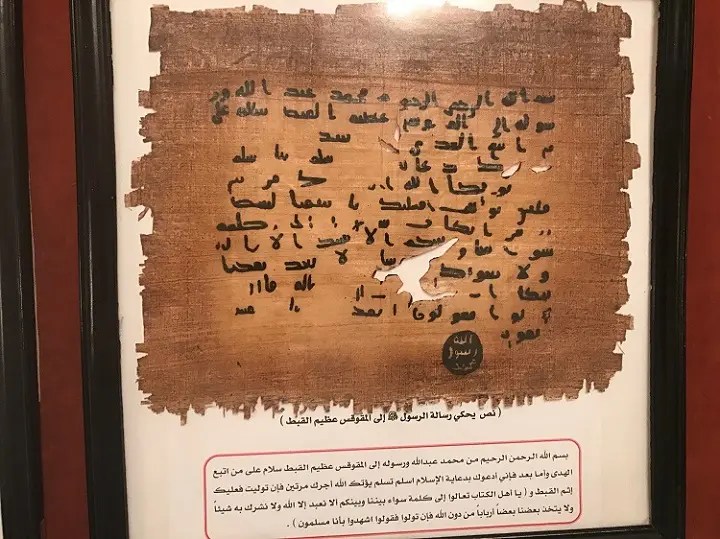
There are numerous hadith that mention that Prophet Muhammad (pbuh) wore a ring.
It is said that he acquired a ring of silver with Muhammad Rasoolullah (Muhammad, Messenger of Allah) on it, saying:
“I have acquired a ring of silver and engraved on it Muhammad Rasool Allaah, and no one should have an engraving like this.”
Al-Bukhaari (5877) and Muslim (2092)
The Holy Prophet would specifically use this as his seal on letters. Another hadith affirming this says:
“When the Prophet (peace and blessings of Allah be upon him) wanted to send a letter to the Romans, he was told that they would not read any letter unless it had a seal on it, so he took a ring of silver. It is as if I can see it shining on his hand, and engraved on it were the words ‘Muhammad the Messenger of Allah.’”
Al-Bukhaari, 5537; Muslim 2092

How to Wear a Ring
Among Sunni Muslims, there is a disagreement as to whether the Holy Prophet wore it on his left or right hand. According to Hanafi, Malaki and Hanbali schools, it is better to wear a ring on the left hand. Multiple reasons are cited, one of which being the following hadith:
It was narrated that Anaas (may Allah be pleased with him) said: The ring of the Prophet (blessings and peace of Allah be upon him) was worn on this – and his pointed to the little finger on his left hand.
Muslim (2095)
Other arguments include it being the way of the Sahaba, with many reported to have worn rings on their left hands (3), as well as the fact that it would have been easier to use for stamping seals when holding a paper with one’s right hand.
The Shafa’i school of thought recommends wearing the ring on the right hand, citing the below hadith:
It was narrated from Anas ibn Maalik (may Allah be pleased with him) that the Messenger of Allah (blessings and peace of Allah be upon him) wore a ring of silver on his right hand, in which there was an Abyssinian stone, and he used to put the stone facing towards his palm.
Muslim (2094)
Hadith suggest that the Holy Prophet wore the ring on his index finger. A narration attributed to Imam Ali says,
“The Messenger of Allah (blessings and peace of Allah be upon him) forbade us to wear rings on these two fingers” – and he pointed to the middle finger and the one next to it.
Muslim (2078)
Engravings
Many of the companions of the Prophet had engravings on their rings. Abdullah ibn Omar had his name engraved on his ring, while Hudhayfah and Abu Ubaydah had Alhamdulilah (praise be to Allah) on theirs. Imam Ali had a ring saying Allah Al-Malik, Allah the Sovereign (other sources mention it read, Allah is the Master of the Kingdom, or similar). (8)
Imam Hassan and Imam Hussain also had their rings engraved, with Al-Hasan’s reading: ‘Verily, All honour (as a whole) belongeth (only) to God’, and al-Hussains: ‘Verily God accomplisheth His purpose.’ (9)
Gemstones play a prominent role in Islamic thought. Allah (swt) has created a variety of different kinds of rocks, stones, and minerals. Some of these are located on mountains, under the ground, or even beneath the sea. Many Muslims toil to extract these raw materials into a gemstone that can be adorned on a ring, bracelet or as a pendant. Why are gemstones important in Islam?
In a reliable hadith, it is reported that Prophet Muhammad (pbuh) used to wear a silver ring with an aqeeq gemstone. Naturally, whatever the Prophet (pbuh) did was copied by his close companions, and his family also continued the legacy of wearing gemstones not only limited to the aqeeq.
At any point in his life, the Prophet (pbuh) did not act on his own volition. It was always either instructed or endorsed by Allah (swt), and therefore gemstones are not only a means of physical adornment but also carry religious significance.
Should I wear a gemstone?
Wearing a gemstone is highly recommended, owing to it being a sunnah of the Prophet (pbuh).
Maintaining a good and presentable appearance has been emphasised in both Qur’an and hadith literature. In Chapter 7, Verse 32 of the Book, God (rhetorically) asks:
“Who has forbidden the adornments and nourishment God has provided for his servants? Say, they are allowed for those who believe during the life of this world.”
Sometimes people may think that to be a good or modest Muslim, one must not pay attention to their attire, jewellery, hair, perfume and other aspects of their appearance. This could not be further from the truth, and in fact, it is the polar opposite as emphasised by the Prophet (pbuh) on many occasions, the most clear and obvious being in the following statement:
“Allah, most High is beautiful and He loves beauty. And He likes to see the evidence of His bounty on His servant. He loathes misery and pretending to be miserable.”
It is the responsibility of every Muslim to inculcate the attributes of Allah (swt) into their own life, such as mercy, compassion and forbearance, but also beauty, and wearing a gemstone is one way to do this and is indeed one of the ways the Prophet (pbuh) did so.
However, gemstones play a much larger role than being a piece of adornment in Islamic circles. Allah (swt) has blessed different gemstones with their own spiritual benefits, and sometimes even physical benefits.
Which gemstone is right for me?
In reality, there is no ‘right’ gemstone because they all have benefits to be taken advantage of, and it comes down to personal preference. Here are some of the most common gemstones and their features.
Aqeeq (Agate) (عقيق)

We will start with the aqeeq, as it is the gemstone of the Prophet (pbuh). This is a truly unique stone as it is reported to be the first stone to testify to the Oneness of Allah (swt) and Muhammad (pbuh) being His Messenger. Although we cannot perceive it, apparent inanimate objects do worship and glorify God. In the first Verse of Chapter 62 of the Holy Qur’an it is mentioned:
“Everything in the heavens and on Earth glorifies Allah.”
Thus you can imagine the benefit of wearing an aqeeq – or any gemstone for that matter – because you will constantly have something on your person that is glorifying God, which can only have a good effect on you.
There are many other narrated benefits for the aqeeq specifically, this includes its ability to:
- Repel poverty
- Provide protection from every evil
- Turn a two rakat prayer to be recorded as a 1000 rakat
- Remove hypocrisy
- Repel sadness and distress
- Brighten one’s face
- Get prayers and requests to Allah (swt) answered quicker
To learn more, visit our blog on the importance of the aqeeq stone in Islamic thought.
Feroza (Turquoise) (فيروز نيشابوري)

The Feroza stone gemstone is recognised for its benefit beyond Muslim circles. It is thought to help its wearer achieve help and victory with the help of God.
In Muslim-specific traditions, the unique aspect of the Feroza is in its ability to help us physically too. This gemstone can bring a sense of peace and tranquillity through relieving
mental health distress, general stress and tension and heal nerve problems. Furthermore, merely looking at the Feroza can help strengthen someone’s eyesight.
With respect to its spiritual benefits, these are similar to the Aqeeq. One notable narration of the Feroza is it’s guarantee in prayers being accepted when Allah (swt) told the Prophet (pbuh):
“Verily I am shy from a servant who raises his hand (that) has a turquoise (Feroza) ring on it and I reject his hand with disappointment.”
Hadeed e Chini (Hematite)

You may be familiar with the term hadeed, due to an entire chapter of the Qur’an being named after it, which in itself shows how important it is.
Whereas other gemstones have overlapping benefits, the hadeed has very unique advantages, which are to be accessed in specific scenarios and instances:
- It will give someone confidence and help them navigate difficult meetings, such as visiting a boss or judge
- Helps a woman manage her pain during childbirth
- Generally can help in any difficult moment for a believer by repelling the whispers of Satan and other harms, and strengthening the insight
It is not recommended to wear the hadeed all the time, but only when help is sought in tough moments.
The Qur’an attests to the greatness of hadeed in Verse 25 of its namesake Chapter:
“and we have made the iron, wherein is great military might and benefits for the people.”
Dur-e-Najaf (حجر در النجف) (Pure Quartz)

The Dur-e-Najaf is a rare gemstone because, as the name suggests, it can only be found in Najaf, Iraq. It has a clear glass-like complexion and is formed when it rains in the city.
Najaf is the burial place of Ali ibn Abi Talib (as), the first Imam for Shi’a Muslims, which is why this gemstone is particularly special for them. Ali (as) is also highly revered by Sunni Muslims and is fourth in line of the caliphs dear to them.
The Dur-e-Najaf has particular benefits associated with Ali (as) and the Prophet (pbuh). It is said that the reward for merely looking at the stone is similar to looking at the Prophet (pbuh) and Ali (as), and in other reports it is mentioned that it’s like visiting the Prophet (pbuh) and Ali (as).
The reward for just wearing it is equivalent to having performed an Umrah or Hajj.
Zabarjad (Peridot) (حجر الزبرجد)
The Zabarjad is an attractive gemstone that is characterised by its grass green colour, although other variations of green are possible too.
The gemstone is not only known for its spiritual benefits but physical too. It can contribute towards the prevention of many conditions such as heart sickness, relieve digestive issues, cleanse the liver and help with a variety of skin issues.
As for its spiritual powers, the Zabarjad has the capacity to help by improving and refining good character traits and promote generosity and kindness and be easy and light on the soul, and overall contribute towards general happiness and positive wellbeing.
Zumurrud (Emerald) (زمرد)

The Emerald is another gemstone known to prevent and cure many physical ailments. The stone plays an influencing role on our central nervous system and helps fend off any nerve problems. It can also:
- Prevent blood problems, such as blood clots
- Prevent back and muscle pain
- Promote good eyesight
- Relieve pangs of pregnancy and childbirth
A narration on the emerald gemstone is attributed to the Prophet (pbuh) who said it can help repel poverty. Furthermore, another narration mentions palaces in heaven being made out of emerald, so it’s the closest you can get to heaven on earth!
Yaqoot (Ruby) (ياقوت)
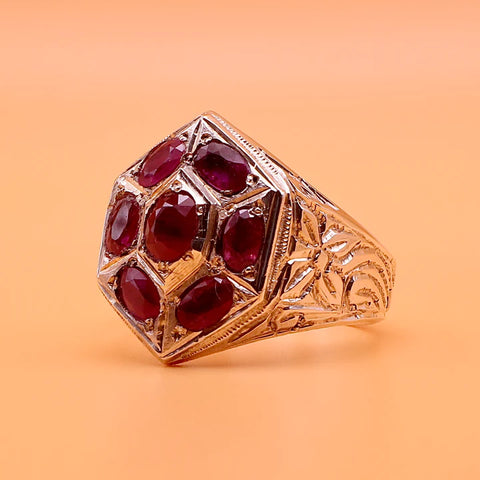
The narrations about the ruby gemstone from the family of the Prophet (pbuh) are sufficient to prove the greatness and reward of adorning ourselves with it.
Imam Ridha (as) has said:
“Wear Yaqut stone, for it will repel from you depression and stress.”
Furthermore, Imam Sadiq (as) said:
“It is recommended to wear a Yaqut ring, as it has abundant reward.”
The abundant reward(s) being spoken about are far and wide. The gemstone can help cure a variety of illnesses and conditions related to the heart, liver, blood, nervous system, digestive system and our joints. Specific illnesses it can help cure include epilepsy and migraines.
The stone is of great benefit to married couples. It can help solve problems related to sterility and libido, and for pregnant women, make childbirth easier.
In addition to physical health, the gemstone is also known to promote good mental wellbeing by helping establish healthy sleeping patterns and prevents nightmares and bad dreams.
The ruby comes in many different colours. You have the option of red, yellow or blue (sapphire).
Choosing a gemstone


Each and every gemstone has its own unique and shared characteristics. The correct gemstone is for you is simply determined by the benefits you wish to reap.
We will perhaps never know why God has placed so much emphasis in stones, but through His mercy and compassion, they are made available for us to use and benefit from, much like everything else on the earth.
Disclaimer: all reported benefits of gemstones have been taken from Islamic sources, however, wearing gemstones should not replace seeking medical advice and attention.
 Aal-e-Qutub Aal-e-Syed Abdullah Shah Ghazi