

Day: June 9, 2021

Ghadir Declaration Hadith 20,21&22
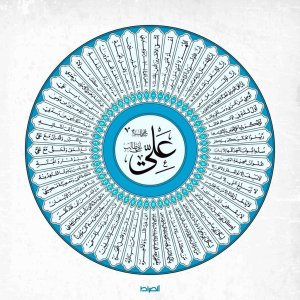
“It is narrated by Jarīr ((رضئ اللہ تعالی عنہ)) that at the ccasion of
Hajjat-ul-wadā‘ we were with the Messenger of Allāh
(). We reached a place called Ghadīr Khum. When the
call came for con gregational prayer, all the (Makkan)
Immigrants an d (Medinan) Helpers rallied there. Then the
Prophet () stood bet ween us an d addressed us: O
people! What witness do yo u bear ? They said: We bear
witness that there is no god but Allāh . He said: Then
what? They said: Surely Muhammad (صلى-الله-عليه-و-آله-وسلم) is His Abd
and Messenger. He said: then who is your guardian ? They
said: Allāh and His Messenger. Then added: who else
is your guardian? Then he made ‘Alī (AlahisSalam) stand up by
holding his hand an d, holding (‘Alī’s) both arms said:
This (‘Alī) is his master whose master is Allāh and
His Messenger. O Allāh! Be his friend who befriends him
an d be h is enemy who is his (‘Alī’s) enemy. O Allāh!
Love him who loves him (‘Alī) from among the people an d bear malice towards him who bears malice towards
him (‘Alī).”
Tabarānī transmitted it in al-Mu‘jam-ul-kabīr (2:357 # 2505);
Haythamī, Majma‘-uz-zawā’id (9:106); Ibn ‘Asākir, Tārīkh
Dimashq al-kabīr (45:179); and Hindī in Kanz-ul-‘ummāl (13:138,
139 # 36437).
“‘Amr bin Dhī Mur ((رضئ اللہ تعالی عنہ)) an d Zay d bin Arqam ((رضئ اللہ تعالی عنہ)) have
narrated that the Prophet () delivered an address on the
day of Ghadīr Khum. He said: One who has me as his
master has ‘Alī as his master. O Allāh! Be his friend who
befriends him an d be h is enemy who is his enemy, and
help him who helps him an d assist him who assists him.
Tabarānī related it in al-Mu‘jam-ul-kabīr (5:192 # 5059);
Haythamī, Majma‘-uz-zawā’id (9:104, 106); Hindī, Kanz-ul-
‘ummāl (11:609 # 32946); and Ibn Kathīr in al-Bidāyah wannihāyah (4:170).
Nasā’ī has reproduced it in Khasā’is amīr-il-mu’minīn ‘Alī bin
Abī Tālib (pp.100,101 # 96) on the authority of ‘Amr Dhī Mur.
Exegetes and hadīth-scholars have described the following
narration in the mode of revelation of the verse:
Today, I have perfected your religion
for you.“Abū Hur ayrah ((رضئ اللہ تعالی عنہ)) has narrated that one who fasted
on 18 Dhul-hijjah will receive a reward equal to 60
months of fasting. This was the day of Ghadīr Khum when
the Prophet (صلى-الله-عليه-و-آله-وسلم), holding ‘Alī bin Abī Tālib’s hand, said:
Am I not the guardian of the believers? They said: why
not, O messenger of Allāh! He said: One who has me as
his master has ‘Alī as his master. At this ‘Umar bin alKhattāb ((رضئ اللہ تعالی عنہ)) said: congratulation ! O Ibn Abī Tālib! You
are my master and (the master of) every Muslim. (On this
occasion ) Allāh revealed this verse: To day, I have
perfected your religion for you.”
Qur’ān (al-Mā’idah, the Table spread) 5:3.
2. Khatīb Baghdādī related it in Tārīkh Baghdad (8:290); Wāhidī,
Asbāb-un-nuzūl (p.108); Rāzī, at-Tafsīr-ul-kabīr (11:139); Ibn
‘Asākir, Tārīkh Dimashq al-kabīr (45:176,177); Ibn Kathīr, al-Bidāyah wan-nihāyah (5:464); and Tabarānī in al-Mu‘jam-ulawsat (3:324#).
Ibn ‘Asākir narrated it through Abū Sa‘īd al-Khudrī in Tārīkh
Dimashq al-kabīr (45:179)
Suyūtī said in ad-Durr-ul-manthūr fit-tafsīr bil-ma’thūr (2:259) that the verse (5:3) revealed when the Prophet () said
on the day of Ghadīr Khum:
من كنت مولاه فعلي مولاه.
One who has me as his master has ‘Alī as his
master.
Quran and Modern Science::MIRACLES BASED ON ARCHAEOLOGY AND THE PEOPLE OF SABA
109- …Do they not travel through the earth and see what
was the end of those before them?
12-Joseph, 109
So far our attention has been focused on the miraculous revelations of
the Quran and our effort has been to try to work out correlations with
natural phenomena. The four preceding chapters were reserved for
philosophical issues expounded in the Quran that had had no dialectic background at the time of its descent. The said four chapters must
be classified in a separate category. The present and the next three
chapters will deal with archaeological findings and their relevance to
the ancient communities. Archaeological data differ from the natural
sciences in many respects and deriving erroneous conclusions from
them is all the more likely. In due consideration of these findings,
those tribes that have disappeared must be examined accordingly.
The accounts given in the Quran about ancient peoples are not
mere stories. They are mostly parables illustrating a moral or spiritual
lesson.
128- Did they not learn from the many generations that We
destroyed before them, in whose haunts they move? Verily,
these are signs for those who possess intelligence.
20-Ta-He, 128THE PEOPLE OF SHEBA AND
THE FLOOD FROM THE DAM
15- There was a sign for the people of Sheba in their habitations: two gardens, one on the right and the other on the
left. “Eat from your Lord’s provisions and be thankful to
Him. Good land and a forgiving Lord.”
16- But they turned away and We sent against them the
flood from the dam. And We converted their two gardens
into gardens of bitter fruit, and tamarisks and a few sparse
cedar-trees.
34-Sheba, 15-16
Some of the accounts we come across in the Quran also exist in the
Old and the New Testaments. As the flood that followed the burst of
the dam referred to in the Quran dates from after Christ, it is not
mentioned in the Old and the New Testaments.
The “flood from the dam” is also referred to as the “arim flood,”
“arim” meaning “dam” in Arabic. Mawdudi, a contemporary Pakistani
scholar, made the following comment: “The word ‘arim’ used in the
expression ‘seyl-ul Arim’ derived from the word ‘arimen’ meaning ‘dam’
is used in Southern Arabia. This word was frequently seen during the
excavations at Yemen. For instance, in a tablet dictated by Abraha, the
ruler of Yemen of Ethiopian origin, after the restoration of the great
Marib Dam dated 542-543 A.D. the said word was often used. So the
expression ‘seyl ul arim’ means the flood disaster in the wake of the burst
dam.” The capital of Sheba was Marib. The people of Sheba had
become prosperous thanks to this dam. Pliny describes this region as
a green spot covered by lush vegetation. The height of the dam at
Marib was 16m and its width 60m, while the length measured 620m.
The area irrigated was 9600 hectares, of which 5300 hectares were in
the southern plain and 4300 hectares in the northern plain (See Cavit
Yalç›n, The Perish of Nations).
The “two gardens” referred to in the Quran were these sumptuous
gardens in the said valleys. Thanks to this dam and the irrigation system, this region was renowned as the best spot in Yemen, well irrigated and fertile. The Frenchman J. Holévy and the Austrian Glaser
proved the existence of the Marib dam. In documents written in the
Himer dialect, it was said that the said dam had made the land fertile.The year of its destruction is believed to be 542 A.D. In the wake of
its destruction the “arim flood” occurred and ravaged the entire area.
Archaeologist Werner Keller also corroborates the account as
reported in the Quran: “The fact that such a dam existed and that its
destruction ravaged the city demonstrates that the account given in the
Quran about the destruction of the gardens is a true account.”
As we read of the disaster that the people of Sheba faced, one cannot help feeling that this was the consequence of the ingratitude of
the people for the gifts with which they had been endowed. We must
acknowledge the fact that the Creator of all the beauties is God,
Whom we must extol and give thanks and try to avoid the fate of the
people of Sheba.
17- That is how We requited them for their ingratitude.
And never do We give requital except to those who are
ungrateful.
34-Sheba, 17

Can Jinns harm Humans
Jinns (made from smoke/fire) are not a myth. May be to a Non Muslim (rarely) this concept (of reality) be difficult to digest, but for a Muslim who believes in Allah then he wouldn’t find the below verse difficult to comprehend “And I (Allaah) created not the jinn and mankind except that they should worship Me (Alone)” [al-Dhaariyaat 51:56] Abu Tha’labah al-Khushani said: “The Messenger of Allaah said: ‘The jinn are of three types: a types that has wings, and they fly through the air; a type that looks like snakes and dogs; and a type that stops for a rest then resumes its journey.” [Shaykh al-Albaani said in al-Mishkaat (2/1206, no. 4148): al-Tahhaawi and Abu’l-Shaykh reported it with a saheeh isnaad] In Arabic the word mass (possession) is used to refer to junoon (insanity). See Lisaan al-‘Arab (6/217).
PROOFS FROM QUR’AN
Allah says “Those who eat Ribaa [usury] will not stand (on the Day of Resurrection) except like the standing of a person beaten by Shaytaan (Satan) leading him to insanity” [al-Baqarah 2:275] Tafseer of the Above ayaah for a better understanding : 1) Imam Al-Qurtubi said in his Tafseer (part 3, p. 355): “This aayah is proof (showing) that those people are wrong who deny that epilepsy is caused by the jinn and (instead) claim that its causes are only physical, and that the Shaytaan does not enter people or cause madness.” 2) Ibn Katheer said in his Tafseer (part 1, p. 32), after mentioning the aayah quoted above: “They will not rise from their graves on the Day of Resurrection except like the way in which the epileptic rises during his seizure, when he is beaten by the Shaytaan
PROOFS FROM AHADEETH
1) According to a saheeh hadeeth narrated by al-Nasaa’i from Abu’l-Yusr, the Prophet (peace and blessings of Allaah be upon him) used to pray: “Allaahumma innee a’oodhu bika min al-taraddi wa’l-haram wa’l-gharaq wa’l-harq, wa a’oodhu bika an yatakhabatani al-shaytaan ‘ind al-mawt ( O Allaah, I seek refuge with You from being thrown from a high place, old age, drowning and burning; and I seek refuge with You from being beaten by the Shaytaan at the time of death).” [ Nasaee’ and also narrated by Hakim in Mishkaak al Masaabeeh vol 1 p 256]
Commenting on this hadeeth in Al-Fayd (part 2, p.148), al-Manaawi said: “[The phrase] ‘and I seek refuge with You from being beaten by the Shaytaan at the time of death’ means, lest he should wrestle with me and play with me, and damage my religious commitment or mental state (at the time of death) by means of his insinuating whispers which cause people to slip or lose their minds. The Shaytaan could take control of a person when he is about to depart this world, and misguide him or stop him from repenting…”
2) In a number of Hadiths from the Messenger of Allaah Salallaahu alayhi wasallaam, recorded by Imaam Ahmad and Al-Bayhaqi, it is reported that he met a boy who was possessed. So the Prophet Salallaahu alayhi wasallaam began saying, “Come out, O enemy of Allaah. Come out, O enemy of Allaah.”
In some versions he said, Come out, O enemy of Allaah. Come out, O enemy of Allaah.”(Ahmad 4/171, 172, Sunnan Ibn Majah, Hadith#3548: Musnad Imam Ahmed ibn Hambal, Vol#4, Hadith#171/172; Al-Baihaqi; and Al-Hakim: Al-Hakim classed this Hadith as SAHIH)
then the boy was healed after the Jin had left him. It was narrated that ‘Uthman bin Abul-‘As said: “When the Messenger of Allah (ﷺ) appointed me as governor of Ta’if, I began to get confused during my prayer, until I no longer knew what I was doing. When I noticed that, I travelled to the Messenger of Allah (ﷺ), and he said: ‘The son of Abul-‘As?’ I said: ‘Yes, O Messenger of Allah.’ He said: ‘What brings you here?’ He said: ‘O Messenger of Allah, I get confused during my prayer, until I do not know what I am doing.’ He said: ‘That is Shaytaan. Come here.’ So I came close to him, and sat upon the front part of my feet then he struck my chest with his hand and put some spittle in my mouth and said: اخْرُجْ عَدُوَّ اللَّهِ ‘Get out, O enemy of Allah!’ He did that three times, then he said: ‘Get on with your work.’” ‘Uthman said: “Indeed, I never felt confused (during my prayer) after that.” [Sunan Ibn Maajah (3548), Chain Saheeh] In another hadeeth This companion Uthman bin Abul As was affected by waswasa in salaah coused by shaytaan called “khanzab” as stated in the narration in Sahih Muslim.
In that narration the Prophet (sallAllahu alayhi was sallam) told him to seek refuge in Allaah and spit to his left in salaah. Below are the ahadeeth explaining these situations of Jin possessions in detail “Abdullah bin Numayr narrated to us, from Uthmaan bin Hakeem, he said: Abdur Rahmaan bin Abdul Azeez informed me, from Ya’la bin Murrah, he said: I have seen three things from the Messenger of Allaah (sallallaahu alayhi wasallam) that no one else would have seen before me nor after me. I went out with the Prophet in a journey until when we reached a certain street; we passed by a woman who was sitting holding a child with her. She said, ‘O Messenger of Allaah, this child has been afflicted with a curse and it worries us. He gets attacked in a day for I don’t know how many times.’ The Prophet said, ‘Hand him to me’ so she lifted the child to him and he sat him down with a saddleback between him and the boy. They he opened his mouth and put some spittle in it for three times and he said, ‘In the name of Allaah, I am the slave of Allaah, go away O enemy of Allaah.’ Then he gave the child to her and said, ‘when we return t o this place, tell us how it went?’ Then we went and later came back to that place and we found that woman along with three (other narrations say: “two”) lambs. The Prophet asked, ‘How is the child?’ She replied, ‘By the one who sent you with truth, we hav e not seen anything wrong in him until now; please take these lambs.’ The Prophet said, ‘Get down and take only one of them and return the rest to her.’” [Musnad Ahmed (29/89) H. 17548]
Narrated Yu`laa bin Murrah: …and a woman approached the Prophet صلى الله عليه وسلم and said: This son of mine has traces of insanity for the past seven years, and it overtakes him twice every day. The Prophet صلى الله عليه وسلم said: “Bring him close to me.” So he was brought him to him. The Prophetصلى الله عليه وسلم spat into his mouth and said: “Come out, enemy of Allaah, I am the Messenger of Allaah.” The Prophet صلى الله عليه وسلم then said to her: “When we come back, inform us of what happens.” When the Messenger of Allaah صلى الله عليه وسلم returned, she entertained him and she had two rams, some yoghurt and butter. The Prophet صلى الله عليه وسلم said to me: “Take (one of these) ram.” So I chose whichever I wished. Then she said: By the One who has honored you! We have not seen anything (wrong) with him (the boy) since you left us. [al-Haakim in his Mustadrak (4163) and said the chain of narration is “Saheeh” and al-Dhahabee agreed with him. Imaam Ahamd also reported it with a different chain in his Musnad (4/170, 171, 172). Al-Mudhiree said in “al-Targheeb” (3/158), its chain is “Jayyid” (good). Shaikh al-Albaanee said in “al-Saheehah” (485): “Overall, the Hadeeth, with all these supporting chains, is “Jayyid” (good), and Allaah knows best.”]
`Uthmaan bin al`Aas رضي الله عنه said: When Allaah’s Messenger صلى الله عليه وسلم appointed me as the governor of al-Taaif, something began to occur to my mind during the course of my prayer till I did not know what I was praying. When I felt this (state), I rode to Allaah’s Messenger صلى الله عليه وسلم upon which he said: “(Is it) Ibn Abi al-`Aas?” I said: Yes, Allaah’s Messenger. He said: “What has brought you?” I said: Allaah’s Messenger, something occurs to my mind during my prayer till I do not know what I pray. He صلى الله عليه وسلم said: “This is (the act of) the devil. Come near.” Then I drew near him and sat down on my toes. Upon this he struck my chest with his hand and put his saliva in my mouth and said: “Come out, O enemy of Allaah!” He said this thrice and then said: “Assume your job (in al-Taaif).” The sub-narrator added that `Uthmaan later said: In all his time, I do not remember it (the Shaytaan) confounding me after it.” [Sunan Ibn Majah (3548) and authenticated by Shaikh al-Albaanee in Saheeh Ibn Majah (2874) and also in “al-Saheehah” (2918). Shaikh al-Albaanee further said: This narration has been reported through four different chains. Firstly: by al-Tabaraanee in “Mu`jam al-Kabeer (8347) and al-Haithamee (9/3) with a “Hasan” (good) chain. Secondly: by al-Baihaqee in “Dalaail al-Nubuwah (5/308) with a Saheeh chain. Thirdly: by Abu Na`eem in “al-Dalaail” and al-Baihaqee with a Saheeh chain. The fourth: is the above narration of Ibn Majah and it is Saheeh]
It was narrated that Matr bin Abdul Rahman said: Umm Abaan told me, from her father that her grandfather brought a son of his – or a son of his sister’s – to the Messenger of Allaah صلى الله عليه وسلم. My grandfather said: When we came to Messenger of Allaah صلى الله عليه وسلم in Madeenah, I said: “O Messenger of Allaah صلى الله عليه وسلم, I have with me son of mine – or a son of my sister’s – who is insane. I have brought him to you so that you may pray to Allaah for him.” The Messenger of Allaahصلى الله عليه وسلم said: “Bring him to me.” So, I went to him (the child) who was with the caravan, took off his travelling garments and dressed him in two good clothes. Then I took him by the hand and brought him to the Messenger of Allaah صلى الله عليه وسلم. He said: “Bring him close to me and turn his back towards me.” Then he took hold of his garment at the top and bottom, and started hitting his back, until I could see the whiteness of his (the Prophet’s) armpits, and he was saying: “Come out, enemy of Allaah; come out enemy of Allaah.” Then the child’s eyes started to look different than they had before. The Messenger of Allaah صلى الله عليه وسلم sat him down in front of him and prayed for him, and wiped his face. After the Messenger of Allaah صلى الله عليه وسلم prayed for him, there was no one among the delegation who was better than him (the child). [Al-Tabaraani]
It was narrated that Jaabir bin `Abdullaah said: We went out with the Messenger of Allaah صلى الله عليه وسلم on the campaign of Dhaat al-Riqaa`. When we were in Harrat Waaqim (name of a place), a Bedouin woman brought a son of hers to the Messenger of Allaah صلى الله عليه وسلم and said: “O Messenger of Allaah صلى الله عليه وسلم, the Shaytaan has got hold of this son of mine and I cannot do anything.” He said: “Bring him close to me.” So she brought him close to him, and he said: “Open his mouth.” So, she opened it and the Messenger of Allaah صلى الله عليه وسلم spat into it, then he said:“be gone, enemy of Allaah, for I am the Messenger of Allaah.” He said that three times and he said: “Take your son, there is nothing wrong with him (now), and the problem that he suffered will not come back to him.” [Al-Tabaraani in al-awsat and Al-Bazzaar]
Saffiyah inb Huyay narrated that the Prophet صلى الله عليه وسلم said: “The Shaytaan flows through the son of Aadam like his blood.” [Saheeh al-Bukhaaree (2035, 2038, 2039, 3101, 3281) and Saheeh Muslim (4047, 4048)]
3) Saying Bismillaah (in the Name of Allaah) before entering one’s home, before eating or drinking, and before having intercourse will also keep the Shaytaan from entering the house or partaking with a person in his food, drink and sexual activity. Similarly, mentioning the name of Allaah before entering the toilet or taking off one’s clothes will prevent the jinn from seeing a person’s ‘awrah or harming him, as the Prophet (peace and blessings of Allaah be upon him) said, “To put a barrier that will prevent the jinn from seeing the ‘awrah of the sons of Aadam, let any one of you say ‘Bismillaah’ when entering the toilet.” (Reported by al-Tirmidhi, 551; Saheeh al-Jaami’, 3611).
4) In al-Saheeh (Al Bukhari) it is narrated that the Prophet (peace and blessings of Allaah be upon him) said: ‘The Shaytaan flows through the son of Adam as his blood flows…
5) Ahmad (7762) and Muslim (780) narrated from Abu Hurayrah (may Allaah be pleased with him) that the Messenger of Allaah (peace and blessings of Allaah be upon him) said: “Do not make your houses (like) graveyards, for the Shaytaan flees from a house in which Soorat al-Baqarah is read.”
6) Abdullah b. Mas’ud reported that Allah’s Messenger (may peace be upon him) said: There is none amongst you with whom is not an attache from amongst the Jinn (devil). They (the Companions) said: Allah’s Messenger, with you too? Thereupon he said: Yes, but Allah helps me against him and so I am safe from his hand and he does not command me but for good. (Sahih Muslim, Book #039, Hadith #6757)
A verse verifying the above hadith : “Likewise, we have made for every Prophet an enemy, Shaytaans from among mankind and the Jinn.” (Quran 6:112)
7) Abu Huraira reported Allah’s Messenger (may peace be upon him) as saying: The crying of the child(starts) when the satan begins to prick him. (Sahih Muslim, Book #030, Hadith #5839)
8) Abu Huraira reported Allah’s Messenger (may peace be upon him) as saying: No child is born but he is pricked by the satan and he begins to weep because of the pricking of the satan except the son of Mary and his mother. Abu Huraira then said: You may recite if you so like (the verse):” I seek Thy protection for her and her offspring against satan the accursed” (iii. 36). This hadith has been narrated on the authority of Zuhri with the same chain of transmitters (and the words are):” The newborn child is touched by the satan (when he comes in the world) and he starts crying because of the touch of satan.” In the hadith transmitted on the authority of Shu’aib there is a slight variation of wording. (Saheeh al-Bukhaaree (3286, 3431, 4548) and Saheeh Muslim (4370, 4371, 4813)
9) A type of the earthbound jinn is called ‘qareen’ (companion). One of these accompanies each human being from his birth until his death. This jinn encourages a man’s lower desires and constantly tries to divert him from righteousness. Narrated Abdullaah ibn Mas’ud: Allaah’s Apostle صلى الله عليه وسلم said: “Every one of you has been assigned a companion from the Jinn.” They (the Companions) said: Allaah’s Apostle صلى الله عليه وسلمwith you too? Thereupon he said: “Yes, but Allaah helps me against him and so I am safe from his hand and he does not command me but for good.” [Saheeh Muslim (5093)]
This is further verified by : “His companion (shaitaan named/called qareen) will say: ‘Our Lord! I did not push him to transgression, (in disbelief, oppression, and evil deeds), but he was himself in error far astray.’ [Qaaf 50:27-29]
Ibn Katheer said: “‘His companion (qareen) will say’ – Ibn ‘Abbaas (may allaah be pleased with him), Mujaahid, Qataadah and others said: this refers to the devil who is appointed to accompany him. ‘Our Lord! I did not push him to transgression’ means, he will disown that person on the Day of Judgement, and will say, ‘Our Lord! I did not push him to transgression’ meaning, I did not lead him astray.
It was narrated from ‘Abd-Allaah ibn ‘Umar that the Messenger of Allaah (peace and blessings of Allaah be upon him) said: “If anyone of you is praying, he should not let anyone pass in front of him; if that person insists then he should fight him for there is a QAREEN (shaitaan) with him.”
[Narrated by Muslim, 506]
10) It was narrated that Abu Sa’eed al-Khudri (may Allaah be pleased with him) said: “The Messenger of Allaah (peace and blessings of Allaah be upon him) used to seek refuge with Allaah from the jinn and from the evil eye until the Mi’wadhatayn were revealed, and when they were revealed he started to recite them and not anything else.”
(Narrated by al-Tirmidhi, 2058; he said it is hasan ghareeb. Also narrated by al-Nasaa’i, 5494; Ibn Maajah, 3511. The hadeeth was classed as saheeh by al-Albaani (may Allaah have mercy on him) in Saheeh al-Jaami’, 4905).
11) It was narrated that Abu Hurayrah said: “The Messenger of Allaah (peace and blessings of Allaah be upon him) put me in charge of guarding the zakaah of Ramadaan. Someone came to me and started grabbing handfuls of the food. I took hold of him and said, ‘I will take you to the Messenger of Allaah (peace and blessings of Allaah be upon him).’ He said, ‘I will teach you some words by means of which Allaah will benefit you.’ I said, ‘What are they?’ He said, ‘When you go to your bed, recite this aayah (interpretation of the meaning): “Allaah! Laa ilaaha illa Huwa (none has the right to be worshipped but He), Al-Hayyul-Qayyoom (the Ever Living, the One Who sustains and protects all that exists)…” [al-Baqarah 2:255] – until he completed the aayah. Then Allaah will appoint a guard for you who will stay with you and no shaytaan (devil) will come near you until morning.’ The Messenger of Allaah (peace and blessings of Allaah be upon him) asked me, ‘What did your prisoner do last night?’ I said, ‘O Messenger of Allaah, he taught me something, and claimed that Allaah would benefit me by it.’ He said, ‘What was it?’ I said, ‘He taught me to recite Aayat al-Kursiy when I go to bed, and said that no shaytaan would come near me until morning, and that Allaah would appoint a guard for me who would stay with me.’ The Prophet (peace and blessings of Allaah be upon him) said, ‘He told you the truth, although he is an inveterate liar. That was the Shaytaan.’” (Narrated by al-Bukhaari, 3101)
12) It was narrated from al-Nu’maan ibn Basheer (may Allaah be pleased with him) that the Prophet (peace and blessings of Allaah be upon him) said: “Allaah inscribed a book two thousand years before He created the heavens and the earth, from which the last two aayahs of Soorat al-Baqarah were revealed. If they are recited for three nights, no shaytaan (devil)will remain in the house). (Narrated by al-Tirmidhi, 2882. This hadeeth was classed as saheeh by al-Albaani in Saheeh al-Jaami’, 1799).
13) It was narrated that Suhayl ibn Abi Saalih said: “My father sent me to Bani Haarithah, and there was with me a slave of ours, or a companion of ours. Someone called out his name from a garden, and the one who was with me looked into the garden and did not see anything. I mentioned that to my father, and he said, ‘If I had known that this was going to happen to you, I would not have sent you. But if you hear a voice then make the call for prayer, for I heard Abu Hurayrah (may Allaah be pleased with him) narrating that the Messenger of Allaah (peace and blessings of Allaah be upon him) said: “When the Shaytaan hears the call to prayer, he runs away fast.’(Narrated by Muslim, 389).
The word translated here as “runs away fast” may also mean “farting.(out of fear) “
Another similar hadith has been transmitted below :
The jinn that appear in horrible, rapidly changing forms in the presence of human beings are called ‘ghool’ (plural gheelan).
The Prophet said, ‘If the gheelan appear and transform themselves beforeyou, call the athaan’ [Al Musnad Ahmad , 142777, Musnad al bazar hadith 1247 and ibn a’adi in “al kamil” 5/1760]
Note : the sanad of the above references (except Al Muslim) have some weakness because it is not known who hasan al basri (r.h) actually heard this narration from , i.e from Jabir or from Sa’ad. Nevertheless, the matan (content) of athaan scaring away the Jinn is proven saheeh and thus one can use this as a defense or attack tactic when required.
14) Abu as-Sa’ib, the freed slaved of Hisham b. Zuhra, said that he visited Abu Sa’id Khudri in his house, (and he further) said:
I found him saying his prayer, so I sat down waiting for him to finish his prayer when I heard a stir in the bundles (of wood) lying in a comer of the house. I looked towards it and found a snake. I jumped up in order to kill it, but he (Abu Sa’id Khudri) made a gesture that I should sit down. So I sat down and as he finished (the prayer) he pointed to a room in the house and said: Do you see this room? I said: Yes. He said: There was a young man amongst us who had been newly wedded. We went with Allah’s Messenger (may peace be upon him) (to participate in the Battle) of Trench when a young man in the midday used to seek permission from Allah’s Messenger (may peace be upon him) to return to his family. One day he sought permission from him and Allah’s Messenger (may peace be upon him) (after granting him the permission) said to him: Carry your weapons with you for I fear the tribe of Quraiza (may harm you). The man carried the weapons and then came back and found his wife standing between the two doors. He bent towards her smitten by jealousy and made a dash towards her with a spear in order to stab her. She said: Keep your spear away and enter the house until you see that which has made me come out. He entered and found a big snake coiled on the bedding. He darted with the spear and pierced it and then went out having fixed it in the house, but the snake quivered and attacked him and no one knew which of them died first, the snake or the young man. We came to Allah’s Apostle (may peace be upon him) and made a mention to him and said: Supplicate to Allah that that (man) may be brought back to life. Thereupon he said: Ask forgiveness for your companion and then said: There are in Medina jinns who have accepted Islam, so when you see any one of them, pronounce a warning to it for three days, and if they appear before you after that, then kill it for that is a devil. [Ref: Saheeh Muslim, Book 26, Hadith 5557, Also see Muwatta Malik Book 54, Hadith 33, Sunan Abi Dawud 5257, ]
Zayd ibn Aslam reported from his father that ‘Umar used to say on the minbar, “O people! Improve your homes but be careful about these house snakes [which are a form of jinn] before they make you afraid. Those among them which are Muslim will not be clear to you and, by Allah, we have not made peace with them since the time when we treated them as an enemy.” [Adaab Al Mufrad, 446, saheeh Albani]
15) It was narrated from ‘Aishah that Umm Habibah bint Jahsh who was married to’ Abdur-Rahman bin ‘Awf suffered from Istihadah (non-mentrual vaginal bleeding) and did not become pure. Her situation was mentioned to the Messenger of Allah (s.a.w) and he said:
‘That is not menstruation, rather it is a kick (from the shaitaan) in the womb, so let her work out the length of the menses that she used to have, and stop praying (for that period of tie), then after that period of time), then after that let her perform Ghusl for every prayer. ‘[Sunan Abu Dawood Book 1, Hadith 211 Saheeh]
16) THE JINN CAN ALSO KIDNAP A MAN
أنَّ رجلًا من قومِه من الأنصارِ خرج يُصلِّي مع قومه العشاءَ فسبَتْه الجنُّ ففُقِدَ فانطلقَتِ امرأتُه إلى عمرَ بنِ الخطابِ رضيَ اللهُ عنهُ فقصَّتْ عليه القصةَ فسأل عنه عمرُ قومَه فقالوا نعم خرج يصلي العشاءَ ففُقِدَ فأمرها أن تربَّصَ أربعَ سنين فلما مضتِ الأربعُ سنينَ أتتْه فأخبرتْه فسأل قومَها فقالوا نعم فأمرها أن تتزوَّجَ فتزوَّجت فجاء زوجُها يُخاصِمُ في ذلك إلى عمرَ بنِ الخطابِ رضيَ اللهُ عنهُ فقال عمرُ بنُ الخطابِ رضيَ اللهُ عنهُ يغيبُ أحدُكمُ الزمانَ الطويلَ لا يعلم أهلُه حياتَه فقال له إن لي عذرًا يا أميرَ المؤمنينَ فقال وما عُذرُكَ قال خرجتُ أُصلِّي العشاءَ فسَبَتْني الجن فلبثتُ فيهم زمانًا طويلًا فغزاهم جنٌّ مؤمنون أو قال مسلمون شك سعيدٌ فقاتَلوهم فظَهروا عليهم فسبَوا منه سبايا فسبَوْني فيما سبَوْا منهم فقالوا نراك رجلًا مسلمًا ولا يحلُّ لنا سَبيُكَ فخيَّروني بين المقامِ وبين القُفولِ إلى أهلي فاخترتُ القفولَ إلى أهلي فأقبلُوا معي أما بالليلِ فليس يحدِّثوني وأما بالنهارِ فعصًا أتبعُها فقال له عمرُ رضيَ اللهُ عنهُ فما كان طعامُك فيهم قال الفولُ وما لم يذكرِ اسمُ اللهِ عليه قال فما كان شرابُك فيهم قال الجدفُ قال قتادةُ والجدفُ ما لا يُخَمَّرُ من الشَّرابِ قال فخيَّره عمرُ بين الصَّداقِ وبين امرأتِه
[Partly translating] At the time of ‘Umar, a man was kidnapped by the jinn and stayed with them for four years, then he came back and told the people that some mushrik jinn had kidnapped him, and he stayed with them as a prisoner, then some Muslim jinn launched a campaign against them and defeated them, and brought him back to his family. [Ref: This was mentioned in Manaar al-Sabeel and elsewhere. Manaar al-Sabeel, 2/88. The story of the kidnapped man was reported by al-Bayhaqi (7/445-446) and its Isnaad was classed as Sahih by al-Albaani in al-Irwaa’, 6/150, no.1709, Also see shaykh Muqbil bin Haade’s fatwa on this :
Shaykh_Muqbil_Can_the_Jinn_kidnap_Humans?-0
Shaykh Muqbil Can the Jinn kidnap Humans?-0]
17) Jinn can have sexual relations with women if their husbands do not mention the nameof Allah before engaging in sex. [Rooh al Maanee vol 27 p 119] Ibn al Jawsee says that a jinn canhave sex with women inthe same way that men do. [Zaad al Maseer fee Ilm at Tafseer vol 8 p 122]
As Suyootee was of the same opinion.[Al Alaam vol 3 p 301]. Ibn Taymeeyah said that jinn and humans can have sex with one another and beget children, this is a frequent occurance that is wellknown to many. [Majmoo al Fatawaa vol 19 p 39]
A minority opinion is that of Al Maawardee who said, ‘the intellectual rejects the possibility of sex between human and jinn due to their differences in species, nature and senses. Man is corporeal, jinn is incorporeal. Thus mixing, would not be possible with such difference and offspring would be inconceivable’. [Al Jaami li Ahkaam al Quran vol 13 p 211] Note: Points 16 & 17 have been witnessed by me and my family, also many others whom we know to be true even today.
………………………………………………………………………………………..
the above findings are only a small portion of knowledge regarding the Jinns and their effects. It is unanimously agreed not only by scholars but also a vast majority of the population or atleast the Muslim Ummah ! that Black magic, Jinns and etc exist and their affects are not only dangerous but also very often to see. It is known that (evil) Jinns trouble people by scaring them, or messing with their household and other daily activities. They enjoy this but All praise is to Allah who gave us the weapon to fight and overpower these Jinns.


Chapter on Sayyidina Rasulullah Sallallahu ‘Alayhi Wasallamleaning on something other than a pillow
The pillow has been discussed in the previous chapter. Besides this Sayyidina Rasulullah Sallallahu ‘Alayhi Wasallam took support of people at the time of illness, and also leaned on them as is evident from the narrations. The author has therefore written this chapter separately. Two narrations are mentioned in this chapter.
(128) Hadith Number 1
Anas Radiyallahu ‘Anhu reports that Rasulullah Sallallahu ‘Alayhi Wasallam became ill. For this reason he came out of his room With the support of Usaamah Radiyallahu ‘Anhu, and led the Sahaaba in salaah. Rasulullah Sallallahu ‘Alayhi Wasallam wore a Yamaani printed shawl at that time.Commentary
This has been discussed in hadith number six in the ‘Chapter on the Clothing of Sayyidina Rasulullah Sallailahu ‘Alayhi Wasallam.’
back(129) Hadith Number 2
Fadl bin ‘Abbaas Radiyallahu ‘Anhu says: “I came to Rasulullah Sallallahu ‘Alayhi Wasallam at the time of his last illness before he passed away. A yellow band was fastened around the mubaarak head of Rasulullah Sallallahu ‘Alayhi Wasallam. I greeted him and after replying, he asked me to fasten the band tightly around his mubaarak head. I carried out his request. Thereafter Rasulullah Sallallahu ‘Alayhi Wasallam sat up, then stood up supporting himself on my shoulder, and entered the masjid”. There is a detailed-incident in this hadith.Commentary
Sayyidina Rasulullah Sallallahu ‘Alayhi Wasallam fastened the band because of a headache. Some ‘ulama have translated it as a turban instead of a band. It is evident that Sayyidina Rasulullah Sallallahu ‘Alayhi Wasallam wore different coloured turbans. The proof of the yellow turban is taken from this hadith. The incident which Imaam Tirmidhi has referred to has been mentioned in detail in the kittab ‘Majma’-uz Zawaa-id’. Sayyidina Fadl Radiyallahu ‘Anhu says: I attended the noble assembly of Rasulullah Sallallahu’Alayhi Wasallam. I noticed that Rasulullah Sallallahu ‘Alayhi Wasallam had a fever and a band was fastened around his mubaarak head. Rasulullah Sallallhu ‘Alayhi Wasallam said: ‘Hold my hand’. I held his hand and (we) entered the masjid. Rasulullah Sallallahu ‘Alayhi Wasallam sat on the mimbar, and said: ‘Call the people’. I went to gather the people. After reciting the hamd and thanaa (thanks and praises to Allah) he addressed them on this subject: ‘The time has come near when I shall leave you. Whomsoever I had hit on the back may take revenge. Whomsoever I have dishonoured or disgraced wrongfully, let him take revenge by dishonouring me. Let no person fear that if he takes revenage I shall hate him, for it is not my nature to do so, nor is it appropriate for me to do so. Remember, that person shall be very dear to me who avenges himself, or forgives me, so that I may meet my creator in happiness and without fear. I will not consider it sufficient to announce this once only, but shall announce it again”. Thereafter he descended from the mimbar. After performing the zuhr salaah, he again ascended the mimbar and made the same announcement. He also repeated about the hatred as mentioned above, and added that if anyone owe’s anything, let him pay it because the disgrace of this world is much less than the disgrace of the hereafter. A person stood up and said: “Oh Rasulullah, you owe me three Dirhams’. Sayyidina Rasulullah Sallallahu ‘Alayhi Wasallain said: ‘I will not refute someone’s claim, nor will I make him swear an oath, but I would like to ask you, how and when was it taken?’ He replied: ‘A beggar once came to you. You asked me to give him three Dirhams’. Sayyidina Rasulullah Sallallahu ‘Alayhi Wasallam told Sayyidina Fadl Radiyallahu ‘Anhu to pay him the three Dirhams. Thereafter another person got up and said: ‘I owe the Baytul Maal (Public Treasury) three Dirhams, which I cheated and wrongfully took from it’. Sayyidina Rasulullah Sallallahu ‘Alayhi Wasallam asked: ‘Why did you cheat?’ He replied: ‘At that time I was in need and very desperate’. Sayyidina Rasuluilah Saliallahu ‘Alayhi Wasallam asked Sayydina Fadl Radiyallahu ‘Anhu to collect the money from him. Thereafter Sayyidina Rasulullah Sallallahu ‘Alayhi Wasallamn annouced : ‘If anyone fears one’s habits, let him ask for a du’aa (because the time for departure is near). A person got up and said. ‘Oh Rasulullah, I am a liar, a munaafiq (hypocrite) and I sleep alot. ‘Sayyidina Rasulullah Sallallahu ‘Alayhi Wasallam made du’aa for him, ‘Oh Allah grant him truthfulness, a strong (and complete) imaan (faith), and cure from the illness of sleeping (a lot)’. After that another person stood up and said: ‘Oh Rasulullah, I am a liar, a munaafiq and there is no sin which I have not committed’. Sayyidina ‘Umar Radiyallahu ‘Anhu warned him that he was openly declaring his sins. Sayyidina Rasulullah Saliallahu ‘Alayhi Wasallam said: ‘O ‘Umar, be calm, the disgrace of the world is lighter and better than the disgrace of the hereafter’. Sayyidina Rasulullah Sallallahu ‘Alayhi Wasallarn made du’aa for that person, ‘Oh Allah, grant him truthfulness and a strong imaan, and make his life a better one’. Thereafter Sayyidina ‘Umar Radiyallahu ‘Anhu got up and said something to the congregation. In reply to which Sayyidina Rasulullah Sallallahu ‘Alayhi Wasallam said: Umar is with me and I am with ‘Umar. After me ‘Umar will remain on the truth wherever he goes’. In another hadith it is stated that a person got up and said : ‘O Rasulullah, I am a coward and have the sickness of sleeping alot’. Sayyidina Rasulullah Sallallahu ‘Alayhi Wasallam also made dua for him Sayydina Fadl Radiyallahu ‘Anhu says: ‘We saw thereafter, that there was no person braver than him’. After this Sayydina Rasulullah Sallallahu ‘Alayhi Wasallam went to the room of Sayyiditina Aayeshah Radiyallahu ‘Anha and repeated to the womenfolk what he had said to the menfolk. One Sahaabiyyah got up and said: ‘Oh Rasulullah, I am helpless from my tongue’. Sayydina Rasulullah Sallallahu ‘Alayhi Wasallam made dua for her’. Majma-uz-Zawaa-id.
These people called them self munaafiq (hypocrite) because of the fear they had of Allah. A few incidents are related in the second chapter of the ‘Stories of the Sahaabah Radiyallahu ‘Anhum’. Due to the great fear that over came them, thay sometimes thought they had become hypocrites. Even Sayydina Abubakr Siddiqe Radiyallahu ‘Anhu, who is the best person among the entire ummah of Sayydina Muhammad Sallallahu ‘Alayh Wasallam, by the consensus of the ‘Ahlul-Haq (rightful ones), also at times, felt that he had become a munaafiq, as we find from the incident of Sayydina Hanzalah Radiyallahu ‘Anhu which is mentioned in the ‘Stories of the Sahaabah Radiyallahu ‘Anhum’. Ibn Abi Mulaykah says: I saw thirty people among the Sahaabah Radiyallahu ‘Anhum who fear they might have become munaafiqs’. Hasan Basri RA, who is among the great sufis and a Taabi’ee says: These muslims of the past, i.e The Sahaabah Radiyallahu ‘Anhum and present muslims, i.e. those living among the Sahaabah and the Taabi’een, there are none among them who do not fear their nifaaq (hypocrisy). And in the past, and present times,there is no munaafiq, that is not content’. It is also reported from Hasan Basri RA, that the person that does not fear hypocrisy is in actual fact a munaafiq. Ebrahim Taymi, who is among the fuqahaa of the Taabi’een says: ‘Whenever I compare my sayings to my deeds, I fear that they may be false’. Bukhaari, Fathul Baari. What is meant, is the fear all these great personalities had for their own deeds. They thought of them as things that did not exist. nor had any value, as if nothing had been accomplished. They always feared that their advice and counsels etc. might become a means of their hypocrisy.

 Aal-e-Qutub Aal-e-Syed Abdullah Shah Ghazi