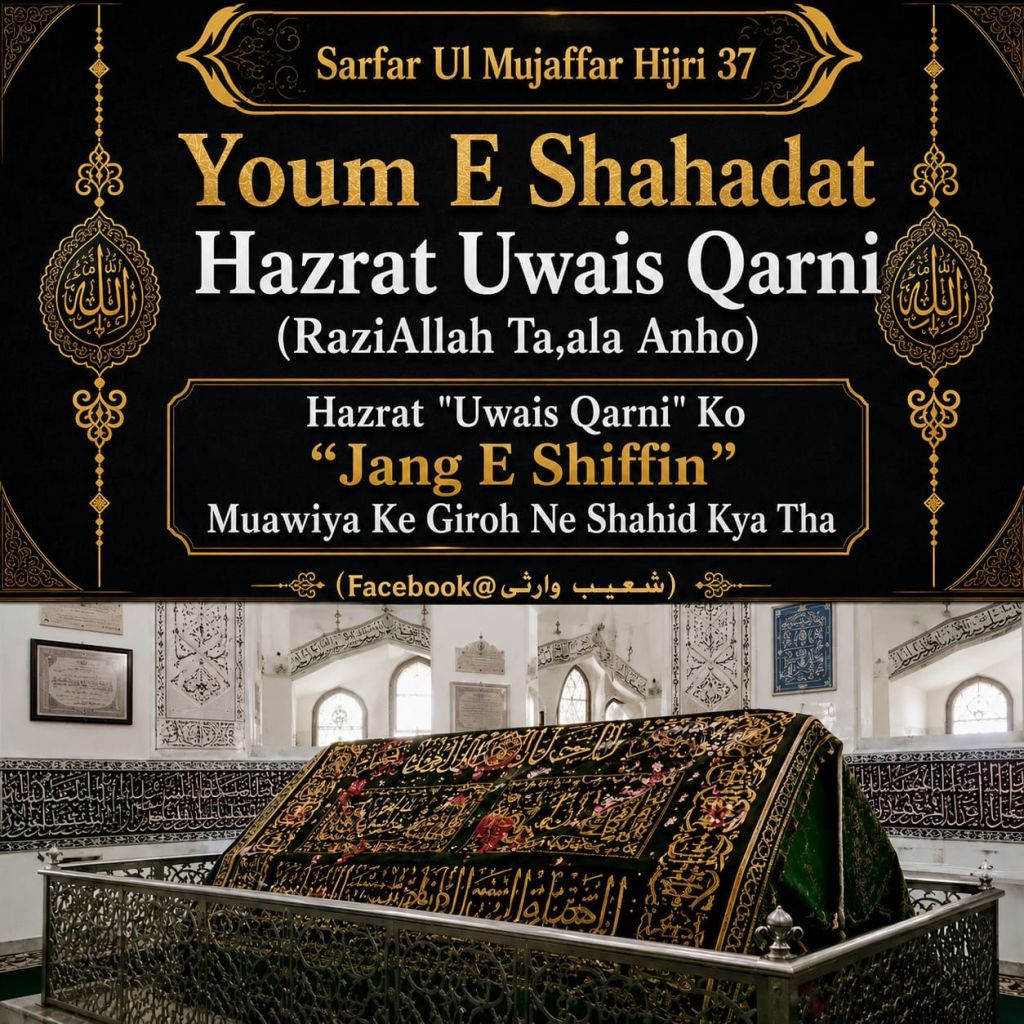
अब्दुल रहमान बिन अबि लैली फरमाते है: जंगे सिफिन के दिन मुआविया के किसी साथी ने हजरत अली (राजी अल्लाह अन्हो) के साथियों को पुकार कर पूछा : क्या तुम्हारे अंदर ओवैस करनी (राजी अल्लाह अन्हो) को मौजूद है? लोगोने जवाब दिया: जी हां۔ फिर उस शख्स ने अपना घोड़ा दौड़ाया और ये कहता हुवा हजरत अली (राजी अल्लाह अन्हो) के लश्कर मै शामिल हो गया के ” ओवैस करनी (राजी अल्लाह अन्हो) तबाइन मे सबसे अफजल है
अल मुस्तद्रक हाकिम हदीस नं: 5717 ____
हज़रत उवैस करनी (रजीअल्लाह तआला अनहो) को खैर-उल-तबीईन कहा जाता है ये लकब उन्हें खुद हजरत मोहम्मद मुस्तफा (सलअल्लाहो अलयहे वआलेेही वसल्लम) ने अता फरमाया था और हजरत उवैस करनी (रजीह अल्लाह तआला अनहो) की गिनती सफे अव्वल की ताबीईन में होती है|
Note:= आपकी सहादत 37 हिजरी जंगे सिफीन में हूवी आप जंगे सिफीन में हजरत अली (अलयहीस सलाम) के लसकर में सामिल थे जंगे सिफीन में आप को मुआविया बिन अबु सूफियान के गिरोह ने सीने पर तीर मार कर आपको शहिद कर दिया था|
■ The Veils on the Path to the Divine Presence: Trials on the Journey to Allāh Almighty
The journey to the Divine Presence (al-Ḥaḍrah al-Ilāhiyyah) is not traversed merely by outward deeds, but by the purification of the heart. The traveller (sālik) discovers that every step towards Allāh Almighty is accompanied by trials that expose the sincerity of his intention and refine the soul.
▪︎ Allāh Almighty says:
“Do people think they will be left to say, ‘We believe,’ and they will not be tested?” (Qur’ān 29:2)
The masters of Tasāwwūf understood that every trial is a means of purification. The seeker does not advance despite these obstacles, but through them.
“The beginning of every station (maqām) is trial, and its end is witnessing (mushāhadah).”
▪︎ Reference: Al-Risālah al-Qushayriyyah, Chapter on the Spiritual Stations (Bāb al-Maqāmāt).
The early Sufis frequently spoke of three great veils confronting every seeker: the opinions of people, the whisperings of Shayṭān, and the demands of the lower self (nafs).
■ The First Veil: Creation: The Trial of People’s Opinions.
The first obstacle often comes from creation itself. When a servant turns sincerely towards Allāh Almighty, he may encounter misunderstanding, criticism, ridicule, or isolation. The world rarely understands a heart whose greatest concern is its Lord.
▪︎ Allāh Almighty says:
“…They do not fear the blame of any blamer.” (Qur’ān 5:54)
The seeker learns that the heart cannot be attached simultaneously to the praise of creation and the pleasure of the Creator.
■ The Second Veil: Shayṭān: The Trial of Doubt
When the servant persists, Shayṭān changes his strategy. Unable to prevent worship altogether, he seeks instead to corrupt it through despair, impatience, pride, or false hope.
▪︎ Allāh Almighty says:
“Indeed, Shayṭān is an enemy to you, so take him as an enemy.” (Qur’ān 35:6)
▪︎ Shaykh Sahl ibn ʿAbd Allāh al-Tustarī (may Almighty Allāh sanctify his secret) said:
“Every act of obedience has a devil seeking to corrupt it.”
▪︎ Reference: Tafsīr al-Tustarī and sayings collected in Abū Nuʿaym’s Ḥilyat al-Awliyāʾ.
▪︎ Among Shayṭān’s greatest whispers are:
“Why has Allah not answered you?” “How much longer will you wait?”
The believer answers with patience (ṣabr) and trust (tawakkul), knowing that every Divine delay contains hidden wisdom.
▪︎ Shaykh Ibn ʿAṭāʾ Allāh al-Sakandarī (may Almighty Allāh sanctify his secret) writes:
“Do not let the delay in receiving what you seek make you despair, for He has guaranteed the response according to what He chooses for you, not according to what you choose for yourself.”
▪︎ Reference: Al-Ḥikam al-ʿAṭāʾiyyah
■ The Third Veil: The Nafs: The Greatest Struggle
The most difficult struggle is not with the world nor with Shayṭān, but with one’s own soul. The nafs loves reputation, comfort, recognition, and control. It resists surrender because surrender means relinquishing its imagined sovereignty.
▪︎ Allāh Almighty says:
“Indeed, the soul continually commands to evil except whom my Lord has mercy.” (Qur’ān 12:53)
The unveiling (kashf) sought by the Sufis is not primarily the disclosure of hidden mysteries, but the removal of the veils separating the heart from intimate knowledge of Allah Almighty.
■ Conclusion: The Wisdom of the Veils
The trials of the path are not punishments but manifestations of Divine mercy. Every criticism endured with patience weakens attachment to creation. Every whisper resisted strengthens trust in Allāh Almighty. Every struggle against the nafs polishes the mirror of the heart.
▪︎ Shaykh Ibn ʿAṭāʾ Allāh al-Sakandarī (may Almighty Allāh sanctify his secret) writes:
“Nothing benefits the heart more than seclusion, wherein it enters the field of contemplation.”
▪︎ Reference: Al-Ḥikam al-ʿAṭāʾiyyah.
The traveller eventually discovers that the greatest distance was never between himself and Allah Almighty, but between his heart and its distractions.
As those veils are lifted one by one, the heart finds what it had always been seeking: nearness to the One who was always nearer than his jugular vein (Qur’ān 50:16).
उमुल मोमिनीन हज़रत उम-ए-सलमा (रज़ि.) के अनुसार मुआबिया बिन अबी सुफ़ियान की बैअत गुमराहियत की बैअत थी
इस रिवायत को इमाम बुख़ारी (रहि.) ने **’तारीख़ अस-सग़ीर’** में नक़्ल किया है। इससे मिलती-जुलती एक रिवायत **’अल-मुसन्नफ़’ (इब्न अबी शैबा)** में भी मौजूद है: > **حدثني سعيد بن محمد الجرمي ثنا يعقوب بن إبراهيم ثنا أبي عن محمد بن إسحاق حدثني أبو نعيم وهب بن كيسان مولى الزبير أنه سمع جابر بن عبد الله يقول قدم بسر بن أرطاة المدينة زمان معاوية فقال لا أبايع رجلا من بنى سلمة حتى يأتي جابر فأتيت أم سلمة بنت أبي أمية زوج النبي صلى الله عليه وسلم فقالت بايع فقد أمرت عبد الله بن زمعة بن أخي أن يبايع على دمه وماله أنا أعلم أنها بيعة ضلالة** > *(التاريخ الصغير للبخاري – ج 1 / ص141)*
जिस साल इमाम हसन (रज़ि.) ने ख़िलाफ़त से दस्तबरदार होकर हुकूमत मुआबिया बिन अबी सुफ़ियान के सुपुर्द की, उसी साल मुआबिया ने बुस्र बिन अर्ताह को मदीना भेजा ताकि वह लोगों से बैअत हासिल करे। हज़रत जाबिर बिन अब्दुल्लाह अल-अंसारी (रज़ि.) मुआबिया की बैअत नहीं करना चाहते थे, इसलिए वे छुप गए। जब जाबिर बिन अब्दुल्लाह (रज़ि.) के क़बीले (बनी सलमा) के लोग बुस्र के पास बैअत करने के लिए हाज़िर हुए, तो उसने कहा: *”जब तक तुम जाबिर को हाज़िर नहीं करते, मैं तब तक तुम्हारी बैअत क़बूल नहीं करूँगा।”* क़बीले के लोग हज़रत जाबिर (रज़ि.) के पास आए और मिन्नत-समाजत करने लगे कि आप बैअत कर लें, वरना यह हमारे मर्दों को क़त्ल कर देगा और हमारी ख़वातीन (महिलाओं) को कनीज़ (दासी) बना लेगा। हज़रत जाबिर (रज़ि.) ने उनसे कुछ मोहलत माँगी। इसी दौरान हज़रत जाबिर (रज़ि.) उमुल मोमिनीन हज़रत उम-ए-सलमा (रज़ि.) से मिले और इस बारे में मश्वरा तलब किया। उमुल मोमिनीन ने फ़रमाया: *”जाओ और बैअत कर लो ताकि अपने क़बीले वालों को क़त्ल होने से बचा सको। मैंने अपने भतीजे अब्दुल्लाह बिन ज़मआ को भी यही मश्वरा दिया है (कि वह अपनी जान व माल की सलामती के लिए बैअत कर ले), हालाँकि मैं जानती हूँ कि यह गुमराहियत की बैअत है।”* नज़र अला रिझाल अल-रिवायत (सनद के रावियों का समीक्षात्मक विश्लेषण) 1. सईद बिन मोहम्मद अबू मोहम्मद (अबू उबैद अल-जुरमी अल-कूफ़ी) आपने इन असहाब से रिवायत नक़्ल की हैं: > **أبي يوسف يعقوب بن إبراهيم بن سعد الزهري وأبي عبد الله شريك بن عبد الله النخعي القاضي الكوفي وأبي تميلة يحيى بن واضح الأنصاري مولاهم المروزي وأبي أسامة حماد بن أسامة بن زيد بن سليمان القرشي مولاهم الكوفي، وابي محمد المطلب بن زياد الثقفي الكوفي وأبي عبيدة عبد الواحد بن واصل السدوسي البصري الحداد، وعبد الرحمن بن عبد الملك بن سعيد بن حيان بن أبحر الكتاني ويقال الهمداني الكوفي وغيرہ** > * **इमाम बुख़ारी** ने इनसे ‘किताब अल-जिहाद’, ‘किताब अल-ख़ुम्स’, ‘किताब अल-मग़ाज़ी’ और ‘किताब अल-ताबीर’ में रिवायत नक़्ल की हैं। * **इमाम मुस्लिम** ने इनकी रिवायत ‘किताब अस-सलात’, ‘किताब अस-सदक़ात’ और ‘किताब अल-जिहाद’ में लाई हैं। * इनसे रिवायत करने वालों में: > **أبو زرعة عبيد الله بن عبد الكريم الرازي، وأبو بكر محمد بن هارون الفلاس المخرمي، وأبو بكر أحمد بن إسحاق بن صالح بن عطاء الوزان الواسطي وعبد الأعلى بن واصل بن عبد الأعلى الكوفي، وإبراهيم ابن عبد الله بن أيوب البغدادي المخرمي وإبراهيم بن عبد الله بن الجنيد البغدادي نزيل سامري صاحب الزهد وغيرہ** > > **وقال أبو زرعة أيضًا سألت أحمد بن حنبل عنه فقال ثقة كان يطلب معنا الحديث** > यानी यह बुख़ारी व मुस्लिम के रावियों में से हैं और इमाम अहमद बिन हंबल के नज़दीक ‘सिक़ाह’ (भरोसेमंद) हैं। #### 2. यअक़ूब बिन इब्राहीम बिन साद अल-ज़ुहरी हाफ़िज़ ज़हबी लिखते हैं कि यह ‘सिक़ाह’ हैं और इनकी कसीर (अत्यधिक) रिवायत हैं। इनका इंतिक़ाल 208 हिजरी में हुआ। *(मीज़ान अल-एअतिदाल – ज़हबी, ज. 7, पृ. 260)* #### 3. मोहम्मद बिन इसहाक़ अल्लामा ज़हबी ‘काशिफ़’ (ज. 3, पृ. 19) में कहते हैं: > **كان صدوقا من بحور العلم وله غرائب في سعة ما روى تستنكر واختلف في الاحتجاج به وحديثه حسن وقد صححه جماعة** > फिर अल्लामा ज़हबी ‘अल-इबर’ (ज. 1, पृ. 216) में कहते हैं: > **وكان بحرا من بحور العلم ذكيا حافظا طلابا لعلم اخباريا نسابة علامة قال شعبة هو أمير المؤمنين في الحديث وقال ابن معين هو ثقة وليس بحجة وقال أحمد هو حسن الحديث** > फिर हाफ़िज़ ज़हबी ‘अल-मुग़्नी’ में कहते हैं: > **أحد الأعلام صدوق قوي الحديث** *(المغني ج 2 ص 552)* > फिर दूसरी जगह कहते हैं: > **ثقة إن شاء الله صدوق احتج به خلق من الأئمة لاسيما في المغازي قال شعبة صدوق وقال أحمد حسن الحديث** *(ديوان الضعفاء ص 265)* > नीज़ हाफ़िज़ ज़हबी एक और जगह लिखते हैं: > **قال الذهبي فأعلى مراتبه (أي الحسن) بهز بن حكيم عن أبيه عن جده وعمرو بن شعيب عن أبيه عن جده وابن إسحاق عن التميمي وأمثال ذلك مما قيل إنه صحيح** *(الموقظة في علم مصطلح الحديث ص 32-33)* > #### 4. अबू नईम वहब बिन कीसान (मवला अल-जुबैर रज़ि.) > **قال النسائي: ثقة** > **وذكره ابن حبان في كتاب الثقات** > **قال محمد بن سعد: وهب بن كيسان كان محدثاً ثقة** > *(تہذیب الکمال – المزی, ج. 32, पृ. 137)*
Hazrat Abu Huraira Razi Allahu Tala Anhu Se Marwi Hain Ke Ek Martaba Andheri Rat Me Hazrat Imaam Hasan Alahis Salam Huzoor Nabi e Kareem ﷺ Ki Khidmat Me Hazir The, Huzoor Nabi e Kareem ﷺ Aapse Be Panah Muhabbat Farmate The, Hazrat Imaam Hasan Ne Arz Ki Ke Me Apni Walida Majida Ke Pas Jana Chahta Hu, Mene Arz Kiya Ya Rasool Allah ﷺ Kya Me Inke Sath Jau Achanak Aasman Se Ek Noor Zahir Hua Jiski Roshni Me Chalte Hue Hazrat Imaam Hasan Mujtaba Apni Walida Majida Ke Pas Pouch Gaye.
📚 *Reference* 📚 Dalail un Nabuwwa, Hadees No 487.
Andheri Raat Me Aasman Se Roshni Zahir Hona Aur Usi Roshni Me Chalna Huzoor Nabi e Kareem ﷺ Ke Faizan Se Imaam e Hasan Alahis Salam Ki Karamat Hain.
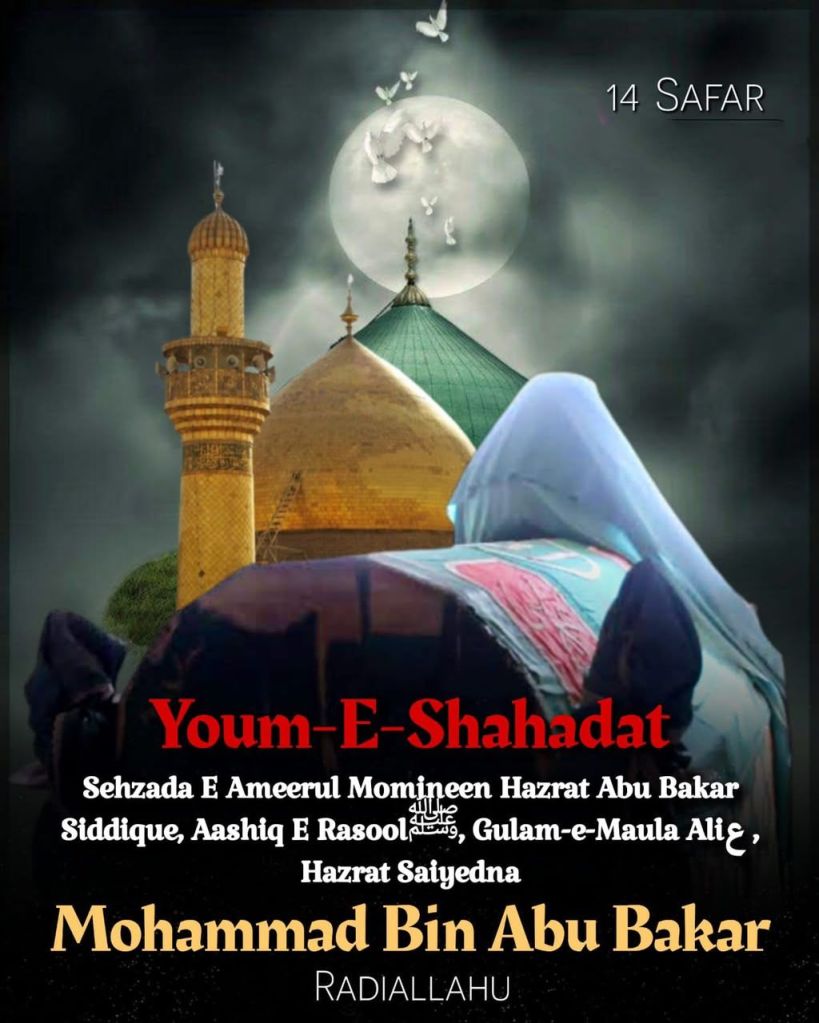
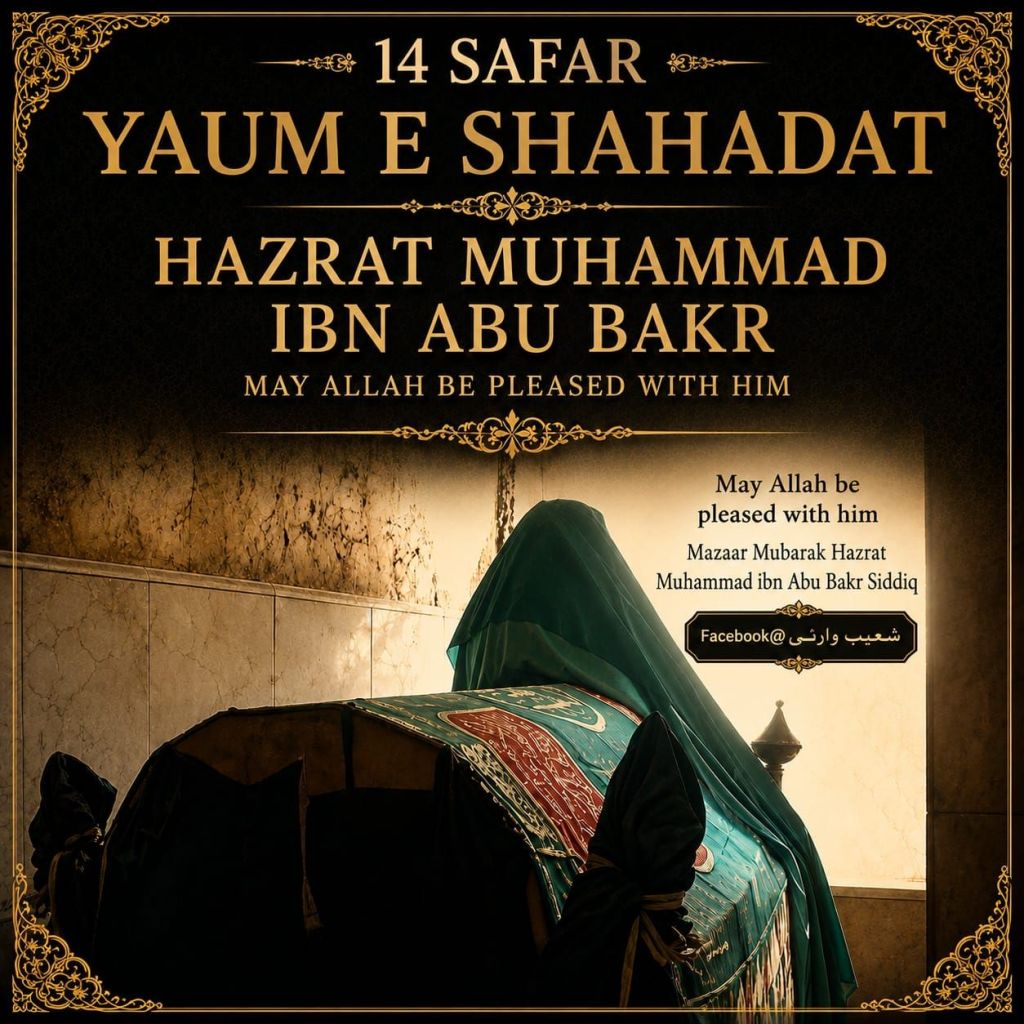
हज़रत मुहम्मद बिन अबू बकर सिद्दीक (रजी अल्लाह अन्हो) आप उम्मुल मोमिनीन हज़रत आयशा (रजी अल्लाह अन्हा) के भाई हैं. खिलाफ़ते रशीदा के ख़लीफ़ा ए अव्वल के यानी हज़रत अबू बकर सिद्दीक (रजी अल्लाह अन्हो) के साहबज़ादे हैं.
हज़रत अबू बकर सिद्दीक (रजी अल्लाह अन्हो) की वफ़ात के बाद हज़रत मुहम्मद बिन अबू बकर (रजी अल्लाह अन्हो) की परवरिश मौला ए कायनात हज़रत अली (अलैहिस्सलाम) की देख-रेख में हुई.
मौला अली ने आपको मिस्र का हाकिम मुक़र्रर किया था. लेकिन मौला अली की शहादत के बाद अमीरे शाम यज़ीद के बाप मुआविया) ने मिस्र पर उमरू बिन अलआस के ज़रिये हमला किया जिसमें हज़रत मुहम्मद बिन अबू बक्र को शिकस्त हुई.
मुआविया के हुक्म की तामील में उन्हें पकड़ पर मुर्दा गधे की खाल में बाँधा गया और आग में जलाकर आपको बड़े ही ज़ालिमाना और दर्दनाक तरीके से शहीद कर दिया गया. उस वक़्त आप रोज़े की हालत में थे.
इन्ना लिल्लाहि व इन्ना इलैही राजिऊन
उम्मुल मोमिनीन सैय्यदा आयशा र.अ. को जब हज़रत मुहम्मद बिन अबू बकर र.अ. की शहादत की ख़बर हुई तो आप बोहत रोईं और उसके बाद ज़िन्दगी भर अपने कभी भुना हुआ गोश्त नहीं खाया.. आप फ़रमाती हैं कि मैं उसे अपना भाई और बेटा समझती हूँ..
इमाम मुहम्मद बिन जरीर तबरी कि रिवायत के मुताबिक उम्मुल मोमिनीन सैय्यदा आयशा र.अ. हर नमाज़ के बाद अमीरे शाम (यज़ीद के बाप) और उमरू बिन अलआस के लिये बददुआ किया करती थीं.