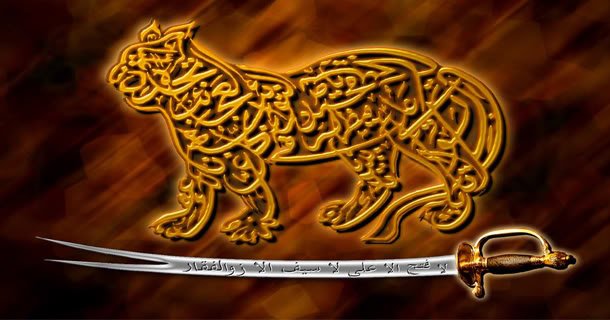
Asking Help from Ambiya and Awliya makes Mushrik really ??

As Salaamu aliekum Yaumul Eid ul Jummah Mubarak to Everyone 🙂

Do our Prophet Muhammad sal lal la hu alehi wasalaam ever said to Allah to Help his Sahaba through Messenger  Ambiyaa and Awliyaa ??

==============

First lets see what do Allah said about Sayeedna Jibrael alehi salaam ?

If ye two turn in repentance to Him, your hearts are indeed so inclined; But if ye back up each other against him, truly God is his Protector, “AND GIBRIEL, AND (EVERY) RIGHTEOUS ONE ” among those who believe (اللَّهَ هُوَ مَوْلَاهُ وَجِبْرِيلُ وَصَالِحُ الْمُؤْمِنِينَ),- and furthermore, the angels – will back (him) up.(66:4)

Here Allah has Himself applied the word “MAWLA (PROTECTOR)” with Himself, also Gibriel and other believers.

Comment :Allah said he is Protector and Gibriel and every Awliyaa Righteous one this Verse of Quran is not Abrogated and never a Verse of Quran Abrogated but its Hukm which can be make Improvement in the Hukm of Allah himself  so finally till Qayammah Almighty Allah  Gibriel alehi salaam and Believers Righteous one Awliyaa are Protector Helper of Islam and Muslims…..

=======================

now coming towards Hadith e Kareema do our Prophet Muhammad sal lal la hu alehi wasalaam said Allah to Help Protect his Companion ?

Narrated Hassan bin Thabit Al-Ansari:
I asked Abu Huraira “By Allah! Tell me the truth whether you heard the Prophet (ﷺ) saying, ‘O Hassan! Reply on behalf of Allah’s Messenger (ﷺ). O Allah! Help him with the Holy Spirit.” Abu Huraira said, “Yes . “

حَدَّثَنَا أَبُو الْيَمَانِ الْحَكَمُ بْنُ نَافِعٍ، قَالَ أَخْبَرَنَا شُعَيْبٌ، عَنِ الزُّهْرِيِّ، قَالَ أَخْبَرَنِي أَبُو سَلَمَةَ بْنُ عَبْدِ الرَّحْمَنِ بْنِ عَوْفٍ، أَنَّهُ سَمِعَ حَسَّانَ بْنَ ثَابِتٍ الأَنْصَارِيَّ، يَسْتَشْهِدُ أَبَا هُرَيْرَةَ أَنْشُدُكَ اللَّهَ هَلْ سَمِعْتَ النَّبِيَّ صلى الله عليه وسلم يَقُولُ  ” يَا حَسَّانُ، أَجِبْ عَنْ رَسُولِ اللَّهِ صلى الله عليه وسلم، اللَّهُمَّ أَيِّدْهُ بِرُوحِ الْقُدُسِ “. قَالَ أَبُو هُرَيْرَةَ نَعَمْ.

Reference  : Sahih al-Bukhari 453
In-book reference  : Book 8, Hadith 102
USC-MSA web (English) reference  : Vol. 1, Book 8, Hadith 444

Comment : Yes Alhamdolilah here our Prophet Muhammad sal lal la hu alehi wasalaam said O Allah Help Hasan bin Thabit r.a with Holy Spirit(Gibriel alehi salaam) if asking Help through any Creature or Through any Creation to Allah  is Shirk then our Prophet Muhammad sal lal la hu alehi wasalaam said O Allah Help Hassan bin Thabit r.a … thats all but our Prophet Muhammad sal lal la hu alehi wasalaam said O Allah Help Hassan bin Thabit r.a with Holy Spirit meaning Gibriel alehi salaam is also Protector and Helper thats why our Prophet Muhammad sal lal la hu alehi wasalaam ask Allah to help his Sahabi through Gibriel alehi salaam….

============================

Lets see do Allah make Ambiyaa and Awliyaa as Helper for forever till Qayammah?

Verily, your Walee (Protector or Helper) is Allah, His Messenger, and the believers, – those who perform As-Salat (Iqamat-as-Salat), and give Zakat, and they bow down (submit themselves with obedience to Allah in prayer). [Muhsin/Hilali 5:55]

Comment : Yes Alhamdolilah Allah is Helper for forever and He(Almighty) the Helper and Protector himself said i am Helper and Protector and my Messenger Muhammad sal lal la hu alehi wasalaam and all the Awliyaa Ikraam Saleheen Shaudaheen ….

Conclusion :Stop saying Shirk Bidaat  whoever  say they are Morons Indeed they never follow Quran and Hadith and salaf they follow islamqa.info Fatwas and Fatwas of Kitaab At Tawheed stop spreading false Accusation of Shirk on Muslims on the base of Fatwas….

MISCONCEPTIONS REGARDING AMBIYA & AWLIYA CLARIFIED !!!Must read !!!

A.   Introduction

B.   Shedding light on few issues related to the status of Ambia and Awliya though Quran-o-Hadith as follows.

  1.  Why should not we limit our selves only to the defined and obligatory Ibadah such as Salah, Quran etc and avoid ‘unimportant’ things? Why should Awliya be given importance or glorified?
  2. Why should some one approach the Pious when Allah says “Allah is nearer than jugular vein” (Quran 50:16)
  3. No one can help except Allah, asking help from anyone besides Allah is an act of shirk
  4. Even Prophets(including Prophet Muhammad peace be upon them) cannot help them selves during difficulties (Allah Forbid). So how can they help others?
  5. Asking material help from others is permissible but presuming that prophets/pious posses supernatural/mystical powers and can provide metaphysical help(Ghaibi madad) is “shirk”.
  6. It is logical & reasonable to call for help to those who is nearby & physically present, but how can someone help from far away? Believing in such mystical power of seeing and hearing from far is an act of shirk.
  7. It is permissible to ask help from alive. But calling the dead for help is shirk.
  8. What if more than one or many people call the Prophet or Awliya for help at the same time/instant? Believing that someone apart from Allah has such power to listen many people at the same time is shirk.
  9. People often call/scream the name of “Wali” in trouble considering that the wali has knowledge of their problem. This is shirk because only Allah knows what is hidden.
  10. 10    Does giving importance to the Pious/Awliya and loving them takes us away from Allah?

                                                                       *   *   * 

Introduction:

All praise is due to Allah (Subhanahu Wa tala), who is the creator of the Universe. Allah (Subhanahu Watala) is all Merciful and his love encompasses the whole of the creation. Among the creation Ambiya (Prophets of Allah) and Awliya (Friends of Allah) are His most beloved Servants. When Allah loves someone, he orders all his angels to do so and also instills the love of that beloved servant in the hearts of all the inhabitants of earth. [Sahih Bukhari Vol 4: Book54 : Hadith:431]

The obedient follow Allah’s orders and love the Pious servants of Allah while those who come under the spell of Devil move away from Allah by moving away from those who call towards Allah(Subhanahu Wa tala), namely the Prophets and the Friends of Allah

Considering the environment we live in, we believe that it would be helpful rather necessary to shed some light on status of Prophets and Awliya. In the forthcoming sections we present,discuss and clarify some general thoughts that come to mind due to consistent presence of Devil with every human being. Below is a brief description about“Awliya” followed by misconceptions and their clarifications.

Awliya are the chosen friends of Allah.They are those devoted and sincere bondsman on the earth who remember Allah ceaselessly and spend their life seeing inner purification through endeavor, toil, abstinence and prayer. They are the one who cease to depend on the”creation” and give themselves unto the creator, seeking sustenance from sources unimaginable, attain nearness to the divine light through constant worship and service to humanity. Their journey is continual and their reward is nothing less than the closeness to Allah.

                                                                       *   *   *

1.     Why should not we limit ourselves only to the defined and obligatory Ibadah such as Salah, Quran etc and avoid ‘unimportant’ things? Why should Awliya be given importance or glorified?

The importance given to Awliya is not something that is created by someone or some sect. Allah himself has granted this exalted position to Awliya by his Grace; this is evident from the following verses of Quran & Ahadith.

1.1  Quran on the excellence of Awliya Allah:

a.       Allah (Subhanahu Wa Ta’la)says, “Pay attention! Indeed the friends of Allah [Awliya Allah] neither have any fear, nor any grief”. [10:62]

b.       In another verse Allah (Subhanahu Wa Ta’la) lists the people upon whom, he has bestowed his grace, Quran states: “Allah has bestowed grace upon Prophets, The Siddiqeen[Truthful],Martyrs and The Saliheen [Pious people]   [ 4:69]

c.       That Day (of judgment) neither wealth nor sons will benefit (anyone), but that person who comes to Allah with a reformed heart.” (26:88)

d.       But as for those who struggle hard in our cause, we shall certainly guide them onto paths leading unto us: for, behold, God is indeed with the doers of good. (26:69)

e.       None one can be its guardian except Al-Muttaqun (The pious, Saints) But most of them know not[8:34]

f.       Even the Pet Dog of Ashab-e-kahf received bounties due to companionship of Allah’s Friends  [And their dog is on the threshold of the cave, with its paws outstretched.[18:18]]

g.       Quran, referring to Ashab-e-Kahf (people of the cave) states that, the sun changed direction not to disturb the friends of Allah sleeping in the cave for 309 years [Gist of Surah Kahf 18:17].

[Here we can notice one special sign of Allah that for His Friends, he changed the rules of rising and setting of the Sun, by which the change was incorporated in the overall system of the universe for long 309 years. He amended a fixed and predetermined heavenly system for 300 rotations of the Earth round the Sun with the sole purpose to keep His Friends safe from any possible damage. He changed the course of nature for His Friends This was the‘decision’ of the All-Powerful, All-Knowing]

h.       Quran states that at the place where the Kidr (AS) was living, the cooked fish brought by Moses (peace be upon him) came alive and went into the water [Gist of Surah Kahaf18:61]

And so on, those who think that few Muslims are doing wrong and then show disrespect/enmity towards Awliya Allah need to give second thought as to whom they are fighting with, with bunch of wrong doers (as they imagine) or with Allah by disrespecting Awliya!!

1.2 Ahadith on the excellence of Awliya Allah:

a. Allah declares a ‘war’ against those who show ire/rage towards a Wali:

Prophet Muhammad (peace be upon him) says that Allah (Subhanahu Wa Tala) said, I will declare war against him who shows hostility [Anger] to a pious worshipper of Mine. [SahihBukhari, Volume 8, Book 76, Number509]

The expression of “Allah being at war “with the enemies of Allah shows us the intensity of the sin as such a serious expression has been used very in frequently in the Quran and only for the worst of sins.

b. Allah says “he becomes hands and legs” of His Pious worshiper.

I become his [the pious worshiper’s] sense of hearing with which he hears, and his sense of sight withwhich he sees, and his hand with which he grips, and his leg with which he walks [Sahih Bukhari, Volume 8, Book 76, Number509]

Allah (Subhanahu Wa Ta’la) does not take Human form [The Quran states Allah is like no one”42:11]and it is obvious that this Hadith does not literally mean that Allah becomes His Worshiper’s hands and legs. This expression shows the specials powers Allah (Subhanahu Wa Ta’la) has bestowed to his Pious worshipers. Their seeing is not like ours. Their hearing is not like how we hear. They see what we cannot see and they hear what we cannot hear. One such example of extra ordinary seeing by Prophet Muhammad(peace be upon him) is given here.

The Prophet Muhammad (peace be upon him)said:

“I certainly see you from my back as I see you (from front.)”  [Sahih Bukhari Volume 1, Book 8, Number 411]


Examples of Awliya having such capabilities are given in other sections of the article.

c. Status of Awliya on the Day of Judgment:

It is narrated by ‘Umar bin al-Kahta (RA)that the Prophet (peace be upon him) said:

Among Allah’s servants there are some who are neither prophets nor martyrs but, on the Day of Judgment the prophets and the martyrs will envy their grades. The Companions asked: ‘O Messenger of Allah, tell us, who are those people?’ He replied: ‘those are the people who love one another on Allah’s count. They are neither related to one another nor do they have any property to exchange. I swear on Allah that they will have faces of light; they will be on pulpits of light. They will not have any fear when others will be afraid, they will not have any grief when others will be grieving’ Then he recited the verse from Quran (Which speaks of Awliya Allah): 


Pay attention! Indeed the friends of Allah [Awliya Allah] neither have any fear, nor any grief.[AbuDawud, Sunan, book of ijarah3:288:3527]

All these Quranic verses and Ahadith show us the exalted status of Awliya Allah in this world and the hereafter. They are honored with enviable grades even on the day of judgment when all other souls remain in despair.

2.      Why should someone approach the Pious when Allah says “Allah is nearer than jugular vein” (Quran 50:16)

The foremost reason for this is due to their closeness to Allah. Prophet Muhammad (peace be upon him) said in a Hadith Qudsi that Allah(Subhanhu Wa Ta’la) says

“My Love is due for the people who Love each other only for the sake of My Love, Who sit close to each other only for my sake, Who go & meet each other only for My Willingness (Radha) and Who spend the money only for my Willingness “[Imam Al-Malik, Book 51, Hadith51.5.15),Imam Ahmed bin Hanbal, Al-Musnad: 5: 233: 22083]

In one more Hadith, Prophet Muhammad (peace be upon him) asserts the excellence of Travelling to a far of place to meet a Pious person.

Abu Huraira(RA) reported Allah’s Apostle (may peace be upon him) as saying: “A person visited his brother in another town and Allah deputed an Angel to wait for him on his way and when he came to him he said: Where do you intend to go? He said: I intend to go to my brother in this town. He said: Have you done any favor to him(the repayment of which you intend to get)? He said: No, except that I love Him for the sake of Allah, the Exalted and Glorious. Thereupon he (The angel) said: I am a messenger to you from, Allah: (to inform you) that Allah loves you as you love him (for His sake) (Sahih Muslim Book 32, Hadith6226)

Another reason to go near pious people is that Supplications made in their vicinity or at places attached to them are answered more readily.This is evident from following verses of Quran & Ahadith


2.1 Allah orders sinners to approach Prophet and seek forgiveness.


And if when they do injustice to their souls, They should come to you [Prophet Muhammad peace be upon him] and then beg forgiveness of Allah and the messenger should also ask forgiveness for them then surely, they would find Allah Most Relenting, Merciful” .[Sura Nisa 4:64]


Allah is “Gafoor” (the one who forgives) and”Raheem”(Merciful).It is Allah who accepts our supplications [Duas] and forgives our sins, but Allah himself orders sinners to go near the Prophet and ask Allah for forgiveness.

This verse shows that going near the pious and supplicating (making dua) to Allah is “The Quranic way” of doing so.

2.2 Prophet Zakariya [Alaihis salam] praying at the place of Bibi Maryam (RA): 

Prophet Zakariya [Alaihis salam] had asked Allah for a son many times [because he had no sons until very old age] but when He made Dua at the place of Bibi Maryam [ra], he had his dua answered immediately.


Allah says in Sura al-Imran:

Whenever Zakariya went to her [Maryam] place of prayer, he found new provisions [of food] with her. He said! O Maryam! Where from did this come to you? She spoke, ‘that is from Allah,’ No doubt, Allah gives whomsoever He pleases, without measure. Here [the Arabic word Hunalika: meaning here “at this very place”] Zakariya called his Lord, said, ‘O my Lord!Give me from yourself pure offspring; no doubt, You only are the Hearer of prayers. Then the angels called him and he was offering prayer standing at his place of worship (again at the same place Allah sent the glad tidings), no doubt Allah gives you glad tidings of Yahya who shall confirm a word  from Allah, a chief and chaste and Prophet from amongst Our righteous.[Quran 3:37-39]


This verse proves that Supplications that are made near a pious person are answered more readily.

2.3 Approaching blessed grave of Prophet to ask rain &relief from severe drought:

The people of Medina were gripped by a severe famine. They complained to Hazratha Aisha (RA) about their condition. She told them to go towards the blessed Prophet’s grave and open a window in the direction of the sky so that there is no curtain between the sky and the grave.The narrator says they did so. Then it started raining heavily, even the lush green grass sprang up (everywhere) and the camels had grown so fat (it seemed)they would burst out due to the over piling of blubber. So the year was named as the year of greenery and plenty.

[Sunan Darimi Volume 001, Page 227, Hadith Number 093; Muhammadbin ‘Alawi al-Maliki says: This Hadith has a sound chain of narrators]

3.    No one can help except Allah, asking help from anyone besides Allah is an act of shirk 

 In order to clarify permissibility of seeking help from Prophets and Friends of Allah, let us first review couple of verses from Quran, In these are few verses where Quran states that “there are no helpers besides Allah” and on the other hand, a few instances where the Quran states “Prophets and practical believers are helpers”.

3.1. No Helpers besides Allah (Type 1):

a.      Allah is sufficient as a Protector and Allah is Sufficient as a Helper(Sura Nisa4:45)

b.      “You have no helper besides Allah” (Sura Sajda 32:4)

3.2. Prophets and Believers are helpers (Type 2): 

c.      Allah is his Maula [helper],and Gabriel, and the righteous believers and after that the angels are his helpers. [Quran 66:4]

d.      Verily, your Wali (Protector or Helper) is Allah, His Messenger, and the believers, – those who performAs-Salât(Iqâmat-as-Salât), and give Zakat, and they bow down (submit them selveswith obedience to Allah in prayer).[Al-Maida 5:55 ]

e.      The believers, men and women, are Awliya (helpers, supporters, friends, protectors) of one another,they enjoin(on the people) [At-Taubah9:71]

A similar Hadith stating Allah and his messenger are Helpers:

Narrated AbuHuraira: “The tribe of Quraish, the Ansar, the (people of the tribe of) Julhaina, Muzaina,   Aslam, Ashja’, and Ghifar are my disciples and have no Maula (protectors, helpers) except Allah and His Apostle.” [Sahih Bukhari, Volume 4, Book 56, Number 707and 715, SahihMuslim, Book 031, Hadith 6120]

One group of people refer to only the first kind of verses, and say  “There is no Helper except Allah” and makes no mention about The Other verses where Allah says even Prophets , angels,Gabriel and Momineen are Helpers.

Another group of people (Like Christians) say this is a contradiction in Quran because few verses say “There is no helper besides Allah” and few say”Prophets are Helpers” “Gabriel, angels and Momineen are helpers” too!

The truth is different from the personal opinions of both the groups. If we read the chain of ayah and understand the topic where these verses are relayed it is obvious that, All those verses which say “there is no Helper beside Allah” speak about the Kuffar (Disbelievers) & Mushriks those who set & associate gods besides Allah and on the other hand the verses indicating prophets/pious as helpers were revealed in relation to the Believers. For example Quran states,

“The Kuffar say: “He (Muhammad SAW) has fabricated Quran?” [SuraSajda 32:3] and in the next verse Allah says that “You have no helpers besides Allah”

Thus Allah says to the Kuffar who have disbelieved in Quran And Prophet Muhammad (peace be upon him) that “You have no Helper besides Allah” meaning “you think you will be saved by your idols and false gods even if you disbelieve my Prophets, and even if you reject my Deen?”..No! “You have no helpers besides Allah” [Sura Sajda 32:4]

And the verses which say that there are many helpers speak about the Momineen, for example the verse Sura Tahrim 66:4 referred in section3.2 speaks about The Prophets Wives (Ummahatul Momineen), 

Mentioning that the Disbelievers (Kuffar) have no helpers besides Allah and at the same time stating that there are many helpers for the believers makes it clear that those who assume that the absolute power rests with creation and start claiming divinity for their false gods, will find no helper unless they come back to their only God, Allah. If anyone believes and considers their false Gods, Satan or even the Pious have their own independent power besides Allah, they are rejecters of Tawheed and the act is shirk. While those who believe that Ambiya and Awliya are ‘Means’ and the real help comes from Allah himself, claim no divinity for the pious, and do not assume that the absolute power rests with the creation are on the right path.

If someone says”Even if one assumes the absolute power remains with Allah, calling pious people for help is Shirk ” then his ruling goes against Sahaba, Tabaeenand the Imams of Hadith and such a claim would make the following people mushrik [Allah forbid]because all these Sahaba or Imams  are reported to have sought help from Prophet even after his passing away from the world.

1.Abdullahbin Umar(RA)  , because he said ” Ya Muhammada”

2.Imam Bukhari(RA) , because he made a chapter on “What to do when your leg goes numb” and included the above Hadith. [It means Imam Bukhari held the belief that it is advisable to seek help from Prophet even after his demise]

3.Imam ahmed(RA), because he said he acted upon the Hadith of”seeking help from men of unseen”

4.Imam Bayhaqi(RA), because he recorded the above incident and agreed with it.

5.Even Ibn-e-Taymiyya, because he too recorded the Incident of Sahaba calling ” Ya Muhammada” and agreed with it.(References to all these examples can be seen in Section 6 and 7) And many such examples can be seen, which will be discussed with references in the subsequent  sections of this articles. If seeking help from anyone other than Allah is shirk, it means all these Sahaba did not know that and committed Shirk (Allah forbid), none of the Imams of Hadith knew that it was Shirk and therefore recorded such statements in their books.It means that the best generations of Islam (Sahaba, Tabaeen and Tabe Tabaeen)did not what shirk was and therefore were involved in it and only today peoplehave to come to know the actual meaning of Tawheed. Allah save us from such misguidance.

3.3 Prophet Muhammad (Sallelahu alaihiva sallam)and Hazrath Ali(Radi allahu anhu) are Helpers

Prophet Muhammad (Sallelahu alaihiva sallam) said : 

“Whoever accepts me as Maula [master, Helper], Ali is his Maula [master, Helper] too”.

This Hadith shows us that Prophet Muhammad (Sallelahualaihiva sallam) and Hazrath Ali (RA) are helpers of believers (Momineen).

[[1.Tirmizi Jami al Sahih 6:79, Book of Virtues, No.3713         2.Fadail e Sahaba by Ahmad bin Hambal 2:959

3. Tibrani-Mujamul kabeer5:5071, 5096                                   4.Tahzeeb ul asma By Imam Nawawi1:347

5. Al bidaya wan nihaya By Ibn-e-katheer 5:463                      6.Ibne HajarAl Asqalani in Tajeel al munfia1222]]

This Hadith is also recorded in many other books through multiplechains of narration- which means it is a ‘Mutawatir’ Hadith. Even Nasir uddin Albani (Revered SalafiAuthority) has declared it sahih. [Silsilatul Ahadith as-Sahiha, Volume No.4,Page No. 344]

3.4 Servants of Allah are Helpers too: 

Narrated Ibne Abbas (RA), may Allah be pleased with Him, reported that our Prophet, (May Allah bless him and grant him peace),stated: 

“If you ever find yourselves stranded alone in a desolate place or jungle, then say, ‘O servants of Allah! Help me, Allah have mercy on you.’”

These wordings are from Musnad Al bazzar and are narrated by Ibn Abbas(RA).This is even recorded by two leading Salafi authorities –  IbnTaymiyya in Al-Kalim al-Tayyib, page 69  & Qadi Shawkani inTufhat ad-Dhakireen, page 130.

Even then, some people try to disregard this narration citing some weakness in the chain of narrators.

Therefore we present one more narration from a different chain and through Abdullah bin masud (RA):

“When you lose your means of transport in a jungle, you should call: O creatures of Allah! Help me, recover my transport! O servants of Allah! Help me, recover my transport! There are many of Allah’s creatures on this earth. They will help you recover it.”

[1.Tabarānī narrated it in al-Mujam-ul-kabir (10:217:10518)   3.Haythami, Majma-uz-zawaid (10:132)

2. Musnad Abu yala, (9:177)    4.Ibn Hajar‘Asqalānī in al-Matalib ul aliya (3:239:3375)]

To further strengthen the authenticity of the narration, we present the belief of various undisputed imams who have actually practiced it.

I.       Ahmed bin Hambal (RA) says :

When I was going to Hajj on foot, I lost my way. I started to exclaim thisO Allah’s servants show me the wayI kept on repeating this until I came back on track. [Imam Baihaqi in Shu’aybul Iman, Volume 6, Page No 128, Tradition No. 7697]

ii.   Imam Nawawi (RA)records the statement of a Scholar of his time–

‘I was once with a group of people and my animal fled and the people failed (to find it) and I said (the du’a) and I found the animal immediately without any means but this statement. [Kitab ul Adhkaar by Imam Nawawi, Page No. 370]

The fact that such great imams have practiced upon this Hadith,wards off such claims that the Hadith is weak and asking help from anyone other than Allah is Shirk.

3.5 Hazrath Umar (RA) says “Ya Gaus”to a Sahabi:

During the tenure of Hazrath Umar Farooq (RA) when they were facing a drought, he addressed Hazrath Umar bin Aas (RA) in a letter as 

                              “Ya Gaus, come to my help” 

[Imam Hakim in musadrak Vol 1,page 563., Sahih Ibne Khuzaimia, Vol4, page 68., Kanzul Umal ,Vol 12,pages  610,615 ., Tabaqatul kubra Vol3:page 389., Sunan ul Kubra Vol 6:page 577 [See the scan pages at the end of article]

Hazrath Umar (RA) himself calls a Sahabi “Ya Ghaus” meaning “O Helper” .Therefore saying that anyone who says “Ya Ghaus” is a mushrik means, labeling Hazrath Umar (RA) a Mushrik (May Allah Forbid).

4.     Even Ambiya (including Prophet Muhammad peace be upon them) cannot help themselves during difficulties (Allah Forbid). So how can they help others?

 Few people argue that the Prophets could not help even themselves when they suffered from physical ailments and worldly difficulties,for example:

·       Hazrath Ayub (Alaihissalam) who suffered from severe physical ailment.

·       Prophet Muhammad (Sallelahu Alaihva sallam) suffered from twice the fever as any one of us. [Sahih Bukhari, Book#70, Hadith #551].

·       It said that prophets have the maximum sufferings among the creation [Sunan At-Tirmidhi, Book ofAsceticism, Hadith 2398 and Ibne majah]… and so on…..

So when they could not come out of their own sufferings, how can they help others?

Answer to this question is, prophets suffering from such ailments and hardships does not mean that they had no power to come out of those things.It’s NOT because they were helpless for themselves. It’s due to

·       The reason that those were the men with highest patience and preferred ‘suffering with patience’ to‘getting instantly cured’.

·       To set an example for Ummah, to show how they have tolerated problems patiently and thanked Allah in difficult times.

·       If they wanted they could have opted for trouble free life but, the residents of Makah at that time, the non-believers and even the Ummah would have complained that the prophets have carried out such great tasks, because they never had any trouble.

The following references advocate that prophets preferred patience to getting instantly cured :

4.1 Prophet asking a black lady to be patient in times of suffering.

A black lady came to the Prophet and said ‘I get attacks of epilepsy (fits) and my body becomes uncovered; please invoke Allah for me.’ The Prophet said (to her), ‘If you wish, be patient and you will enter Paradise; and if you wish, I will invoke Allah to cure you.’ She said, ‘I will remain patient,’ and added,’but I become uncovered, so please invoke Allah for me that I may not become uncovered.’So he invoked Allah for her.” [Sahih Bukhari Volume 7, Book 70, Number 555]


4.2 Prophet asking a blind man to remain patient even though he could get his eyesight restored immediately.

In another Hadith, when a blind man came to the Prophet(SallelahuAlaihiva sallam) and said: 

“Pray to Allah to heal me.” He said: “If you wish to store your reward for the Hereafter that is better (meaning if you remain patient it’s better),or if you wish I will supplicate for you.” He said:”Supplicate.”Thereafter Prophet taught him a dua and his eyesight was immediately restored.


[Nisai, Amal-ul-yawm wal-laylah (p.418#660), Ahmad bin Hambal, Musnad (4:138), Bayhaqī, Dalā’il-un-nubuwwah (6:166-7), Qastalani al-Mawahib-ul-laduniyyah(4:594), Ibn Kathir, al-Bidaya wan-nihaya (4:559),Hakim in al-Mustadrak(1:313,519) declared it SAHIH]

The following references advocate that prophets had the power to remove sufferings :

4.3 Prophet cured eyes of Hazrath Ali (RA).

Hazrath ‘Ali (RA) was suffering from eye-trouble. So, he ordered them to bring ‘Ali (RA) in front of him. Then the Prophet spat in his eyes and his eyes were cured immediately as if he had never any eye-trouble. [Bukhari Volume 4, Book 52, Number 192]

4.3 Prophet helped Abu Huraira (RA) to improve his memory and mental performance.

Abu Huraira (RA) narrates “I said to Allah’s Apostle “I hear many narrations (Hadiths) from you but I forget them. “Allah’s Apostle said, “Spread your Rida’ (garment).” I did accordingly and then he moved his hands as if filling them with something (and emptied them in my Rida’) and then said, “Take and wrap this sheet over your body.” I did it and after that I never forgot anything” [Bukhari Volume 1, Book 3,Number 119]

Similarly, there are many narrations where Prophet had removed the sufferings of his companions with just a touch of a hand. So, considering that the Prophets could not help themselves and had no control over anything is a gross disrespect towards Prophet, May Allah forbid.

Prophet of Allah was not only able to cure others but he also has the ability to give treasures of world and hereafter, which is evident form Quran and Ahadith, few of which are quoted below. 

4.4 The earth belongs to Allah(SWT) and Prophet Muhammad(peace be upon him):

A Hadith in Sahih Bukhari states “You should know that the earth belongs to Allah and His Apostle.” [Sahih Bukhari, Vol 4, Book53, Hadith392 & Vol 9, Book 85, Hadith 77]

4.5. The treasures of earth belong to Prophet Muhammad(peace be upon him):

Prophet Muhammad (peace be upon him) said “While I was sleeping, the keys of the treasures of the world were brought to me and put in my hand.” [Sahih Bukhari Volume 4, Book 52, Number 220]

By Allah! I see my Fount (Kauthar) just now and I have been given the keys of all the treasures of the earth (or the keys of the earth) [Sahih Bukhari Volume 2, Book 23, Number 428]

4.6 Prophet Muhammad (peace be upon him) can make”Ghani” (enrich)

Allah says in the Quran“And they were not resentful except[for the fact] that Allah and His Messenger had enriched them of His bounty” [Quran 9:74]


5.     Asking material help from others is permissible but presuming that prophets/pious posses supernatural/mystical powers and can provide metaphysical help (Ghaibi madad) is”shirk”.

Some people see no problem in asking a doctor for help but say asking saint for help is “”shirk”. The reason they say is doctor offers ‘Physical Help’ and asking a saint to grant health is asking‘Metaphysical Help’ (Ghaibi madad) and asking metaphysical help is shirk. This type of classification can nowhere be found in Quran and Hadith. People claiming to follow just Quran and Hadith should not distinguish between the two and even asking a doctor for help should be shirk.

Various verses of Quran and Ahadith prove that pious people offered metaphysical help. (See Section 4 for Ahadith – Hazrath Ali (RA)getting his eyes cured just with the touch of a hand and Hazrath Abu Huraira(RA)  getting good memory are all examples of‘Metaphysical help’)

Proofs from Quran:

5.1 Regain of Eyesight by Hazrath Yusuf’s (As) shirt

“Take my shirt and lay it on the face of my father(Ya‘qub), he will regain his sight.” (Sura Yusuf12:93)

When the bearer of glad tidings arrivedhe laid the shirt on the face of Yaqub and his sight returned immediately (Qur’an Yusuf12:96)

5.2 Hazrath Eesa(AS)use to cure the sick:

Hazrath Eesa (AS) curing the leper, born blind, and raising the dead is well known. [Sura Al Imran 3:49]

Few say that these are miracles that Allah has given only to the Prophets;here is an example of a Non-Prophet, Wali offering metaphysical help.

5.3 Asif bin Barkhiya(RA) brought throne of Bilqis (RA) in blink of the eye

Asif Bin Barkhiya, A wali and member of court of Hazrath Suleiman(AS) brought the Throne of Hazrath Bilqis (RA) from thousands of miles away in no time.

“He said: I would bring the throne of Bilqis to you before the blink of your eye. And when [Solomon] saw it placed before him, he (Solomon)said,” This is from the favor of my Lord…” [SuraNaml 27:40].

All these verses prove that Allah himself has granted His Beloved Servants some extraordinary powers, and they are powerful by the grant of Allah and the real comes from Allah alone.

Some say it’s logical to ask physical help to creation and metaphysical help to the Allah, that’s wrong because even physical help is given only by Allah. Thinking that anyone among the creation has absolute power over anything be it physical or metaphysical, is Shirk.  Because it is Allah alone, who has the Absolute power over everything. It is Allah alone who offers material help and it is Allah alone who offers metaphysical help. But just as Allah has granted some of his creation the power to help physically, he has granted His Pious worshipers (Ambiya and Awliya) the power to help metaphysically. In both the cases the actual helps comes from Allah himself.

Anyone who believes absolute power rests with Allah;and Momineen can help by the grant of Allah is justified by the following verse:

Allah is his Maula [helper], and Gabriel, and the righteous believers and after that the angels are his helpers. [Sura Tahreem 66:4]


6.     It is logical & reasonable to call for help to those who is nearby & physically present, but how can someone help from far away? Believing in such mystical power of seeing and hearing from far is an act of shirk

There is no single Quranic verse or Hadith that says believing that pious possess the power to see or hear from far is shirk. There are many incidents where Prophet Muhammad (peace be upon him)saw far away places while he was still in Medina al Munawwara.

“I saw everything promised to me by Allah and I saw (Paradise) and I wanted to pluck a bunch (of grapes)there from, at the time when you saw me stepping forward”. [Sahih Bukhari, Volume 2, Book 22, Number303]

This Hadith proves that physical distances mean nothing to the Pious; they can not only see what happening faraway but also can physically reach the place. This is not an isolated incident, various Ahadith in Sahih Bukhari prove Prophet seeing Mecca from Medina (Vol 4, Book 52, Number 281),Seeing a battle field faraway from Medina (Vol 5, Book 59, Number 561). Creating such boundaries of near and far with regard to Prophets,Pious people and to declare that “hearing or seeing from far is shirk”, is Bidah (an innovation) in religion.


6.1 Prophet helping a Sahabi from far:

The Prophet (Peace be upon him) was performing ablution for Tahajjud Salah at the home of Hazratha Umme Maimuna (Radi Allahu anha). He suddenly called out three times, “Labbaik, Labbaik, Labbaik!” (Here I am) and “Nusirtu, Nusirtu, Nusirtu!” (I helped you). Hazratha Umme Maimuna (Radi Allahu anha) further asked him why he had called out those words”. He replied: “Raajiz (a sahabi from far) was calling me because Quraish wanted to kill him”[Imam Tabarani in Mujam as-Sagheer,Volume No.2, Hadith # 968]

6.2 Hadrat Umar (Radi Allahu anhu) helping Sahaba (RA) from 1000 miles away:

When Umar Ibn Khattab(RA) sent out an army, he appointed a man named Sariyah as their leader. Then while Umar (RA) was delivering the Khutbah he started shouting, “O Sariyah, the mountain! O Sariyah, the mountain, the mountain!’ Then a messenger from the army came and he [Hazrat Umar (RA)] questioned him [concerning the army], he said,’O Leader of the Believers! We met with the enemy and they had [almost] defeated us, then a voice proclaimed, ‘O Sariyah, the mountain!’ So we put ourbacks against the mountain and Allah vanquished them.’

[Baihaqi dalail un naubuwwah 6:370. Ahmed bin Hambal in fadail e Sahaba1:219:300 .,

Ibn Taymiyya, The Decisive Criterion between the Friends of Allah and the Friends of Shaitain page 316]

6.3 Ibn Taymiyya regarding special hearing and seeing powers of Pious:

“What is considered as a miracle for a saint is that sometimes the saint might hear something that others do not hear and they might see something that others do not see, while not in a sleeping state, but in a wakened state of vision. And he can know something that others cannot know, through revelation or inspiration.” [Majmu’a Fatawa IbnTaymiyya, Vol. 11,p. 314]. 

Further Quran states special powers bestowed on Prophet Suleiman (peace be upon him),Prophet’s control over worldly elements, hearing the conversation of ants is recorded in Quran [Refer Sura, As-Saad38:36, Al-Ambiya 21:18, Naml 27:18/19]. This incident proves that these special qualities of hearing from far, responding, and control over worldly elements etc do not advocate divinity.

7.    It is permissible to ask help from alive.But calling the dead for help is shirk.

This type of division too has no basis in Quran and Ahadith. An act which is Shirk will be Shirk whether it is done for a living person or a dead one. For instance if a person does “Prostration(Sajda)” to someone, it is shirk irrespective of whether he does it to a living person or a dead body.

Here are some proofs the pious can help and can be called for help even after their disappearance from this world.

7.1 Sahaba proclaimed “Ya Muhammada (Peace be upon him)” after Prophet’s demise.

Sayyeduna Abdullah Ibn-e-Umar (RA) once suffered from a cramp.Someone advised him to remember the person whom he loved the most. He proclaimed loudly, “Ya Muhammada” (peace be upon him)!” He was immediately relieved.

[Imam al-Bukhari in Adab al-Mufrad Hadith No.964 see the scanned page at the end of article..    Imam Nawawi  in Kitab alAdhkar page 370  Ibne Taymiyya …scanned page at the end of article]

 Similar practice recorded from other Sahaba [ Narrated by Ibne Taymiyya, regarded as ‘Supreme authority’ by Salafis]

“In the same way as ‘Abd Allah Ibn Umar’s foot became numb and he remembered the one he loves the most, ‘Abd Allah Ibn ‘Abbas’s foot also became numb. Someone also advised him to remember the one who he loves the most, whereupon ‘AbdAllah Ibn’ Abbas exclaimed ‘Ya Muhammad’ (peace be upon him) and his foot immediately recovered from numbness” [Ibn Taymiyya, Al Kalim alTayyib, chapter on ‘Khadirat Rijluhu’]

7.2    A visitor requested food to Prophet after demise and Prophet fulfilled his wish. (Narrated Ibn-e-Taymiyya)

 A person came to the blessed grave of the Prophet and requested food from the Prophet and sat down. After a while a Hashmi [a member of the Prophet’s family] came to him. He had with him a tray of food, and said, “this food has been sent by the Prophet and with it he gave a message: Eat it and leave from here because whoever loves us does not make this kind of desire”. (Iqtida as-Siratal Mustaqim, page 290 by Ibn Taymiyya).

7.3 “Ya Muhammada” was the war cry of Sahaba to win battles after Prophets Demise. [Narrated Ibn Kathir, Ibn al Athir]

“During the Khilafa of Abu Bakr as-Siddique (may Allah be pleased with him) there was a battle against the false Prophet, Musaylima of Najd. When the battle commenced, the Muslims lost their footing at which point Khalid bin Walid (may Allah be pleased with him) and the rest of the Companions called out ‘Ya Muhammad!’ (may Allah bless him and grant him peace) and proceeded to win the battle

[Tabari, Ta’rikh at-Tabari; Ibn Kathir, Ta’rikh Ibn Kathir; andIbn al-Athir and Ibn Jarir, Ta’rikh Qamil, chapter on ‘Musaylima Kazzab’]

7.4 Hazrath Moosa (AS) helped Ummat-E-Muhammadia[Sahih Bukhari]:

Prophet Muhammad (Sallelahu alaihva sallam) said narrating the Journey Of Meraj or Isra :

Then the prayers were enjoined on me: They were fifty prayers a day. When I returned, I passed by Moses (peace be upon him) who asked(me), ‘What have you been ordered to do?’ I replied, ‘I have been ordered to offer fifty prayers a day.’ Moses said, ‘Your followers cannot bear fifty prayers a day, and by Allah, I have tested people before you, and I have tried my level best with Bani Israel (in vain). Go back to your Lord and ask for reduction to lessen your followers’ burden.’ So I went back, and Allah reduced ten prayers for me… [Hadith continued till the prayers were reduced to five] [SahihBukhari Volume 5, Book 58, Number227]

In the above narration it can be observed that the decrease in the number of prayers from 50 to 5 was due to the help of Hazrath Moosa(AS). Remember the incident of Meraj took place almost 3000 years after the blessed demise of Hazrath Moosa (As).This incident proves two things:

Firstly, it is evident that the pious people can go wherever they wish even after their demise.[Note that Hazrath Moosa (AS) met Prophet on 7th heaven or sky and whereas in the earlier part of the journey, he was seen in the grave offering Salah, the corresponding Hadith about Prophet seeing him in grave offering Salah is recorded in Sahih Muslim Book 030, Number 5858:]

Secondly, the pious people can help even after their demise.


The actual reason for the misconception that dead cannot help is based on assumptions that 1) Pious people are not alive in their graves 2) The dead cannot hear and speak. Discussion on these issues would further lengthen the article. So here we just present one Hadith on each of these issues and the Opinion of the Imam of those people who think the dead cannot hear and therefore cannot help.

On the life of Prophets in graves

·       The Prophets area live in their graves and praying [Musnad Abu Yala with Sahih Isnaad Vol 6,Hadith 3425; Nasir uddin Al-Albani, Salafi scholar declared it sahih in“Silsilatul-Ahadith al-sahihah”  Vol 2,Hadith 621]


·       “Allah has prohibited the Earth from consuming the bodies of the prophets; so Allah’s prophet is alive and given provision. [Sunan Ibn Maja Vol 1,Hadith 1627]

On hearing of dead:

·       “When a person is placed in his grave and his companions depart from him, he hears the sound of their footsteps.” [Sahih Bukhari (Book #23, Hadith #422); Sahih Muslim (Book #040,Hadith #6862)]

On speaking of dead:  

·       One of the Prophet’s companions set up his tent over a grave without realizing that it was a grave, and it contained a man who was reciting the Sura, “Blessed is He in whose hand is the kingdom,” up to the end. He went and told the Prophet (peace be upon him), who said, “It is the defender; it is the protector which is protecting him from Allah’s punishment.” [Al-Tirmidhi Hadith no 663]

Ibn Taymiyya about the life after death, dead hearing, speaking and help coming from graves – 

Ibn Musayab’s (RA) listening of the Adhan from the Prophet’s grave or there turning of Salaam from the graves of the Awliya, is Haqq and we believe in it. 

Some people came to the grave of our Prophet Mohammad (Sallelahu Alaihva sallam) and requested something, and their needs were fulfilled. Inthe same way, the pious people can also fulfill the needs of people – and we do not deny this [Iqtida as Siratal-Mustaqim, – page 373 by Ibn Taymiyya] 

8.    What if more than one or many people call the Prophet or Awliya for help at the same time/instant? Believing that someone apart from Allah has such power to listen many people atthe same time is shirk. 

Listening to many people at a time is not the sign of divinity and deciding factor for “Tawheed” it is proven by the following Hadith, where in Prophet says, he answers every Muslim’s Greetings.

Prophet Muhammad (Sallelahu Alaihva sallam) said: “If anyone of you greets me, Allah returns my soul to me and I respond to the greeting”. [Sunan Abu Dawud, Book 10, Hadith 2036]

The chain of this Hadith is declared “Sahih” by Imam Nawawi [Khulasat ul-Ahkaam: 1/441], Ibn Taymiyya [Iqtida as-Sirat al-Mustaqim: P.324] Ibn al-Qayyim [Jalaa ul-Afhaam:1/53]

The above Hadith says Prophet replies to every greeting. What if many people send salutations at the same time?? Similarly every Muslim is well aware angel of death, the angel giving the death is one and still fulfills his duty even thousands die at the same instant, he never misunderstands/ gets delayed or gets the wrong soul due to constantly on run.

9.    People often call/scream the name of”Wali” in trouble considering that the wali has knowledge of their problem. This is shirk because only Allah knows what is hidden

We have already clarified calling out for help and screaming name of Prophet during trouble in section 7 above.Here, in this section we will explore the knowledge of hidden/problems in question, where people consider knowledge of hidden is a factor defining the divinity.

9.1 Hazrath Qizr (as) and and the knowledge of hidden things: 

The incident of Hazrath Moosa’s (peace be upon him) meeting with Hazrath Qizr (peace be upon him) is narrated in Sura Al Kahf. The verses 18:54 to 18:82 narrates the incident of Hazrath Qizr (peace be upon him) that when Hazrath Moosa (peace be upon him) was with him,

–      Both of them travelled in a Ferry (boat), and later Hazrath Qizr (peace be upon him)damaged the boat.

–      They saw a boy and Hazrath Qizr (peace be upon him) killed him.

–      Later they went in an evil locality but Hazrath Qizr (peace be upon him) built a damaged wall their without taking wages.

All the actions could not be understood by Hazrath Moosa (peace be upon him) and when he asked why Hazrath Qizr (peace be upon him) has done so,he says: 

–      “As for the boat, it belonged to poor person working at the sea. So I intended to cause defect in it as there was after them a king who seized every [good] ship by force. [Al Quran 18:79]

 –      And as for the boy, his parents were believers, and we feared that he would overburden them by transgression and disbelief. [Al Quran 18:80]

 –      And as for the wall, it belonged to two orphan boys in the city, and there was beneath it a treasure for them, and their father had been righteous. So your Lord intended that they reach maturity and extract their treasure, as a mercy from your Lord. And I did it not of my own accord. That is the interpretation of that about which you could not have patience.” [Al Quran 18.82]

Here we can notice that Hazrath Qizr (peace be upon him) knew

1. The problem the boat owner was going to face in future and helped him out of trouble.

2. He knew the future of the boy that the boy would become a disbeliever when he would grow up, would pose a threat to his parents’ faith.Taking an extreme step of killing a small boy, could not have been done if it was merely based on an assumption that the boy would become kafir and nobody can say whether a boy will be a Muslim or a kafir when he grows up. It shows that the pious have the knowledge of hidden difficulties of people and that too with certainty, and they have been given the power to remove difficulties.

3. Similarly he knew that there was a treasure hidden under the wall, he knew to whom the wall belonged, who was the father of the orphans, how righteous life he lead.

Further it is mentioned in Bukhari that “Al-Qizr touched the wall with his hand and it became straight”.  [Sahih Bukhari Volume 6, Book 60, Number 250]. Through all this it is very much evident that the pious not only know your hidden problems, but also have miraculous powers to remove those problems.

9.2 Hazrath Umar (RA) and the knowledge of hidden things: 

Hazrath Abdullah bin Umar (RA) narrates  “I never heard Umar (RA) saying about something that he thought it would be so-and-so, but he was quite right” (Whenever Hazrath Umar (RA) said about something that it could be like this ,the reality would never be different from what he had said) [Sahih Bukhari ,Volume 5,Book 58, Number206, Hakim in Mustadrak 3:4503] 

9.3 Hazrath Abu Bakr (RA) and the knowledge of hidden things: 

A’ishah (RA)narrated:”When he (Abu Bakr) was on his deathbed, my father (Abu Bakr)said to me:”Verily, you have two brothers and two sisters.” So, I became startled at this, as I only had two brothers and one sister. He referred to his then-pregnant wife, Bint Kharijah, saying: “I see that she is pregnant with a girl, “and that turned out to be exactly the case.”[Muwatta imamMalik Vol2,Hadith no 1438,Sunan al Kubra by Baihaqi 6:11728 Imam Nawawi inThazeeb ul asma 2:1030 and Ibn Taymiyya mentioned it in ‘Majmu’a’ al-Fatawa’ (11/318)

9.4 Ibne Taymiyya writes about saints andKashf:

Whenever a disciple came to Sheikh Abdul Qadir Jeelani  he would be aware of the desires and problems in his disciple’s mind.(Ibn e Taymiyya in Al isteqama,page 78) 

The volume 11 of Ibne Taymiyya book “Majmu’a al Fatawa” is entirely about Tasawwuf or Sufism (The way of Awliya), its excellence, the special powers of Awliya, etc. See the cover page at the end.

Few more quotes about Awliya Allah from the book “Majmu’al Fatawa” by Ibn Taymiyya.

·       “The pious friends of Allah are the followers of Prophet Muhammad (Sallelahu Alaihva sallam) . They do as He commanded and abstain from what He criticized. They follow Him in all that is clear to them that they should follow Him… Allah helps them with His angels and a spirit from Him and sends from His light into their hearts. Allah honors then by way of miracles which are also proofs for the Dīn and help for the Muslims. [Majmu’a Fatawa Ibn Taymiyya  v11; p 17]

·       “Sometimes he[The wali] is shown the exact object when Kashf of it is made. Sometimes he sees an image of it in his heart which acts as a mirror for him. The heart sees as well. This can occur while awake or asleep, such as when a man sees something in his dream and then sees the exact thing when he awakens without any change to it.” [V 11; p 638]

·       “As for the special ones amongst people, they know the punishments of Perished nations through the Kashf Allah gives them.” [v11; p69]


9.5 Even Satan knows the intentions:

It’s a well-known fact that Satan invokes towards bad whenever someone intends to do good.Satan is not only aware of intentions but also has the power to insert evil thoughts into one’s mind as mentioned in a Hadith.

“Satan circulates in the human being as blood circulates in the body, I was afraid Satan might insert an evil thought in your minds.””  [Sahih Bukhari Volume 3, Book 33, Number 251]

Ibn Taymiyya writes: 

“Satan even knows what is in the heart of the son of Adam,and they see and hear what he says to himself. Moreover, the devil has full control over man‘s heart,then when man remembers Allah he withdraws, and when he neglects to remember Him, he whispers to himHe knows whether he is remembering Allah or is neglecting to remember Him, and he knows the whims and desires of his heart and makes them appear attractive to him. The closeness of the angels and the Satan to the heart of the son of Adam is something that is confirmed in many reports, whether the person is a believer or a disbeliever. [Majmu’al-Fatawa, 5/508]


The above discussion has made it clear that to call it shirk when Muslims say “Awliya have knowledge of hidden things” is purely out of ignorance. It goes against Quran, Hadith and even the Imam of Salafis themselves, who say holding such beliefs is Shirk.

10. Does giving importance to the Pious/Awliya and loving them takes us away from Allah?

It’s an erroneous thought that giving importance to pious people decreases the importance of Allah and decreases His remembrance. In fact the correct Islamic viewpoint is that Allah loves those, who love others who are close to Allah. The following Ahadith ascertain this fact.

10.1 The importance of loving for the sake of Allah:

Narrated by Anas(RA) the Prophet said, “Whoever possesses the following three qualities will have the sweetness (delight) of faith:

1. The one to whom Allah and His Apostle becomes dearer than anything else.

2. Who loves a person and he loves him only for Allah’s sake.

3. Who hates to revert to Atheism (disbelief) as he hates to be thrown into the fire.” 

[Sahih Bukhari Volume 1, Book 2, Number 15]


10.2 Reward for Loving pious people:

-“Allah will give shade, to seven (types of people), on the Day (of judgment) when there will be no shade but His (of his Arsh) .One category of people among the seven is: Two persons who love each other only for Allah’s sake and they meet and part in Allah’s cause only, [Sahih Bukhari, Volume 1, Book 11, Number 629, Muwatta imam Malik Book 51, Hadith51.5.14] 

-“Where are those who loved each other for My majesty? Today I will shade them in My shade on the day when there is no shade except My shade.”  [Muwatta imam Malik Book #51, Hadith #51.5.13]

10.3 Its Allah’s order to love the pious:

Narrated by Abu Huraira The Prophet said, “If Allah loves a person, He calls Gabriel saying,’ Allah loves so and-so; O Gabriel! love him.’ Gabriel would love him and make an announcement amongst the inhabitants of the Heaven. Allah loves so-and-so, therefore you also should love him,‘ and so all the inhabitants of the Heaven would love him, and then he is granted the pleasure of the people on the earth.” [Sahih Bukhari, Volume 4, Book 54, Number 431]

All these evidences from Quran and Ahadith are enough for the believers to acknowledge that Ambiya [Peace be upon them] and Awliya Allah [Rahimatullahi tala alaihim ajmaeen] are among the greatest favors of Allah upon the creation. Whomever Allah loves, He makes him closer to Ambiya and Awliya and Whoever hates these pious worshipers of Allah,reject all these evidences, spread hatred towards Allah’s friends  and wage a war against Allah. We pray Allah to grant us closeness to Him and make not us from the people who reject truth when evidences come to them.

“And do not be like those who became divided and differed after clear proofs had come to them. And those will have a great punishment” [Al Quran 3:105]

Ambiya & Awliya are Alive !!!

Image result for Ambiya & Awliya are Alive !!!

The true belief of the Ahl al-Sunnah wa al-Jama’ah is that the Prophet (صلى الله عليه وسلم), did die, but he is alive in his grave
Qur’an States:

ضَرَبَ اللَّهُ مَثَلًا رَّجُلًا فِيهِ شُرَكَاءَ مُتَشَاكِسُونَ وَرَجُلًا سَلَمًا لِّرَجُلٍ هَلْ يَسْتَوِيَانِ مَثَلًا الْحَمْدُ لِلَّهِ بَلْ أَكْثَرُهُمْ لَا يَعْلَمُونَ

Allah puts forth a Parable a man belonging to many partners at variance with each other, and a man belonging entirely to one master: are those two equal in comparison? Praise be to Allah. but most of them have no knowledge. [az-Zumar 39:29]

إِنَّكَ مَيِّتٌ وَإِنَّهُم مَّيِّتُونَ

Truly thou wilt die (one day), and truly they (too) will die (one day). [az-Zumar 39:30]

As mentioned in (Verse number 29) the condition of two persons to be different,similarly the death of Prophet (صلى الله عليه وسلم) is not same like other deaths. There is great difference between the conditions and the levels of both. This example was given because of this reason that equality to the respect of Prophet (صلى الله عليه وسلم) (Shan-e-Nabuwah) should be condemned completely. 

It is said that Ahlus-Sunnah wa al-Jama’ah actually believes that the Prophet Muhammad (صلى الله عليه وسلم) did not die!! What a gross accusation!! The true belief of the Ahlus-Sunnah wa al-Jama’ah is that the Prophet (صلى الله عليه وسلم), did indeed “TASTE” death, but then he is made alive in his grave. (Note: All the proofs misused by certain people do prove that prophets including Huzoor (صلى الله عليه وسلم) had tasted death. We do believe in all those verses and Ahadith, so there is no two opinions about that point but the point to be discussed here is not the occurrence of death but the true concept of the death of a Prophet) It is in the grave that the Prophet Muhammad (صلى الله عليه وسلم) is presented with our deeds, and makes supplication on behalf of the Ummah. There are also instances where the Prophet (صلى الله عليه وسلم) will appear in our dreams and comfort us with good news and glad tidings. We also believe that to send salaam (salutations) to our Prophet (صلى الله عليه وسلم) is directly recieved by him and that It will be met with a reply.

Allah says: Every soul will taste death. The Holy Quran 3:185

It is in Hadith – Narrated Ummul Momineen Aisha (رضئ اللہ تعالی عنہا): Allah’s Apostle (صلى الله عليه و آله وسلم) died while Abu Bakr (رضئ اللہ تعالی عنہ) was at a place called As-Sunah (Al-‘Aliya). ‘Umar (رضئ اللہ تعالی عنہ) stood up and said, “By Allah( سبحانہ و تعا لی )! Allah’s Apostle (صلى الله عليه و آله وسلم) is not dead!” ‘Umar (رضئ اللہ تعالی عنہ) (later on) said, “By Allah ( سبحانہ و تعا لی )! Nothing occurred to my mind except that.” He said, “Verily! Allah( سبحانہ و تعا لی ) will resurrect him and he will cut the hands and legs of some men.” Then Abu Bakr (رضئ اللہ تعالی عنہ) came and uncovered the face of Allah’s Apostle (صلى الله عليه و آله وسلم), kissed him and said, “Let my mother and father be sacrificed for you, (O Allah’s Apostle – صلى الله عليه و آله وسلم), you are good in life and in death. By Allah ( سبحانہ و تعا لی ) in Whose Hands my life is, Allah ( سبحانہ و تعا لی ) will never make you taste death twice.” (Sahih Bukhari – Book #57, Hadith #19).

And say not of those who are slain (martyred) in the way of Allah, “they are dead”, nay, they are living, though you perceive it not” [Surah al-Baqarah, 154]

Imam Ibn Hajar al-Asqalani (Allah have mercy on him) states in his monumental commentary of Sahih al-Bukhari, Fath al-Bari: “When the living of the martyrs is proven from the text of the Qur’an, then this is also proven from a analogical point of view. And the Prophets are superior then the martyrs” [Fath al-Bari, Volume 006: Page No. 379]

“Think not of those who are slain in Allah’s Way as dead. Nay, they are alive, finding their sustenance in the Presence of their Lord”. (al-Ale’ Imraan: 169)

Qadi Shawkawni writes: “In the Qur’an it is mentioned that martyrs are alive and food is provided for them. The Prophets and righteous people are a lot higher in status than them so what will be their place? It has been proven through Ahadith that Prophets are alive in their graves. Both Imam at-Tirmidhi and Imam al-Bayhaqi have said that these are authentic Ahadith” [Nayl al-Awtar, Volume 003, Page No. 82]

‏عن ‏ ‏أبي الدرداء ‏ ‏قال ‏قال رسول الله ‏ ‏صلى الله عليه وسلم ‏ ‏أكثروا الصلاة علي يوم الجمعة فإنه مشهود تشهده الملائكة وإن أحدا لن يصلي علي إلا عرضت علي صلاته حتى يفرغ منها قال قلت وبعد الموت قال وبعد الموت إن الله حرم على الأرض أن تأكل أجساد الأنبياء فنبي الله حي يرزق
Narrated on the authority of Abu Darda:

Allah’s Messenger (صلى الله عليه وسلم) said, “Invoke many blessings on me on Friday for it is witnessed. The angels are present on it, and no one will invoke a blessing on me without his blessing being submitted to me till he stops.” I asked whether that applied also after his death, and he replied, “Allah has prohibited the Earth from consuming the bodies of the prophets; so Allah’s prophet is alive and given provision. [Sunan Ibn Maja Volume 001: Hadith Number 1627] 

Anas b. malik reported Allah’s Messenger (صلى الله عليه وسلم) as saying: I came. And in the narration transmitted on the authority of Haddib (the words are): I happened to pass by Moses (عليه السلام) on the occasion of the Night journey near the red mound (and found him) saying his prayer in his Grave. [Sahih Muslim Book 030, Number 5858:]

Hadrat Sheikh ‘Abd al-Haq “Muhaddith-e-Dehwli” states under the commentary of this Hadith that: 

The Prophets of Allah are alive in their graves, “JUST AS THEY WERE ALIVE IN THE WORLD“[Ash’at al-Lam’at – Vol. 1 Pg. 576] 
Sheikh Abdul Haq Muhadith dehlvi (rah) clarifies another important point, he states:

The Prophets are alive and everyone believes that they are alive; there is no disagreement in this. Their life (in their graves)”IS REAL, PHYSICAL LIFE (LIKE THEY POSSESSED IN THE WORLD)” not like the martyrs whose life is only spiritual. [Ash’at al-Lam’at – Vol. 1 Pg. 574]

Ibn Taymiyyah said: “The proof of dead awareness comes from two Sahih Books of Bukhari and Muslim in which Rasool Allah (صلى الله عليه وسلم) said that when people have buried a dead person and leave for home, the dead can hear the thumps of sandaled feet of those who leave.” [Majmuaat-al-Fatawa by Ibne Taymiyyah, Volume 24: Page No. 362]

Ibn Hajar al-Asqalani states: “Death will never come to the Blessed Messenger of Allah (صلى الله عليه وسلم) in his grave, but he will remain alive, due to the fact that the Prophets remain alive in their graves” [Fath al-Bari, Volume 17: Page No. 22]

Abu Huraira reported Allah’s Messenger (may peace be upon him) as saying: He who saw me in a dream in fact saw me, for the satan does not appear in my form. ►Sahih Muslim :: Book 29 : Hadith 5635

Abu Huraira reported: I heard Allah’s Messenger (may peace be upon him) as saying: He who saw me in a dream would soon see me in the state of wakefulness, or as if he saw me in a state of wakefulness, for the satan does not appear in my form. ►Sahih Muslim :: Book 29 : Hadith 5636

It is in Hadith – Narrated ‘Urwa (رضئ اللہ تعالی عنہ): When the wall fell on them (i.e. on Graves) during the Caliphate of Al-Walid bin ‘Abdul Malik, the people started repairing it, and a foot appeared to them. The people got scared and thought that it was the foot of the Prophet (صلى الله عليه و آله وسلم). No one could be found who could tell them about it till I (‘Urwa – رضئ اللہ تعالی عنہ ) said to them, “By Allah, ( سبحانہ و تعا لی ) this is not the foot of the Prophet (صلى الله عليه و آله وسلم) but it is the foot of Umar (رضئ اللہ تعالی عنہ).” (Bukhari Book #23, Hadith #474).

Ibn Abi’d Dunya narrates from Malik that the souls of the believers go where they please. By believers is meant the accomplished [kamileen]. Allah gives their bodies the power of souls, hence, they offer Salah, perform Dhikr and recite the Qu’an in their graves [Tadhkiratu’l MAwta wa’l Qubur, p.75].

Ibn Taymiyya writes: ‘A group of people heard the answer of their salaam. And, in the days of Harrah, Sa’id ibn al- Musayyib heard the voice of our Prophet (صلى الله عليه وسلم) saying the adhan, from the grave. And there are more events like these and they are all true. [Ibn Taymiyya, Iqtidah Siratul-Mustakeem, Page No. 373]

Narrated from Ibrahim bin Shayban that: A disciple of mine said to me in Makka that: Oh guide of mine! I will die at the time of Dhuhr tomorrow. Take one Ashrafi [currency]; spend half on my burial and half on my shrouding. The next day, the disciple came and performed tawaf. He then moved away from the Ka’aba and lied down and his soul was taken. I lowered him into the grave and he opened his eyes. I asked: Is there life after death? He replied: I am alive and every friend of Allah is alive [Sharh al-Sudur, p.86].

Some muslims raise the slogans of purifying Islam from innovations. But in their attempt to purify Islam they have completely changed Islam into a different religion. New faiths and practices are propagated by these sects in massive Da’wa campaigns that have no relationship with the real teachings of Islam. 

The above article is one of the examples which they try to prove that it is shirk & biddat to believe that Prophets are Alive,

Visiting The Graves Of Awliya Allah

Image result for Ambiya & Awliya are Alive !!! 


QUESTION 1:What do the Qur’an and Sunnah say concerning the visiting of graves, the spiritual life and awareness of the dead, and the presence of barakah (grace) and nur (light) at the graves of the pious ones among Allah’s servants?

ANSWER:Firstly, Allah Ta’ala says in the Glorious Qur’an (9:84) about the graves of the hypocrite what means: “do not stand at his grave” (Wa la taqum ‘ala qabrih). From this the ‘Ulama of the four maddhab unanimously deduce that standing by the graves of a believer is on the contrary permissible.Secondly, it is narrated in Sahih Muslim, Sunan of at-Tirmidhi, Sunan of Abu Dawud, Sunan of Nasa’i and Musnad of Imam Ahmad (Book of Funerals) that Rasul-Ullah, sall- Allahu `alayhi wa sallam, said what means: “I had previously forbidden you to visit graves, but I now permit you to visit them, for it will remind you of the Hereafter.”The Prophet Muhammad himself ,sall-Allahu `alayhi wa sallam, used to visit the graves of his companions who had passed away at that time. It is narrated in Sahih Muslim and Sunan of at-Tirmidhi that the Rasul-Ullah, sall-Allahu `alayhi wa sallam, used to regularly visit the graveyard of Medina, Jannat al-Baqi’, and make supplications there.It is also narrated in Sahih Muslim that Rasul-Ullah, sall-Allahu `alayhi wa sallam, taught his wife, our mother Sayyidah Aishah, radi Allahu ‘anha’, the etiquette of visiting graves and the way of greeting the dead. Al-Bayhaqi, narrates that Rasul-Ullah, sall-Allahu `alayhi wa sallam, used to visit the graveyard of the martyrs of Uhud annually.So, besides merely visiting the graves, in some cases the Prophet Muhammad, sall-Allahu `alayhi wa sallam, would also make a habit of visiting them at specific times every year.Thus the practice of annual commemoration for visiting certain graves, as is the custom of many Muslims all over the world today, is actually derived from the Sunnah. Al-Bazzar narrates that the Prophet Muhammad, sall-Allahu `alayhi wa sallam, visited the Jannat al-Ma’la graveyard in Mecca, where his dear wife, our Sayyidah Khadijah, radi Allahu ‘anha’, is buried and said about the place what means “This is a blessed graveyard” (Ni’mah al-maqbarah hadhih). Imam Muslim narrates that the Prophet Muhammad, sall-Allahu `alayhi wa sallam, also visited his honourable mother’s grave, which is in a place between Mecca and Medina.He weeped there and those who were present also wept.One should also wonder – according to different ahadith – Jannat al-Baqi’ in Medina is regarded as the holiest graveyard on earth. This precisely happens because of the holy people who are buried there. This clearly shows that not all graves and graveyards are the same in status according to the Shari’ah. Those graveyards in which holy people are buried are definitely higher in status and barakah, and that is also the reason why the Muslims visit Jannat ul-Baqi’ in Medina and Jannat ul-M’ala in Mecca more than other graveyards.Al-Bayhaqi narrates in Shu’ab al-Iman that Rasul-Ullah, sall-Allahu `alayhi wa sallam, said what means: “Whoever visits the grave of his parents or the grave of one of them every Friday, he will be forgiven and his name will be written among the pious ones” (Man zara Qabra abawayhi aw ahadihima fi kulli Jumu’ah, ghufira lahu wa kutiba barran).If visiting the graves of one’s parents causes such a blessing, what about visiting the graves of the Prophets or of the intimate Saints of Allah? Rasul-Ullah, sall-Allahu `alayhi wa sallam, encouraged the Muslims to visit graves regularly and considered a cause for forgiveness, although the ignoramuses dislike it. The above mentioned hadith also proves the validity and desirability of visiting graves on a regular basis, which is the common practice of the Muslims..It is narrated in Sharh as-Sudur by Imam al-Suyuti that the Prophet Muhammad, sall-Allahu `alayhi wa sallam, said what means that when one visits the graveyard, he should read Surat al-Ikhlas, Surat at-Takathur and Surat al-Fatiha, and present the reward of the recitations as a gift to the inhabitants of the graves. He, sall-Allahu `alayhi wa sallam, aslo explained that these souls will then ask forgiveness make for him, asking Allah Ta’ala to forgive and bless him. So this then is a command of the Nabi Muhammad, sall-Allahu `alayhi wa sallam.We learn from this Hadith that the souls of the departed have the ability to make Du’a for the living, asking Allah, subhanaHu wa Ta`ala, to help the living who are visiting them. In another Hadith found in the Kanzul Ummal by al-Imam al-Muttaqi, it is narrated by Sayyidina ‘Ali, radi Allahu `anh, that the Nabi Muhammad, sall-Allahu `alayhi wa sallam, said: “Whoever goes to a graveyard or passes by a graveyard and recites Surah Ikhlas eleven times and gives the Sawab of the recital to the dead buried there, will receive the same Sawab for it as the dead people”. In fact the Nabi Muhammad, sall-Allahu `alayhi wa sallam, is encouraging us to recite Surah Ikhlas and present the Sawab of it as a gift to the dead when we visit them. Today, some people are saying that making Dhikr at the graves is Bid’ah!!!!! They must go and study Hadith.Awareness of the dead and their spiritual life in the graves:Firstly, the Qubur of the Prophets, sall-Allahu `alayhi wa sallam. A Sahih Hadith narrated by Imam Muslim (vol.2 p.268) states that the Nabi Muhammad, sall-Allahu `alayhi wa sallam, said that on the night of Mi’raj, “He, sall-Allahu `alayhi wa sallam, passed by the grave of Sayyidina Musa and saw him praying in his grave (iza bi Musa yusalli fi Qabrihi)”.This is evidence from the Sunnah of the Nabi Muhammad, sall-Allahu `alayhi wa sallam, that there are certain holy people of Allah, subhanaHu wa Ta`ala, who can even pray in the Qabr. The Ulama say that they are not praying because it is fard upon them (since they have already passed away) but that they are praying for the sake of the love of Allah, subhanaHu wa Ta`ala, and because they enjoy praying and thus talking to Allah, subhanaHu wa Ta`ala. This is why they pray in their graves.About the Ambiya Allah (Prophets), there are no doubts since Abu Ya’la and al-Bazzar (in their Musnads) narrate a Sahih Hadith that the Prophet, sall-Allahu `alayhi wa sallam, said that: ” All of the Ambiyaa are Alive and Praying in their graves. (al-Anbiya Ahyaa’un fi Quburihim yusalloon). The Arabic word for prayer used in this Hadith is (Salah), which may also mean Du’a, besides the ritual Salah we know.In another Sahih Hadith narrated by Abu Dawud, Nasai, Ibn Majah, Ahmad, Tabaranim and others, the Nabi Muhammad, sall-Allahu `alayhi wa sallam, said that one must make a lot of Salawat/Darud on the day of Jum’ah as this will be presented to the Nabi Muhammad, sall-Allahu `alayhi wa sallam. Then the Sahabah asked the Prophet, sall- Allahu `alayhi wa sallam, how their Salawat was going to be presented to him after he had died and his body is no more, and the Prophet, sall-Allahu `alayhi wa sallam, replied that: ” Allah, subhanaHu wa Ta`ala, has made it haram (forbidden) for the earth to consume the bodies of the Prophets”.By the way, things are only presented to someone if he is alive, fully aware and conscious of everything. This Hadith also shows that the Prophet, sall-Allahu `alayhi wa sallam, is aware of our Salawat and our spiritual states, otherwise what is the meaning of this presentation?So they are alive in the graves, they are praying, they are aware regarding who is making Salawat on them in short— they know us. We also know that on the night of Mi’raj, all the Prophets, sall-Allahu `alayhi wa sallam, assembled in Masjid al-Aqsa, physically (or spiritually as some think), but all of these Prophets save I’sa, `alayhi-s-salam, had already died, so to say. Yet that night they met the Nabi Muhammad, sall-Allahu `alayhi wa sallam, spoke to him and prayed behind him.And when he went into the samawat (the skies) He, sall-Allahu `alayhi wa sallam, met them again. This shows, and we know it from many Sahih Hadith concerning the Mi’raj,that these Nabi’s were alive and they went to the Aqsa, went to the skies and met the Nabi Muhammad, sall-Allahu `alayhi wa sallam.Yet many people today want to deny the life of the Prophet, sall-Allahu `alayhi wasallam, who is in fact the Imam of all those Prophets, sall-Allahu `alayhi wa sallam, saying that the Nabi Muhammad, sall-Allahu `alayhi wa sallam, is dead and cannot go from place to place, that he is no more and has no awareness in him, A’uzo billah. May Allah, subhanaHu wa Ta`ala, protect us from such blasphemy.We all know about the incident of Mi’raj, and the reason why Masjid al-Aqsa is so dear to us and so holy is because the Prophet, sall-Allahu `alayhi wa sallam, prayed there with all the Nabis. If we say that they never prayed then why is it so dear to us? What then is the importance of the Aqsa Mosque in Jerusalem?We also know that Sayyidina Musa benefitted us on that night because Allah, subhanaHu wa Ta`ala, had made fifty Salahs fard on us. But, through the intermediary action of Musa, `alayhi-s-salam, this number was reduced to five times daily. What a great help is this to the Ummah of Muhammad, sall-Allahu `alayhi wa sallam. There are so many people having problems performing only the five daily Salahs, how much more difficult would not 50 have been? Allah’s Rahmah for us is indeed great. But it came to us through the mediation of a Prophet!But what is astonishing about this incident is that Musa, `alayhi-s-salam, had passed away 4 000 years before that night of Mi’raj, yet there he was, acting as an intermediary for the Ummah of the Nabi Muhammad, sall-Allahu `alayhi wa sallam.If this is the ability of Musa, `alayhi-s-salam, what about the best of creation, the Imam of all Prophets, our own Nabi Muhammad, sall-Allahu `alayhi wa sallam? Cannot the Nabi Muhammad, sall-Allahu `alayhi wa sallam, benefit us today if Sayyidina Musa could benefit us then?Concerning the Qubur of ordinary Muslims:Firstly, the Holy Quran (3:169-170) is clear that those who die in the Way of Allah, subhanaHu wa Ta`ala, are Alive. Allah, subhanaHu wa Ta`ala, (s.w.t) says: “Think not of those who are slain in Allah’s Way As dead. Nay, they are Alive! Finding sustenance from their Lord—They rejoice in the Bounty Provided by Allah, subhanaHu wa Ta`ala,”. We do not think that there is any Ayah in the Quran which destroys the atheistic concept of Death as the end of all Awareness, as this Ayah.The Verse is clear that the Shahid’s, who, by the way, are lesser in status than the Prophets (Nabiy’yeen) and the Saints (Siddiqeen), are fully Alive in their graves and are even getting sustenance and even rejoicing.Even a child knows that only those who have full awareness and life need sustenance and have the capability of rejoicing. Thus, Those who call the friend of Allah, subhanaHu wa Ta`ala, as dead are contradicting the very Book of Allah, subhanaHu wa Ta`ala.Our incapability of perceiving their life, in the physical sense, does not in any way negate the fact that they are alive in the Spiritual World. The Quran (2:154) is clear that: “And say not of those Who are slain in the Way of Allah: ‘They are Dead’. Nay, They are Living, though you do not perceive it”.It is narrated by Abu Nuaym and Imam Ahmad bin Hanbal that the great Tabi’i (a person who met the Sahabah) Thabit al-Bannani, used to say “O Allah! If you would give anyone the honour of making Salah in the Qabr (grave), give me that honour. Abu Nuaym narrates that on the day of Thabit’s death, Jubair, radi Allahu `anh, one of the great Tabi’in also, said: “I swear by Allah who created me, other than whom there is no Lord, I put Thabit al-Bannani in his his Qabr that day when we buried him and with me was a person named Humaid at-Taweel and when we had finished putting the stones on the Qabr one of the bricks fell down and I saw Thabit al-Bannani making Salah in his Qabr.”In other words, Allah, subhanaHu wa Ta`ala, accepted the Du’a of this great Wali to make Salah in his grave. This is a Sahih Hadith narrated by Ahmad ibn Hanbal and Abu Nuaym.In another Sahih narration by Tirmidhi and Ibn Majah, the Nabi Muhammad, sall-Allahu `alayhi wa sallam, said that if anyone buries his brother, that he must put on a beautiful kafan for the dead person because they visit one another in the grave (innahum yatazaawarun).This is only speaking about ordinary Muslims and not Awliya Allah. If ordinary Muslim dead can visit one another in their Qubur, then how much greater is not the status and ability of the Awliya Allah in their Qubur? What awareness do not these friends of Allah, subhanaHu wa Ta`ala, have in their Qubur?It is narrated by Tirmidhi and an-Nasa’i as well as al-Hakim that one of the Sahabah put his tent over a Qabr without knowing it and when he was inside the tent, he heard someone reciting Surah al-Mulk. He went to Nabi Muhammad, sall-Allahu `alayhi wa sallam, and told him what he heard. Nabi Muhammad, sall-Allahu `alayhi wa sallam, informed him that Surah al-Mulk is a protection against punishment in the Qabr, and is protecting the man buried there.The ‘Ulama of Hadith explain that that man loved reciting Surah al-Mulk when he was alive and thus Allah, subhanaHu wa Ta`ala, granted him that he could recite it in his Qabr as well.This proves that an ordinary man is able to recite Qur’an in his Qabr and a normal living man is able to hear him. Thus if a truthful person claims that he has been spoken to by a Wali, at the Wali’s Qabr, it is most likely true, and most importantly, possible. This fact is grounded in the abovementioned Hadith.Even Ibn Taymiyyah, who is called “Shaykhu-l-Islam” by his Wahhabi followers,narrates another hadith sahih regarding this. We note that most of his followers today claim that the dead have no perception or power after their demise, i.e. abide by an atheistic and materialistic view of death.However, to refute them is enough to say their their beloved shaykh, Ibn Taymiyah narrates in his Fatawa (vol.24 p.331) that Rasul-Ullah, sall-Allahu `alayhi wa sallam, said what means, “When one passes by the grave of his believing brother who he had known in this world, then stands by his grave and says, ‘Assalamu ‘alaykum’, the person in the grave will know him and also return his greeting” (ya’rifuhu wa yarudda ‘alayihi-ssalam)”.This shows that the dead have awareness and are able to make du’ah for the living, since saying “as-salamu ‘alaykum” is a supplication in favor of the person one greets.Furthermore, against what his Wahhabi followers claim today, Ibn Taymiyah was asked in his Majmu’at al-Fatawa (vol.24 p.362) “Whether the dead could perceive the living acquaintances that visit them.” He replied: “There is no doubt that they can.” And he stated that evidence to this effect comes from the two Sahih books of Bukhari and Muslim (Kitab al-Jana’iz) where Nabi Muhammad, sall-Allahu `alayhi wa sallam, said that when the people have buried a dead person and leave for home, the dead person can hear the steps of those who leave (yasma’u qar’a ni’alihim). (This even refers to the kuffar).What makes people who have studied Hadith claim that Prophets, Awliya and ordinary dead have no awareness after their demise? Maybe they have not studied properly.The Great Hadith and Tafsir scholar al-Suyuti was asked the following questions:Do the dead recognize their visitors and know their states in life?Do the dead hear what the living say?Do the souls of the dead meet and see each other?He replied to all questions: “Yes”, and produced a lot of ahadith in support.About the ayah that some people quote about the dead not hearing, the learned al-Suyuti says that it is the meaning is allegorical (an-Nafi Ja’a ala m’ana al-Majaz), and the actual meaning of it is that “They cannot listen to guidance” (Ma’naha Sama’ Huda) i.e. they are dead and they cannot be guided after rejecting guidance while they were alive.”Any scholar can check al-Hawi lil Fatawa (vol.2 p.169-175) by Imam Jalaluddin al- Suyuti.Do we want to follow the great giants of Islamic knowledge or modern day dwarfs?In Surah al-A’araf, we are told by Allah that after the evil people of Thamud were destroyed, Nabi Salih, `alayhi-s-salam, addressed them and said “O my people! I did indeed convey to you the Message for which I was sent by my Lord: I gave you good counsel, But ye love not good counsellors!”(7:79). Nabi Shuayb, `alayhi-s-salam, also addressed his destroyed nation and said similar words (7:93).The fact that Nabi Salih, `alayhi-s-salam, and Nabi Shuayb, `alayhi-s-salam, addressed their destroyed nations proves that according to these Nabi’s, even the dead kuffar can hear. If the kuffar can hear in their graves (the destroyed people didn’t even have graves) why can’t Believers hear from their graves?In a Sahih Hadith regarding the Battle of Badr, it is narrated that the Muslims threw Abu Jahl and other kuffar who were slain into a well. Nabi Muhammad, sall-Allahu `alayhi wa sallam, went to their Qubur and asked them whether they had found the promise of Allah, subhanaHu wa Ta`ala, to be true (that the kuffar would be punished.Then, Sayyiduna Umar inquired of Nabi Muhammad, sall-Allahu `alayhi wa sallam, whether the dead could hear Him. Nabi Muhammad, sall-Allahu `alayhi wa sallam, explained that he (Umar) could not hear any better than them, but they did not have the ability to respond (Bukhari-Kitab al-Maghazi). This is the life of the kuffar dead. Today, some ignorant Muslims say that even the Prophet and the Awliya cannot hear us. We can only cry at their level of Imaan. Abu Dawud (Kitab al-Jana’iz) narrates that Aishah, radi Allahu `anh, said that when al-Najashi (the pious King of Abyssinia) had passed away, the Sahabah reported that there was LIGHT shining from his grave (yura ala Qabrihi Nur). He was not even a Sahabi but it was believed that he was a Wali. Thus, if the Sahabah believed that the Awliya can have Nur (light) and blessings at their Qubur, it does not matter what any 21st century ignorant ‘scholar’ says.In another Sahih Hadith narrated by Ibn Hanbal, Hakim and Tabarani, Nabi Muhammad, sall-Allahu `alayhi wa sallam, saw a person sitting on a Qabr and told him: “Do not harm the person in the Qabr and he will not harm you.”(la tu’zi sahib al-Qabri wala yu’zeek).The ‘Ulama of Hadith explained that this shows that the dead are affected by what people do at their Qubur. This Hadith also shows that the dead feel what happens on the top of their graves. Otherwise, why not sit on a Qabr, if the dead does not feel anything?Therefore one should not harm or destroy Qubur. On the other hand showing respect at a Qabr and conveying your love to the inhabitant will also be felt by him and result in like action being returned to you That is why Muslims show outward respect to the Graves of those who they are ordered by Allah, subhanaHu wa Ta`ala, to love, i.e. the Prophets and the Saliheen (Saints of Allah).The second part of the Hadith proves that the dead have the power to harm as well as to benefit you, each in their own way and according to their status with Allah, subhanaHu wa Ta`ala, of course.Imam Ahmad bin Hanbal narrates that before Sayyidina Umar was buried in her room,Sayyidah Aishah would go there without Hijab (head Covering), as the Prophet (s.a.w) and Sayyiduna Abu Bakr, who were buried there were her Husband and Father. However, when Sayyiduna Umar got buried there, she would only go in the room with Hijab. (check Mishkat al-Masabih: Bab Ziyarat al-Qubur).This action clearly shows that according to Sayyidah Aishah, the dead can feel and see their visitors and are aware of those who come to them and how they come to them. It is narrated in a Sahih Hadith that Nabi Muhammad, sall-Allahu `alayhi wa sallam, said that every person’s grave would be either a garden from the gardens of Paradise or a hole from the holes of hell (Rawda mim Riyad al-Jannah aw Hufrah min Hufar an Naar)If the Qabr of a normal mu’min is a garden of paradise, what about the Qubur of the Awliya of Allah, subhanaHu wa Ta`ala. Are they not from the Jannah? If yes, then only a fool can claim that there is no Barakah there!The people of Cape Town are Shafi’i. We say that when Imam al-Shafi’i was in Baghdad, whenever he would have a problem, he would visit the TOMB of Imam Abu Hanifah, pray two Rak’ahs there and ask Allah, subhanaHu wa Ta`ala, through the Barakah of Imam Abu Hanifah, and his problem would be immediately be solved. He would also make those two Rak’ahs according to the Hanafi Madhab. When asked why, he replied:”In respect of the person in the Tomb (i.e. Abu Hanifah)” (Ta’adduban ma’a Sahib al- Qabr).This Authentic story is narrated by the Great Shafi’i scholar Imam Ibn Hajar al-Makki in in his Book called “al-Khairat al-Hisan fi Manaqib al-Imam al-A’zam Abu Hanifah al- Nu’man”. The great Hanafi scholar Ibn Aabidin al-Shami also narrates it in the introduction of his massive work called “Radd al-Muhtar”.We ask, was Imam Shafi’i making Shirk, and are these great Ulama who narrated this incident also encouraging Shirk? Na’uzu billah min dhalik.Summary:It is Sunnah to visit Qubur, even on a certain fixed day, annually. The people in the Qubur have awareness about what is happening outside.Some dead are actually praying or making Du’a in their Qubur. It is Sunnah to recite Qur’an at the Qubur. There is Barakah at the Qubur of the Awliya. Graveyards become more blessed and significant when pious people are buried there.It is Sunnah to ask the pious to make Du’a for you. It is absurd to say that one may ask the living pious for Du’a but once they have passed away it is Shirk to ask Du’a, as they are still alive in their Qubur. Or, do they say that Shirk is allowed with a living person and not allowed with a dead person?

QUESTION 2:Is it true that Sayyidana Umar, radi Allahu `anh, chopped down the tree where he saw people praying to attain the Barakah of Nabi Muhammad, sall-Allahu `alayhi wa sallam? It was believed that special Bay’ah-or oath of allegiance to the Prophet, sall-Allahu `alayhi wa sallam, was taken at this tree.Mr.Gamieldien uses this to show that the Sahabah did not believe in the Barakah of Sayyidina wa Mawlana Rasul Allah, sall-Allahu `alayhi wa sallam, and were against honouring his monuments.ANSWER:It is well known that when Nabi Muhammad, sall-Allahu `alayhi wa sallam, was in Hudaybiyyah he gave Bay’ah to the Sahabah under a certain tree. This incident is known as Bay’at al-Ridwan. The tree became famous when Allah, subhanaHu wa Ta`ala, mentioned it in the Holy Qur’an (48:18) saying: (Laqad radiy Allahu anil muminina iz. Yubayi-oonaka tahta ash shajarah) “Verily Allah, subhanaHu wa Ta`ala, is Pleased with those Believers who gave Bay’ah to you under the Tree”.In the time of Sayyidina Umar, radi Allahu `anh, people were going to this historical tree and praying there to receive the Barakah of Nabi Muhammad, sall-Allahu `alayhi wa sallam. Upon knowing this, Sayyidina Umar went there and chopped down the tree. Faaik Gamieldien uses this Hadith, wrongly, to prove that praying under the blessed tree was Shirk. Also, to search for Tabarruk and blessings of Nabi Muhammad, sall-Allahu `alayhi wa sallam, and pious people is Shirk and it is for this reason that Sayyidina Umar chopped down the tree.This is a great lie and some people fabricate this to suit their own ideas and nafs. Sayyidina Umar, radi Allahu `anh, did chop down the tree, but not because he thought the people praying there were Mushriks, who, by the way, were Sahabah and Tabi’eenb themselves. That kind of a silly thought did not even occur to his mind.This incident as recorded in Sahih al-Bukhari (Kitab al-Maghazi) and Muslim (Kitab al-Imamah) took place because there was controversy over which tree was the one where the honourable Bay’ah was taken and reliable sources from amongst the Sahabah held that that tree in question was definitely the wrong tree and the original Tree could no longer be located and had mysteriously vanished. Ibn Umar (who was present in the Bay’ah under the Tree) said: “No one could locate the Tree after that year”. (Bukhari).Thus, the tree that the Sahabah and Tabi’een were visiting at Hudaybiyyah, in the era of Sayyidina Umar was not the real one, but it was in the same valley where the real one was.Hence, the real reason for Sayyidina Umar’s chopping down of the tree was because it was wrongly believed to be the Tree under which the Holy Bay’ah was taken.In fact, the mysterious vanishing of the Real Tree by Allah, subhanaHu wa Ta`ala, shows how important it was. The honourable Sahabah actually looked for the Tree and could not find it. Sayyidina Umar’s respect for the relics and things of the Nabi , sall-Allahu `alayhi wa sallam, can be ascertained from the following incident narrated in Kanzul Ummal (vol.7 p.66) and Ibn Qudamah (al-Mughni vol.4 p.554):Once while going to the Mosque to lead the Jum’ah Salah, Umar passed by a canal (Mizab), which was in the way, and the dirty water from the canal messed up his clean clothes. Umar got angry and took the canal out of the way, went back home, dressed up again and went to Mosque.In the Mosque, the Prophet’s, sall-Allahu `alayhi wa sallam, uncle Sayyidina Abbas confronted him and said: “That canal was put there by the Messenger of Allah, sall- Allahu `alayhi wa sallam, as I saw with my own eyes”.When Sayyidina Umar heard that, he immediately left the Mosque with Abbas and went where that canal was, bent himself like in Ruku and said to al-Abbas:”O Uncle of the Messenger of Allah, sall-Allahu `alayhi wa sallam, climb on my back and put the canal back where Allah’s Messenger put it”.THIS WAS THE LOVE AND RESPECT OUR MASTER UMAR HAD FOR THETHINGS RELATED TO THE MASTER OF ALL BELIEVERS, SAYYIDINAMUHAMMAD, sall-Allahu `alayhi wa sallam. THOSE WITH NO LOVE IN THEIR HEARTS CAN SAY AND DO WHAT THEY WANT.Summary:Sayyidina Umar, radi Allahu `anh, did not cut the tree because he believed the people were making Shirk, he cut it because it was not the original tree.Sayyidina Umar, radi Allahu `anh, had complete respect and honour for all things related to the Prophet, sall-Allahu `alayhi wa sallam, and it is unimaginable that he should show any kind of disrespect to them.The Sahabah gave a lot of importance to that tree and that is why they tried to locate it after the year of the Bay’ah. The Tabi’een would also go to the valley of Hudaibiyyah looking for that tree. However, Allah, subhanaHu wa Ta`ala, had made the original tree vanish for mysterious reasons.

QUESTION 3:What were the true views of Sayyidina Umar, radi Allahu `anh, regarding Tabarruk (seeking Barakah with the Nabi Muhammad, sall-Allahu `alayhi wa sallam? ANSWER: We ask, why did Sayyidina Abu Bakr as well as Sayyidina Umar requested to be buried next to the Qabr of Nabi Muhammad, sall-Allahu `alayhi wa sallam, in his house, while everybody in Madinah gets buried in the Baqie?Because they knew that there was Barakah at his Qabr and they wanted it.In fact, it is related in Sahih al-Bukhari (Kitab al-Jana’iz), that when Sayyidina Umar finally got the confirmation of his burial next to Prophet’s, sall-Allahu `alayhi wa sallam, blessed Grave, he said: “There was nothing more important to me than that” (Ma Kaan Shai Ahamm ilayya min Zaalik).Today some people call it Shirk. May Allah, subhanaHu wa Ta`ala, guide them to the Barakah of His Prophet (s.a.w). It is narrated in Sahih al-Bukhari (Kitab al-Libas) that Nabi Muhammad, sall-Allahu `alayhi wa sallam, had a ring; thereafter Sayyidina Abu Bakr, radi Allahu `anh, had the ring, thereafter Sayyidina Umar, radi Allahu `anh, and thereafter Sayyidina Uthman, radi Allahu `anh. Clearly, they wore this ring to receive the Barakah of Nabi Muhammad, sall-Allahu `alayhi wa sallam. It is narrated in Sahih al-Bukhari (Kitab al-Maghazi) that the same holds true for the Spear of Nabi Muhammad, sall-Allahu `alayhi wa sallam. It was passed on to Sayyidina Abu Bakr, radi Allahu `anh, and then to Sayyidina Umar, radi Allahu `anh, and then to Sayyidina Uthman, radi Allahu `anh, and finally to Sayyidina ‘Ali, radi Allahu `anh.It is also narrated in Sahih Bukhari that Sayyidina Ibn Umar, radi Allahu `anh, when travelling between Makkah and Madinah, would make a point of praying at the spots where Nabi Muhammad, sall-Allahu `alayhi wa sallam, prayed. Clearly, Sayyidina Ibn Umar, radi Allahu `anh, wished to receive the Barakah of Nabi Muhammad, sall-Allahu `alayhi wa sallam.This was also the practice of Sayyidina Abu Musa al-Ashari as narrated by Nasai (3/243).Thus, the Sahabah would search out the places where Nabi Muhammad, sall-Allahu `alayhi wa sallam, prayed, and they would pray there.In Sahih Muslim (Kitab al-Libas vol.3 p.140), it is narrated that Asma’, the daughter of Sayyidina Abu Bakr had the garment of Nabi Muhammad, sall-Allahu `alayhi wa sallam, which she had received from Sayyidah Aishah (r.a). She would take the water with which she washed the holy Garment and give it to the sick. They would drink it and be cured.The Sahabah had accepted the fact that water from the blessed clothes of the Prophet, sall-Allahu `alayhi wa sallam, had Barakah and could cure. Were these Sahabah Mushriks?Tabarani narrates that Sayyidina Abu Mahzura once removed his Turban, revealing a long patch of hair on his head. People inquired about this. He explained that Nabi Muhammad, sall-Allahu `alayhi wa sallam, had onced touched him on that part of his head and he could not bring himself to cut that hair.It is narrated in Al-Shifa of al-Qadi Iyad that Sayyidina Ibn Umar, radi Allahu `anh, would put his hands on Nabi Muhammad’s, sall-Allahu `alayhi wa sallam, Mimbar (pulpit) and would wipe it over his face. He was clearly looking for Tabarruk. If the Sahabah were clearly in need of Barakah, aren’t we?Imam Ahmad Bin Hanbal narrates that the Nabi Muhammad, sall-Allahu `alayhi wa sallam, visited the mother of Anas Bin Malik and he drank half a cup of beverage. She cut off and kept the part of the cup that had touched the Nabi Muhammad’s, sall-Allahu `alayhi wa sallam, lips, for purposes of Barakah.Abu Dawud, Tabarani and Imam Hakim relate in a Sahih Hadith that during the preparation for the battle of Uhud, one of the Sahabah was standing out of line. Nabi Muhammad, sall-Allahu `alayhi wa sallam, hit him back into line with a stick. The man was unhappy about this and complained to Nabi Muhammad, sall-Allahu `alayhi wa sallam. Nabi Muhammad, sall-Allahu `alayhi wa sallam, gave him leave to exact revenge with like action. The man insisted that Nabi Muhammad, sall-Allahu `alayhi wa sallam, expose His flesh as He, sall-Allahu `alayhi wa sallam, had hit him upon his naked skin. Nabi Muhammad, sall-Allahu `alayhi wa sallam, lifted up his shirt and the man quickly kissed Nabi Muhammad, sall-Allahu `alayhi wa sallam, on his stomach. The Nabi, sall- Allahu `alayhi wa sallam, smiled and asked him to explain his action. The man replied that he may die in the battle and wanted to make sure that he had made physical contact with Nabi Muhammad, sall-Allahu `alayhi wa sallam, at least once in his lifetime.It is narrated by Bukhari in al-Adab al-Mufrad (p.144) that Sayyidina ‘Ali, radi Allahu `anh, used to kiss the hands and feet of Sayyidina al-Abbas, radi Allahu `anh. How can we today term as “Shirk”, actions, which were not only acceptable to the Sahabah, but demonstrated their intense reverence of the Holy Prophet, sall-Allahu `alayhi wa sallam.In another Sahih Hadith narrated by Tabarani and Abu Yala: In a battle between the Muslims and the Byzantine Romans, the Commander, Sayyiduna Khalid bin al-Walid (who had the title of the “Unleashed Sword of Allah”) was looking for a fez. When it was found, they saw that it was a very old and tattered. So the Sahabah inquired why he was looking for such a fez in the middle of a battle. He replied that he had stuck some hair of Nabi Muhammad, sall-Allahu `alayhi wa sallam, in it and whenever he would have it in battle, he would be victorious. He had lost it and was worried that the disbelievers would find it and win the battle.In Sahih Muslim (Kitab al-Hajj) it is narrated that Nabi Muhammad, sall-Allahu `alayhi wa sallam, distributed his hair amongst the Sahabah on cutting it on Mina. Each Sahabah would take a bunch for Barakah.It is narrated in Sahih al-Bukhari (Kitab al-Libas) that Sayyidah Umm Salmah would keep the hair of her husband, Nabi Muhammad, sall-Allahu `alayhi wa sallam, in a red glass. Whenever someone was ill she would stroke the blessed Hair in water and give the water to that person to drink, and he would then immediately be cured.An-Nasai narrated that Nabi Muhammad, sall-Allahu `alayhi wa sallam, gave Bay’ah to a group of people. They informed Nabi Muhammad, sall-Allahu `alayhi wa sallam, that they had worshipped idols before, but now that they were Muslim, they desired to build a mosque in that vicinity and requested His Du’a. Nabi Muhammad, sall-Allahu `alayhi wa sallam, performed the Wudu and gave the water left from His Wudu to these people, ordering them to destroy the idols and place the water in the mosque for Barakah. They were concerned that the water may dry up before they reached their far destination. Nabi Muhammad, sall-Allahu `alayhi wa sallam, replied that the water would bring purity and would not become less. (Mishkat al- Masabih).It is narrated in Sahih Muslim (Kitab al-Zuhd) that Nabi Muhammad, sall-Allahu `alayhi wa sallam, was travelling with his Sahabah through the land of Thamud, the land of the people of Nabi Salih, `alayhi-s-salam. While travelling, the Sahabah collected water from the wells in that land. Nabi Muhammad, sall-Allahu `alayhi wa sallam, ordered the Sahabah to throw that water away, as those were the wells of the kuffar in the time of Nabi Salih, `alayhi-s-salam. Nabi Muhammad, sall-Allahu `alayhi wa sallam, then permitted them to drink from a certain well that the camel of Nabi Salih, `alayhi-s-salam, drank out of.Imam al-Nawawi (Sharh Muslim vol.8 p.118) comments on this Hadith that we should try to derive blessings from things connected to pious people (wa min fawaid hazel Hadith, at-Tabarruk bi Aasaar as-Saliheen).It is important to note here that if Barakah is received from the camel of a pious person (who lived about 4000 years ago), what then about the Qubur of the Awliya of Allah, subhanaHu wa Ta`ala?!In Sahih Muslim, it is narrated that Sayyidina Utbaan, radi Allahu `anh, always asked Nabi Muhammad, sall-Allahu `alayhi wa sallam, to pray in a certain part of his house, so that he too may pray there and receive blessings in this regard. Imam al-Nawawi says in Sharh Muslim vol.5 p.161 that there are three main things(Fawa’id) we learn from this Hadith:It is permitted to get Barakah from Pious People and objects connected to them.It is recommended to pray in the places where the pious used to pray.It is recommended to seek Barakah from the places where the pious people resided.Perhaps, the greatest proof of Tabarruk is the Story of the Holy Tabut (Wooden Chest) as mentioned in Surah al-Baqarah (Ayah 248):” And their Prophet said to them: ‘Verily the Sign of his authority is that there shall come to you the Tabut with with an assurance therein from Your Lord and the Relics left by theFamily of Moses and the Family of Aaron, Carried by Angels. In this is a Symbol for you if you indeed have Faith”.Al-Qurtubi (in his Tafsir vol.3 p.247) and Ibn Katheer (in his Al-Bidayah vol.1 p.8), write that the Jews, before embarking on a battle, would put this Chest in front of them and Pray, and they would then be victorious through the Barakah of that Holy Chest! Ibn Katheer (in his Tafsir vol. p.313) narrates that this Holy Chest (Tabut), carried respectfully by the very Mala’ika of Allah, contained the Sandals, Clothes, Sticks and other blessed Relics of Nabi Musa and Nabi Harun, `alayhi-s-salam.One need not to think that if the Relics of the Prophets of Bani Israel are so Honourable and Blessed in the Eyes of Allah, how Honourable and Blessed then are the things related to The Master of all Prophets, Muhammad, sall-Allahu `alayhi wa sallam!!! Summary:The Holy Quran clearly supports the Veneration of the Relics of the Nabis and that they are a source of security and Barakah..All the Sahabah always sought Tabarruk from any object connected to the pious. Nabi Muhammad, sall-Allahu `alayhi wa sallam, was first and foremost in teaching us to receive blessing from him as illustrated by the fact that He distributed his Hair and Wudu water.It is important to note that the learned ‘Ulama such as Imam Ahmad bin Hanbal, radi Allahu `anh, and Imam Nawawi, radi Allahu `anh, etc. approved of the concept of Tabarruk. Maybe our contemporary local ‘uluma are more learned than them?To those who say that only Allah, subhanaHu wa Ta`ala, gives Barakah – not people, we agree, but we hold that people are able to share the Barakah that Allah, subhanaHu wa Ta`ala, gives them. All Barakah comes from Allah, subhanaHu wa Ta`ala: the Barakah of the Qu’ran, of Islam, of the Ka’bah, of Madinah, of voluntary charity, of Zamzam water.Do we deprive ourselves from the Barakah of these things?! Of course not.Every Muslim knows that these are only “Means” and “Attractors” and that the real Source of Barakah is only Allah, subhanaHu wa Ta`ala.If anyone wants to proclaim a limit upon Allah, subhanaHu wa Ta`ala, and His Barakah by saying that Allah, subhanaHu wa Ta`ala, cannot bestow Barakah upon individuals and objects whom He wants to, that person has a serious misunderstanding of the Attributes of Allah, subhanaHu wa Ta`ala.

QUESTION 4:Is it allowed to Kiss the Qabr? ANSWER: The issue of kissing is often (deliberately) misunderstood. Kissing is a natural human behaviour. One could kiss someone out of love, respect, honour, desire, or maybe even worship. It depends on your intention – the reason why you do it. However, some individuals insist on interpreting all types of kissing as worship. There is no real basis for this view, as it is not found anywhere in the Quran or the Sunnah. Nabi Muhammad, sall-Allahu `alayhi wa sallam, used to kiss the black stone, and thus, by the Prophet’s action one can clearly see that there is a distinction between merely kissing and worshipping. And even as this stone is the stone from Heaven (as in Nasai, Tirmidhi and Hakim), so are the Prophets, sall-Allahu `alayhi wa sallam, and the saints the People of Heaven.These individuals then proceed to label Muslims who may kiss them out of veneration or love as Mushriks or Kafir. This labeling is the real act of Kufr.There is an interesting story about a man who condemned the kissing of the Awliya and the descendants of Nabi Muhammad, sall-Allahu `alayhi wa sallam, as Shirk and Worship of other Humans. When he was seen kissing his own son, he was asked why he was now worshipping his son. He said that he kissed his son out of love. The people responded by saying that they, too, kissed the family of Nabi Muhammad, sall-Allahu `alayhi wa sallam, out of love. The man then kept quiet.It is for this reason, the reason of love and respect, that visitors to the Qubur of the Ahlul Bayt, Sahabah, and Awliya kiss their respective Qubur.If individuals insist on holding the view that kissing a Qabr is an act of worship, let them prove it from Qur’an and Sunnah, and not merely give an opinion based on their hawa, or base desire.There are many Hadith which show that the Sahabah used to kiss the grave of Nabi Muhammad, sall-Allahu `alayhi wa sallam: Ibn Asakir in Tarikh Dimashq, al-Samhudi in Wafa al-Wafa and al-Imam al-Mujtahid al- Subki in Shifa as-Siqam bi-ziyarat Khayr al-Anaam, narrate that when Sayyidina Bilal,radi Allahu `anh, came back to Madinah after many years, he went straight to the Honourable Qabr of Nabi Muhammad, sall-Allahu `alayhi wa sallam, and fell down and put his forehead on the Qabr, and kissed it, saying, “Oh my beloved, Rasulullah, sall- Allahu `alayhi wa sallam.”This was an expression of his love for Nabi Muhammad, sall-Allahu `alayhi wa sallam. No doubt, some of todays “shaykhs” would label Sayyidina Bilal a “Mushrik”, claiming that he was worshipping the Prophet, sall-Allahu `alayhi wa sallam! Astaghfirullah.Tabarani narrates that Abu Ayyub al-Ansari, radi Allahu `anh, the Great Sahabi, once put his head on the honourable Qabr of Nabi Muhammad, sall-Allahu `alayhi wa sallam, and kissed it. The Umayyad ruler, Marwan bin al-Hakam, a notorious man, asked Abu Ayyub why he was worshipping the stone. Abu Ayyub replied that he was visiting Nabi Muhammad, sall-Allahu `alayhi wa sallam, and not a stone. Someone then intervened and warned Marwan not to interfere with Abu Ayyub, radi Allahu `anh, as he was one of the Companions of Nabi Muhammad, sall-Allahu `alayhi wa sallam, and Marwan let him be.Thus, when we visit the tombs of the Ahl al-Bayt and the Awliya, we are expressing our love for them, as Sayyidina Bilal and Sayyidina Abu Ayyub, not worshipping them.Imam al-Qastalani narrates in his Mawahib Ladunniyyah that when Nabi Muhammad, sall-Allahu `alayhi wa sallam, died, his daughter, Sayyidah Fatimah, radi Allahu `anha’, took sand from His Qabr and put it over her face and wept, saying: “Maza ala man shamma Turbata Ahmadin an laa yashumma madaz Zamaani Ghawaliya (The person who has smelt the dust of the Grave of Nabi Muhammad, sall-Allahu `alayhi wa sallam, does not need to smell any perfume ever again)In other words, the Dust on the Qabr of Nabi Muhammad, sall-Allahu `alayhi wa sallam, has a better fragrance than any perfume in the world. This is what Imam al-Busiri said in his world famous Qasidat al-Burdah and some ignorant ‘shaykhs’ called him a Kafir too.Would some of todays “shaykhs” also condemn Sayyidah Fatimah’s act of Love, radi Allahu `anha’! Astaghfirullah! Ibn Hisham narrates that when Nabi Muhammad, sall-Allahu `alayhi wa sallam, had passed away, Sayyidina Abu Bakr As-Siddiq, radi Allahu `anh, went to kiss his forehead and said, “How blessed and perfumed are you when you are alive, and how blessed and perfumed are you when you have passed away.” Was he making Shirk?These are evidences from the Sahabah. And the same Nabi Muhammad, sall-Allahu `alayhi wa sallam, who instructed us to destroy all the idols also instructed us to kiss the black stone – not for worship – but because of the stones closeness to Allah, subhana Hu wa Ta`ala. We draw an analogy between this stone and the tombs of the Awliya.The Ka’bah is also a stone building. We pray towards it and tawaf around it. Does imply worship? No! The Ka’bah represents the presence Allah, subhanaHu wa Ta`ala, just as the shrines of the Awliya are places where Allah’s, subhanaHu wa Ta`ala, Rahmah descends.We also pray at the Maqam Ibrahim, as we are clearly instructed to in the Holy Qur’an (1:125): “And take Maqam Ibrahim as a place of Prayer” (wat takhizu min Maqam Ibrahima Musalla ) . Maqam Ibrahim is merely a large slab of stone containing the footprints of Nabi Ibrahim, `alayhi-s-salam. It is thousands of years old, and is not even a grave, nor the physical feet of Nabi Ibrahim, `alayhi-s-salam. Is praying there Shirk or Kufr? If not, then why condemn praying at the tomb of Nabi Muhammad, sall-Allahu `alayhi wa sallam, and the Awliya of his Ummah?!Imam al-Dhahabi narrates in Majmu’ Shuyukh al-Dhahabi (vol.1 p.72-74) that the son of Imam Ahmad bin Hanbal said to his father that people touch and kiss the Qabr of Nabi Muhammad, sall-Allahu `alayhi wa sallam, to get the Barakah. Imam Ahmad bin Hanbal replied that there was no problem with that (la ba’sa bihi).Imam al-Dhahabi went on to explain that:”Only some of the Sahabah did this, as the Sahabah had (obviously) seen Nabi Muhammad, sall-Allahu `alayhi wa sallam, when he was alive, had close interaction with him, kissed his hand, fought over his Wudu water, distributed his Hair for Barakah, and even took his spit and rubbing it over their faces (as in Bukhari in clear words). But those who had not met Nabi Muhammad, sall-Allahu `alayhi wa sallam, express their love by going to his Qabr, and kissing and touching it”.Imam al-Ghazali says in his famous work Minhaj al-‘Abideen (p.347) that the Wali of Allah reaches such a state that: “Allah gives Barakah in his Breath, Speech, Clothes, Company, places where he sat and even the Sand he walked on”.If the Barakah IS THERE, what is wrong if we try to get it??????We Ask: If we kiss the cloth over the Ka’bah because inside it is the House of Allah, And the cover of the Quran because inside it is the Book of Allah.THEN why can’t we kiss the cloth over a Tomb because inside it is a Wali of Allah????? Some ignorant and misguided people, upon losing all arguments, then go on to question the integrity of the Honourable Awliya and say: How do we know Status in the Akhirah?For them, the following Two Hadith’s from Bukhari (Kitab al-Jan’iz) should suffice:It is narrated that once a Janazah went pass the Prophet (s.a.w), and some of his Companions praised the dead person, so the Prophet (s.a.w) said: “It has been affirmed to him”. They asked What?. He said “The Jannah”, giving the reason for it as “You are the Witnesses of Allah on this Earth” (Antum Shuhad’a Allah fil Ard).The Prophet, sall-Allahu `alayhi wa sallam, also said: “Any Muslim, who is attested by four people to have Good Nature-Allah will enter him into Paradise”.We say, the Awliya of this Ummah are attested by Millions of Pious Muslims to be from the Friends of Allah, how can one then still question their Imaan?How can such an evil thought even occur in a Muslim’s mind concerning those who are honoured by both Allah and his Creation?To have a bad opinion of an ordinary Human Being is a sin, let alone to question the Imaan of those Saints whose holy lives and examples have inspired generations of True Believers in Allah.Point: If an accusation is made that people are kissing the Awliya out of worship, it remains the onus of the accusers to prove this, as we are all Muslims who say, “La ilaha ill-Allah, Muhammadun Rasul Allah.”To brand a Muslim as a Kafir is one of the gravest sins in Islam. We worship Allah, subhanaHu wa Ta`ala, and honour his friends.Shirk is related to one’s internal belief concerning Allah, it is not about kissing and respecting. To consider acts of love and respect as Shirk is a trivialization of the concept of Shirk. In fact, to call Muslims as Mushriks on issues of difference is the real Bid’ah that is plaguing the Ummah of Islam.

QUESTION 5:Is it allowed to put flowers on the Qabr? ANSWER: It is narrated in Sahih al-Bukhari and Sahih Muslim that: Once, while travelling, Nabi Muhammad, sall-Allahu `alayhi wa sallam, stopped at a certain place and said that there was a grave in front of him, and that the person therein is busy suffering punishment. Nabi Muhammad, sall-Allahu `alayhi wa sallam, then broke off two branches from a date palm and placed in on the grave, and said that as long as the branches were fresh, the punishment would be lessened.This is because the fresh branches would be making the Dhikr of Allah, subhanaHu wa Ta`ala. So this act is a Sunnah, and people use flowers, as it is more available and also able to maintain its freshness for much longer.From this we can also deduce that if we ourselves perform Dhikr at the Qubur, it would also lessen the inhabitants’ punishment. Performing Dhikr at the Qubur of the Awliya would bring more blessings upon their respective Ruhs (souls). Doing this would be compliance with a divine order.It is stated in the famous Hanafi Fiqh book Fatawa Alamgiriyyah/Hindiyyah (Kitab al- Jana’iz) that it is allowed to put flowers on a grave. Mullah Ali al-Qari writes in the commentary of the above-mentioned Hadith in al-Mirqat fi Sharh al-Mishkat that:”Our Ulama have issued a ruling that to place fragrance and plants (over a grave) are a Sunnah practice”.One fails to understand how placing flowers over a grave means associating a Partner with Allah!!! To say that, actually means that flowers should only be put on the grave of Allah, subhanaHu wa Ta`ala! Astaghfirullah!!!!It is sad that sometimes, even so-called learned people also cannot understand the consequences of calling a normal practice of Muslims as Shirk.Nabi Muhammad, sall-Allahu `alayhi wa sallam, said that “The one who does not thank people, does not thank Allah, subhanaHu wa Ta`ala,”, and we owe it to the Prophets, `alaymmu-s-salam, and Awliya, who protected and spread the Deen of Allah, subhanaHu wa Ta`ala, over the ages, that we visit their shrines, dress it with flowers if we wish to (as it is Sunnah) and make Dhikr there. A Nation, which does not honour its true servants and heroes, is an ungrateful Nation and is bound to confusion.

QUESTION 6:Is it allowed to build Domes or structures over graves? ANSWER:Pseudo scholars define Bid’ah as anything that Nabi Muhammad, sall-Allahu `alayhi wa sallam, did not do. However, the true definition of Bid’ah is:’Anything that has not been done by Nabi Muhammad, sall-Allahu `alayhi wa sallam, and does not have an origin (Asl) in the Shari’ah Qur’an and Sunnah’.Certain people unceremoniously condemn the building of domes on Qubur as Bid’ah, but what about the building of domes on the Moques?There were no domes on the Mosques in the time of Nabi Muhammad, sall-Allahu `alayhi wa sallam, nor were there any carpets, Minarets or Mihrabs. All these designs and structures were added long after the Beloved Nabi’s time.Domes were added to amplify the voice of the Imam by making it echo, carpets were added so that people did not have to pray on sand and minarets were added so that people could see the location of the mosque from a distance. Let those who cry “Bid’ah!” build themselves a mosque without a dome, carpet, Mihrab and Minarets.Let us remember that the Nabi, sall-Allahu `alayhi wa sallam, himself put a large stone to mark the grave of his Sahabi Uthman bin Maz’un and said:(li A’alama bihi Qabra Akhi) i.e. “So that I can know the Qabr of my brother”.(Abu Dawud and Mishkat al-Masabih).This Hadith is the Asl (Islamic origin) for marking graves, especially that of special people so that they may be KNOWN. The designs and style of structure may change over the centuries, but the Original Idea comes from the Sunnah, as the idea to decorate Masajid.The most significant proof for the permissibility of having structures over graves is the example of Nabi Muhammad, sall-Allahu `alayhi wa sallam, himself. He said that a Prophet should be buried where he passed away. Nabi Muhammad, sall-Allahu `alayhi wa sallam, passed away inside his house and was subsequently buried inside it, and the Sahabah did not destroy that structure.For those who claim that this is an exception applicable only to Nabi Muhammad, sall- Allahu `alayhi wa sallam, firstly, let them prove it from the Qur’an or Sunnah, and secondly, we ask them why Sayyidina Abu Bakr As-Siddiq, radi Allahu `anh, also wanted to be buried inside this structure? The very same holds true for Sayyidina Umar, radi Allahu `anh, who was also buried inside this structure. Their action clearly shows the validity of having a grave in a structure, for non-Prophets as well. Another Hadith often misinterpreted and quoted out of context is where Nabi Muhammad, sall-Allahu `alayhi wa sallam, ordered his Sahabah to destroy all the high graves.In the time of Nabi Muhammad, sall-Allahu `alayhi wa sallam, there were no graves of Muslims, only graves of kuffar, which were built high. The Sahabah were thus ordered to destroy the high structures on the graves of the kuffar, not of the Anbiya or Awliya.A significant evidence to support this is that when Sayyidina Umar, radi Allahu `anh, conquered Syria and Palestine, both lands abounded with great tombs of the honoured Prophets, `alaymu-s-salam, of Allah, subhanaHu wa Ta`ala, e.g. the shrine of Nabi Ibrahim, `alayhi-s-salam, the tomb of Nabi Yusuf, `alayhi-s-salam, Nabi Ya’qub, `alayhis-salam, Nabi Dawud, `alayhi-s-salam, Nabi Sulayman, `alayhi-s-salam.Sayyidina Umar, radi Allahu `anh, destroyed the idols in Syria and Palestine, but he did not touch the shrines of the beloved Prophets, sall-Allahu `alayhi wa sallam, of Allah, subhanaHu wa Ta`ala. Thus the above Hadith refers to the high graves of the kuffar.In a Sahih Hadith, Nabi Muhammad, sall-Allahu `alayhi wa sallam, says that the honour of a Mu’min who has passed away is the same like his honour was when he was alive (Hurmatul Mumini maitan ka Hurmatihi Hayyan).Allah, subhanaHu wa Ta`ala, says that the most honourable of you in the sight of Allah, subhanaHu wa Ta`ala, are the pious ones. So we respect the pious in the Dunya, and when they pass away, we continue honouring them by venerating their graves (as allowed in Islam of course).In another Sahih Hadith, it is narrated that when Nabi Muhammad, sall-Allahu `alayhi wa sallam, looked at the Holy Ka’bah, he said, “How great are you, oh house of Allah, but I swear by Allah who created me, that the honour the believer is even greater than you”. The Holy Quran (Surah al-Haj Ayah 32) says: “And those who venerate the Sha’a’ir Allahi (Signs/Symbols of Allah), then that is from the Taqwa in their hearts”. (wa man yuazzim sha’a’ir Allahi fa innaha min Taqwal Qulub)In the Quran (1:158), the mountains of Safa and Marwah were called Sha’a’ir Allahi, because they are the mountains on which a Waliyyah from the Ummah of Nabi Ibrahim, `alayhi-s-salam, called Hajirah ran seven times.What about a place where a Wali from the Ummah of Nabi Muhammad’s, sall-Allahu `alayhi wa sallam, is resting?We believe that place is also from the Sha’a’ir Allahi and should be honoured.It is thus unfortunate that some people want to prohibit us from honouring the Awliya of Allah. They forget that we honour them for the sake of Allah and not as Partners with Allah. No Muslim can ever do that.There are also Qur’anic evidences supporting the building of structures at graves. Surah al-Kahf, Ayah 21, speaks about the honourable Ashab al-Kahf. According to Tafsir al-Jalalayn, ‘The believers’ built a Masjid at their Qubur. This was to derive extra blessings from the pious ones buried there, as in the Tafsirs of Khaffaji, Baydawi, Razi and Ruh Al-Bayan.Also often misinterpreted is the Hadith which says that Allah, subhanaHu wa Ta`ala, cursed the people who have turned the Qubur of Prophets into Mosques.This Hadith is actually referring to those people who actually pray to the Prophets, and not those who merely pray near the Prophets’ graves – to Allah, subhanaHu wa Ta`ala, -for the sake of Barakah.Every Haji can see that in Madinah, in the Blessed Prophet’s (s.a.w) Mosque, people have been praying around the four sides of His Holy and Blessed Qabr ash-Shareef for 1400 years. Was that Shirk?In Makkah, it is recommended to pray in Hijr Ismail (also called Hateem), as it has the Qabr of Nabi Ismail (a.s) in it as many scholars have said (Qisas al-Anbiya by Ibn Katheer).In the famous work of Shafi’i Fiqh, Umdat as-Salik, it is clearly stated that what is meant by “making a Qabr a Masjid” is: “praying to it in honour or praying on it (Reliance of the Traveller p.896). “Ittikhaz al-Qubur Masajid” does not mean praying around it or building structures over it. Building something on a Qabr is definitely not allowed as it is disrespectful to the person buried, but establishing the Qabr and building a structure over it is definitely allowed and the universal practice of the Ummah for 1400 years. There is no clear proof against this, only for it.For 1400 years, the Honourable Tombs of the Great Sons and Daughters of Islam, throughout the Islamic World, have acted as symbols of inspiration and glory for all Muslims, as well as a source of Barakah and Spirituality.It is indeed sad that, today, while other nations are working hard to maintain the memory of their Heroes and Leaders, We are being are told by certain ignorant 20th scholars to wipe out the memory of Our Heroes and Leaders.In summary, to kiss the black stone is a Sunnah, to decorate the grave with flowers is a Sunnah, and to destroy the graves of the Awliya is a Bid’ah.The Sahabah actually used to maintain the graves.

Question 7:Another condemnation issued by Shaykh Faaik was the comparison that he drew Between the Muslims of Cape Town (and of the whole world for that matter as every Muslim country has respected Tombs/Kramats) who visit the shrines of the Awliya, and the idolaters in the time of Nabi Muhammad, sall-Allahu `alayhi wa sallam? Are we the Same as the idolaters of Makkah? Answer: That statement of ‘Shaykh’ Faaik really proves how ignorant he is. Here, Faaik is actually trying to invalidate an authentic saying of Nabi Muhammad’s, sall-Allahu `alayhi wa sallam.It is narrated in a Sahih Hadith in Ibn Majah (Kitab al-Zuhd), that Nabi Muhammad, sall- Allahu `alayhi wa sallam, said that the thing he dreaded most for his Ummah was Shirk. Nabi Muhammad, sall-Allahu `alayhi wa sallam, went on to say that he does not mean that his Ummah is going to worship the sun or the moon or idols (ama la aqulu tabuduna shamsan wala qamaran wala wasana), but that they are going to do things for reasons besides for the sake of Allah, subhanaHu wa Ta`ala, e.g. they would pray to impress people, perform hajj to show off, and the study the Deen to show off to people or cause Fitna .So, Prophet Muhammad, sall-Allahu `alayhi wa sallam, did not fear that his Ummah would worship idols. If someone comes along and says that the Ummah of Nabi Muhammad, sall-Allahu `alayhi wa sallam, is worshipping idols, he is implying that Nabi Muhammad, sall-Allahu `alayhi wa sallam, was wrong. Astagh firullah.Nabi Muhammad, sall-Allahu `alayhi wa sallam, actually warned us about people like Shaykh Faaik. It is narrated in a Sahih Hadith that Nabi Muhammad, sall-Allahu `alayhi wa sallam, said that towards the end of time, people will say to you things that neither you, nor your forefathers have heard. Nabi Muhammad, sall-Allahu `alayhi wa sallam, goes on to say that we should beware of them, lest we be misguided into confusion.In the light of the fact that Shaykh Faaik is quoting Hadith about the kuffar in Makkah who worshipped idols and is now using in reference to Muslims, we say:In Sahih al-Bukhari it is narrated that Abdullah ibn Umar said that the Khawarij (enemies of Sayyidina Ali) were the worst of people because they used Qur’anic Ayats referring to the kuffar, and made it to refer to believers. (nazalat fil Mushrikeen wa Ja’a looha fil Mumineen).This is exactly what Shaykh Faaik is doing.Shaykh Faaik also compared us to the people who, in the time of Nabi Nuh, `alayhi-ssalam, used to keep pictures of certain people and then worshipped it. How can he compare those kuffar to the Ummah of Nabi Muhammad, sall-Allahu `alayhi wa sallam?How can one compare the misguided people of Nabi Nuh to the blessed followers of Nabi Muhammad (s.a.w)?Shaykh Faaik also says that if you honour the Awliya, you will end up worshipping them.However, Muslims all over the world have been honouring the Awliya for 1400 years, and until today, nobody has ever worshipped them. In Cape Town people have been honouring the Awliya for 300 years and, alhamdulillah, the people of Cape Town are still Muslims – nobody worships the Awliya, but all respect them, except hypocrites of course.Finally, Shaykh Faaik quotes an Ayah of the Qur’an where the kuffar say that they worship idols to get closer to Allah, subhanaHu wa Ta`ala, claiming that that is the same for those who visit the shrines of the Awliya of Allah, subhanaHu wa Ta`ala. This is an utter misinterpretation of that Ayah. The kuffar were lying – they did not really and fully believe in Allah, subhanaHu wa Ta`ala, but were only making excuses. Allah, subhanaHu wa Ta`ala, instructed us not to swear at the “gods” of the kuffar, as these kuffar will then swear at Allah, subhanaHu wa Ta`ala, (The Holy Qur’an 6:108). This proves that they did not really believe in Allah, subhanaHu wa Ta`ala. In the battle of Uhud, the Kuffar were calling the names of their idols, when the Sahabah called the name of Allah, subhanaHu wa Ta`ala!Also, the kuffar explicitly said that they worship (Na’buduhum) their “gods” to get closer to Allah, subhanaHu wa Ta`ala. Not a single Muslim out of all the millions of Muslims in the world who visit the Awliya claims to worship them. We only respect and love them and want to be close to them because Allah says: (Inna Rahmat Allahi Qaribun minal Muhsineen) i.e. Verily, the Rahmah (Mercy) of Allah, subhanaHu wa Ta`ala, is close to the Pious Ones.We can only repeat the Ayah of the Quran: (Afa tajaloon al-Muslimeena kal Mujrimeen-Maalakum Kaifa tahkumun) i.e. “Do you make the Muslims like the Mujrims (Kuffar)-What is (wrong) with you, How do you Judge?”Faaik Gamieldien says that only Allah is our protector and helper and we don’t need any Prophet or pious person’s Barakah.We say that Allah himself clearly states in the Holy Qur’an (5:55):”Verily, your Wali (Protector or Helper) is Allah, His Messenger, and the believers”. (Exact words of the Saudi translation of the Qur’an validated by the university of Madinah, printed in Riyadh: 1993).Also, it is narrated in Sahih al-Bukhari (Kitab al-Jihad) under the Heading “Whoever Sought the Help of the Poor and the Pious people in War”, that the Prophet, sall-Allahu `alayhi wa sallam, said: “You gain no victory or livelihood except through (the blessings and invocations of) the poor amongst you”. (Exact words of the Saudi Validated translation by Muhsin Khan).Yes, ultimately Allah is the only protector and helper but the Anbiya and the Awliya are the attractors and the reflections and of his help and protection. Only an ignoramus can deny this. CONCLUSION Today some people claim to teach us Tawhid. We have to remember that there are two types of Tawhid – the true Tawhid, and the false tawhid. We have to beware of the false tawhid, which is the tawhid of Iblis, as it started with him.Allah, subhanaHu wa Ta`ala, ordered Iblis (Shaytan) to Sujud (prostrate) before Nabi Adam, `alayhi-s-salam, out of veneration. Iblis responded that he only venerates Allah, subhanaHu wa Ta`ala, and nobody else. What is Iblis’s fate? Hell.The cursed Iblis was the first ‘Aalim’ who thought that venerating a friend of Allah, subhanaHu wa Ta`ala, is against Tawhid.So those who do not want us to honour the people who Allah, subhanaHu wa Ta`ala, has honoured by making them His Awliya, are like Iblis – claiming to honour Allah, subhanaHu wa Ta`ala, exclusively, and not honouring the friends of Allah, subhanahuwa Ta`ala.The Malaika (Angels) knew that true belief in Allah, subhanaHu wa Ta`ala, means loving, respecting, and venerating all those close to him, so they bowed to Adam (a.s), and were blessed.It is ironic that the Mala’ika (Angels) made Sajdah to Nabi Adam, `alayhi-s-salam, but some people today, have a problem with Honouring Nabi Muhammad, sall-Allahu `alayhi wa sallam, and don’t want to stand up for his honour.However, they will stand up to drink Zamzam water, in respect of it and because it is Sunnah to drink Zamzam standing and drink all other water sitting. They honour Zamzam, water that come from the Blessed feet of Nabi Ismail, `alayhi-s-salam, but refuse to honour the greatest of all Prophets.This becomes even more ironic when we read in Sahih al-Bukhari (Kitab al-Jana’iz) that the Nabi, sall-Allahu `alayhi wa sallam, and His Sahabah would even stand up in respect for a Jewish man’s funeral procession!!!A Jewish man’s Janazah can be honoured but the Beloved Nabi of Allah, sall-Allahu `alayhi wa sallam, cannot be Honoured because it is bid’ah to stand up!!! The Tawhid of Islam insists that we honour all those whom Allah, subhanaHu wa Ta`ala, has honoured, the Anbiya, Siddiqin, Shuhada and Salihin, all the honourable Prophets and Friends of Allah, subhanaHu wa Ta`ala.

Prophets and Awliya are alive in their graves

Bismillahi Rahmani Raheem

Ahle Hadith,Salafists and Wahhabists accuse shirk and bidah on Muslim for praying at the Graves of Prophets and Awliya Allah and asking for their Madad (Support) and Intercession .

Salafis who claim they follow Quran and Hadith does not really know what Quran/Hadith really Says!. Their Jahil behavior and abuse against pious Muslims and their followers caused Salafis to deviate from Islam and end up in Disbelief (Kufr)!

BUT SAHIH HADTIH SAYS: PROPHETS CAN HEAR US, THEY SPEAK TO EACH OTHER AND THEY ALL MEET EACH OTHER:
Answering Wahhabism:A Sahih Hadith Proves Prophets Seeing us hearing us and knowing us
Sunan Ibn Majah, Volume 5, Hadith 4081, Page 274 , Published by Darussalam Publications (Wahhabi Publication), Sahih Hadith:

Sunan IIbn Majah,Hadith No,4081: It was narrated thatAbdullah Ibn Masud said: “On the Night on which the Messenger of Allah (alaihiswalathu wa salam) was taken on the night of Journey (Isra), he met Ibrahim Musa and Esa (peace be up on them), and they discussed the Hour. They started with Ibrahim and asked him about it, but he did not have any knowledge of it, then they asked Musa, and he did not have any knowledge of it. Then they asked Esa Ibn Maryam, and he said,: “I have been assigned to some tasks before it happens. As for as when it take place, no one knows that except Allah. Then he mentioned Dajjal (Anti_Christ) and said:’I will descend and kill him,, then the people will turn to their own lands and will be confronted with God and Magog people,who will “Swoop down from every mound. They will not pass by any water but they will drink it. They (the people) Beseech Allah , and I will pray Allah to Kill them. The earth will be filled with their stench and (the people) will beseech Allah) and I will pray to Allah, then the sky will send down rain that that will carry them and throw them in the sea.

Then the mountains will turn dust to dust and the earth will be stretched out like a hide. I have been promised that when that happens, the Hour Will come up on the people, like a pregnant woman whose family does not know when she will suddenly give birth”

(One of the narrators) ‘Awwam Said: Confirmation of that is found in the Book of Allah, where Allah says: “Until, when Gog and Magog people are let loose (from their barrier) , and they swoop down from every mound”

(Sahih)

In the above Hadith we see these points:

  • Prophet (s.a.w) met Prophet Ibrahim, Prophet Musa and Prophet Esa Ibn Maryam (peace be up on them)
  • Prophet Muhammad (s.a.w) and Prophet Isa (A.S), are only Physically alive in that time. Prophet Ibrahim (A.S) and Prophet Moses (A.S) were passed away and were in grave too!
  • Here, two physically alive Prophets (Prophet Muhammad s.a.w and Prophet Jesus A.S) discussing with two Prophets (Prophet Musa A.S and Prophet Ibrahim A.S) who are alive in the graves.
  • The Prophets were spiritually present in more than one place. For instance, Prophet Abraham (A.S) and Prophet Moses (A.S) were present in their graves , in heavens and in the barzaq (world of Souls) as another hadith narates Prophet (s.a.w) saying: ” I saw Prophet Moses standing and praying in his graves.
HADITH-2
Sahih Al-Bukhari,Volume 8, Book 77, Number 611:
Narrated Abu Huraira (R.A):The Prophet(s.a.w) said, “Adam and Moses argued with each other. Moses said to Adam. ‘O Adam! You
are our father who disappointed us and turned us out of Paradise.’ Then Adam said to him, ‘O Moses!Allah favored you with His talk (talked to you directly) and He wrote (the Torah) for you with His Own Hand. Do you blame me for action which Allah had written in my fate forty years before my creation?’ So Adam confuted Moses, Adam confuted Moses,” the Prophet added, repeating the Statement three times.

Prophet Adam (A.S) and Prophet Musa (A.S) arguing each other!. It is sure that they are not arguing in Barzakh-World of dead souls!, because Barazkh is not a place for arguments or help or mediation!

Prophets and Awliya Allah are free from the restrictions of Barzakh!

So now the questions to you is:Why Wahhabis lying and misleading you?, why you blindly following their teachings?
Why you following their way of misguidance and error?
 
This Hadith is taken from Wahhabi published Sunan Ibn Majah (Darussalam Publications), you can go yourself and look at this book.
This is sufficient proof for any school level student to realize that salafism/wahhabism is nothing but deception, hatred, enmity ,misguidance and fitnah that Satan built against Muslim Ummath!
 
So wake up, no one knows when he/she dies, repent and accept the truth and true path!
1:7 *Quran The path of those upon whom You have bestowed favor, not of those who have evoked [Your] anger or of those who are astray.
Sura Al-Bakara 2:154 And say not of those who are slain in the way of God: “They are dead.” Nay, they are living, though ye perceive (it) not.
 
But Salafis claiming their fake Syrian Mujahideens are alive in their grave and Prophets are dead!, they saying salafi mujahideen body are scented with heavenly fragrance after their martyrdom and Prophets and Awliya Allah are dead!
Muhammad is Alive and Shall Never Die: By Muhammad (s.a.w) Allah effaces Kufr (disbelief), so those who say Prophet Muhmmad is dead and can’t hear help or guide, they have not attained faith!
They are like a non-Muslim who learnt about Islam and preach it to people, just like some people learning bible and preaching to Christians by it!
Hadith:
Malik related to me from Ibn Shihab from Muhammad ibn Jubayr ibn Mutim that the Prophet, may Allah bless him and grant him peace, said, “I have five names. I am Muhammad. I am Ahmad. I am al-Mahi (the effacer), by whom Allah effaces kufr. I am al-Hashir (the gatherer), before whom people are gathered. I am al-Aqib (the last).”
-Above hadith recorded in Muwatta Imam Malik , Book No 61