

Month: July 2019
Mohabat e Rasool (صلى الله عليه و آله وسلم)
Hazrat Abu Talib RadiyAllahu Ta’ala Anhu Sahib-E-Iman Rawi-E-Hadith
Hazrat Abu Talib RadiyAllahu Ta’ala Anhu Sahib-E-Iman Rawi-E-Hadith
“Hazrat Abu Talib RadiyAllahu Ta’ala Anhu Ne RasoolAllah SallAllahu Ta’ala Alayhi Wa Aalihi Wa Sallam Kee Kuchh Aisi Ahadith Bhi Bayan Kaerte Hain Jin Ke Kalimaat Is Amr Par Dalaalat Karte Hain Woh Sahib-E-Iman They Aur Un Ka Dil Tauhid-E-Khudawandi Se Labarez Tha.”
Pehli Hadith
“Hazrat Abu Talib RadiyAllahu Ta’ala Anhu Kee Bayaan Kardah Riwayat Me Se Aik Ye Hai Jise Khatib Baghdadi Ne Apni Isnaad Ke Saath Bayaan Kiya Hai.
Imam Ja’far Sadiq, Imam Baqir, Imam Zayn-ul-Aabidin, Imam Husain, Imam-ul-Muslimin Hazrat Ali Alayhim-us-Salato Was Salam,
Hazrat Ali KarramAllahu Ta’ala Waj’hah-ul-Karim Farmate Hain Ki Mein Ne Apne Waalid-E-Giraami Hazrat Abu Talib RadiyAllahu Ta’ala Anhu Ko Yeh Farmate Huwe Suna Ki Mujh Se Mere Bhaai Ke Bete Hazrat Muhammad SallAllahu Ta’ala Alayhi Wa Aalihi Wa Sallam Ne Hadith Bayan Farmaayi Aur Khuda Kee Qasam Woh Yaqinan Sachche Hain.
Kyun Ki Jab Mein Ne Aap Se Puchha ! Ya Muhammad SallAllahu Ta’ala Alayhi Wa Aalihi Wa Sallam Aap Kis Chiz Ke Saath Mab’oos Farmaye Gaye Hain To Aap Ne Farmaya : Silah Rahmi Aur Ada-E-Namaz Wa Zakaat Ke Liye.
Aur Namaz Se Murad Us Waqt Fazar Aur Asar Kee Do Do Rak’atein Thi Kyun Ki Awa’il-E-Islam (Aaghaaz-E-Islam) Me Yahi Do Namazein Thi Ya Phir Namaz-E-Tahajjud Thi Jis Par RasoolAllah SallAllahu Ta’ala Alayhi Wa Aalihi Wa Sallam Ka Be’asat Mubarak Se Pehle Bhi Amal Tha, Aur Un Ko Namaz-E-Panjagana Par Mahmool Karna Durust Nahin, Kyun Ki Namaz-E-Panjagana Hazrat Abu Talib RadiyAllahu Ta’ala Anhu Kee Wafaat Ke Dedh Saal Baad Mearaaj Kee Raat Farz Huwi Kyun Ki Hazrat Abu Talib RadiyAllahu Ta’ala Anhu Ka Wisaal Be’asat Mubarak Ke Dasawein Saal Sawwal-ul-Mukarram Me Huwa.Aur Zakat Se Muraad Us Waqt Mutlaq Sadqah Mehmaan Ka Ikraam Karna Tha Aur Maal Wagairah Me Se Har Qism Ke Sadaqaat Ko Bhi Zakaat Par Hee Mahmool Kiya Jaata Tha Aur Ma’roof Zakaat-E-Shar’iyyah Aur Fitaraanah Wagairah Sab Ke Sab Hijrat Mubarak Ke Baad Madinah Munawwaarah Me Hazrat Abu Talib RadiyAllahu Ta’ala Anhu Ke Wisaal Mubaarak Ke Baad Farz Huwi.”
Dusari Hadith
“Aur Aise Hee Khatib Baghdadi Rahmat-ul-Allahi Ta’ala Alayh Hazrat Aboo Rafe’ RadiyAllahu Ta’ala Anhu Se Jo Ki Hazrat Umm-E-Haani Binte Hazrat Abu Talib RadiyAllahu Ta’ala Anhu Ke Ghulaam They Riwayat Naqal Karte Hain Ki Mein Ne Hazrat Abu Talib Se Yeh Hadith Suni Aap Farmate They Ki Mujh Se Muhammad Bin Akhiy SallAllahu Ta’ala Alayhi Wa Aalihi Wa Sallam Ne Hadith Bayan Farmayi !
Ki Mujhe Allah Tabarak Wa Ta’ala Jalla Majdah-ul-Karim Ne Hukam Farmaya Ki Mein Logon Tak Us Ka Yeh Hukm Pahunchaawun Ki Silah Rahmi Karu Aur Allah Ta’ala Kee Ibaadat Karu, Aur Is Ke Saath Kisi Dusare Ko Shariq Na Karu Aur Muhammad SallAllahu Ta’ala Alayhi Wa Aalihi Wa Sallam Mere Najdik Sachche Aur Amin Hain.”
Tisari Hadith
Aur Aise Hee Hazrat Abu Talib RadiyAllahu Ta’ala Anhu Ka Irsahaad Hain Ki Mein Ne Apane Ibn Akhiy SallAllahu Ta’ala Alayhi Wa Aalihi Wa Sallam Ko Yeh Farmate Huwe Suna Ki Shukr Karo Kyun Ki Is Se Rizq Me Faraawaani (Ziyaadati) Hogi Aur Kufr Na Karo Us Se Musibat Me Mubtila Ho Jaawonge.”
Chauthi Hadith
Ibn Sa’ad, Khatib Baghdad, Ibn Asakir Hazrat Amru Bin Saeed RadiyAllahu Ta’ala Anhu Se Woh Hazrat Abu Talib RadiyAllahu Ta’ala Anhu Se Riwayat Bayan Karte Hain Ki Mein Apne Ibn Akhiy SallAllahu Ta’ala Alayhi Wa Aalihi Wa Sallam Ke Saath Waadi-E-Zil Majaz Me Tha Mujhe Shadid Pyaas Mahsoos Huwi Aur Mein Ne Apni Pyaas Kee Shikaayat Huzoor Risaalat Ma’ab SallAllahu Ta’ala Alayhi Wa Aalihi Wa Sallam Se Kee Haala’n Ki Waha’n Kahin Paani Ka Nishaan Tak Nahin Tha.
Magar Aap SallAllahu Ta’ala Alayhi Wa Aalihi Wa Sallam Ne Zameen Par Aydi Dabaate Huwe Waha’n Paani Ka Chashmah Phoot Nikala Aur Aap Ne Mujhe Farmaaya ! Chchaa Jaan Paani Pee Lijiye, Chuncanchi Mein Ne Khoob Sheyr Ho Kar Paani Piya.”
Muhammad Bin Rasool Barzakhi Ka Tabsirah
“Yeh Hadith Naqal Farmane Ke Baad Qaazi Dahlan Makki Alayh-ir-Rahmah Farmate Hain KiJanab-E-Muhammad Bin Rasool Barzakhi Alayh-ir-Rahmah Is Maqam Par Farmate Hain Ki Bagair Ahl-E-Tauhid Ke Allah Tabarak Wa Ta’ala Is Qism Ka Muqaddas Paani Kisi Ke Nasib Nahin Karta Kyun Ki Huzoor Risaalat Ma’ab SallAllahu Ta’ala Alayhi Wa Aalihi Wa Sallam Kee Aydi Mubarak Kee Ragad Se Zameen Se BarAamad Hone Waala Paani Aab-E-Kawthar Aur Aab-E-Zam Zam Se Bahar Soorat Afzal-O-Aala Hai.”
Alaawa Azy’n Imam Barzakhi Alayh-ir-Rahmah Mazid Farmate Hain Ki Jis Shakhs Ke Saamne Is Qism Ke Muajizaat Zaahir Ho’n Us Ke Dil Me Un Kee Tasdiq Kaise Wuqooa Pazir Nahin Hogi Aur BeShak Qara’in-E-Kathirah Un Kee Tasdiq Par Dalaalat Karte Hain.
Paanchwin Hadith
Aur Ibn Adi Hazrat Anas RadiyAllahu Ta’ala Anhu Se Riwayat Karet Hain Ki Aik Dafa Hazrat Abu Talib RadiyAllahu Ta’ala Anhu Bimaar Ho Gaye To Sarkar-E-Do Aalam SallAllahu Ta’ala Alayhi Wa Aalihi Wa Sallam Aap Kee Iyaadat Ke Liye Tashrif Le Gaye To Janab-E-Abu Talib RadiyAllahu Ta’ala Anhu Ne Bargah-E-Risalat Ma’ab SallAllahu Ta’ala Alayhi Wa Aalihi Wa Sallam Mein Araz Kee Aye Ibn Akhiy Allah Tabarak Wa Ta’ala Se Meri Seht Ke Liye Duaa Farmaayein.
Chunaanchi Huzoor Sarwar-E-Qaynat SallAllahu Ta’ala Alayhi Wa Aalihi Wa Sallam Ne Bargah-E-Rabb-ul-Izzat Me Duaa Kee Ki Elaahi Mere Chacha Jaan Ko Sehhat Wa Aafiyat Ata’ Farma, Usi Waqt Hazrat Abu Talib RadiyAllahu Ta’ala Anhu Usi Tarah Sehhatyaab Ho Gaye Jaise Bimaari Ka Shikanjah Toot Gaya Ho.
Hafiz Aboo Nu’aym “Dala’il-un-Nubuwwah” Me Abi Bakar Bin Abd-ul-Allah Bin Jahim Ke Tariq Se Bayan Karte Hain Ki Woh Apne Baap Se Aur Woh Apne Daada Se Riwayat Naqal Karte Hain Ki Mein Ne Hazrat Abu Talib RadiyAllahu Ta’ala Anhu Yeh Hadith Suni.
Roshan Mushahide
“Aap Ne Farmaya Ki Mere Walid-E-Mohtarm Hazrat Abd-ul-Muttalib Ne Mujh Se Hadith Bayan Farmayi Ki Mein Ne Khwaab Me Dekha Ki Meri Pusht Se Aik Darakht Paida Huwa Jis Kee Bulandi Aasmaan Ko Chhu Rahi Thi Aur Us Kee Shaakhon Ne Mshriq Wa Maghrib Ka Ihaatah Kar Rakha Tha. Aur Farmaaya Ki Mein Ne Aik Aisa Chamakta Huwa Noor Dekha Ki Agar Sattar Aaftaab Bhi Aik Waqt Tuloo’ Ho;n To Yeh Roshani Un Par Ghaalib Rahti. Aur Woh Us Ke Saamne Mad’ham Rahte.”
Aur Mein Ne Dekha Ki Us Noor Ke Huzoor Me Arab Wa Ajam Ke Log Sajdah Reyz Hain, Aur Us Darakht Kee Bulandi Aur Roshani Me Har Lamha Izaafah Ho Raha Hai Aur Yeh Noor Aik Lamhah Poshidah Rahne Ke Baad Do Baara Zaahir Ho Jaata Hai. Aur Mein Ne Quraysh Ke Aik Giroh Ko Us Kee Shakhon Se Latakte Huwe Dekha Aur Kuchh Logo’n Ko Us Ke Kaatne Ke Dar Pe Paaya, Magar Jab Woh Qareeb Aayein To Unhein Aik Naujawan Ne Pakad Liya, Jo Aik Paykar-E-Husn-O- Jamaal Aur Khoobsoorattareen Jawaan Hai, Jis Ke Rukh-E-Anwar Kee Misl Mein Ne Kabhi Koi Hasin Nahin Dekha. Aur Na Hee Mein Ne Kabhi Koi Aisi Khooshbu’n Sunghi Hai Jo Us Ke Jism-E-Mushkbar Se Phoot Rahi Thi.
Phir Mein Ne Dekha Ki Is Khoobroo Naujawaan Ne Un Logon Kee Pushtein Tod Dee Aur Aankhein Phod Dee Jo Is Darakht Ko Kaatana Chaahti They. Baad Az Aa’n Mein Ne Us Darakht Kee Taraf Haath Badha Kar Apana Hissa Lena Chaaha Magar Kaamyaab Na Huwa. Phir Mein Ne Puchha Ki Yeh Kis Ka Hissa Hai ?
To Logo’n Ne Bataaya Ki Yeh Unhin Logo’n Ka Hissa Hai Jo Is Darakht Ke Saath Latke Huwe Hain. Mein Ne Yeh Khwaab Dekha To Khawfzadah Ho Kar Bedaar Ho Gaya. Aur Qurayshi Kahinah Se Yeh Tamam Maajara Bayaan Kiya To Us Kaahina Ka Chehra Mutaghiyyar Ho Gaya Aur Us Ne Kaha Ki Agar Mein Aap Ko Khwaab Kee Tasdiq Karu To Aap Kee Pusht-E-Anwar Se Aik Aysa Shakhs Paida Hoga Jo Mashriq Wa Maghrib Ka Maalik Hoga. Aur Log Us Kee Ita’at Karege Phir Jab Huzoor SallAllahu Ta’ala Alayhi Wa Aalihi Wa Sallam Duniya Me Tshrif Le Aaye To Hazrat Abd-ul-Muttalib RadiyAllahu Ta’ala Anhu Ne Hazrat Abu Talib RadiyAllahu Ta’ala Anhu Ko Farmaya Shaayad Yahi Woh Mawlood Hai.”
Saatawin Hadith
“Aksar Taur Par Hazrat Abu Talib RadiyAllahu Ta’ala Anhu Yeh Hadith Bayan Farmaya Karte They Aur Jab Huzoor Risalat Ma’ab SallAllahu Ta’ala Alayhi Wa Aalihi Wa Sallam Kee Be’asat Mubarakah Huwi To Hazrat Abu Talib RadiyAllahu Ta’ala Anhu Farmate : Khuda Kee Qasam Yahi Woh Shajar-E-Noor Aboo’l Qaasim Aur Amin Hai.”
–
[Asna-ul-Matalib Fi Nijat-E-Abi Talib,/53 Taa 60,Tabqat Ibn Sa’ad, 01/32,
Uyoon-ul-Matalbi Fi Isbat-E-Iman-E-Abi Talib, 01/244.]
Madad help (Waseela)

Concept of Bayah in Islam
Bismillahir Rahmanir Raheem
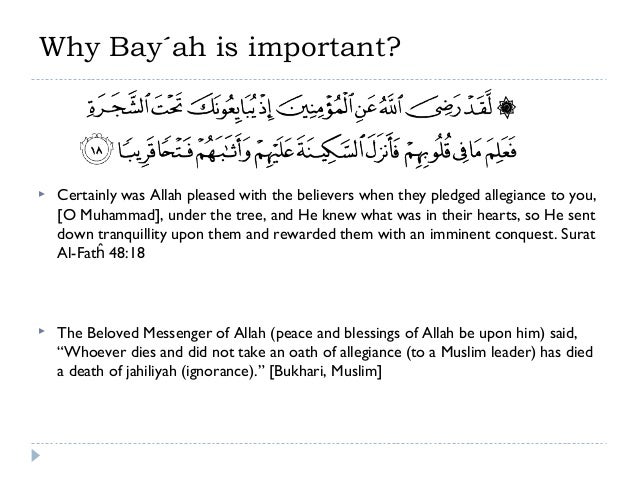
Certainly Allah was well pleased with the believers when they swore allegiance to you under the tree, and He knew what was in their hearts, so He sent down tranquillity on them and rewarded them with a near victory,—Sura Al-Fath, Ayah 18, Qur’an 48:18
After the time of Prophet alaihiswalathu wa salam, the rightly guided successors followed the tradition of Bayah and connected the people to the Oath of Allegiance to Prophet.
After them, Awliya Allah became their successors and given bayath to the people and connected them to the oath of allegiance of Prophet,in an unbroken chain (Silsila). So that the Oath of Allegiance of all generations until last day are connected to Prophet through the Bayat to the Awliya Allah of every Century, through the Silsila of Well known tarikats (Sufi Ways) which Originated from the 12 Imams of the Ahlu Bayth and their children and followers.
Baya-Oath of Allegiance is first the step to Piety (Taqwa) and Wilayah (Sainthood)
In order to submit to (To obey Allah-Wa athi’ullah) Allah, you must submit to (wa athi’urasool) Rasool Allah (alaihiswalathu wa salam) and to submit to Rasool Allah,you will submit to those who are charged with authority(wa ulool amri minkum) amongst you.
It is the order of the Quran and Sunnah of the rightly guided successors and verdict of many Islamic Jurists
4:59. Sura Nisa: O ye who believe! obey Allah, and obey the Messenger, and those charged with authority among you.
Hadith:The Messenger of Allah, sallallahu ‘alayhi wasallam, delivered an admonition that made our hearts fearful and our eyes tearful. We said, “O Messenger of Allah, it is as if this were a farewell sermon, so advise us.” He said, “I enjoin you to have Taqwa of Allah and that you listen and obey, even if a slave is made a ruler over you. He among you who lives long enough will see many differences. So for you is to observe my Sunnah and the Sunnah of the rightly-principled and rightly-guided successors, holding on to them with your molar teeth. Beware of newly-introduced matters, for every innovation (bid’ah) is an error.”
[Abu Dawud & Al-Tirmidhi, who says it is an authentic hadith)
Verdict:“Whoever dies without an Imaam then he dies the death of jaahileeyah” (AHMAD, MUTAQQI AL HINDI in ‘Kanzul U’maal’ [1/103])
Check the history of any Imams and Awliya, they all were related to Sufism and to a Shaykh 🙂
The steps:
Bayat-Oath of Allegiance
The Bayah has many categories.
- The Bayah of a beginner
- Th Bayah of a Scholar
- The Bayah of a Shaykh to another Shaykh in higher rank of Wilayah (Sainthood)
Obey Shaykh:
Obeying Shaykh means, you take the advise and commands of the Shaykh, which he only speak according to the “Ijazah” (Permission) from the chain of Saints which connect to Prophet (peace and blessings of Allah) be up on him). The Shaykh is responsible for what he order to you that you are responsible only on whether did you obey him or not!.
So obey Shaykh, do not question him or doubt in his commands. The way of the Shaykhs come with a hidden wisdom.
Follow Sunnah:
Follow the traditions of Prophet alaihiswalathu wa salam in all sphere of life.
Follow Shari’a:
Observe the laws of Islam.
Imam Malik (94-179 H./716-795 CE)
Imam Malik (r) said, “Whoever studies jurisprudence (fiqh) and didn’t study Sufism (tasawwuf) will be corrupted; and whoever studied tasawwuf and didn’t study jurisprudence will become a heretic; and whoever combined both will be reach the Truth.” This saying is mentioned and explained in the book of the scholar ‘Ali al-Adawi with the explanation of Imam Abil-Hassan, a scholar of jurisprudence, vol. 2, p. 195.
Many corrupted people and heretics among us!
Shaykh Al Islam Dr Muhammad Tahir Al Qadri explains,Watch
Do zikr as much as you can and develop zikr to a 24hr habit like heart beat and breathing
Sincerity and Truthfulness:
On the authority of Tamim Al-Dari that the Prophet, sallallahu ‘alayhi wasallam, said:
“Religion is nasihah.” We said: “To whom?” The Prophet, sallallahu ‘alayhi wasallam, said: “To Allah and His Book, and His messenger, and to the leaders of the Muslims and their common folk.”
[Muslim]
Halal provisions:
On the authority of Abu ‘Abdullah al-Nu’man bin Bashir, radiyallahu ‘anhu, who said: I heard the Messenger of Allah, sallallahu ‘alayhi wasallam, say:
“Truly, what is lawful is evident, and what is unlawful is evident, and in between the two are matters which are doubtful which many people do not know. He who guards against doubtful things keeps his religion and honour blameless, and he who indulges in doubtful things indulges in fact in unlawful things, just as a shepherd who pastures his flock round a preserve will soon pasture them in it. Beware, every king has a preserve, and the things Allah has declared unlawful are His preserves. Beware, in the body there is a flesh; if it is sound, the whole body is sound, and if it is corrupt, the whole body is corrupt, and behold, it is the heart.”
[Al-Bukhari & Muslim]
This hadith is clear evidence that “Purification of Heart” is most important. Tasawwuf (Sufism) is the science of purifications.
The Shari’a explains how to make Wudu(Ablution) to your body, Tasawwuf teach how to make ablution to your heart.
It is only Hypocrisy and false pride, which take people away from Awliya Allah and Sufism.

Pledging allegiance, also known as taking bayah or bayt, is a tradition from the times of Beloved Messenger of Allah (peace and blessings of Allah be upon him).
Once such example of this is when the Noble Companions pledged oath to him under the tree. In this incident, each Companion placed their hand in the hand of the Beloved Prophet (peace and blessings of Allah be upon him), and affirmed their faith in the oneness of Allah (tawheed).
This incident is reported in the Holy Qur’an, which states, “Certainly Allah was pleased with the believers when they pledged allegiance to you, [O Muhammad], under the tree, and He knew what was in their hearts, so He sent down tranquillity upon them and rewarded them with an imminent conquest.” [Qur’an 48:18]
Importance of Bayah to a Shaykh
The Beloved Messenger of Allah (peace and blessings of Allah be upon him) said, “Whoever dies and did not take an oath of allegiance (to a Muslim leader) has died a death of jahiliyah (ignorance).” [Bukhari, Muslim]
The meaning of taking bayah is to pledge spiritual allegiance & surrender yourself to the supervision of a Murshid/Pir/Shaykh, or spiritual teacher/leader. He leads you to Allah by guiding you through the path of Shar’iah and the teachings of our Beloved Prophet (peace and blessings of Allah be upon him). The Murshid is he who takes others under his guardianship so that he may help them with their deen, often strengthening their hearts with zikr and good counsel.
Taking bayah also acts as a powerful guard against arrogance and pride, as a mureed (a spiritual disciple, follower, a seeker who follows the Murshid as his guide on the path of Tasawwuf) must hold complete adab (respect) and humility where his Murshid is concerned. This orders the nafs towards discipline; it is made to recognise its own worth, reflecting upon the pure state of those close to Allah, realising that true honour is in piety only, and understanding that it has no right to be proud. The nafs also learns to obtain knowledge and guidance from one who is greater in faith, causing it to humble itself. This is the way of the Salaf, who would sit at the feet of their Murshid to correct their own characters (akhlaaq) and achieve purity.
• Sayyidina Shaykh Abdul Qadir al-Jilani, the Leader of the Saints, explains, “Arrogance, hypocrisy, egoism, are all arrows of Shaytan aimed at your hearts. One should formulate a strategy to defend oneself from this attack.
The correct strategies are explained and demonstrated by the Mashaa`ikh (Teachers). You should heed to their commands and act on them. They will guide you on the path of Allah since they have already travelled on this path. Ask their advice on matters relating to the nafs (lower self), cravings and other weaknesses, because they have also suffered their consequences and are well aware of the dangers and harms of evil desires. They have battled these over a long period of time and can confront, control and defeat them.”[Al-Fath-ur-Rabbani, pg. 150]
Additionally, spending time in the presence of the righteous will cause one to benefit greatly in character and mannerisms. This influence has a powerfully positive effect on a person’s heart and mind, causing them to adopt traits pleasing to Allah.
• Imam Ghazali states in his Ihya Uluum al-Din, “Keep company with those who have firm faith, hear from them the learning of sure faith, follow them always, so that your faith may become firm as their faith became firm.”
The Messenger of Allah (peace and blessings of Allah be upon him) said, as an analogy for good/bad company, “The likeness of a righteous friend and an evil friend, is the likeness of a (musk) perfume seller and a blacksmith. As for the perfume seller, he may either bestow something on you, or you may purchase something from him, or you may benefit from his sweet smell…” [Bukhari, Muslim]
The above narration clarifies the importance of righteous company, which can benefit a person in more ways than one – there are numerous other Ahadith about the merits of being with the righteous. Also, the Holy Qur’an states:
“And keep yourself patient [by being] with those who call upon their Lord in the morning and the evening, seeking His countenance.”[Qur’an 18:28]
Regarding the presence, then, of a Murshid, one who is a scholar of religion and devout in his duties towards Almighty Allah, one should bear in mind the following Hadith of the Noble Messenger, may Allah’s peace and blessings be upon him:
“The best of you are those who, when they are seen, God is remembered.”[Ibn Majah]
This highlights the necessity of being in the company of one’s Murshid who, if he is a true teacher, will have this effect on those who meet him.
• Imam Muhyuddin ibn Arabi states in his book, Kitab Kunh ma la Budda minhu lil-Murid or What the Seeker Needs, “Look for a perfect teacher who will lead you on the Straight Path.”
• Imam al-Shafi said, “I accompanied the Sufiya (plural of Sufi) and I received from them three kinds of knowledge, 1. They taught me how to speak, 2. They taught me how to treat people with leniency and a soft heart, 3. They guided me in the ways of Tasawwuf.” [Tanwir Al-Qulub, page 405]
• Imam Ahmad advising his son said, “O my son, you must sit with the Sufiya, because they are like a fountain of knowledge. They recite the remembrance of Allah in their hearts. They are ascetics and they have the most spiritual power.” [Ghiza Al-Albab, Vol 1, page 120]
• Imam Abu Hanifa said, emphasizing the importance of sitting at the feet of a spiritual guide and teacher, “If it were not for two years, I would have perished. For two years, I accompanied Imam Jafar al-Sadiq and I acquired the spiritual knowledge that made me a knower in the Way (i.e. Tasawwuf).” [Ad-Durr Al-Mukhthar, Vol. 1, page 43]
It has been agreed upon for centuries that one cannot travel the path of Tasawwuf, or the essential spiritual branch of Islamic belief, without guidance from a spiritual teacher. This knowledge cannot be taught in books, it must be acquired through the guidance of a teacher or Murshid.
• Mawlana Jalaluddin Rumi states in his Masnavi, “Butter cannot be acquired without milk, as recognition of Allah (ilm-e-baatin) cannot be obtained without a spiritual guide or Murshid.”And he further states, “Whoever travels without a guide needs two hundred years for a two day journey.”
About him, there is a story regarding the importance of a Murshid.
He, Mawlana Rumi, was not only a poet but also a great jurist, theologian and scholar of the highest accord. One day, as he taught his students in the open courtyard of the Masjid, a poorly dressed dervish stood by and watched. He observed how the Mawlana referred to many handwritten books and texts as he taught, so he enquired as to what they contained. Mawlana Rumi replied, “O Sufi! This contains knowledge which is beyond your understanding, so you continue to read your tasbeeh (rosary).” The dervish was in fact the great Shamsuddin Tabrez, who would soon be his spiritual guide and teacher.
When Mawlana Rumi’s attention had gone back to teaching, Khwaja Shamsuddin Tabrez threw all the Mawlana’s books into the nearby pond. The students who noticed this rushed to him and began to beat him. A distraught Mawlana Rumi complained of how his valuable knowledge had all been lost.
“Tell your pupils to leave me alone and I will give back your books,” replied Khwaja Shamsuddin. Mawlana Rumi, thinking that this would be impossible, asked his students to leave the dervish alone. Then he watched in amazement as Khwaja Shamsuddin recited ‘Bismillah,’ retrieved the books out of the water and returned them to him intact. He asked him as to how he had done this, to which Khwaja Shamsuddin replied, “This knowledge is beyond your understanding so you continue to teach your pupils.”
The Mawlana then realised his mistake, asked for forgiveness and submitted himself to the presence of this great Sufi dervish. Eventually, time spent at the feet of Khwaja Shamsuddin transformed him from a scholar of religious texts, into a truly devout lover of God.
In Mawlana Rumi’s own words:
“Sad kitaboh, sad waraq, dar nar kun
Aur jaan-o-dil rah, janibeh, dil daar kun.”
Meaning: “Throw all your books into the fire,
And turn with heart & soul towards the pure-hearted (the Awliya).”
Hafiz al-Shirazi affirms this advice saying, “Do not take a step on the path of Love without a guide. I have tried it one hundred times and failed.”
• If one is lucky enough to reach the presence of a Wali or Friend of Allah (read article about Wilayah), bear in mind the words of Khwaja Shah Baha’uddin Naqshband who said, “There is no friend of Allah on this earth who is not under the special Gaze of Allah. When you sit in the company of the friend of Allah, the fayz (spiritual blessing) that you receive is in fact a reflection of that special gaze.”
The power of this fayz has been known to truly transform personalities, causing even the harshest of criminals and sinners to turn whole-heartedly to Allah in repentance and devotion.
• Sayyidina Shaykh Abdul Qadir Jilani said, “The heart is the plantation for the Aakhira (hereafter). Sow the seeds of Imaan in your heart. Irrigate, fertilise and mature it with regular good deeds. If there is kindness and energy in the heart, it will be fertile and an abundant harvest will result. Should the heart be harsh and contemptuous, the soul becomes infertile, barren and no crop will be able to grow.
Learn this art of farming by its farmers/experts, the Awliya Allah. Do not think your opinion to be sufficient. Our Prophet (peace and blessings of Allah be upon him) says, ‘Seek help in every field from an expert in that field.’” [Al-Fathur Rabbani, pg. 202]
Criteria of a True Murshid
A true Murshid is one whose own faith is sound enough for him to guide others to the Path. His status as a Murshid must be initiated by orders from his own spiritual guide, who may receive these instructions from preceding saints with the permission of the Beloved Messenger of Allah (peace and blessings of Allah be upon him).
This spiritual chain is known as a Tareeqa.
Firstly, true Murshid must be a Sunni Muslim who strictly follows the beliefs and creed of the Ahle Sunnah wal Jamaah, the only true path of Islam. He adheres to the ways of the Beloved Messenger, and is guided by the Noble Companions and the Salaf who follow after them. This is absolutely crucial, and without this, he is a danger to the Imaan of those who follow him and a cause for serious corruption in faith.
• Imam Malik said, “Whoever studies jurisprudence (fiqh) and does not study Tasawwuf will be corrupted. Whoever studies Tasawwuf and does not study jurisprudence will become a heretic. Whoever combines both will reach the truth.” [Kashf Al-Khafa Wa Muzid Al-Abas, Vol. 1, page 341]
Secondly, he must be a knowledgeable scholar or Aalim, with a broad understanding in matters of Deen so that he is able to differentiate between forbidden (haram), acceptable (halal) and everything in between. He will be able to give sound judgements and guide the actions of his followers according to the Qur’an and Sunnah.
Thirdly, he must display the noble characteristics and etiquettes taught by the Beloved Messenger, and this indicates the purity of his heart. A great Murshid is one who teaches by practical example as well as through his words and advice. He is respected by all due to his character and he instills love for the Sunnah within the hearts of those who follow him.
Fourthly, his spiritual lineage (Shejra) must be that of a true Tareeqa, or spiritual chain; it must be connected, starting from our Master the Beloved Messenger of Allah, to Noble Companions, to Salaf and Awliya after them. Spiritual wisdom, teachings and guidance are passed down from the top in this manner, so one cannot gain any fayz or virtue without these connections.
Additionally, Imam Muhyuddin ibn Arabi teaches that one should not expect a Murshid to perform miracles. This is not a requirement of a spiritual guide or even of a Wali. This is something which many are blessed with by Allah, but is an aspect they wish to conceal due to their humility and noble state.
• Imam ibn Arabi states, “People think that a Shaykh should show miracles and manifest illumination. The requirement of a teacher however, is only that he should possess all that the disciple needs.”
• Regarding this, Mawlana Rumi narrates the following story in his Masnavi:
Seeing a man who was tilling the earth, a fool who was unable to control himself cried out, “Why are you ruining this soil?”
“Fool,” said the man, “leave me alone. Try to recognize the difference between tending the soil and wasting it. How will this soil become a rose garden until it is disturbed and overturned?”
This indicates the importance of the Shaykh who acts as the tiller, testing the mureed by overturning their heart and nourishing their inner soil. This is done to benefit the mureed so that their full inner potential is realized and as a result, they are elevated in spiritual rank and station.
Tareeqa – Spiritual Chain
The word tareeqa literally means ‘way’ or ‘path’. It terms of Tasawwuf, it refers to the path of spiritual guidance and blessing issued down from the Beloved Messenger, passed along from one righteous personality to another. Silsila is another term used for tareeqa.
As madhabs are the paths for adhering to the Shar’iah, sotareeqas are the paths for adhering to Tasawwuf. They are all correct, as they all lead back to the ultimate source of guidance, our Beloved Prophet, may Allah’s peace and blessings be upon him. The saints in every tareeqa are connected to his eminent presence and blessings.
• Imam Ahmad Raza Khan says, “By just having a link with a spiritual order (Silsila) is itself a great fortune and blessing.”
Each tareeqa has branches; like a tree, where the roots are one but the branches are many. This is due to how each tareeqa is connected and taught through different saints and their Darbars (sanctuaries, or centres).
The Naqshbandi tareeqa is distinguished in that it is the only one which connects from the Beloved Messenger of Allah (peace and blessings of Allah be upon him) to Sayyidina Abu Bakr Siddique (may Allah be pleased with him) onwards, whereas all the others connect from the Beloved Messenger of Allah (peace and blessings of Allah be upon him) to Sayyidina Ali (may Allah be pleased with him) onwards.
• Mawlana Jami is reported to have said, “The Naqshbandiya lead an extraordinary caravan, for they take their students to the Haram (sanctuary) via a secret, hidden route.”
The Shejra is a chart which shows clearly how the tareeqa has progressed; which Companions and saints it has been passed down from. It clarifies the spiritual connection and authenticity of the guidance a mureed is blessed with through their tareeqa.
There are many virtues associated with reciting one’s Shejra. It encourages the remembrance of the Messenger of Allah (peace and blessings of Allah be upon him), and the Saaliheen (the righteous). This is a method which strengthens hearts and rejuvenates one’s faith.
It also acts as a form of Isaal-e-Sawaab, or virtue for the deceased, which is a means to receive their guidance and fayz. It also brings a mureed closer to the Awliya, so that they are able to receive the blessings and assistance of these saints in times of hardship, as well as during moments of ease.
Duties and Respect towards One’s Murshid
First and foremost, it is crucial for the mureed to have utmost love, respect and trust towards his Murshid. A seeker cannot gain even a grain of wisdom or blessing unless he has complete adab (respect) for his spiritual guide.
Notice the respect and honour the Noble Companions had for the Beloved Messenger of Allah (peace and blessings of Allah be upon him). They had such deep love and respect for him that they would honour everything associated with him – his belongings, his mannerisms, places he visited etc. They would never raise their voice above his, they would never turn their backs towards him or even look at his blessed face except by glancing, due to their respect for him.
A mureed’s respect for his/her Murshid should be in accordance to the Companion’s level of reverence for the Beloved Messenger – he was their guide to Allah, as one’s Murshid is a guide to the Beloved Messenger.
• Khwaja Shah Baha’uddin Naqshband said, “Good conduct with the Shaykhs is a requirement for every seeker. The Shaykhs are the causes and the means for following in the footsteps of the Prophet (peace and blessings of Allah be upon him).”
It is also extremely important that the mureed adheres to the advice and instructions of the Murshid, without fail or hesitation. Of course, any advice given which is blatantly and without even a shadow of a doubt, in contradiction of the Shari’ah, must be opposed – but a true Murshid will never advise in such a manner.
In the case of a true Murshid, a mureed must understand that even when the advice of their Murshid appears suspicious, these doubts should not be entertained. Often, it is due to the lack of the mureed’s understanding and faith that they are unable to comprehend the wisdom behind the Murshid’s words. Therefore, they should endure with patience knowing that eventually, their doubts will be removed and the truth will be brought to light. The true Murshid has answers which a seeker can only obtain through complete trust.
• Khwaja Moinuddin Chishti said, “Whoever has attained anything achieved it through service (khidmat). It is compulsory upon the mureed not to go against the commands of the Murshid even to the size of an atom.”
There is an incident reported about Imam Junayd al-Baghdadi, who came to the River Tigris and saying “Ya Allah”, began to walk across it as if it was solid ground. One of his followers witnessed this, so the Imam advised him to say “Ya Junayd” and he too would be able to cross. The follower did so, and repeating “Ya Junayd”, he walked across the water – until Shaytan entered his mind. He thought, “The Imam himself is repeating the Name of Allah, whilst he tells me to repeat ‘Ya Junayd’. Surely, this is shirk! Will I not repeat the Name of Allah too?”
So he disregarded the words of his Murshid Imam Junayd, and began to say “Ya Allah”.Immediately, he plunged into the depths of the water beneath him and began to drown. Imam Junayd rescued him and he told him what had happened. The Imam replied, “You have not yet understood or attained the status of Junayd and yet you tried to comprehend the Reality of Allah!”
• Sayyidina Shaykh Abdul Qadir al-Jilani, “You should heed to the commands of the Shaykhs and act on them. They will guide you on the path of Allah since they have already travelled on this path.”[Al-Fathur Rabbani, pg. 150]
Therefore, the mureed must ensure that they are consistent in reciting the awrad (or wird, wazaa’if, or daily zikr) prescribed to them by their spiritual guide. This is of utmost importance; the Murshid is a healer or physician who recommends the appropriate antidote necessary for the seeker. He knows the seeker’s state better than the seeker themselves, so trust in his knowledge and remember that he receives guidance from the saints and the Beloved Messenger of Allah (peace and blessings of Allah be upon him).
• Khwaja Moinuddin Chishti said, “Whatever zikr the Murshid has instructed should be read accordingly so that the mureed may attain some spiritual perfection; what the Murshid commands is for the benefit of the mureeds.”
A seeker should also show complete loyalty and allegiance towards their Murshid. They should honour the belief that their Murshid is the best guide for them, the most beneficial for them, and that none else can surpass this rank. This loyalty is a part of the respect shown towards one’s Murshid, as it proves the level of trust and belief a seeker has, not just in the Murshid, but also the tareeqa they follow.
Those who are looking for a Murshid to guide them should remember that if a seeker is truly sincere, Allah will guide them to a true Murshid who will elevate and strengthen their spiritual state. InshaAllah, they will be successful if they act upon the words of the Qur’an, “And seek help through patience and prayer…” [Qur’an 2:45]
The Status of Fana fi-Shaykh
The status of fana fi-Shaykh (annihilation in one’s Shaykh or Murshid) is a truly dignified one, and is the first stage of spiritual elevation. It indicates the mureed’s pure nature and firm faith, and shows that they are ready for further enlightenment from Allah and the Beloved Messenger (peace and blessings of Allah be upon him).
The second stage of spiritual elevation is Fana fi-Rasul, and the third & final stage is Fana-fillah which is the utmost level of spirituality.
Attaining the status of fana fi-Shaykh requires the seeker to become one with the will of their Murshid – to the extent that they no longer harbour desires of their own, as all their feelings are harmonized with that of their spiritual guide. It is a truly honourable status where the love for the Murshid becomes so intense that his pleasure is the seeker’s own pleasure, and his displeasure is also the seeker’s displeasure. In this manner, the seeker receives and reflects the fayz of their Murshid in a much more powerful form.
Khwaja Sirri as-Saqti said about the love and devotion between Murshid and mureed, that it cannot be authentic unless one says to the other, “I am you, and you are I.” This indicates the complete absorption of a mureed’s heart, which submits itself completely to the one it loves i.e. the Murshid, who is its master, the one who nurtures it and guides it to Allah and the Beloved Messenger.
• About fana fi-Shaykh, Imam Ahmad Raza Khansays, “One must feel that his Shaykh is present with him at all times, and his heart is under the heart of his Shaykh. While in this state, the spiritual beams of the Beloved Messenger of Allah are beaming onto the heart of his Shaykh which is then reflecting onto the Mureed. If this concentration is correctly perfected and maintained for a period of time, the Mureed will clearly visualize the image of his Shaykh upon whatever object he looks at. This condition intensifies so much that the image of the Shaykh will not part from him even whilst in Salah. The Mureed will find this image wherever he goes.”[al-Malfuz al-Sharif]
This state is perfected when the mureed becomes so absorbed in the tasawwur (observation) of their Murshid that his every move impacts their own actions. Eventually, the Murshid also controls the movements of the mureed and at this stage, the mureed becomes completely annihilated (fana), merging into existence of their spiritual guide. This is a divine reality.
Tasawwur-e-Shaykh, or visualizing one’s Shaykh is an important part of being a mureed. It is also a form of muraqaba prescribed through many tareeqas due to the benefits it has upon the heart of a seeker.
May Allah’s eternal peace and blessings of the highest degree be upon our Master Muhammad, upon his Family and his Companions.
 Aal-e-Qutub Aal-e-Syed Abdullah Shah Ghazi