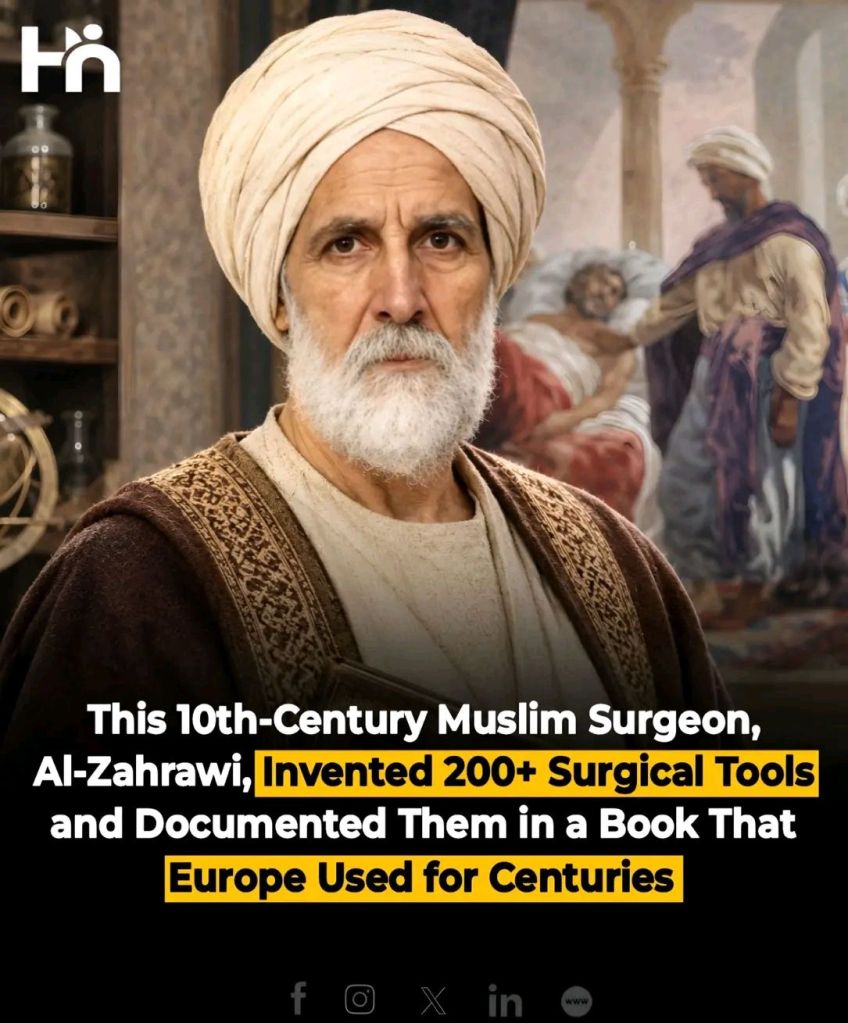
Abu al-Qasim Al-Zahrawi (936–1013)

Abu al-Qasim Al-Zahrawi (936–1013), widely known in Europe as Abulcasis, was a Muslim physician and surgeon from Al-Andalus, in present-day Spain. He is remembered as one of the most influential figures in the history of surgery. At a time when surgical knowledge was often passed down through practical experience, Al-Zahrawi worked to make it more systematic by documenting medical procedures, instruments and techniques in a comprehensive medical encyclopedia.

His most famous work was Al-Tasrif, a 30-part medical encyclopedia covering different areas of medicine. Its final section was devoted entirely to surgery and described more than 200 surgical instruments, including scalpels, forceps, hooks, probes, scissors and tools used in dental and other operations. He provided illustrations and explained how the instruments were used, helping surgeons understand both the tools and the procedures they performed.

Al-Zahrawi also made important contributions to surgical practice. He described techniques for treating fractures and dislocations, removing bladder stones, controlling bleeding and performing other operations. He discussed the use of catgut, a material made from animal intestines, for internal stitches. His work emphasized that surgery required proper medical knowledge, practical training and careful judgement, rather than simply learning how to use instruments.

The influence of Al-Tasrif eventually reached Europe through its Latin translation by Gerard of Cremona in the 12th century. It became an important reference for European medical education and influenced surgeons for centuries. Today, Al-Zahrawi is widely remembered as one of the pioneers of operative surgery, while his illustrated work remains an important record of the medical achievements of the Islamic Golden Age.

Disclaimer: This report is based on historical and medical sources, including UNESCO, the U.S. Library of Congress and academic publications. The 200-plus figure refers to instruments described and illustrated in his work; it does not mean every instrument was invented by him.

अंबिया की माली विरासत का सुबूत

अंबिया की माली विरासत का सुबूत और हदीस-ए-«ला नूरस» का ऑपरेशन तीन उलमा-ए-अहले सुन्नत के अक़वाल की रौशनी में🔥📚

क़ारईन-ए-किराम: पहली बात मज़कूरा हदीस सही नहीं है। दूसरी बात अगर बिल-फ़र्ज़ इस हदीस को क़बूल करें तो इसकी सही तावील यह है जैसा इन तीन बुज़ुर्ग उलमा-ए-अहले सुन्नत ने लिखा है। यानी हदीस-ए-«إِنَّا مَعْشَرَ الْأَنْبِيَاءِ لَا نُورَثُ» का मतलब यह हरगिज़ नहीं कि अंबिया अलैहिमुस्सलाम अपना माली वारिस नहीं छोड़ते। इसका मतलब वही है जो क़ुर्तुबी, सरख़सी और नह्हास ने बयान किया है, कि जो माल सदक़ा कर दिया जाए उसकी विरासत नहीं होती, और यह अंबिया अलैहिमुस्सलाम का आम तरीक़ा है। इस तावील के बग़ैर यह हदीस क़ुरआन की वाज़ेह आयतों के ख़िलाफ़ हो जाएगी, और रसूलुल्लाह सल्लल्लाहु अलैहि व आलिही व सल्लम क़ुरआन के ख़िलाफ़ बात नहीं कर सकते।

क़ारईन-ए-किराम: आप बख़ूबी जानते हैं कि नबी सल्लल्लाहु अलैहि व आलिही व सल्लम के बाद जब नबी-ए-अकरम सल्लल्लाहु अलैहि व आलिही व सल्लम की लख़्त-ए-जिगर बेटी सैयदा फ़ातिमा सलामुल्लाह अलैहा ने दरबार-ए-ख़िलाफ़त में फ़दक का मुतालबा किया तो सैयदा फ़ातिमा सलामुल्लाह अलैहा के सामने एक  हदीस का सहारा लेते हुए कहा गया कि अंबिया अलैहिमुस्सलाम अपना माली वारिस नहीं छोड़ते, उनका माल सदक़ा होता है, इसलिए आप नबी सल्लल्लाहु अलैहि व आलिही व सल्लम की वारिसा नहीं हैं। यह दावा इसी हदीस की ग़लत तावील पर मबनी है, जिसका रद्द ख़ुद अहले सुन्नत के काफ़ी उलमा ने किया है। हम यहाँ तीन उलमा के अक़वाल से इसका रद्द करते हैं।

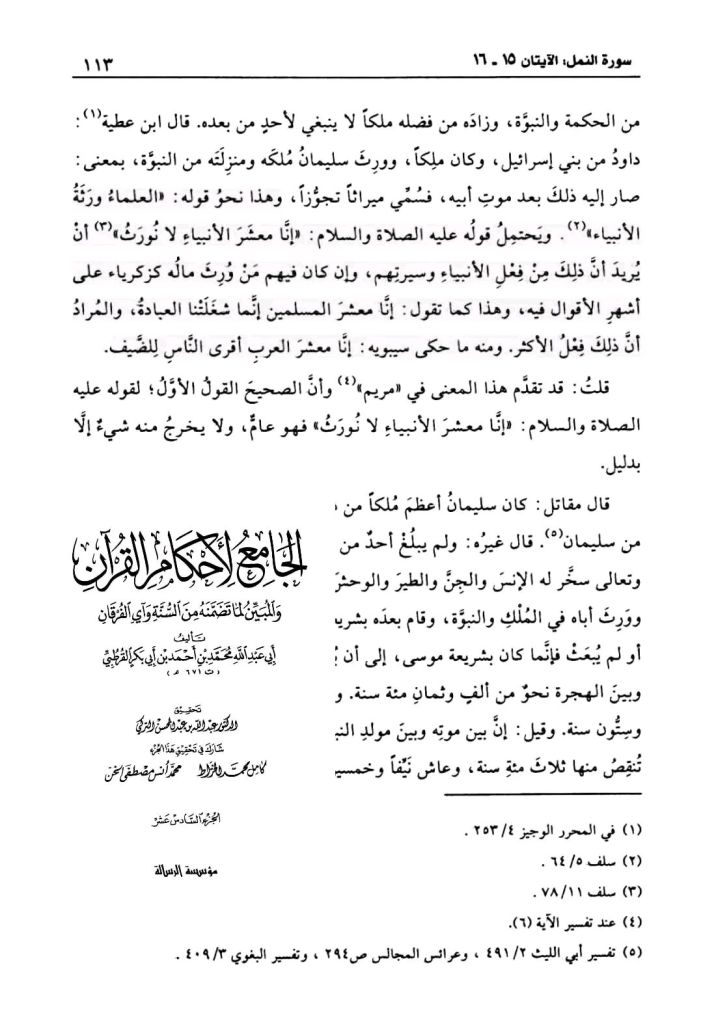
पहली दलील: इमाम क़ुर्तुबी अपनी तफ़सीर अल-जामे लि-अहकामिल क़ुरआन में सूरह नम्ल की आयत «وَوَرِثَ سُلَيْمَانُ دَاوُدَ» की तफ़सीर में लिखते हैं:

صَارَ ذَلِكَ إِلَيْهِ بَعْدَ مَوْتِ أَبِيهِ، فَسُمِّيَ مِيرَاثًا تَجَوُّزًا، وَهَذَا نَحْوُ قَوْلِهِ: «الْعُلَمَاءُ وَرَثَةُ الْأَنْبِيَاءِ». وَيُحْتَمَلُ قَوْلُهُ عَلَيْهِ الصَّلَاةُ وَالسَّلَامُ: «إِنَّا مَعْشَرَ الْأَنْبِيَاءِ لَا نُورَثُ» أَنْ يُرِيدَ أَنَّ ذَلِكَ مِنْ فِعْلِ الْأَنْبِيَاءِ وَسِيرَتِهِمْ، وَإِنْ كَانَ فِيهِمْ مَنْ وَرَثَ مَالَهُ كَزَكَرِيَّا عَلَى أَشْهَرِ الْأَقْوَالِ فِيهِ.

तर्जुमा: सुलेमान अलैहिस्सलाम को यह चीज़ बाप के मरने के बाद मिली, इसलिए इसको मजाज़न मीरास कहा गया। और नबी सल्लल्लाहु अलैहि व आलिही व सल्लम के इस क़ौल का यह मतलब भी हो सकता है कि हम अंबिया अलैहिमुस्सलाम विरासत नहीं छोड़ते, यानी यह अंबिया अलैहिमुस्सलाम का आम तरीक़ा है, अगरचे उनमें से बाज़ ऐसे भी हैं जिन्होंने अपना माल विरासत में छोड़ा, जैसे ज़करिया अलैहिस्सलाम, मशहूर क़ौल के मुताबिक़।

इससे साबित हुआ: क़ुर्तुबी ख़ुद मान रहे हैं कि ज़करिया अलैहिस्सलाम ने माल छोड़ा और उसकी विरासत हुई। पस यह क़ायदा कुल्ली नहीं कि नबी सल्लल्लाहु अलैहि व आलिही व सल्लम का माल कभी विरासत नहीं होता।

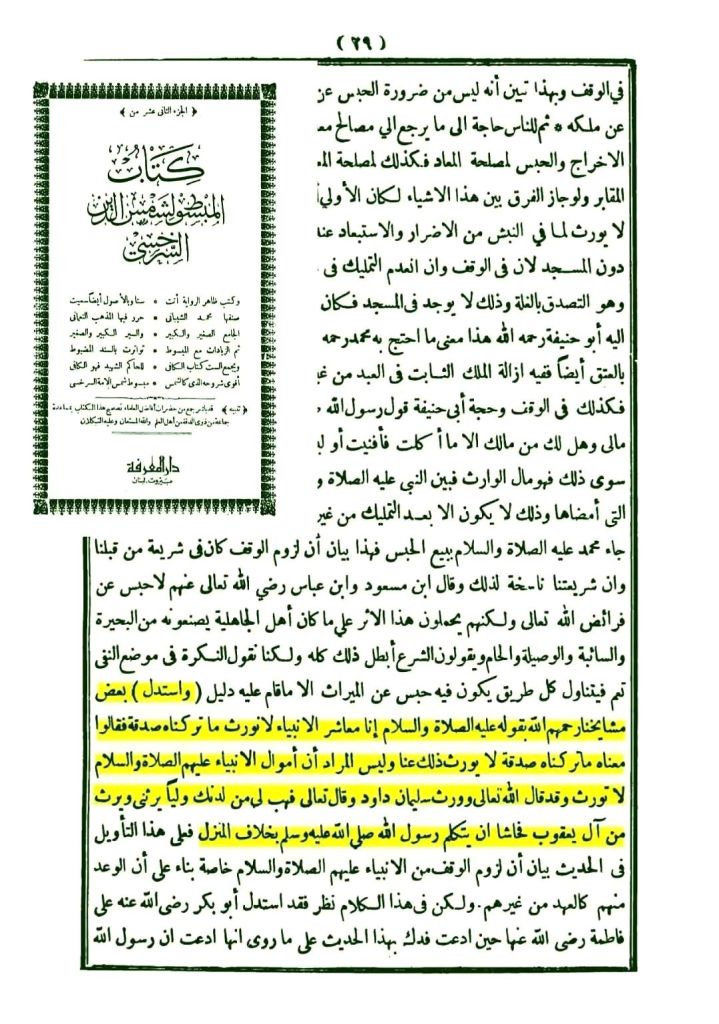
दूसरी दलील: इमाम सरख़सी अपनी किताब अल-मबसूत में अपने मशाइख़ का क़ौल नक़ल करते हुए लिखते हैं:

وَاسْتَدَلَّ بَعْضُ مَشَايِخِنَا رَحِمَهُمُ اللَّهُ بِقَوْلِهِ عَلَيْهِ الصَّلَاةُ وَالسَّلَامُ: إِنَّا مَعْشَرَ الْأَنْبِيَاءِ لَا نُورَثُ، مَا تَرَكْنَاهُ صَدَقَةٌ، فَقَالُوا: مَعْنَاهُ مَا تَرَكْنَاهُ صَدَقَةً لَا يُورَثُ ذَلِكَ عَنَّا، وَلَيْسَ الْمُرَادُ أَنَّ أَمْوَالَ الْأَنْبِيَاءِ عَلَيْهِمُ الصَّلَاةُ وَالسَّلَامُ لَا تُورَثُ، وَقَدْ قَالَ اللَّهُ تَعَالَى: وَوَرِثَ سُلَيْمَانُ دَاوُدَ، وَقَالَ تَعَالَى: فَهَبْ لِي مِنْ لَدُنْكَ وَلِيًّا يَرِثُنِي وَيَرِثُ مِنْ آلِ يَعْقُوبَ، فَحَاشَا أَنْ يَتَكَلَّمَ رَسُولُ اللَّهِ صَلَّى اللَّهُ عَلَيْهِ وَسَلَّمَ بِخِلَافِ التَّنْزِيلِ.

तर्जुमा: हमारे बाज़ मशाइख़ ने इस हदीस से दलील ली: हम अंबिया अलैहिमुस्सलाम की विरासत नहीं होती, जो हम छोड़ जाएँ वह सदक़ा है। उन्होंने कहा: इसका मतलब यह है कि जो चीज़ हमने सदक़ा करके छोड़ी वह विरासत में नहीं मिलेगी, और इससे यह मुराद नहीं कि अंबिया अलैहिमुस्सलाम के मालों की विरासत ही नहीं होती। और अल्लाह ने फ़रमाया: सुलेमान अलैहिस्सलाम ने दाऊद अलैहिस्सलाम की विरासत पाई। और फ़रमाया: मुझे एक वारिस अता फ़रमा जो मेरा वारिस हो और आल-ए-याक़ूब अलैहिस्सलाम का वारिस हो। पस यह नामुमकिन है कि रसूलुल्लाह सल्लल्लाहु अलैहि व आलिही व सल्लम क़ुरआन के ख़िलाफ़ बात करें।

इससे साबित हुआ: हदीस का मतलब सिर्फ़ सदक़ा किए हुए माल का है, न कि हर माल का। और रसूलुल्लाह सल्लल्लाहु अलैहि व आलिही व सल्लम क़ुरआन के ख़िलाफ़ बात नहीं कर सकते, जबकि क़ुरआन दो जगह अंबिया अलैहिमुस्सलाम की माली विरासत को साबित कर रहा है।

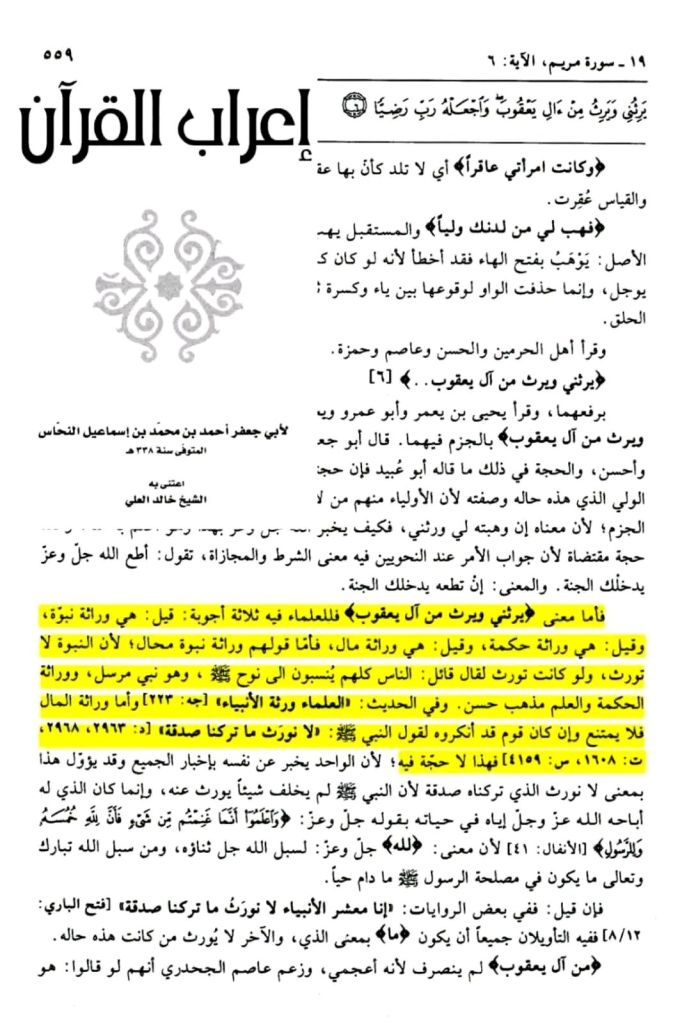
तीसरी दलील: अबू जाफ़र नह्हास अपनी तफ़सीर एराबुल क़ुरआन में सूरह मरियम की आयत «يَرِثُنِي وَيَرِثُ مِنْ آلِ يَعْقُوبَ» के बारे में फ़रमाते हैं:

فَأَمَّا مَعْنَى «يَرِثُنِي وَيَرِثُ مِنْ آلِ يَعْقُوبَ» فَلِلْعُلَمَاءِ فِيهِ ثَلَاثَةُ أَجْوِبَةٍ: قِيلَ: هِيَ وَرَاثَةُ نُبُوَّةٍ، وَقِيلَ: هِيَ وَرَاثَةُ حِكْمَةٍ، وَقِيلَ: هِيَ وَرَاثَةُ مَالٍ، فَأَمَّا قَوْلُهُمْ وَرَاثَةُ نُبُوَّةٍ فَمُحَالٌ؛ لِأَنَّ النُّبُوَّةَ لَا تُورَثُ، وَوَرَاثَةُ الْحِكْمَةِ وَالْعِلْمِ مَذْهَبٌ حَسَنٌ. وَأَمَّا وَرَاثَةُ الْمَالِ فَلَا يَمْتَنِعُ وَإِنْ كَانَ قَوْمٌ قَدْ أَنْكَرُوهُ لِقَوْلِ النَّبِيِّ ﷺ: «لَا نُورَثُ مَا تَرَكْنَا صَدَقَةٌ» فَهَذَا لَا حُجَّةَ فِيهِ؛

तर्जुमा: रहा «يَرِثُنِي وَيَرِثُ مِنْ آلِ يَعْقُوبَ» का मअना, तो इसमें उलमा के तीन जवाब हैं। कहा गया: यह नुबुव्वत की विरासत है, और कहा गया: यह हिकमत की विरासत है, और कहा गया: यह माल की विरासत है। पस रहा उनका यह क़ौल कि यह नुबुव्वत की विरासत है, तो यह मुहाल है, क्योंकि नुबुव्वत विरासत में नहीं दी जाती। और अगर नुबुव्वत विरासत में मिलती तो कहने वाला यह कहता कि सारे लोग नूह अलैहिस्सलाम की तरफ़ मंसूब होते हैं, और वह रसूल नबी हैं। और हिकमत व इल्म की विरासत एक अच्छा मज़हब है। और हदीस में है: «उलमा अंबिया अलैहिमुस्सलाम के वारिस हैं»। और रही माल की विरासत, तो यह नामुमकिन नहीं है, अगरचे एक क़ौम ने नबी सल्लल्लाहु अलैहि व आलिही व सल्लम के इस क़ौल की वजह से इसका इंकार किया है: «हमारी विरासत नहीं होती, जो हमने छोड़ा वह सदक़ा है» तो इसमें कोई हुज्जत नहीं है।

इससे साबित हुआ: इमाम नह्हास साफ़ कह रहे हैं कि माल की विरासत का इंकार बे-दलील है। ज़करिया अलैहिस्सलाम की दुआ में «يَرِثُنِي» से मुराद माल की विरासत भी है।

इन तीनों उलमा के अक़वाल से एक ही नतीजा निकलता है:

क़ुरआन में अंबिया अलैहिमुस्सलाम की माली विरासत दो वाज़ेह आयतों से साबित है: «وَوَرِثَ سُلَيْمَانُ دَاوُدَ» और «يَرِثُنِي وَيَرِثُ مِنْ آلِ يَعْقُوبَ»।

हदीस-ए-«إِنَّا مَعْشَرَ الْأَنْبِيَاءِ لَا نُورَثُ» का मतलब यह नहीं कि नबी सल्लल्लाहु अलैहि व आलिही व सल्लम का कोई माल वारिस को नहीं मिलता। इसका मतलब सिर्फ़ यह है कि जो माल नबी सल्लल्लाहु अलैहि व आलिही व सल्लम ने अपनी ज़िंदगी में सदक़ा कर दिया हो, उसकी विरासत नहीं होगी, न कि हर माल जो अंबिया अलैहिमुस्सलाम के पास हो वह सदक़ा है।

पस वह दावा कि अंबिया अलैहिमुस्सलाम अपना माली वारिस नहीं छोड़ते, और इस बुनियाद पर सैयदा फ़ातिमा सलामुल्लाह अलैहा को फ़दक से महरूम किया जाए, यह दावा ख़ुद इन तीनों उलमा के अक़वाल से रद्द हो जाता है। क्योंकि अगर अंबिया अलैहिमुस्सलाम की माली विरासत न होती तो ज़करिया अलैहिस्सलाम वारिस की दुआ क्यों करते, और सुलेमान अलैहिस्सलाम दाऊद अलैहिस्सलाम के वारिस क्यों बनते।

लिहाज़ा सैयदा फ़ातिमा सलामुल्लाह अलैहा रसूलुल्लाह सल्लल्लाहु अलैहि व आलिही व सल्लम की शरई वारिसा थीं, और फ़दक उनका हक़ था, जिसका इंकार क़ुरआन की इन आयतों के ख़िलाफ़ था।

अशहदु अन्न फ़ातिमा ज़हरा सलामउल्लाहु अलैहा सिद्दीक़तुल कुबरा”🌹

When the moon split part 4

• Choosing a Profession: Having grown up without inheritance under his uncle Abu Talib’s care, he initially earned a living tending goats for Banu Sa’d and later for the Quraysh in Makkah. Because of his integrity, he became widely known as “Al-Ameen” (the Trustworthy).


• Journey to Syria for Khadeejah: Impressed by his reputation, a wealthy businesswoman named Khadeejah bint Khuwaylid hired him to trade her merchandise in Syria alongside her servant, Maysarah. The trip yielded high profits, which he faithfully returned to her


• Marriage to Khadeejah Alaihissalam: Previously turned down proposals from Quraysh chiefs, Khadeejah was moved by Maysarah’s account of Muhammad’s (ﷺ) noble character. She proposed marriage through her friend Nafeesah, and he agreed after consulting his uncles.Following a proposal through her uncle Amr bin Asad and a dowry of twenty camels (or six in some accounts), Muhammad married Khadeejah in the presence of Banu Hashim and Quraysh chiefs, with Abu Talib delivering the sermon.

• Their Children: Khadeejah Alaihissalam was his first and only wife during her lifetime, bearing all of his children except Ibraheem (born to Mariya Qibtiya)—listed here as Qasim, Zaynab, Ruqayyah, Umm Kulthoom, Fatimah, Abdullah, and Ibraheem. All sons died in childhood, while all daughters lived to see his prophethood and migrate to Madinah; all except Fatimah Alaihissalam passed away before him, with Fatimah Alaihissalam dying six months after him.


• Rebuilding the Ka’bah: When Muhammadﷺ was thirty-five, a flood and an earlier fire damaged the Ka’bah. The Quraysh resolved to rebuild it using only lawful funds (excluding usury, prostitution, or larceny), and Waleed bin Mugheera was the first to begin dismantling the walls without harm.

• Rebuilding the Ka’bah: The tribes demolished the Ka’bah down to the original foundations laid by Prophet Ibraheem (Abraham) and shared the construction duties, with Muhammad ﷺ and his uncle Abbas carrying stones.


• Hijr Isma’eel: Because the tribes lacked enough funds to rebuild the entire structure on the original foundation, a Roman mason named Baqoom built a smaller low wall on the northern side enclosing about six cubits, known as Hijr Isma’eel.


• The Black Stone Dispute: When it was time to place the Black Stone, the tribal chieftains argued for four or five days over who would have the honor, bringing them to the brink of bloodshed.


• Abu Umayya’s Suggestion: The eldest chieftain, Abu Umayya, proposed letting the next man to enter the gate of the Ka’bah decide the matter—and that person turned out to be Muhammad ﷺ.


• The Resolution: Known for his trustworthiness, Muhammad ﷺ placed the Black Stone on a sheet and had each clan leader hold an edge to lift it together, before setting it into place with his own hands.

Notes that the Quraysh kept the doorway elevated to control access, doubled the wall height from nine to eighteen cubits, added a fifteen-cubit-high roof, and placed six pillars inside in two rows.