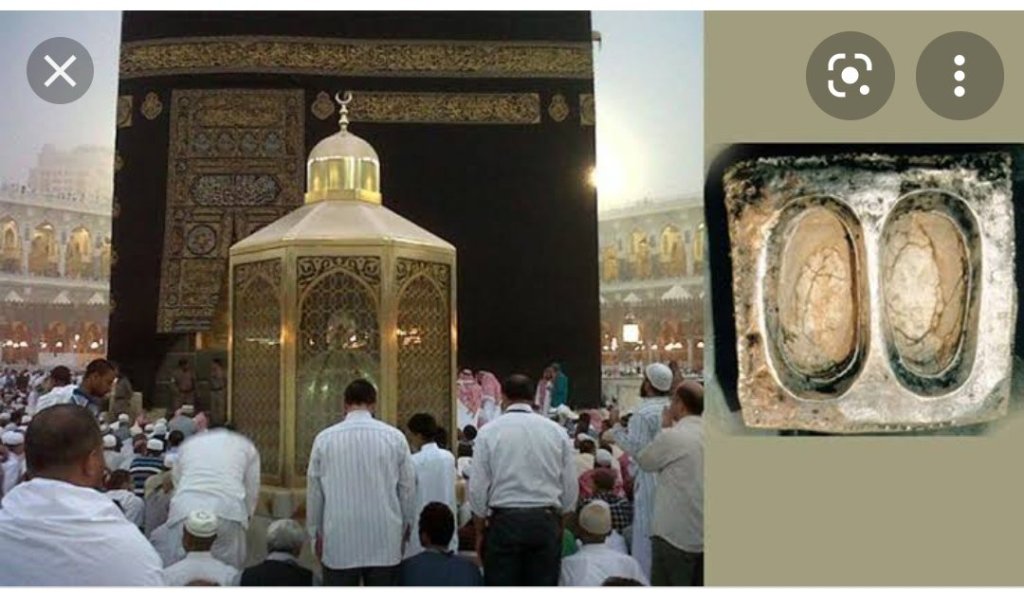
It was just a stone like any other stone.

It was just a stone like any other stone.

There were other thousands of stones in the valley, and Prophet Ibrahim alihissalam could have stepped on many of them. But none of them have preserved the imprinted marks of the foots of prophet Ibrahim alaihissalam on them, except this one. The only reason that can explain this strange phenomena is that; Sayyiduna Ibrahim Alaihissalam supplicated standing on it and requested the Almighty to grant his Beloved in his Descendants. or to make him(Sayyiduna Ibrahim) the Grandfather of Muhammad (Sallellahu Alaihi Wa sallim). And the stone preserved that great moment in this way, which is till date witnessed by everyone.

Shaykh-ul-Islam Dr Muhammad Tahir-ul-Qadri

Fitnoṅ kā ẓuhūr part 2

al-Qur’ān

(3) اِنَّ السَّاعَةَ اٰتِیَةٌ اَکَادُ اُخْفِيْهَا لِتُجْزٰی کُلُّ نَفْسٍ م بِمَا تَسْعٰیo
(طٰہ، 20/ 15)

بے شک قیامت کی گھڑی آنے والی ہے، میں اسے پوشیدہ رکھنا چاہتا ہوں تاکہ ہر جان کو اس (عمل) کا بدلہ دیا جائے جس کے لیے وہ کوشاں ہےo

  1. Be-shak qiyāmat kī ghar̥ī āne wālī hai, maiṅ use poshīdah rakhnā chāhtā hūṅ tā-keh har jān ko us (ʻamal) kā badlah diyā jā’e jis ke liye woh koshāṅ hai.
    [Ṭā-Hā, 20/15.]

al-Ḥadīt̲h̲

3۔ عَنْ أَنَسٍ رضي الله عنه قَالَ: لَأُحَدِّثَنَّکُمْ حَدِيْثًا سَمِعْتُهٗ مِنْ رَسُوْلِ اللهِ ﷺ لَا یُحَدِّثُکُمْ بِهٖ أَحَدٌ غَيْرِي سَمِعْتُ رَسُوْلَ اللهِ ﷺ یَقُوْلُ: إِنَّ مِنْ أَشْرَاطِ السَّاعَةِ أَنْ یُرْفَعَ الْعِلْمُ وَیَکْثُرَ الْجَهْلُ وَیَکْثُرَ الزِّنَا وَیَکْثُرَ شُرْبُ الْخَمْرِ وَیَقِلَّ الرِّجَالُ وَیَکْثُرَ النِّسَاءُ۔
مُتَّفَقٌ عَلَيْهِ۔

حضرت انس رضی اللہ عنہ بیان کرتے ہیں کہ میں تم سے ایک ایسی حدیث ضرور بیان کروں گا جو میں نے رسول اللہ ﷺ سے سنی اور میرے سوا اس حدیث کو تم سے کوئی بیان بھی نہیں کر سکتا۔ میں نے آپ ﷺ کو فرماتے ہوئے سنا: قیامت کی نشانیوں میں سے یہ بھی ہے کہ علم اُٹھا لیا جائے گا، جہالت پھیل جائے گی، زنا اور شراب پینے کی کثرت ہو جائے گی، مرد کم ہو جائیں گے، عورتیں بڑھ جائیں گی۔
یہ حدیث متفق علیہ ہے۔

  1. Ḥaz̤rat Anas raḍiya Allāhu ‘anhu bayān karte haiṅ keh maiṅ tum se ek aisī ḥadīs̲ z̤arūr bayān karūṅgā jo maiṅ ne Rasūl Allāh ṣallá Allāhu ‘alayhi wa-Ālihi wa-sallam se sunī aur mere siwā is ḥadīs̲ ko tum se ko’ī bayān bhī nahīṅ kar saktā. Maiṅ ne Āp ṣallá Allāhu ‘alayhi wa-Ālihi wa-sallam ko farmāte huwe sunā: qiyāmat kī nishāniyoṅ meṅ se yeh bhī hai keh ʻilm ut̥hā liyā jā’egā, jahālat phail jā’egī, zinā aur sharāb pīne kī kas̲rat ho jā’egī, mard kam ho jā’enge, ʻaurteṅ bar̥h jā’eṅgī.
    Yeh ḥadīs̲ muttafaq ʻalayh hai.

    [Ṭāhir al-Qādrī fī al-Qawlu al-Ḥasani fī ʻalāmatī al-sāʻaṫi wa-ẓuhūri al-fitan,/17_18, raqam: 03.]

Ghadir Declaration Hadith 50,51

“Amr bin al-‘Ās narrates that someone asked him:
O ‘Amr! Our elders heard it from the Messenger of Allāh
(صلى-الله-عليه-و-آله-وسلم) about ‘Alī: one who has me as his master has ‘Alī as
his master. Is it correct or not? ‘Amr said: it is correct,
and may I add that no one among the Companions ((رضئ اللہ تعالی عنہ))
deserves to be praised more than ‘Alī (AlahisSalam).

Related by Ibn Qutaybah in al-Imāmah was-siyāsah (1:113).

It is narrated by ‘Alī ((AlahisSalam) himself). He said: on the
day of Ghadīr Khum, the Messenger of Allāh (صلى-الله-عليه-و-آله-وسلم) had a
turban tied round my head ( as a symbol of honour) and let
the loose end hang down at the back. Then he said: The
angels whom Allāh  had sent to help me at Badr and
Hunayn were wearing turbans of the same kind. He then
added: surely the turban differentiates between belief and
disbelief.”

Tayālisī related it in al-Musnad (p.23#154); and Bayhaqī in asSunan-ul-kubrā (10:14).
Hindī says in Kanz-ul-‘ummāl (15:306,482#41141,41909)
that, besides Tayalisī, this tradition has also been narrated by
Bayhaqī, Tabarānī, Ibn Abī Shaybah and Ibn Munī‘. Hindī has
added the following words:
إن العمامة حاجزة بين المسلمين والمشركين.
Surely the turban differentiates between Muslims
and polytheists.
‘Abd-ul-A‘lā bin ‘Adī has also narrated that the Prophet ()
called ‘Alī bin Abī Tālib () on the day of Ghadīr Khum, tied a
turban round his head (as a sign of honour) and let the loose end
hang down at the back.
This tradition is recorded in the following books:
i. Ibn Athīr, Asad-ul-ghābah fī ma‘rifat-is-sahābah (3:170)
ii. Muhib Tabarī, ar-Riyād-un-nadrah fī manāqib-il-‘ashrah
(3:194).
iii. Zurqānī, Sharh-ul-mawāhib-il-laduniyyah (6:272)