

Imam Ali quotes in Morals and General Words of Wisdom
1- “The slanderer and the one who spreads it are equal in guilt.”
Al-Adab Al-Mufrad by Al Bukhari (324)
2- “The speakers of falsehood and the one who extends its rope it are equal in guilt.”
Al Mawsu’at Ibn Abi Al Dunya 7/172
3- “Do not be hasty exposers of secrets, for you will face a harsh test and a lengthy heavy trial that will cause you to frown.”
Al-Adab Al-Mufrad by Al Bukhari (327)
4- “Be among the people like the bees among birds. All birds consider it as deficient in strength. If birds knew the blessing it carried they wouldn’t do so. Socialize with men with your tongues and bodies, and separate from them with your deeds and hearts. The man earns what is his and he shall be gathered in the Day of Judgment with those he loves.”
Al-Sunan Al-Darami (320)
5- “The mind is in the heart, the mercy is in the liver, the tenderness is in the spleen, and the soul is in the lungs.”
Al-Adab Al-Mufrad by Al-Bukhari (547)
6- Ali bin Abi Talib used to say whenever he was called to funeral prayers, “We are but those that stand; what prays upon the deceased are his deeds.”
Al-Musannaf by Ibn Abi Shaybah (11222)
Month: April 2020

APRIL FOOL DAY MANAANA GHAIR-ISLAAMI HAI

APRIL FOOL DAY MANAANA GHAIR-ISLAAMI HAI.
♦♦♦♦♦♦♦♦♦♦♦♦♦♦♦♦♦
♦♦♦♦♦♦♦♦♦♦♦♦♦♦♦♦♦
Qur’an :
2 Surah al-Baqarah, Aayat 208 :
يَا أَيُّهَا الَّذِينَ آمَنُوا ادْخُلُوا فِي السِّلْمِ كَافَّةً وَلَا تَتَّبِعُوا خُطُوَاتِ الشَّيْطَانِ ۚ إِنَّهُ لَكُمْ عَدُوٌّ مُبِينٌ
Aye Eimaan walo, Islaam me pure daakhil ho jaao aur shaitaan ke raasto par na chalo, Beshak wo tumhara khula dushman hai.
O you who have believed, enter into Islaam completely [and perfectly] and do not follow the footsteps of Shaitan. Indeed, he is to you a clear enemy.
Hadeeṡ e Nabawi :
(1) Tum me se koi shakhs us waqt tak kaamil mo’min nahi ho sakta jab tak ke us ki khwaahishat us deen ke taabe’ na ho jaaye jise main lekar aaya hu.
(Bukhari)
(2) Jo shakhs jis qaum ki mushaabihat ikhtiyaar karega (naqal karega ) us ka hashr usi qaum ke saath hoga.
(Abu Daawūd, Hadeeṡ -4031)
(3) Aqlmand wo shakhs hai jo apne nafs ko ALLĀH ke taabe’ kare aur maut ke baad ke liye amal kare aur bewakoof wo shakhs hai jo apne nafs ko apni khwaahish ke taabe’ kare aur ALLĀH par ummid rakhe.
(Ibne Maajah;
Tirmizi)
*******************
♦ Ghair-muslim ke tareeqe ya rasm apnaana ya sahi maanna ya un ke tehwaar manana ya un ki ta’azeem karna ya mubarak-baad dena ye kufr hai.
›› ALLĀH ta’ala Qur’an majeed me farmaata hai :
Aye mere mo’min bando, Tum eimaan laaye ho to har waqt har amal shariate Islaam ke mutaabiq karne ki puri koshish karo.
Ya’ni Ibaadat me, tehwaar me, shaadi me aur dusre khushi ke mauqe par, janaa’iz (maiyat) me, majlis me ya juloos me, kisi se mulaaqat me aur har mauqe par Qur’an aur Sunnat o hadees par amal karte raho ke isi me kaamyaabi hai aur ghairo ke taqeeqe ko na apnaao.
Shaitaan mo’min ka khula dushman hai aur har waqt use behkaakar kar shariate Islaam se door karke gunah ki taraf le jaane ki koshish karta hai. Jab koi insaan us ke makro fareb me phanskar gunaah karta hai to shaitaan khush hota hai.
Aur jab koi banda apna eimaan bachaate hue ALLĀH ki raza ke liye Ishqe Rasool ke saath nek amal karta rehta hai to ALLĀH ta’ala raazi hota hai aur use deen wa dunya ki bhalaai ata farmaata hai.
*******************
♦ Kai baar shaitaan musalmano ko nafs ke zariye behkaata hai aur kai baar hume lagta hai ke Ghair-muslimo ke tehwaar aur tareeqa achha hai.
Mo’mino ko chaahiye ke hamesha islaami tareeqa apnayen aur ghair-muslim ke tehwaar manaane se aur us me saamil hone se door rahen.
›› 1st April ko jaanbuz kar jhoot bola jaata hai aur log jhoot bolkar aur dusro ko dhoka dekar pareshaan karke khushi manaate hain aur khud ko us se behtar samjhte hain.
›› Hum Rasm nibhaane ke liye ya maza lene ke liye Jhoot bolte hain.
Jhoot bolna gunaah e kabeerah hai.
Jhoot bolne wale par ALLĀH ta’ala ki la’anat hoti hai aur rahmat aur barkat kam ho jaati hai.
Jhoot bolne ki aadat ka sab se bada nuqsaan ye bhi hai ke jhoot bolne wala jab sach bolta hai to bhi log us ki baat par yaqeen nahi karte.
Qur’an :
3 Surah Aale Imraan, Aayat 61 :
Jhooto par ALLĀH la’anat bhejta hai.
Hadeeṡ e Nabawi :
Huzoor Rasool-Allāh sallallāhu alaihi wa sallam ne farmaaya hai ki
Us shakhs ke liye barbaadi hai jo logo ko hansaane ke liye jhoot bole.
Us shakhs ke liye badi kharaabi hai jo mazaaq me bhi jhut bolta hai.
(Mishkaat)
Jhoot se bacho. Bila shubah jhoot gunaah ki taraf le jaata hai aur gunaah jahannam me pahunchane waale hai.
(Abu Daawūd)
›› Hum maza lene ke liye jhoot bolte hain magar jis ne hum par bharosa kiya ho us ko hum dhoka dete hain.
Kisi ko dhoka dena gunaah e kabeerah hai.
Hadeeṡ e Nabawi :
Jo dhoka de woh hum [musalmaano] me se nahi.
(Tirmizi, Hadeeṡ -1315 )
›› Hamare Jhoot se ya Dhoka dene se dusro ko pareshaani hoti hai.
Kisi ko pareshaan karna ya takleef dena gunaah e kabeerah hai.
Qur’an :
5 Sural al-Maa’idah, Aayat 2 :
Aur neki aur parhezgaari (ke kaamo) me ek dusre ki madad kiya karo aur gunaah aur zulm (ke kaamo) me ek dusre ki madad na karo aur ALLĀH se darte raho beshak ALLĀH (na-farmaani karne walo ko) sakht Azaab dene wala hai.
Hadeeṡe Nabawi :
Jis ne kisi musalman ko sataaya ya use dhoka diya us par ALLĀH ki la’anat hai.
›› Hum Jhoot bolkar kisi ko dhoka dekar ye samajhte hain ke hum ne use bewaqoof banaaya aur hum us se behtar hain. Ye Takabbur (ghuroor) hai.
Takabbur gunaah e kabeerah hai.
Qur’an :
31 Surah Luqmaan, Aayat 18 :
Beshak ALLĀH tamaam takabbur karne wale, itraakar chalne walo ko pasand nahi farmaata.
Hadeeṡe Nabawi :
Jis ke dil me raai ke daane ke baraabar bhi Takabbur (ghamand) hoga wo Jannat me daakhil nahi hoga.
***********
›› Huzoor Pyare Aaqa Sayyed ul ambiya Muhammad Mustafa sallallāhu alaihi wa sallam ke pyare ummatiyo
Ye ahad karo ke ke Ghairo ke tehwaar aur tareeqe kitne bhi achhe lage lekin hume sirf apne mazhab ka sahi tareeqa apnaana hai aur 1st April ko bhi aur hamesha ke liye Jhoot bolne se door rehna hai aur Gunaah se bachne ki koshish karke ALLĀH ta’ala ko raazi karna hai aur Ita’ate wa Itteba e Rasool sallallāhu alaihi wa sallam karke apne Ishq e Rasool ka saboot paish karna hai.
Aap log ye sab baaten apne dosto, Rishtedaaro aur Padosiyo ko bataakar unhe bhi aise Jhoot, Dhoka, Dusro ko pareshaan karne waale aur takleef dene waale aur gunaaho waale tehwaar manaane se door rehne ke liye samjhayen.
Kisi ko nek amal karne ke liye kehna ya gunaah se bachne ke liye kehna bhi bahot badi neki hai.
***********
ALLĀH ta’ala us ke Habeeb sallallāhu alaihi wa sallam ke sadqe me
Sab ko hidaayat ata farmae aur sab ke Eimaan ki hifaazat farmae aur Sahi ilme deen haasil karne ki aur Sahi baat samajhne ki taufiq ata farmae aur Sahi aqeede ke saath sahi nek amal karne ki taufiq ata farmae.
Sab ko sach bolne ki aur shariat e Islaam par amal karne ki aur Ghair-muslim ke tehwaar manaane se door rehne ki aur Gunaaho se bachne ki taufiq ata farmae.
Aur Sab ko Dunya aur aakhirat me kaamyaabi aur bhalaai ata farmae.
Aameen.

The Sacred Hands
Sayyiduna Usayd (radi Allahu ta’ala ‘anhu) narrates:
The beloved Prophet of Allah (Salla Llahu ‘alayhi wa sallam) placed his sacred hands on the companion’s chest and rubbed them over his face. After that, whenever the companion (radi Allahu ta’ala ‘anhu) would enter a dark house it would lighten up.
[Imam Nabhani, Hujjatullah ‘Ala al-‘Aalameen, Page 438]


The Story of Mathematics
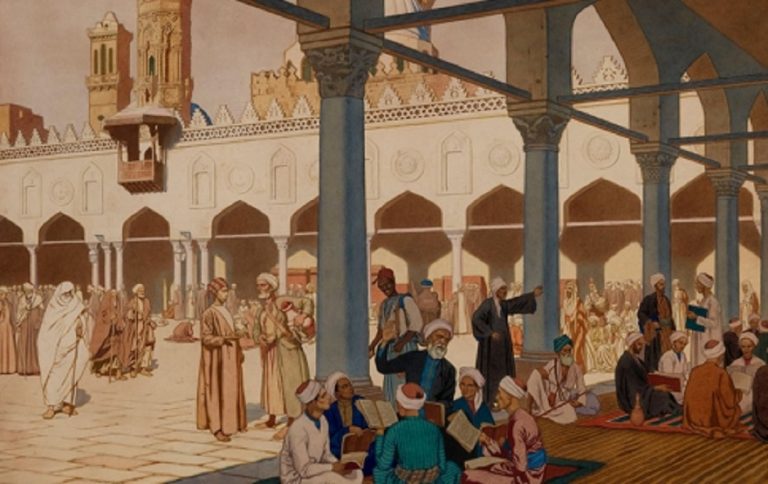
The Cheltenham Science Festival took place between 6 – 11 June 2017, headlining was one panel discussion on “The Story of Math”. Professors Mona Siddiqui, Mohamed El-Gomati, Marcus du Sautoy and Dr Amira Bennison took part in the conversation with Professor Siddiqui opening the panel discussion. Professor Siddiqui is a Professor of Islamic and Interreligious Studies at the University of Edinburgh[1]. Professor Siddiqui explained the importance of why such a panel should take place due to the current political, social and economic climate between the Muslim and non-Muslim populous. Professor Mona Siddiqui concluded that “sharing examples of ‘The Story of Mathematics’ in different Civilisations – including that of Muslim Civilisation – demonstrates the interconnectivity of cultures.”
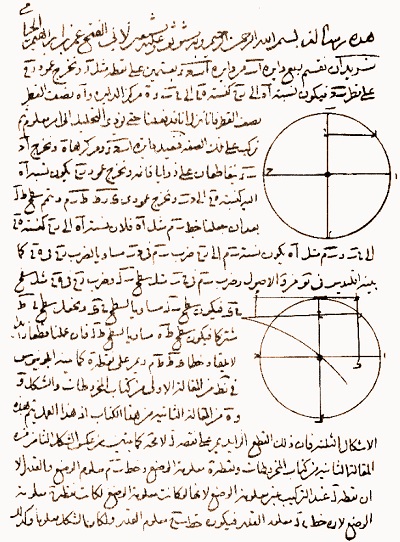 Figure 1. Omar Khayyám’s “Cubic equations and intersections of conic sections”, Tehran University (Source) |
Professor Siddiqui’s address was followed by a short statement from by Dr Amira Bennison. Dr Amira Bennison is Deputy-Chair of the Faculty of Oriental Studies at the University of Cambridge[2]. Dr Bennison discussed the daily activities in Baghdad during the Abbasid regime. She touched upon the Bayt al-Hikmah (House of Wisdom) and mentioned the works of Banu Musa and Thabit ibn Qurra who were renowned for their pursuit of knowledge in engineering and mathematics. She further explained how the research culture of that age shaped some of the reasons why it was named “The Golden Age”. Moreover, that well educated individuals would have a good aspect of several disciplines which produced “Renaissance like gentlemen” and educated women. Although women were not written about as much due to what seems to be less preservation of such texts, Dr Bennison highlighted that there clearly were women who accomplished similar feats but perhaps more in literary fields than in science. Additionally, women educators would tend to teach women as male educators would tend to teach men. Women scribes however were renowned in Cordoba. “The importance of education was stressed to all at that time” she concluded, “particularly when it came to basic numeracy and literacy”.
Following Dr Bennison’s talk, Professor Mohamed El-Gomati, OBE, Chairman of the Foundation for Science, Technology and Civilisation UK[3] commenced his presentation. He remarked that in reality the Golden Age stretched between 750 CE – 1600 CE, not just between 950 CE – 1100 CE as it is sometimes alluded. Professor Gomati outlined that some of the factors, which shaped this period included financial and economic stability as well as the influx of migrants to Baghdad. What is more, there did not appear to be any clash between religion and science, in fact that free thinking was promoted. “Migrants were welcomed to Baghdad and paid handsomely – they were given gold in exchange of translations” he outlined. Scholars, such as the Banu Musa amongst others, were said to have developed upon translated knowledge that the Greek, Chinese and Indian civilisations contributed to. In example, Archimedes is said to have proposed mirrors to burn ships, in the late 10th century, Ibn Al-Sahl is believed to have attempted to explore this claim and in doing so developed the law of refraction, which we refer to today as Snell’s law. Similar to this, in the early 11th century Ibn al-Haytham explored optic contributions made by Greek and earlier scholars. Professor El-Gomati stated how “the scholars would do this for the good of all”. This is in contrast to how centres of learning now function. In example, at present, commercialisation and patenting of ideas and inventions is often expected. This appears to have converted Universities interest more on businesses instead of being purely places of knowledge sharing.
 Figure 2. 15th-century European portrait of Jabir ibn Hayyan (Source) |
Additional reasons underlying why Professor El-Gomati believes the sciences flourished include physics and maths being intertwined and the fact that people did not see the “boundaries” that are placed on or classify sciences today. For example, in the 1600s CE all sciences were referred to as “natural philosophy”. What is interesting to note here is that it was Ibn al-Haytham who was the first to ‘mathematicise’ science, starting such a trend in his work in Physics. Another scholar, Al-Khwarizimi combined both abstract and applications in his treatment of mathematics. For example, Algebra, from al-jabr, is similar to a math formula composition. Jabir ibn Hayyan was said to compose chemical formulas without providing a detailed textual explanation, hence some of his works being referred to as “jibberish” or “gibberish” by those who could not follow his analysis; a word commonly used today to describe things one is unable to understand or make sense of. During the Questions and Answer session, one member of the audience asked about the role of women during Muslim Civilisation, Professor El-Gomati mentioned the Health and Safety officer, Al-Shifa bint Abdullah in the 7th century, astrolabe maker Maryam al-Astrulabi who worked in the court of Sayf al-Dawla during the 10th century. Other famous women of science included Fatima al-Fihriyya, a woman who is said to have established the Qarawiyyin Mosque School Complex in 854 CE that became the first university in the world and which still operates to date. Moreover, many of the books written paid homage to women, Professor El-Gomati highlighted.

Figure 3. Interior of Al Quaraouiyine Mosque and university, founded by Fatima bint Muhammad Al-Fihri Al-Quraysh (Source)
The concluding talk was delivered by Professor Marcus du Sautoy, FRS, OBE. Professor Du Sautoy is the Charles Simonyi Professor for the Public Understanding of Science at the Oxford University, a chair he holds jointly at the Department of Continuing Education and the Mathematical Institute[4]. Professor Du Sautoy believes that the story of maths began with taxation in Ancient Egypt and Ancient Babylon. He holds that as the Ancient Egyptians and Ancient Babylonians built up their lands, they also began taxing them with concepts such as “pi” originating from places like the River Nile as things had to be taxed outside of the circle. His BBC television series, “The Story of Maths”, further explored this topic by revisiting Ancient Greek, Egypt, Babylonian times etc. One thing that struck Professor Du Sautoy was the gap in history such as the mathematics which originated from the East, namely that of the Muslim, Chinese and Indian contribution. He explained how trade routes took these ideas from one place to another and eventually winded up in Europe. For example, numerals which Professor Du Sautoy clarified were not just Arabic numerals, but rather Indian-Arabic numerals. “The creation of the number zero originated from Indian culture but Arabs picked it up as they derived from a culture which was not scared of the cosmos, the infinite etc.” Professor Du Sautoy remarked. He continued to mention how the Babylonians developed a “cryptic crossword” like language of math but scholars such as Al-Khwarizmi from Muslim Civilisation helped understand it. He finished with, “We should celebrate the stories of math which helps make math more interesting and brings them to life. We should breakdown the boundaries of science as science is interconnected. A new language through graphics and images has emerged which has changed our ways of thinking. The elite during Fibonacci’s time worried of societal progress e.g. the working class in Florence learning math, when maths and science are taught in a fluid way, their tools can empower others.”

जो लोग क़ुरआन को सिर्फ़ इसलिए नहीं खोलते, क्योंकि वे पढ़ना नहीं जानते

जो लोग क़ुरआन को सिर्फ़ इसलिए नहीं खोलते, क्योंकि वे पढ़ना नहीं जानते, तो वे क़ुरआन पढ़ें.
दक्षिण अफ़्रीका में एक अल्लाह वाले बुज़ुर्ग मौलाना यूनुस साहब दावत-ए-हक़ दे रहे थे. जो शख़्स उनकी ख़िदमत में था, रात को उसका इंतक़ाल हो गया. जब बुज़ुर्ग को ख़बर दी गई, तो वह जनाज़े के साथ हो लिए. आप फ़रमाते हैं- जब क़ब्रिस्तान पहंचे, तो देखा कि उसकी क़ब्र से मुश्क की ख़ुशबू आ रही है. मैयत को दफ़नाने के बाद आप लौटे, तो आपने मक़ामी साथी से कहा कि अपनी बीवी को मरने वाले के घर भेजो और पता करो कि वह कौन सा आमाल था, जिसकी वजह से उसकी क़ब्र से मुश्क की ख़ुशबू आ रही है.
लिहाज़ा ऐसा ही हुआ. लौट कर उस साथी की बीवी ने ख़बर दी कि उसकी बीवी ने बताया कि वह क़ुरआन पढ़ना नहीं जानता था. बस अलहम्द और क़ुल की सूरह ही जानता था और नमाज़ भी इन्हीं से ही पढ़ता था. हां, मगर वह रोज़ क़ुरआन लेकर बैठता और आयतों पर उंगली घुमाते हुए कहता- अल्लाह ये सही है, आगे-आगे उंगली घुमाता जाता और कहता जाता- अल्लाह ये भी सही है. इस तरह पूरा क़ुरआन ख़त्म होने पर मीठा लाता. क़ुरआन सिर पर रखकर कहता- अल्लाह तू भी सही है, तेरा दीन भी सही है, ये क़ुरआन भी सही है. बस मैं ग़लत हूं. बस तू, इस किताब में मेरे हिस्से की जो हिदायत है, मुझे नसीब करके ग़लती माफ़ कर दे.
दोस्तों ! वो पढ़ना नहीं जानता था, मगर क़ुरआन की निस्बत, उसके शौक़, उसकी तड़प का अल्लाह ने ये सिला दिया कि उसकी क़ब्र को मुश्क की ख़ुशबू से महका दिया. अल्लाह हम सबको क़ुरआन पढ़ने की तड़प अता फ़रमा. उसमें जो हिदायत हमारे हिस्से की है, हमें नसीब कर दे, सारे आलम को हिदायत नसीब कर दे. आमीन
मुआफ़ करना सीखो
ज़बान का एक बोल सब कुछ बर्बाद कर देता है या आबाद कर देता है. माफ़ करना सीखो. हमारे नबी को सब ज़्यादा दुख- तकलीफ़ ताएफ़ वालों ने दी. आप (सअस) को पत्थरों से मार कर लहूलुहान कर दिया. आप (सअस) बेहोश हो गए. ख़ुद नबी (सअस) फ़रमाते- सारी ज़िन्दगी में जितनी तकलीफ़ ताएफ़ ने पहुंचाई और किसी ने नहीं पहुंचाई. मगर जब वे लोग ईमान लाने आए, तो आपने (सअस) ने उन्हें भी गले से लगाया. उनके साथ रोज़ रात का खाना खाते. एक रोज़ तिलावत की वजह से खाना नहीं खा सके, तो उनसे माफ़ी मांगी. ये वे लोग थे, जिन्होंने आपको (सअस)जिस्मानी तकलीफ़ दी थी.
अब दो लोग और आए, वे भी ईमान लाए. एक आप (सअस) के चाचा का बेटा अबु सुफ़यान बिन हारिस, दूसरा आप (सअस) की फुफी का बेटा अबदुल्लाह बिन अबी उमय्या. जब ये दोनों ईमान लाए आए, तो आप (सअस) ने मना कर दिया और कहा- मुझे नहीं मिलना इनसे. इन्होंने मुझे बहुत बुरा-भला कहा है. अबु सुफ़यान मेरे बारे में बुरे बुरे शेअर कहता था.
और अबी उमय्या ये वह है, जिसने हरम में खड़े होकर कहा था- तुम अल्लाह से क़ाग़ज़ पर लिख कर लाओ, साथ में चार फ़रिश्ते लाओ, तब भी मैं तुमको नबी नहीं मानूंगा. इन्होंने मेरा दिल दुखाया है. उम्मे-सलमा ने कहा या रसूल अल्लाह आपने तो ग़ैरों को भी माफ़ किया है. इन्हें भी माफ़ कर दें. आपने कहा- ठीक है.
ज़बान का निकला एक बोल बहुत गहरा ज़ख़्म देता है. बर्दाश्त करना सिखो, माफ़ करना सीखो. नबी (सअस) का हुकुम है. अमल करना सीखो.
जन्नतुल फ़िरदौस का सवाल करो…
जब तुम अल्लाह से सवाल करो, तो जन्नतुल फ़िरदौस का सवाल किया करो, क्योंकि वह जन्नत का आला और अफ़ज़ल हिस्सा है. (बुख़ारी फ़िल तारीख़ :4/146)
اللھم انی اسئلک الجنة الفردوس
अल्लाहुम्मा इन्नी असआलुकल जन्नतुल फ़िरदौस…
तर्जुमा- ऐ अल्लाह! मैं तुझसे जन्नतुल-फ़िरदौस का सवाल करता हूं.
जन्नत का सवाल और जहन्नम से पनाह
जो शख़्स अल्लाह पाक से तीन बार जन्नत का सवाल करे, तो जन्नत कहती है- ऐ अल्लाह ! इसको जन्नत में दाख़िल कर दे और जो शख़्स तीन बार जहन्नम से पनाह मांगे, तो जहुन्नम कहती है- ऐ अल्लाह ! इसको जहन्नम से बचा ले. [सही तिर्मिज़ी]
اَللَّهُمَّ أَجِرْنِي مِنَ النَّارِ
तर्जुमा- ऐ अल्लाह! मैं तुझसे जहन्नुम से पनाह मांगता हूं.
ऐ अल्लाह! हम तुझ से जन्नत का सवाल करते हैं और जहन्नम से तेरी पनाह मांगते हैं. आमीन
 Aal-e-Qutub Aal-e-Syed Abdullah Shah Ghazi