VIRTUES OF THE SAINTS

VIRTUES OF THE SAINTS

The virtues of the pious saints and friends of Allah have been clearly stated in The Holy Quran. Allah states:

‘They are amongst those, upon whom Allah has showered his blessings. They are Prophets, Martyrs and pious people. These are the best of companions. This is a blessing from Allah and Allah’s knowledge alone is sufficient’.

In another place it has been stated:

Listen for those who are the friends of Allah there is no fear nor should they be worried. Those people that have faith and are careful, there are glad tidings for them both in this life and the hereafter. There is no changing what Allah has decreed. In this is the greatest achievement’. (Surah Yunus)

Also addressing the Shaytaan Allah has said, ‘You have no control over my people’.

Allah also states, ‘Those that have undertaken afflictions in my path we will surely show them our path’.

With regards to the saints it has also been stated ‘Allah loves them and they love Allah’.

Also Allah says: Those people that have testified that Allah is our Lord, then they have remained steadfast upon this belief.

Angels descend upon them saying that they mustn’t be afraid nor must they worry. Listen to the glad tidings of that Paradise which has been promised to you. We are your friends in this world and the next. Everything will be provided for you. This is from the All Forgiving, Most Merciful Host’.

A great many more ayaat have been mentioned in the Quraan in relation to the lofty rank that the saints hold in the eyes of the Lord.

Countless Hadith have also been narrated on

realising the true rank of the saints: A hadith recorded by Sahih Bukhari states, it has been narrated by Abu Hurairah (RA) that the Blessed Prophet of Allah (SAW) said, “Allah says, those that hold enmity with my friends/saints, I inform them that they are picking a fight with me. When a person seeks nearness to me through his worship, there is no worship dearer to me than that I have made compulsory upon him. When my person remembers me constantly through non-obligatory non-obligatory prayers searching for my nearness, then I begin liking him.

When my love grows for him, I become his ears from which he hears, and his eyes with which he sees. I become his hand with which he grasps and his feet with which he walks. Whatever he asks
from me I give and from whatever he seeks refuge I give him refuge”.

In another tradition found in Sahihain, Abu Sae’ed Khudri (RA) has narrated that once a man came before Nabi (SAW) and asked, “Oh Prophet of Allah, who is the best from amongst the people?” The Prophet replied, “The best is he who gives his life and wealth in the path of Allah”. The man questioned, “Then who?” Nabi (SAW) stated further, “He who finds solitude in some cave only to worship his Lord”. In another tradition it is stated that the Prophet (SAW) said, “He who fears Allah and saves people from his own bad”

It has also been stated in Sahihain, Ibn Sa’d Saaidi says, “that a man passed by close to where Nabi (SAW) was. Nabi (SAW) asked the person seated beside him. “What can you tell about this man?” He said “He is from amongst the noble people and by Allah if he were to send a proposal for marriage it would be accepted immediately if he were to intermediate on anyone’s behalf his intermediating would be accepted such is his worthiness, at this Nabi (SAW) remained silent. Another man passed them where they were seated. Nabi (SAW) enquired enquired. “What do you see in this man?” He replied, “He is from amongst the
poor Muslims. If he were to send a proposal for marriage or mediate on anyone’s behalf neither would be accepted. People would take no notice of him. Nabi (SAW) then explained, “If the world was filled with men like he who passed by earlier, they would not be able to match the latter. He would be better than them all”.


Evidence supporting the Miracles

It is to be understood that the occurrence of miracles at the hands of the saints, by the command of Allah is not far fetched. The mind can accept it as nothing is outside the reach and commands of Allah. If He so wills anything is possible.

Evidence to support this fact is found in the Quran in numerous places.

In the incident with Maryam (A.S.) whenever Zakariya (A.S.) would enter her place of worship, he would find her surrounded by food. He questioned, “Oh Maryam, from where do you acquire all this?” She replied, “It is all from Allah. He sustains whom he wishes without any reckoning”.

On another occasion Allah had commanded Maryam (A.S) “Oh Maryam shake the branch of the tree, fresh dates will be showered upon you”.
Miracles of the Saints

Also mentioned in Surah Kahaf when Hadhrat Moosa (A..S) witnessed many a miracle at the hands of Hadhrat Khidhr (A.S.)

In the story of Hadhrat Sulayman (A.S) and Bilquees, when Aasif Ibn Barkhaya summoned the throne of Bilquees before Sulayman.

The above mentioned are some of the miracles performed by the saints of Allah, by the will of Allah and are stated clearly in the Quran.

This fact has also been endorsed in the Ahadith of the Blessed Prophet of Allah (SAW). There is the story of Hadhrat Juraij to be found in Sahih Bukhari and Sahih Muslim. Hadhrat Juraij was only a child when questioned to name his father. He astounded the people by saying, “My fathers name is such and such”.

It has been narrated that once a man piled his possessions on to the back of a cow. The cow turned to him and spoke “I have not been created to carry loads. I was created to work in the fields”. On hearing the cow the surrounding people cried ‘Subhanallah!’ This cow speaks. When this incident was related to Nabi (SAW) he verified the story that it was correct. This hadith has also been mentioned in Sahih Bukhari and Sahih Muslim.

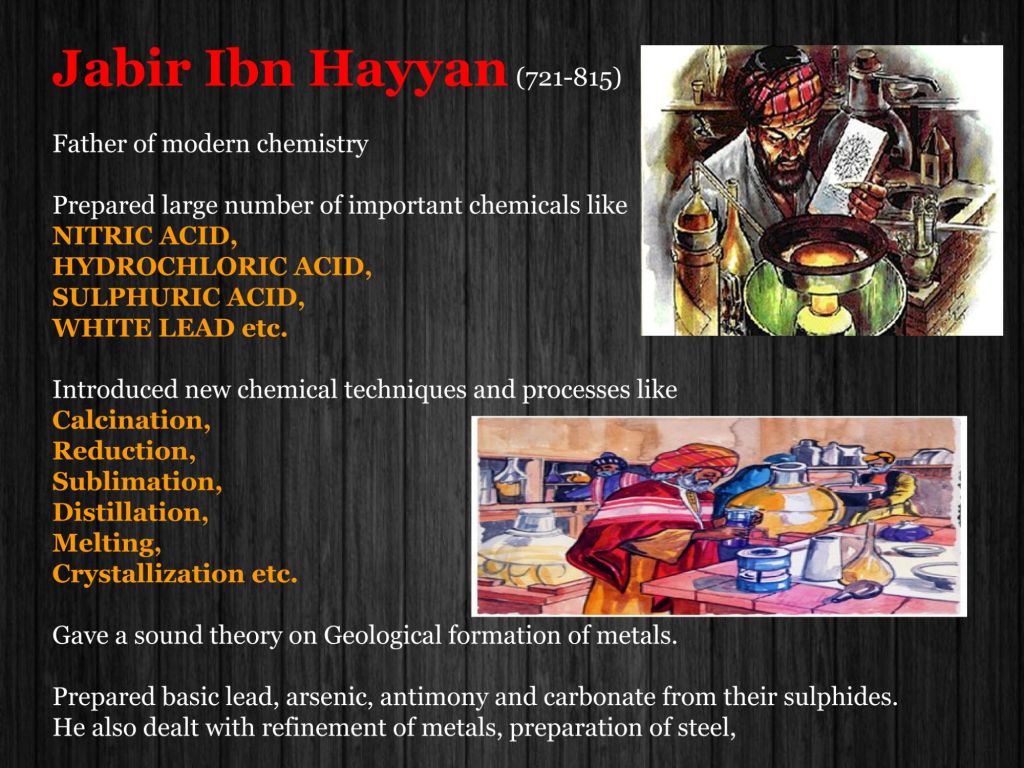
मूसा जाबिर बिन हय्यान

आपका पूरा नाम अबू मूसा जाबिर बिन हय्यान बिन अब्दुल समद अल सूफ़ी अल तरसूसी अल कूफ़ी है। आप 742 ई 0 में पैदा हुए और 803 ई 0 में इन्तेक़ाल फ़रमा गए। बाज़ मोहक़्क़ेक़ीन ने आपकी वफ़ात 813 ई 0 बताई है लेकिन इब्ने नदीम ने 777 ई 0 लिखा है।

इन्साईकिलो पीडिया आफ़ इस्लामिक हिस्ट्र में है कि उस्तादे आज़म जाबिर बिन हय्यान बिन अब्दुल्लाह , अब्दुल समद कूफ़ै में पैदा हुए। वह तूसी उल नस्ल थे और आज़ाद नामी क़बीले से ताअल्लुक़ रखते थे , ख़्यालात में सूफ़ी थे और यमन के रहने वाले थे। अवाएल उम्र में इल्मे तबीआत की तालीम अच्छी तरह हासिल कर ली और इमाम जाफ़रे सादिक़ (अ.स.) इब्ने इमाम मोहम्मद बाक़र (अ.स.) की फ़ैज़े सोहबत से इमाम उल फ़न हो गए।

तारीख़ के देखने से मालूम होता है कि जाबिर बिन हय्यान ने इमाम जाफ़रे सादिक़ (अ.स.) की अज़मत का एतराफ़ करते हुए कहा है कि सारी कायनात में कोई ऐसा नहीं जो इमाम की तरह सारे उलूम पर बोल सके।

तारीख़े आइम्मा में हज़रत इमाम जाफ़रे सादिक़ (अ.स.) की तसनीफ़ात का ज़िक्र करते हुए लिखा है कि हज़रत इमाम जाफ़रे सादिक़ (अ.स.) ने एक किताब कीमीया , जफ़र रमल पर लिखी थी। हज़रत के शार्गिद व मशहूर मारूफ़ कीमिया गर जाबिर बिन हय्यान जो यूरोप में जबर के नाम से मशहूर हैं , जिनको जाबिर सूफ़ी का लक़ब दिया गया था और जुनूनन मिस्री की तरह वह भी इल्मे बातिन से ज़ौक़ रखते थे। इन जाबिर बिन हय्यान ने हज़ारों वरक़ की एक किताब तालीफ़ की थी जिसमें हज़रत इमाम जाफ़रे सादिक़ (अ.स.) के पांच सौ रिसालों को जमा किया था। अल्लामा इब्ने ख़लकान किताब दफ़ियात इला अयान जिल्द 1 पृष्ठ 130 प्रकाशित मिस्र में हज़रत इमाम जाफ़रे सादिक़ (अ.स.) का ज़िक्र करते हुए लिखते हैं।

हज़रत इमाम जाफ़रे सादिक़ (अ.स.) के मक़ालात इल्मे कीमिया और इल्मे जफ़र व फ़ाल में मौजूद हैं और आपके शार्गिद थे जाबिर बिन हय्यान सूफ़ी तरसूसी जिन्होंने हज़ार वरक़ की एक किताब तालीफ़ की थी जिसमें इमाम जाफ़रे सादिक़ (अ.स.) के पांच सौ रिसालों को जमा किया था। अल्लामा ख़ैरूद्दीन ज़रकली ने भी अल आलाम जिल्द 1 पृष्ठ 182 प्रकाशित मिस्र में यही कुछ लिखा है। इसके बाद तहरीर किया है कि उनकी बेशुमार तसानीफ़ हैं जिनका ज़िक्र इब्ने नदीम ने अपनी फ़ेहरिस्त में किया है। अल्लामा मोहम्मद फ़रीद वजदी ने दायरा ए मआरेफ़ुल क़ुरआन अल राबे अशर की जिल्द 3 पृष्ठ 109 प्रकाशित मिस्र में भी लिखा है कि जाबिर बिन हय्यान ने इमाम जाफ़रे सादिक़ (अ.स.) के पांच सौ रसायल को जमा कर के एक किताब हज़ार सफ़हे की तालीफ़ की थी। अल्लामा इब्ने ख़ल्दून ने भी मुक़दमा ए इब्ने ख़ल्दून मतबूआ मिस्र पृष्ठ 385 में इल्मे कीमिया का ज़िक्र करते हुए जाबिर बिन हय्यान का ज़िक्र किया है और फ़ाज़िल हंसवी ने अपनी ज़ख़ीम तसनीफ़ किताब और किताब ख़ाना ग़ैर मतबूआ में बा हवाला ए मुक़द्दमा इब्ने ख़ल्दून पृष्ठ 579 प्रकाशित मिस्र लिखा है कि जाबिर बिन हय्यान इल्मे कीमिया के ईजाद करने वालों का इमाम है बल्कि इस इल्म के माहेरीन ने इसको जाबिर से इस हद तक मख़सूस कर दिया है कि इस इल्म का नाम ‘‘ इल्मे जाबिर ’’ रख दिया है।(अल जव्वाद शुमारा 11 जिल्द 1 पृष्ठ 9 )

मुवर्रिख़ इब्नुल क़त्फ़ी लिखते हैं कि जाबिर बिन हय्यान को इल्मे तबीआत और कीमिया में तक़द्दुम हासिल है। इन उलूम में उसने शोहरा ए आफ़ाक़ किताबें तालीफ़ की हैं। इनके अलावा उलूमे फ़लसफ़ा वग़ैरा में शरफ़े कमाल पर फ़ाएज़ थे और यह तमाम कमालात से भर पूर होना इल्मे बातिन की पैरवी का नतीजा था। मुलाहेज़ा हो ,(तबक़ातुल उमम , पृष्ठ 95 व अख़बारूल हुक्मा पृष्ठ 111 प्रकाशित मिस्र)


पयामे इस्लाम जिल्द 7 पृष्ठ 15 में है कि वही ख़ुश क़िस्मत मुसलमान है जिसे हज़रत इमाम जाफ़रे सादिक़ (अ.स.) की शार्गिदी का शरफ़ हासिल था। इसके मुताअल्लिक़ जनवरी 25 ई 0 में साईंस प्रोग्ररेस नवीशता ए जे 0 होलम यार्ड एम 0 ए 0 एफ़ 0 आई 0 सी 0 आफ़ीसरे आला शोबा ए र्साइंस कफ़टेन कालेज ब्ररिस्टल ने लिखा है कि इल्मे कीमिया के मुतअल्लिक़ ज़माना ए वस्ता की अकसर तसानीफ़ मिलती हैं। जिसमें ‘‘ गेबर ’’ का ज़िक्र आता है और आम तौर पर गेबर या जेबर दर अस्ल ‘‘ जाबिर ’’ हैं। चुनान्चे जहां कहीं भी लातीनी कुतुब में गेबर का ज़िक्र आता है वहां मुराद अरबी माहिरे कीमिया जाबिर बिन हय्यान ही है। जिसे जे के बजाय गे आसानी से समझ में आ जाता है , लातानी में (जे) से मिलती जुल्ती आवाज़ और बाज़ इलाक़ों मसलन मिस्र वग़ैरा में (जे) को अब भी बतौर (जी) यानी गाफ़ इस्तेमाल किया जाता है। इसके अलावा ख़लीफ़ा हारून के ज़माने में साईंस कमेस्ट्री वग़ैरा का चरचा बहुत हो चुका है और इस इल्म के जानने वाले दुनिया के गोशे गोशे से खिंच कर दरबारे खि़लाफ़त से मुन्सलिक हो रहे थे। जाबिर इब्ने हय्यान का ज़माना भी कमो बेश इसी दौर में था। पिछले 20, 25, साल में इंगलिस्तान और जर्मनी में जाबिर के मुतअल्लिक़ बहुत सी तहक़ीक़ात हुई हैं। लातीनी ज़बाना में इल्मे कीमिया के मुताअल्लिक़ चंद कुतुब सैकड़ों साल से इस मुफ़क्किर के नाम से मन्सूब हैं। जिसमें मख़सूस 1. समा , 2. बरफ़ेकशन , 3. डी इन्वेस्टीगेशन परफ़ेक्शन , 4. डी इन्वेस्टीगेशन वर टेलेक्स , 5. टीटा बहन , लेकिन इन किताबों के मुताअल्लिक़ अब तक उक तूलानी बहस है और इस वक़्त तक मुफ़क़्के़रीने योरोप इन्हें अपने यहां की पैदावार बताते हैं। इस लिये उन्हें इसकी ज़रूरत महसूस होती है। जाबिर को हर्फ़ (जी) (गाफ़) गेबर से पुकारें और बजाय अरबी नस्ल के उसे यूरोपियन साबित करें। हांलाकि समा के कई प्रकाशित शुदा ऐडीशनों में गेबर को अरब ही कहा गया है। रसल के अंगे्रज़ी तरजुमे में उसे एक मशहूर अरबी शाहज़ादा और मन्तक़ी कहा गया है।


1541 ई 0 में की नूरन बर्ग कि एडिशन में वह सिर्फ़ अरब है। इसी तरह और बहुत से क़ल्मी नुसख़े ऐसे मिल जाते हैं जिनमें कहीं उसे ईरानियों के बादशाह से याद किया गया है किसी जगह उसे शाह बन्द कहा गया है। इन इख़्तेलाफ़ात से समझ में आता है कि जाबिर बर्रे आज़म एशिया से न था बल्कि इस्लामी अरब का एक चमकता सितारा था।

इन्साईकिलो पीडिया आफ़ इस्लामिक कैमिस्ट्री के मुताबिक़ जाफ़र बर मक्की के ज़रिये से जाबिर बिन हय्यान का ख़लीफ़ा हारून रशीद के दरबार में आना जाना शुरू हो गया चुनान्चे उन्होंने ख़लीफ़ा के नाम से इल्मे कीमिया में एक किताब लिखी जिसका नाम ‘‘ शुगूफ़ा ’’ रखा। इस किताब में उसने इल्मे कीमिया के जली व ख़फ़ी पहलूओं के मुताअल्लिक़ निहायत मुख़्तसर तरीक़े , निहायत सुथरा तरीक़े अमल और अजीबो ग़रीब तजरबात बयान किये। जाबिर की वजह से ही कुस्तुनतुनया से दूसरी दफ़ा यूनानी कुतुब बड़ी तादात में लाई गई।

मन्तिक़ में अल्लामा ए दहर मशहूर हो गया और 90 साल से कुछ ज़्यादा उम्र में उसने तीन हज़ार किताबें लिखीं और इन किताबों में से वह बाज़ पर नाज़ करता था। अपनी किसी तसनीफ़ के बारे में उसने लिखा है कि रूए ज़मीन पर हमारी इस किताब के मिस्ल एक किताब भी नहीं है न आज तक ऐसी किताब लिखी गई है और न क़यामत तक लिखी जायेगी।(सरफ़राज़ 2 दिसम्बर 1952 ई 0 )

फ़ाज़िल हंसवी अपनी किताब ‘‘ किताब व किताब ख़ाना ’’ में लिखते हैं कि जाबिर के इन्तेक़ाल के दो बरस बाद इज़्ज़ उद दौला इब्ने मुइज़्ज़ उद दौला के अहद में कूफ़े के शारेह बाबुश शाम के क़रीब जाबिर की तजरूबे गाह का इन्केशाफ़ हो चुका है। जिसको खोदने के बाद बाज़ क़दीमी मख़तूतात ब्रिटिश मियूज़ियम में अब तक मौजूद हैं। जिनमें से किताब उल ख़वास क़ाबिले ज़िक्र है। इसी तरह फ़ुस्ते वस्ता में बाज़ किताबों का तरजुमा लातीनी में किया गया। इन किताबों के अलावा इन अनुवादों के सिबअईन भी हैं जो नाक़िसों ना तमाम है।

‘‘ इसी तरह अल बहस अनल कमाल ’’ का तरजुमा भी लातीनी में किया जा चुका है। यह किताब लातीनी ज़बान में कीमिया पर यूरोप की ज़बान में सब से पहली किताब है। इसी तरह और दूसरी किताबें भी अनुवादित हुई हैं। जाबिर ने कीमिया के अलावा तबीयात , हैय्यत इल्मे रोया , मन्तिक़ , तिब और दूसरे उलूम पर भी किताबें लिखीं। इसकी एक किताब समीयत पर भी है जो कुत्बे ख़ाना ए तैमूरिया क़ाहेरा मिस्र में मौजूद है। इनमें चन्द ऐसे मक़ालात को जो बहुत मुफ़ीद थे बाद करह हुरूफ़ ने रिसाला ए मक़ततफ़ जिल्द 58. 59 में शाया किये हैं। मुलाहेज़ा हो ,(मोअज्जमुल मतबूआत अल अरबिया अल मोअर्रेबा जिल्द 3 हरफ़ जीम पृष्ठ 665 )

जबिर ब हैसियत एक तबीबी के काम करता था लेकिन इसकी तिब्बी तसानीफ़ हम तक न पहुंच सकीं। हालां कि इस मक़ाले का लिखने वाला यानी डाक्टर माक्स मी यरहाफ़ ने जाबिर की किताब को जो समूूम पर है हाल ही में मालूम कर लिया।

जाबिर की एक किताब जिसको मय मतन अरबी और तरजुमा फ़्रानसीसी पोल कराओ मुशर्तरक ने 1935 ई 0 में शाया किया है ऐसी भी है जिसमें उसने तारीख़ इन्तेशार आराद अक़ाएद व अफ़कार हिन्दी यूनानी और इन तग़य्यूरात का ज़िक्र किया है जो मुसलमानों ने किए हैं। इस किताब का नाम ‘‘ एख़राज माफ़िल क़ूव्वत इल्ल फ़ेल ’’ है।(अल जवाद जिल्द 10 पृष्ठ 9 प्रकाशित बनारस)

प्रोफ़ेसर रसकार की रद मेरे बयान से यह यक़ीनन वाज़ेह हो गया कि मुवर्रेख़ीन इस पर मुत्तफ़िक़ है कि जाबिर बिन हय्यान इस्लाम का मोअजि़्ज़ कीमिया गर हज़रत इमाम जाफ़रे सादिक़ (अ.स.) का शार्गिद था। लेकिन मिस्टर प्रोफ़ेसर रसकार ने इल्मे कीमिया के बारे में जो रिसाला शाया किया है उसमें जाबिर इब्ने हय्यान के उन दावों को ग़लत और जाली बताया है जो इमाम जाफ़रे सादिक़ (अ.स.) की शार्गिदी की तरफ़ मन्सूब है। इसकी दलील यह है कि इमाम जाफ़रे सादिक़ (अ.स.) को इल्मे कीमिया और साईंस से क्या वास्ता और इमाम जाफ़रे सादिक़ (अ.स.) की हैसियत का इमाम पारे , गन्धक , खटाई और फुकनी के इस्तेमाल में मसरूफ़ हो यह कैसे हो सकता है। मैं मौसूफ़ के जवाब में कहता हूँ कि मौसूफ़ ने कोई माक़ूल वजह इन्कार की बयान नहीं फ़रमाई। तारीख़ों को सुबूत पेश करना सुबूत के लिये काफ़ी है और उनके इन्कार से अदम शर्मिंन्दगी की दलील नहीं क़ायम की जा सकती। यह कब ज़ुरूरी है कि जाबिर बिन हय्यान जैसे ज़की व ज़ेहीन शार्गिद को बच्चों की तरह बैठ कर अमल कर के दिखाया हो। ज़ैहीन तालिबुल इल्मों को ज़बानी तालीम दी जाती है और अगर इसी तरह तालीम दी हो जिस तरह एतेराज़ करने वालों का ख़्याल है , तब भी कोई हर्ज नहीं है।

इमाम जाफ़रे सादिक़ (अ.स.) जैसा उस्ताद उलूम को फ़ैलाने के लिये पारा और गन्धक , खटाई और फुकनी में कुछ देर मसरूफ़ रह सकता है और यह कोई एतेराज़ की बात नहीं हो सकती , मुम्किन है कि हज़रत ने जुमला उलूम के उसूल तालीम फ़रमा दिये हों और जाबिर ने उन्हें वसअत दे दी हो। मिसाल के लिये मुलाहेज़ा हो , किताब मनाक़िब में है कि हज़रत अली फ़रमाते हैं , अल मनी रसूल अल्लाह (स अ व व ) अलीफ़ बाब , आं हज़रत (स अ व व ) ने मुझे उलूम के एक हज़ार बाब तालीम फ़रमाये और मैंने हर बाब से हज़ार हज़ार बाब खुद पैदा किये। किताब मतालेबुस सूऊल पृष्ठ 58 में है कि हज़रत अली (अ.स.) ने इल्मे नहो के उसूल अबु असवद दवेली को तालीम फ़रमाये फिर उसने तमाम तफ़सीलात मुकम्मल किये , हो सकता है कि इसी उसूल पर जाबिर को तालीम दी गई हो।

जाबिर बिन हय्यान की वफ़ात इन्साईकिलो पीडिया आफ़ इस्लामिक कैमिस्ट्री से मालूम होता है कि जाबिर बिन हय्यान की उम्र 90 साल से कुछ ज़्यादा थी। मिस्टर जाफ़र बारहवी ने उनकी विलादत और वफ़ात के बारे में सरफ़राज़ 17 नवम्बर 1952 ई 0 में जो कुछ तहरीर किया है उसी को नक़ल करते हुए मिस्टर क़मर रज़ा ने पयामे इस्लाम जिल्द 7 पृष्ठ 15, 16, 26 जुलाई 1953 ई 0 में लिखा है कि जाबिर बिन हय्यान 722 ई 0 में पैदा हुए और उन्होंने 803 ई 0 में इन्तेक़ाल किया और बाज़ का कहना है कि 813 ई 0 तक ज़िन्दा रहे। इसके बाद लिखते हैं कि इब्ने नदीम ने उनकी वफ़ात 777 ई 0 में बताई है और मेरे नज़दीक यही ठीक है। मेरी समझ में नहीं आता कि मौसूफ़ ने इब्ने नदीम के फ़ैसले को क्यों कर तसलीम कर लिया , इस लिये कि अगर विलादत का सन् सही है तो फिर इब्ने नदीम का बयान मानने लायक़ नहीं क्यों कि अगर वह 722 ई 0 में पैदा हुए थे और 777 ई 0 में वफ़ात पा गये तो गोया उनकी उम्र सिर्फ़ 55 साल की हुई जो इतने साहेबे कमाल के लिये क़रीने क़यास नहीं है। मेरे नज़दीक़ इन्साईकिलो पीडिया वाले की तहक़ीक़ सही है वह 90 साल से कुछ ज़्यादा उनकी उम्र बताता है जो हिसाब के एतेबार से सही है क्यों कि विलादत 722 ई 0 और वफ़ा 813 ई 0 में तसलीम करने के बाद उनकी उम्र 91 साल होती है और यह उम्र ऐसे बा कमाल के लिये होनी मुनासिब है।

Ali AlaihisSalam the Super man part 31 THE GREAT CONTROVERSY

Ali’s Role in the Caliphate of Uthman

Ali with the same selfless devotion which had characterised him to render valuable service to the cause of Islam under Abu Bakr and Umar, gave in his adhesion to Uthman, when he was elected Caliph. Ali had held the dual charge of Chief Justice and the Secretary General of the State under Abu Bakr and Umar but Uthman conferred upon Ali the appointment of Chief Justice and bestowed the office of the Secretary General on his cousin Merwan. As a Chief Judge Ali worked zealously day and night for Uthman’s government and the fame of his judgments spread far and wide. With the growing discontent that began to prevail in the later part of Uthman’s reign, Ali began to retire from the political arena and concentrate on the preaching of the Qur’an. At no time would he associate himself with the rebels and is said to have preserved the same impartial devotion that he had previously shown to the predecessors of Uthman. It is true that he looked at Uthman’s favouritism, but never would he lend an ear to the rebels. To Ali the person of the Caliph was sacred because he was God’s Pontiff on earth. When the rebels besieged Uthman’s house, Ali sent his sons to guard the Caliph’s person and property. Being the most influential man in Medina, Ali tried, though in vain, to intervene and advise the rebels to leave the Caliph alone and to return to their homes.

Von Kremer’s remark that Ali had associated himself with the rebels is not warranted by facts. To an over- conscientious man like Ali, it was nothing short of sacrilege and profanity to see eye to eye with the rebels or with their cause. It is probable the rebels in order to champion their cause as a means of gaining their own ends might have used Ali’s name but it is certain that neither did he identify with them nor with their activities.

Summary of the Outstanding Events of the Reign of Uthman

Our chroniclers artificially divide the reign of Uthman into two distinct parts-the first half, from 644-50 A.D. being a time of good government, and the second half from 650-56 A.D. being a period of confusion and anarchy. In the first half of his reign, Uthman fortified his frontiers and followed the ambitious designs of expansion. He restored peace on the north eastern frontier, added Khurasan, Nishapur, Merv, Tus and Tabristan, and won the homage of the chiefs of Turkistan, Afghanis- tan, Herat, Kabul and Ghizni. On the Syrian front he inflicted a crushing defeat on the Romans and added Armenia, Azerbijan, and Asia Minor to the Caliphate. He is said to have pushed the Islamic forces as far as Tiflis and the Black Sea. As a father of the Muslim navy, Uthman built ships and captured the Island of Cyprus. The Románs who had invaded and conquered Alexandria were driven back with heavy losses and the Caliph’s army re-entered Alexandria and Egypt. The Muslim forces then penetrated into Tripoli and Barqa.
By inflicting a crushing defeat on the Roman commander, Gregory, in Africa, the Caliph’s forces consolidated his

African possessions. By the second half of Uthman’s reign, the Caliph had attained the advanced age of eighty. Meek, conciliatory and mild by nature, the Caliph was by this time spending most of his days in the performance of religious duties, in reading the Qur’an, in solitary meditation, fasting and prayers. By favouring his kinsfolk, who were notoriously irreligious he had, however, alienated the sympathies of the masses. While the new, standardised version of the Holy Qur’an that he had authorised led to schisms in the clerical parties sporadic risings began to take place in various parts of the country and a class of conspirators arose who, posing as the avengers of an outraged religion organised large-scale rebellions in Iraq, Kufa, Basra, and Egypt. By the year 656 Muslims all over the Islamic Commonwealth-in Arabia, Syria, Iraq, Persia and Egypt-were seething with unrest. The struggle for the change of Caliphate had begun.

The Categories of Awliya (Saints)

■ The Categories of Awliya (Saints)

1. Awliya Mahboobin (The Saints of Love)

The Awliya (Saints) who are endowed with the highest level of Mahboobiyyah (Belovedness) are those who share a deep connection with Prophet Muhammad ﷺ. Their spiritual journey is rooted in the love for him, and their connection to the divine source of mercy and light is in union with the blessed Prophet ﷺ. They are connected to the source of divine grace (مبداء فیض) through the shadow of knowledge (ظل شان العلم). These Aulia Allah are blessed with an inherent relationship with the Prophet ﷺ and enjoy the distinct status of Mahboobiyyah Zaatiyyah (personal belovedness), meaning they are naturally aligned with the Prophet’s source of light and mercy.

(Sharh Maktubat, 37)

2. Awliya Muhibbin (The Saints of Love for Allah)

The Awliya who attain the level of Muhibbiyyah (the degree of loving Allah) follow the spiritual path of the great Prophets. Their source of grace (مبداء فیض) aligns with the attributes of these Prophets:

The Adamiyy al-Mashrab (spiritual connection with Adam) whose source of grace is aligned with the attribute of creation (تکوین).

The Nuhiyy al-Mashrab (spiritual connection with Noah) whose source of grace is aligned with the essence of the attribute of knowledge (علم).

The Ibrahimiyy al-Mashrab (spiritual connection with Abraham) whose source of grace is the detailed manifestation of knowledge.

The Mūsawiyy al-Mashrab (spiritual connection with Moses) whose source of grace reflects the divine attribute of speech (کلام).

The Isāwiyy al-Mashrab (spiritual connection with Jesus) whose source of grace reflects the divine attribute of power (قدرت).

This division is according to divine will and the eternal decree of Allah, and the individual’s own actions do not influence this distribution. The conduct of these saints is defined by the power of their love and devotion to Allah and His Prophets.

(Sharh Maktubat, 1/338)

3. Awliya Mahboobin (The Saints of Absolute Love)

It is clear that absolute belovedness is an attribute specific to the Prophet Muhammad ﷺ. However, some of the Awliya are honored with this status of belovedness due to their following the Prophet ﷺ and inheriting his spiritual blessings. Among these saints are figures like:

Hazrat Sayyidna Sheikh Abdul Qadir Jilani

Hazrat Nizamuddin Auliya

Hazrat Khawaja Sayyid Bahaa’uddin Muhammad Owaisi Bukhari, also known as Shah Naqshband

Hazrat Imam Rabbani Mujaddid Al-Thani Hazrat Sheikh Ahmad Farooqi (RA)

These saints are gifted with divine favor by Allah, and this is a result of His will and grace, as the Quran says:

❝That is the grace of Allah; He grants it to whom He wills.❞

(Al-Mubīnāt Sharh Maktubat, 365/1)