अर-रहीकुल मख़्तूम  पार्ट 78 पार्ट 1

इस समझौते की धाराओं की उपलब्धि

यह है हुदैबिया का समझौता

जो व्यक्ति इसकी धाराओं का उस पृष्ठ भूमि सहित जायजा लेगा, उसे कोई शक न रहेगा कि यह मुसलमानों की महान विजय थी, क्योंकि कुरैश ने अब तक मुसलमानों का वजूद ही नहीं माना था और वे इन्हें नेस्त व नाबूद करने का तहैया किये बैठे थे। उन्हें इंतिज़ार था कि एक न एक दिन यह ताक़त दम तोड़ देगी।

इसके अलावा कुरैश अरब प्रायद्वीप के धार्मिक नेता और दुनिया के अगुवा होने की हैसियत से इस्लामी दावत और आम लोगों के दर्मियान पूरी ताक़त के साथ रोक बने रहने की कोशिशें करते रहते थे। इस पृष्ठभूमि में देखिए तो समझौते की ओर मात्र झुक जाना ही मुसलमानों की ताक़त का मान लिया जाना और इस बात का एलान था कि अब कुरैश इस ताक़त को कुचलने की सामर्थ्य नहीं रखते।

फिर तीसरी धारा के पीछे साफ़ तौर पर यह मनोविज्ञान काम करता नज़र आता है कि कुरैश की दुनिया वाली चौधराहट और धार्मिक नेतृत्व का जो पद प्राप्त था, उसे उन्होंने बिल्कुल भुला दिया था और अब उन्हें सिर्फ अपनी पड़ी थी । उनको इससे कोई सरोकार न था कि बाक़ी लोगों का क्या बनता है, यानी अगर सारे का सारा अरब प्रायद्वीप इस्लाम की गोद में आ जाए, तो कुरैश को इसकी कोई परवाह नहीं और वे इसमें किसी तरह का इस्तक्षेप न करेंगे। क्या कुरैश के इरादों और उद्देश्यों को देखते हुए यह उनकी ज़बरदस्त हार नहीं है ? और मुसलमानों के उद्देश्यों को देखते हुए यह खुली जीत नहीं है? आखिर इस्लाम वालों और इस्लाम विरोधियों के बीच जो खूनी लड़ाइयां हुई थीं, उनका मंशा और मक्सद इसके सिवा और क्या था कि अक़ीदे और दीन के बारे में लोगों को पूरी आज़ादी मिल जाए। यानी अपनी आज़ाद मर्जी से जो व्यक्ति चाहे मुसलमान हो और जो चाहे काफ़िर रहे। कोई ताक़त उनकी मर्ज़ी और इरादे के सामने रोड़ा बनकर खड़ी न हो। मुसलमानों का यह मक़सद तो हरगिज़ न था कि दुश्मन के माल ज़ब्त किए जाएं, उन्हें मौत के घाट उतारा जाए और उन्हें ज़बरदस्ती मुसलमान बनाया जाए, यानी मुसलमानों का अभिप्राय केवल वही था, जिसे अल्लामा इक़बाल ने यों बयान किया है—
शहादत है मतलूब व मक्सूद मोमिन

न माले ग़नीमत, न किशवर कुशाई

आप देख सकते हैं कि इस समझौते के ज़रिए मुसलमानों का ऊपर लिखा मक़सद अपनी तमाम पहलुओं समेत हासिल हो गया और इस तरह हासिल हो गया कि कभी-कभी लड़ाई में खुली जीत पा लेने के बाद भी नहीं मिल पाता । फिर इस आजादी की वजह से मुसलमानों ने दावत व तब्लीग़ के मैदान में बहुत ज़बरदस्त कामियाबी हासिल की। चुनांचे मुसलमान फ़ौजों की तायदाद जो इस समझौते से पहले तीन हज़ार से ज़्यादा कभी न हो सकी थी, वह सिर्फ दो साल के भीतर मक्का विजय के मौक़े पर दस हज़ार हो गई।

धारा 2 भी वास्तव में इस खुली जीत का एक हिस्सा है, क्योंकि लड़ाई की शुरुआत मुसलमानों ने नहीं, बल्कि मुश्किों ने की थी। अल्लाह का इर्शाद है’पहली बार उन्हीं लोगों ने तुम लोगों से शुरुआत की।’

जहां तक मुसलमानों की जासूसी और फ़ौजी गश्तों का ताल्लुक़ है, तो मुसलमानों का मक़सूद उनसे सिर्फ यह था कि कुरैश अपने मूर्खता भरे घमंड से और अल्लाह का रास्ता रोकने से बाज़ आ जाएं, और बराबरी की शर्त पर मामला कर लें यानी हर फ़रीक़ अपनी-अपनी डगर पर चलता रहने के लिए आज़ाद रहे ।

अब विचार कीजिए कि दस वर्षीय लड़ाई बन्द रखने का समझौता आखिर इस घमंड और अल्लाह की राह में रुकावट से बाज़ आने ही का तो वचन है, जो इस बात की दलील है कि लड़ाई का शुरू करने वाला कमज़ोर और मजबूर होकर अपने मक़सद में नाकाम हो गया।

जहां तक पहली धारा का ताल्लुक़ है, तो यह भी असल में मुसलमानों की नाकामी के बजाए कामियाबी की निशानी है, क्योंकि यह धारा वास्तव में उस पाबन्दी के ख़त्म करने का एलान है, जिसे क़ुरैश ने मुसलमानों पर मस्जिदे हराम में दाखिले के बारे में लगा रखी थी। अलबत्ता इस धारा में कुरैश के लिए भी तसल्ली की इतनी सी बात थी कि वे उस एक साल मुसलमानों को रोकने में सफल रहे, पर ज़ाहिर है यह वक़्ती और बेहैसियत फ़ायदा था ।

इसके बाद इस समझौते के सिलसिले में यह पहलू भी ध्यान देने का है कि कुरैश ने मुसलमानों को ये तीन रियायतें देकर सिर्फ़ एक रियायत हासिल की, जिसका ज़िक्र धारा 4 में है, लेकिन यह रियायत हददर्जा मामूली और बे-क़ीमत थी और इसमें मुसलमानों का कोई नुक्सान न था, क्योंकि यह मालूम था कि जब तक मुसलमान रहेगा अल्लाह, रसूल और मदीनतुल इस्लाम से

भाग नहीं सकता। उसके भागने की सिर्फ़ एक ही शक्ल हो सकती है कि वह विधम (मुर्तद) हो जाए, चाहे ज़ाहिर में, चाहे परदे के पीछे से और ज़ाहिर है कि जब मुर्तद हो जाए, तो मुसलमानों को इसकी ज़रूरत नहीं, बल्कि इस्लामी समाज में उसकी मौजूदगी से कहीं बेहतर है कि वह अलग हो जाए और यही वह खास बात है, जिसकी ओर अल्लाह के रसूल सल्ल० ने अपने इस इर्शाद में इशारा फ़रमाया था-

अर-रहीकुल मख़्तूम

‘जो हमें छोड़कर इन मुश्किों की ओर भागा, उसे अल्लाह ने दूर (या बर्बाद) कर दिया। “

बाक़ी रहे मक्के के वे निवासी, जो मुसलमान हो चुके थे या मुसलमान होने वाले थे, उनके लिए अगरचे इस समझौते के मुताबिक़ मदीना में शरण लेने की गुंजाइश न थी, लेकिन अल्लाह की ज़मीन तो बहरहाल फैली हुई थी। क्या हब्शा की ज़मीन ने ऐसे नाज़ुक वक़्त में मुसलमानों के लिए अपनी गोद नहीं खोल रखी थी, जबकि मदीना निवासी इस्लाम का नाम भी नहीं जानते थे। इसी तरह आज भी ज़मीन का कोई टुकड़ा मुसलमानों के लिए अपनी गोद खोल सकता था और यही बात थी जिसकी ओर रसूलुल्लाह सल्ल० ने अपने इस इर्शाद में इशारा फ़रमाया था—

‘उनका जो आदमी हमारे पास आएगा, अल्लाह उसके लिए फैलाव और निकलने की जगह बना देगा। 2

फिर इस क़िस्म के रिज़र्वेशन से अगरचे ज़ाहिर में कुरैश ने मान-मर्यादा हासिल कर ली थी, पर सच तो यह है कि यह कुरैश की ज़बरदस्त मनोवैज्ञानिक घबराहट, परेशानी, दबाव और मात खाने की निशानी थी। इससे पता चलता है कि उन्हें अपने बुतपरस्त समाज के बारे में बड़ा डर लगा हुआ था और वे महसूस कर रहे थे कि उनका यह समाजी घरौंदा एक खाई के ऐसे खोखले और अन्दर से कटे हुए किनारे पर खड़ा है जो किसी भी दम गिरने वाला है, इसलिए उसकी हिफ़ाज़त के लिए इस तरह के रिजर्वेशन का हासिल कर लेना ज़रूरी है।

दूसरी ओर रसूलुल्लाह सल्ल० ने जिस खुले दिल से यह शर्त मंजूर की कि क़ुरैश के यहां पनाह लेने वाले किसी मुसलमान को वापस न तलब करेंगे वह इस बात की दलील है कि आपको अपने समाज के जमाव और पक्केपन पर पूरा-पूरा

1. सहीह मुस्लिम, बाब सुलहे हुदैबिया 2/105

2. सहीह मुस्लिम, 2/105

भरोसा था और इस क़िस्म की शर्त आपके लिए क़तई तौर पर किसी अंदेशे की वजह न थी।

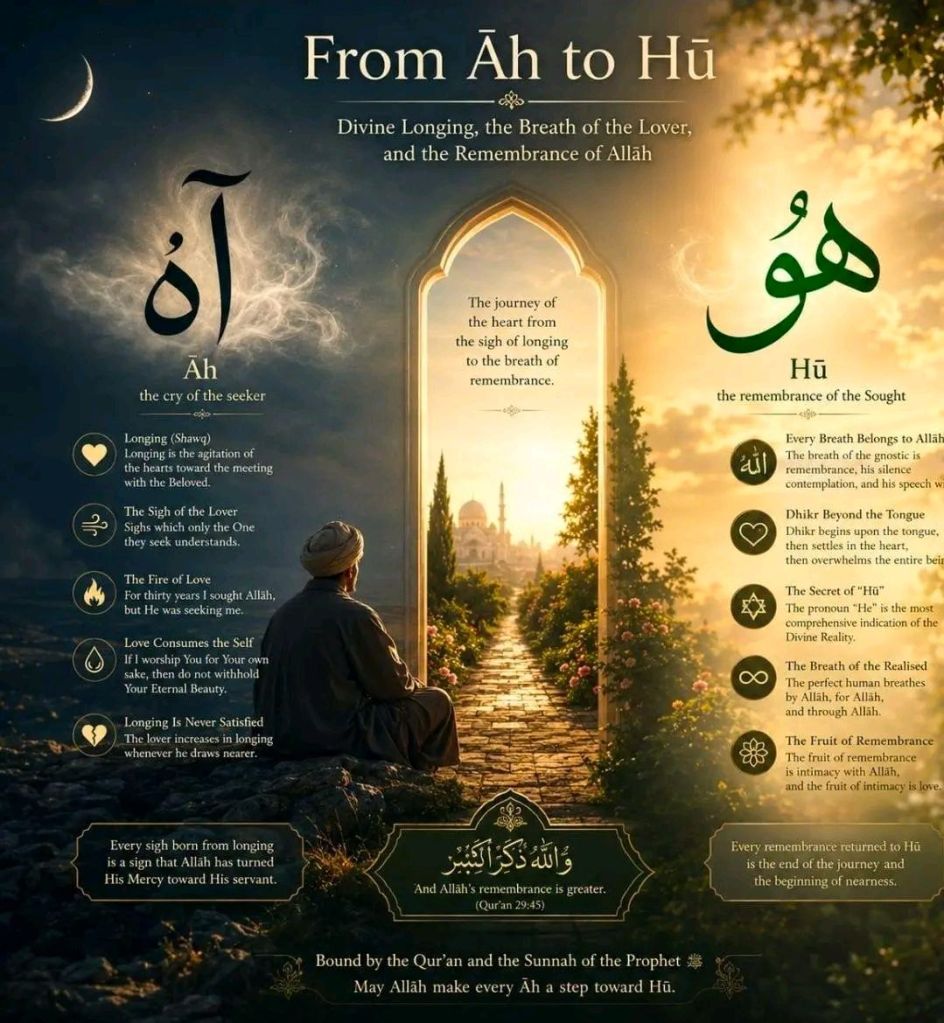
From Āh to Hū”

■ “From Āh to Hū” Divine Longing, the Breath
of the Lover, and the Remembrance of Allāh

The calligraphy contrasting هو (Hū) with آه (Āh) expresses one of the oldest themes in Islamic spirituality: the transformation of the servant’s sigh into the remembrance of Allāh.

The Qur’an does not explicitly speak of “Āh,”
nor does it prescribe “Hū” as a standalone formula of dhikr.

Rather, the symbolism arises from the contemplations of the Awliyā’, who reflected deeply upon the Qur’an’s teachings regarding the heart, remembrance, longing, and Divine proximity.

Their insights should therefore be understood as spiritual commentary (ishārāt), not as legal or doctrinal obligations.

■ The Secret of Longing (Shawq)

The foundation of the image is shawq the longing for Allāh. The saints consistently taught that longing is not merely a human emotion. It is evidence that Allāh has already begun drawing His servant.

▪︎ Shaykh Abū al-Qāsim al-Junayd al-Baghdādī may Almighty Allāh sanctify his secret, said:

“Longing is the agitation of the hearts toward the meeting with the Beloved.”

(Abū Nuʿaym al-Iṣfahānī, Ḥilyat al-Awliyā’,
vol. 10.)

Notice that al-Junayd does not describe longing as sadness. Rather, it is movement.
The heart has begun travelling before the body has moved.

■ Every Breath Belongs to Allāh

One of the earliest Sufi teachings concerns the sanctity of every breath.

▪︎ Shaykh Sahl ibn ʿAbd Allāh al-Tustarī, may Almighty Allāh sanctify his secret, said:

“The breath of the gnostic (ʿārif) is remembrance, his silence contemplation, and his speech wisdom.”

(Abū Nuʿaym, Ḥilyat al-Awliyā’, vol. 10.)

Thus, the sigh “Āh” is not merely air leaving
the lungs. It becomes a vehicle carrying remembrance. Every breath either carries heedlessness or carries Allāh.

■ The Sigh of the Lover

▪︎ Imām Aḥmad ibn ʿAjībah, may Almighty Allāh sanctify his secret, wrote:

“The people of love possess sighs which only the One they seek understands.”

(Ibn ʿAjībah, Iqāẓ al-Himam fī Sharḥ al-Ḥikam)

The sigh cannot always be translated into language. Its meaning is known only to the heart and to Allāh. This explains why many saints regarded tears, silence, and sighs as forms of worship.

■ The Fire of Love

▪︎ Shaykh Abū Yazīd al-Bisṭāmī, may Almighty Allāh sanctify his secret, famously said:

“For thirty years I sought Allāh, but when I looked carefully, I found that it was Allāh Who had been seeking me.”

(Farīd al-Dīn ʿAṭṭār, Tadhkirat al-Awliyā’]

This statement perfectly reflects the movement from “Āh” to “Hū.” The seeker imagines he is searching. The realised servant discovers that every sigh was already inspired by Divine attraction (jadhb).

■ Dhikr Beyond the Tongue

▪︎ Imām al-Qushayrī, may Almighty Allāh sanctify his secret, writes:

“Dhikr begins upon the tongue, then settles in the heart, then overwhelms the entire being.”»

(al-Qushayrī, al-Risālah al-Qushayriyyah, chapter on Dhikr)

This image reflects precisely that final stage.
The servant no longer merely pronounces remembrance. He breathes remembrance.
His sigh itself has become dhikr.

■ The Cry Heard Before It Is Spoken

▪︎ Shaykh Ibn ʿAṭā’ Allāh al-Iskandarī, may Almighty Allāh sanctify his secret, writes in
the Ḥikam:

“Do not think that your invocation is the cause of His gift; rather, your invocation itself is one of His gifts to you.”

(al-Ḥikam al-ʿAṭā’iyyah, Hikmah 66)

Therefore, the servant’s “Āh” is already evidence that Allāh has remembered him. For were He not drawing the servant, the servant would never call.

■ Longing Is Never Satisfied

▪︎ Shaykh Dhū al-Nūn al-Maṣrī, may Almighty Allāh sanctify his secret,  said:

“The lover increases in longing whenever he draws nearer.”

(Abū Nuʿaym, Ḥilyat al-Awliyā’, vol. 9)

Ordinary desire disappears after attainment.
Love of Allāh grows stronger after every unveiling. Every meeting produces greater yearning. Every “Hū” gives birth to another “Āh.”

■ The Secret of “Hū”

Shaykh al-Akbar Muḥyī al-Dīn Ibn ʿArabī, may Almighty Allāh sanctify his secret, wrote:

“The pronoun ‘He’ (Huwa) is the most comprehensive indication of the Divine Reality, for every name eventually returns to Him.”

(Ibn ʿArabī, al-Futūḥāt al-Makkiyyah, chapter on the Divine Names)

For this reason, many Sufis regarded “Hū” as the remembrance that points beyond all concepts. It is not another name added to the Divine Names. Rather, it is the pronoun pointing to the One Whom every Name reveals.

■ The Breath of the Realised

Shaykh ʿAbd al-Karīm al-Jīlī, may Almighty Allāh sanctify his secret, writes:

“The perfect human breathes by Allāh, for Allāh, and through Allāh.”

(al-Jīlī, al-Insān al-Kāmil)

This does not mean incarnation or union in an ontological sense. Rather, every movement becomes conscious servitude. Every breath becomes an act of witnessing Divine grace.

■ The Beginning and the End

▪︎ Imām Abū Ḥāmid al-Ghazālī, may Almighty Allāh sanctify his secret, writes:

“The fruit of remembrance is intimacy with Allāh, and the fruit of intimacy is love.”

(al-Ghazālī, Iḥyā’ ʿUlūm al-Dīn, Book of Dhikr
and Duʿā’]

The beginner remembers Allāh because he wishes to love Him. The realised servant remembers Allāh because he cannot bear separation.

■ The Prophetic Foundation

All of this spirituality rests firmly upon the guidance of the Messenger of Allāh ﷺ.

▪︎ Imām Al-Junāyd, may Almighty Allāh sanctify his secret, declared:

“Our path is bound by the Qur’ān and the Sunnah. Whoever does not memorize the Qur’an, write ḥadīth, and understand religion is not to be followed in this matter.”

(al-Qushayrī, al-Risālah al-Qushayriyyah)

Thus, the journey from “Āh” to “Hū” is never separated from the Sunnah of the Prophet ﷺ. The sigh of longing only becomes a means of nearness when guided by revelation.

■ Spiritual Conclusion:

The calligraphy is not merely an artistic play on two Arabic words. It portrays the entire spiritual journey. Āh is the cry of the seeker. Hū is the remembrance of the Sought.

Between them lies the purification of the heart, constant dhikr, sincere repentance, love, patience, and steadfast adherence to the Qur’ān and the Sunnāh.

The saints teach that every sincere sigh born from longing for Allāh is already a sign that He has turned His Mercy toward His servant.

The path begins with a cry, but it ends with witnessing that every cry was inspired by Him, every breath sustained by Him, and every remembrance returned to Hū.

And Almighty Allāh knows best.