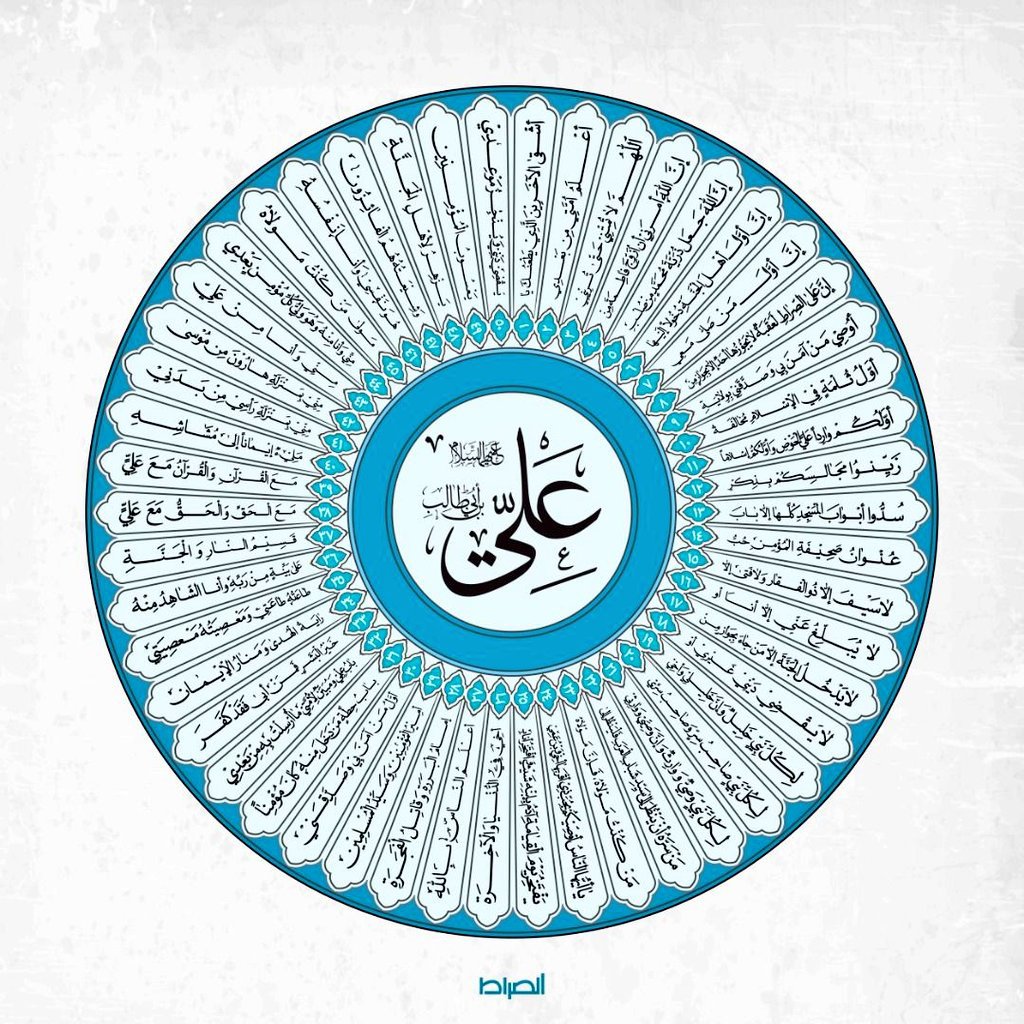
“ Sufyān bin ‘Uyaynah (in praise of ‘Alī (AlahisSalam)) relates it
from Sa‘d bin Abī Waqās ((رضئ اللہ تعالی عنہ)) that of the four qualities of
‘Alī (AlahisSalam) if I possessed anyone of them, I would have held
it dearer than such an d such, even the red camels. (The
four qualities were as follows:) (first quality) he was
blessed with the flag (on the occasion of the battle of
Khaybar; (second quality is) the Prophet’s صلى-الله-عليه-و-آله-وسلم saying about
him (that they are related) as Hārūn and Mūsā (were
r elated); (third quality is) the Prophet’s saying about Him
that one who h as me as h is master (has ‘Alī as his master).
(The sub-narrator) Sufyān bin ‘Uyayn ah did not remember
the fourth quality.”
Ibn Abī ‘Āsim related it in as-Sunnah (p.607 # 1385); and Diyā’
Maqdisī in al-Ahādīth-ul-mukhtārah (3:151 # 948).
Ahmad bin Hambal related it with a fair (hasan) chain of
authorities in Fadā’il-us-sahāhah (2:643 # 1093).
Ibn ‘Asākir narrated this tradition through Sa‘d bin Abī Waqās
who mentioned the four qualities in detail in Tārīkh Dimashq alkabīr (45: 89-91).
“‘Abd-ur-Rahmān bin Sābit (in praise o f ‘Alī (AlahisSalam))
r elates that Sa‘d ((رضئ اللہ تعالی عنہ)) said: I heard Allāh’s Messenger
(صلى-الله-عليه-و-آله-وسلم) describe three of ‘Alī’s qualities that if I am blessed
with anyone of them I would hold it dearer than the world
an d its contents. I heard Allāh ’s Messenger (صلى-الله-عليه-و-آله-وسلم) say : One
who has me as his master (has ‘Alī as his master), and you
are in my place as Hārūn was in place of Mūsā, and I shall
bestow the flag on him (who is a friend of Allāh an d
His Messenger (صلى-الله-عليه-و-آله-وسلم), an d Allāh and His Messenger
(صلى-الله-عليه-و-آله-وسلم) are his friends).”
Ibn Abī ‘Āsim related it in as-Sunnah (p.608 # 1386); Ibn Abī Shaybah, al-Musannaf (12:61 # 12127); and Diyā’ Maqdisī declared its chain of transmission sahīh (sound) in al-Ahādīth-ulmukhtārah (3:207 # 1008).
Ibn ‘Asākir narrated it in Tārīkh Dimashq al-kabīr (45:88,89).
“Rifā‘ah bin Iyāsad-Dabbī relates on the authority of
h is father who relates it on the authority of his
grandfather. He said: We were with ‘Alī (AlahisSalam) on the day of
the Battle of Jamal. He sent a message for Talhah bin
‘Ubaydullāh ((رضئ اللہ تعالی عنہ)) who called on him. He said: I make yo u
swear by Allāh! Have yo u heard from the Messenger of
Allāh صلى-الله-عليه-و-آله-وسلم: One who has me as his master has ‘Alī as his
master. O Allāh! Befriend him who befriends him and be
h is enemy who is his enemy. Talhah ((رضئ اللہ تعالی عنہ)) said: Yes. ‘Alī (AlahisSalam) said: Then why do you battle with me? Talhah ((رضئ اللہ تعالی عنہ))
said: I did not remember it. The narrator said: (After this)
Talhah ((رضئ اللہ تعالی عنہ)) went back.”
Hākim narrated it in al-Mustadrak (3:371 # 5594), Bayhaqī, alI‘tiqād wal-hidāyah ilā sabīl-ir-rishād ‘alā madhhab-issalaf wa ashāb-il-hadīth (p.373); Ibn ‘Asākir, Tārīkh Dimashq
al-kabīr (27:76); Hindī, Kanz-ul-‘ummāl (11:332 # 31662); and
Haythamī said in Majma‘-uz-zawā’id (9:107) that this tradition has
been narrated by Bazzār through Nadhīr.








 Aal-e-Qutub Aal-e-Syed Abdullah Shah Ghazi