Hadith Translation of Sahih Bukhari Praying at Night in Ramadaan (Taraweeh)


Volume 3, Book 32, Number 226:

Narrated Abu Huraira:

I heard Allah’s Apostle saying regarding Ramadan, “Whoever prayed at night in it (the month of Ramadan) out of sincere Faith and hoping for a reward from Allah, then all his previous sins will be forgiven.”

Volume 3, Book 32, Number 227:
Narrated Abu Huraira:

Allah’s Apostle said, “Whoever prayed at night the whole month of Ramadan out of sincere Faith and hoping for a reward from Allah, then all his previous sins will be forgiven.” Ibn Shihab (a sub-narrator) said, “Allah’s Apostle died and the people continued observing that (i.e. Nawafil offered individually, not in congregation), and it remained as it was during the Caliphate of Abu Bakr and in the early days of ‘Umar’s Caliphate.” ‘Abdur Rahman bin ‘Abdul Qari said, “I went out in the company of ‘Umar bin Al-Khattab one night in Ramadan to the mosque and found the people praying in different groups. A man praying alone or a man praying with a little group behind him. So, ‘Umar said, ‘In my opinion I would better collect these (people) under the leadership of one Qari (Reciter) (i.e. let them pray in congregation!)’. So, he made up his mind to congregate them behind Ubai bin Ka’b. Then on another night I went again in his company and the people were praying behind their reciter. On that, ‘Umar remarked, ‘What an excellent Bid’a (i.e. innovation in religion) this is; but the prayer which they do not perform, but sleep at its time is better than the one they are offering.’ He meant the prayer in the last part of the night. (In those days) people used to pray in the early part of the night.”

Volume 3, Book 32, Number 228:
Narrated ‘Aisha:

(the wife of the Prophet) Allah’s Apostle used to pray (at night) in Ramadan.

Volume 3, Book 32, Number 229:
Narrated ‘Urwa:

That he was informed by ‘Aisha, “Allah’s Apostle went out in the middle of the night and prayed in the mosque and some men prayed behind him. In the morning, the people spoke about it and then a large number of them gathered and prayed behind him (on the second night). In the next morning the people again talked about it and on the third night the mosque was full with a large number of people. Allah’s Apostle came out and the people prayed behind him. On the fourth night the Mosque was overwhelmed with people and could not accommodate them, but the Prophet came out (only) for the morning prayer. When the morning prayer was finished he recited Tashah-hud and (addressing the people) said, “Amma ba’du, your presence was not hidden from me but I was afraid lest the night prayer (Qiyam) should be enjoined on you and you might not be able to carry it on.” So, Allah’s Apostle died and the situation remained like that (i.e. people prayed individually). “

Volume 3, Book 32, Number 230:
Narrated Abu Salama bin ‘Abdur Rahman:

that he asked ‘Aisha “How was the prayer of Allah’s Apostle in Ramadan?” She replied, “He did not pray more than eleven Rakat in Ramadan or in any other month. He used to pray four Rakat —- let alone their beauty and length—-and then he would pray four —-let alone their beauty and length —-and then he would pray three Rakat (Witr).” She added, “I asked, ‘O Allah’s Apostle! Do you sleep before praying the Witr?’ He replied, ‘O ‘Aisha! My eyes sleep but my heart does not sleep.”

Volume 3, Book 32, Number 231:
Narrated Abu Huraira:

The Prophet said, “Whoever fasted the month of Ramadan out of sincere Faith (i.e. belief) and hoping for a reward from Allah, then all his past sins will be forgiven, and whoever stood for the prayers in the night of Qadr out of sincere Faith and hoping for a reward from Allah, then all his previous sins will be forgiven .”

Volume 3, Book 32, Number 232:
Narrated Ibn ‘Umar:

Some men amongst the companions of the Prophet were shown in their dreams that the night of Qadr was in the last seven nights of Ramadan. Allah’s Apostle said, “It seems that all your dreams agree that (the Night of Qadr) is in the last seven nights, and whoever wants to search for it (i.e. the Night of Qadr) should search in the last seven (nights of Ramadan).”

Volume 3, Book 32, Number 233:
Narrated Abu Salama:

I asked Abu Sa’id, and he was a friend of mine, (about the Night of Qadr) and he said, “We practiced Itikaf (seclusion in the mosque) in the middle third of the month of Ramadan with the Prophet . In the morning of the 20th of Ramadan, the Prophet came and addressed us and said, ‘I was informed of (the date of the Night of Qadr) but I was caused to forget it; so search for it in the odd nights of the last ten nights of the month of Ramadan. (In the dream) I saw myself prostrating in mud and water (as a sign). So, whoever was in l’tikaf with me should return to it with me (for another 10-day’s period)’, and we returned. At that time there was no sign of clouds in the sky but suddenly a cloud came and it rained till rain-water started leaking through the roof of the mosque which was made of date-palm leaf stalks. Then the prayer was established and I saw Allah’s Apostle prostrating in mud and water and I saw the traces of mud on his forehead.”

Volume 3, Book 32, Number 234:
Narrated ‘Aisha:

Allah’s Apostle said, “Search for the Night of Qadr in the odd nights of the last ten days of Ramadan.”

Volume 3, Book 32, Number 235:
Narrated Abu Said Al-Khudri:

Allah’s Apostle used to practice Itikaf (in the mosque) in the middle third of Ramadan and after passing the twenty nights he used to go back to his house on the 21st, and the people who were in Itikaf with him also used to go back to their houses. Once in Ramadan, in which he practiced Itikaf, he established the night prayers at the night in which he used to return home, and then he addressed the people and ordered them whatever Allah wished him to order and said, “I used to practice Itikaf for these ten days (i.e. the middle 113rd but now I intend to stay in Itikaf for the last ten days (of the month); so whoever was in Itikaf with me should stay at his place of seclusion. I have verily been shown (the date of) this Night (of Qadr) but I have forgotten it. So search for it in the odd nights of the last ten days (of this month). I also saw myself (in the dream) prostrating in mud and water.” On the night of the 21st, the sky was covered with clouds and it rained, and the rain-water started leaking through the roof of the mosque at the praying place of the Prophet . I saw with my own eyes the Prophet at the completion of the morning prayer leaving with his face covered with mud and water.

Volume 3, Book 32, Number 236:
Narrated ‘Aisha:

The Prophet said, “Look for (the Night of Qadr).”

Volume 3, Book 32, Number 237:
Narrated ‘Aisha:

Allah’s Apostle used to practice Itikaf in the last ten nights of Ramadan and used to say, “Look for the Night of Qadr in the last ten nights of the month of Ramadan ,”

Volume 3, Book 32, Number 238:
Narrated Ibn Abbas:

The Prophet said, “Look for the Night of Qadr in the last ten nights of Ramadan ,’ on the night when nine or seven or five nights remain out of the last ten nights of Ramadan (i.e. 21, 23, 25, respectively).”

Volume 3, Book 32, Number 239:
Narrated Ibn ‘Abbas:

Allah’s Apostle said, “The Night of Qadr is in the last ten nights of the month (Ramadan), either on the first nine or in the last (remaining) seven nights (of Ramadan).” Ibn ‘Abbas added, “Search for it on the twenty-fourth (of Ramadan).”

Volume 3, Book 32, Number 240:
Narrated ‘Ubada bin As-Samit:

The Prophet came out to inform us about the Night of Qadr but two Muslims were quarreling with each other. So, the Prophet said, “I came out to inform you about the Night of Qadr but such-and-such persons were quarreling, so the news about it had been taken away; yet that might be for your own good, so search for it on the 29th, 27th and 25th (of Ramadan).

Volume 3, Book 32, Number 241:
Narrated Aisha:

With the start of the last ten days of Ramadan, the Prophet used to tighten his waist belt (i.e. work hard) and used to pray all the night, and used to keep his family awake for the prayers.

The Invasion of Tabuk part 1

The Invasion of Tabuk (In Rajab, in the Year 9 A.H.)

The invasion and conquest of Makkah was considered a decisive one between truth and falsehood. People started to embrace Islam, the religion of Allâh, in great numbers. This is manifest clearly in the chapter – It can also be deduced from the enormous number of people who shared in the Farewell Pilgrimage. All domestic troubles came to an end. The Muslims eventually felt at ease and started setting up the teachings of Allâh’s Laws and intensifying the Call to Islam.

The underlying Reasons

Byzantine power, which was considered the greatest military force on earth at that time, showed an unjustifiable opposition towards the Muslims. As we have already mentioned, their opposition started with the killing of the ambassador of Allâh’s Messenger ﷺ Al-Harith bin ‘Umair Al-Azdi, by Shurahbil bin ‘Amr Al-Ghassani. The ambassador was then carrying a message from the Prophetﷺ to the ruler of Busra. We have also stated that the Prophetﷺ consequently dispatched a brigade under the command of Zaid bin Harithah who had a fierce fight against the Byzantines at Mu’tah. Although Muslim forces could not have revenge on those arrogant and proud tyrants, the confrontation itself had a great impression on the Arabs. all over Arabia,

Caesar could neither ignore the great benefit that Mu’tah Battle had brought to Muslims nor disregard the Arab tribes’ expectations of independence and their hopes of getting free from his influence and reign nor their alliance to the Muslims. Realizing all that, Caesar was aware of the progressive danger threatening his borders, especially the fronts in Greater Syria that were

neighboring the Arab lands. So, he concluded that demolition of the Muslims’ power had grown an urgent necessity. This decision of his should. in his opinion, be achieved before the Muslims become too powerful to conquer, and raise troubles and unrest in the adjacent Arab territories.

To meet these urgent requirements, Caesar gathered a huge army of the Byzantines and pro-Roman Ghassanide tribes to launch a decisive bloody battle against the Muslims.

General News about the Byzantines and Ghassanide Preparations for War

No sooner than the news about the Byzantine’s preparations for a decisive invasion against Muslims had reached Madinah, fear spread among them. They started to think about the Byzantine invasion in the least event they heard of.

another version, ‘Umar Radiallahu anhoo said, “We talked about the

Ghassanide preparations to invade us. When it was his turn to convey the news to me, he went down and returned in the evening. He knocked at the door violently and said, ‘Is he sleeping?’ I was terrified but I went out to meet him. ‘Something serious had taken place.’ He said. ‘Have the Ghassanides arrived?” said I. ‘No,’ he said, ‘it is greater and more serious Allâh’s Messenger ﷺ has divorced his wives.’

This state of too much paranoia clearly shows the seriousness of the situation that Muslims began to experience. The seriousness of the situation was confirmed to a large degree by the hypocrites behavior, when news about the Byzantines’ preparations reached Madinah. The fact that Allâh’s Messengerﷺ than won all the battles he fought, and that no power on earth could make him terrified, and that he had always proved to be able to overcome all the obstacles that stood in his way – did not prevent the hypocrites. who concealed evil in their hearts, from expecting an affliction to fall upon the Muslims and Islam.

They used to hide evil and ill-intentions against the whole process of Islam and the Muslims. On grounds of false hopes of destroying this great religious structure, they erected a source of conspiracy and intrigue in the form of a mosque – Masjid Dirar (the mosque of harm). They approached the Prophetﷺ with the request that he should come and bless the place by praying in it himself. As he was at the moment about to start for Tabuk, he delayed the fulfillment of their request till his return. Meanwhile he came to know through Divine Revelation that it was not a Mosque for devotion and prayer, but a meeting place for antiIslamic elements. On his return, therefore, the Prophet hie sent a party to demolish the new structure.

Particular News about the Byzantine and Ghassanide Preparations for War

A magnified image of the prominent danger threatening the

Muslims’ life was carried to them by the Nabateans who brought cooking oil from Ash-Sham to Madinah. They carried news about Heraclius preparations and equipment of an enormous army numbering over fort thousand fighters besides Lakhm. Judham and other tribes allied to the Byzantines. They said that its advance force had already reached Al-Balqa’. Thus was the grave situation standing in ambush for the Muslims. The general situation was aggravated seriously by other adverse factors of too much hot weather, drought and the rough and rugged distance they had to cover in case they decided to encounter the imminent danger

The Messenger of Allâh’s ﷺ concept and estimation of the situation and its development was more precise and accurate than all others. He thought that if he delayed or dealt passively with the situation in such a way that might enable the Byzantines to pass through the Islamic controlled provinces or to go as far as Madinah, this would – in these circumstances – leave the most awful impression on Islam as well as on the Muslims’ military credibility.

The pre-Islamic beliefs and traditions (Al-Jahiliyah) which were at that time dying because of the strong decisive blow that they had already had at Hunain, could have had a way to come back to life once again in such an environment. The hypocrites were conspiring against the Muslims so that they might stab them in the back whereas Byzantines would attack them from the front line such a thing came to light and they succeeded in their evil attempts, the Prophetﷺ and his Companions’ efforts to spread Islam would collapse and their profits which were the consequences of successive and constant fights and invasions would be invalidated. Allâh’s Messengerﷺ realized all that very well. So – in spite of the hardships and drought that Muslims were suffering from — the Prophet ﷺ was determined that the Muslims should invade the Byzantines and fight a decisive battle at their own borders. He was determined not to delay at all in order to spoil any Roman attempt to approach the land of Islam. Messengerﷺ had made up his mind and took his

final decision, he ordered his Companions to get ready for war and sent for the Makkans and the other Arab tribes asking for their assistance.

Contrary to his habit of concealing his real intention of the invasion by means of declaring a false one, he announced openly his intention of meeting the Byzantines and fighting them. He cleared the situation to his people so that they would get ready and urged them to fight in the way of Allâh. On this occasion a of Surat Bara’ah (Chapter 9 – The Repentance) was sent down by Allâh, urging them to steadfastness and stamina.

On the other hand. Allâh’s Messenger ﷺ than cherished them to pay charities and to spend the best of their fortunes in the way of Allâh.

No sooner than the Muslims had heard the voice of Allah’s Messenger ﷺ calling them to fight the Byzantines, they rushed to comply with his orders. With great speed they started getting ready for war. Tribes and groups from here and there began pouring in Madinah. Almost all the Muslims responded positively. Only those desired to stay behind who had weakness at their hearts, except three people who had true Faith but did not participate in the invasion. Even the needy and the poor who could not afford a ride came to Allâh’s Messenger asking for one so that they would be able to share in the fight against the Byzantines. But when he said:

“..,’I can find no mounts for you,’ they turned back with their eyes overflowing with tears of grief that they could not find anything to spend (for Jihad).” [9:92]

The Muslims raced to give from their wealth and property to support this invasion. ‘Uthman cities, for instance, who had prepared two hundred saddled camels to travel to Ash-Sham. presented them all with two hundred ounces (of gold) as charity. Then he brought one hundred saddled camels. He also brought a

thousand dinars and cast them all into the lap of Allâh’s Messengersﷺ who tured them over and said: “From this day on nothing will harm ‘Uthman regardless of what he does. Again and again ‘Uthman gave till his charity reached nine hundred camels and a hundred horses, besides the money he paid.

‘Abdur-Rahman bin ‘Awf . for his part, paid two hundred ounces of silver, whereas Abu Bakr a paid all of the wealth he had leaving himself with nothing but Allâh and His Messengerﷺ as a fortune for his family. ‘Umar paid half his wealth. Al”Abbas • gifted a lot of money. Talhah, Sa’d bin ‘Ubadah and Muhammad bin Maslamah also gave money for the welfare of the invasion. ‘Asim bin ‘Adis, on his turn, offered ninety camelburdens of dates. People raced to pay as little or as much as they could. One of them gave the only half kilo of dates (or the only kilo) he owned. Women shared in this competition by giving the things they owned: such as musk, armlets, anklets, earrings and rings. No one abstained from spending except the hypocrites

“Those who defame such of the believers who give charity (in Allâh’s cause) voluntarily, and those who could not find to give charity (in Allâh’s cause) except what is available to them, so they mock at them (believers).” [9:79]

The Muslim Army is leaving for Tabuk

Upon accomplishing the equipment of the army. Allâh’s Messenger ﷺ ordained that Muhammad bin Maslamah AlAnsari # should be appointed over Madinah in another version Siba’ bin ‘Urfutah . To Ha zat Ali bin Abu Talib AlaihisSalam he entrusted his family’s safety and affairs and ordered him to stay with them.

he followed Nabi Pak ﷺ and caught up with him.

But the Prophetﷺ ‘Ali AlahisSalam turn back to Madinah after saying: “Would it not suffice you to be my successor in the way that Aaron (Harun) was to Moses?” Then he moved saying: “But no Prophet succeeds me.”

On Thursday. Allâh’s Messenger ﷺ marched northwards to Tabuk. The army that numbered thirty thousand fighters, was a great one, when compared with the previous armies of Islam. Muslims had never marched with such a great number before.

Despite all the gifts of wealth and mounts, the army was not perfectly equipped. The shortage of provisions and mounts was so serious that eighteen men mounted one camel alternatively.

As for provisions, members of the army at times had to eat the leaves of trees till their lips got swollen. Some others had to slaughter camels – though they were so dear – so that they could have some liquids; that is why that army was called ‘The army of distress’.

On their way to Tabuk, the army of Islam passed by Al-Hijr – which was the native land of Thamud who cut out (huge) rocks in the valley; that is Al-Qura Valley of today.

They watered from its well but later Allâh’s Messengerﷺ told them not to drink of that water, nor perform the ablution with it. The dough they made, he asked them to feed their camels with. He forbade them to eat anything whatsoever of it. As an alternative, he told them to water from that well which Prophet Salih’s she-camel used to water from.

On the authority of Ibn ‘Umar : Upon passing by Al-Hijr the Prophetﷺ said:

“Do not enter the houses of those who erred themselves lest what had happened to them would afflict you, but if you had to do such a thing, let it be associated with weeping.”

Then he raised his head up and accelerated his strides till he passed the valley out.

Shortage of water and the army’s need to it made them complain to Allah’s Messengers ﷺ about that. So he supplicated Allâh. Who sent a cloud. It rained and so all people drank and supplied themselves with their need of water.

When they drew near Tabuk, the Prophet ﷺsaid: “If Allâh wills, tomorrow you will arrive at the spring of Tabuk. You will not get there before daytime. So whoever reaches it, should not touch its water; but wait till i come.” Mu’ad Radiallahu anhoo said: “When we reached the spring, it gushed forth some water. We found that two men had already preceded us to it. Allâh’s Messenger ﷺ asked them: “Have you touched its water?’ They replied: ‘Yes’. He said what Allâh inspired him to say, then he scooped up a little water of that spring. a thin stream which gathered together, he washed his face and hand with it and poured it back into it: consequently plenty of water spouted out of it so the people could have water. ‘Mu’adh.’ said the Messenger of Allâhﷺ . ‘if you live long life, you will see fields full of vegetation here.”

On the way to Tabuk, or as soon as they reached Tabuk, Allâh’s Messenger ﷺ said: “Severe wind will blow tonight, so none of you should stand up. . Whoever has a camel should tie it up.” Later on when the strong wind blew, one of the men stood up and the wind carried him away to Tai’ Mountain.

All the way along Allâh’s Messenger ﷺ

was intent on the performance of the combined prayers of Noon and the Afternoon and so did he with Evening and Night prayers.

Farman e Maula Ali AlaihisSalam

IMAM ALI (A.S.)
ALLAH (S.W.T.) Ke Baare Me Yeh Bande Ka Dhokha Hai Ke Insaan Gunaho Per Israar Karta Rahe Aur Usse Bakshish Ki Umeed Bhi Rakhe.
📚(Meesam ul Hikmah 9/4268)

Aapas Me Galatiyon Ko Darguzar Kiya Karo :
“Aapas Me Galatiyon Ko Darguzar Kiya Karo. Qyunki Darguzar Na Karo Ge Tou Mohabbat Khatm Ho Jayegi,
Jab Mohabbat Khatam Hogi Tou Rabta Toot Jayega,
Jab Rabta Toot Jayega Tou Fasla(Doori) Ho Jayea.
Aur Yeh Fasla Ek (1) Din Tumhare Rishte Ko Tod Dega”.  
✒️ *Hazrate Ali Radi Allahu Ta’ala Anhu*

हज़रत हाजी वारिस अ’ली शाह के बुज़ुर्गों ने विलादत की पेशीन-गोई फ़रमा दी

हज़रत हाजी वारिस अ’ली शाह के बुज़ुर्गों ने बहुत पहले आपकी विलादत की पेशीन-गोई फ़रमा दी। चुनांचे रमज़ानुल-मुबारक1238 हिज्री में हज़रत क़ुर्बान अ’ली शाह के घर में रुश्द-ओ-हिदायत का ये अफ़्ताब तुलूअ’ हुआ जिसकी ज़िया- पाशियों से अ’वाम-ओ-ख़्वास, मुस्लिम-ओ-ग़ैर-मुस्लिम सभी अपने अपने ज़र्फ़ के मुताबिक़ अख़ज़-ए-फ़ैज़ करते रहे हैं। आपका नाम-ए-नामी वारिस अली और उ’र्फ़ियत मिट्ठन मियाँ, रखी गई मगर उ’र्फ़-ए-आ’म में आप हाजी साहिब के नाम से मशहूर हुए।

हदीस-ए-नबवी सलल्लाहु अ’लैहि-व-सल्लम मन सइ’दा सुइ’दा फ़ि बतनि उम्मतिहि (जो सई’द-ओ-ख़ुश-बख़्त होता है वो माँ के पेट ही से सई’द-ओ-ख़ुश-बख़्त होता है) के मिस्दाक़ आपके बचपन से ही विलाएत-ओ-बुजु़र्गी के आसार ज़ाहिर होने लगे थे। आप तीन साल की उ’म्र में वालिद-ए-मोहतरम के बा’द चंद दिनों में वालिदा-ए-मोहतरमा के आग़ोश-ए-तर्बियत-ओ-मोहब्बत से महरूम हो गए। अल्लाह तआ’ला ने आपकी नस नस में मोहब्बत का ख़ुमार भर दिया था। वालिदैन की रिह्लत के बा’द आपकी परवरिश आपकी दादी साहिबा ने अपने ज़िम्मा ले ली।5 बरस की उ’म्र में मक्तब में दाख़िल किए गए। ख़ुदा-दाद ज़िहानत की बिना पर सात बरस की उ’म्र में ही क़ुरआन-ए-मजीद हिफ़्ज़ कर लिया था। यतीम-ओ-यसीर तो थी ही सात बरस की उ’म्र में दादी साहिबा की भी वफ़ात हो गई। इस के बा’द आपके हक़ीक़ी बहनोई हाफ़िज़ सय्यिद ख़ादिम अ’ली शाह अपने हम-राह लखनऊ ले आए। वो ख़ुद बड़े ख़ुदा-तर्स और साहिब-ए-हाल बुज़ुर्ग थे। हाजी साहिब की फ़ित्री सलाहिय्यत और इस्ति’दाद उस पर बहनोई की तर्बियत-ओ-सोहबत सोने पर सुहागा साबित हुई। उन्होंने आपको ता’लीम-ए-बातिनी-ओ-ज़ाहिरी के साथ ही अज़्कार-ओ-अश्ग़ाल भी सिखाए और सिल्सिला-ए-क़ादरिया चिश्तिया में न सिर्फ़ अपना मुरीद फ़रमाया बल्कि इजाज़त-ओ-ख़िलाफ़त से भी सरफ़राज़ फ़रमाया आपकी उ’म्र15 बरस की थी कि आपके पीर-ओ-मुर्शिद ने विसाल फ़रमाया। चुनांचे पीर-ओ-मुर्शिद के सेउम के रोज़ उ’लमा-ओ-मशाइख़ के मज्मा’ में आपकी ख़िर्क़ा-पोशी हुई ।बचपन से ही माल-ए-दुनिया आपके लिए मार-ए-दुनिया के मिस्दाक़ था चुनांचे वालिदैन का मतरूका असासा-ओ-नक़्द रक़म तमाम का तमाम आपने ज़रूरत-मंद और ग़ुरबा में तक़्सीम कर दिया और गोया अस्सख़ीयु हबीबुल्लाह(सख़ी अल्लाह का दोस्त-ओ-महबूब होता है) का ताज पहन लिया। ज़रूरत-मंदों और नादारों की हाजत-रवाई और अपनी ज़रूरत पर दूसरों की ज़रूरत को तर्जीह देना आप का ए’न मस्लक-ओ-मश्रब था।
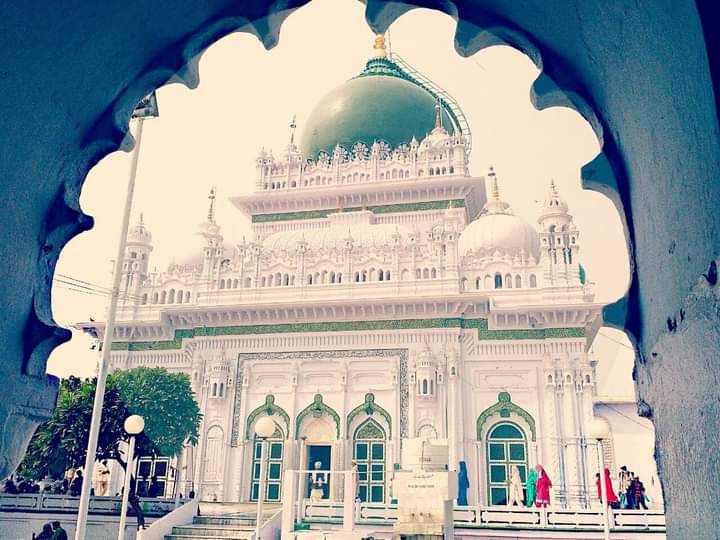
तवील अ’र्सा तक मख़लूक़-ए-ख़ुदा को अपने फ़ैज़-ए-सोहबत-ओ-पैग़ाम-ए-इन्सानियत से सरफ़राज़-ओ-फ़ैज़याब कर के1905 ई’सवी को सुब्ह-ए-सादिक़ के वक़्त जब आफ़्ताब मशरिक़ से तुलूअ’ होने वाला था ये आफ़्ताब-ए-अन्फ़ुसी ग़ुरूब हो कर अपने मालिक-ए-हक़ीक़ी से जा मिला और अपने हस्ब-ए-वसिय्यत उसी जगह जहाँ दरगाह शरीफ़ है क़ियामत तक के लिए रु-पोश हो गया। दरगाह शरीफ़ आज भी मर्जा’-ए-ख़ास -ओ-आ’म है और हर मज़्हब-ओ-मिल्लत के लोग अपने अपने ज़र्फ़ के मुताबिक़ आज भी उसी तरह फ़ैज़याब होते रहते हैं। हर साल तारीख़-ए-विसाल पर एक शानदार उ’र्स भी लगता है।
हाजी वारिस अ’ली शाह की ता’लीम निहायत आ’म-फ़हम, दिलों को मोह लेने वाली और क़ुलूब में उतर जाने वाली होती है।आ’म तौर पर सूफ़िया-ए-किराम की तरह आपकी ता’लीमात का मक़्सद भी तमाम इन्सानों को एक इकाई में जोड़ने और उन्हें अल्लाह तआ’ला का कुंबा समझने समझाने का होता। आपकी नज़र में तमाम इन्सानों की तख़्लीक़ का एक ये भी मक़्सद था कि वो आपसी मेल मोहब्बत और इत्तिहाद-ओ-इत्तिफ़ाक़ क़ाइम रखें क्योंकि

सूरत में तफ़र्क़ा है हक़ीक़त में कुछ नहीं
तमाम आ’लम ऐ’न हक़ है इसके सिवा कुछ नहीं

हज़रत शाह तुराब अ’ली क़लंदर काकोरवी क्या प्यारी बात फ़रमाते हैं:

जैसे मौजें ऐ’न-ए-दरिया हैं हक़ीक़त में ‘तुराब’
वैसे आ’लम ऐ’न-ए-हक़ है ग़ैर-ए-हक़ आ’लम नहीं

आपकी तमाम-तर ता’लीम और तलक़ीन का मर्कज़ मोहब्बत था।इसी से आदमी इन्सान बनता है और अपने मालिक और आक़ा को पहुंचाँता है और यही अस्ल है।

मिल्लत-ए-इ’श्क़ अज़ हम: दींहा जुदास्त
आ’शिक़ाँ रा मज़्हब-ओ-मिल्लत ख़ुदास्त

आपके मोहब्बत-ओ-इन्सानियत के इसी दर्स ने हिंदू मुसलमान सब के दिल ऐसे मोह लिए कि वो आपके हल्क़ा-ब-गोश हो गए। एक ग़ैर-मुस्लिम को किस तरह तलक़ीन फ़रमाते हैं। अ’द्ल-ओ-इन्साफ़ किया करो। अपने पैदा करने वाले को मोहब्बत के साथ याद किया करो, फिर फ़रमाया”मोहब्बत है तो सब कुछ है और मोहब्बत नहीं तो कुछ नहीं जैसा कि मौलाना रुम फ़रमाते हैं:

अज़ मोहब्बत मुर्द: ज़िंद: मी-शवद
वज़ मोहब्बत शाह बंद: मी-शवद
(मोहब्बत वो चीज़ है जो मुर्दे में जान डाल देती है और बादशाह को बंदा बना देती है)।

एक दूसरे मुरीद को नसीहत फ़रमाई। अल्लाह की तमाम मख़्लूक़ से हम-दर्दी और अच्छा सुलूक सिर्फ़ इस ख़याल से किया करो कि ये अल्लाह के बंदे और उस की कारी-गरी की निशानियाँ हैं। तुमको इसी तरह उसकी मोहब्बत नसीब होगी। यही अस्ल तरीक़त है।

मुअ’ल्लिम-ए-इन्सानियत शैख़ सा’दी इसी बात को यूँ कहते हैं।
तरीक़त ब-जुज़ ख़िदमत-ए-ख़ल्क़ नीस्त
ब-तस्बीह-ओ-सज्जादा-ओ-दल्क़ नीस्त
(तरीक़त मख़्लूक़-ए-ख़ुदा की ख़िदमत के सिवा कुछ नहीं न कि सिर्फ़ गुदड़ी पहन कर और तस्बीह लेकर मुसल्ले पर बैठ जाया जाये।

फ़रमाते थे कि अगर अल्लाह तआ’ला से मोहब्बत और उसकी मख़्लूक़ से उल्फ़त नहीं तो इ’बादत रियाज़त बेकार चीज़ें हैं।
ज़ोह्द में कुछ भी न हासिल हुआ निख़्वत के सिवा
शुग़्ल बे-कार हैं सब उनकी मोहब्बत के सिवा

फ़रमाते थे कि इन्सानियत ये है कि तमाम इख़्तिलाफ़ात को मिटाकर और फ़ुरूई’ झगड़ों से बुलंद हो कर ज़िंदगी गुज़ारी जाए और आपसी इत्तिहाद और मेल-ओ-मोहब्बत को फ़रोग़ दिया जाए गोया इन्सान की पैदाइश का मक़्सद यही है।

तू बरा-ए-वस्ल कर्दन आमदी
ने बराए फ़स्ल कर्दन आमदी
(तुम्हारा मक़्सद-ए-पैदाइश तो ये है कि तुम आपसी मेल-ओ-मोहब्बत की फ़िज़ा क़ाएम करो ख़ालिक़-ओ-मख़्लूक़ से नाता जोड़ो न कि इख़्तिलाफ़ की आड़ में आपसी तफ़र्क़ा और जुदाई पैदा करो)।

आपका इर्शाद है कि मज़्हबी रवादारी और इन्सानियत की अक़्दार में ये चीज़ भी ज़रूरी है कि किसी का कभी बुरा न चाहो न उसको बद-दुआ’ दो और न उसके मज़्हब को बुरा कहो क्योंकि ख़ुदा-तलबी के रास्ते मुख़्तलिफ़ हैं।

हर क़ौम रास्त राहे दीने-ओ-क़िब्ला-गाहे

ये था पैग़ाम-ए-इन्सानियत की अ’लम-बर्दार एक मुक़द्दस हस्ती हज़रत हाजी सय्यद वारिस अ’ली शाह की हयात और ता’लीमात का मुख़्तसर-सा ख़ाका। इस माद्दियत, नफ़्सी-नफ़्सी और इख़्तिलाफ़ात के दौर में इन बुज़ुर्गों के दर्स-ए-इन्सानियत और आफ़ाक़ी पैग़ाम पर अ’मल कर के न मा’लूम और कितनों की ज़िंदगियाँ निखर और सँवर सकती हैं।

आज भी हो जो इब्राहीम का ईमाँ पैदा
आग कर सकती है अंदाज़-ए-गुल्सिताँ पैदा