


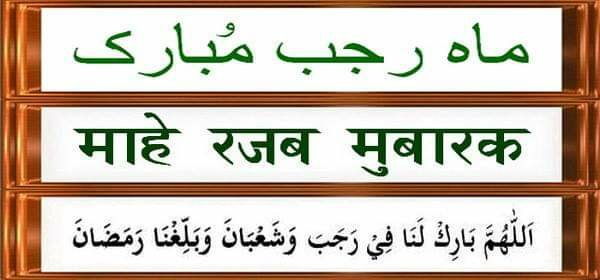
Maah e Rajab Mubarak.
♦♦♦♦♦♦♦♦
‘Rajab’ ka ma’ana hai ‘Ta’azeem karna’.
Ahle Arab is mahine ki khaas ta’azeem kiya karte the.
Is ko ‘Al-Asab’ bhi kehte hain ya’ni Tez bahaav.
Is Maah e mubarak me Tauba karne waalo par Rahmat ka bahaav tez ho jaata aur Ibaadat karne waalo par Qubooliyat ke anwaar ka Faizaan hota hai.
**************
Is barkat wa rahmat aur fazeelat waale mahine me Shab e Me’araaj hai.
27wi Rajab ki mubarak raat me ALLĀH ta’ala ne apne Habeeb sallallāhu alaihi wa sallam ko Me’araj ata farmai aur aap ko La makaan ki us bulandi par bulaaya jis ka koi tasawwur bhi nahi kar sakta aur aap ko Rab ta’ala ne apna deedaar karaaya aur aap se kalaam kiya aur Mo’mino ke liye Namaaz ka tohfa ata farmaaya.
********************
Maahe Rajab ka chaand dekhkar Surah al-Ādiyaat padhen :
بِسْمِ اللَّهِ الرَّحْمَٰنِ الرَّحِيمِ
وَالْعَادِيَاتِ ضَبْحًا
فَالْمُورِيَاتِ قَدْحًا
فَالْمُغِيرَاتِ صُبْحًا
فَوَسَطْنَ بِهِ جَمْعًا
إِنَّ الْإِنْسَانَ لِرَبِّهِ لَكَنُودٌ
وَإِنَّهُ عَلَىٰ ذَٰلِكَ لَشَهِيدٌ
وَإِنَّهُ لِحُبِّ الْخَيْرِ لَشَدِي
۞ أَفَلَا يَعْلَمُ إِذَا بُعْثِرَ مَا فِي الْقُبُورِ
وَحُصِّلَ مَا فِي الصُّدُورِ
إِنَّ رَبَّهُمْ بِهِمْ يَوْمَئِذٍ لَخَبِيرٌ
Bismillāh ir-Rahmān ir-Raheem.
Wal-ādiyāti dab’ha.
Fal-mooriyāti qad’ha.
Fal-mogheerāti sub’ha.
Fa-aṡrna bihī naq’a.
Fa-wasatna bihī jam’a.
Innal insaana lirabbihī lakanoodu.
Wa innahū alā zālika lashaheedu.
Wa innahū lihubbil khayri lashadeedu.
Afalaa ya’alamu izaa bu’aṡiru maa feel quboor.
Wa hussila maa fees sudoor.
Inna rabbahum bihim yawma’izin lakhabeeru.
Phir ye masnoon dua padhen :
اللَّهُمَّ أَهِلَّهُ علَيْنَا بِالأَمْنِ والإِيمَانِ وَالسَّلامَةِ والإِسْلامِ ، رَبّي ورَبُّكَ اللَّه ، هلال رشد وخير
Allāhumma ahillahu alayna bil amni wal eimaani was salaamati wal islaami Rabbee wa Rabbuk-Allāh hilaalu rushdin wa khayrin.
अल्लाहुम्म अहिल्लहु अलयना बिल अम्नि वल ईमानि वस्सलामति वल इस्लामि रब्बी व रब्बुकल्लाह हिलालु रुश्दिन व ख़ैरिन।
Tarjuma :
‾‾‾‾‾‾‾‾‾‾‾‾
Aye ALLĀH is chaand [mahine] ko hum par amn aur eimaan aur salaamati aur islaam ke saath , Tera Rabb aur mera Rabb ALLĀH hai, yeh chaand hidaayat aur khair waala ho.
Translation :
O Allāh, let this moon appear on us with security and faith with safety and Islaam. (O moon!) Your Rabb and mine is Allāh. May this moon be bringing guidance and good.
(Jaami Tirmizi, Jild -2, Hadeeṡ -1376 /Hasan;
Tabarani, Al-Mujam-ul-Awsat, Hadeeṡ -6241)
Phir Dua e Maahe Rajab-ul-Murajjab padhen :
‾‾‾‾‾‾‾‾‾‾‾‾‾‾‾‾‾‾‾‾‾‾‾‾‾‾‾‾‾‾‾‾‾‾‾‾‾‾‾‾‾‾‾‾‾‾‾‾‾‾‾‾‾‾‾‾
اللَّهُمَّ بَارِكْ لَنَا في رَجَبٍ وَ شَعْبَانَ وَ بَلِّغْنا رَمَضَان
Allāhumma baarik lana fee Rajab wa Sha’abaan wa ballighna Ramadaan.
Tarjuma :
‾‾‾‾‾‾‾‾‾‾‾‾
Aye ALLĀH, Hume Maah e Rajab aur Sha’abaan ki barkate ata farma aur Maah e Ramazaan tak pahunchne me aasaani ata farma.
Translation :
O ALLĀH, Grant us blessings in the month of Rajab & Sha’abaan & make us reach safely the month of Ramazaan.
*************
Hadeeṡe Nabawi :
Hazrat Anas bin Maalik radiy-Allāhu ta’ala anhu se riwaayat hai ki :
Huzoor Rasool-Allāh sallallāhu alaihi wa sallam ne irshaad farmaaya
‘Jannat me ek naher hai jise Rajab kehte hain jo doodh se zyada safed aur shahed se zyada meethi hai. Jo maahe Rajab ke Roze rakhega ALLĀH ta’ala use is naher se shairaab karega.’
(Shoab-ul-Eimaan, 3/367)
********
Maah e Rajab ke khaas din :
‾‾‾‾‾‾‾‾‾‾‾‾‾‾‾‾‾‾‾‾‾‾‾‾‾‾‾‾‾‾‾‾‾‾‾
1 Rajab – Yaum e Wilaadat Hazrat Imaam Muhammad Baqar Alaihis Salam (Madina Sharif, Saudia Arabia)
1 Rajab – Yaum e Wisaal Hazrat Khwaja Qutub-ud-deen Maudood Chishti rahmatullāhi alaihi (Chisht / Afghanistan);
1 Rajab – Yaum e Wisaal Hazrat Peer Sayyed Mahmood Shaah Mohaddeeṡ Hazarwi rahmatullāhi alaihi (Havelian / Pakistan);
2 Rajab – Yaum e Wisaal Hazrat Khwaja Ghulaam Yaseen Shah-Jamali rahmatullāhi alaihi (Sandali, Dera Ghazi Khan / Pakistan);
2 Rajab – Yaum e Wisaal Hazrat Khwaja Shaah Ghulaam Muhammad Soofi rahmatullāhi alaihi (Durban / South Africa);
2 Rajab – Yaum e Wisaal Hazrat Allama Abul Hasanaat Sayyed Mohammad Ahmad Qaadri rahmatullāhi alaihi (Lahore / Pakistan);
2 Rajab – Yaum e Wisaal Hazrat Sayyed Abdul Haleem Shaah Daatar Bhandaari rahmatullāhi alaihi (Ankleshwar, Gujarat);
3 Rajab – Yaum e Wisaal Hazrat Imaam Sayyed Ali al-Haadi an-Naqi rahmatullāhi alaihi (Samarra / Iraq);
3 Rajab – Yaum e Wisaal Hazrat Abdus Salaam Qaadri Jilani rahmatullāhi alaihi (Baghdad / Iraq);
3 Rajab – Yaum e Wisaal Hazrat Haaji Noor-ud-deen Shareef Zandani rahmatullāhi alaihi (Qunooh / Syria);
3 Rajab – Yaum e Wisaal Hazrat Maulana Mufti Taqaddus Ali Khan Razawi rahmatullāhi alaihi ();
5 Rajab – Yaum e Wisaal Hazrat Khwaja Hasan Basri rahmatullāhi alaihi (Basra / Iraq);
5 Rajab – Yaum e Wisaal Hazrat Imaam-ul-Arus Sayyed Muhammad bin Ahmad Lebbai rahmatullāhi alaihi (Kilakari, Tamil Nadu);
6 Rajab – Yaum e Wisaal Hazrat Sultaan-ul-Hind Khwaja Ghareeb Nawaaz Moeen-ud-deen Hasan Chishti rahmatullāhi alaihi (Ajmer, Rajasthan);
6 Rajab – Yaum e Wisaal Hazrat Makhdoom Mohammad Haashim Thatthawi rahmatullāhi alaihi (Thattha / Pakistan);
7 Rajab – Yaum e Urs Hazrat Makhdoom Muhammad Ali Chishty rahmatullāhi alaihi (Saharanpur, Uttar Pradesh)
7 Rajab – Yaum e Wisaal Hazrat Ain-ud-deen Shaami rahmatullāhi alaihi;
8 Rajab – Yaum e Wisaal Hazrat Shams-ud-deen Tabrizi rahmatullāhi alaihi (Khoy / Iran);
8 Rajab – Yaum e Wisaal Hazrat Khwaja Faiz Muhammad Chishti Shah-Jamali rahmatullāhi alaihi (Sandali, Dera Ghazi Khan / Pakistan);
8 Rajab – Urs Hazrat Hazrat Shaheed Peer Mahmood Shaah Bukhari rahmatullāhi alaihi (Bhadiyad, Gujarat);
8 Rajab – Yaum e Wisaal Hakeem e Millat Hazrat Hakeem Muhammad Ahmad Sahab Qadri Chishty rahmatullāhi alaihi (Saharanpur, Uttar Pradesh)
9 Rajab – Yaum e Wilaadat Hazrat Ali Asgar bin Imaam Hussain Alaihi Salam (Karbala Sharif, Iran)
9 Rajab – Yaum e Wisaal Hazrat Jamaal-ud-deen Faarooqi Uchi rahmatullāhi alaihi (Patan, Gujarat);
9 Rajab – Yaum e Wisaal Hazrat Shaah Gada-ur-Rahmān Abbaas rahmatullāhi alaihi;
9 Rajab – Yaum e Wisaal Hazrat Sarkaar e Kalaan Allama Sayyed Shaah Muhammad Mukhtaar Ashraf al-Ashrafi rahmatullāhi alaihi (Kichhauchha, Uttar Pradesh);
10 Rajab – Yaum e Wisaal Hazrat Khwaja Moosā Suhaag rahmatullāhi alaihi (Ahmedabad, Gujarat);
11 Rajab – Yaum e Wisaal Hazrat Makhdoom Shaah Mohammad Munem paak Chishti rahmatullāhi alaihi (Patna, Bihar);
11 Rajab – Yaum e Wisaal Hazrat Sayyed Abul Husain Ahmad-e-Noori Miyan Barkaati rahmatullāhi alaihi (Marehra, Uttar Pradesh);
11 Rajab – Yaum e Wisaal Hazrat Sayyed Shaah Ali Husain Ashrafi rahmatullāhi alaihi (Kichhauchha, Uttar Pradesh);
12 Rajab – Yaum e Wisaal Hazrat Abbaas ibn Abdul Muttalib radiy-Allāhu ta’ala anhu (Madeena munawwara);
12 Rajab – Yaum e Wisaal Hazrat Maqbool e aalam Sayyed Nizaam-ud-deen Mohammad rahmatullāhi alaihi (Ahmedabad, Gujarat);
12 Rajab – Yaum e Urs Hazrat Sidi Mubaarak Nob urfe Baava Gor rahmatullāhi alaihi (Ratanpur, Gujarat);
12 Rajab – Yaum e Wisaal Hazrat Mufti Muhammad Ashraf Chishti Sialwi rahmatullāhi alaihi (Pakistan);
13 Rajab – Yaum e Wilaadat Hazrat Ali al-Murtaza Alaihi Salam
13 Rajab – Yaum e Wisaal Hazrat Imaam Tirmizi rahmatullāhi alaihi (Sherobod / Uzbekistan);
13 Rajab – Yaum e wisaal Hazrat Khwaja Sayyed Abu Yousuf Chishti rahmatullāhi alaihi (Chisht / Syria);
13 Rajab – Yaum e Wisaal Hazrat Meer Sayyed Moosā Qaadri Jeelaani rahmatullāhi alaihi (Baghdad / Iraq);
14 Rajab – Yaum e Wisaal Ummul mo’mineen Hazrate Zainab binte Jahsh radiy-Allāhu ta’ala anha (Madeena munawwara);
14 Rajab – Yaum e Wisaal Hazrat Ghaazi Sayyed Saalaar Mas’ood rahmatullāhi alaihi (Bahraich, Uttar Pradesh);
14 Rajab – Yaum e Wisaal Hazrat Khwaja Sayyed Hisaam-ud-deen Jigar sokhta Chishti rahmatullāhi alaihi (Sambhar, Rajsthan);
14 Rajab – Yaum e Wisaal Hazrat Syyed Beg Mohammad urfe Shaah Bhikan rahmatullāhi alaihi (Ahmedabad, Gujarat);
14 Rajab – Yaum e Wisaal Hazrat Ghaiban Shaah rahmatullāhi alaihi (Rajkot, Gujarat);
14 Rajab – Yaum e Wisaal Hazrat Alaawan Shaheed rahmatullāhi alaihi (Motha, Gujarat);
15 Rajab – Yaum e Wisaal Hazrat Sayyeda Zainab binte Ali Salam un Aleha (Damascus / Syria);
15 Rajab – Yaum e Wisaal Hazrat Imaam Ja’afar al-Saadiq Alaihi Salam (Madeena munawwara);
15 Rajab – Yaum e Wisaal Hazrat Umar bin Abdul Azeez rahmatullāhi alaihi (Aleppo / Syria);
15 Rajab – Yaum e Wisaal Hazrat Khwaja Sayyed Haaji Hud rahmatullāhi alaihi (Patan, Gujarat);
15 Rajab – Yaum e Wisaal Hazrat Haaji Mohammad Jahaangeer rahmatullāhi alaihi (Ajmer, Rajasthan);
16 Rajab – Yaum e Wisaal Hazrat Mohaddeeṡ e Aazam e Hind Sayyed Shaah Muhammad Ashrafi rahmatullāhi alaihi (Kichhauchha, Uttar Pradesh);
16 Rajab – Yaum e Wisaal Hazrat Khwaja Shams-ud-deen Ghaazi rahmatullāhi alaihi (Usmanabad);
16 Rajab – Yaum e Wisaal Hazrat Sayyed Ahmad Shaah Qaadri urfe Nagaarchi Peer rahmatullāhi alaihi (Jambur, Gujarat);
17 Rajab – Yaum e Wisaal Hazrat Abdul Azeez urfe Urjun Shaah Suharwardi rahmatullāhi alaihi (Petlad, Gujarat);
18 Rajab – Yaum e Wisaal Hazrat Shaikh Sayyed Sharf-ud-deen Hasan Mash’hadi rahmatullāhi alaihi (Bharuch, Gujarat);
18 Rajab – Yaum e Wisaal Makhdoom e Millat Hazrat Khwaja Wali Muhammad Rajshahi rahmatullāhi alaihi (Satawari, Haryana);
18 Rajab – Yaum e Wisaal Hazrat Sadr-ul-ulama Tehseen Raza Khan rahmatullāhi alaihi (Bareilly, Uttar Pradesh);
19 Rajab – Yaum e Urs Hazrat Sha Haroon Chishty rahmatullāhi alaihi (Saharanpur, Uttar Pradesh);
20 Rajab – Yaum e Wisaal Hazrat Khwaja Ala-ud-deen Attaar rahmatullāhi alaihi (Jafaaniyan / Uzbekistan);
20 Rajab – Yaum e Wisaal Hazrat Meer Sayyed Abdul Jaleel Bilgrami rahmatullāhi alaihi (Marehra, Uttar Pradesh);
21 Rajab – Yaum e Wisaal Hazrat Ahmad bin Idrees al-Fasi rahmatullāhi alaihi (Sabya / South Africa);
21 Rajab – Yaum e Wisaal Hazrat Khwaja Abu Bakr Tusi urfe Matka Peer rahmatullāhi alaihi (Delhi);
21 Rajab – Yaum e Wisaal Hazrat Qaazi Zia-ud-deen rahmatullāhi alaihi (Unnao, Uttar Pradesh);
21 Rajab – Yaum e Wisaal Hazrat Maulana Mohammad Shafi Okarawi rahmatullāhi alaihi (Karachi, Pakistan);
22 Rajab – Niyaaz Imaam Jafar Sadiq (Alaihi Salam)
22 Rajab – Yaum e Wisaal Hazrat Maulana Sayyed Deedaar Ali Shaah rahmatullāhi alaihi (Lahore / Pakistan);
22 Rajab – Yaum e Wisaal Hazrat Sayyed Shaah Jalaal-ud-deen Hammaad Qaadri urfe Ma’ashooq Rabbaani rahmatullāhi alaihi (Warangal, Andhra Pradesh);
22 Rajab – Yaum e Wisaal Aarif e Kamil Hazrat Molana Ismaile Sahab Rajshahi rahmatullāhi alaihi (Fareed Nagar, Uttar Pradesh);
23 Rajab – Yaum e Wisaal Hazrat Imaam Shabaab-ud-deen Ahmad ibn Hajar Haithami rahmatullāhi alaihi (Makka mukarrama);
24 Rajab – Yaum e Wisaal Hazrat Imaam Yahyā al-Nawawi rahmatullāhi alaihi (Nawa / Syria);
24 Rajab – Yaum e Urs Hazrat Khwaja Ala-ul-Haq Pandawi rahmatullāhi alaihi (Pandua, Bengal);
25 Rajab – Yaum e Wisaal Hazrat Imaam Sayyed Moosā al-Kaazim (Alaihi Salam) (Kazimain / Iraq);
25 Rajab – Yaum e Wisaal Hazrat Qaazi Ṡana’ullāh Panipati rahmatullāhi alaihi;
25 Rajab – Yaum e Urs Hazrat Jalaal-ud-deen Shaah Qaadri rahmatullāhi alaihi (Mumbai, Maharashtra);
25 Rajab – Yaum e Wisaal Hazrat Shaah Abdul Azeez Soofi rahmatullāhi alaihi (Durban / South Africa);
26 Rajab – Shab e Mairaj
26 Rajab – Yaum e Wisaal Hazrat Khwaja Sayyed Fakhr-ud-deen Gurdezi rahmatullāhi alaihi (Ajmer, Rajashtan);
26 Rajab – Yaum e Wisaal Hazrat Khwaja Muhammad Abdullāh urfe Peer Baaro rahmatullāhi alaihi;
26 Rajab – Yaum e Wisaal Hazrat Sayyed Ali Chishti Tirmizi rahmatullāhi alaihi (Buner / Pakistan);
26 Rajab – Yaum e Urs Hazrat Sha Abdul Azeez Naqshbandi Almaroof Baba Baje Sha Sahab rahmatullāhi alaihi (Saharanpur, Uttar Pradesh);
27 Rajab – Yaum e Wisaal Hazrat Khwaja Yousuf al-Hamadani rahmatullāhi alaihi (Merv / Turkmenistan);
27 Rajab – Yaum e Wisaal Hazrat Junaid Baghdadi rahmatullāhi alaihi (Baghdad / Iraq);
27 Rajab – Yaum e Wisaal Hazrat Shaikh Sayyed Abu Saaleh Nasr rahmatullāhi alaihi (Baghdad / Iraq);
27 Rajab – Yaum e Wisaal Hazrat Imaam Abu Yousuf rahmatullāhi alaihi (Baghdad / Iraq);
27 Rajab – Yaum e Wisaal Hazrat Makhdoom Ala-ud-deen Ansaari urfe Laadle Masha’ikh rahmatullāhi alaihi (Aland, Karnataka);
27 Rajab – Yaum e Wisaal Hazrat Peer Badr-ud-deen Badr-e-Aalam rahmatullāhi alaihi (Bihar);
27 Rajab – Yaum e Wisaal Hazrat Jannan Shaah Tabrizi rahmatullāhi alaihi (Velan, Gujarat);
28 Rajab – Imaam Aali Maqam Imaam Hussain (Alaihi Salam) Ki Rawangi Madina Sharif Se, Karbala Sharif Ka Safar Shuru
28 Rajab – Yaum e Wisaal Hazrat Malik Qutb-ud-deen Suharwardi rahmatullāhi alaihi (Ahmedabad, Gujarat);
28 Rajab – Yaum e Wisaal Hazrat Sharf-ud-deen Wilaayat Shaah rahmatullāhi alaihi (Karachi / Pakistan);
28 Rajab – Yaum e Wisaal Hazrat Sayyed Hasan Faqeeh rahmatullāhi alaihi (Patan, Gujarat);
29 Rajab – Yaum e Wisaal Hazrat Khwaja Muhammad Abdullāh Bharchundi rahmatullāhi alaihi;
30 Rajab – Yaum e Wisaal Hazrat Imaam Shafi’i rahmatullāhi alaihi (Fustat / Egypt).
********
ALLĀH ta’ala is Maah e mubarak me us ke Habeeb sallallāhu alaihi wasallam ke sadqe me aur Ahle bait aur Khwaja Ghareeb nawaaz rahmatullāhi alaihi aur Auliya Allāh ke waseele se
Sab ko mukammal ishq e Rasool ata farmae aur Sab ko hidaayat ata farmae aur Sab ke Eimaan ki hifaazat farmae aur Sahi tareeqe se zyada ibaadat karne ki taufiq ata farmae aur Hamare nek amal qubool farmae aur In buzurgaan e deen ko isaal e sawaab karne ki taufiq ata farmae aur Islaam ka bolbala ata farmae.
Aur Sab ko dunya wa aakhirat me kaamyaabi aur izzat ata farmae aur Sab ki nek jaa’iz muraado ko puri farmae aur Sab ko Ilm me, Amal me aur Rizq me barkat ata farmae.
Aur in baato ko yaad rakhkar us par amal karne ki aur dusro ko bataane ki taufiq ata farmae.
Aameen.




 Aal-e-Qutub Aal-e-Syed Abdullah Shah Ghazi