
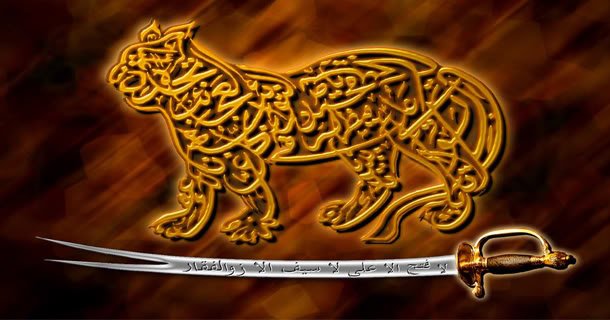


Section 5 The Oath of Allah confirming the position of Prophet Muhammad
In the chapter “Mid-Morning” Allah says, “By the mid-morning, and by the night when it covers, your Lord has not forsaken you (Prophet Muhammad), nor does He hate you. The Last shall be better for you than the First. Your Lord will give you, and you will be satisfied. Did He not find you an orphan and give you shelter? Did He not find you a wanderer so He guided you? Did He not find you poor and suffice you? Do not oppress the orphan, nor drive away the one who asks. But tell of the favors of your Lord!” Chapter 93.
The third verse addressed the rumors circulated by the unbelievers that Allah had forsaken His Prophet, praise and peace be upon him, on account of a period in time when no verses or chapters of the Koran had been sent down to him. This chapter proved that Allah had never forsaken him. The insight of this

is that Revelations are of three types, one is the Holy Koran, another Divine Quotations and the other Prophetic quotations. The Prophet, praise and peace be upon him, said that he was given the Koran and twice of its likeness in size. The difference between the category of Koran Revelation and other categories is that there is a built in challenge that no one can compose anything like it, whereas the other categories have prophetic styles which are the most elite among the Arabs. The unbelievers were unaware of these fine details and were forever seeking ways in which they might discredit the Prophet, praise and peace be upon him, and seized upon the opportunity and consequently concocted rumors, not knowing that the Prophet, praise and peace be upon him, was continuously in the assembly of angels and receiving light and wisdom and the other categories of Revelation.
After having addressed the complaint of the unbelievers, it further demonstrates the certain assurance of the honor in which Allah holds His beloved Prophet, praise and peace be upon him, together with His praising and the care He has for him which is made evident in six different ways.
First of all, the opening verses of this chapter “By the mid-morning, and by the night when it covers,” is amongst one of the highest forms of esteem Allah has for His Prophet, praise and peace be upon him.
Secondly, Allah clarifies his situation, and favors saying, “your Lord has not forsaken you (Prophet Muhammad), nor does He hate you.’ “In other words, Allah has not abandoned him, and He makes it very clear that He does not hate him. It has also been said, that Allah did not neglect him after choosing him, neither did He despise him.
Thirdly, note the words, “The last shall be better for you than the first” Isaac’s son explained the meaning of this verse to be that when he returned to Allah his honor is even greater than the honor given to him in this world. Sahl At- Tustori said that it refers to the intercession granted to the Prophet, praise and peace be upon him, and the praiseworthy station Allah has reserved especially for him, which is greater than he was given in this life.
Fourthly, from the verse “your Lord will give you, and you will be satisfied” we learn not only of his honor in this world and in the Hereafter but the happiness and blessings in both. Isaac’s son explained that Allah will satisfy him by sending relief in this world and also reward him in the Everlasting life where he will be given the Pool of Kawthar, the grand right of intercession and the praised status. Referring to this verse, a member of the Prophet’s family said, “The Koran contains no other verse that has more hope than this one and we know that the Messenger of Allah, praise and peace be upon him, will not be satisfied if any of his nation enters the Fire.”
Fifthly, in the verses “Did He not find you an orphan and give you shelter? Did He not find you a wanderer so He guided you? Did He not find you poor and suffice you?” our attention is drawn to the blessings bestowed upon him by Allah together with His favors, which include, the guidance of people through him or his guidance. He had no property, yet Allah enriched him, or, it has been said, that it refers to the contentment and wealth He placed in his heart. He was an orphan but his uncle took care of him and it was with him that he found shelter. It has also been explained as meaning that he found shelter with Allah and that the meaning of “orphan” is that there was no other like him and Allah sheltered him. As for the verses “Did He not find you a wanderer so He guided you? Did He not find you poor and suffice you? Do not oppress the orphan,” Allah reminds His Prophet, praise and peace be upon him, of these blessings and that even before Allah called him to the Prophethood, He never neglected him either when he was a young orphan or when he was poor. Rather, He called him to the Prophethood and had neither abandoned him nor hated him. How could He do so after He had chosen him!
Sixthly, in this verse Allah tells Prophet Muhammad, praise and peace be upon him “But tell of the favors of your Lord!” to announce the blessings given to him by Allah and to be thankful for the honor He bestowed upon him. This verse is also applicable to his nation that they tell of the favors of Allah in sending Prophet Muhammad, praise and peace be upon him, to them and making them witnesses over other nations.
The first eighteen verses of chapter 53, “The Star” are yet another example and reads, “By the star when it plunges, your companion is neither astray, neither errs, nor does he speak out of desire. Indeed it is not except a Revelation which is revealed taught by One who is Stern in power. Of might, he stood firm while he was in the highest horizon; then he drew near, and became close, he was but two bows’ length or even nearer, so (Allah) revealed to His worshiper that which he revealed (to Prophet Muhammad). His heart did not lie of what he saw. What, will you dispute with him about what he sees! Indeed, he saw him in another descent at the Lote Tree of the Ending close to the Garden of Refuge. When there comes to the Lote Tree that which comes his eyes did not swerve, nor did they stray for indeed he saw one of the greatest signs of his Lord.” 53:1- 18.
There is a difference of scholarly opinion concerning the word “star”, some say it means exactly that whereas others say its meaning is the Koran. Jafar, Muhammad’s son said it refers to the heart of Prophet Muhammad, praise and peace be upon him. Similar meanings have been expressed in respect of the verses in “The Nightly Comer” where Allah swears, “By the sky, and the nightly comer! What could let you know what the nightly comer is! (It is) the piercing star.” 86:1-3 and that the “star” refers to Prophet Muhammad, praise and peace be upon him.
The excellence and honor in which Allah holds His Prophet, praise and peace be upon him, abounds in the chapter “The Star”. It is clear that Allah established on oath His guidance of the Prophet, his truthfulness in the recitation of the Koran, which was sent down with the Archangel Gabriel, who is strong and powerful, to him directly from Allah, and that the Prophet, praise and peace be upon him, is rendered free from all self-desire. Then again in the chapter “The Nightly Comer” Allah reiterates his excellence and tells of his reaching the Lote tree near the Garden of Refuge, and the certainty of his unswerving sight upon seeing one of the greatest signs of His Lord. Allah also tells us of this great event in the opening verses of the chapter “The Night Journey.”
Allah revealed to the Prophet, praise and peace be upon him, His Mighty Unseen Kingdom where he saw the wonders of the angelic realm that can neither be expressed in words nor yet possible for human intellect to endure hearing, not even in its minutest atom. In the verse “so (Allah) revealed to His worshiper that which He revealed” there is in the opinion of scholars, a subtle indication to the high estimation Allah has for His Prophet, praise and peace be upon him, as it is a most eloquent form of expression.
Allah says, “he saw one of the greatest signs of his Lord.” 53:18. Our limited understanding is unable to grasp the details of what was actually revealed and ultimately becomes lost in any attempt to define what was the great sign.
In these verses Allah mentions Prophet Muhammad’s absolute state of purity and the protection he received during this miraculous journey. In reference to his heart, Allah says “His heart did not lie of what he saw”, of his tongue He says, “nor does he speak out of desire”, of his eye He says, “his eyes did not swerve, nor did they stray.”
Allah says, “Rather, I swear by the returning, orbiting, disappearing; by the night when it approaches and the morning when it extends, it is indeed the word of an Honorable Messenger, of power, given a rank by the Owner of the Throne obeyed, honest. Your Companion is not mad, in truth he saw him on the clear horizon, he is not grudging of the Unseen. Nor is this the word of a stoned satan.” 81:15-25.
Scholars explained the meaning of these verses saying, “Allah swears that this is the word of an Honorable Messenger who has an honorable rank with Him, having the power to communicate the Revelation, and that his position is both secure and firm with his Lord. He is obeyed in the heavens and trusted to deliver the Revelation.”
The consensus of scholars is that the preceding verses refer to Prophet Muhammad, praise and peace be upon him. Jesus Ar-Rumani’s son holds the opinion that the ‘Honorable Messenger’ refers to Prophet Muhammad, praise
and peace be upon him, and consequently all the qualities belong to him. Whereas other scholars hold the opinion that rather than it being in reference to Prophet Muhammad, praise and peace be upon him, it is in reference to the Archangel Gabriel therefore the qualities are his. They also say that the verse “in truth he saw him” the ‘him’ refers to Gabriel. It has also been said that “not grudging” means that when the Prophet, praise and peace be upon him, supplicates to Allah he is neither grudging nor doubts the Unseen. It has also been explained that it refers to his mentioning the wisdom and knowledge of Allah.
Another great oath is found in the chapter “The Pen” in which Allah starts with the mystical letter “Noon”. “Noon. By the Pen and that (the angels) write, you are not, because of the favor of your Lord, mad. Indeed, there is an unfailing wage for you. Surely, you (Prophet Muhammad) are of a great morality.” 68:1- 4. The unbelievers held the Prophet, praise and peace be upon him, in distain. They rejected him and attributed many falsehoods to him. In these verses Allah swears a great oath that His chosen Prophet, praise and peace be upon him, he is free from all their assertions making his heart joyous and increases his hope when Allah gently comforts him saying “you are not, because of the favor of your Lord, mad.” This verse is one of very great respect and also displays the highest level of conversational manners.
Allah informs His Prophet, praise and peace be upon him, “Indeed, there is an unfailing wage for you.” The meaning of this has been explained that Allah has in store for him everlasting blessings, a wage that will never fail, a wage that although uncountable will not be a cause for indebtedness. This is followed by the great attestation of Allah that garlands his praiseworthy qualities, “Surely, you are of a great morality.” Apart from the verse meaning exactly that, the verse has also been explained as referring to the Holy Koran, whereas others say it is Islam. It has also been said that it means the Prophet, praise and peace be upon him, was without any desire other than Allah.
Al-Wasiti explained that the Prophet, praise and peace be upon him, was praised for his absolute acceptance of the multiple blessings given to him by Allah, and that He preferred him by adorning him with this mighty characteristic.
Judge Eyad supplicates saying “Exaltations be to the Subtle, the Generous, the All Praised who eased for us the doing of good things and guided people to do them. He praises whosever does good and rewards them for its doing. Exaltations be to Him! His blessings are abundant, and His favors are vast!”
The chapter continues to console the Prophet, praise and peace be upon, for the detrimental things said against him, saying “You shall see and they will see which of you is the demented. Indeed, your Lord knows very well those who strayed from His Path, and those who are guided.” 68:5-7.
Having praised Prophet Muhammad, praise and peace be upon him, Allah exposes his enemies by revealing the crudeness of their character and wickedness by mentioning their foul qualities. Allah says, “Therefore, do not obey those who belie, they wish you would compromise, then, they would compromise. And do not obey every mean swearer, the backbiter who goes about slandering, those who hinder good, the guilty aggressor, the crude of low character because he has wealth and sons. When Our verses are recited to him, he says, ‘They are but fairy-tales of the ancients.” 68:8-15.
In the verse that follows their impending punishment together with their ruin is made very clear. Allah says, “We shall mark them on the nose!” 68:16. These words of Allah are far more effective than anything the Prophet, praise and peace be upon him, might say, and the confounding of his enemies is also more effective than anything he might do.






 Aal-e-Qutub Aal-e-Syed Abdullah Shah Ghazi