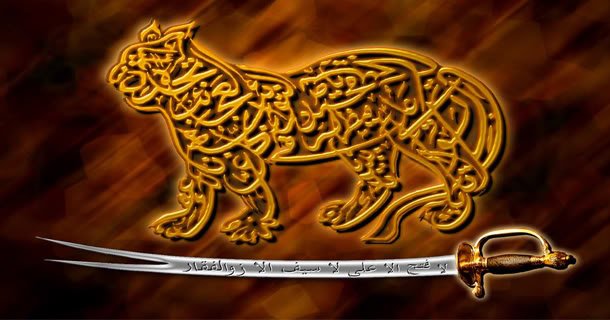
Maah e Muharram me khushiyaa.n kyun nahi manani chahiye…

BISMILLAH HIR RAHMANIR RAHEEM

QULLA AS’ALOKUM ALAIHE AJRAN ILLAL MAWADDATA FIL QURBA

Surah Shura 23

Tarjuma:
(Aye MAHBOOB) Aap farma di jiye ke main tum se koi ajr (yaani badla kaar e risalat ka) nahi chahta siwaye meri Qarabat ki mawaddat o muhabbat

Imam e Ahlesunnat mufassir e azam Hazrat Imam Fakhruddin Raazi ne Tafseer e Kabeer me farmaya hai ke ye ayat mubarka PANJATAN PAK aur AHLE BAYT ALAIHIMUS SALAM ki shan me nazil hui hai, isi tarha jamhoor e mufassireen ka qaul bhi yahi qaul hai.

Is Ayat e Kareema, jise ayat e mawaddat bhi kehte hain, par ham gaur karein to ALLAH ye farma raha hai ke jo kuch RASOOL e PAK SALLALLAHO ALAIHE WA ALEHI WASALLAM ne kaar e risalat anjaam diya hai yaani namaaz sikhai, roza sikhaya, zakaat ke ehkaam samjhaye, tableeg o isha’at e deen ki aur jahalat ke andhere se nikal kar ilm ke noor se munawwar kiya, al garz ISLAM ke ehkamaat ki mukammal taleem de kar ham sab ko insaan e kamil aur namuna e amal banaya. Us dauraan jo kuch musibatein RASOOL ALLAH SALLALLAHO ALAIHE WA ALEHI WASALLAM ne bardaasht ki aur jin-jin pareshaaniyon se guzare maslan faqe kiye, logo ki dush-naamiyo par tahammul kiya, logo ne patthar maare phir bhi sabr kiya.

Mash’hoor Hadees Pak me hai ke RASOOLALLAH SALLALLAHO ALAIHE WA ALEHI WASALLAM ne irshad farmaya ke jitni musibat raah e KHUDA me mujh par aayi hai utni kisi pe nahi aayi. Maslan kisi nabi ki AHLE BAYT zibah nahi kiya gaya, qaidi nahi banaya gaya aur na hi kisi NABI ki betiyo.n ko bazaar me be-parda phiraya gaya, aur is tarah ki kayi musibat se do-chaar huwe. Phir bhi har haal me Tableeg e Islam farmate rahe aur ehkaam e KHUDA ko ashaab tak unke waseele se ham tak pahunchaya.

ALLAH isi taraf ishara karte huwe mazkoora Ayat me farma raha hai ke in tamaam qurbaniyo ke badle me kuch nahi chahiye bas ye ke RASOOLALLAH SALLALLAHO ALAIHE WA ALEHI WASALLAM ke AHLE BAYT se muhabbat karna aur mawaddat rakhna.
To pata ye chala ki Ajr e RISALAT RASOOLALLAH SALLALLAHO ALAIHE WA ALEHI WASALLAM ki AHLE BAYT ALAIHIMUS SALAM se be inteha aur shadeed muhabbat karne ka naam hai.

Ab ek sawaal uth’ta hai ki Mawaddat kya hai?
Muhabbat ki inteha ke baad jis kaifiyat wa ehsaas o jazbaat ki ibteda hoti hai use mawaddat kehte hain. Muhabbat kehte hain us ehsaas ko jiske sabab kisi dusre shakhs ko itna pasand kare ke khud apni zaat par usko bartari dene lage aur us ke hukm ko baja laaye. Jab ke Mawaddat isse ek darja aage ki chiz hai ke jab insaan kisi se inti muhabbat karne lage ke uske liye apna sab kuch lutane par amadah ho jaaye aur uske liye apni jaan dene se bhi gurez na kare.

ALLAH TA’AALA momineen ko AHLE BAYT se is tarha ki muhabbat karne ka hukm de raha hai aur is ayat me diye gaye hukm ki buniyaad par aap aur ham aksar kaha karte hain RASOOLLALLAH SALLALLAHO ALAIHE WA ALEHI WASALLAM aur unke AHLE BAYT ke liye apni jaan tak luta denge.

Apni AHLE BAYT se muhabbat ka hukm RASOOLALLAH SALLALLAHO ALAIHE WA ALEHI WASALLAM ne bohat se muqamaat par diye hain. Abhi ye mauqa nahi hai ke un tamaam riwayaat ka zikr karu.n albatta ishara kiye deta hoon ke muta’ala ka shok rakhne wale Hadees e Saqlain, Hadees e Kisa, Hadees e Noor jaisi riwayatein padh sakte hain. Bas barkat ki niyat se us Hadees ko mafhooman darj kar hoon jisko Al Sawaiq ul Muharriqa me Imam ibne Hajar Makki Al Shafe’i Al Qadri ne naql kiya hai ke RASOOLALLAH SALLALLAHO ALAIHE WA ALEHI WASALLAM ne irshad farmaya ke koi shakhs musalmaan nahi ho sakta jab tak Mujhe se muhabbat na kare aur koi shakhs Mujhse muhabbat nahi kar sakta jab tak ke meri AHLE BAYT ko apni AHLE BAYT par bartari na de de.

Bas Muhabbat wa Mawaddat e RASOOLALLAH aur AHLE BAYT ALAIHIMUS SALAM ka yahi taqaza hai ke jin tareekho.n me unpar koi khushi ka muamla pesh aaya ho to unki khushi me sharik ho kar khushiyaan manaye aur apne imaan ka saboot pesh karein. Maslan RASOOLALLAH SALLALLAHO ALAIHE WA ALEHI WASALLAM ki wiladat ka mauqa ho ya HAZRAT ALI ya HAZRAT SYEDA FATIMA ya IMAM HASAN ya IMAM HUSAIN ya jumla AHLE BAYT me se kisi ki wiladat ya shaadmani ki tareekh aaye to us din momin ko chahiye ke khushi manaye.

To bas isi tarha AHLE BAYT ALAIHIMUS SALAM se muhabbat wa mawaddat ka taqaaza ye hai ke agar inhi AHLE BAYT ALAIHIMUS SALAM me se kisi ki wisaal ya shahadat ka mauqa ho to gham ka izhar kare khaas taur par Syed ush Shohada HAZRAT IMAAM HUSAIN ALAIHIS SALAM ne jis tarha se Islam ko bachane ke liye yaani kalma, roza, namaz garz ki jumla ehkaam e ILAHI aur insaani qadro.n(values) ko bachane ke liye jis tarha se maidaan e karbala me qurbaani pesh ki hai uski nazeer milna mushkil hai.

Aaj imaan ke saaye me saans lene wale har musalmaan kalme go par HAZRAT IMAAM HUSAIN ALAIHIS SALAM ka ehsaan hai aur is ehsaan ka badla koi shakhs jitna bhi chahe chuka nahi sakta aaj agar koi shakhs namaaz ada karta hai aur ehkaam e ilahi baja lata hai to us par HAZRAT IMAAM HUSAIN ALAIHIS SALAM aur digar Shohda e Karbala ka ehsaan e azeem hai.

Is baat ko ek shayar ne ba khubi kaha hai:

Namaziyo par hai farz ye khuda ki qasam
Bicha ke musalla kahe HUSAIN zindabaad!

To hukm e ILAHI ke tahet isi muhabbat ka ye taqaaza hai ke ham maah e muharram me Gham e IMAAM HUSAIN ALAIHIS SALAM ka lihaaz karte hue apni khushiyo par inke gham ko tarjeeh dete hain aur isi wajeh se kisi khushi ki mehfil wa taqreeb se door rehte hain. Ye to common sense ki baat hai ki jab insaan kisi se muhabbat karta hai aur us par koi gham ya dardnaak haadsa pesh aa jaaye to woh is gham ko apna gham bana leta hai. Isliye maah e muharram me RASOOLALLAH SALLALLAHO ALAIHE WA ALEHI WASALLAM aur unki AHLE BAYT ALAIHIMUS SALAM ki Arwaah e Pak beshak ghamgeen hoti hai. Lihaza momin hone ka taqaaza ye hai ke RASOOLALLAH SALLALLAHO ALAIHE WA ALEHI WASALLAM aur Unki AHLE BAYT ALAIHIMUS SALAM ko pursa wa taziyat pesh karein aur dil se ye kahein ki YA RASOOLALLAH SALLALLAHO ALAIHE WA ALEHI WASALLAM ham aapke gham me sharik hain.

Saheeh muslim me jo Hadees e Saqlain hai yaani Quran aur AHLE BAYT wali uska aakhiri jumla ye hai ki RASOOLALLAH SALLALLAHO ALAIHE WA ALEHI WASALLAM ne irshad farmaaya ki m1ain tumhe darata hoon ALLAH se apni AHLE BAYT ke maamle me aur ye jumla HUZOOR PAK SALLALLAHO ALAIHE WA ALEHI WASALLAM ne teen (3) baar irshaad farmaya.

Kya ham HUZOOR PAK SALLALLAHO ALAIHE WA ALEHI WASALLAM aur AHLE BAYT ALAIHIMUS SALAM ke gham ki wajah se apni khushiyo ko mauqoof wa multvi (postpone) nahi kar sakta? Naye saal ki Mubarak baad dene baaz nahi aa sakte? Kya ye bid!’at nahi hai? Jab ke yahi muhabbat ka taqaaza hai aur Quran Kareem ki zikr karda aayat se sabit bhi ho chuka hai.

Mera ye sawal apne momin bhaiyon aur behno se hai ke roz e qayamat agar HUZOOR PAK SALLALLAHO ALAIHE WA ALEHI WASALLAM aap se sawaal kare lenge ke tum hamare gham me sharik kyun nahi ho sake to aap kya jawaab denge? Agar RASOOLALLAH SALLALLAHO ALAIHE WA ALEHI WASALLAM ne ye puch liya ke milaad ki khushi me jalsa to khoob karte the, kya Mere Nawaase ke gham me bhi sharik hue? To iska kya jawab ban payega? Agar RASOOL ALLAH SALLALLAHO ALAIHE WA ALEHI WASALLAM ne ye sawal kar liya ke duniya me tumne hamare gham ki tarikho me khushiyo ki mehfil sajaayi aur naye saal ki mubarak baad di, tafreeh wagaira ka ehtamaam kiya, kya tujhe hamara gham yaad na raha to kya jawaab banega?
Momineen zara hosh me aayein aur thande dimagh se sochein……

Ye baat to hadees se sabit hai ke RASOOLALLAH SALLALLAHO ALAIHE WA ALEHI WASALLAM ummat se apni AHLE BAYT ALAIHIMUS SALAM ke baare sawaal zaroor karenge. Kyunki chand riwayato me ye alfaaz aaye hain ke main dekhunga ki tum meri AHLE BAYT ALAIHIMUS SALAM ke saath kya sulook karte ho. Is riwayat me jo lafz hai dekhunga is se yahi matlab nikalta hai ke RASOOLALLAH SALLALLAHO ALAIHE WA ALEHI WASALLAM sawaal karenge ab jis kisi ke paas himmat ho jawab dene ki to woh phir jo chahe kare.

Karbala me isi ayat mawaddat par amal karte hue SYEDA ZAINAB ne apne bachcho ko aur dostaan e ha4zrat IMAAM HUSAIN ALAIHIS SALAM ne unke gham sharik hone aur unki madad karne ke liye unke upar aayi musibat se ladte huwe apni jaano ki qurbani ka nazrana diya aur mawaddat ka haq ada kiya.
Imaan ka taqaaza yahi hai ke duniya me apna sab kuch IMAAM HUSSAIN ALAIHIS SALAM ke gham me luta dein aur unke gham me sharik ho kar upar pesh ki gayi Ayat Qur’ani ke hukm pe amal karte hue imaan ka saboot deñ aur ajr e risalat ada kare. ALLAH mujhe aur doosro ko iski taufeeq ata kare.

Note: Lafz Ahle Bayt ka matlab ghar wale hota hai lekin jab is lafz ko HUZOOR PUR NOOR HAZRAT MUHAMMAD SALLALLAHO ALAIHE WA ALEHI WASALLAM ki taraf nisbat di jaati hai to isse muraad khaas taur par HAZRAT ALI HAZRAT, SYEDA FATMA ZAHRA, HAZRAT IMAAM HASAN, HAZRAT IMAAM HUSAIN aur unki Aulaad e Pak jo AHLE BAYT ALAIHIMUS SALAM me IMAAM GUZRE hain.

WasSalamo Alaikum
talib e Shifa’at e IMAAM HUSAIN
Syed Faizan Warsi
Khanqah Warsiya Zaidiya Alviya

Ali AlahisSalam THE MIRACLE OF Nabi Pakﷺ part 14

img_20210804_1113287837408404759551993.jpgTHE BATTLE OF KHANDAQ
The externed Jews of Madina and its outskirts had now openly joined hands with Abu Sufian to attack
the Muslims again. While fleeing from Ohad, Abu Sufian had vowed to come back to take revenge.
Prominent leaders of Bani Nazeer like Hai Bin Akhtab, Salam Bin Mushkam and Kinana Bin Alhaqiq
came to Mecca, and met Abu Sufian who was already preparing for another war. With the help of Bani
Guffan, Bani Asad and other mighty clans from the neighbouring areas, they raised an army of four
thousand soldiers. The flag was decorated at Darun Nadva and given to Asma son of Talha Bin Talha.
The general command was with Abu Sufian. As the army was marching towards Madina other tribes too
joined them making an unformidable force of ten thousand soldiers. Four men of Bani Khaza-a
immediately rushed to Madina and informed the Prophet (S.A.W) about the coming attack. The Prophet
(S.A.W) could collect only three thousand people in this short-period and came out of the city to face
them. He pitched his tents at the foot of Mount Sara. The women and children were put in safer places
inside the city.
When the Muslims in the battlefield learned that Abu Sufian is coming with a force of ten thousand
soldiers they became panicky and wanted to leave the battlefield. Many of them wanted to go home to
protect their wives and children knowing fully well that they are not in danger. The Prophet (S.A.W)
unmoved by these desertions ordered his men to dig trenches, and himself led the digging, and within
seven days completed the entire task. The army of Abu Sufian on seeing the trenches were shocked.
Because the idea of digging trenches was unheard of in Arabia. Unable to attack the Muslims, he
ordered to lay a siege and wait.
The Muslims who were over tired with digging of trenches in extremely cold weather and cold wind
blowing and without proper food, shelter and sleep had to stand in the open to face the showers of
arrows from the enemies. Then the fear of attack at any moment by ten thousand well-equipped and
much superior soldiers loomed large on their heads. A whole month passed in this atmosphere making
the Muslims more demoralized. On that they got the news from Madina that Bani Quraiza (a Jewish
tribe) with whom the Muslims had a peace pact had joined the forces of Abu Sufian. This endangered
the lives of the families of the Muslims, who were left behind with no male to look after them.
The Prophet (S.A.W) in the mid of the night came to his people and asked as to who can go to the
enemies and bring some news of their movements. But none came forward. The Prophet (S.A.W) then
asked Abu Bakr directly to get some news of the enemies, but Abu Bakr excusing himself refused. The
Prophet (S.A.W) then asked Umar to do the needful but he too refused. The Prophet (S.A.W) then asked
Hozaifah who immediately went. [Tafseer Durrul Mansur Vol 5 page 185]. Suddenly Amr Ibne Abdawood
along with Akrama son of Abu Jahal, Abdulla Ibne Abu Mogheera, Zarrar Ibne Khattab, Nofil Ibne
Abdulla with two others crossed the trenches and stood before the Muslims challenging them.
Amr Ibne Abdawood was so famous for his bravery, valour and courage that his strength was
compared to the strength of one thousand people. The terror of his personality had so frightened some
of the Muslims that according to Quran, “Their hearts were petrified and were beating so violently that
they were thinking of running away.” They were so shocked and stunned by his presence that they
became motionless as if birds were sitting on their heads. From the entire Muslim army Ali (A.S.) was
the only person to accept their challenge. But the Prophet (S.A.W) did not allow Ali (A.S.) to have a bout
with Amr and ordered him to go back to his position, reminding Ali (A.S.) that he was Amr Ibne
Abdawood. Amr again repeated his challenge and again it was only Ali (A.S.) to answer his challenge.
The Prophet (S.A.W) again ordered Ali (A.S.) back to his position. When Amr challenged the Muslims
for the third time and again no Muslim went forward to accept the challenge, Ali (A.S.) came out from
his position to face him. The Prophet (S.A.W) again reminded Ali (A.S.) that he is Amr Ibne Abdawood.
Ali (A.S.) in reply said, “Yes I know he is Amr Ibne Abdawood.” The Prophet (S.A.W) then granting
permission to fight Amr tied a turban on Ali (A.S.)’s head (Ali (A.S.) generally went to fight bareheaded)
and gave the famous sword Zulfiqar. As Ali (A.S.) proceeded towards Amr the Prophet (S.A.W) raised
his hands and prayed, “O Allah you took away Obaida Bin Harris from me on the day of Badr, Hamza on
file:///D|/books/Ali/chap18.htm (1 of 3) [8/8/2000 4:14:36 AM]
alimir
the day of Ohad, and now it is Ali (A.S.), my brother and my uncle’s son who is left with me. Protect him
O Lord as I have given him under your protection. O Allah don’t leave me alone as You are The Best
Protector.” Then pointing his finger towards Ali (A.S.) he said, “Here goes the embodiment of faith to
face the infidel.” Some of the Muslims were so sure of Ali (A.S.)’s death that they came down some
distance near Ali (A.S.) to have a last view. Ali (A.S.) walked upto Amr and stood in front of him.
Amr : Who are you?
Ali (A.S.) : I am Ali.
Amr : Who’s son?
Ali (A.S.) : Grandson of Abde Munaf, son of Abu Talib.
Amr : Nephew, you better go back and send some of your uncles who are stronger than you. I
don’t want to shed your blood as your father was my friend.
Ali (A.S.) : But By Allah I will not be sorry to shed your blood. Therefore I request you to embrace
Islam.
Amr : This is not possible.
Ali (A.S.) : Then go away from here.
Amr : I will not be able to bear the taunts of the ladies of Quraish.
Ali (A.S.) : Then fight with me.
Amr laughed and said, “I never expected anyone under the sky who would challenge me.”
Then getting down from his horse, as Ali (A.S.) was on foot, he cut the legs of his horse in anger and
attacked Ali (A.S.) with a quick blow of his sword. Ali (A.S.) took the blow on his shield, but it was so
severe that he got a cut on his forehead. Then Ali (A.S.)’s attack was so instant and so quick that his
sword cut Amr’s shoulders and went right down. Amr fell dead and Ali (A.S.) cried Allah-o-Akbar (God
is Greatest). Then severing his head Ali (A.S.) brought it before the Prophet (S.A.W) and laid it on his
feet. The Prophet (S.A.W) received Ali (A.S.) with joy and said, “Ali (A.S.)’s one stroke at Khandaq is
superior to the devotional prayers of both the worlds.”
Abu Bakr and Umar were so happy to see Amr killed that both of them rushed to receive Ali (A.S.) and
kissed his forehead. Ali (A.S.) then returned to finish the remaining members of Amr’s gang, but by
then they had fled and were crossing the trenches. Ali (A.S.) caught them and finished them.
Shah Abdul Haq Muhaddis Dehlavi writing on the fight of Ali (A.S.) at Khandaq has quoted a tradition of
the Prophet (S.A.W), “Ali (A.S.)’s fight at Khandaq is equal to the sacrifices my entire nation will do till
the Day of Judgement.”
The death of Amr shocked the enemies and shattered their hopes of wiping out the Muslims. They were
now a miserable lot not knowing what to do. Then suddenly the weather changed and a fierce cold wind
started blowing from the sea. For three days and nights nobody could hold their shelters nor light a
fire. Abu Sufian was so disgusted with the whole atmosphere that he raised the siege and went away.
Seeing the Quraish retreating the members of Bani Guftan too went away. When Amr’s sister came to
the battlefield to see her brother’s corpse she was surprised to see that Ali (A.S.) had not removed a
single thing from Amr’s body (it was a custom among Arabs to take away all the belongings of the
deceased including the clothes) praising Ali (A.S.) she said, “Whoever has killed my brother belongs to
a noble family.” Then she composed a verse in praise of Ali (A.S.) which says, “If anyone other than Ali
had killed my brother I would have wept my whole life over the infamy. But now I will not cry.”
In all the three wars of Badr, Ohad and Khandaq, Ali (A.S.) alone had killed seventy persons, all of
file:///D|/books/Ali/chap18.htm (2 of 3) [8/8/2000 4:14:36 AM]
alimir
whom were either the heads of some clan or a famous warrior of Arabia.
After returning from the battlefield the Prophet (S.A.W) sent some three thousand men under the
command of Ali (A.S.) to punish the tribe of Bani Quraiza who had broken the pledge with the Muslims
and had supported Abu Sufian, just when the Muslims were besieged by him. Ali (A.S.) went straight to
their fort and fixed his flag on their gate. An observer from their fort who recognized Ali (A.S.) cried,
“The killer of Amr Ibne Abdawood has come”, another voice answered, “He has not killed Amr but
broken our backs” and some were cursing the Prophet (S.A.W). Ali (A.S.) in answer to their curses and
cries said, “By Allah either will I conquer your fort or die and meet my uncle Hamza.” The Jews then
came out of the fort to fight with Ali (A.S.) and his men. Ali (A.S.) fought and killed all their leaders. The
Prophet (S.A.W) ordered to kill Hai Ibne Akhtab also who had instigated the Jews not to leave Madina.
When Ali (A.S.) went near Hai he said, “I am happy to be killed by a noble man like you.” Ali (A.S.)
replied,”Yes only noble people kill bad men and bad men harass noble people.”
The fate of the Jewish tribes of Bani Nazeer and Bani Quraiza had dampened the hopes of the Jewish
tribes of Khaiber who were nursing the idea of regaining the hold of Madina. Finding themselves unable
to achieve this goal they instigated Bani Saad to Fadak near Khaiber to challenge the Muslims. The
Prophet (S.A.W) on getting the news sent Ali (A.S.) with a hundred people to probe the situation. Ali
(A.S.) travelled only during the night and hiding himself during the day reached a homage a place
between Fadak and Khaiber. There he met an emissary of Bani Saad who was going to deliver some
message to the Jews of Khaiber. On questioning, he confessed that he was going to inform them that
two hundred men were ready with their arms to attack the Muslims. Ali (A.S.) immediately rushed to
finish those people but they had received the news of Ali (A.S.)’s coming and had fled, leaving behind
fifty camels and two thousand goats. Ali (A.S.) brought them and presented them to the Prophet
(S.A.W).

SATAN AND SEEKING REFUGE

In the Quran, we are told that Satan (Iblis) is the enemy of mankind.
Muslims should seek refuge (euzu) in God in order to be protected
from the evil of Satan. The relationship between these two words is
crystal clear for the people who know the Quran. These two words are
used in equal numbers, i.e., 11 times each. Examples are given below:
50- …they fell prostrate, except Satan. He was one of the
jinns and rebelled against His Lord’s command…
18-The Cave, 50
1- Say “I seek refuge in the Lord of the people.”
114-People, 1

Chapter 55 on the seeing of Sayyidina Rasulullah Sallallahu ‘Alayhi Wasallam in a dream

img-20210611-wa00077913086747172418493.jpg

What are the facts of a dream? Is it something real or is it just some type of thoughts? There are lengthy deliberations to this, which are not relevant here. The unaani hakims claim that whatever type of mixture is overwhelmed in the nature of a person, one has thoughts according to it. For example, if one has a balghami (phlegm) nature, then one will see water and things related to it, like the sea, oceans, swimming in the water etc. Those whose nature is overwhelmed with safraa (yellow bile), they see in their dreams fire and its related subjects, or they see themselves flying in the sky. There is the same manner, in the case of people with different blood groups and saudaa (black bile). According to the philosophers the things that take place in the world, an image of it is engraved in the outer world, therefore if one of these appear before the nafs (soul), an image of it appears in a dream. Besides these there are many other theories too. According to the Ahlus-Sunnah these are imaginations. Allah Ta’aala creates them in the mind of man, which are conveyed at times through an angel and at times through the devil. The ‘ulama have written that dreams are of three types. The first, which is conveyed through an angel who is specially appointed for this. This is a fact. The second is a devilish influence and effect, in which the shaytaan shows a few examples and pictures. The third is the nafsaani (psychic) fears of a person. Whatever one thinks of while awake, the same is portrayed in dreams. The saying of Sayyidina Rasulullah Sallallahu ‘Alayhi Wasallam also supports this. A saying of Sayyidina Rasulullah Sallallahu’Alayhi Wasallam is mentioned by Abu Daawud, that dreams are of three types: (a.) A pious and mubaarak dream, this is a glad tiding from Allah. (b.) A frightening dream, which results from the frightening of the shaytaan. (c.) A dream that results from one’s thoughts and doubts. The ‘ulama of interpretation on dreams have stated that the angel that is appointed to convey dreams is known as Siddiqun, who explains to the people through examples in their dreams. This is regarding general dreams. If one sees Sayyidina Rasulullah Sallallahu ‘Alayhi Wasallam in one’s dream, this portrayal of Sayyidina Rasulullah Sallallahu ‘Alayhi Wasallam is free front the effects of the shaytaan. Sayyidina Rasulullah Sallallahu ‘Alayhi Wasallam has himself mentioned this in many ahaadith, which shall be mentioned later. Sayyidina Rasulullah Sallallahu ‘Alayhi Wasallam has said: ‘The ones who have seen me in their dreams, have really seen me, because the shaytaan does not have the power to appear in my form’. If one sees Sayyidina Rasulullah Sallallahu ‘Alayhi Wasallam in a dream, but sees features contrary to those mentioned at the beginning of this book or against the dignity of Sayyidina Rasulullah Sallallahu ‘Alayhi Wasallam, or one sees in a dream that Sayyidina Rasulullah Sallallahu ‘Alayhi Wasallam is ill or sad etc. or that Sayyidina Rasulullah Sallallahu ‘Alayhi Wasallam is instructing one to do something which is against the shari’ah, or which does not befit the dignity of Sayyidina Rasulullah Sallallahu ‘Alayhi Wasallam, this will be due to the shortsightedness, weakness and mistake of the one who sees the dream. The commentators and mashaa-ikh compare this with a mirror that if a thing is seen in a red mirror, the thing seen will also look red; in a green mirror things will look green etc. In different types of mirrors things look different. Hence, if one sees Sayyidina Rasulullah Sallallahu ‘Alayhi Wasallam in a dream, one has really seen him, but the features and descriptions seen are according to the thinking and understanding of a person. The way a person looks at things, in the same manner that person shall see Sayyidina Rasulullah Sallallahu ‘Alayhi Wasallam in a dream. For example, the sufis have written that if a person sees Sayyidina Rasulullah Sallallahu ‘Alayhi Wasallam instructing in a dream that one should strive to gain material possessions, then in this case the darkness in which a person is engrossed, is reflected in this dream, that one is unintentionally indulging in an undesirable act. The author has mentioned seven ahaadith in this chapter.

(389) Hadith Number 1.
‘Abdullah bin Mas’ud Radiyallahu ‘Anhu reports that Rasulullah Sallallahu ‘Alayhi Wasallam said: “The one that has seen me in one’s dream, has really seen me, as the shaytaan cannot impersonate me”.
back

(390) Hadith Number 2.
Abu Hurayrah Radiyallahu ‘Anhu reports that Rasulullah Sallallahu ‘Alayhi Wasallam said: “The one who sees me in one’s dream, has actually seen me, because the shaytaan cannot imitate my person”.

Commentary
The manner in which Allah Ta’aala has protected Sayyidina Rasulullah Sallallahu ‘Alayhi Wasallam from the shaytaan during his life time, in the same manner, after his death the shaytaan has not been.given the power to impersonate Sayyidina Rasulullah Sallallahu ‘Alayhi Wasallam. This is a decided fact. Now the question may arise that is the original form of Sayyidina Rasulullah Sallallahu ‘Alayhi Wasallam seen?, that is, does the one who sees him obtain such strength that one will see him in his actual form, or does one see only his image. For example, if a person is sitting a little away from a mirror, another person who is also at a distance can see the image of the person in the mirror, but due to some obstruction cannot see the actual person. The sufis opine that Sayyidina Rasulullah Sallallahu ‘Alayhi Wasallam is seen both ways. Some people actually see Sayyidina Rasulullah Sallallahu ‘Alayhi Wasallam and some see his image, like the one described of the mirror. For this reason at times Sayyidina Rasulullah Sallallahu ‘Alayhi Wasallam is seen in the form of others, as if that person is a mirror of Sayyidina Rasulullah Sallallahu ‘Alayhi Wasallam.
back

(391) Hadith Number 3.
It is narrated from Abi Maalik AI-Ashja’ee (Sa’eed bin Taariq bin Ash-yam) Radiyallahu ‘Anhu that Rasulullah Sallallahu ‘Alayhi Wasallam said: “The one who sees me in ones dream, has seen me”.

Commentary
A question may arise that different people in different towns, and different countries see Sayyidina Rasullullah Sallallahu’Alayhi Wasallam at the same moment in their dreams. How can Sayyidina Rasulullah Sallallahu’Alayhi Wasallam be present at different places at one moment. This view carries no weight because it is not necessary that if many people see him at one time or moment, he is present everywhere, but it is possible that different people can see him at one place. It is like the sun which is in no one place and many people see it from many towns which are a distance from one another. Also whatever colour of spectacles are worn, red, green, etc. to see the sun, the sun will appear in that colour, despite the sun having its original colour and form.
back

(392) Hadith Number 4.
Kulayb bin Shihaab Al-Kufi says that Abu Hurayrah Radiyallahu ‘Anhu narrated to me the mubaarak saying of Rasulullah Sallallahu ‘Alayhi Wasallam, that whomsoever sees me in a dream, has really seen me, because the shaytaan cannot impersonate me. Kulayb says, I mentioned this hadith to Ibn ‘Abbaas Radiyallahu ‘Anhu and also told him that I was blessed with the seeing of Rasulullah Sallallahu ‘Alayhi Wasallam in my dream. At that moment I thought of Hasan bin ‘Ali Radiyallahu ‘Anhu. I said to Ibn ‘Abbaas Radiyallahu ‘Anhu that I found the image in my dream very similar to that of Hasan Radiyallahu ‘Anhu. Ibn ‘Abbaas Radiyallahu ‘Anhu verified my statement, that truly Hasan Radiyallahu ‘Anhu was very similar to Rasulullah Sallallahu ‘Alayhi Wasallam in appearance.

Commentary
In some narrations it has been related that the chest and the portion above it, of the body of Sayyidina Hasan Radiyallahu’Anhu was similar to that of Sayyidina Rasulullah Sallallahu ‘Alayhi Wasallam, and the lower portion of Sayyidina Husayn Radiyallahu ‘Anhu was similar in appearance to that of Sayyidina Rasulullah Sallallahu’Alayhi Wasallam.
back

(393) Hadith Number 5.
Yazeed Al Faarisi bin Hurmuz, who was a calligrapher of the Qur-aan, once saw Rasulullah Sallallahu ‘Alayhi Wasallam in his dream during the time of Ibn ‘Abbaas Radiyallahu ‘Anhu. He related his dream to Ibn ‘Abbaas. Ibn ‘Abbaas said: “Rasulullah Sallallahu ‘Alayhi Wasallam used to say that the shaytaan cannot imitate him. That person who has seen him in a dream has really seen him’. After mentioning this he asked: ‘Can you describe this person whom you have seen in your dream?’. I replied: ‘Yes, I can, I will describe to you a man whose body and height were of a medium stature. He had a wheat-coloured complexion with a bit of whiteness in it. Eyes like those that had kuhl on them. A smiling face. Beautiful and round face. A compact beard which surrounded his mubaarak face, and spread on the foreportion of the chest”. ‘Awf ibn Abl Jamilah, a narrator of this hadith says: “I do not remember what other feature besides these, my ustaadh Yazeed, who is a narrator of this hadith, described”. Ibn ‘Abbaas Radiyallahu ‘Anhu said.. “If you had seen him while being awake, you would not have been able to describe him any further”.
back

Commentary
As this has been mentioned at the beginning of the book, here too the noble features of Sayyidina Rasulullah Sallallahu ‘Alayhi Wasallam have been described in the same manner.

(394) Hadith Number 6.
Abu Qataadah Radiyallahu ‘Anhu reports that Rasulullah Sallallahu ‘Alayhi Wasallam said: “Whomsoever sees me, that is, in a dream, has seen that which is a fact”.

Commentary
Meaning one has really seen me. It cannot be so that the shaytaan shows something else and says that it is Sayyidina Rasulullah Sallallahu ‘Alayhi Wasallam. Some of the ‘ulama have written that it means, it is a true dream and not a collection of thoughts.
back

(395) Hadith Number 7.
Anas Radiyallahu ‘Anhu reports that Rasulullah Sallallahu ‘Alayhi Wasallam said: “The one who sees me in a dream has really seen me, because the shaytaan cannot impersonate me”. He also said: “A dream of a Muslim (conveyed through an angel) is a portion from the forty six portions of nubuwwah”.

Commentary
The ‘ulama have adopted different headings to its meaning. Haafizul Hadith Ibn Hajar has written a very lengthy treatise in his commentary on Bukhaari, wherein he has mentioned the sayings of many ‘ulama. The author of Tabreez has also written in detail on this subject. Mulla ‘Ali Qaari and others have written that this is the best, because it is said to be part of the ‘ilmi nubuwwah (knowledge of prophethood), and the ‘ulum of nubuwwah is particular only to the ambiyaa, therefore, it should be regarded as something special only to them. In brief, it is sufficient to know that a good and blessed dream is a great glad tiding and a portion from the portions of nubuwwah. This is enough for his nobility, greatness and blessedness. Only a nabi can know correctly if it is a forty sixth part of nubuwwah, and he is the only one who can correctly understand how and what this forty sixth portion is.
The discussion of seeing Sayyidina Rasulullah Sallallahu ‘Alayhi Wasallam in a dream ends here. Imaam Tirmidhi ends his kitaab by including two athars, which in reality are advices and also an important warning. The first is that one should not guess and give a ruling. The basis of the deen should be in following Sayyidina Rasulullah Sallallahu ‘Alayhi Wasallam, and therefore in every verdict, Sayyidina Rasulullah Sallallahu ‘Alayhi Wasallam should be obeyed and followed. The second is that the verdict of any ordinary person should not be accepted, the irreligious are not worthy of being followed. In reality both advices are very important.
back

(396) Athar Number 1.
‘Abdullah bin Mubaarak (was a great muhaddith, who is also counted among the jurists and sufis; a great shaykh, ‘aabid and a pious and cautious person. He is also among those who memorised the hadith (Hafiz of Hadith). Many of his virtues and capabilities have been mentioned in the book of history. He said: ”If every one becomes a judge or arbirtrator, then always follow that which has been narrated”.

Commentary
The object here is that one should not follow one’s own view and completely rely on one’s own way of thinking, but should follow the sayings of the pious predecessors and the Sahaabah Radiyallahu
‘Anhum. This is the general advice of ‘Abdullah bin Mubaarak. In respect of all verdicts, whether it refers to the verdicts of justice or otherwise, as has been mentioned. Imaam Tirmidhi has mentioned this as a general advice, this is the view of all the commentators of the Shamaa-il. According to this humble servant, this may have a special relation to this chapter, that the interpretation of a dream is also a verdict, therefore in this too one should not confuse others by giving one’s own judgments, but should refer to the interpretation of the learned ones of the past. Many interpretations of dreams have been related from Sayyidina Rasulullah Sallallahu ‘Alayhi Wasallam. The Sahaabah Radiyallahu ‘Anhum and the Taabi’een. The ‘ulama of the sciences of interpreting dreams have written, it is necessary for one who interprets dreams to be understanding, pious, cautious and have knowledge of the Qur-aan and Sunnah of Sayyidina Rasulullah Sallallahu ‘Alayhi Wasallam. One should also possess knowledge of the ‘Arabic language and its related sciences. Many other conditions and aadaab have been stipulated in books on interpretations of dreams.
back

(397) Athar Number 2.
Ibn Seereen says: “The knowledge of hadith (in the same manner all other religious subjects) are included in the deen. Therefore before acquiring knowledge, be aware from whom knowledge is acquired”.

Commentary
Ibn Seereen was also an Imaam of his time and is a famous Taabi-ee. He acquired ‘ilm from many of the Sahaabah Radiyallahu ‘Anhum, and is regarded as the imaam in the art of interpreting dreams. His interpretations of dreams are a hujjah (testimony). The object of his advice is that prior to acquiring knowledge from a person, one should first thoroughly investigate the state of the person’s piety, honesty religion and maslak (rule of conduct). One should not follow the sayings of every person, because the following of the sayings of an irreligious person has its effects. This has also been commanded by Sayyidina Rasulullah Sallallahu ‘Alayhi Wasallam in a few narrations. This is a general advice as mentioned in athar number one. This athar may also be relevant to the subject of interpreting dreams, as this subject is also important. When a good dream is a portion from the portions of nubuwwah, its importance can be understood. Therefore one should always be careful from whom one is seeking an interpretation of a dream. Is that person capable of interpreting a dream or not. It is for this reason that Imaam Tirmidhi has mentioned this athar here. This advice of Ibn Seereen is not particular or confined to the subject of dreams, but includes all other sciences. The more important the signs are, the more it becomes necessary to seek a competent and knowledgeable person. In our times which is close to the time of qiyaamah, a very dangerous and detrimental element has appeared. That every person, however unlearned or irreligious, after delivering a short inspiring lecture, or writing an article on a aspect of the deen, begins to be considered an ‘allaamah or an ‘aalim, and by donning coloured clothing begins to be regarded as a sufi, hence people ignorantly begin to follow such a person. In the beginning the general public due to some misunderstanding begin following such a person, and because of their ignorance they are caught in their web. This is because of a general misunderstanding, which has entered the hearts of the public, that ‘See what is said and not who has said it’. Although this saying is true, it is for those who understand and differentiate, that which is being said, is it a fact or is it false? Those who cannot differentiate should not follow the sayings of every person they come across, as this will result in a bad and detrimental ending. It is for this reason that in these times, if one claims to be a saint, imaam, or prophet, and Allah forbid, also that of being a God, one group always immediately begins to follow that person. And to Allah is our complaint, and He is the One that grants assistance.
Alhamdulillah, the translation of this book was completed on Friday night the 8th jamadi-uth Thaani 1344 hijri.
Zakariyya Kandhelwi. Madrasah Mazaahirul ‘Ulum, Saharanpur

Since this humble servant professes his inability, this translation was given to the respected Maulana ‘Abdurrahmaan Saahib, the head ustaadh at the Madrasah Mazaahirul ‘Ulum, Saharanpur for re- checking. Taking into consideration all his responsbilities and lack of time he completely re-checked it, and at many places made corrections too. May Allah reward him abundantly on my behalf. At the end he included this sentence. Alhamdulillah, this humble servant completed its reading on Thursday, the 27th Rajab 1344.
Since this translation was written in 1344, and this book was reprinted many times thereafter, at every reprint inaccuracies increased. Now for a long time it has been out of print. A few of my sincere friends, finding many printing errors, urged me to recheck the kitaab, and truly many glaring errors were found, and while re-checking one adds and subtracts, therefore at some places additions and subtractions were made. It was my aim to keep it concise, but as much as one would like to keep it brief, at many places it resulted in the discussion becoming lengthy. Alhamdulillah, today n the 24th Dhul Hijjah 1360 A.H., on Sunday night, the re-checking was completed. May Allah grant this worthless servant a portion of the noble character of His beloved Sayyidina Rasulullah Sallallahu ‘Alayhi Wasallam through the blessing of the ahaadith.
And our last supplications is Praise be to Allah, the Lord of the Worlds. And peace and blessings on the best of His creations Muhammad (Sallallahu ‘Alayhi Wasallam) and on his family and companions.
Alhamdulillah, Allah Ta’aala granted me the taufeeq to complete the translation if this valuable kitaab on the 27th Ramadaan 1395(3rd October l975) after Jumu’ah at the Nugget Street Masjid. The’ulama and learned are humbly requested to point out any corrections to be made and give their valuable suggestions to improve this kitaab. “If I am correct it is from Allah. If I have erred it is from me and shaytaan the accurse .” May Allah Most High accept this humble effort and also grant me a portion of the noble character of His habib Sayyidina Rasulullah Sallallabu ‘Alayhi Wasallam and keep me steadfast on the deen during this period of ‘Inhitaat ‘anid deen’, and may the Muslims benefit from this humble effort.
Wa Sallallahu ‘alaa Muhammadiw, wa ‘alaa aalihi was sahbhi ajma’een. Wal hamdulillaahi Rabbil ‘Aalamin.