
Year: 2021

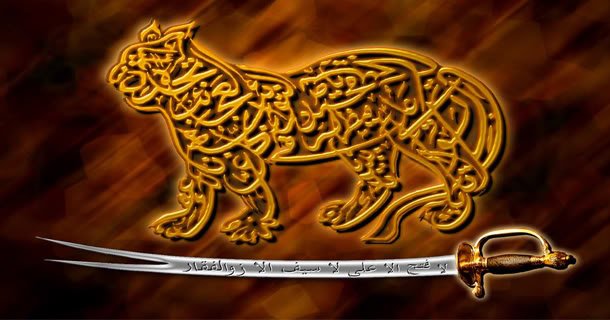
What is the status of Sayidina Ali Alahissalam??

An elderly wise man was asked, “What is the status of Sayidina Ali Alahissalam in your view?”
The wise man answered, “What is the best kind of house?”
The man replied, “The Masjid.”
The wise man asked, “Which is the best place in the house of Allāh?”
The man replied, “The Mehrab.”
The wise man asked, “What is the best kind of deed?”
The man replied, “The Salah.”
The wise man asked, “Which is the best Salah?”
The man replied, “Fajr.”
The wise man asked, “What’s the best position in Salah?”
The man replied, “Sajdah- prostration.”
The wise man asked, “Which is the best body part?”
The man replied, “The forehead.”
The wise man asked, “Which is the best month?”
The man replied, “Ramadan.”
The wise man asked, “Which is the best night in Ramadan?”
The man replied, “The night of Qadr.”
The wise man asked, “Which is the best kind of death?”
The man replied, “Martyrdom.”
The wise man then said, “In Ramadan on the night of Qadr, in the Mehrab, during Fajr Salah, whilst his forehead was on the ground, in the sajdah-prostration position, praying to His Lord, Sayidina Ali Alahissalam was martyred.
The Story of Ashab e Rass

The Story of the Dwellers of Ar-Rass
In the Qur’an
The Qur’an mentioned the People of Rass beside the People of ‘Ad, the People of Thamud and the People of Noah (AlahisSalam),
“The people of Noah denied before them, and [so did] the people of Rass and Thamud,” (Qur’an 50:12)
According to the Qur’an, the People of Rass refused to worship God and were afflicted by His punishment. Some exegetic references related the story of the People of Rass with the verse 45 of Qur’an 22 and “Bi’r Mu’attala” (the Abandoned Wells).
|
Allah Almighty revealed: Noah’s people, when they denied the Messengers We drowned them, and We made them as a sign for mankind. We have prepared a painful torment for the Zalimeen (polytheists and wrongdoers) Also Ad and Thamud and the dwellers of Ar Rass and many generations in between. For each of them We put forward examples (as proofs and lessons etc), and each of them We brought to utter ruin (because of their disbelief and evil deeds). (Ch 25:37-39 Quran) Allah the Exalted revealed: Denied before them (these pagans of Mecca who denied you, O Muhammad) the people of Noah and the dwellers of Ar Rass, and Thamud and Ad and Pharaoh, and the brethren of Lot, and the dewellers of the Wood, and the people of Tubba, everyone of them denied their Messengers so My Threat took effect. (Ch 50:12-14 Quran).
Cause of Naming“Rass” is a Semitic word and in Aramaic and Hebrew, it means “to split and to break”. In Arabic too, it means “to penetrate” and “to dig” and “well”. It is said that in the Qur’an it means “well” and the People of Rass were the people who threw their prophet into a well. Also, “Rass” is mentioned as a name for a region, mountain, river and people.
The Story of the People of RassThere are different reports about who were the People of Rass, The First Report The Second Report The Third Report Some exegetes considered the people of Rass to be actually the people of Ukhdud and considered “Rass” as “Ukhdud”. It is said that some people, including Ka’b al-Ahbar and Maqatil considered Rass, the name of a well in Antioch where people of Mu’min Al Yasin killed Habib Najjar and Mu’min Al Yasin and threw them into the well. People of Rass have also been considered a branch of Thamud tribe and Bedouins of Hadura tribe whose prophet was Shu’ayb b. Dhi Mahra’.In some hadiths, the people of Rass have been introduced as nomads and stockbreeders whose prophet was Shu’ayb (AlahisSalam). Time and Place of LivingDifferent places have been mentioned as the place the people of Rass lived. The region of Aras river, Hadramaut in Yemen and Yamama. It is said that Dhu l-Qarnayn was the first person who visited their city. The time of the people of Rass is considered an era after Prophet Noah (AlahisSalam), Prophet Solomon (AlahisSalam), or between the prophethood of Jesus (AlahisSalam) and Prophet Muhammad (صلى الله عليه و آله وسلم) or even at the time of Khalid b. Sanan. The Qur’an used the word “qurūn” to refer to the period between the people of Rass and other nations in the verse, “And ‘Ad and Thamud, and the inhabitants of Rass, and many generations between them.” (Qur’an 25:38) These verses indicate that the dwellers of Ar Rass were destroyed as they were the other people who refused to believe in the prophets of Allah Ibn jarir stated that the dwellers of Ar Rass were the people of one of Thamud’s villages. Allah sent a prophet to them called Huzlah Ibn Safwan. They denied and killed him, so Allah destroyed them. Abu Bakr Muhammad Ibn Al Hassan narrated: “The dwellers of AR Rass had a well sufficing them and their land. They also had a just and good-hearted king. When he died, they were much grieved for him. After four days Satan took his form and said: “I was not dead, but I kept absent from you to see your reaction.” They were very joyful. He commanded them to set up a curtain between him and them and told them that he would never die. A great number of them believed him and were fascinated with and worshiped him. Then Allah sent them a prophet telling them that it was only Satan who was addressing them from behind the curtain. He forbade them to worship him and commanded them to worship only Allah and no partner with Him. In spite of that, they killed their prophet and threw his body into a well. Therefore Allah destroyed them and their homes.” Books:Qurṭubī, al-Jāmiʿ al-aḥkām, Azharī, Tahdhīb al-lugha, Jawharī, al-Ṣiḥāḥ,Miybudī, Kashf al-asrār, Hamidānī, al-Aklīl, Majlisī, Biḥār al-anwār, |

The people of Mohenjo-Daro can be “Ashab-al-Rass”

In Quran, Allah said “And Ad, Tamood, the people of Rass and many generations between them? For everyone, we set a similitude and each destroyed utterly (Chapter 25 “Al-Furqan” Verses 38-39). Next in chapter 50, “Qaf”, Allah said, “Before them, the people of Noh rejected the people of Rass and Tamood, Ad and Pharaoh and the brethren of Lot and the dwellers of the Al-Aikah and the people of Tubba. Each one rejected the messengers,and so my threat was fulfilled (Chapter “Kaf” Verses 12-14).
Who were Ashab-al-Rass and which area did they belong to? If we look at the advanced civilisations of the world during that period, we shall come to know that there is only one civilisation: “Mohenjo-Daro”, which had an abundance of wells.
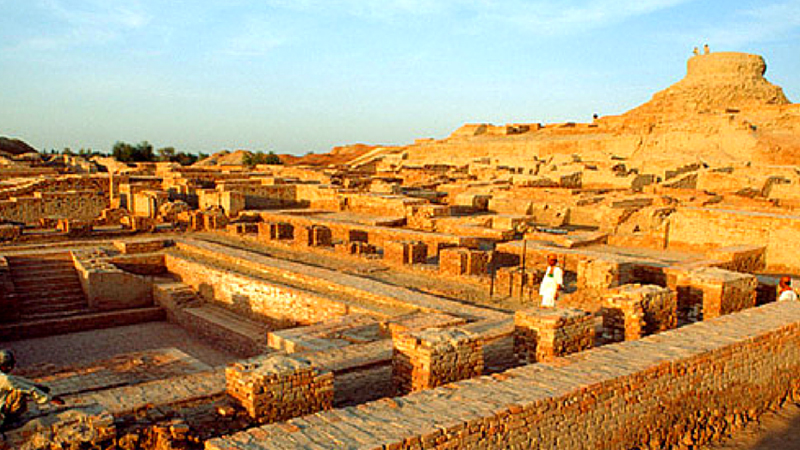
Every house had a well, and there was a proper system of sewerage. Even after five thousand years, if we dig these wells, we can get water.
The original city was situated on a mound. When we observed ruins of “Mohenjo-Daro”, we came to know that this area had submerged in the earth.
In the past when invaders invaded an area, they used to destruct and burn the properties. But there is no sign of destruction in Mohenjo-Daro, which means that no foreign invaders attacked the area.
If we see according to the Islamic point of view, it is possible that almighty Allah might have destroyed this area. Almighty Allah sent about one lac and twenty-four thousand prophets for the welfare of the humanity in different regions and different ages. In “Tafhemul-Quran”, Allama Maududi explained that “in the Arabic language, ‘Rass’ means an old well. It can be guessed there was a nation who killed its Prophet by throwing or hanging him in well”. Other scholars like Ibn-Jarir, Ibn Asakar etc agree that Allah had destroyed Ashab-al-Rass before Moses (AS) period and the name of the prophet of Ashab-al-Rass was Huzlah Ibn Safwan (AS).
On the other side, the archaeologists and historians say that it is not necessary that Allah punished any nation by imposing storm, rain of stones, famine or by turning humans into a monkey. There are many other punishments because in Holy Quran Allah says, “When any nation does not act upon teaching and principles of my prophets and kill my prophets, I impose the better people and better nation on them.”
The downfall period of Mohenjo-Daro spanned from 2500BC to 1800BC, which is also the period of Moses (AS) – 2000 B.C (according to Jews’ holy scripts).
We can conclude that the people of Mohenjo-Daro can be “Ashab-al-Rass”.
 Aal-e-Qutub Aal-e-Syed Abdullah Shah Ghazi