
At-Tibbu Nabawi PART I TRADITIONAL MEDICINE

NATURAL HEALING WITH THE MEDICINE OF THE PROPHET At-Tibbu Nabawi PART I TRADITIONAL MEDICINE

We say, and Allah is the helper Who provides the means and controls the actions, that there are two types of illnesses stated in the holy Qur’an: 1. Illness of the hearts and, 2. Illness of the body. As for the illness of the heart, it comprises two types, the first is suspicion and doubt, and the second desire, allurement and sin. In that regard, Allah, the glorious and magnificent, says: ◆ Their hearts are sick, and Allah has caused their sickness to intensify (Qur’an 2:10). He also says: ♦ Those whose hearts are sick and the unbelievers say: What does God mean with this parable?> (Qur’an 74:31) He, the most magnificent then says concerning those who refuse to accept the criterion of the Qur’an and the prophetic traditions: ♦ When they are invited to Allah and to His Messenger to judge between them, a group of them will object, though if they were right, they would walk to him flagrantly. Are they sick at heart or do they have doubt, or do they fear that Allah and His Messenger will defraud them? Nay, but such are the unjust ones (Qur’an 24:48).

This is the sickness of doubt and suspicion. As for the sickness of desire, allurement and wantonness, this is the sin of adultery. Admonishing the believers, Allah, the magnificent and most exalted, addresses the wives of His Prophet who had to serve and attend the needs of the ever growing number of people visiting and soliciting the advice of His Prophet, saying: O ye consort of the Prophet, you are not like any other women if you heed with piety. Therefore, be not too complaisant of speech lest someone whose heart is sick should be moved with desire (Qur’an 33:32).

As for the illness of the body, Allah, the magnificent and most exalted, says: ♦ A blind person is not subject to blame, nor is the lame or the sick (Qur’an 48:17). He, the Almighty Lord, also mentions physical illness, the health advantages embodied in the pilgrimage, fasting, and the hygienic properties of taking ablution, besides other benefits, to illustrate the practical as well as spiritual

wealth that is hidden in the glorious Qur’an for those who read it, act upon it and fathom its mysteries. This will help one to satisfy his utmost needs by pursuing the divine guidance. Such guidance in physical wellness is better defined in pursuing three avenues including: preventive medicine, abstaining from what is harmful and cleansing the body and flushing out pernicious toxins. God Almighty mentions these three principles in the verse of ‘fasting’ saying: Fasting is prescribed for a fixed number of days; however, if any of you is ill or traveling, then the prescribed number of days should be made up on later days (Qur’an 2:184). Thus, He otherwise permitted the sick to postpone his fast until he recovers from his illness, and for the traveler to temporarily delay the prescribed fast to preserve his strength, because of the strain and movement involved in travel. As for the verse of ‘pilgrimage’, He says: If any of you is ill or has an ailment in his scalp (necessitating shaving, he should) in compensation either fast, or feed the poor, or offer sacrifice ♦ (Qur’an 2:196). Here again, God Almighty gives permission for a sick person or someone suffering from a serious itch, dandruff or lice, for example, or from other scalp disease to compensate by shaving the head during the sacrament of Ihrãm, which is otherwise not permitted, to eliminate harmful vapors that would congest over the scalp, hindering the breathing of the pores and perhaps causing infection of follicles. Once he shaves his head, the pores open and such vapors are emitted, allowing a natural cleansing process. Thus, in interpreting Qur’anic verses, and as one may understand from the divine explanations, they provide guidance in handling the lesser illness to help treat the more serious illness, and therefore, a deductive method called qiyãs is developed for purging harmful toxins and other congestions. This method deals with ten areas of the human body when excited, including: the blood when it boils, semen when it abounds, urine, feces, gas, vomit, sneeze, sleep, hunger and thirst. Each one of these ten elements causes an illness when congested and henceforth necessitates purgation. As for the aspect of dietetic abstinence (himyah), the divine

guidance provided in the verse of ‘ablution’ says: If you are ill, or on a journey, or if one of you comes from offices of nature, or if you have been in contact with women and find no water for washing your whole body, then use a clean surface (sand or earth) and rub your faces and hands with it, for God blots out sins and forgives again and again (Qur’an 4:43). In this case, God Almighty permitted a sick person to substitute tayammum for the regular ablution and avoid the use of water when its external use is harmful.
Again, this guidance indicates the need for abstinence to alleviate questionable health complications. In such a way, God Almighty instituted the basic principles of medicinal remedies and their constitutions.

In this study, we will also introduce the medical guidance which is instituted by God’s messenger C, upon whom be peace, and surely there is no better way to apply such knowledge than through their guidance. As for the medicine of the hearts, it can only be acquired through God’s prophets, upon all of whom be peace and blessings, and to correct one’s heart and wash it from impurities one must recognize his Creator and Cherisher, His divine Names and attributes, observe His actions, contemplate His wisdom and adopt the criteria He instituted for His creation. Such hearts also must beseech His blessings by consenting to what He commands and loves, and by abstaining from what He forbids and abhors, and one’s heart will know no trueness or experience true life otherwise. Such knowledge can only be learned from the teachings of His messengers, upon all of whom be peace, and thinking otherwise will be completely wrong and unfruitful. Therefore, should one think that he can do oppositely, it means that he merely fosters the health and strength of his animal mind, desire, lust, carnality and wantonness. His life will be meaningless and similar to that of animals, while a true heart of piety is free from such base associations. One who cannot discern the difference between these two types of hearts should cry for his losses, for a true heart is alive, and a heart that is blinded with carnality is dead, and a true heart is filled with light while a dead heart is submerged in the abyss of darkness.

God’s Messenger, indicated that there are two types of knowledge: (A) Knowledge of religion, and (B) knowledge of the body. The medicine for the illness of the body is also of two types: (1) one which, innate in both human and animal lives, necessitates no diagnosis of a physician to attend to it, such as hunger, thirst, cold and fatigue, and has its own natural remedies and antidotes; and (2) a second type of illness which does require diagnosis and treatment, and affects one’s temperaments and humors, whereby heat, cold, dryness or moisture in the body exceed their natural balance, and the effects of combining any two of them exacerbates discomfort. Such effects produce one of two types of illness, that is, either somatical or collateral. Hence, for example, somatical illness manifests in the form of agitation of the blood or spillage of an element, while the collateral illness manifests as a result of such excess spillage and after the elimination of the original
causes. Thus, the illness-causing matters are expelled and the

after effects remain to influence one’s temperaments and humors. A somatical disease carries its own stimulus that arouses further complications. Hence, if the disease carries its own stimulus, one must first diagnose the cause, then the effects, then find the medicine that is recognizing the disease, then the illness, then prescribing the cure. Somatic diseases manifest in the form of physiological changes, such as a cavity in an organ, narrowing or expanding of ducts, organ deformation (enlarged heart or small stomach for example), rough or soft uterine-wall tissue, dislocated bones or displaced organs as well as other diseases. When organs correlate and operate harmoniously, they form a healthy body, while if they are abnormal, discordant or malfunctioning, they produce the synchronous effects of an illness, some of which are organic and others relate to bodily temperaments and humors.

Common diseases are the result of malfunction of the humors. This intemperament is called ‘illness’. When its harm is felt, it manifests in eight areas: (1) four of them are compound, and (2) the other four are primary. The latter can either be cold, hot, moist or dry and they manifest at the site of the liver. The compound temperaments manifest as hot and moist, cold and moist, hot and dry, and cold and dry. This is caused with or without spillage of a component, and if the disease does not reach further complications and produces mere discomfort, it indicates an unhealthy balance of one’s body.

Thus, the human body sustains: (1) three natural healthy conditions, (2) one abnormal condition, and (3) a mild condition. The natural healthy conditions demonstrate the standard functions and constitution of the human body, otherwise, one is sick, and the third condition known as mild identifies an in-between state that is consented to and is treated by the person as tolerable, without the need for a physician, by taking a simple pain reliever for example. Such an in-between state of “not healthy” and “not sick” can only linger in the same category, for negative does not become positive, but rather remains constant or invariable.

The cause of such body abnormality can either be internal or external. The internal causes manifest because of the four humors: (1) hot, (2) cold, (3) moist, and (4) dry, and as for the external causes, they manifest because of the nutrients one takes in, and those can either be agreeable or disagreeable to the body. Thus, the harm or illness that results thereafter produces such imbalance and discomfort, or could be the result of malfunction

of a specific organ, or a general malaise of the body, or even weakness of the spirits that bear the body. This general condition is caused by: (1) increase in passivity of what must be balanced when it does not compensate for losses; or (2) by decrease of needed adjustment of balancing factors of the humors when they do not compensate for saturation; or (3) by the hindering of agents that are supposed to facilitate the flow of balancing factors; or (4) by the linking of agents whose binding interferes with creating the correct balance; or (5) by the acceleration of what should be moderate; or (6) by the deformation of molecules; or (7) by the displacement of an organ. The experienced physician or hakim can identify such disorders and either eliminate the causes that infringed upon the proper constitution of a healthy body, or he maybe able to stabilize them and gradually, with the proper treatment, deal with the disease by using the correct antidote. Hence, the proper diet (himyah), moderating excess and abstinence prove to be the best cure as we shall see later in this study of guidance in natural healing with Tibb medicine of God’s Prophet .

ताज़ीम, एहले बैत और सादात का हक़ है

ताज़ीम, एहले बैत का हक़ है

नासिर इस्लाम हज़रत ख़्वाजा नसिरुद्दीन उबैदुल्लाह एहरारनक्शबंदी कुद्दस सिर्रहू ( 895 हि.) एक रोज़ सादाते किराम की तौकीर व ताज़ीम के बारे में फरमा रहे थे कि जिस बस्ती (गोठ) सादात किराम रहते हों मैं उसमें रहना नहीं चाहता क्योंकि उनकी बुजुर्गी और शर्फ ज्यादा है। मैं उनकी ताज़ीम का हक़ बजा नहीं ला सकता । ( तज़किरा मशाईख नक्शबंदिया) (ज़ैनुल बरकात )

सादात की ताज़ीम के लिए क्याम

ख़्वाजा एहरार कुद्दस सिर्रहू रिवायत फ़रमाते हैं कि एक रोज़ इमाम आज़म सिराज उम्मत सैयदना इमाम अबू हनीफ़ा की अपनी मजलिस में कई बार उठे किसी को इसका सबब मालूम न हुआ। आखिरकार हज़रत इमाम से एक शागिर्द ने मालूम किया।

हज़रत इमाम आज़म ने फ़रमायाः सादाते किराम का एक साहबज़ादा लड़कों के साथ मदरसा के सहन में खेल रहे हैं। वह साहबज़ादा जब इस दर्स के करीब आता है और उस पर मेरी नज़र पड़ती है तो मैं उसकी ताज़ीम के लिए उठता हूँ।” (ज़ैनुल बरकात)

सय्यदों का एहतरामः

(1) सय्यदी अब्दुल वहाब शोरानी में फ़रमाते हैं: “मुझ पर अल्लाह तआला के एहसानात में से एक यह है कि मैं सादाते किराम की बेहद ताज़ीम करता हूँ अगर्चे उनके नसब में तअन करते हों।

मैं इस ताज़ीम को अपने ऊपर उनका हक तसव्वुर करता हूँ, इसी तरह उलमा व औलिया की औलाद की ताज़ीम शरई तरीके से करता हूँ, अगर्चे मुत्तकी न हों, फिर मैं सादात की कम अज़ कम इतनी ताज़ीम व तकरीम करता हूँ जितनी मिस्र के किसी भी नाइब या लश्कर के काजी की हो सकती है। ” (अल् शरफुल मोबिद )

(2) हज़रत अबु राफेअ बयान करते हैं कि हुज़ूर नबी अकरम ने हज़रत अली से फ़रमाया: बेशक पहले चार अशख़ास जो जन्नत में दाखिल होंगे वह मैं, तुम, हसन और हुसैन होंगे और हमारी औलाद हमारे पीछे होगी (यानी हमारे बाद वह दाखिल होगी) और हमारी बीवियाँ हमारी औलाद के पीछे होंगी (यानी उनके बाद जन्नत में दाखिल होंगी) और हमारे चाहने वाले (हमारे मददगार ) हमारी दाऐं जानिब और बाऐं जानिब होंगे।” इस हदीस को इमाम तिबरानी ने रिवायत किया है।

JOSEPH (YUSUF) part 1

JOSEPH (YUSUF)

Joseph (Yusuf) was one of the twelve sons of Jacob. His mother’s name was Raheel. He had a younger sister and a brother named Benjamin n (Binyamin) from the same mother. Joseph was exceptionally handsome and was very dear to his parents.

The dream of Joseph and its interpretation by his father

One day Joseph told his father about a dream he had the previous night. He saw that the sun, the moon and eleven stars bowed down before him. His father was the prophet of the time and knew the meaning of the dream. He told him that he would be a prophet of God and will be a powerful king over everybody including his parents and his brother.

Ill-treatment of Joseph by his brothers

Interpretation of the dream by Jacob did not go well with his sons who were already distraught due to their father’s special affections for Joseph. They decided to get rid of their brother Joseph. They threw him in a well and brought his shirt. smothered in sheep’s blood. They put up scene upon entering their home, wailing and crying They told their parents that a wolf had devourer their young brother and that they were unable to save him from the terrible fate.

Jacob was so grieved at the story and was so saddened by the apparent loss of his son that he wept profusely all day and all night. It is said that he lost his eyesight due to excessive crying.

Joseph retrieved from the well and sold as a slave

Having thrown their younger brother in the well, the older brothers stayed around to see what might happen. A caravan headed for Egypt stopped at the well for water and for

rest. Seeing a handsome youth in the well they pulled him out and wondered at his beauty and youth. The brothers showed up in front of the leader of the caravan and said that the youth was their slave who had escaped from them and had hidden himself in the well. The leader of the caravan saw the potential of higher sale value for Joseph in the slave market of Egypt and he paid a low price to his brothers for legitimising his ownership.

Upon arriving in Egypt, the caravan leader placed Joseph on the market. His price increased every day. The ruler of Egypt heard about the sale of an exceptionally handsome youth in his city and he came down to see him. He was stunned by the beauty of the lad and paid the highest price at the bidding. He took him to his palace to serve his beautiful wife. Zulaikhah, who had no child.

Joseph in servitude of the Pharaoh of Egypt

Joseph served the king and his wife with such honesty and efficiency that he was made incharge of the ruler’s household. It so happened that Zulaikhah developed infatuation for Joseph and started to love him with increasing passion.

The story of Zulaikhah’s love for Joseph

ashe Zulaikhah fell madly in love with Joseph, but he took every opportunity to avoid her advances. On one occasion was successful in trapping him into her chamber so that she could be alone with him. No sooner did he realize the wicked designs of the queen than he made for the door of the chamber. She lunged after him and was able to grab his shirt from behind. In the short scuffle that followed, Joseph’s shirt was torn from behind. Just as he escaped through the chamber door, he bumped into the king himself. Realizing the acuteness of her situation, the queen yelled for help. The ruler was greatly angered by the rather strange circumstances and looked at Joseph demanding an explanation. Joseph said that he was innocent and that Zulaikhah was the guilty one. One of Zulaikhah’s own relatives from the household came forward to clear the matter. He said that if
Joseph’s shirt was torn from front, then he was the aggressor and culpable for his actions but if it was torn from behind, then Zulaikhah was guilty. As Joseph’s shirt was torn from behind, the ruler found his wife to be culpable for the embarrassing event.

He told Joseph to forget the event and told his wife to refrain from seeing Joseph when alone. However, the story of the scandal got out of the palace and spread far and wide. Women of other nobles maliciously gossiped about this happening.

Zulaikhah arranged a party and invited the women of nobility to her palace. As they were busy cutting and eating fruits, she summoned Joseph into her audience. As he arrived in their presence, the women got totally stunned by his beauty and many cut their fingers instead of the fruits in their hands. They were now convinced about what they had heard about Joseph and his beauty.

Joseph prayed to God to save him from the wickedness of the queen and other women of Egypt.

The imprisonment of Joseph

When the king learnt about the scandalous involvement of the wives of other nobles in his kingdom over Joseph, he considered it best to take Joseph away from his palace and threw him into the prison. However the supervisor of the prisons noted the purity of character and conduct of Joseph and started to treat him with respect. He made him’ his deputy in managing the affairs of the prison.

Interpretation of dreams by Joseph

It so happened that two other young men were thrown in the same prison. Each one of them saw a dream. One saw that he was extracting juice from ripe grapes and the other saw that he was carrying a basket of bread on his head and birds were eating freely from it. They asked Joseph if he could interpret their dreams. He gave them sermon on virtuous conduct and belief in the oneness of God. He then gave them the interpretation of their dreams. He told the one who saw himself extracting juice from.

ALI, THE MAGNIFICENT part 22

Operations against the Banu Zubuda.

Banu Zubuda was a clan living to the west of Medina. and had accepted Islam. Their leader was a warrior known as Omar bin Kurb. Omar had a feud with another warrior of the same clan named Ushus Khusee, who had killed his father. Anxious to avenge his father’s death. Omar took Ushus prisoner and desired to slay him. The matter went up to the Prophet for arbitration. The Holy Prophet decreed that after the acceptance of Islam, the seeking of revenge for the blood of relatives, which had become a system during the time before Islam, did not now arise. This decision upset Omar so much that he renounced Islam. Omar then killed Harrith Ibn Kaab, the chief of a tribe which had become a feudatory to Islam. This killing of an ally of the Muslims could not be tolerated by the Holy Prophet.

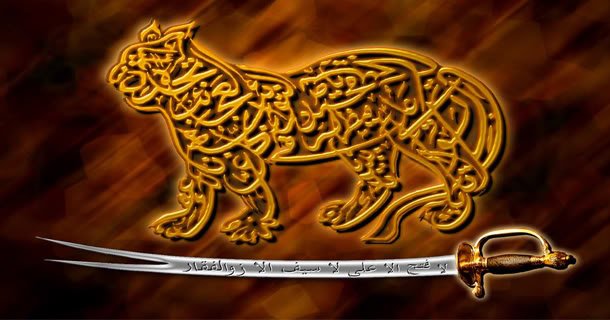
He deputed Ali to lead a force against the Banu Zubuda. Before the general battle began, Omar came out and challenged Ali to a single combat. At this Ali, The Lion

of God’, came thundering out of the ranks, and chanting verses in which he glorified the valour of the Muslim heroes. struck such awe in the heart of the adversary that he fled from the battlefield. This left the tribe of Banu Zubuda without a leader, and they promptly took to flight. Ali pursued them, took several of thein prisoners and returned to Medina in triumph.

The Tabuk expedition, and the appointment of All as Governor of Medina.

In the middle of 9 A.H. 631 A.D. news reached the Prophet that the Roman Emperor Heracles was mobilising a huge army to surprise the Muslims at Medina. Receiving this intelligence, the Prophet resolved to meet the enemy on their way, and issued explicit orders to his men to make preparations for the expedition. The Holy Prophet appointed Ali, his Vicegerent, as Governor of Medina. Besides commanding the Medina garrison, Ali was to officiate at prayers and to perform all those duties that had hitherto devolved on the Holy Prophet. In addition to maintaining law and order, he was also required to look after the Prophet’s household, a duty which more. than all others epitomised the love and trust in which he was held by his beloved Master. He accepted the trust with great reluctance, having been accustomed always to: accompany the Prophet and share all his perils.

After the departure of the Holy Prophet, rumours began to circulate to the effect that Ali had been deliberately left behind because the Prophet had been apprehensive about the dangers of the Tabuk expedition. These rumours were started by one of the leaders of the hypocrites, Abdullah ibn Ubay, an old enemy of Islam since the days of Badr.

To a man of Ali’s nature, accusations of cowardice were more than could be borne. Stung by this suggestion. Ali hastened after the Prophet, overtaking him on the road to Tabuk and informed him of the various rumours prevailing in Medina. The Holy Prophet managed to pacify Ali and spoke thus: “These men are liars. They are the party of the Hypocrites and Doubters, who would breed sedition in Medina. I left thee behind to keep watch over them, and to be a guardian to both our families. ‘I would have thee to be what Aaron was to Moses; excepting that thou canst not be like him, a Prophet; I being the last of the Prophets.” The Holy Prophet also explained to Ali that although Abu Sufyan had embraced Islam, the danger of an intrigue at Medina was still so great, that only Ali would be able to curb the mischievous designs of the enemies within the city.

Ali left post-haste for Medina where he sought out the house of Abdullah Ibn Ubay and dragging him outside proceeded to give him a bit of his mind. Though the Holy Prophet had been lenient in his dealings with the Hyprocrites, Ali made it very clear to them that he would not tolerate their double-dealings. He believed in harsher measures and he made it abundantly clear, that, as long as he was in charge of Medina, he would neither brook any insult nor endure any form of intimidation.

Nara-e-Haideri Say Kya Muraad Hai?

Origin Of Nara E Haideri from ahlae sunnat source

It is Ijma of Sahaba and the Ummah that Imam Ali is the most courageous and bravest amongst the followers of Mohammed Mustafa (Sallal Lahu Alaihi Wa Sallam). Just study the seerah and you will see Badr, Khandaq, Khayber, Hunain etc. For instance, in Badr, 72 kuffar were killed and 37 were killed by Imam Ali (Alaihi Asalam).

The origins of the Naara are from the battlefield and it is recited in praise of the one on whose hand Allah Taalah granted victory to the Muslims after others had failed. When Hazrat Ali (Alaihi Asalam) once defeated many foes by himself, and the Sahaba’s (Radi Allah Anum Ajma’een) said, Nara e Haideri – Ya Ali (Alaihi Asalam).

Sayidna Ali (Aliahi Asalaam) is known as Haider – Lion

Ya Ali (Aliahi Asalaam) is the reply for Naaray Haideri.

Naaray Haideri is the call for Sayidna Ali (Aliahi Asalaam) since he is Asadullah.

Sayidna Ali (Aliahi Asalaam) is also Mushkil Kusha, thus we say Ya Ali to call upon Sayidna Ali (Aliahi Asalaam) as a waseela (intermediately or intercessor).

Sayidna Ali (Aliahi Asalaam) is Imamul Auliya.