Mercy and Compassion

Usually our good deeds, sacrifice and donations appear to be substantial to us. This mistaken impression deceives us and engages our mind. It fills us with contentment. A mere urn of water appears to be an ocean to us.

Our mundane desires never cease. We presume that what we own is our natural birthright. When we are asked to make a sacrifice our behavior changes as if we have been asked for something from our own personal possessions. Consequently, the bright, crystal clear and delicate mirror of trustworthiness and generosity becomes stained.

However, as Almighty Allah has revealed in the Qur’an: “As to the orphan do not oppress him. Nor refuse the one who asks for help” (Duha, 9-10).

Compassion_FuneralCall

Mawlana Rumi, quddisa sirruh, said:

Just as physically beautiful people search for bright and clear mirrors, for generosity to be seen poor and powerless people are required. As a beautiful person’s face may be reflected in a mirror, so too the beauty of those who help the needy through their generosity is reflected in the poor and the miserable.

Mawlana Rumi, quddisa sirruh, said: “Thus, the poor are the mirror of divine mercy and generosity. Those who are with Allah or lost in the existence of Allah are in a state of continuous generosity.”

*

Tafsir-i Hazin, a commentary on the Qur’an, reports the following from the great companion Jabir (RadiAllahu Anhu):

A small child came to the Prophet Muhammadﷺ . He told him that his mother had asked for a shirt. At that time the Prophet Muhammadﷺ owned only the shirt that he was wearing. He told the child to come back another time. The child returned to his home. But, soon he came back and told the Prophetﷺ  that his mother wanted the shirt he was wearing. The Messenger of Allahﷺ went to his room, took off his shirt and gave it to the child.

At that moment, Bilal (RadiAllahu Anhu), the muadhdhin of the Prophetﷺ  began reciting the Adhan, or the call to prayer. The Messenger of Allahﷺ  could not come out of his room to lead the communal prayer because he did not have a shirt. Some of the companions came to his room since they were worried about him and they discovered that the Prophet  no longer had a shirt to wear.

*

Wealth is a trust of Allah given to our care. The only way to enjoy it and feel happy about it is by sympathizing with the suffering of the needy by opening a window of mercy and compassion from our heart to them.


The great Rumi, quddisa sirruh, said:

Act like the sun in mercy and compassion!

Act like the night in covering the mistakes of others!

Act like a river in generosity and sacrifice!

Act like a dead one in anger and fury!

Act like the soil in humility and selflessness!

Act in accordance with the way you look!

Look in accordance with the way you act!

We should keep in mind that regardless how one presents oneself, what will come out of him is what he has in the urn of his heart. It is true that many urns that have claimed to be full of love have only produced eventually the water of indiscretion and heedlessness. Likewise, many people who have spoken about the elixir, or the water of life, could not drink a drop of it nor could they offer any to others. On the other hand, many people who hide themselves in humility and externally look like empty urns are special servants of Allah and carry endless oceans in their hearts. And they unhesitatingly offer water to burning lovers like the water of al-Kawthar, a river in Paradise.

compassion

May Allah raise all of us to be of His sincere and pure- hearted servants, so that we may too offer to all of humanity drops from the water of al-Kawthar and Tasnim(*) while still in this world.

Amen!

(*) al-Kawthar (literally, ‘The Abundant’) is a river of Jannah and Tasnim (literally, ‘Nectar’) is a spring of Jannah.

-An excerpt from the book, “Tears of the Heart’

Loh Bhi Tu Qalam Bhi Tu


Loh Bhi Tu Qalam Bhi Tu Tera Wajood Al-Kitab
لوح بھی تو قلم بھی تو تیرا وجود الکتاب

Loh Bhi Tu Qalam Bhi Tu, Tera Wajood Al-Kitab
Gunbad-e-Abgina Rang tere Muheet Mein Habab

لوح بھی تو قلم بھی تو تیرا وجود الکتاب
گنبد آ بگینہ رنگ تیرے محیط میں حباب

You are the Sacred Tablet, You are the Pen and the Book;
This blue‐colored dome is a bubble in the sea that you are.

Alim-e-Aab-o-Khak Mein Tere Zahoor Se Faroug
Zarra’ay Raig Ko Diya Tu Ne Tulu-e-Aftab

عالم آب و خاک میں تیرے ظہور سے فروغ
ذرہ ریگ کو دیا تو نے طلوع آفتاب

You are the lifeblood of the universe:
You bestowed the illumination of a sun upon the particles of desert dust.

Shoukat-e-Sanjar-o-Saleem Tere Jalal Ki Namood
Faqr-e-Junaid(R.A.)-o-Bayazeed(R.A.), Tera Jamal Be-Naqab

شوکت سنجروسلیم تیرے جلال کی نمود
فقر جنید و با یزید تیرا جمال بے نقاب

The splendour of Sanjar and Selim: a mere hint of your majesty;
The faqr of Junaid and Bayazid: your beauty unveiled.

Shauq Tera Agar Na Ho Meri Namaz Ka Imam
Mera Qiyam Bhi Hijab, Mera Sajood Bhi Hijab

شوق تیرا اگر نہ ہو میری نماز کا امام
میرا قیام بھی حجاب میرا سجود بھی حجاب

If my prayers are not led by my passion for you,
My ovation as well as my prostrations would be nothing but veils upon my soul.

Teri Nigah-e-Naaz Se Dono Murad Pa Gaye
Aqal Ghiyab-o-Justajoo, Ishq Huzoor-o-Iztarab

تیری نگاہ ناز سے دونوں مراد پا گئے
عقل غیاب و جستجو، عشق حضور و اضطراب

A meaningful glance from you redeemed both of them:
Reason—the seeker in separation; and Love—the restless one in Presence.

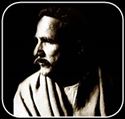
Allama Iqbal


Physical Descriptions of the Four Great Imams of Fiqh

By Imam Abu Abdullah Muhammad Ibn Ahmad al-Dhahabi (rah)

maxresdefault

1. Imam Abu Hanifah an-Nu’man bin Thabit (rah):

Abu Yusuf said: “Abu Hanifah was well-formed, was from the best of people in appearance, the most eloquent of them in speech, the sweetest in tone, and the clearest of them in expressing what he felt.”

Hamad bin Abi Hanifah said: “My father was very handsome, dark, had good posture, would wear a lot of perfume, was tall, would not speak except in reply to what someone else had said, and he – may Allah have Mercy upon him – would not involve himself in what did not concern him.”

[6/535]

2. Imam Abu ‘Abdillah Muhammad bin Idris ash-Shafi’i (rah):

Ibrahim bin Buranah said: “ash-Shafi’i was serious, tall, and noble.”

[8/391]

az-Za’farani said: “ash-Shafi’i visited us in Baghdad in the year 95. He stayed with us for a few months, then left. He would dye his hair with henna, and he had thin cheeks.”

Ahmad bin Sinan said: “I saw him with a red beard and hair – i.e. he used to dye them.”

[8/415]

3. Imam Abu ‘Abdillah Ahmad bin Hambal (rah):

Ibn Dharih al-’Ukbari said: “I requested to see Ahmad bin Hambal. So, I greeted him, and he was an old man who dyed his hair. He was tall and extremely dark.”

Muhammad bin ‘Abbas an-Nahwi said: “I saw Ahmad bin Hambal with a handsome face, well-formed, and dyeing his hair with henna that was not too dark. He had black hairs in his beard, and I saw his clothes extremely white. When I saw him, he was wearing a turban and an izar.”

[9/438]

‘Abd al-Malik al-Maymuni said: “I do not know that I have ever seen anyone who wore cleaner clothes, was more attentive to trimming his moustache and grooming the hair on his head and body, or wore purer and whiter garments than Ahmad bin Hambal.”

[9/454]

One man said: “In Khurasan, they did not think that Ahmad resembled a human being. They thought that he resembled the Angels.”

[9/456]

al-Fadl bin Ziyad said: “I saw Abi ‘Abdillah in the winter, and he was wearing two shirts with a colored vest between them, and maybe he was wearing a shirt with a heavy sweater. And I saw him with a turban over a hood and heavy outer garment. So, I heard Aba ‘Imran al-Warkani saying to him: “O Aba ‘Abdillah! All of these clothes?” So, he laughed and said: “I cannot stand the cold,” and he would also wear the hood without a turban.”

al-Fadl bin Ziyad said: “I saw Abi ‘Abdillah in the summer wearing a shirt, trousers, and robe.”

[9/461]

4. Imam Abu ‘Abdillah Malik bin Anas (rah):

‘Isa bin ‘Umar said: “I never saw anything white or red that was more beautiful than the face of Malik, or any clothes whiter than Malik’s.”

And a number of people relate that he was tall, firm, serious, blond, had a white beard and hair, had a large beard, was balding, and would not shave his moustache, as he considered this to be a form of mutilation.

It is said that he had blue eyes, and some of this was narrated by Ibn Sa’d from Mutarraf bin ‘Abdillah.

Muhammad bin ad-Dahhak al-Hizami said: “Malik’s clothes were clean and soft, and he would constantly wear different clothes.”

al-Walid bin Muslim said: “Malik would wear white clothes, and I saw he and al-Awza’i wearing black and green caps.”

Ashhab said: “When Malik would wear a turban, he would wrap part of it under his chin and would leave the ends of it hanging between his shoulders.”

Khalid bin Khidash said: “I saw Malik wearing a cap, and I saw him wearing woven clothes.”

Ashhab said: “If Malik would wear kohl for a necessity, he would remain in his house.”

Mus’ab said: “Malik would wear ‘Adani clothes, and he would wear perfume.”

Abu ‘Asim said: “I never saw a Muhaddith with a more handsome face than Malik’s.”

It is said: “He was so light colored that he was blond. He had wide eyes, a raised, pointed nose, and he would let his moustache grow long based on ‘Umar’s curling of his moustache.”

Ibn Wahb said: “I saw Malik dying his hair with henna once.”

Abu Mus’ab said: “Malik had the most handsome face of the people, the widest of eyes, the whitest skin, and was the greatest of them in height – all in the strongest body.”

al-Waqidi said: “He was well-formed, would not dye his hair, and would not enter the public baths.”

Bishr bin al-Harith said: “I entered upon Malik and saw him wearing a cap that was worth about 500 dirhams.”

Ashhab said: “When Malik would wear a turban, he would wrap part of it under his chin and would leave the ends of it behind his back, and he would scent himself with musk and other scents.”

[7/396-397]


Collected from Siyar A’lām al-Nubalā