Blog

Did you know that the Quran described the process of human fertilization??

Did you know that the Quran described the process of human fertilization ,specifically the fact that a human being originates from a very small portion of fluid rather than the entire emission ,with a scientific precision that was not confirmed until the invention of the microscope?

Allah says in Surah Al-Qiyamah verses 37 and 38 ,

was he not a drop of sperm emitted? Then he was a clinging clot and Allah created and proportioned him.

And in Surah Al-Insan verse 2 — indeed We created man from a drop — amshaj — of mingled fluid to try him and We made him hearing and seeing.

The Arabic word used in Surah Al-Insan is Amshaj. This word specifically means a mixture or a mingling of different fluids ,communicating that the origin of the human being is not from one fluid alone but from the mingling of two. The male and the female contribution.

But here is the detail that is even more specific. In Surah Al-Sajdah verse 8 Allah says —

then He made his lineage from an extract of a liquid disdained.

The Arabic word translated as extract is Sulalah. This word specifically means a refined portion drawn from a larger substance. Not the entirety of the substance. A refined extract of it.

Modern embryology confirms that of the hundreds of millions of sperm cells in a single emission only one ,or in the case of multiple births a very small number — actually fertilizes the egg. The human being originates from a sulalah , a refined extract ,drawn from a much larger fluid.

The Quran used this specific word — sulalah — in the 7th century. The precise cellular biology required to understand what this word was describing was not available to human scientists until the 19th century development of microscopy.

The extract of a liquid disdained. The refined portion drawn from the whole. Scientifically accurate fourteen centuries before the science could confirm it.


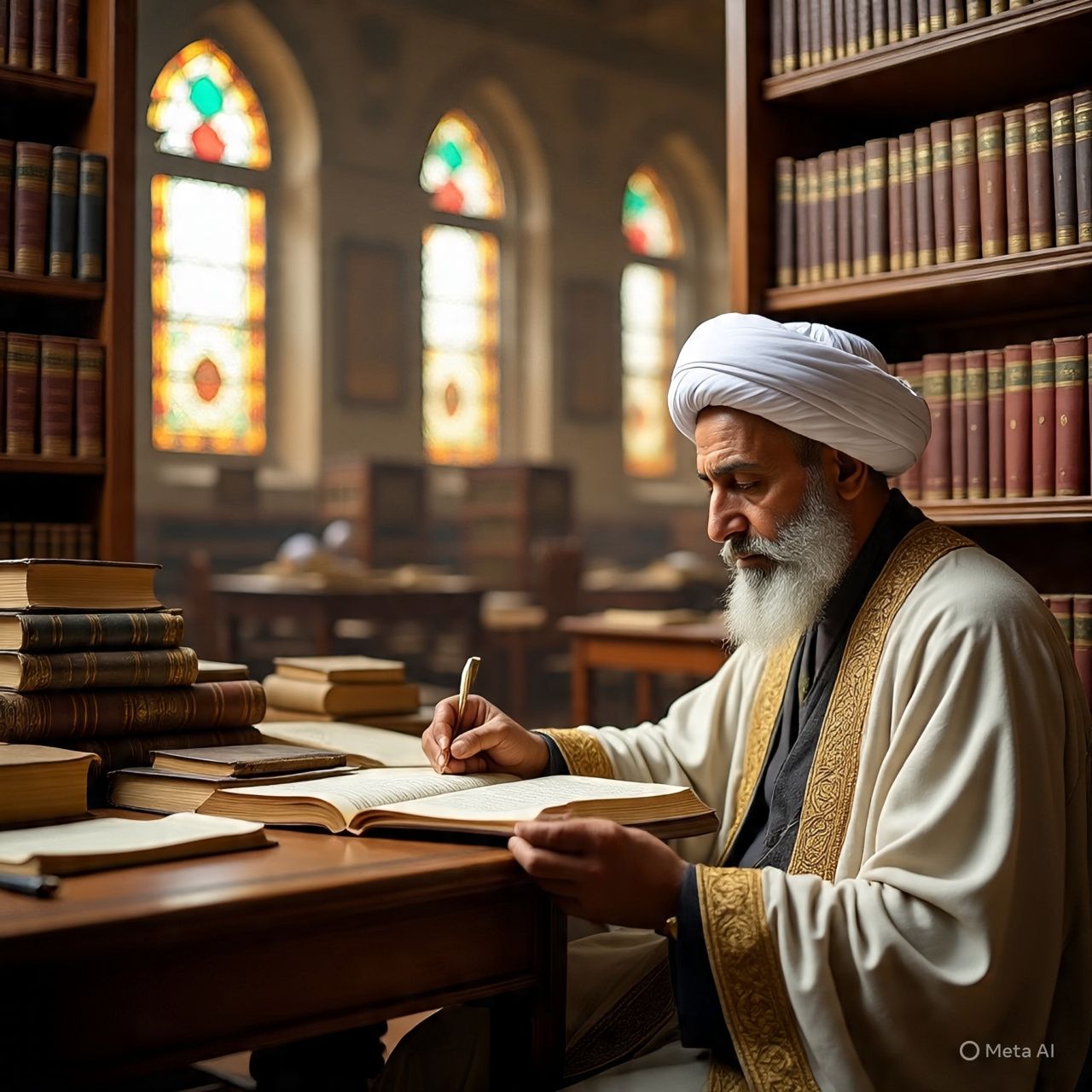
The Nafs in the Metaphysics of Shaykh Ibn ʿArabī, may Almighty Allāh

■ The Nafs in the Metaphysics of Shaykh Ibn ʿArabī, may Almighty Allāh sanctify his secret.

In the thought of Shaykh Ibn Arabī, the nafs (self/soul) is not a fixed psychological entity
to be morally improved in isolation.

Rather, it is a locus of divine self-disclosure (maẓhar al-tajallī) a mirror in which reality appears according to the purity or opacity of perception.

The transformation of the nafs, therefore,
is not a movement from “evil to good” in a purely ethical sense, but a progressive lifting
of veils so that what was always present becomes witnessed without distortion.

■ The Veiled Nature of the Self

Shaykh Ibn ʿArabī repeatedly grounds the problem of the human condition in ḥijāb (veil). In al-Futūḥāt al-Makkiyya.

▪︎ He states:

“The veils are nothing but the forms of existence when the Real is not witnessed in them.”

From this perspective, the nafs is not inherently separate from the Real, but it experiences separation through perception.

The veil is not absence of Allāh, but failure to recognize His presence within form.

Thus, the first condition of the nafs is forgetfulness (ghaflah), where the world appears as independently existing reality.

Shaykh Ibn ʿArabī’s metaphysics dissolves this assumption immediately: what is called “world” is nothing but divine manifestation misread as autonomy.

■ The Cosmos as Mirror and the Nafs
as the Reflective Locus.

The turning point in Shaykh Ibn ʿArabī’s anthropology is the realization that existence
is fundamentally reflective. In Fuṣūṣ al-Ḥikam, he writes:

“The cosmos is nothing but the loci of manifestation of the Divine Names.”

Here, the nafs is redefined. It is not merely a moral agent, but a mirror structured to receive the Names of Allāh according to capacity (istiʿdād).

Every emotional state, perception, and action
is a form in which a divine Name becomes visible.

Thus, the human self is not outside the
divine order it is one of its most complete articulations.

▪︎ Shaykh Ibn ʿArabī extends this principle further:

“The Real becomes known to Himself
through the forms of the world.”

This means that knowledge itself is not external acquisition, but self-disclosure of Reality within structured receptivity.

■ Continuous Creation and the Fluidity
of the Self

A key pillar of Shaykh Ibn ʿArabī’s ontology is that existence is never static. In al-Futūḥāt al-Makkiyya, he affirms:

“The cosmos is renewed at every breath.”

This principle radically transforms the understanding of the nafs. The self is not
a stable substance moving through time,
but a continuous re-creation at every instant.

Identity is therefore not fixed essence but ongoing manifestation.

The implication is profound: what is experienced as “selfhood” is actually a sequence of divine acts appearing in temporal form, while the Reality behind them remains unchanged.

■ Self-Knowledge as Divine Knowledge

The famous principle often attributed to Shaykh Ibn ʿArabī appears throughout his metaphysical system:

“Whoever knows himself knows his Lord.”

This statement does not point toward psychological introspection alone. Instead,
it indicates that the structure of the self is identical in pattern to the structure of divine manifestation.

▪︎ To know the nafs is to recognize:

▪︎ It’s dependence on continuous divine bestowal

▪︎ It’s lack of independent ontological standing

▪︎ It’s function as a mirror of divine Names

Thus, self-knowledge is not inward isolation but ontological unveiling of relational existence.

■ The Dissolution of Independent Agency

At the deepest level of realization, Shaykh Ibn ʿArabī removes the illusion of independent action. In al-Futūḥāt al-Makkiyya, he states:

“The Real is never absent, but the servant is veiled from witnessing Him.”

This means that what is experienced as “the self acting” is, in truth, divine action appearing through form.

When the veil is lifted, agency is no longer perceived as dual (God vs. self), but unified in witnessing.

▪︎ He further explains the result of unveiling:

“When the veil is lifted, nothing remains
but the Real as witnessed in all things.”

The nafs does not disappear in annihilation; rather, it ceases to be mistaken for an independent principle.

■ The Perfect Human and the Completion
of the Nafs

The culmination of the journey of the nafs is the realization of the insān al-kāmil (Perfect Human), a central doctrine of Ibn ʿArabī’s metaphysics. In Fuṣūṣ al-Ḥikam (Wisdom of Adam), he writes:

“The human being is a copy of the divine presence, encompassing all realities.”

▪︎ And in al-Futūḥāt al-Makkiyya:

“The cosmos does not reach perfection except through the Perfect Human, for he is the mirror in which the Real beholds His Names.”

In this state, the nafs is no longer experienced as limitation or conflict.

▪︎ It becomes:

▪︎ Fully transparent to divine self-disclosure

▪︎ Completely receptive to all Names

▪︎ No longer confined by partial identification

This is not self-destruction, but complete ontological integration into witnessing unity while remaining manifest in form.

■ The Nafs as a Mirror of the Real

Across Shaykh Ibn ʿArabī’s metaphysical system, the nafs is never truly “other” than
the Real. Its apparent separation is a function of perception, not ontology.

The journey of the soul is therefore not a movement toward something absent, but
a progressive unveiling of what is already present.

In his own language:

“He is One in every aspect of existence.”

▪︎ The final realization is that:

▪︎ Multiplicity is appearance

▪︎ Unity is reality

The nafs is the mirror in which the Real contemplates His own disclosure

Thus, the path of the soul does not end in possession or arrival, but in clear witnessing without distortion, where nothing is seen except the One manifesting through all things.

And Almighty Allāh knows best.

18 ज़िलहज्ज: यौम-ए-ग़दीर की हक़ीक़त और नासिबियों के एतराज़ात का मुकम्मल जवाब

18 ज़िलहज्ज: यौम-ए-ग़दीर की हक़ीक़त और नासिबियों के एतराज़ात का मुकम्मल जवाब

आजकल सोशल मीडिया और हमारे मुआशरे (समाज) में कुछ नासबी मौलवी और उनके पैरोकार यौम-ए-ग़दीर (18 ज़िलहज्ज) पर फ़तवेबाज़ी करते नज़र आते हैं। आज हम इसी मौज़ू पर तफ़सील से बात करेंगे, ताकि हक़ीक़त सबके सामने वाज़ेह हो सके। आप सभी से गुज़ारिश है कि इस पोस्ट को आख़िर तक ज़रूर पढ़ें।.🙏🏻

ग़लतफ़हमी और फ़तवेबाज़ी.👇

आज के दौर में, ख़ासकर कुछ मख़सूस फ़िरक़ों के नासबी मौलवी और उनके मानने वाले यौम-ए-ग़दीर की मुबारकबाद देने और इसकी खुशियां मनाने को ‘हराम’ क़रार देते हैं। वह अवाम को यह कहकर गुमराह करते हैं कि “यह सिर्फ़ शिया हज़रात का तरीक़ा है” और सुन्नियों को इससे दूर रहना चाहिए।
लेकिन जब इन मौलवियों से दलील मांगी जाती है कि आख़िर यौम-ए-ग़दीर की ख़ुशी मनाना हराम कैसे है? तो उनके पास कोई ठोस जवाब नहीं होता। वह सिर्फ़ गोल-मोल बातें करके लोगों को असल हक़ीक़त से दूर रखने की कोशिश करते हैं।

आइए, तारीख़ और क़ुरआन-ओ-हदीस की रौशनी में जानते हैं कि 18 ज़िलहज्ज को असल में क्या हुआ था और एक सच्चा मोमिन इसकी ख़ुशी क्यों मनाता है।

तारीख़ी पस-मंज़र: ग़दीर-ए-ख़ुम का वाक़िया.👇

18 ज़िलहज्ज, सन् 10 हिजरी का दिन था। हज़रत मोहम्मद मुस्तफ़ा (सल्लल्लाहो अलैहे व आलेही व सल्लम) अपना आख़िरी हज (हज्जतुल वदा) अदा करने के बाद मक्का से मदीना वापस तशरीफ़ ला रहे थे। आपके साथ तक़रीबन सवा लाख (1,25,000) सहाबा किराम (रज़ियल्लाहु अन्हुम) का अज़ीम लश्कर मौजूद था।

मदीने से कुछ फ़ासले पर ‘ग़दीर-ए-ख़ुम’ नामी मुक़ाम पर क़ाफ़िला पहुंचा, तो हुज़ूर पाक ﷺ पर हज़रत जिब्राईल (अलैहिस्सलाम) अल्लाह सुब्हानहु व तआला की “वही” लेकर नाज़िल हुए। यह क़ुरआन मजीद की सूरह अल-माइदा की आयत नंबर 67 थी:
۞ يَا أَيُّهَا الرَّسُولُ بَلِّغْ مَا أُنزِلَ إِلَيْكَ مِن رَّبِّكَ ۖ وَإِن لَّمْ تَفْعَلْ فَمَا بَلَّغْتَ رِسَالَتَهُ ۚ وَاللَّهُ يَعْصِمُكَ مِنَ النَّاسِ ۗ إِنَّ اللَّهَ لَا يَهْدِي الْقَوْمَ الْكَافِرِينَ
तर्जुमा (अल-माइदा – 67):
“ऐ रसूल! जो हुक्म तुम्हारे परवरदिगार की तरफ़ से तुम पर नाज़िल किया गया है, उसे पहुंचा दो। और अगर तुमने ऐसा न किया, तो (समझ लो कि) तुमने उसका कोई पैग़ाम ही नहीं पहुंचाया। और (तुम डरो नहीं) ख़ुदा तुमको लोगों के शर से महफ़ूज़ रखेगा। बेशक ख़ुदा काफ़िरों की क़ौम को हिदायत नहीं देता।”

इस👆 आयत-ए-करीमा के नाज़िल होने के फ़ौरन बाद,

रसूलअल्लाह (सल्लल्लाहो अलैहे व आलेही व सल्लम) ने सहाबा-ए-किराम को एक जगह जमा होने का हुक्म दिया। ऊंटों के पलाणों (काठियों) का एक मिम्बर बनाया गया।

ऐलान-ए-विलायत और अज़ीम ख़ुतबा۔👇

हुज़ूर ﷺ मिम्बर पर तशरीफ़ ले गए और मौला अली (अलैहिस्सलाम) का हाथ बुलंद करके वह तारीख़ी ऐलान फ़रमाया, जिसे आज तक मुस्लिम उम्मा याद करती है:
“‏‏‏مَنْ كُنْتُ مَوْلَاهُ فَعَلِيٌّ مَوْلَاهُ”
तर्जुमा: “मैं जिसका मौला हूं, अली भी उसके मौला हैं।”

सहाबा किराम की सुन्नत: मुबारकबाद पेश करना.👇

रसूलअल्लाह ﷺ का यह फ़रमान सुनकर सहाबा किराम ने बेहद ख़ुशी का इज़हार किया और मौला अली (अ.स.) को मुबारकबाद पेश की।

एहले-सुन्नत की कीताबे और तारीख़ गवाह है कि सबसे पहले मुबारकबाद देने वालों में हज़रत अबू बक्र सिद्दीक़ (रज़ि.) और हज़रत उमर फ़ारूक़ (रज़ि.) शामिल थे।

हज़रत उमर फ़ारूक़ (रज़ि.) ने मौला अली (अ.स.) से ख़ुशी का इज़हार करते हुए फ़रमाया था:
“बख़िन बख़िन ल-क या इब्न अबी तालिब…”
यानी, “ऐ अली! आपको बहुत-बहुत मुबारक हो, आज से आप मेरे और हर मोमिन मर्द और मोमिन औरत के मौला हो गए।”

🤷🧏ग़ौर करने का मुक़ाम: जब 18 ज़िलहज्ज सन् 10 हिजरी को मौला अली (अ.स.) को हर मोमिन का मौला बनाया गया, और हज़रत अबू बक्र (रज़ि.) व हज़रत उमर (रज़ि.) ने उन्हें मुबारकबाद दी, तो आज हम मोमिन होकर इस दिन की ख़ुशी क्यों नहीं मना सकते? यौम-ए-ग़दीर की मुबारकबाद देना तो ख़ुद सहाबा किराम की सुन्नत है!

नासिबियों का एतराज़ और उसकी हक़ीक़त.👇

आजकल कुछ लोग यह बेबुनियाद एतराज़ करते हैं कि 18 ज़िलहज्ज को हज़रत उस्मान ग़नी (रज़ियल्लाहु अन्हु) की शहादत हुई थी, इसलिए इस दिन मुबारकबाद नहीं देनी चाहिए या ख़ुशी नहीं मनानी चाहिए। यह दलील निहायत कमज़ोर और गुमराहकुन है। आइए इसका जायज़ा लें:

1. तारीख़ का फ़र्क़: हज़रत उस्मान ग़नी (रज़ि.) की शहादत का दिन 12 ज़िलहज्ज, सन् 35 हिजरी है, जबकि यौम-ए-ग़दीर 18 ज़िलहज्ज, सन् 10 हिजरी का वाक़िया है।

2. वक़्त का फ़ासला: हज़रत उस्मान ग़नी (रज़ि.) ऐलान-ए-ग़दीर के तक़रीबन 25 साल बाद शहीद हुए थे।

3. वाक़ियात की अहमियत: दीन की तकमील और रसूलअल्लाह ﷺ के ज़रिए किए गए ऐलान की ख़ुशी अपनी जगह एक अज़ीम नेअमत है। एक वाक़िया जो 25 साल बाद पेश आया, उसकी आड़ में दीन के इतने बड़े ऐलान (ऐलान-ए-विलायत) को कैसे छुपाया जा सकता है?

“ख़ुलासा-ए-कलाम”
इन तमाम दलीलों से यह पूरी तरह साबित हो जाता है कि 18 ज़िलहज्ज को मौला अली (अ.स.) की विलायत का जश्न मनाना और ख़ुश होकर एक-दूसरे को मुबारकबाद देना सहाबा किराम की सुन्नत है।

जो नासबी मौलवी और उनके चाहने वाले यौम-ए-ग़दीर के दिन “हराम-हराम” चिल्लाते हैं, असल में उन्हें तकलीफ यौम-ए-ग़दीर मनाने से नहीं होती, बल्कि उनकी असल तकलीफ मौला अली (अलैहिस्सलाम) की अज़ीम शान और फ़ज़ीलत से है। उनके दिलों में अहल-ए-बैत की अज़मत बर्दाश्त नहीं होती, इसीलिए वह अवाम को गुमराह करने के लिए ऐसे झूठे फ़तवे गढ़ते हैं।

हक़ीक़त को पहचानें, अहल-ए-बैत से सच्ची मुहब्बत करें और ग़दीर के पैग़ाम को आम करें!

वअल्लाहु आलम बिस्सवाब (अल्लाह बेहतर जानने वाला है)।

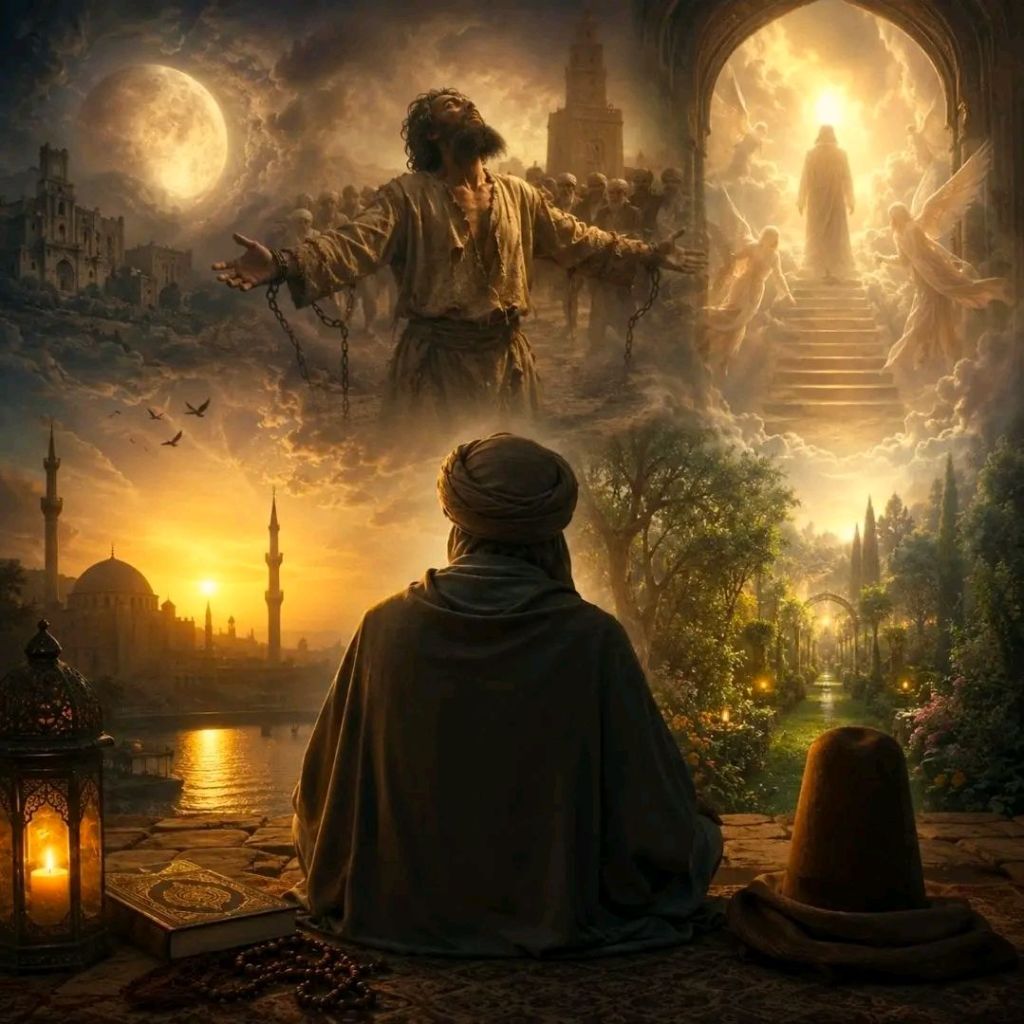
The Relationship of the Barzakh and the Soul

■ The Relationship of the Barzakh and the Soul

Among the most profound metaphysical doctrines articulated by Shaykh Ibn Arabī,
may Almighty Allāh sanctify his secret,
is the reality of the Barzakh.

The intermediate realm that stands between spirit and matter, the unseen and the visible, eternity and temporal existence.

Yet for Shaykh Ibn Arabī, the Barzakh is not merely a “place” entered after death. It is a universal principle woven into the very structure of existence itself.

The Arabic word barzakh means an isthmus, barrier, or partition. However, Shaykh Ibn Arabī defines it in a uniquely paradoxical way: it separates two realities while simultaneously joining them.

Thus the Barzakh possesses qualities of both worlds without becoming identical to either.

▪︎ He writes:

“The world of imagination is an isthmus (barzakh) between the world of spirits and the world of bodies, taking from both sides and giving to both sides.”

▪︎ Al-Futūḥāt al-Makkiyyah, II: 313

This intermediate reality is what Shaykh Ibn Arabī calls ʿĀlam al-Khayāl or ʿĀlam al-Mithāl  the Imaginal World.

It is neither purely physical nor purely abstract. Rather, it is the realm in which meanings become clothed in forms and forms become spiritualized.

▪︎ He says:

“Meanings take on forms in the imaginal presence, and forms become spiritualized there.”

▪︎ Al-Futūḥāt al-Makkiyyah, II: 377

For Shaykh Ibn Arabī, the human soul is intimately connected to this realm because
the soul itself is barzakhic in nature.

The human being stands between clay and spirit, between the world of density and the world of light. Thus man becomes a mirror between creation and the Divine.

▪︎ He writes:

“Man is the barzakh between the Real and creation. Through him the realities of the
Divine Names become manifest.”

▪︎ Fuṣūṣ al-Ḥikam

This is why the soul survives bodily death. Death, in Shaykh Ibn Arabī’s understanding,
is not annihilation but transition the soul withdrawing from the coarse physical body
into a subtler imaginal mode of existence.

▪︎ He explains:

“When the human being dies, he does not enter into absolute nonexistence. Rather, he passes from one abode to another, and appears in forms corresponding to his deeds and states.”

▪︎  Al-Futūḥāt al-Makkiyyah, Chapter on the Barzakh

The experiences of the grave, heavenly gardens, constriction, lights, and terrifying visions are therefore real, but real according
to the laws of the imaginal world rather than earthly physics. The Barzakh mirrors the inward reality of the soul.

▪︎ Shaykh Ibn Arabī states:

“Every soul is resurrected in accordance with the form of its belief and the realities acquired during earthly life.”

▪︎ Al-Futūḥāt al-Makkiyyah, IV: 483

The soul encounters its own truths objectified in symbolic form. This doctrine also explains dreams.

During sleep, the soul partially disengages from bodily constraints and enters the imaginal realm. Dreams are therefore not meaningless fantasies, but disclosures from the unseen clothed in symbolic imagery.

▪︎ Shaykh Ibn Arabī writes:

“Sleep is the brother of death, and the dream world is the first unveiling of the world of the unseen.”

▪︎ Al-Futūḥāt al-Makkiyyah, I: 304

Hence the famous wisdom often quoted by
the Sufis:

“People are asleep, and when they die they awaken.”

The worldly life itself resembles a dream when compared to the unveiled realities perceived after death.

Central to all of this is Shaykh Ibn Arabī’s understanding of khayāl (imagination).

Modern thought often treats imagination as fantasy or unreality, but Shaykh Ibn Arabī sees imagination as a divine faculty and ontological reality through which the unseen becomes manifest.

▪︎ He writes:

“Imagination is neither nonexistent nor existent absolutely; it is the meeting place of the two realities.”

▪︎  Al-Futūḥāt al-Makkiyyah, III: 9

▪︎ And elsewhere:

“Allāh made the world of imagination as a mirror in which meanings are seen clothed in sensory forms.”

▪︎ Al-Futūḥāt al-Makkiyyah, III: 275

Thus the cosmos itself becomes a grand barzakh. Creation is neither absolute being
nor pure nothingness; it is the imaginal self-disclosure (tajallī) of Almighty Allah.

Existence is symbolic, transparent, and revelatory for the one whose inner sight has awakened.

▪︎ Among Shaykh Ibn Arabi’s most famous statements is:

“Know that you are imagination, and all that you perceive and of which you say, ‘This is not imagination,’ is imagination. For all existence
is imagination within imagination.”

▪︎ Al-Futūḥāt al-Makkiyyah, III: 142

▪︎ And likewise:

“The whole cosmos is imagination, and it is truth in imagination. The one who understands this has attained the secrets of the Path.”

▪︎ Fuṣūṣ al-Ḥikam, chapter of Ishāq (Isaac)

These statements do not mean the world is unreal in the nihilistic sense. Rather, the world is real as symbol, real as manifestation, real as divine disclosure.

Just as a dream possesses meaning while not existing materially, so too creation is an imaginal unveiling of deeper realities.

Thus the spiritual traveler (sālik) seeks purification of the soul so that the Barzakh
may be consciously perceived before death.

The gnostic (ʿārif) begins to witness meanings within forms and divine signs within creation itself.Shaykh Ibn Arabī finally summarizes the mystery of existence and death in these words:

“The cosmos is all imagination, yet it is true imagination. Death awakens you from the dream of sensory existence.”

▪︎  Al-Futūḥāt al-Makkiyyah

In this vision, the Barzakh is not merely the realm entered after death it is the hidden architecture of existence itself.

The soul does not simply travel through the Barzakh; rather, it gradually awakens to the realization that its entire existence has always unfolded within this mysterious intermediary realm between contingency and the Eternal Real (al-Ḥaqq).

And Almighty Allāh knows best.

■ Teachings Of The Heart.