Amir al-Mu’minin: The Endless Virtues of Sayyiduna ‘Ali ibn Abi Talib (Alaihis Salam)

Amir al-Mu’minin: The Endless Virtues of Sayyiduna ‘Ali ibn Abi Talib (Alaihis Salam)
أَمِيرُ الْمُؤْمِنِينَ عَلِيُّ بْنُ أَبِي طَالِبٍ عَلَيْهِ السَّلَامُ

To speak of Sayyiduna ‘Ali (Alaihis Salam) is to speak of a mountain of merit that no article can encompass. He was a veteran of Badr, standing firm when Islam was few in number. He was from the Sabiqun Al-Awwalun — the foremost to embrace Islam, whose hearts raced to the truth before the world knew its worth. 

He was Amir al-Mu’minin, Chief of the Believers, and a Rightly-Guided Caliph (الْخُلَفَاءُ الرَّاشِدُونَ), one of the four upon whose guidance the Ummah was commanded to hold fast. 

Imam Abu Bakr Muhammad bin Al-Husayn Al-Ajurri (d. 360H, may Allah have mercy on him) captured his rank with words that still echo through the centuries: 

“So know, may Allah have mercy upon us and you, that Allah Al-Karim has honoured Amir Al-Mu’minin ‘Ali bin Abi Talib with the most lofty eminence. His precedence in goodness is great, his virtues are many, his merit is immense, his importance is revered and his rank is noble. 

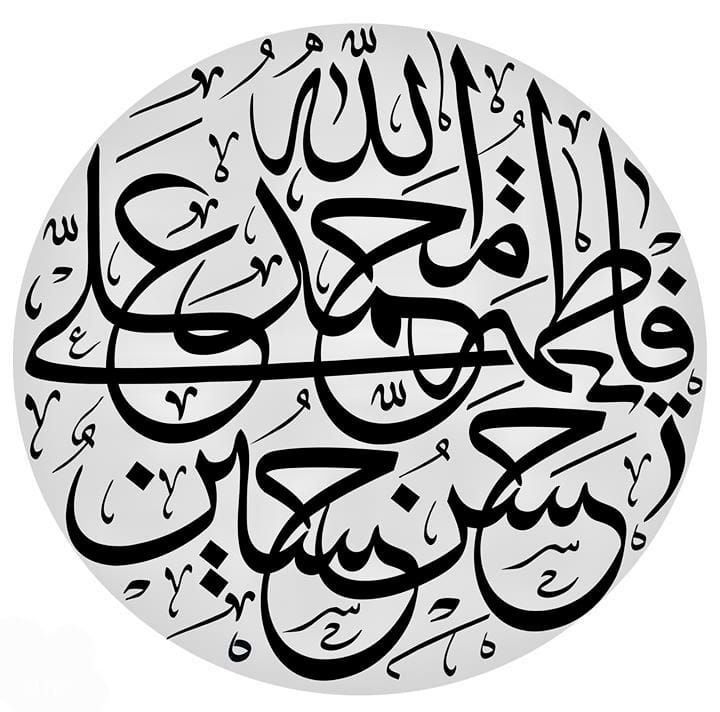
He is the brother of the Messenger ﷺ, the son of his uncle, the husband of Fatimah, the father of Al-Hasan and Al-Husayn. 

He is the Knight of the Muslims, the one that would remove anguish from the Messenger of Allah ﷺ, the killer of the enemies. 

He is the just and ascetic Imam in this worldly life, longing for the next. The follower of truth, fleeing from falsehood, and the one that possesses every noble character. 

Allah (Mighty and Majestic) and His Messenger ﷺ both love him, and he loves Allah and the Messenger. 

He is the one who is not loved except by a pious believer and is not hated except by a miserable hypocrite. 

[He is] a treasure of intellect, knowledge, gentleness, and manners, may Allah be pleased with him.” 

Kitab Ash-Shari’ah, p. 714-715 


A Life Woven with Honor 

أَخُو رَسُولِ اللَّهِ ﷺ — The brother of the Messenger ﷺ. Not by blood, but by a bond declared in Madinah when the Prophet ﷺ took his hand and said, “You are my brother in this world and the next.” 

زَوْجُ الْبَتُولِ — The husband of Fatimah Az-Zahra (Alaihas Salam), the Leader of the Women of Paradise. 

أَبُو السِّبْطَيْنِ — The father of Al-Hasan and Al-Husayn (Alaihimas Salam), the two fragrant flowers of the Prophet ﷺ in this Ummah. 

كَاشِفُ الْكَرْبِ عَنْ رَسُولِ اللَّهِ ﷺ — The remover of distress from the Messenger of Allah ﷺ. At Uhud when ranks broke, at Khaybar when the fortress seemed unbreakable, at Hunayn when feet turned back — Ali (Alaihis Salam) was the shield that did not move. 

الزَّاهِدُ الْعَادِلُ — The ascetic and the just. He ruled a vast empire while mending his own sandals, slept on bare earth, and wept when he feared he had wronged a single soul. 


The Criterion of Hearts 

لَا يُحِبُّهُ إِلَّا مُؤْمِنٌ تَقِيٌّ، وَلَا يُبْغِضُهُ إِلَّا مُنَافِقٌ شَقِيٌّ 

“None loves him except a pious believer, and none hates him except a miserable hypocrite.” 

This is not the praise of men — it is the statement of the Messenger of Allah ﷺ himself [Sahih Muslim]. Love for ‘Ali (Alaihis Salam) became a sign etched into the heart of faith. 

He was كَنْزُ الْعَقْلِ وَالْعِلْمِ وَالْحِلْمِ وَالْأَدَبِ — a treasure of intellect, knowledge, forbearance, and manners. The gate to the City of Knowledge, whose judgments still guide jurists, whose sermons still humble scholars, whose night vigils still shame the worshippers. 

No pen can count his virtues, and no tongue can do justice to his rank. We can only say what Imam Al-Ajurri said: His virtues are many, his merit is immense, his rank is noble. 

عَلَيْهِ السَّلَامُ 

Upon him be peace.

Shamsi wal Qamar

● Shamsi wal Qamar is symbolic to Lailaha Ilal Allah reflecting to Muhammadun Rasulallah SAW please expand

The Sun and Moon (Shamsi wal Qamar): Symbolism in “La ilaha illallah Muhammadun Rasulallah ﷺ”

The Qur’anic symbolism of the Sun (Shams) and the Moon (Qamar) is a profound spiritual teaching, especially as explained by Shaykh Nurjan Mirahmadi. This symbolism directly reflects the relationship between “La ilaha illallah” (There is no deity but Allah ﷻ) and “Muhammadun Rasulallah ﷺ” (Muhammad is the Messenger of Allah).

1. The Sun: “La ilaha illallah”

The Sun represents the Divine Reality, the Source of all Light and Power—“La ilaha illallah.” The Sun is the origin of fire (diya), the source of all energy, and in Qur’an is described as the masculine, active, and illuminating force. This symbolizes Allah’s ﷻ oneness and transcendence, from which all existence and guidance emanate.

2. The Moon: “Muhammadun Rasulallah ﷺ”

The Moon is the perfect reflection of the Sun’s light. It has no light of its own but shines with the nur (light) it receives. This is the reality of Sayyidina Muhammad ﷺ: he is the complete mirror and reflection of Divine Light, manifesting Allah’s ﷻ guidance to creation. Just as the Moon reflects and distributes the Sun’s light to the darkness of night, the Prophet ﷺ is the means by which Divine Mercy and guidance reach the hearts of the believers.

3. The Secret of Guidance

Shaykh Nurjan explains that the relationship between Sun and Moon is the secret of all spiritual guidance. The Divine Power and Light (“La ilaha illallah”) flows only to “Muhammadun Rasulallah ﷺ.” No creation, not even angels or other Prophets, can bear this direct manifestation. The Prophet’s ﷺ heart is the vessel for Allah’s ﷻ gaze and energy. The awliya (saints) are the “moons” of this nation, reflecting the Muhammadan Light to humanity, but always in complete humility—knowing their light is not their own but a reflection of the Prophet’s ﷺ reality.

4. Practical Reflection

This symbolism teaches us to seek the light of guidance by following the Prophet ﷺ with love and humility, just as the Moon follows the Sun. The Moon never changes its course or claims its own light; it is always in perfect submission and service. In the same way, true seekers must attach themselves to the Muhammadan Reality, recognizing that all spiritual openings, blessings, and realities come through Sayyidina Muhammad ﷺ.

May Allah ﷻ grant us to be true reflections of the Muhammadan Light, always following the Sun of Prophethood with sincerity and love. May our hearts become polished mirrors for Divine guidance, and may we never forget our utter dependence on the light of Sayyidina Muhammad ﷺ.

Reality of Hijrah: Two Faces of the Moon
Insan al-Kamil: The Perfect Human Being
The Way of the Rising Sun