At-Tibbu Nabawi PART 6

SECTION I TYPES OF NATURAL MEDICINE

TREATING FEVER WITH COLD WATER

said: ‘Abdullah bin Omar narrated that God’s Messenger “The intensity of fever is a scorching torridity that is vented from the boiling of hell-fire, so cool it down with water.” (Reported in sahih Bukhāri & Muslim). In the past, this saying baffled the majority of inexperienced physicians and hakïms, who were even able to convince some doubting canonists to regard it as an apocryphal tradition. Therefore, we shall, and by God’s leave, explain the depth of this important prophetic saying which is a divine revelation (wahi). Often revelations become controversial among adepts when misunderstood. However, pursuing modern medical practices, it is common among pediatricians to give an infant suffering from fever a bath of cold water until it subsides. We therefore testify, and Allah is our helper, that His Messenger spoke the truth. This prophetic saying carries two meanings: one is general for all people, and the second is exclusive and pertains to some people only. The second interpretation particularly concerns people who live in an extremely hot climate such as the inhabitants of the Arabian peninsula, for example. In their case, it is common to suffer from ephemeral fever due to exposure to extreme heat, and this must be treated by drinking cold water or by bathing in it. However, exposure to extreme cold also can produce such ephemeral fever, and such case can be treated by drinking hot drinks or bathing in hot water. Here again we recognize the theory of opposites.

According to Tibb medicine, fever is a biologically unnatural temperature that originates in the heart and rises through stagnationof certain blood hormones that are connected to the spirit or soul (described by Galen as pneuma); and by floating in a median course throughout the veins and arteries, such temperature expands across the entire body and rises to yield biological imbalance that affects the body’s natural functions.

There are two types of fevers: (1) Ephemeral fever, which is caused by inflammation, excessive motion, or exposure to scorching summer heat or freezing winter cold besides other causes; and (2) traumatic fever, which is divided into three categories. Traumatic fever originates from the blood humor and it develops a temperature that spreads throughout the whole body: a) When temperature is related to the soul, it is called a one day fever (i.e., ephemeral), and it may last up to three days; b) when fever is related to the primary four humors, namely: bilious (yellow bile), atrabilious (black bile), phlegmatic, and sanguine, it is called putrefactive, and finally, when fever originates from a primary organ, it is called hectic, and the latter further divides into many types.


दुश्मन एहले बैत को इबादत काम नहीं आएगी

इमाम तिबरानी व हाकिम हज़रत अब्दुल्लाह बिन अब्बास से रिवायत हैं कि रसूले पाक ने फरमाया (हदीस का आखरी हिस्सा मुलाहिजा फरमाऐं) :

अगर कोई शख़्स बैतुल्लाह के एक कोने और मुकाम इब्राहीम के दर्मियान क्याम करे नमाज़ पढ़े और रोज़े रखे फिर वह एहले बैत की दुश्मनी पर मर जाए तो वह जहन्नम में जाएगा। (बरकात आल रसूलस 257, ख़साईसुल कुबरा जि. 2. स. 565 इमाम सीयूती.) कौन ?

JASHUA (YUSHA’ BIN NUN) Alahissalam

JASHUA (YUSHA’ BIN NUN)

Jashua (Yusha bin Nun) carried out the first assignment of Moses on their first arrival in the Promised Land. After the death of Aaron he accompanied Moses in the desert for forty years and carried out all the assignments that were previously carried out by Aaron. When they returned to the banks of Jordan River after their difficult journeys in the desert, Moses appointed him his deputy and went up the mountain for the last time. He never came back.

It was Jashua who led Bani Israel into the city of Jericho (Yareho) and arranged the settlement of the twelve tribes of Bani Israel in the land of Canaan. It was his responsibility to personally see the burial of the remains of Prophet Joseph amongst his forefathers in accordance with his will. He died when all the tasks of settling the Israelites were accomplished according to the Will of God.

(Yusha bin Nun is known as Jashua in the Torah.)

References: His name is not mentioned in the Qur’an but is referred to along with the narratives of Moses in Sura Maidah. Kahaf and Waqeah.

हज़रत निज़ामुद्दीन औलिया रहमतुल्लाह अलेह का मसलक

हज़रत निज़ामुद्दीन औलिया रहमतुल्लाह अलेह का मसलक 👈

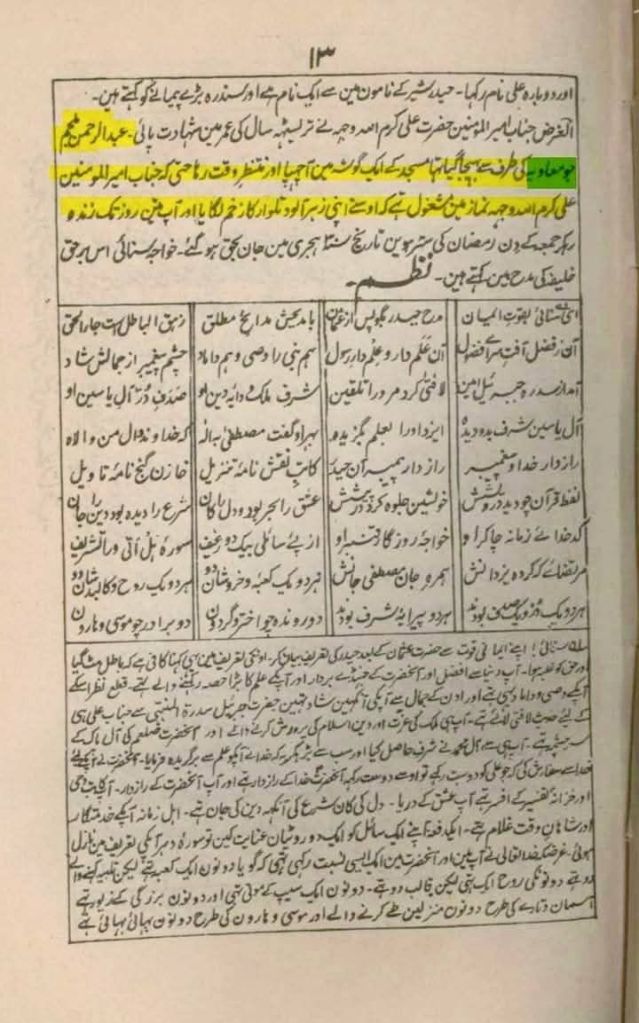
मोला अली अलैहिस्सलाम के कातिल को मुआविया ने भेजा था

जनाब अमीरूल मोमीनीन हज़रत अली अलैहिस्सलाम ने 63 साल की उम्र में शहादत पाई ,,,,अब्दुर रहमान मलजम जो मुआविया की तरफ से भेजा गया था ,,मस्जिद के एक कोने में आ छुपा और मुंतजर ए वक़्त रहा हत्ता के जनाब अमीरूल मोमीनीन मोला अली अलैहिस्सलाम नमाज़ में मशगूल थे के उसने अपनी ज़हर आलुद तलवार का जख्म लगाया और आप तीन रोज जिन्दा रहे

📗सैर उल औलिया📗
सफा No,,13
खलीफा ए हज़रत ख्वाजा निज़ामुद्दीन औलिया रहमतुल्लाह अलेह
हज़रत ख़्वाजा सय्यद मोहम्मद बिन मुबारक  किरमानी मीर खुर्द रहमतुल्लाह अलेह

ज़रबत के बाद हसनैन शरीफैन (अस) और उन के चाहने वालों के नाम हज़रत अली (अस) की वसीयत

ज़रबत के बाद हसनैन शरीफैन (अस) और उन के चाहने वालों के नाम हज़रत अली (अस) की वसीयत:
ضربت کے بعد حسنینؑ شریفین اور ان کے چاہنےوالوں کے نام حضرت علی علیہ السلامؑ کی وصیت:

اُوْصِیْکُمَا بِتَقْوَی اللّٰہِ۔
मैं तुम दोनों को खुदा से डरते रहने की वसीयत करता हूं
میں تم دونوں کو خدا سے ڈرتے رہنے کی وصیت کرتا ہوں۔

وَاِنْ لَا تَبْغِیَاالدُّنْیَا وَاِنْ بَغَتْکُمَا۔
और दुनिया कि तरफ माएल ना होना खुवाह वह तुम्हारी तरफ माएल हो
اور دنیا کی طرف مائل نہ ہونا خواہ وہ تمہاری طرف مائل ہو۔

وَلَا تَأَسَفًا عَلیٰ شَیْ ءٍ مِنْھَا زُوِیَ عَنْکُمَا۔
और दुनिया कि जो चीज़ तुम से रोक ली जाए तो उस पर अफसोस ना करना
اور دنیا کی جو چیز تم سے روک لی جائے اس پر افسوس نہ کرنا۔

وَقُوْلَا بِالْحَقِّ۔
और जो भी कहना हक़ के लिए कहना
اور جو بھی کہنا حق کے لئے کہنا۔

وَاعْمَلَا لِلْاَجْرِ۔
और जो कुछ करना सवाब के लिए करना
اور جو کچھ کرنا ثواب کے لئے کرنا۔

وَکُوْنَا لِلظَالِمِ خَصْمًا وَلِلمَظْلُوْمِ عَوْنًا۔
और ज़ालिम के दुश्मन और मज़लूम के मददगार रहना
اور ظالم کے دشمن اور مظلوم کے مددگار رہنا۔

اُوْصِیْکُمَا وَجَمِیْعَ وَلَدِیْ وَاَھْلِیْ وَمَنْ بَلَغَہُ کِتَابِیْ بِتَقْوَی اللّٰہِ وَنَظْمِ اَمْرِکُمْ۔
मैं तुम दोनों को, अपनी दूसरी औलादों को, अपने कुनबे के लोगों को और जिन लोगों तक मेरी यह बात पहुंचे उन सब को यह वसीयत करता हूं के अल्लाह से डरते रहना और अपने उमूर को मुनज़्ज़म रखना
میں تم دونوں کو، اپنی دوسری اولادوں کو، اپنے کنبے کے افرادکواور جن لوگوں تک میرایہ نوشتہ پہنچے، اُن سب کو وصیت کرتا ہوں کہ اللہ سے ڈرتے رہنا اور اپنے امور کو منظم رکھنا۔

وَصَلَاحِ ذَاتِ بَیْنِکُمْ۔ فَاِنِّیْ سَمِعْتُ جَدَّکُمَاصَلَّی اللّٰہُ عَلَیْہِ وَاٰلِہٖ یَقُوْلُ:صَلَاحُ ذَاتِ الْبَیْنِ اَفْضَلُ مِنْ عَامَۃِ الصَّلٰوۃِ وَالصِّیَامِ۔
और बाहमी ताअल्लुकात को सुलझाए रखना, कीयुं की मैं ने तुम्हारे नाना रसूल अल्लाह (स अ व अ व) को फरमाते सुना है के: “आपस की कशिदगियूं को मिटाना आम नमाज़ रोज़े से अफ़ज़ल है
اورباہمی تعلقات کو سلجھائے رکھنا، کیونکہ میں نے تمہارے نانا رسول اللہ صلی اللہ علیہ وآلہ وسلم کو فرماتے سنا ہے کہ:آپس کی کشیدگیوں کومٹانا عام نماز روزے سے افضل ہے۔

وَاللّٰہَ اللّٰہَ فِیْ الْاَیْتَامِ، فَلاَ تُغِبُّوْاأَفْوَاہَہُمْ وَلَا یَضِیْعُوْا بِحَضْرَتِکُمْ۔
देखो! यतीमों के बारे में अल्लाह से डरते रहना उन पर फाक़े की नौबत ना आए और तुम्हारे होते होए वह बर्बाद ना हों
دیکھو! یتیموں کے بارے میں اللہ سے ڈرتے رہناان پر فاقے کی نوبت نہ آئے اور تمہارے ہوتے ہوئے وہ برباد نہ ہوں۔

وَاللّٰہَ اللّٰہَ فِیْ جِیْرَانِکُمْ، فَاِنَّھُمْ وَصِیَّۃُ نَبِیِّکُمْ، مَازَالَ یُوْصِیْ بِھِمْ، حَتَّی ظََنَنَّا أَنَّہُ سَیُوَرِّثُھُمْ۔
देखो! अपने हम्सायों के बारे में खुदा से डरते रहना, कियूंकी इन के बारे में तुम्हारे नबी (स अल व आल व) ने बराबर हिदायत कि है आप (स अल व आल व) इन के बारे में इस क़दर ताक़ीद फरमाते थे कि हमें यह गुमान होने लगा था कि आप (स अल व आल व) उन्हें भी वर्सा दिलाएंगे
دیکھو! اپنے ہمسایوں کے بارے میں خدا سے ڈرتے رہنا، کیونکہ ان کے بارے میں تمہارے نبیؐ نے برابر ہدایت کی ہےآپ ؐان کے بارے میں اس قدر تاکید فرماتے تھے کہ ہمیں یہ گمان ہونے لگا تھا کہ آپ ؐاُنھیں بھی ورثہ دلائیں گے۔

وَاللّٰہَ اللّٰہَ فِیْ الْقُرْاٰنِ، لَا یَسْبِقُکُمْ بِالْعَمَلِ بِہٖ غَیْرُکُمْ۔
और क़ुरान के बारे में अल्लाह से डरते रहना, कहीं ऐसा ना हो के दूसरे इस पर अमल करने में तुम पर सबक़त ले जाएं
اور قرآن کے بارے میں اللہ سے ڈرتے رہنا، کہیں ایسا نہ ہو کہ دوسرے اس پر عمل کرنے میں تم پر سبقت لے جائیں۔

وَاللّٰہَ اللّٰہَ فِیْ الصَّلوٰۃِ، فَاِنَّھَاعَمُودُ دِیْنِکُمْ۔
नमाज़ के बारे में अल्लाह से डरना कियुंकी वह तुम्हारे दीन का सतून है
نماز کے بارے میں اللہ سے ڈرنا کیونکہ وہ تمہارے دین کا ستون ہے۔

وَاللّٰہَ اللّٰہَ فِیْ بیْتِ رَبِّکُمْ، لَا تُخْلُوْہُ مَابَقِیْتُمْ۔
और अपने रब के घर के बारे में खुदा से डरते रहना, जीते जी इसे खाली ना छोड़ना
اور اپنے رب کے گھر کے بارے میں خدا سے ڈرتے رہنا، جیتے جی اسے خالی نہ چھوڑنا۔

فَاِنَّہُ اِنْ تُرِکَ لَمْ تُناظَرُوْا۔
कियुंकी अगर यह खाली छोड़ दिया गया तू फिर (अज़ाब से) मोहलत ना पाओगे
کیونکہ اگریہ خالی چھوڑ دیا گیا توپھر (عذاب سے) مہلت نہ پاؤ گے۔

وَاللّٰہَ اللّٰہَ فِی الْجِہَادِ بِاَمْوَالِکُمْ وَاَنْفُسِکُمْ وَاَلْسِنَتِکُمْ فِیْ سَبِیْلِ اللّہِ۔
अपने अमवाल, जान और ज़बान से राहे खुदा में जिहाद के सिलसिले में खुदा से डरते रहना
اپنے اموال، جان اور زبان سے راہِ خدا میں جہاد کے سلسلے میں خدا سے ڈرتے رہنا۔

وَعَلَیْکُمْ بِالتَّوَاصُلِ وَالتَّبَاذُلِ، وَاِیَّاکُمْ وَالتَّدَابُرَوَالتَّقَاطُعَ۔
तुम पर लाज़िम है के एक दूसरे से मेल मिलाप रखना और एक दूसरे की एआनत करना, खबरदार एक दूसरे से क़्त ए ताऑल्लुक से परहेज़ करना
تم پر لازم ہے کہ ایک دوسرے سے میل ملاپ رکھناا ور ایک دوسرے کی اعانت کرناخبردار ایک دوسرے سے قطع تعلق سے پرہیز کرنا۔

لَا تَتْْرُکُواالْاَمْرَ بِالْمَعْرُوْفِ وَالنَّہْیَ عَنِ الْمُنْکَرِ، فَیُوَلَّیٰ عَلَیْکُمْ شِرَارُکُمْ، ثُمَّ تَدْعُوْنَ فَلَا یُسْتَجَابُ لَکُمْ۔
देखो अमरे बिल मारूफ और नहीं अनिल मुंकर को तर्क ना करना, वरना बद किरदार तुम पर मुसल्लत हो जाएंगे और फ़िर अगर तुम दुआ मांगो गे तो वह क़बूल ना होगी
دیکھو!امربالمعروف اور نہی عن المنکرکو ترک نہ کرنا، ورنہ بد کردار تم پر مسلّط ہوجائیں گے اور پھر اگر تم دعا مانگوگے تو وہ قبول نہ ہوگی۔

یَا بَنِیْ عَبْدِالْمُطَّلِبِ! لَا اُلْفِیَنَّکُمْ تَخُوْضُوْنَ دِمَآءَ الْمُسْلِمِیْنَ، خَوْضًا تَقُوْلُوْنَ: قُتِلَ اَمِیْرُالْمُؤْمِنِیْنَ۔
ऐ अब्दुल मुत्तलिब के बेटो! ऐसा ना हो के तुम, “अमीरूल मोमेनीन क़त्ल होगए, अमीरूल मोमेनीन क़त्ल होगए”, के नारे लगाते होए मुसलमानों के खून से होली खेलने लग जाओ
اے عبدالمطلب کے بیٹو! ایسا نہ ہو کہ تم، امیرالمو منین قتل ہوگئے، امیر المومنین قتل ہوگئے کے نعرے لگاتے ہوئے مسلمانوں کے خون سے ہولی کھیلنے لگو۔

أَلاَ لاَ تَقْتُلُنَّ بِیْ اِلَّا قَاتِلِیْ۔
देखो! मेरे बदले में सिर्फ मेरा क़ातिल ही क़त्ल किया जाए
دیکھو! میرے بدلے میں صرف میرا قاتل ہی قتل کیاجائے۔

اُنْظُرُوْااِذَاأَ نَامُتُّ مِنْ ضَرْبَتِہِ ہٰذِہٖ، فَاضْرِبُوْہُ ضَرْبَۃً بِضَرْبَۃٍ، وَلَا تُمَثِّلُ بِالرَّجُلِ، فَاِنِّیْ سَمِعْتُ رَسُوْلَ اللّٰہُ (صَلّی اللّٰہ عَلیْہِ وَآلِہِ وَسَلَّمَ) یَقُوْلُ: ”
اِیَّاکُمْ وَالْمُثْلَۃَ وَلَوْبِالْکَلْبِ الْعَقُوْرِ۔
देखो! अगर मैं इस ज़रब से मर जाऊं, तो तुम इस एक ज़रब के बदले में इसे एक ही ज़रब लगाना, और इस शख्स के हाथ पैर ना काटना, कियुंकी मैं ने रसूल अल्लाह (स अ व अ व) को फरमाते सुना है के: खबरदार किसी के हाथ पैर ना काटना, खूवाह वह काटने वाला कुत्ता ही कियुं ना हो.
دیکھو! اگر میں اس ضرب سے مر جاؤں، تو تم اس ایک ضرب کے بدلے میں اسے ایک ہی ضرب لگانا، اور اس شخص کے ہاتھ پیرنہ کاٹنا، کیونکہ میں نے رسول اللہ(صلی اللہ علیہ وآلہ وسلم) کو فرماتے سنا ہے کہ: خبردار کسی کے ہاتھ پیر نہ کاٹنا، خواہ وہ ٹنے والا کتّا ہی کیوں نہ ہو۔
______________________