THE COSMIC REALMS IN SUFISM

THE COSMIC REALMS IN SUFISM

In Islamic mysticism and Sufism, the cosmic realms are often discussed to explain the layers of existence beyond the physical world. These realms are not explicitly categorized in the Qur’an or Hadith in this way, but they are drawn from various Islamic philosophical and mystical traditions.

1. Alam al-Nasoot (عالم الناسوت) – The Physical World

This is the material realm where humans live.

It includes everything that can be perceived by the senses.

Governed by physical laws and time.

Humans, animals, plants, and all tangible creations exist here.

2. Alam al-Malakoot (عالم الملكوت) – The Spiritual Realm

This is the realm of the unseen, including angels, spirits, and divine decrees.

It is considered a higher vibrational realm than the physical world.

Angels and other non-physical beings reside here.

It is accessible through deep spiritual practices, dreams, and divine inspiration.

Mentioned in the Qur’an:
“Thus did We show Ibrahim the kingdom (Malakoot) of the heavens and the earth…” (Quran 6:75).

3. Alam al-Jabaroot (عالم الجبروت) – The Realm of Divine Power

This is a higher realm of divine majesty and absolute power.

The realm of Allah’s direct command (“Kun fayakun” – Be, and it is”).

Angels of high rank, such as Jibreel (Gabriel), are said to belong here.

It is beyond human perception but can be experienced through spiritual ascension (Miraj of the Prophet Muhammad ﷺ).

4. Alam al-Lahoot (عالم اللاهوت) – The Divine Realm of Pure Oneness

This is the realm of pure divinity, where Allah’s essence is beyond comprehension.

It represents the absolute existence of Allah, where nothing else exists.

It is considered beyond time, space, and creation.

Some Sufi scholars believe that Prophet Muhammad ﷺ, during Miraj (Ascension), experienced a glimpse of this realm when he reached Sidratul Muntaha.

This realm cannot be entered by any being; it is purely Allah’s domain.

5. Alam al-Barzakh (عالم البرزخ) – The Intermediate Realm (Between Life & Hereafter)

The realm where souls go after death but before the Day of Judgment.

It is a state between this world and the next.

Souls experience the consequences of their deeds while waiting for resurrection.

Described in the Qur’an:
“And behind them is a barrier (Barzakh) until the Day they are resurrected.” (Quran 23:100).

6. Alam al-Araf (عالم الأعراف) – The Heights Between Heaven & Hell

A temporary realm on the Day of Judgment where those with equal good and bad deeds will wait for Allah’s judgment.

Mentioned in Surah Al-A’raf (7:46-49).

MYSTICAL INTERPRETATION & RELEVANCE

Sufi scholars believe spiritual seekers can ascend through these realms through deep worship, dhikr, fasting, and devotion.

Prophets and Awliya (saints) may gain glimpses of these realms through divine inspiration.

Dreams and visions can sometimes be messages from the Malakoot realm.

The Night Journey (Isra wa Miraj) of Prophet Muhammad ﷺ is considered a journey through these realms.

Manaqib e Asadullah

The Martyrdom of Syedna Ali (A.S.)
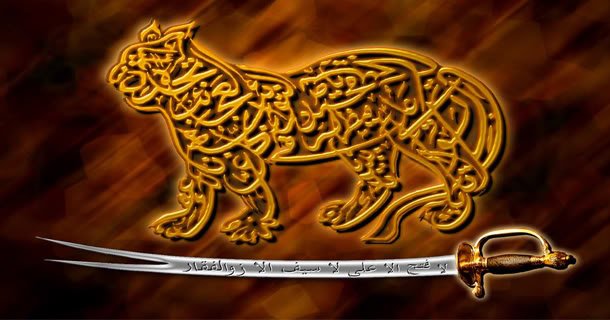
On the 21st of Ramadan, the world mourns the martyrdom of Syedna Mawla Ali (A.S.), the Bab-ul-Ilm (Gate of Knowledge), Asadullah (Lion of Allah), and Sirr-ul-Asrar (Secret of Secrets). Struck in sujood while immersed in Divine Remembrance, his final words were:

“By the Lord of the Kaaba, I have succeeded!”

For Sufis, Syedna Ali (A.S.) is the Imam of Divine Realities (Haqiqah) and Spiritual Authority (Wilayah). His heart contained the oceans of Ilm al-Yaqeen (Knowledge of Certainty), Ayn al-Yaqeen (Vision of Certainty), and Haqq al-Yaqeen (Truth of Certainty). He is the perfect example of Fana Fillah (Annihilation in God) and Baqa Billah (Subsistence in God)—where the self dissolves, leaving only Divine Presence.

The Holy Prophet (PBUH) declared:
“I am the city of knowledge, and Ali (A.S.) is its gate.”
(Kanz al-Ummal, Vol. 13, Page 148 | Al-Mustadrak al-Hakim, Vol. 3, Page 127)

The Prophet (PBUH) also said:
“Ali (A.S.) is with the Truth, and the Truth is with Ali (A.S.).”
(Sahih Tirmidhi, Vol. 31, Page 166)

Ali (A.S.) is the “Mazhar al-Asma wal-Sifat” (Manifestation of Divine Names and Attributes), the guide for all seekers who wish to travel from Shari’ah (Outer Law) to Tariqah (Inner Path), from Ma’rifah (Gnosis) to Haqiqah (Truth).

21 Hadiths on the Virtues of Syedna Ali (A.S.)

1. Ali (A.S.) as an Act of Worship

“Looking at Ali (A.S.)’s face is an act of worship.”
(Al-Mustadrak al-Hakim, Vol. 3, Page 11)

2. Mentioning Ali (A.S.) as Worship

“Mentioning Ali (A.S.) is an act of worship.”
(Kanz al-Ummal, Vol. 11, Page 601)

3. Ali (A.S.) as Harun to Musa

“Ali (A.S.) holds the same position with me as Harun did with Musa, except that there will be no prophet after me.”
(Sahih Bukhari, Vol. 3, Page 1142 | Sahih Muslim, Vol. 31, Page 5931)

4. The Beloved of Allah and His Messenger

On the Day of Khaybar, the Prophet (PBUH) said:
“Tomorrow, I will give the flag to the one who is most beloved to Allah and His Messenger.”
(Sahih Muslim, Vol. 31, Page 5917)

5. Ali (A.S.)’s Judgment

“Among the matters of dispute after me, Ali (A.S.)’s judgment will be the best.”
(Kanz al-Ummal, Vol. 13, Page 120)

6. The Best Ruler

“Ali (A.S.) is the best ruler among you.”
(Kanz al-Ummal, Vol. 13, Page 120)

7. The Leader of the Arabs

“I am the leader of the children of Adam, and Ali (A.S.) is the leader of the Arabs.”
(Al-Mustadrak al-Hakim, Vol. 3, Page 123)

8. Ali (A.S.)’s Strike at Khandaq

“Ali (A.S.)’s strike on the Day of Khandaq is superior to the worship of both worlds (Thaqalayn).”
(Al-Mustadrak al-Hakim, Vol. 3, Page 34)

9. The Exclusive Door to Masjid al-Nabawi

“Close all doors to Masjid al-Nabawi except the door of Ali (A.S.)’s house.”
(Al-Mustadrak al-Hakim, Vol. 3, Page 125)

10. Ali (A.S.) and the Prophet (PBUH)

“Ali (A.S.) is from me, and I am from Ali (A.S.).”
(Musnad Ahmad ibn Hanbal, Vol. 5, Page 606 | Sahih Tirmidhi, Vol. 13, Page 168)

11. The Prophet’s (PBUH) Dua for Ali (A.S.)

When sending out an army, the Prophet (PBUH) prayed:
“O Allah, do not take my soul until I see Ali (A.S.) again.” (Narrated by Umm Ayman)
(Sahih Tirmidhi, Vol. 13, Page 178)

12. Ali (A.S.) and the Truth

“Ali (A.S.) is with the truth, and the truth is with Ali (A.S.).”
(Sahih Tirmidhi, Vol. 31, Page 166)

13. The Announcement at Ghadir Khumm

At Ghadir Khumm, the Prophet (PBUH) raised Ali (A.S.)’s hand and declared:
“For whomever I am Mawla, Ali (A.S.) is also his Mawla.”
(Tafsir al-Durr al-Manthur)

14. Hurting Ali (A.S.) Hurts the Prophet (PBUH)

“Whoever hurts Ali (A.S.), hurts me.”
(Musnad Ahmad ibn Hanbal, Vol. 4, Page 534)

15. Enmity with Ali (A.S.)

“Whoever is hostile to Ali (A.S.) is hostile to me.”
(Manaqib Ali ibn Abi Talib, Page 192)

16. The Mark of a True Believer

“O Ali (A.S.)! None but a true believer will love you, and none but a hypocrite will hate you.”
(Sahih Tirmidhi, Vol. 13, Page 177)

17. Ali (A.S.)’s Love Burns Away Sins

“Ali (A.S.)’s love burns away sins as fire consumes wood.”
(Kanz al-Ummal, Vol. 11, Page 125)

18. Obedience to Ali (A.S.)

The Prophet (PBUH) said to Ali (A.S.):
“Whoever obeys us has obeyed Allah.” (Narrated by Abu Dharr al-Ghifari)
(Al-Mustadrak al-Hakim, Vol. 3, Page 123)

19. The Three Titles Given to Ali (A.S.) by Allah

“On the night of my ascension, Allah revealed three things to me about Ali (A.S.): He is the leader of the pious, the guardian of the believers, and the guide of the radiant-faced ones.”
(Al-Mustadrak al-Hakim, Vol. 3, Page 138)

20. The Gate to Knowledge

“I am the city of knowledge, and Ali (A.S.) is its gate.”
(Kanz al-Ummal, Vol. 13, Page 148 | Al-Mustadrak al-Hakim, Vol. 3, Page 127)

21. Ali (A.S.), the Prophet’s (PBUH) Brother

At the brotherhood pact in Medina, the Prophet (PBUH) said:
“O Ali (A.S.)! You are my brother in this world and the Hereafter.”
(Tarikh Ibn Kathir, Vol. 3, Page 223)

May the love of Mawla Ali (A.S.) illuminate our hearts and guide us to Divine Truth.

Can someone control a jinn?

Can someone control a jinn?

In Islam, jinnaat are real beings created by Allahﷻ from “smokeless fire” (Qur’an 55:15). They have free will like humans, meaning they can choose to obey or disobey Allahﷻ. Some are Muslims, while others are disbelievers or even devils (shayateen).

Yes, it is possible, but with very strict limitations and serious consequences. The only known person to whom Allahﷻ granted control over the jinn was Prophet Sulayman (Solomon, peace be upon him). This was a miracle specifically given to him as mentioned in the Qur’an:

“And We subjected to Solomon the wind… and the devils [jinn], every builder and diver and others bound in chains.”
(Surah Sad 38:36-38)

For anyone else, controlling a jinn is not permissible (haram) if it involves magic (sihr), rituals, or making deals with the jinn, which is what happens in most so-called control methods.

Why is it haram?

1) Because it typically involves:

2) Associating with jinn through forbidden means

3) Using magic or shirk (associating partners with Allahﷻ)

4) Relying on jinn for knowledge or help instead of Allah

5) Inviting harm to yourself and others spiritually and physically

“And indeed, there were men among mankind who took shelter with the jinn, but they [only] increased them in burden.”
(Surah Al-Jinn 72:6)

What about ruqyah or exorcism?

That is halal and encouraged — when done by permissible means, like:

1) Reciting Qur’an (e.g., Surah Al-Falaq, An-Naas, Ayat al-Kursi)

2) Making du‘a using authentic Prophetic methods

3) Seeking protection from Allahﷻ, not through the jinn

This is considered defensive, not controlling the jinn.

So in summary:

Yes, jinn can be controlled — but only Prophet Sulayman (AS) was granted that lawfully.

Using forbidden methods (magic, rituals, etc.) to control jinn is haram and extremely dangerous.

Ruqyah and spiritual healing through Qur’an and du‘a is halal and beneficial.

Ummul Momineen Hazrat Ayesha Siddeeqa Ki Sakhawat

*Ummul Momineen Hazrat Ayesha Siddeeqa Ki Sakhawat*

*1.* Hazrat Urwa Bin Zubair Razi Allahu Tala Anhu Bayan Karte Hain Ke Hazrat Ayesha Siddeeqa Salamullah Alaiha Ke Paas Allah Ke Rizq Me Se Jo Bhi Cheez Aati Wo Usko Apne Pas Na Roke Rakhti Balke Usi Waqt Khade Khade Us Ka Sadqa Farma Deti Thi.

📚 *Reference* 📚
Bukhari, As Sahih, Kitab Al Manaqib, Bab Manaqib e Quraish, Jild 3, Safa 1291, Hadees No 3314.

*2.* Hazrat Umm e Zarah Jo Ke Hazrat Ayesha Siddeeqa Ki Khadima Thi Bayan Karti Hain Ke Hazrat Abdullah Bin Zubair Razi Allahu Tala Anhu Ne Do Theliyon Me Se Aapko (Hazrat Ayesha Ko) 80 Hazar Ya 1 Lakh Ki Maliyat Maal Bheja, Aapne Maal Rakhne Ke Liye Ek Thaal Mangwaya Aur Aap Us Din Roze Se Thi Aap Wo Maal Logo Me Taqseem Karne Ke Liye Bedh Gayi, Pas Sham Tak Us Maal Me Se Aapke Paas 1 Dirham Bhi Na Bacha Jab Sham Ho Gayi To Aapne Farmaya Aye Ladki Mere Liye Iftar Ke Liye Kuch Lao Wo Ladki Ek Roti Aur Thora Sa Ghee Lekar Hazir Hui, Umm e Zarah Ne Arz Kiya :- Kya Aapne Jo Maal Taqseem Kiya Hain Usme Se Hamare Liye Ek Dirham Ka Gosht Nahi Khareed Sakti Thi Jisse Aaj Ham Iftaar Karte, Hazrat Ayesha Ne Farmaya :- Ab Mere Sath Is Lehje Me Baat Na Kar Agar Us Waqt (Jab Me Maal Taqseem Kar Rahi Thi) Tu Ne Mujhe Yad Karaya Hota To Shayad Me Aesa Kar Leti.

📚 *Reference* 📚
*1.* Abu Nu’aym, Hilyatul Auliya, Jild 2, Safa 47.
*2.* Zahabi, Siyar Alam Al Nubala, Jild 2, Safa 187.
*3.* Ibne Saad, Al Tabqaat Al Kubra, Jild 8, Safa 67.