The preparation for the arrival of Dajjal seems to be nearing completion…
Hadith tells us that Dajjal will come. But when? Looking at the world today, it feels like that time may not be very far.
The Messenger of Allah ﷺ (Prophet Muhammad) said: “From the time of Adam (AS) until the Day of Judgment, there is no greater trial than the trial of Dajjal.”
This is not just a statement. It is a warning. The greatest danger to humanity is coming.
But are we prepared?
First, who is Dajjal? A man. One-eyed. Blind in the left eye. The right eye will be swollen. On his forehead will be written “Kafir” (K-F-R). A believer will be able to read it, but a disbeliever will not.
His claims will escalate: •First: “I am a good man.” •Then: “I am a prophet.” •Finally: “I am God.”
He will perform extraordinary acts: •He will appear to bring the dead back to life (in reality, it will be deception). •He will bring rain. •He will cause crops to grow. •He will provide wealth and resources.
People will be deceived. Millions will follow him.
But think for a moment… How will Dajjal control the whole world?
He will need certain systems: 1. Control of communication With one command, he can reach everyone. Today, this is possible — Internet. Social media.
2. Control of the economy Who can buy, who cannot. Who has money, who does not. Those who follow him will receive, those who refuse will be deprived. Today, this is possible — Digital currency. Cashless society.
3. Identity marking system A sign to identify his followers. Hadith mentions that his followers will carry a mark. Today we see: Digital IDs. Biometric data. RFID chips.
Are these just technological advancements? Or preparation for Dajjal?
4. Masjid Al-Aqsa Hadith mentions that Dajjal will come to Jerusalem!!!
That will be his central place. Look at what is happening today in Jerusalem. Occupation. Excavations under Al-Aqsa Mosque. They claim they are searching for the foundation of the Temple of Prophet Sulaiman (AS).
Why is this temple important? According to their belief, their “Messiah” will not come until that temple is rebuilt.
Who is this “Messiah”? In Islamic understanding — this is Dajjal.
What about predictions like Newton’s? Isaac Newton once calculated that a major turning point might occur around the year 2060, based on his interpretation of historical and biblical texts.
But as Muslims, we do not know the exact time. We only know the signs.
The Prophet ﷺ said: During the time of Dajjal, believers will face extreme trials. Dajjal will show what appears to be Paradise and Hell: •What he calls “Paradise” will actually be Hell. •What he calls “Hell” will actually be Paradise.
So what should a believer do?
The Prophet ﷺ advised: Recite Surah Al-Kahf — especially the first 10 verses.
Who will survive that time? •Those with strong faith (Iman) •Those connected to the Qur’an •Those who establish Salah (prayer)
But here’s the real question: Preparation for that time must begin today.
Are you prepared?
Is your faith strong?
How deep is your connection with the Qur’an?
How consistent is your prayer?
Answer these questions to yourself. Look at the signs of Dajjal. Then look at today’s world.
Do you see the similarities? Let us know your thoughts.
Allahumma inna nauzubika min fitnatil Masihid Dajjal… (O Allah, we seek refuge in You from the trial of the False Messiah, Dajjal.)
Bilal ibn Rabah رضي الله عنه was an Abyssinian from Africa. He was initially a slave belonging to Abdullah ibn Jud‘an. Bilal used to take some of the sheep out to graze on the outskirts of Makkah.
One day, while he was out grazing the sheep, he saw Muhammad ibn Abdullah ﷺ together with Abu Bakr as-Siddiq رضي الله عنه.
The Prophet ﷺ said to him:
“O shepherd, we would like some milk from your sheep.”
Bilal رضي الله عنه replied:
“These sheep are not mine except for one share. But if you wish, I can give you my share because this animal normally does not give much milk.”
The Prophet ﷺ then placed his blessed hands upon the animal and milked it.
The milk was enough for Bilal ibn Rabah رضي الله عنه to drink.
Then the Prophet ﷺ milked it again, and Abu Bakr as-Siddiq رضي الله عنه drank.
Then he milked it again, and the Prophet ﷺ himself drank.
Bilal رضي الله عنه returned over the next few days and noticed something incredible.
All of the sheep had become healthy and full, and they were producing large amounts of milk.
Abu Jahl noticed that something unusual was happening.
So he said to Abdullah ibn Jud‘an:
“Your slave boy is definitely meeting Muhammad.”
They followed Bilal رضي الله عنه and discovered that it was true.
Bilal ibn Rabah رضي الله عنه openly declared his shahadah.
The Quraysh then decided to torture him severely.
They stripped him of his clothing. Dragged him through the burning heat. Burned him with fire. Whipped him mercilessly.
They treated him worse than an animal.
They tied ropes around his neck and dragged him through the streets while children spat on him.
And they kept saying:
“Curse Muhammad and praise our gods!”
But Bilal رضي الله عنه continued repeating only one phrase:
“Ahadun Ahad… Ahadun Ahad…”
“He is One… He is One…”
When his body had become nothing but wounds and bones, Abu Bakr as-Siddiq رضي الله عنه approached Umayyah ibn Khalaf and said:
“Sell him to me.”
A deal was struck for nine ounces of gold.
After the sale, Umayyah mocked Abu Bakr in front of everyone and said:
“Even if you had offered me one ounce of gold, I would still have sold him to you because this slave is worthless.”
Abu Bakr رضي الله عنه replied:
“Wallahi, if you had asked me for one hundred ounces of gold, I would have paid it.”
Bilal رضي الله عنه had an incredibly beautiful voice.
When the Muslims migrated to Madinah, and the Adhan was legislated, the Prophet ﷺ instructed Bilal رضي الله عنه to climb to a high place and call the Adhan.
The Prophet ﷺ said to him:
“Your voice is clearer and sweeter.”
Bilal ibn Rabah رضي الله عنه stood up and called the very first Adhan in Islam.
From that day onward, he became known as the Mu’adhin of Rasulullah ﷺ.
His assistant was Abdullah ibn Umm Maktum رضي الله عنه.
After the Prophet ﷺ returned from Al-Isra wal-Mi‘raj, he said to Bilal:
“O Bilal, I heard your footsteps in Paradise.”
SubhanAllah.
One day, a man came to the Prophet ﷺ and said:
“O Messenger of Allah, I have a daughter. If you know anyone suitable for marriage, please tell me.”
The Prophet ﷺ replied:
“Bilal ibn Rabah.”
The man returned later and asked again.
The Prophet ﷺ again replied:
“Bilal ibn Rabah.”
The man returned a third time and asked:
“O Messenger of Allah, is there anyone you have in mind?”
The Prophet ﷺ replied:
“What is wrong with Bilal ibn Rabah? Do you not want your daughter to marry a man from the people of Paradise?”
SubhanAllah.
The man then gave his daughter in marriage to Bilal رضي الله عنه, and they lived happily together.
During the Battle of Badr, the Prophet ﷺ instructed the companions regarding the battle cry.
The cry was:
“Ahadun Ahad! Ahadun Ahad!”
The same words Bilal رضي الله عنه used while being tortured in Makkah.
When Makkah was conquered, three people entered the Kaaba together with the Prophet ﷺ:
Uthman ibn Talhah, Usamah ibn Zaid, and Bilal ibn Rabah رضي الله عنه.
Then the Prophet ﷺ said to Bilal:
“It is time for prayer.”
Bilal رضي الله عنه climbed on top of the Kaaba and called the Adhan.
This was one of the greatest moments in Islamic history.
A former African slave who had once been dragged through the streets of Makkah was now standing on top of the Kaaba calling people to Allah.
The Prophet ﷺ then made the famous declaration:
“Islam has removed racism. All people are from Adam, and Adam was created from dust.”
When the Prophet ﷺ passed away, Bilal رضي الله عنه once stood to call the Adhan.
But when he reached the words:
“Ashhadu anna Muhammadan Rasulullah…”
he could not continue.
He broke down crying.
And when Bilal cried, the companions cried with him.
Because the memories of Rasulullah ﷺ overwhelmed them all.
Later, during the Khilafah of Abu Bakr as-Siddiq رضي الله عنه, Bilal said:
“O Abu Bakr, I cannot continue calling the Adhan after the Messenger of Allah ﷺ.”
Years later, during the Khilafah of Umar ibn al-Khattab رضي الله عنه, Umar traveled to Jerusalem to receive its keys.
The companions requested Umar:
“Convince Bilal to call the Adhan one more time.”
Bilal رضي الله عنه stood and called the Adhan.
And when the people heard his voice again, they burst into tears because it brought back the memories of the days of Muhammad ﷺ.
यौम ए अक़्द मौला ए कायनात अली इब्ने अबि तालिब (अलैहिस्सलाम) व खातून ए कायनात फातिमा बिन्ते मोहम्मद (सलाममुल्लाही अलैहा)
हज़रत अली رضي الله عنه से रिवायत है के आप फरमाते हैं कि रसुलुल्लाह ﷺ ने फरमाया के ऐक फरिश्ता मेरे पास आया और कहा के : “अय मुहम्मद ﷺ अल्लाह ﷻ आप को सलाम केहलवाया है और फरमाया है कि मैं ने आलमे-बाला में मुकर्रब फरिश्तों की मजलिस में आपकी बेटी फातिमा رضي الله عنها को अली رضي الله عنه की झैजीयत (निकह) में दे दिया है अब आप ज़मीन पर फातिमा رضي الله عنها को अली رضي الله عنه की झौजीयत मे दे दें| 📚किताब : ज़खाइरूल उक़बा फी मनाक़िबे-ज़विल-क़ुरबा सफा : 72 बाब : अल्लाह तआला का आलमे-बाला में मलाइका की हाज़री में फातिमा को अली की झौज़ीयत में देना.
हज़रते असमा बिन्ते अमिस رضي الله عنها फरमाती है: मैं रसूलल्लाह ﷺ की साहबज़ादी हज़रते फातिमा رضي الله عنها की शबे अरोसी के मोके पर उनके घर मौजूद थी, जब सुबह हुवी तोह नबीऐ अकरम ﷺ दरवाज़े पर तशरीफ़ लाऐ और फ़रमाया: ए उम्मे ऐमन मेरे भाई को मेरे पास बुलाओ – उन्होंने कहा : वो आपका भाई है? जब के आपने (अपनी बेटी के साथ) उसका निकाह किया है – आपने फ़रमाया: जी हां ऐ उम्मे ऐमन – उसी ईशना मे हज़रते अली رضي الله عنه भी आ गऐ ,नबीऐ अकरम ﷺ ने उनके जिसम पर पानी का छींटा मरते हुवे दुआए खैर दी और फ़रमाया: फातिमा رضي الله عنها को मेरे पास बुलाओ – उम्मे ऐमन फरमाती है: हज़रते फातिमा رضي الله عنها हया की वजह से झिज़कती हुवी आई, रसूलल्लाह ﷺ ने उनसे फ़रमाया : तुम मुत्मइन रहो क्यूंकि मैंने तुम्हारा निकाह उस शख्स के साथ किया है जो पुरे खानदान मै मुझे सबसे जियादा अज़ीज़ है, अल मुस्तद्रक लिल हाकिम जिल्द: 4 हदीस नं: 4752
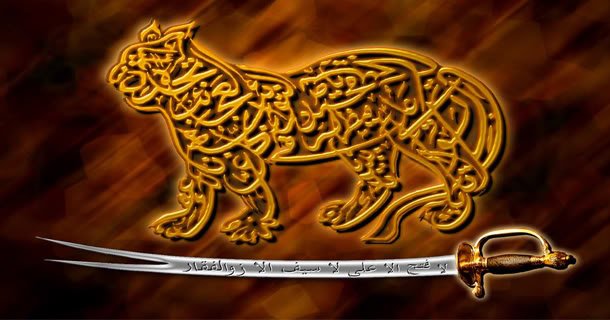
When Imam Ali (as) assumed the Caliphate and the people pledged their allegiance to him, he went out to the Mosque turbaned in the turban of the Messenger of Allah (saww), cloaked in the cloak of the Messenger of Allah (saww), wearing the sandals of the Messenger of Allah (saww), and equipped with the sword of the Messenger of Allah (saww). So, he climbed the pulpit and sat upon it masterfully. Then, he folded his hands and placed them under his stomach.
Then, he said:
O people! Ask me before you lose me. This is the vessel of knowledge. This is the saliva of the Messenger of Allah (saww). This is the sustenance that the Messenger of Allah (saww) has sustained me with. Ask me, for I have the knowledge of the former and latter peoples.
By Allah, if a cushion were folded for me, I could give judgments to the people of the Torah with their Torah until the Torah is made to say: “`Ali has spoken the truth and he has not lied. He has given you judgments by that which Allah has revealed”; and I could give judgments to the people of the Gospel with their Gospel until the Gospel is made to say: “`Ali has spoken the truth and he has not lied. He has given you judgments by that which Allah has revealed”; and I could give judgments to the people of the Quran with their Quran until the Quran is made to say: “`Ali has spoken the truth and he has not lied. He has given you judgments by that which Allah has revealed.”
You recite the Qur’an night and day, so, is there one of you who knows what was revealed in it?
If it were not for one verse in the Book of Allah, I could have informed you of what was, what will be, and what is, until the Day of Resurrection; and it is this verse, “Allah erases what He wishes and confirms, and with Him is the Mother of the Book.” (13:39)
Ask me before you lose me, for by Him who split the seed and gave life, if you were to ask me about any verse – whether it were revealed in the night or revealed in the day, in Mecca or in Medina, while travelling or while present; whether it is abrogating or abrogated, decisive or allegorical; or about its interpretation or its exegesis – I would have informed you of it.
So, a man named Dha`lab, who had a sharp tongue, who was eloquent in speech, and who had a bold heart, said: Ibn Abi Talib has risen to a difficult station, so I will embarrass him today in my questions posed to him.
So, he said: O Amir al-Mu’minin! Have you seen your Lord?
The Imam said: Woe to you, Dha`lab, I am not one who would worship a Lord that I haven not seen.
Dha`lab said: So, how did you see Him? Describe Him to us.
The Imam said: Woe to you! Eyes do not see Him by way of sight, but rather, hearts see Him by the realities of faith. Woe to you, Dha`lab, surely, my Lord is not described with proximity, nor with movement, nor with stillness, nor with standing – standing physically – nor with coming, nor with going. He is the Most Subtle of the subtle, but He is not described with subtlety. He is the Most Great of the great, but He is not described with greatness. He is the Most Grand of the grand, but He is not described with grandness. He is the Most Majestic of the majestic, but He is not described with difficulty. He is kind in mercy, but He is not described with gentleness; the Protector, but not gained through worship. He perceives, but not through touching. He speaks, but not through pronouncement. He is in the things, but not interwoven, and He is outside of them, but not contrasting. He is above everything, and nothing is to be said to be above Him. He is in front of everything, but He is not to be said to be in front. He is inside the things, but not like a thing inside another thing. He is outside the things, but not like a thing outside another thing.
So, Dha`lab fell unconscious. Then, he awoke and said: By Allah, I have never heard an answer like this. By Allah, I will not repeat a question like it.
Then, he (as) said: Ask me before you lose me.
So, al-Ash`ath b. Qays went to him and said: O Amir al-Mu’minin! Why is the jizya taken from the Zoroastrians when no Book was revealed to them and no prophet was sent to them?
So, the Imam said: O Ash`ath! Allah revealed a Book to them and sent a prophet to them. They had a king who was drunk one night. He called his daughter to his bed and had intercourse with her. When he awoke, his people had heard what had happened and had gathered at his door. So, they said: “O king! You have dirtied our religion and you have destroyed it. Get out, so that we may purify you by establishing the penalty on you.” So, he said to them: “Gather and listen to my words. If there is no way out for me, then do as you wish.” So, they gathered. So, he said to them: “Do you know that Allah did not create a creation more noble than our father Adam and our mother Hawa’?” They said: “You have spoken the truth, king.” He said: “Did he not marry his sons to his daughters, and his daughters to his sons?” They said: “You have spoken the truth. This is the religion.” So, they contracted marriages based on that. So, Allah erased knowledge from their hearts and raised the Book from them, so they became disbelievers who enter the Fire without judgment – and the hypocrites are in a more severe condition than them.
So, al-Ash`ath said: By Allah, I have never heard an answer like this. By Allah, I will not repeat a question like it.
Then, he (as) said: Ask me before you lose me.
So, a man from the furthest end of the Mosque came to him, leaning on a staff. He did not stop surpassing the people until he came close to him and said: O Amir al-Mu’minin! Lead me to a practice which, if I did it, Allah would deliver me from the Fire.
So, the Imam said to him: Listen, so-and-so, then understand, then ascertain. The world is upheld by three: a speaking scholar whose knowledge is acted upon, a wealthy person who is not stingy in his wealth with the people of the religion of Allah, and patient poor person. If the scholar hides his knowledge, and the wealthy becomes stingy, and the poor person is not patient, then at that will be woe and devastation. At that, those that know Allah will know that the abode will revert to its incipience – meaning, to disbelief after faith. O asker! Do not be deceived by the number of mosques, nor by the gatherings of people who are united in their bodies but disunited in their hearts. O people! Surely, there are only three types of people: the ascetic, the hedonist, and the patient. As for the ascetic, he is not gladdened by anything of the world that comes to him, nor is he saddened by anything of the world that misses him. As for the patient, he wishes for it (the world) in his heart, but when he comes by anything of it, he avoids it because he knows its evil consequences. As for the hedonist, he does not mind taking it lawfully or unlawfully.
The man said: O Amir al-Mu’minin! What is the sign of the believer in that time?
The Imam said: He looks to what Allah has obliged him and he fulfills it, and he looks to what is contrary to it and dissociates from it, even if it is beloved and near to him.
He said: You have spoken the truth, by Allah, O Amir al-Mu’minin.
Then, the man disappeared, and we did not see him. The people went out looking for him, but they did not see him. So, `Ali (as) smiled on the pulpit and said: What are you doing? This is my brother al-Khidr (as).
Then, he (as) said: Ask me before you lose me.
So, no one went to him. So, he praised Allah and commended Him, blessed His Prophet (saww), then said to al-Hassan (as): O Hasan! Stand, climb the pulpit, and speak, so that Quraysh are not ignorant of you after me, lest they say: “Al-Hassan has not beautified (yuhsin) anything.”
Al-Hasan (as) said: O father! How can I climb the pulpit and speak when you are among the people listening and watching?
He said: May my mother and my father be your sacrifice! I will hide myself from you, so you will neither hear nor see me.
So, al-Hassan (as) climbed the pulpit, praised Allah in an eloquent and honourable way, blessed the Prophet and his Family briefly, then said: O people! I heard my grandfather the Messenger of Allah (saww) say: “I am the City of Knowledge and `Ali is its Gate. A city can only be entered by its gate.” Then, he descended; and `Ali (as) leapt toward him, embraced him, and held him to his chest.
Then, he said to al-Hussein (as): O my son! Stand, climb the pulpit, and speak, so that the Quraysh are not ignorant of you after me, lest they say: “Al-Hussein b. `Ali has no insight in anything”, and so that your words may follow your brother’s.
So, al-Hussein climbed, praised Allah and commended Him, blessed His Prophet and his Family briefly, then said: O people! I heard the Messenger of Allah (saww) say: “Surely, `Ali is the City of Guidance. Whoever enters it is saved, and whoever turns away from it is destroyed.” So, `Ali (as) leapt toward him, embraced him, and held him to his chest.
Then, he said: O people! Bear witness that these two are the younglings of the Messenger of Allah (saww) whom he entrusted to me, and I am entrusting them to you. O people! The Messenger of Allah (saww) will question you regarding them.