
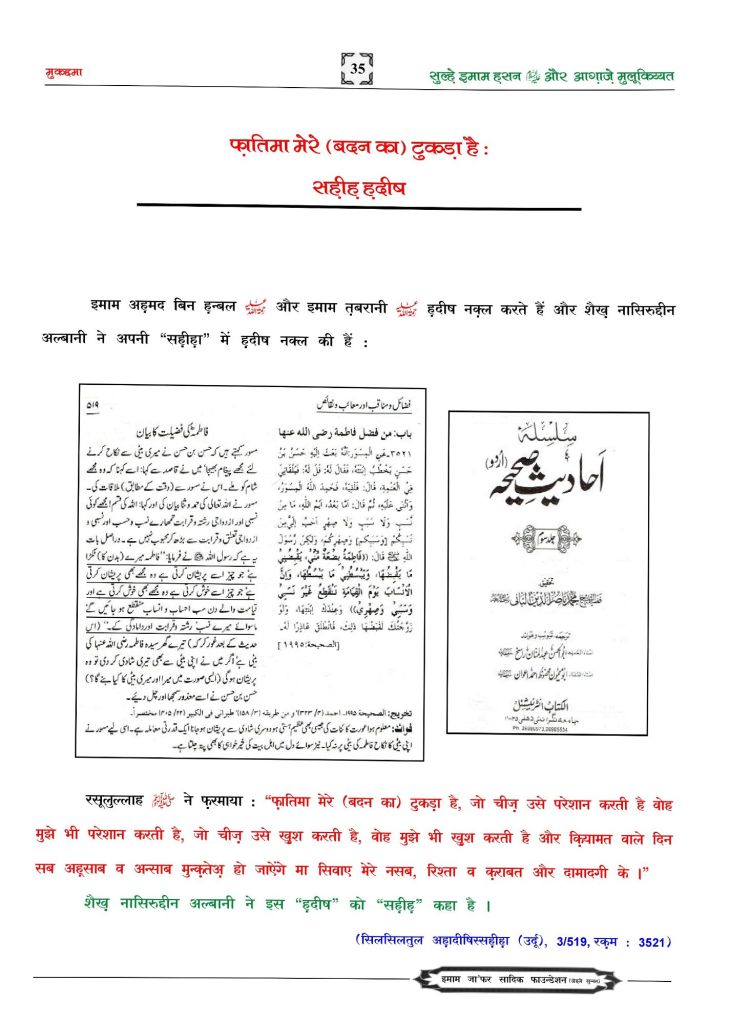

Fatima Alaihissalam Nabi Pakﷺ ka Tukkad Hai…



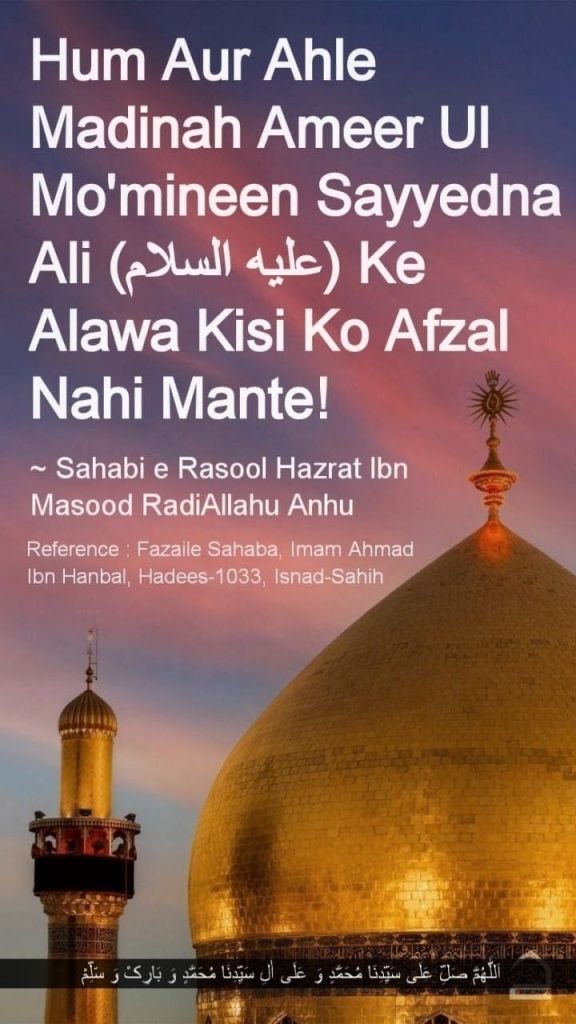
Roman Urdu Text: “Hum Aur Ahle Madinah Ameer Ul Mo’mineen Sayyedna Ali (عليه السلام) Ke Alawa Kisi Ko Afzal Nahi Mante!”
English Translation: “Apart from the Commander of the Faithful, our Master Ali (peace be upon him), we and the people of Medina do not consider anyone to be more superior!”
Attribution: ~ Sahabi e Rasool Hazrat Ibn Masood RadiAllahu AnhuReference
Provided: Fazaile Sahaba, Imam Ahmad Ibn Hanbal, Hadees-1033, Isnad-Sahih.
Arabic text cited in some editions
كُنَّا نَتَحَدَّثُ أَنَّ أَفْضَلَ أَهْلِ الْمَدِينَةِ عَلِيُّ بْنُ أَبِي طَالِبٍ
Translation:
“We used to say/discuss that the best of the people of Madinah was Ali ibn Abi Talib.”
The numbering 1033 does occur in some editions of Faḍāʾil al-Ṣaḥābah of Imam Ahmad, although numbering differs between editions.
Important scholarly note: The wording is disputed. Ibn ʿAbd al-Barr considered “afḍal” (best) to be a scribal/transmission error and stated that the محفوظ wording was “aqḍā” (the best/judicious in judgment). However, other scholars, including Ibn Ḥajar, reported the narrators of the version containing “afḍal” as reliable.
Original Arabic Text & Translation
The complete text of this athar (narration from a Companion) traditionally recorded in historical and virtue compilations reads as follows:
“مَا كُنَّا نَعْدِلُ بِعَلِيٍّ أَحَدًا مِنْ أَهْلِ الْمَدِينَةِ”
“We (the Sahaba) did not consider anyone among the people of Madinah to be equal to Ali.”
Context of the Narration
Narrator: Hazrat Abdullah Ibn Masood (RadiAllahu Anhu), one of the foremost jurists and closest companions of the Prophet ﷺ.
The Meaning: The statement highlights that during the lifetime of the Prophet ﷺ and the era immediately following, the companions residing in Madinah recognized Sayyedna Ali (Alaihi Salam) as unparalleled in his knowledge, judicial expertise, bravery, and proximity to the Prophet ﷺ.
The narration in Faḍāʾil al-Ṣaḥābah of Imam Ahmad
Arabic:
حَدَّثَنَا عَبْدُ اللَّهِ، قَالَ: حَدَّثَنِي أَبِي، حَدَّثَنَا مُحَمَّدُ بْنُ جَعْفَرٍ، حَدَّثَنَا شُعْبَةُ، عَنْ أَبِي إِسْحَاقَ، عَنْ عَبْدِ الرَّحْمَنِ بْنِ يَزِيدَ، عَنْ عَلْقَمَةَ، عَنْ عَبْدِ اللَّهِ، قَالَ: كُنَّا نَتَحَدَّثُ أَنَّ أَفْضَلَ أَهْلِ الْمَدِينَةِ عَلِيُّ بْنُ أَبِي طَالِبٍ.
Translation:
Abdullah ibn Masʿūd said: “We used to say/discuss that the best of the people of Madinah was Ali ibn Abi Talib.”
The narration is recorded in Faḍāʾil al-Ṣaḥābah with number 1033
Chain of narration
Abdullah ibn Ahmad
→ Imam Ahmad ibn Hanbal
→ Muhammad ibn Jaʿfar (Ghundar)
→ Shuʿbah ibn al-Ḥajjāj
→ Abu Isḥāq
→ ʿAbd al-Raḥmān ibn Yazīd
→ ʿAlqamah
→ Abdullah ibn Masʿūd


