


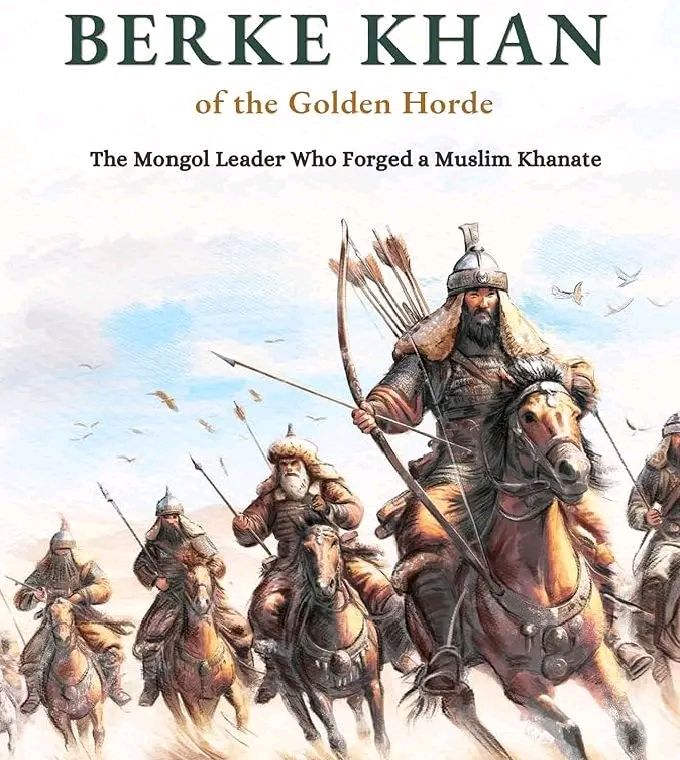
How did a grandson of Genghis Khan stand against his own people… and become one of the reasons behind the decline of the Mongol legend?
One of history’s most remarkable ironies is that a man from the very heart of the Mongol imperial family — a descendant of Genghis Khan himself — became one of the indirect causes of Mongol defeat and the weakening of their power.
He was Berke Khan, one of the leaders of the Tatars and ruler of the Golden Horde, and a cousin of the famous Mongol commander Hulagu Khan, who invaded the Muslim world and caused the fall of Baghdad.
Born into a powerful Mongol dynasty, Berke Khan grew up immersed in warfare and conquest. However, he was different from many of his peers. He embraced Islam, and his conversion is often seen as a turning point in his life — changing his worldview completely.
When Hulagu committed massacres in Baghdad and killed hundreds of thousands of Muslims, bringing down the Abbasid Caliphate, Berke Khan did not remain silent. He became deeply angered and is reported to have said words expressing his resolve to seek justice for the Muslims.
This anger developed into direct conflict. Berke Khan entered into open war against his cousin Hulagu, marking one of the earliest internal civil wars within the Mongol Empire.
This conflict was not merely a family dispute — it had major strategic consequences. Hulagu was forced to withdraw part of his forces from the Levant to deal with the northern threat posed by Berke Khan, weakening his military presence in the region.
At this critical moment, Sultan Qutuz was preparing to confront the Mongols, which later led to the historic Battle of Ain Jalut, where the Mongols suffered a decisive defeat at the hands of the Mamluks.
Thus, Berke Khan is considered one of the indirect contributors to this historic Muslim victory, as his war against Hulagu helped divide Mongol forces and prevented them from concentrating their full strength in the Levant.
His struggle against the Mongols continued, and he inflicted further losses upon them, contributing to the erosion of their fearsome reputation that once dominated much of the known world.
This episode remains one of history’s most profound lessons: a man from the same bloodline and empire can turn against his own people when his beliefs and principles change.
Berke Khan was not merely a Mongol commander — he became a symbol of how faith can transform an individual… and even alter the course of history itself.


