*Farmane Ummul Momineen Hazrat Sayyeda Maymunah Salamullah Alaiha :- Sayyedna Ali Na Khud Gumrah Hain Aur Na Unke Saath Rehne Wala Gumrah Ho Sakta Hain*
Jari Ibn Kulayb Al Amiri Farmate Hain :- Jab Ameer ul Momineen Sayyedna Ali Alahis Salam Siffin Ki Janib Rawana Hue Mujhe Ye Ladayi Pasand Na Thi, Me Madina Munawwara Aa Gaya Aur Ummul Momineen Sayyeda Maymunah Salamullah Alaiha Ki Khidmat Me Hazir Hua Unhone Mujhse Pucha Ki Tum Kaun Ho? Mene Kaha Kufa Walo Me Se, Phir Unhone Mujhse Aane Ka Maqsad Pucha Mene Kaha Sayyedna Ali Siffin Ki Janib Rawana Hue Hain To Unhone Pucha Kya Tumne Unki Bai’at Ki Thi ? Mene Kaha Ji Haa! Unhone Farmaya Tum Laut Jao Aur Unke Lashkar Me Shareek Ho Jao Khuda Ki Qasam! Woh Na Khud Gumrah Hain Aur Na Unke Saath Rehne Wala Gumrah Ho Sakta Hai…
📚 *Reference* 📚
Mustadrak Ala Al-Sahihain, Hadees – 4680, Imam Hakim Ne Is Hadees Ko Imam Bukhari Aur Imam Muslim Ki Sharait Par Sahih Qarar Diya Hain.
Other significant accomplishments in Trigonometry and Geometry in the Islamic Golden age are listed below. In Trigonometry, we have:
sin(A) sin (B) • Proofs of other trigonometric identities, such as sin(a+b)=sin(a) cos(b)± sin(b)cos(a) and sin(C), and proofs for the spherical and plane sine theorems. (Nasir Al-Din Al-Tusi and Abu Al-Wafa’ Al-Buzjani) a
Telling time by the altitude of the Sun. (by Abu Al-Wafa’ Al-Buzjani)
• Measurements of the radius of the Earth using trigonometry 2. (Abu Rayhan Al-Biruni)
2 Al-Biruni calculate the radius of the earth to be 6339.6 km. The true radius is 6378.1 km.and in Geometry:
• Proof for the general Pythagorean theorem (Thabit ibn Quraa)
• Proof for area of parabola is area of the inscribed triangle (Ibrahim ibn Sinan)
• Constructing an equilateral pentagon in a known square
• Constructing a segment of a sphere equal in volume to one sphere segement and equal in area to a different sphere segment.
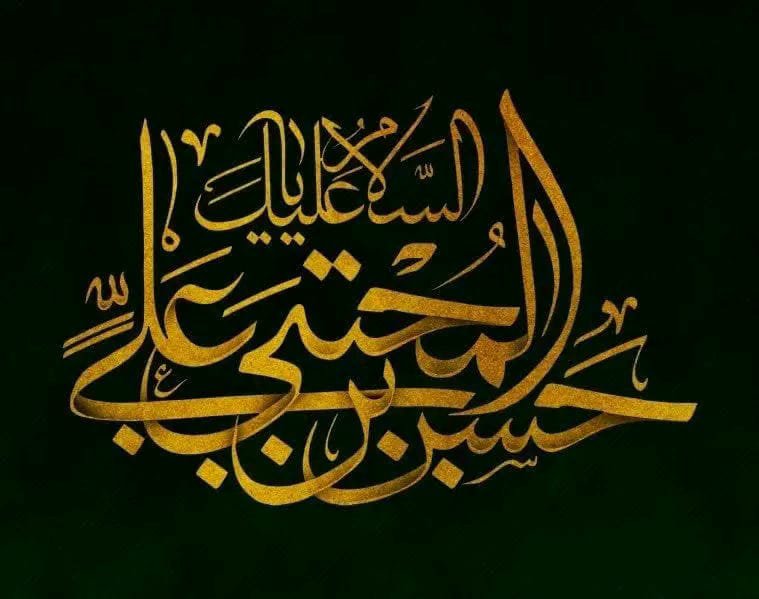
Imar Hasan [a], the grandson of the Prophet of Allah [s], like the rest of Ahlul-Bayt [a], enjoys a high position in the Book of Allah, the Most High, and the sunnah of His Messenger [s].
The Holy Qur’an, the constitution of the ummah, and Islam’s eternal miracle, has many verses which speak volumes of the position of Imam Hasan [a], and Ahlul-Bayt in the sight of Allah, the Most High, and His Message, including:
1. The verse of Purification (Tathir):
“…Allah only desires to keep away the uncleanness from you O people of the house! And to purify you a (thorough) purifying.” Holy Qur’an (33:33)
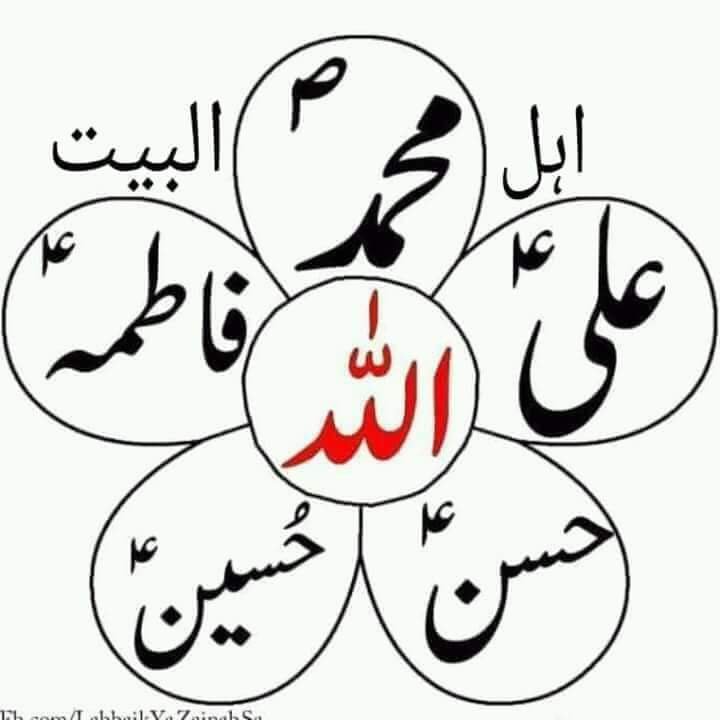
It is reported that the reason the Verse of al-Tathir (purification) was revealed was that the Prophet [s] called for a Khaibari cloak (made in Khaibar), and covered Fatimah, Imams Ali, Hasan and Husayn [a] with it, and said:
“O Lord! These are my family. So keep away uncleanness from them and purify them.” [5]
In response to the prayer of the Prophet [s], this ayah was revealed. It is a witness, given by Allah, in the Holy Qur’an, about the purity of Ahlul Bayt [a], and that they were Islam incarnate.
2. The Verse of Malediction (Mubahalah):
‘…come let us call our sons and your sons and our women and your women and our near people and your near people,…” 11
Holy Qur’an (3:61)
The exegetes, in explaining the cause of the revelation of this verse known as the verse of alMubahalah (malediction), say that the Christians of Najran agreed with the Messenger of Allah [s] to pray to Allah to kill the parry which espoused falsehood. The Messenger of Allah [s] went out accompanied only by his family; Fatimah, Imams Ali, Hasan and Husayn [a] to the contest. When the Christians saw the blessed faces which the Messenger [s] had brought with him to pray to Allah for death on the liars, they backed out offering some excuse. They yielded to his authority and paid him the jizyah (a tax paid by the non-Muslims who live in the Islamic state).
As we can see, the holy verse calls Imams Hasan and Husayn [a] “our sons”, and the Holy Prophet [s] and Imam Ali [a] “ourselves”, while Her Holiness Fatimah Al-Zahra [a] represented the women of all the Muslims, as she is called “our women”. It is a frank, and incontrovertible proof of the great stature of Ahlul Bayt in the eyes of Allah and His Messenger [s].
3. The verse of Affection (Mawaddah):
“…Say: I do not ask of you any reward for it but love for my near relatives…”
Holy Qur’an (42:23)
Exegetes say that this ayah called al-Muwaddah (love) was revealed concerning Ali, Fatimah, Hasan and Husayn [a]. The two sahihs (authentic books of hadith), Musnad Ahmad bin Hanbal
(Book of Hadith with complete chains of transmission), the Qur’anic exegesis of al-Tha’labi, and the Qur’anic exegesis of bin Abbas quotes bin Abbas as saying:
“When the verse ‘…say: I do not ask of you any reward for it…’ was revealed, they (the Muslims) asked: ‘O Messenger of Allah! who are your relations whom you ordered us to love?’ ‘Ali,’ he replied, ‘Fatimah, and her two sons.”” [6]
Imam Ali bin Husayn [a], Sa’id bin Jubair, Amru bin Shu’aib, Abu-Ja’far, and Imam Husayn [a] quoted the Messenger of Allah [s] as having said when asked about the interpretation of the verse, ‘To love my relatives…’ [7]
If we confine ourselves to these few verses, the lofty position in the eyes of Allah, of Imam Hasan [a], the grandson of the Messenger of Allah [s], and all of Ahlul Bayt, becomes clear. We deem it useful to cite some other texts, however, conveyed from the Messenger of Allah [s] about Imam Hasan [a], and his high status in the world of Islam, and in the sight of the leading Prophet [s]:
1. Al-Bukhari and Muslim report on the authority of al Bara’, that be said: “I saw the Messenger of Allah [s] carrying Hasan bin Ali [a] on his shoulder. He was saying: ‘O Lord! I love him, so love him.”
2. Al-Tirmidhi reports from bin Abbas as saying: “The Messenger of Allah [s] was carrying Hasan bin Ali [a], when a man said: “What an excellent mount you are riding, lad.” “What an excellent rider he is,” the Holy Prophet [s] replied.”
3. Al Hafid Abu-Na’im reports on the authority of Abu Bakr, who said: “The Messenger of Allah [s] was leading us in prayer. Hasan, who was still a child, would come to him while he was in prostration, and sit on his back or sometimes on his neck. The Prophet [s] would lift him tenderly. When the prayer was finished, they (the Muslims) asked him: ‘O Messenger of Allah! You are doing to this boy what you do not do to another person?’ ‘He is my basil,’ he replied.”
4. Anas bin Malik said: “The Messenger of Allah [s] was asked: ‘Who is most loved by you from among your family?’ ‘Hasan and Husayn’, he answered.”
5. A’ishah reports that “the Prophet would pick up Hasan and embrace him and say: ‘O Lord! This is my son, and I love him. Love him, and love who loves him.””
6. Jabir bin Abdullah says: “The Messenger of Allah [s] said: ‘He who pleases to look at the Lord of the Youths of Paradise, let him look at Hasan bin Ali.””
7. Ya’la bin Murrah says: “We went with the ran into Hasan [a] who was playing near the road. The Holy Prophet [s] went ahead of the people hurriedly, and put out his hand to the boy. Then he pretended to pass by Hasan one time on his right hand, and another time on his left hand, to make the boy laugh. Then he approached him. He put one hand on his neck and the other on his head. Presently he embraced and kissed him. Then he said: ‘Hasan is from me and I am from him. Allah loves whoever loves him.”
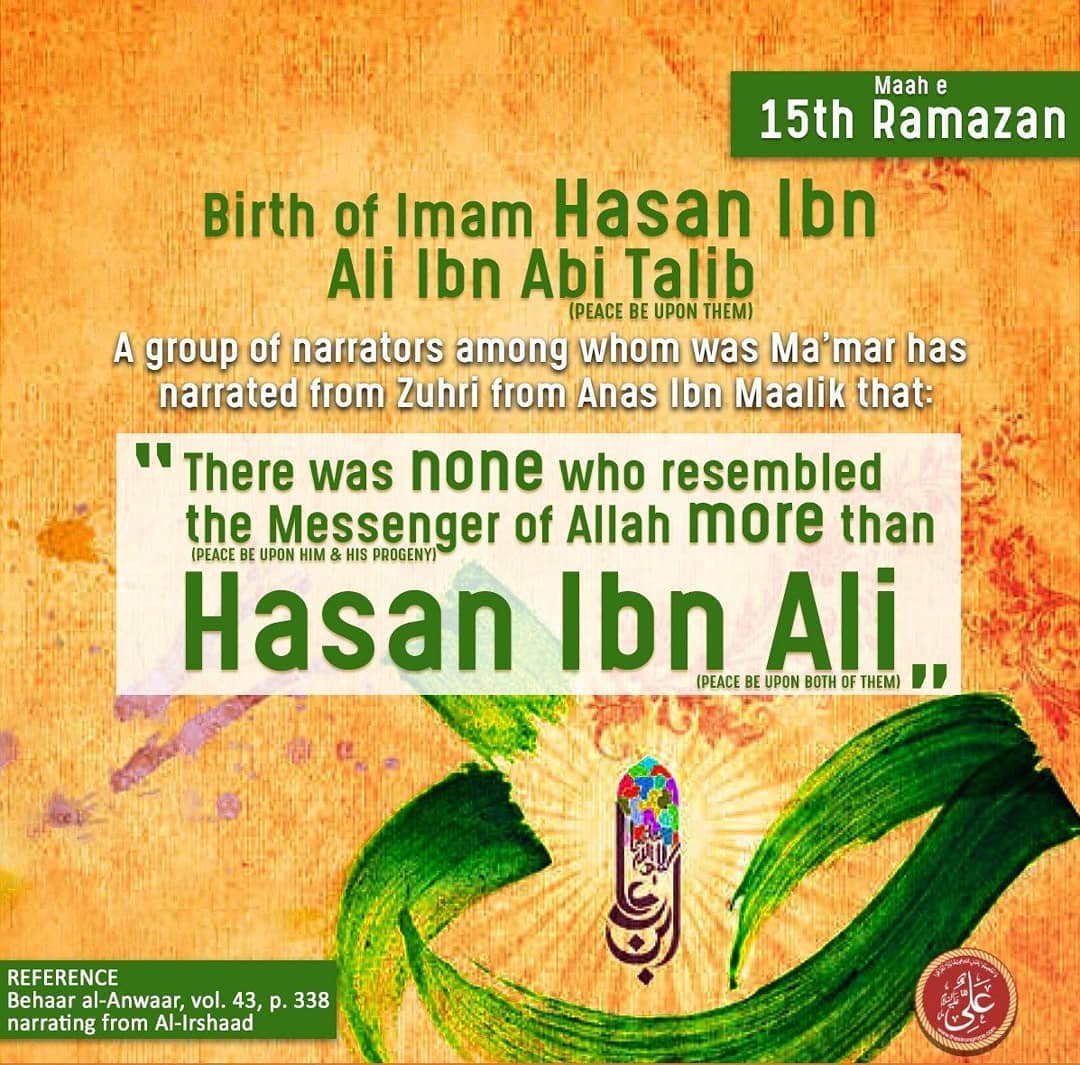
8. Al-Ghazali in his book, Al-Ihya’ (Revival), reports that the Prophet [s] had said to Hasan: “You resemble me in my appearance and disposition.” [8]
This is only a small number of the narratives about Imam Hasan [a]. He who wants more should refer to: Yanabee al-Muwaddah (Springs of Love), by al-Qandoozi al-Hanafi, Fada’il al-Khamasah min al-Sihah al-Sittah (Outstanding Merits of the Five Persons from the Six Authentic Books of Hadith), by al-Firoozabadi, Musnad Ahmad bin Hanbal, Tadhkirat al-Khawas (Reminder of the Pious), by Sibt Bin al-Jawzi, etc.
Through the Holy Qur’an, the Prophet’s sunnah, and the many books of authentic ahadith, the exalted position of the Prophet’s beloved grandson, Imam Hasan, becomes undeniable.
[5] This tradition was reported by Muslim in his Sahih (Authentic Book of Tradition), al-Tirmidthi in his Sahih, al-Nisa’l in al-Khasa’is (Characteristics), al-Tabari in his Qur’anic exegesis, and others, Sahih Muslim mentions it in the 4th volume, No. 2424, through A’ishah, in a slightly different wording. For more details, refer to: al-Firoozabadi, Fadha’il al-Khamsah fi al-Sihah al-Sittah (Outstanding Merits of the Five in the Six Sahihs).
[6] Dhakhar’ir al-Uqba, p.25.
[7] Ibid., p.28
[8] We chose these authentic traditions from: Bin al-Sabbagh al-Maliki, Al-Fusool al-Muhimmah (Important Chapters), Tawfeeq Abu-Alam, I’lam al-Wara (Informing humankind), al-Tabarsi, Ahlul Bayt, and Sayy’id Muhsin al-Ameen al-Amili, al-Majalis al-Saniyyah. They were reported in many books other than these.
علم و حکمت کے مدینے کی کشش ہے مجھ کو » لطف دے جاتا ہے کیا کیا مجھے ناداں ہونا Ilmo Hikmat Key Maddenay Ki Kashish Hai Mujhko, Lutf Day Jata Hai Kiya Kiya Mujhey Nadan Hona
The Holy Prophet (s.a.w.) has claimed that he is the city of knowledge and abode of learning. In this Couplet Iqbal says that his fondness for seeking knowledge has made him a lover of the Holy Prophet and since today’s advanced man thinks that those who are still adherents of old and bye-gone sayings are illiterate he is proud of being called so, and inhales breath of pleasure and satisfaction in following the prophet even if he is taken as an uneducated one. In fact the Prophet being the fountain of knowledge it is prudence to seek knowledge from him and be perfect. COUPLET 2
زندگی تجھ سے ہے اے فخر براہیم اپنی و کر دعا حق سے کہ مشکل ہوا جینا اپنا
Zindgi Tujh Say Hai Ay Fakhre Barahim Apni, Ker Doa Haq Say Ki Muskil Hawa jina Apna
Allama Iqbal is deeply grieved to see the downfall of Muslims who were once a ruling nation in the world. He, therefore, seeks Divine Blessings through the Holy Prophet (s.a.w.) and says:
“Oh Prophet, you are the pride of the progeny of Hazrat Ibrahim, we received all emenince in life through you. Do please pray God to improve our position and elevate us to the high position which as Muslims and true believers we do deserve. At present we are under degradation and our condition is pitiable.”
COUPLET 2
بزم عالم میں طراز مسند عظمت ہے تو * بہر انسان جبرئیل آیۂ رحمت ہے تو اے دیار علم و حکمت قبلۂ امت ہے تو “ اے ضیاۓ چشم ایماں زیب ہر مدحت ہے تو درد جو انساں کا تھا وہ تیرے پہلو سے اٹھا » قلزم جوش محبت تیرے آنسو سے اٹھا Bsme Alam Main Taraz-e-Masnade Azmat Hai Too,
Bahre Insan Jibraeele Ayae Rahmat Hai Too
Ay Diare Ilmo Hikmt Qiblae Ummat Hai Too, Ay Zia-e-Chashme Iman Zaibe Her Midhat Hai Too
Dard jo Insan Ka Tha Who Taray Pehloo Say Utah, Qulzeme Josh Mohabbat Taray Ansu Say Utah Allama Iqbal says:
“Mohammad the Prophet of God (s.a.w.) is the source of Divine Blessings for mankind. The Prophet led the man to his high position. Those who followed him got high status in the world. So it is the Prophet (s.a.w.) above who showed the right path and led the man to elevation. He was kindkearted. After his victory in Mecca he forgave all of his enemies and set them free. He spent the days and nights of his life in reforming the nation teaching the human beings how to lead a happy and social life comprising love for all human beings and doing justice and working out the application of equity and fairness of things in all phases of social life.







 Aal-e-Qutub Aal-e-Syed Abdullah Shah Ghazi