
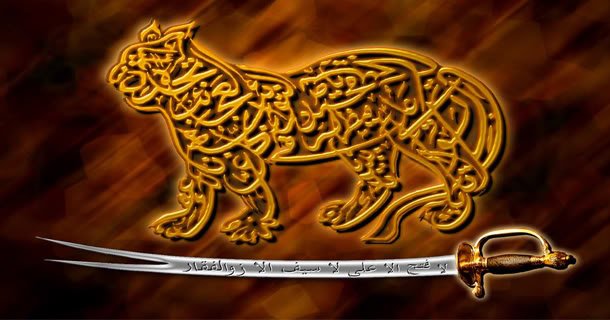


Imam Al-Shafi’ee, also known as ‘Shaykh Al Islam’, is one of the four great Imams of Sunni schools of law. He is also the author of several prominent works in the field. He has been titled ‘Nasir al-Hadith’ which means “defender of hadith”.
1. His Name, Background and Family:
Imam’s full name is Abu Abdullah Muhammad bin Idris Al-Shafi’ee ibn Al-Abbas ibn Uthman ibn Syafie bin Ubaid ibn Abdu Yazid ibn Hasyim ibn Al-Muttalib [father of Abdul Muttalib grandfather of the Prophet (S.A.W.)] bin Abd Manaf. He is the Only Imam who is related to Prophet Mohammad (S.A.W.) as he belonged to Qurayshi tribe of Banu Muttalib, which was the sister tribe of the Banu Hashim [tribe of Prophet Mohammad (S.A.W.)].

2. His Early Life and Early Education:
Imam Shafi’ee was born in the year 150 AH (767 AC) in Ghaza, Palestine. It was the same year in which the Great Imam Abu Hanifah had passed away. He lost his father during infancy and was raised by his mother under very poor circumstances. Fearing the waste of his son’s lineage, his mother decided to move to Mecca where their relatives lived. Imam was very young at that time. It is quoted by some scholars that he was two years old when his mother migrated to Mecca. Therefore, he spent his formative years acquiring religious education in the cities of Mecca and Medina. According to some sources, he memorized the Quran by the age of seven or nine.

3. His Journey to Seek Knowledge:
His early education was marked by poverty because of which his mother could not afford to pay the fees for his education. Consequently, instead of participating in the classes, the young Imam would just sit on the side lines and take it all in only by listening to what his teacher was teaching to other kids in the class. He became so adept at learning and storing knowledge even though just by listening, that on occasions when his teacher was unable to take a class, he the young Imam would step in and take the class teaching his fellow students. His Teacher was so impressed by his abilities that he took him on as a formal student on a complimentary non fees basis.
The Imam himself used to say:
“After I finished learning the Quran, I would go to the Mosque and sit with the Scholars the sayings of the Prophet Muhammad (S.A.W.) and Islamic matters. I used to live in Makkah among tent dwellers in such a state of poverty that I could not even afford to by paper to write, so I would write on stones and bones instead.”
4. Him and Imam Maalik:
At the age of fifteen or eighteen, his teacher gave Al-Shafi’ee permission to issue judicial decisions (fatwas). While still studying in Makkah, Aa-Shafi’ee heard of the renowned scholar of Madinah, Imam Maalik Ibn Anas. He wanted to become a student of Imam Maalik yet he saw with his sharp intellect that he should not go to him unprepared. He memorized Imam Malik’s famous book “Al Muwatta” in only nine days. After that he went off to see Imam Maalik in his house in Madinah. Al-Shafi’ee spoke eloquently and politely with the Imam and told him that he wished to become his student. The Imam looked at the boy for a long time as the boy was telling his story of how he sought knowledge so far. The Imam had an astonishing physiognomy and a penetrating insight; he told him:
“My son! By the Will of Allaah, you will have a great future. Tomorrow come to me and bring with you someone who could read the ‘Muwatta’ well as I fear you would not be able to read it by yourself.”
Al-Shafi’ee responded with the same politeness
“Imam, I will read it myself from memory without a book.”
For a period of nine years, Al-Shafi’ee remained in Madinah until Malik’s death in the year 179 AH (790 AC).
5. Coming back to Makkah:
After the death of Imam Malik, Imam Al-Shafi’ee returned to Makkah with a great load of knowledge which had influenced his life.
6. His Marriage:
In Makkah he was wedded to ‘Hamidah Bint Naafi’, granddaughter of third Caliph ‘Uthman Ibn Afaan (R.A). He had three children, two sons Abu Uthman and Abul Hasan and a daughter Fatima.
7. His Persecution:
The governor of Yemen, while paying a visit to Makkah, met Al-Shafi’ee, discerned his unique abilities, and offered him an administrative post in Yemen but like his predecessor Imam Abu Hanifa, Imam Shafi’ee also suffered Political persecution and intrigues, but thankfully, unlike Imam Abu Hanifa, he was not subjected to torture.
Imam Shafi’ee was arrested and charged with the offense of political interference in Yemen. The Caliph of that time, Haroon-al-Rasheed examined him and found him to be innocent of all charges and discharged him with honour.
Soon after that, he met Muhammad bin Hasan Al-Shaibaani who was one of Imam Abu Ḥanifa’s most important pupils. His contact and discussions with Al-Shaibaani increased and by which he strengthened his knowledge. Moreover, Al-Shafi’ee had the opportunity to study the books of Al-Shaibaani and other Iraqi scholars in Baghdad. After his travels, he returned to Makkah. During these travels, in every place he visited, he arranged meetings and organized study circles attended by many including great scholars such as Abu-Thawr, Al-Zafarani, AlKarabisi. Imam Ahmad ibn Hanbal also attended his circle and studied with Al-Shafi’ee.
The last station for Al-Shafi’ee was Egypt where he remained until his death. He was welcomed with great honor and respect by the people and scholars of Egypt due to his being as a pupil of Imam Malik and due to his reputation in fıqh.
8. His Teachers:
Imam Shafi’ee learned from the scholars in various places such as Makkah, Madinah, Kufa, Basrah, Yemen, Syria and Egypt. Following are some prominent scholars who had teached Al-Shafi’ee:
- Muslim bin Khalid Al-Zangi (in Makkah)
- Sufyaan bin Uyainah Al-Hilaali (in Makkah)
- Ibrahim bin Yahya (in Madinah)
- Imam Maalik bin Anas (in Madinah)
- Wakee bin Al-Jarraah bin Maleeh Al-Kofi (in Kufa)
- Muhammad bin Hasan Al-Shaibaani (in Basrah)
- Hammaad bin Usama Al-Haashimi Al-Kofi (in Kufa)
- Abdul-Wahhab bin Abdul-Majeed al-Busri (in Basrah)
9. His Students:
Al-Shafi’ee had a lot of talented students, some of whom become prominent masters. Among his best students are:
- Imam Abu Yaqub Al-Buwayṭi
- Abu Ibrahim Isma’il ibn Yahya Al-Muzani
- Rabi bin Sulayman Al-Muradi
- Abu Ali Al-Karabisi
- Ibrahim bin Khalid Abu ThawrH
- He also met Imam Ahmad bin HambaI and took mutual knowledge between the two. Imam Ahmad bin Hambal once said: “Had it not been for Ash-Shafi’ee, we would not have known the understanding of Hadith.”
10. His Writings and Books:
He authored more than 100 books. Some of which are as follows:
- Kitab al-Umm
- Al-Risalah
- Ikhtilaf Al-Hadith
- Al-Imla
- Ikhtilaf Al-Iraqiyani
- Jima Al-Ilm
- Ikhtilaf Malik wa Al-Shafi’ee
- Kitab Al-Hujjah
11. His last days and death:
Imam Al-Shafi’ee remained to follow his daily routine until illness forced him to retire and stop teaching. In his last days before his death, Imam said:
“I feel that I am traveling away from this world, away from the brothers, drinking from the cup of death, and approaching Allah the Glorious. By Allah I do not know if my soul will go to heaven so that I may congratulate it, or to hell so that I may lament.”
Then he went into crying. He became very sick at the end of his life. Imam Al-Shafi’ee kept the company of learned people till the very end of his life, and he is reported to have spent his last days in the company of Abdullah Ibnul Hakam, a well-known scholar of his time. He is thought to have died on a Friday in the Islamic calendar month of Rajab aged 54 in the year 204 AH (820 AC). The Governor of Egypt of that time acknowledged his academic excellence by not only just attending his funeral but actually leading those prayers. His two sons Abul Hasan Muhammad and Uthmaan were present for the funeral rites.

12. His Burial Place:
Imam Al-Shafi’ee was buried in the vault of the Banu Abd Al-Hakam at the foot of Muqattam Hills in Cairo, Egypt.




 Aal-e-Qutub Aal-e-Syed Abdullah Shah Ghazi