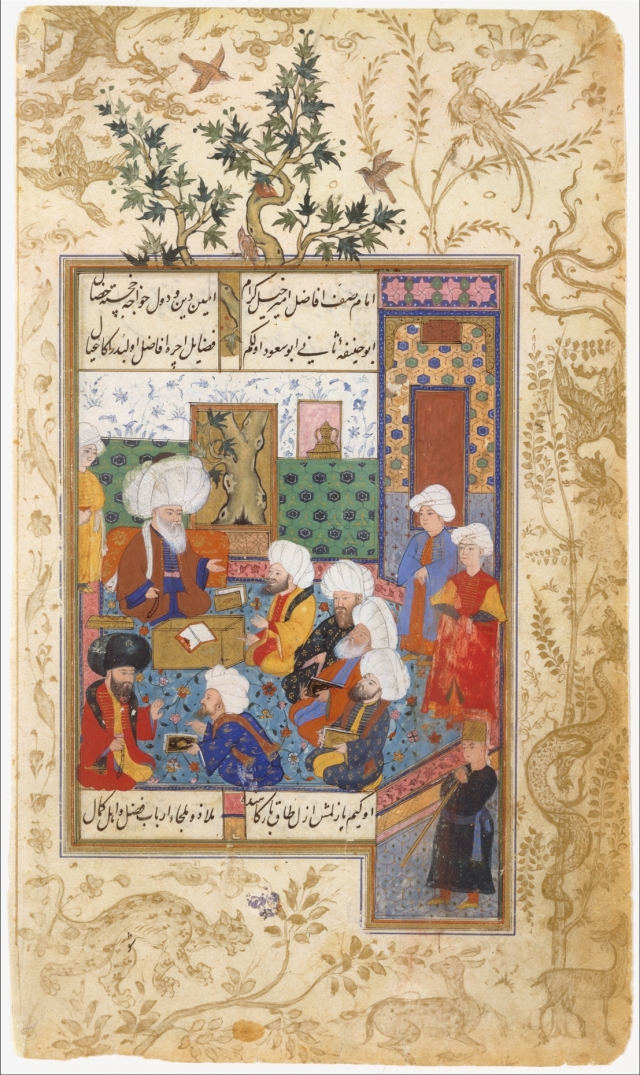
A depiction, from a mid-sixteenth century illumined copy of the Divân of Mahmûd ‘Abdülbâkî, of the most prominent Ottoman jurist of the century, Muhammad Ebussuûd Efendi, (d. 1574), and a circle of students, wearing clothing typical of the Ottoman ‘ilmiye hierarchy from which kâdîs, such as the one in the story below, were recruited.
As I’ve discussed in these digital pages before, one of the most fascinating and insightful ‘variety’ of Muslim saint in the early modern Ottoman world was the majdhūb (Ott. Turk. meczûb), the ‘divine attracted one,’ a strange and often disruptive and even antinomian figure who became a fixture of many Ottoman cities and towns in both the Arabic and Turkish speaking portions of the empire. Like the holy fool (yurodivy) in the Russian lands during the same period, [1] the majdhūb often engaged in public acts of disrespect towards holders of political power and authority, often with a sharp edge of political critique which might not have been tolerated from other actors. Such an act of transgressive, symbolic political intervention featured strongly in the remembered life story of the majdhūbI’m profiling today, one Abū Bakr al-Mi’ṣarānī al-Majdhūb (d. 1605), of Damascus.
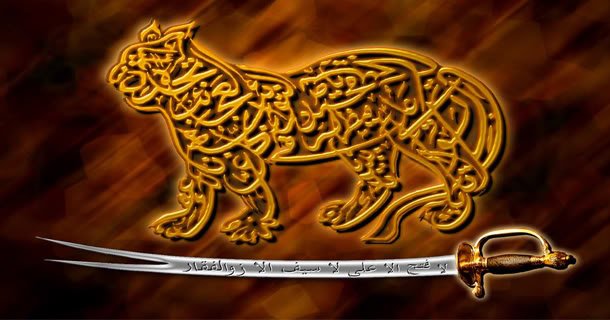
He was profiled by the prominent Damascene scholar and biographer Najm al-Dīn al-Ghazzī, who personally knew and revered the saint, to the point that towards the end of Abū Bakr’s life he would even spend nights in the al-Ghazzī family home, talking with Najm al-Dīn deep into the night. Abū Bakr had humble origins and source of livelihood, having worked, as his laqab al-Mi’ṣarānī indicates, as an oil-presser, until one night while in a dhikr assembly (that is, a session of ritual remembrance of God) under the leadership of Shaykh Sulimān al-Ṣawāf al-Ṣufī, Najm al-Dīn’s brother Shihāb al-Dīn in attendance as well, ‘lightning flashes from God flashed out to him and seized him, so that he entered divine attraction, stripping off his clothes and going naked, save for his genitals. Then the state left him after some months, returning to him every year for three or four months. He was hidden in it from his senses, and would utterly shave away his beard and go naked [2].’ Besides embracing the typical majdhūb distaste for proper clothing and facial hair, both also characteristics of ‘antinomian’ dervishes, Abū Bakr also engaged in playful ‘assaults’ on people, demanding money from them, which he would then distribute to the poor. When not in his state of jadhb he would practice silence and acts of worship, secreting himself in the Umayyad Mosque. When ‘under the influence’ his state was clearly a fierce and potentially dangerous one, especially to members of the Ottoman elite. His inner potency was further indicated by a dream al-Ghazzī reports, in which, having asked God to reveal Abū Bakr’s true ‘form’ to him, the scholar behold the majdhūb transmuting into the form of a lion, then back to his human form. ‘That made manifest that he was from among the Abdāl. When day came I saw him, in his condition, and he laughed at me, and said to me: “How did you see me last night?”’ [3]
The central wondrous story that al-Ghazzī relates has to do with Abū Bakr’s curious interaction with the then chief judge (Ar. qāḍī, Turk. kâdî) of the city. In the Ottoman system, kâdîs were regularly circulated through different posts, being transferred frequently in order to avoid having them build up a local power base and to avoid corruption. As this story suggests, they did not always prove to be acceptable to local subjects:
‘Abd al-Raḥman Efendī, when he was chief qāḍī in Damascus, believed in [Abū Bakr al-Mu’asirānī al-Majdhūb]. Concerning the matter of the harvest he had injustice in mind, and the people were distressed concerning him. One day the qāḍī said to [the majdhūb], who was in his retreat (khalwa): “O Shaykh Abū Bakr, I want to ride you!” So he said to him, “Stand up oh Efendi!” So he bore him on his back, holding on to his thighs with his hands. He stood up with him, then stopped alongside a basin of water nearby and said to him: “How do you think of yourself now Efendi? Should I throw you into the water?” There was no one else with the qāḍī, so he took to flattering Abū Bakr, supposing that he was indeed going to throw him in. [The majdhūb] did not stop but rather intensified what he was doing, until finally Abū Bakr set him down from his back. The qāḍī tossed him three silver coins, and left his presence. The report came of his dismissal from office two days later. The people knew that what [the majdhūb] did to him was an indication (ishāra) of the lifting of his assault on the Muslims and his dismissal from office.
‘I asked Shaykh Abū Bakr about his encounter with the qāḍī, while he was in his ḥāl [his spiritual state of jadhb, divine attraction], and he reported to me in a manner that agreed with what had been related to me from others about the matter. I said to him, “By the Doer! This was a diminishment of your adab [i.e. proper behavior] with the qāḍī of the sharī’a!” But he replied to me, “Quiet! God does not love the prideful!” [4]
Two things in particular stand out in this story: first, the kâdî is shown being a ‘believer’ in the majdhūb, a term that also has the sense of having ‘allegiance’ and ‘loyalty,’ with ‘believer’ capturing but part of the sense. The strange and seemingly ‘deviant’ practices of these saints were, by the end of the sixteenth century, recognized widely across the Ottoman world as markers of sainthood, including by members of the Ottoman elite. It is this recognition of his sainthood that allows the second notable aspect of this story, the saint’s freedom of political critique. Abū Bakr can mock, and indeed threaten with albeit mild violence, one of the most important members of the Ottoman power elite within a given locale, the kâdî, and can do so with impunity, precisely because of his exceptional status. Like the late antique holy man profiled by Peter Brown, or like the yurodivy St. Basil of Moscow who famously upbraided Tsar Ivan the Terrible, Abū Bakr’s widely recognized and venerated position as a ‘friend of God’ gave him certain leeway in his relations with the kâdî.
Now, that said, the oddest, to me, part of the story is the kâdî’s request to ‘ride’ on the saint’s back. What are we meant to make of that detail? I am not sure, honestly- there may be homoerotic undertones (is the kâdî proposing that he ‘mount’ the saint, with all the sexual and power dynamic connotations such a suggestion might carry?), or perhaps the kâdî wished to receive the saint’s baraka through close physical contact. It is also possible that we are meant to see it as absurd, a desire precipitated by the saint’s divinely bestowed power. Regardless, the story is deliberately comic, another ‘typical’ aspect of majdhūb behavior and this sort of saint’s propensity for inversion. Finally, note that al-Ghazzī, the narrator, was clearly uncomfortable with the saint’s behavior, even if he acknowledges in his account that the judge was unjust and worthy of removal (which, it is implied, was effected through the saint’s power). But it is the majdhūb who has the last word, not the scruples of the learned scholar of the sharī’a.
Footnotes:
[1] On the tradition of holy foolishness in late medieval into early modern Russia, see S. A. Ivanov, Holy Fools in Byzantium and Beyond, (Oxford ; Oxford University Press, 2006).
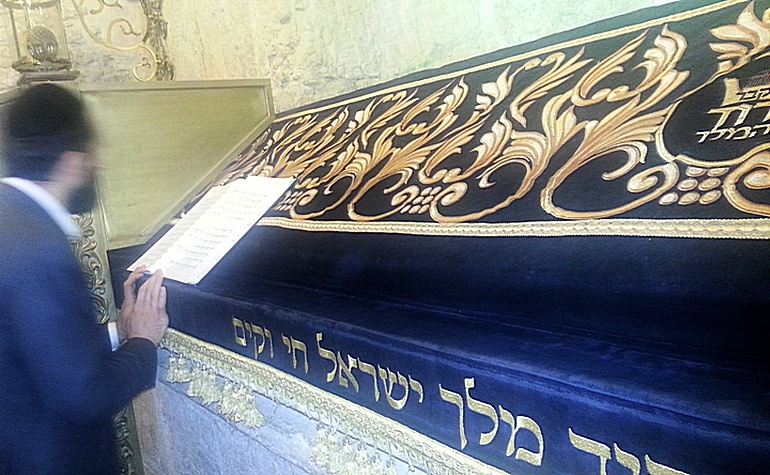
This is believed to be the tomb of the Prophet Dawud (upon him be peace) who was the father of the Prophet Sulaiman (upon him be peace). Some historians believe that this is not his tomb but a ‘maqam’, to mark the place where he once stayed.
Dawud (upon him be peace) is mentioned by name 16 times in the Holy Quran.
Dawud (upon him be peace) ruled the Children of Israel [Banu Israil] for forty years, seven years in Hebron (al-Khalil) and thirty-three in Jerusalem, which became known as the City of Dawud.
According to Jewish and Christian belief (ref: Who’s Who in the Bible by Peter Calvocoressi), Dawud (upon him be peace) [David] committed adultery with Bathsheba, the wife of Uriah the Hittite. Bathsheba became pregnant and David sent for Uriah, who was with the Israelite army at the siege of Rabbah, so that he might lie with his wife and so conceal the identity of the child’s father. Uriah refused to do so while his companions were in the field of battle and David sent him back to Joab, the commander, with a message instructing him to abandon Uriah on the battlefield, “that he may be struck down, and die.“ In Islam, Dawud (upon him be peace) is regarded as one of the great Prophets, to whom the Zabur (Psalms) were revealed by Allah (ﷻ). The Islamic tradition includes many elements from the Jewish/Christian history of David, such as his battle with the giant Goliath, but completely rejects the Biblical portrayal of him as an adulterer and murderer.
Dawud (upon him be peace) was the first person skilled in making armour from iron. Allah (ﷻ) mentions in Surah Saba in the Holy Quran:“And certainly We gave Dawud bounty from Us (and said), ‘O mountains! Repeat Our praises with him, and the birds you too’. And we softened for him iron, (saying) ‘Make wide coats of mail, and measure well the links and do righteous deeds. Surely I am Seer of what you do.” [34:10-11]
The Prophet (ﷺ) said, “The most loved Salat (prayer) in the sight of Allah is the Salat of Dawud and the most loved of Saum (fasting) in the sight of Allah is the Saum of Dawud. He used to sleep for the first half of the night and offer prayer for one-third of it and sleep (again) for one-sixth of it. And he used to observe fast on alternate days. And when he encountered an enemy he never fled.”[Bukhari]
Allah (ﷻ) had given him a very sweet voice such as not had been given to anyone before. When he used to recite the Zabur (Psalms) human beings, jinn, birds and animals stood devotedly listening to him.
हर प्रकार की प्रशंसा और स्तुति अल्लाह के लिए योग्य है।
इस्लाम पाँच स्तंभों पर आधारित है जिन्हें पैग़म्बर सल्लल्लाहु अलैहि व सल्लम ने अपने इस फरमान के द्वारा स्पष्ट किया है :”इस्लाम की नीव पाँच चीज़ों पर आधारित है: इस बात की शहादत देना कि अल्लाह के अलावा कोई सच्चा पूज्य (मा’बूद) नहीं, और यह कि मुहम्मद (सल्लल्लाहु अलैहि व सल्लम) अल्लाह के पैगंबर हैं, नमाज़ स्थापित करना, ज़कात देना, हज्ज करना और रमज़ान के महीने के रोज़े रखना।” (बुखारी हदीस संख्याः 8)
इस्लाम अक़ीदा (आस्था, विश्वास) और शरीअत (नियम, क़ानून, शास्त्र) का नाम है जिस में अल्लाह और उसके रसूल ने हलाल और हराम (वैध और अवैद्ध), नैतिकता, शिष्टाचार, उपासना के कार्य, मामलात, अधिकारों और कर्तव्यों और क़ियामत के दृश्यों को स्पष्ट किया है। जब अल्लाह तआला ने इस धर्म को अपने पैग़म्बर के हाथ पर परिपूर्ण कर दिया, तो इसे इस बात के लिए पसंद कर लिया कि यह क़ियामत आने तक सर्व मानव जाति के लिए जीवन का दस्तूर बन जाये : “आज मैं ने तुम्हारे लिए तुम्हारे धर्म को मुकम्मल कर दिया और तुम पर अपनी नेमतें सम्पूर्ण कर दीं और तुम्हारे लिए इस्लाम धर्म को पसन्द कर लिया।” (सूरतुल-माईदा:3)
यह इस्लाम के स्तंभ और उसके सिद्धांत हैं जिन पर वह आधारित है :
पहला स्तंभ : शहादतैन (दो गवाहियाँ अर्थात “ला-इलाहा इल्लल्लाह” और “मुहम्मदुर्रसूलुल्लाह” की गवाही) :
इस का मतलब यह है कि मनुष्य यह विश्वास रखे कि अकेला अल्लाह ही परमेश्वर (पालनकर्ता) स्वामी, नियंत्रक, उत्पत्तिकर्ता और प्रदाता है, और उसके उन सभी सुंदर नामों और सर्वोच्च गुणों को साबित करे जिन्हें अल्लाह ने अपने लिए साबित किया है, या उन्हें उसके लिए उसके रसूल ने साबित किया है, और यह आस्था और विश्वास रखे कि केवल अल्लाह ही इबादत का हक़दार है उसके सिवा कोई इबादत के योग्य नहीं, जैसाकि अल्लाह सुब्हानहु व तआला का फरमान है :”वह (अल्लाह) आसमानों और ज़मीन का पैदा करने वाला है, उसके औलाद कहाँ हो सकती है? जब कि उसकी कोई बीवी नहीं है वह हर चीज़ का बनाने वाला और जानने वाला है। वही अल्लाह तुम्हारा रब है, उस के सिवाय कोई माबूद नहीं, हर चीज़ का बनाने वाला है, इसलिए उसी की इबादत करो और वह हर चीज़ का निगराँ है।” (सूरतुल अंआम : 101-102)
तथा मनुष्य यह आस्था रखे कि अल्लाह तआला ने अपने रसूल मुहम्मद सल्लल्लाहु अलैहि व सल्लम को अपना रसूल बनाकर भेजा है, और आप पर क़ुर्आन अवतरित किया है और आप को तमाम लोगों तक इस दीन को पहुँचाने का आदेश दिया है, तथा यह आस्था रखे कि अल्लाह और उसके रसूल से महब्बत करना और उनका आज्ञापालन करना हर एक पर वाजिब है, और अल्लाह से महब्बत करना रसूल सल्लल्लाहु अलैहि व सल्लम की पैरवी और ताबेदारी के बिना परिपूर्ण नहीं हो सकता: “कह दीजिए अगर तुम अल्लाह तआला से महब्बत रखते हो तो मेरी पैरवी (अनुसरण) करो, स्वयं अल्लाह तआला तुम से महब्बत करेगा और तुम्हारे गुनाह माफ कर देगा और अल्लाह तआला बड़ा माफ करने वाला और बहुत मेहरबान (दयालू) है।” (सुरत-आल इम्रान: 31)
दूसरा स्तंभ : नमाज़
इसका मतलब यह है कि आदमी यह अक़ीदा रखे कि अल्लाह ने हर बालिग बुद्धिमान मुसलमान पर दिन और रात में पाँच वक्त की नमाज़ें अनिवार्य की हैं जिसे वह पवित्रता की हालत में अदा करेगा, चुनाँचि वह अपने रब के सामने हर दिन पाकी हासिल करके नम्रता और खुशू के साथ खड़ा होता है, अल्लाह का उसकी नेमतों पर शुक्र अदा करता है, उसके फज्ल़ (अनुकम्पा) का सवाल करता है, उस से अपने गुनाहों की माफी माँगता है, उस से जन्नत का प्रश्न करता है और जहन्नम से पनाह मांगता है।
दिन और रात में अनिवार्य नमाज़ें पाँच हैं : फज्र, ज़ुह्र, अस्र, मग्रिब और इशा। इसी तरह कुछ मस्नून (ऐच्छिक) नमाज़ें भी हैं जैसे क़ियामुल्लैल, तरावीह की नमाज़, चाश्त के वक्त की दो रक्अतें और इनके अलावा दूसरी सुन्नत नमाज़ें।
नमाज़, चाहे फज़Z हो या नफ्ल, सभी मामलों में केवल अकेले अल्लाह की ओर वास्तविक रूप से ध्यानगम्न (मुतवज्जिह) होने का प्रतिनिधित्व करता है, अल्लाह तआला ने अपने इस कथन के द्वारा समस्त मुसलमानों को जमाअत के साथ उसकी पाबन्दी करने का आदेश दिया है : “नमाज़ों की हिफाज़त करो विशेषकर बीच वाली नमाज़ की, और अल्लाह तआला के लिए विनम्रता के साथ (बा-अदब) खड़े रहा करो।” (सूरतुल बक़रा : 238)
पाँच समय की नमाज़ें दिन और रात में प्रत्येक पुरूष और स्त्री पर अनिवार्य हैं : “नि:सन्देह नमाज़ मुसलमानों पर निश्चित और नियत समय पर अनिवार्य की गई हैं।” (सूरतुन्निसा :103)
और जिस ने नमाज़ छोड़ दिया, उस आदमी का इस्लाम में कोई हिस्सा नहीं, अत: जिस ने जान बूझ कर उसे छोड़ दिया उस ने कुक्र किया जैसाकि अल्लाह सुब्हानहु व तआला का फरमान है : “(लोगो !) अल्लाह की ओर ध्यान करते हुए उस से डरते रहो और नमाज़ को कायम रखो और मुश्रिकों (मूर्तिपूजकों) में से न हो जाओ।” (सूरतुर्रूम :31)
इस्लाम धर्म आपसी सहयोग, भाईचारे और प्यार पर आधारित है, इस्लाम ने इन नमाज़ों और इनके अलावा अन्य नमाज़ों के लिए एकत्र होने को इन्हीं प्रतिष्ठाओं (उद्देश्यों) को प्राप्त करने के लिए वैध किया है, आप सल्लल्लाहु अलैहि व सल्लम ने फरमाया :”जमाअत की नमाज़ अकेले नमाज़ पढ़ने से सत्ताईस दर्जा श्रेष्ठ है।” (मुस्लिम हदीस नं.:650)
कठिनाई और आपदा के समय नमाज़ बन्दे के लिए सहायक है, अल्लाह तआला का फरमान है : “और सब्र और नमाज़ के द्वारा मदद हासिल करो। और वास्तव में यह बहुत भारी है, लेकिन अल्लाह से डरने वालों के लिए नहीं।” (सूरतुल बक़रा :45)
पाँच दैनिक नमाज़ें गुनाहों को मिटा देती हैं, जैसा कि पैगंबर सल्लल्लाहु अलैहि व सल्लम का फरमान है :”तुम्हारा क्या विचार है अगर तुम में से किसी के दरवाजे़ पर नदी हो जिस में वह प्रति दिन पाँच बार स्नान करता हो, तो क्या उसके शरीर पर कुछ गंदगी (मैल) बाक़ी रहे गी? लोगों ने उत्तर दिया : उसकी गंदगी (मैल-कुचैल) बाकी नहीं रह जाये गी। आप ने फरमाया : तो इसी के समान पाँच दैनिक नमाज़ें भी हैं इनके द्वारा अल्लाह तआला गुनाहों को मिटा देता है।” (मुस्लिम हदीस नं.: 677)
मिस्जद में नमाज़ पढ़ना स्वर्ग में प्रवेश करने का कारण है, पैगंबर सल्लल्लाहु अलैहि व सल्लम ने फरमाया :”जो आदमी सुबह या शाम को मिस्जद में आता है तो अल्लाह तआला उसके लिए स्वर्ग में मेहमानी की व्यवस्था करता है जब भी वह सुबह या शाम के समय आता है।” (मुस्लिम हदीस नं. :669)
नमाज़ बन्दे को उसके उत्पत्तिकर्ता (खालिक़) से जोड़ती और मिलाती है, तथा वह पैग़म्बर सल्लल्लाहु अलैहि व सल्लम के आँख की ठंढक थी। जब भी आप को कोई गंभीर मामला पेश आता था तो नमाज़ की तरफ भागते थे, अपने रब (प्रभु) से चुपके चुपके बातें करते, उस से विनती करते, उस से क्षमा मांगते और उसके फज्ल़ व मेहरबानी (दया और अनुकंपा) का प्रश्न करते।
विनम्रता और भय के साथ पढ़ी जाने वाली नमाज़ मुसलमान को उसके पालनहार (प्रभु) से क़रीब कर देती है, बेहयाई (अश्लीलता) और बुरे कामों से रोकती है जैसा कि अल्लाह सुब्हानहु का फरमान है :”आप पर जिस किताब की वह्य (प्रकाशना, ईश्वाणी) की गई है उसकी तिलावत कीजिये और नमाज़ स्थापित कीजिये, नि:सन्देह नमाज़ बेहयाई (अश्लीलता) और बुरी बातों से रोकती है।” (सूरतुल अंकबूत : 46)
तीसरा स्तंभ : ज़कात :
अल्लाह तआला ने लोगों को रंग, नैतिकता, व्यवहार, ज्ञान, कर्मों और जीविकाओं में भिन्न-भिन्न पैदा किया है, चुनाँचि उन्हीं में से कुछ को धन्वान और कुछ को निर्धन बनाया है, ताकि धन्वान की कृतज्ञता के द्वारा और निर्धन की धैर्य के द्वारा परीक्षा करे।
जब मोमिन लोग आपस में भाई-भाई हैं और यह भाईचारा, करूणा, हमदर्दी, स्नेह, दया, प्यार और मेहरबानी पर आधारित है, इसीलिए अल्लाह तआला ने मुसलमानों पर ज़कात को अनिवार्य किया है जो उनके मालदार लोगों से लेकर उनके निर्धन और दरिद्र लोगों में बांट दिया जायेगा, अल्लाह तआला का फरमान है : “आप उनके मालों में से सद्क़ा ले लीजिए जिस के द्वारा आप उन्हें पाक व साफ कर दीजिए, और उनके लिए दुआ कीजिए, बेशक आप की दुआ उनके लिए इत्मेनान का कारण है।” (सूरतुत्तौबा : 103)
ज़कात, धन को पवित्र करता और उस में बढ़ोतरी करता है, आत्मा को कंजूसी और लोभ (लालच) से पाक करता है, गरीबों और मालदारों के बीच प्यार को मज़बूत बनाता है, जिस के कारण कीना-कपट (द्वेष) समाप्त हो जाता है, शान्ति फैलती है और उम्मत को सौभाग्य प्राप्त होता है।
जो भी आदमी सोना, चाँदी या अन्य धातुओं और व्यापार के सामान में से निसाब भर (वह न्यूनतम राशि जिस पर ज़कात अनिवार्य होती है) का मालिक हो और उस पर एक साल बीत जाये, तो उस पर अल्लाह तआला ने चालीसवाँ हिस्सा (2.5%) ज़कात निकालना अनिवार्य किया है, जहाँ तक कृषि उपज और फलों का संबंध है तो यदि उसकी सिंचाई बिना खर्च के हुई है तो उस में दसवाँ भाग और अगर खर्च के द्वारा उसकी सिंचाई हुई है तो उस में बीसवाँ भाग उसकी कटाई के समय ज़कात निकालना अनिवार्य है, और पशुओं के ज़कात की मात्रा का विवरण किक्ह की किताबों में है। अत: जो इसे निकाले गा अल्लाह तआला उसके गुनाहों को मिटा देगा, उसके धन में बरकत देगा और उसके लिए बहुत बड़ा अज्र (पुण्य) संग्रहित करके रखे गा, अल्लाह तआला का फरमान है : “तुम नमाज़ की अदायगी करो और ज़कात (धर्मदान) देते रहो, और जो भलाई तुम अपने लिये आगे भेजो गे सब कुछ अल्लाह के पास पा लोगे, बेशक अल्लाह तआला तुम्हारे अमल को देख रहा है।” (सूरतुल बक़रा : 110)
ज़कात को रोक लेना और उसकी अदायगी न करना उम्मत के लिए आपदाओं, मुसीबतों और बुराईयों को न्योता देता है, ज़कात रोकने वालों को अल्लाह तआला ने क़ियामत के दिन कष्टदायक अज़ाब की धमकी दी है, अल्लाह अज़्ज़ा व जल्ल का फरमान है : “और जो लोग सोने चाँदी का खज़ाना रखते हैं और उसे अल्लाह के मार्ग में खर्च नहीं करते उन्हें कष्टदायक सज़ा की सूचना पहुँचा दीजिए। जिस दिन उस खज़ाना को जहन्नम की आग में तपाया जायेगा, फिर उस से उन के माथे और पहलू और पीठें दागी जायेंगी (उन से कहा जायेगा) यह है जिसे तुम ने अपने लिए खज़ाना बना कर रखा था, तो अपने खज़ानों का मज़ा चखो।” (सूरतुत्तौबा : 34)
ज़कात को गुप्त रखना उसे लोगों के सामने ज़ाहिर करने से बेहतर है जैसाकि अल्लाह तआला का फरमान है : “अगर तुम सदक़ात (दान-पुण्य) को ज़ाहिर करो, तो वह अच्छा है, और अगर तुम उसे छिपा कर गरीबों को दे दो, तो यह तुम्हारे लिए बेहतर है, और अल्लाह तुम्हारे गुनाहों को मिटा देगा, और तुम जो कुछ भी करते हो अल्लाह उस से अवगत है।” (सूरतुल बक़रा : 27)
जब मुसलमान ज़कात निकाले तो उसके लिए उसे केवल उन्हीं चीज़ों में खर्च करना जाईज़ है जिनका अल्लाह तआला ने अपने इस कथन के द्वारा उल्लेख किया है : “ख़ैरात (ज़कात) तो बस फकीरों का हक़ है और मिसकीनों का और उस (ज़कात) के कर्मचारियों का और जिनके दिल परचाये जा रहे हों और गुलाम के आज़ाद करने में और क़र्ज़दारों के लिए और अल्लाह की राह (जिहाद) में और मुसाफिरों के लिए, ये हुकूक़ अल्लाह की तरफ से मुक़र्रर किए हुए हैं और अल्लाह तआला बड़ा जानकार हिकमत वाला है।” (सूरतुत्तौबा : 60)
चौथा स्तंभ : रमज़ान का रोज़ा रखना
रोज़ा रखने की नीयत (इच्छा) से फज्र के उदय होने से लेकर सूर्यास्त तक रोज़ा तोड़ने वाली चीज़ों जैसे खाना पीना और संभोग से रूका रहना रोज़ा या ‘सौम’ कहलाता है।
ईमान के अंदर सब्र (धैर्य) का स्थान शरीर में सिर के समान है। अल्लाह तआला ने इस उम्मत पर साल भर में एक महीना रोज़ा रखना अनिवार्य किया है ताकि वह अल्लाह से डरे, अल्लाह की हराम की हुई चीज़ से बचाव करे और सब्र करने और अपने नफ्स को नियंत्रण में करने का आदी बने, दानशीलता, उदारता, आपसी सहयोग, हमदर्दी और दया में एक दूसरे से आगे बढ़ने का प्रयास करे। अल्लाह तआला का फरमान है : “ऐ ईमान वालो! तुम पर रोज़े रखना अनिवार्य किया गया है जिस प्रकार तुम से पूर्व लोगों पर अनिवार्य किया गया था, ताकि तुम संयम और भय अनुभव करो।” (सूरतुल बक़रा: 183)
रमज़ान का महीना एक महान महीना है जिस में अल्लाह तआला ने क़ुर्आन अवतरित किया, और इस में अच्छे कर्म, दान (खैरात) और उपासनाओं के अज्र व सवाब (बदले) कई गुना बढ़ा दिये जाते हैं, इस महीने में लैलतुल-क़द्र भी है, जो एक हज़ार महीने से बेहतर है, इस महीने में आकाश (स्वर्ग) के द्वार खोल दिये जाते हैं और नरक के द्वार बंद कर दिये जाते हैं, और शैतानों को जकड़ दिया जाता है।
अल्लाह तआला ने रमज़ान के महीना का रोज़ा रखना हर बुद्धिमान व्यस्क मुसलमान पुरूष एंव स्त्री पर अनिवार्य किया है, जैसाकि अल्लाह ताअला का फरमान है : “रमज़ान का महीना वह है जिसमें क़ुरआन उतारा गया जो लोगों के लिए मार्गदर्शक है और जिसमें मार्गदर्शन की और सत्य तथा असत्य के बीच अन्तर की निशानियाँ हैं, तुम में से जो व्यक्ति इस महीना को पाए उसे रोज़ा रखना चाहिए। और जो बीमार हो या यात्रा पर हो तो वह दूसरे दिनों में उसकी गिन्ती पूरी करे, अल्लाह तआला तुम्हारे साथ आसानी चाहता है, तुम्हारे साथ सख्ती नहीं चाहता है, वह चाहता है कि तुम गिनती पूरी कर लो और अल्लाह के प्रदान किए हुए मार्गदर्शन के अनुसार उसकी बड़ाई बयान करो और उसके शुक्रगुज़ार (कृतज्ञ) रहो।” (सूरतुल बक़रा: 185)
अल्लाह के पास रोज़े का सवाब (बदला) बहुत महान है, पैगंबर सल्लल्लाहु अलैहि व सल्लम ने फरमाया : “आदम के बेटे का हर कर्म कई गुना कर दिया जाता है, नेकी को दस गुना से सात सौ गुना तक बढ़ा दिया जाता है, अल्लाह अज्ज़ा व जल्ल का फरमान है कि सिवाय रोज़े के, क्योंकि वह मेरे लिए है और मैं ही उसका बदला दूँगा, वह (रोज़ादार) अपनी शह्वत और अपने खाने को मेरे कारण त्याग देता है।” (मुस्लिम)
पाँचवाँ स्तंभ : हज :
अल्लाह तआला ने मुसलमानों के लिए एक क़िब्ला नियुक्त कर दिया है जिसकी ओर वे अपनी नमाज़ों और प्रार्थनाओं में चेहरा करते हैं चाहे वे कहीं भी हों, और वह मक्का मुकर्रमा में अल्लाह का प्राचीन घर है : “आप अपना मुँह मिस्जदे हराम की तरफ फेर लें और आप जहाँ कहीं भी हों आप अपना मुँह उसी ओर फेरा करें।” (सूरतुल बक़रा : 144)
जब मुसलमानों के घर एक दूसरे से दूर हैं और इस्लाम उन्हें एकजुट होने और एक दूसरे का परिचय प्राप्त करने का आह्वान करता है, जिस प्रकार कि नेकी और संयम के काम पर एक दूसरे का सहयोग करने, हक़ की वसीयत करने, अल्लाह की ओर बुलाने और अल्लाह के शआइर की ता’ज़ीम (सम्मान) करने की ओर बुलाता है, इसी कारण अल्लाह तआला ने हर बुद्धि वाले सामर्थी व्यस्क मुसलमान पर अपने प्राचीन घर की ज़ियारत करना, उसका तवाफ करना (परिक्रमा करना) अनिवार्य किया है, तथा हज्ज के मनासिक (कार्यकर्म) को उसी प्रकार अदा किया जायेगा जैसाकि अल्लाह और उसके रसूल ने बयान किया है। अल्लाह तआला ने फरमाया : “अल्लाह तआला ने उन लोगों पर जो उस तक पहुँचने का सामर्थ्य रखते हैं इस घर का हज्ज करना अनिवार्य कर दिया है, और जो कोई कुफ्र करे (न माने) तो अल्लाह तआला (उस से बल्कि) सर्व संसार से बेनियाज़ है।” (सूरत आल-इम्रान : 97)
हज्ज एक ऐसा मौसम है जिस में मुसलमानों की एकजुटता, ताक़त और गौरव स्पष्ट होकर सामने आता है, चुनाँचि उनका रब (पालनहार) एक ही है, किताब एक है, पैगंबर एक है, उम्मत एक है, इबादत एक है और पोशाक एक ही है।
हज्ज के कुछ आदाब (शिष्टाचार) और शर्तें हैं जिन पर मुसलमान के लिए अमल करना अनिवार्य है, जैसे कि ज़ुबान, कान और आँख की अल्लाह की हराम की हुई चीज़ों से सुरक्षा करना, नीयत का खालिस होना, खर्च का पाक (हलाल) होना, अच्छी नैतिकता से सुसज्जित होना, और हज्ज को खराब करने वाली सभी चीज़ों से दूर रहना जैसे कि कामुक बातें, नाफरमानी और लड़ाई झगड़ा, जैसाकि अल्लाह सुब्हानहु का फरमान है : “हज्ज के कुछ जाने पहचाने महीने हैं, अत: जिस ने इन महीनों में हज्ज को फर्ज़ कर लिया, तो हज्ज में कामुकता की बातें, फिस्क़ व फुजूर (अवहेलना) और लड़ाई-झगड़ा नहीं है, तुम जो भलाई (सवाब) का काम करोगे अल्लाह उसे जानने वाला है, और अपने साथ रास्ता का खर्च ले लिया करो, सब से बेहतर रास्ता का खर्च तो अल्लाह का डर है, और ऐ बुद्धिमानों! मुझ से डरते रहा करो।” (सूरतुल बक़रा :197)
जब मुसलमान हज्ज को शुद्ध धार्मिक तरीक़े पर अदा करता है, और वह अल्लाह के लिए खालिस होता है, तो वह उसके गुनाहों का कफ्फारा (प्रायश्चित) बन जाता है, पैगंबर सल्लल्लाहु अलैहि व सल्लम ने फरमाया : “जिस आदमी ने हज्ज किया और उसमें संभोग और उस से संबंधित कामुक चीज़ों और अवज्ञा से बचा रहा, तो वह उस दिन के समान वापस लौटा जिस दिन उसकी माँ ने उसे जना था।” (बुखारी हदीस नं.: 15210)
A most valuable service rendered by the holy Sufi saints was that they stood fearlessly against the unjust and degenerate ways of powerful despots and tyrannical rulers, and saved the kingdom and the society, in general, from the consequences of their follies by boldly telling the truth at their face. Inspired by their example, people also shed fear and became courageous and straightforward. The history of Muslim rule in India offers many number or instances when Muslim saints threw the consideration of personal safety to the winds and fulfilled, at the gravest peril of their lives, the Islamic duty contained in the Prophet’s Tradition that a most superior form of Jihad is to speak the truth in front of a tyrannical ruler.
Sheikh Qutbuddin Munawwar was a Chishti saint who lived in solitude at the time of Sultan Mohammad bin Tughlaq. On one of his tours the King happened to pass through the area in which the saint lived, but the saint did not come to meet him. The King later summoned him to Delhi. When the saint entered the royal palace, the court nobles, ministers, heralds and attendants were standing in a double row in front of the throne. On seeing this imposing spectacle, his young son Nuruddin, who was with him and had never been in a king’s court before, was seized with fright. The Sheikh admonished him sternly, “Glory is for God, Baba Nuruddin”, he said to him in a loud voice. His son later said that as soon as he heard these words, he fell a new strength surging within him, all the fear disappeared and the Court grandees began to look to him as meek as goats.
The King complained to the saint, “When i was in your neighbourhood you neither counselled me nor honoured me with visit.”
The Sheikh replied, “The Dervish (A muslim ascetic) does not consider himself worthy of royal society. In his solitary corner he prays for the King as for the general body of Muslims, He will now beg to be excused.”
After the interview the King confided to a nobleman that he had noticed with all the spiritual leaders with whom he had the occasion to shake hands, that their hands trembled at the time, but Sheikh Munawwar’s grip was so firm that he seemed to be completely unaffected by the event.
The King then presented to him a purse of one lakh (100000) gold coins whereupon the Sheikh exclaimed, “Glory be! Two seers of pulses and rice and a pice (a former monetary unit of India) worth of ghee are enough for the dervish. What will he do with all this money ?” After great persuasion and on being advised that the King would be antagonized by a blank refusal, he agreed to accept 2,000 pieces which too he distributed among his brother-saints and other poor and indigent people before returning from Delhi.”1
To take another instance, again from the reign of Sultan Mohammad bin Tughlaq, Maulana Fakhruddin Zarradi had a strong aversion to meeting him. He used often to say that he saw his head rolling in his royal court (meaning that he will not hesitate to speak the truth in his presence and the King will not forgive him and behead him). At last he was called by the Sultan to his court.
“Give me some good advice”, the Sultan asked,
“Suppress anger”, the Maulana said.
“What anger ?”, asked the Sultan.
“The anger of the wild beasts”, the Maulana replied.
The king grew red in the face at the reply, but he kept quiet. After this the royal meal was ordered. The King shared his vessel with the Maulana and sometimes even fed him with his own lane. The Maulana ate with apparent dislike. When the meal was over, the Maulana came away.2
The Sufi saints upheld steadfastly the traditions of detachment, fearlessness and undaunted championship of truth though those were the days of absolute monarchy and despotic rule. The Kings too, under the force of their spirituality, felt compelled to allow them the freedom to perform their duty even when they showed no consideration to the forthright and honest Ulema (Muslim religious scholars). The spiritual leaders guarded zealously their self-respect and dignity before mighty rulers, chieftains and noblemen right till the last days of the Mughal Empire.
It is reported that Emperor Shah Alam was once present in the Mehfil-Simaa 3 of Khwaja Mir Dard when troubled by a painful leg he could not help stretching it a little. The Khwaja protested, “It a against the decorum of the society of the fakir (Dervish)to sit like this”. The Emperor apologized and indicated his discomfort upon which Khwaja Mir Dard remarked, “If you were not feeling well, what was the need to come ?”4
1. Siar-ul-Aulia, pp. 253-55
2. Siar-ul-Aulia, pp. 271-72
3. Among the Sufis this term is applied to an assembly in which hymns are sung to produce spiritual ecstasy.









 Aal-e-Qutub Aal-e-Syed Abdullah Shah Ghazi