“Actions are but by intentions”: Ibn Rajab’s Commentary on Imam Nawawi’s Forty Hadith

The hadith of intentions is not meant to be taken in a vacuum. Nothing in the Shari`a is in a vacuum. It needs to be taken together with all the other injunctions of Allah and His Prophet which includes five hundred commands and eight hundred prohibitions. Furthermore the hadith of intention is a warning to eliminate self-display and self-delusion because they cancel  reward and have negative consequences. There are other applications as well. An important requirement is to tread the path of teachers and not to try and split hairs by philosophizing on our own.

quotes-about-intentions-and-actions

IBN RAJAB’S COMMENTARY ON IMAM NAWAWI’S FORTY HADITH 
TRANSLATION AND COPYRIGHT: MOHAMMED FADEL

‘Umar b. al-Khattab RadhiAllahuanhu narrated that the Prophet () said: Deeds are [a result] only of the intentions [of the actor], and an individual is [rewarded] only according to that which he intends. Therefore, whosoever has emigrated for the sake of Allah and His messenger, then his emigration was for Allah and His messenger. Whosoever emigrated for the sake of worldly gain, or a woman [whom he desires] to marry, then his emigration is for the sake of that which [moved him] to emigrate.” Narrated by Bukhari and Muslim.

This hadith has only one path to ‘Umar: Yahya b. Sa’id al-Ansari on the authority of Muhammad b. Ibrahim al-Taymi, on the authority of ‘Alqama b. Abi Waqqas al-Laythi, who narrated it from ‘Umar b. al-Khattab. Large numbers of people narrated this hadith on the authority of Yahya b. Sa’id, including Imam Malik, al-Thawri, al-Awza’i, Ibn al-Mubarak, al-Layth b. Sa’d, Hammad b. Zayd, Shu’ba, Ibn ‘Uyayna and others.

This was the first hadith Bukhari recorded in his book, where it serves the purpose of the introduction (khutba), pointing out that all deeds that are devoid of the proper intention are vain (batil). ‘Abd al-Rahman b. Mahdi is reported to have said that “Were I to compose a book comprised of various chapters, I would place the hadith of ‘Umar regarding deeds and intentions in each chapter.” This is one of the firm hadiths which serves as an axis of Islam. Al-Shafi’i said that it comprises a third of all religious knowledge. Ahmad b. Hanbal said that the principles axes of Islam, in terms of hadith, are three: the hadith of ‘Umar that “deeds are judged only by intention,” the hadith of ‘A`isha, “Whoever introduces into our affairs that which does not belong, it is rejected,” and the hadith of al-Nu’man b. Bashir, “The licit is clear and the illicit is clear.” Ishaq b. Rahawyahi also included this hadith as one of the axises of Islam. Abu Dawud, the collector of the Sunan, is reported to have said that of the 4,800 hadiths in his book, it is sufficient if a person knows four, the hadith of ‘Umar regarding intentions and deeds, the hadith “Part of person’s virtue in Islam is to ignore that which is of no concern to him,” the hadith “The believer is not a believer unless he desires for his brother what he desires for himself,” and the hadith “the licit is clear and the illicit is clear.”

The first question regarding this hadith is whether it refers to all actions, or only those actions whose validity requires an intention (niyya)? Thus, if it refers only to the former, it would not apply to the customary areas of human life, e.g., eating, drinking, clothes, etc., as well as transactional matters, e.g., fulfilling fiduciary duties and returning misappropriated properties. The other opinion is that the hadith refers to all actions. Ibn Rajab attributes the first position to the later scholars whereas the second position he attributes to earlier scholars.

The first sentence of the hadith, “innama al-a’mal bi-l-niyyat,” is a declaration that the voluntary actions of a person are a consequence only of that person’s purpose to perform the act or bring it into existence (“la taqa’ illa ‘an qasd min al-‘amil huwa sabab ‘amaliha wa wujudiha.“). The second sentence, “wa innama li-kulli imri` ma nawa,” is a declaration of religion’s judgment of the act in question (“ikbar ‘an al-hukm al-shar’i“).? Thus, if the intention motivating an act is good, then performance of the act is good and the person receives its reward.? As for the corrupt intention, the action it motivates is corrupt, and the person receives punishment therefor.? If the intention motivating the act is permissible, then the action is permissible, and the actor receives neither reward nor punishment. Therefore, acts in themselves, their goodness, foulness or neutrality, from the perspective of religion are judged according to the person’s intention that caused their existence.

Niyya is used in two senses by the scholars of Islam. The first is to distinguish some acts of worship from others, e.g., salat al-zuhr from salat al-‘asr or to distinguish acts of worship (‘ibadat) from mundane matters (‘adat). This is the primary usage of the term in the books of the fuqaha`The second usage is to distinguish an action that is performed for the sake of Allah, subhanahu wa ta’ala, from an act done for the sake of Allah and others, or just for the sake of other than Allah. This second meaning is that which is intended by the gnostics (‘arifun) in their discussions of sincerity (ikhlas) and related matters. This is the same meaning that is intended by the Pious Ancestors (al-salaf al-salih) when they use the term niyya. Thus, in the Qur`an, the speech of the Prophet (S) and the speech of the Salaf, the term niyya is synonymous, or usually so, with the term desire (irada) and related terms, e.g., ibtigha`. The texts of the shar‘ testifying to this usage are too numerous to be cited in this posting, but include such verses as “Among you are those who desire (yurid) the profane world and among you are those who desire (yurid) the next,” and “You desire (turidun) the profit of the profane world but Allah desires [for you] the next,” and “Whosoever desires (yurid) the harvest of the profane world, etc.” and “Whosoever desires (yurid) the immediate [gratification of the profane world], we hasten it to him what We wish to whom We desire,” and “Do not expel those who call out to their Lord in the early morn and in the evening, who are seekers (yuridun) of His face and let not your eyes wander from them out of covetous desire (turid) of the frivolity of the profane world.”

Likewise, Imam Ahmad and al-Nasa`i report that the Prophet (ﷺ ) said that “Whosoever takes part in a military campaign in the cause of Allah, but sought only booty [thereby], shall gain [only] what he intended (nawa),” and on the authority of Imam Ahmad, “Most of the martyrs of my community shall die in their beds (ashab al-furush), and many a man killed in battle whose intention is known only to Allah,” and the hadith of Sa’d b. Abi Waqqas in Bukhari, where the Prophet (ﷺ ) says “Indeed, you shall never spend of your property an amount whereby you are desirous (tabtaghi) of pleasing Allah save that you shall be rewarded for it, even the morsel of food that you place in your wife’s mouth.”Similarly, it is reported that ‘Umar said “One who has no intention (niyya) has no [meritorious] deeds (“la ‘amala li-man la niyyata lahu”).

Despite the importance of having a good niyya, and its centrality to Islam, it is among the most difficult things to achieve. Thus, Sufyan al-Thawri is reported to have said, “Nothing is more difficult for me to treat than my intention (niyya) for indeed it turns on me!.”Yusuf b. Asbat said, “Purifying one’s intention from corruption is more difficult for persons than lengthy exertion (ijtihad).”?

An act that is not done sincerely for the sake of Allah may be divided into parts:

The first is that which is solely for display (riya`) such that its sole motivation is to be seen by others in order to achieve a goal in the profane world, as was the case of the Hypocrites in their performance of prayer, where Allah described them as “When they join prayer, they go lazily [with the purpose] of displaying [themselves] to the people.”

At other times, an action might be partially for the sake of Allah and partially to display one’s self in front of the people. If the desire to display one’s self arose at the origin of the action, then the action is vain. Imam Ahmad reports that the Prophet (ﷺ ) said, “When Allah gathers the first [of His creation] and the last [of His creation] for that Day for which there is no doubt, a crier will call out, ‘Whosoever associated with Me another in his actions let him seek his reward from other than Allah, for Allah is the most independent of any association (fa-inna allaha aghna al-sharaka` ‘an al-shirk).” Al-Nasa`i reported that a man asked the Prophet (ﷺ ), “What is your opinion of one who fights [in the way of Allah] seeking fame [in the profane world] and reward [from Allah]” The Prophet (ﷺ ) replied, “He receives nothing [by way of reward from Allah’.” The Prophet (ﷺ ) repeated this three times and then said, “Allah accepts no deeds other than those that are performed solely for His sake and by which His face is sought.” This opinion, namely, that if an act is corrupted by any desire to display one’s self (riya`) then that act is rejected, is attributed to many of the Salaf, including, ‘Ubada b. al-Samit, Abu al-Darda`, al-Hasan al-Basri, Sa’id b. al-Musayyib and others.

If one’s intention is corrupted with something other than the desire to display one’s self, e.g., to earn profit whilst on a jihad in the path of Allah, such an intention reduces one’s reward from jihad, but does not negate it entirely. Muslim reported in his Sahih that the Prophet (ﷺ ) said that “Soldiers in the path of Allah attain two-thirds of their reward immediately when they obtain booty [from the enemy], whereas they receive their reward in its entirety when they obtain nothing from the enemy.”

As for an action whose origin is for Allah, then it subsequently becomes corrupted by a desire to display one’s self, then the Salaf differed as to whether such an act is vain. Their differences on this matter have been reported by Ahmad and al-Tabari. Al-Hasan al-Basri is reported to have held that such a desire, in itself, does not invalidate the proper intention that was the origin of the act.

In conclusion, the saying of Sahl b. ‘Abd Allah is most beautiful in this regard: Nothing is more difficult on a person than sincerity because the person gains no share of that [act]. Ibn ‘Uyayna said that Mutarrif b. ‘Abdallah would repeat the following prayer, “O Allah! I seek Your forgiveness for that which I sought your repentance but to which I subsequently returned; I seek Your forgiveness from that which I rendered to You from my self, but then, I was not able to maintain faithfully; and, I seek Your forgiveness from that by which I claimed I desired your Face but my heart became corrupted with that which I did.”

Wa akhir da’wana an al-hamdu li-llahi rabbi al-‘alamin, wa-l-salat wa-l-salam ‘ala ashraf al-mursalin wa ‘ala alihi wa sahbihi wa azwajihi.


Will the Mahdi Come Before Dajjal? What About Our Liege-Lord `Isa (Allah bless him)?

According to what is indicated in various prophetic narratives (ahadith), the Mahdi (Allah bless him) will come before the Dajjal.

In the Sunan of Abu Dawud it is stated that Imam Mahdi (Allah bless him) will be given allegiance by the people between the Black Stone and the maqam of Ibrahim (Allah bless him and grant him peace). The Dajjal will then come out and would later be met by Imam Mahdi and his army (after some prior conquests) in battle, as understood from the narration of Muslim. Mulla `Ali al-Qari also states in his Mirqat,that the Dajjal will come out during the time of Imam Mahdi, indicating that the Mahdi will already be present at the time.

As for our liege-lord `Isa (Allah bless him and grant him peace), he will also descend after the appearance of Imam Mahdi (Allah bless him). Abu Hurayra (Allah be well pleased with him) states, “The Prophet (Allah bless him and grant him peace) said, ‘How will you be when the son of Mary descends among you and your leader (imam) is from amongst yourselves.”

This narration demonstrates that at the time our liege-lord `Isa (Allah bless him) descends, the Muslims will already have a leader. Many of the hadith commentators stated that this leader (imam) would be none other than the Mahdi (Allah bless him). Our liege-lord  `Isa (Allah bless him and grant him peace) will pray behind him, as is is mass-transmitted (tawatur) from the Prophet (Allah bless him and grant him peace). [Ibn Hajar, Fath al Bari; Nawawi. Sharh Sahih Muslim; Kashmiri, Fayd al-Bari]

Wasalam

What is the Link Between Sura al-Kahf and the Dajjal?

Imam Muslims narrates in his Sahih that the Prophet (peace and blessings of Allah upon him) said:

“Whosoever memorizes 10 verses from the beginning of Surah al-Kahf will be protected from the tribulation of the Dajjal.”

Imam Munawi in his Fayd al-Qadeer (commentary on Jami’ as-Saghir of Imam Suyuti) said:

“It is because of what is in the story of the people of the cave of wonders, such that whoever knows these will not be amazed by the Dajjal and therefore, he will not be tried; or, whosoever ponders over these verses and contemplates their meanings will be weary of the Dajjal and therefore safe from him; or that this is a specialty given to this Surah…”

And Allah knows best.

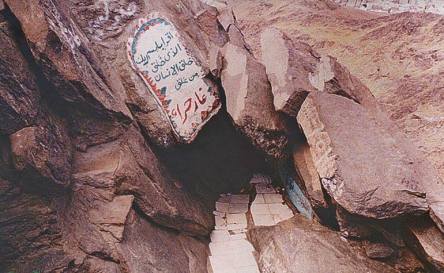
Mount Hira (Jabal Hira)

29060297_1362940417143602_1965352119353546520_o29343006_1362940413810269_7884475600042921310_n

This is Mount Hira (Jabal Hira), which lies about two miles from the Ka’bah. Near the top is a small cave, a little less than 4 meters in length and a little more than one and a half meters in width. It was here that the Prophet Muhammad (peace and blessings of Allah be on him) received the first revelations of the Holy Quran during the month of Ramadhan in 610 CE. The mountain is also known as Jabal Noor (the Mountain of Light).

During Tahajjud time one night, when he was alone in the cave, there came to him an angel in the form of a man. The angel said to him, “Recite!”. “I cannot read”, the Prophet (peace and blessings of Allah be on him) replied. The angel took hold of him a second time and pressed him until he could not endure it any longer. After letting him go, the angel again said, “Recite!”. Again the Prophet (peace and blessings of Allah be on him) replied “I cannot read”. The angel further embraced him again until he had reached the limit of endurance and said “Recite!” for the third time the Prophet (peace and blessings of Allah be on him) said “I cannot read”. The angel released him and said: “Read in the name of your Lord, the Creator. He Who created man from a clot. Read! And your Lord is the Most Bounteous. Who taught by the Pen, taught man what he knew not.” [96:1-5]

COMMEMORATING THE PROPHET’S ASCENSION TO HIS LORD

Many people these days are into this discussion, namely;  did The Prophet peace unto him see Allah? 

 
Al Quran:
53.7: While he was in the highest part of the horizon:
53.8: Then he approached and came closer,
53.9: And was at a distance of but two bow-lengths or (even) nearer;
53.10: So did (Allah) convey the inspiration to His Servant- (conveyed) what He (meant) to convey.
53.11: The (Prophet’s) (mind and) heart in no way falsified that which he saw.
53.12: Will ye then dispute with him concerning what he saw?


Here in the 12th Ayah Allah is challenging the whole world that “WILL YE THEN DISPUTE WITH HIM CONCERNING WHAT HE SAW” had it been seeing Gabriel only then that would not have been a great challenge because previous Prophets like Moses (Peace be upon him) had even talked “DIRECTLY WITH ALLAH” which was a far superior thing than seeing Gibriel (Alaihi Salaam), hence the vision of Allah was finally reserved for Prophet (Peace and blessings be upon him) as hadith of Ibn Abbas (May Allah be pleased with him) proves (I will come to it later) meanwhile I will quote detailed Tafsir of it by Imam Ibn Jawzi (rah), he explains the 8th and 9th ayah in light of sahih ahadith and aqwaal in this fashion.

There are three famous sayings regarding the saying of Allah i.e.Then he approached and came closer.
First:

That is Allah Azza wajjal as it is narrated by Bukhari and Muslim in “Sahihayn” the hadith from Sharik bin Ibn Numayr who heard from Anas bin Malik (May Allah be pleased with him) who said:

The Irresistible, the Lord of Honor and Majesty approached and came closer till he was about two bow lengths or (even) nearer [Sahih Bukhari Hadith # 7518, Sahih Muslim Hadith # 162] 


Masbat (Proof) takes over Nafi (rejection)

…and It is narrated by Abu Salama from Ibn Abbas (May Allah be pleased with him) that {He approached} refers to Allah coming near, this is adopted by Maqatil (May God be pleased with him) who said: Allah came near to Muhammad (Peace and blessings be upon him) on the night of Isra And was at a distance of but two bow-lengths or (even) nearerhowever It is written in the book Al Mughni that this coming nearer does not refer to coming closer in sense of bodies not distance as that is the case with bodily creations and Allah is High of such thing being attributed to him.


The Second:
That It was Muhammad (Peace and blessings be upon him) who went near Allah, this is said by Ibn Abbas (May Allah be pleased with him) and Qurzi (May Allah be pleased with him) too.
The Third: 
It was Gibril (Alaihi Salaam) and there is Kalaam in this Qawl!
Reference: [Imam Ibn Jawzi in Zad al Maseer fi Ilm at Tafsir, Volume No. 8, Page No. 65-66]


Hence From Quran and Sahih ahadith of Bukhari and Muslim which give best sharah of 8th and 9th Ayahs It is proven that Prophet (Peace and blessings be upon him) saw Allah (this itself is enough to say that Aisha (May Allah be pleased with her)’s qawl is not to be taken as absolute authority and even Anas bin Malik (May Allah be pleased with him) who is claimed to have rejected sight of Allah is proving in these ahadith that Prophet Peace and blessings be upon him saw Allah, It is fundamental Usool of Hadith that If same sahabi says 2 contrary things then “Masbat (proof)” takes over “Nafi (i.e. rejection)”, so according to this Usool itself It is soundly established that the Prophet Peace and blessings be upon him did indeed see Allah and the Nafi of this has to be rejected)


Some people use the ayah (Surah al Araaf: 143) to claim that Prophet (Peace and blessings be upon him) could not see Allah as in that Ayah Allah said to Moses (Peace be upon him) that you cannot see me!

We will see how this verse actually proves that Allah’s sight is possible.


Let’s look at tafsir Al jalalayn and Al Qurtubi.


Imam Jalal ud din Suyuti (rah) said:
Translation: {You shall not see Me}, which means you do not have the capability to see me THE USE OF THE WORDING(LAN TARANI) RATHER THAN LAN URA (I.E. I SHALL NOT BE SEEN) IMPLIES THAT IT IS POSSIBLE TO SEE ALLAH {But gaze at the mountain} which is stronger than you are, {And if it stands still in its place} then you shall see Me’, that is, [then] you shall remain fixed [able] to see Me, otherwise, you will not have the capacity [for it]. {And when his Lord revealed (His) glory to the mountain} i.e. When he manifested his light, equivilant to half a nail of little finger as this is mentioned in the sahih hadith of Hakim [Tafsir al Jalalyn, Page No. 167, Published by Dar Ibn Kathir, Damascus]


Explanation by Imam Qurtubi (rah);
The Anbiya never ask for Impossible!
In the Ayah Musa (Peace be upon him) said in the end: And Moses fell down in a swoon. When he recovered his senses he said: “Glory be to Thee! to Thee I turn in repentance, and I am the first to believe.”(7:143)
Imam Qurtubi (rah) explains it as:
The Imams are unanimous that (Musa (peace be upon him)) asking for Tawba does not refer to sins because the Anbiya are infallible/Masoom,and in the opinion of Ahlus Sunnah Wal Jammah the Sight of (Allah) is possible [Tafsir al Qurtubi, Under 7:143]
Hence it is decisively proven from Quran itself that Anbiya never ask for something Impossible, had sight of Allah not been possible then Musa (peace be upon him) would not have asked for it and nor would have Allah linked it to the condition of mountain staying at its place (because Allah does not do illogical things either .. Naudhobillah), the thing is that Musa (peace be upon him) was not capable of seeing Him but Prophet Muhammad (Peace and blessings be upon him) was and the vision was only reserved for him. (SubhanAllah)


Hadith of Aisha (May Allah be pleased with her) cannot supersede the overwhelming other ahadith which prove contrary to it.

First of all, ‘Aisha (may Allah be pleased with her) was not married to the Prophet (peace and blessings of Allah be upon him) at the time of Miraj.

In fact, she may not have been born at the time of the Night Journey, (as there are minor disputes as to which year the Isra and Mir’aj took place).

Hence, she did not witness this night and must have heard the event from someone else. For this reason, preference is given to the other Companions, of which most assert he did see his Lord.

Also, ‘Aisha never slept with the Prophet (peace and blessings of Allah be upon him) until Madina, and the Isra and Mi’raj happened when the Prophet (peace and blessings of Allah be upon him) was in Makka Sharif.

The hadith of Aisha (May Allah be pleased with her) which Usman (May Allah be pleased with him) used has this wording: Whoever among you says that Muhammad (upon whom be Allah’s peace) had seen his Lord and Sustainer, tells a lie
This hadith and specific wording of Aisha (May Allah be pleased with her) is itself proof that other Sahaba differed with her and many believed in sight Of Allah, plus Aisha (May Allah be pleased with her) getting very angry upon it is proof of her doing it in opposition of Ibn Abbas (May Allah be pleased with him) who was actually a far superior commentator of Quran than Aisha (May Allah be pleased with her) herself…


Knowing from Best commentators of Bukhari/Muslim

…some people would be eying for this to start accusing on Sahaba but what I am saying has absolutely no accusation on Sahaba because Sahaba were not infallible and this is opinion of Ahlus Sunnah (contrary to Shi’ites who see these mistakes of sahaba as excuses to accuse them and the great thing is that Shi’ites themselves reject the sight of Allah but Alhamdulillah Ahlus Sunnah are the saved group so our viewpoint is Haqq and Indeed our beloved Prophet has seen Allah)
I will present the most revered and authentic Sharh of this hadith in words of the great Imam Ahmed bin Hanbal as cited by the leading commentator of Bukhari i.e. Imam Ibn Hajr al Asqalani (rah)
Imam Ibn Hajr al Asqalani (Rahimuhullah) says in his Fath ul Bari; Maruzi (rah) said to Imam Ahmed (rah): People say that Aisha (May Allah be pleased with her) used to say that whosoever says that the Prophet (Peace and blessings be upon him) saw his Lord has attributed a lie to Allah, so how shall this be answered? (Imam Ahmed) replied: From the saying of Prophet (Peace and blessings be upon him) [himself] i.e. I saw my Lord, this will be an answer to Aisha (May Allah be pleased with her)’s Qawl because the saying of Prophet (Peace and blessings be upon him) is far superior than saying of her (i.e. Aisha (May Allah be pleased with her))[Fath ul Bari, Sharah Sahih ul Bukhari, Volume No. 8, Page No. 494]

The 2 Ahadith of Muslim actually prove “Sight”Imam Nawawi (rah) the leading commentator on Sahih Muslim sheds more light on this. He presents the case beautifully as:
When it is proven from Sahih ahadith of Ibn Abbas (May Allah be pleased with him) then we cannot assume that he said it according to his own thinking, definitely he said it due to his hearing from Prophet (saw),Ma’mar bin Rashid (rah) said regarding the difference between Aisha (May Allah be pleased with her) and Ibn Abbas (May Allah be pleased with him) that Aisha (May Allah be pleased with her) was not aware about this (completely) whereas Ibn Abbas (May Allah be pleased with him) was, So when Ibn Abbas (May Allah be pleased with him) is proving it while some others are doing Nafi of it then It is a (Principle) that Masbat (Proof) takes over Nafi (rejection) [Sharah Sahih Muslim, Kitab al Iman, Chapter in meaning of :He saw him at the second descent].

Yet another great Sharh of Bukhari !

Translation: Ibn Abbas (May Allah be pleased with him) said that Muhammad (salAllaho alaihi wa aalihi wassalam) saw his Lord, (Ikrama) asked: Hasn’t Allah said that Eyes cannot “COMPREHEND” him, at this (Ibn Abbas (May Allah be pleased with him)) replied: Strange that you have not understood, this is when Allah shows glimpse of his own Nur (which cannot be comprehended), so Prophet (salAllaho alaihi wa aalihi wassallam) saw Allah twice [Sunnan Tirimdh, Tafsir of Surah al-Najm, Hadith No. 3201] – Imam Tirimdhi declared this hadith as “Hassan”

Sheikh Muhadith Haq Dhelvi (rahimuhullah) writes: Ibn Umar (May Allah be pleased with him) turned to Ibn Abbas (May Allah be pleased with him) regarding this matter and asked whether the Prophet (peace and blessings be upon him) has seen his Lord, Ibn Abbas replied in affirmative, Ibn Umar (May Allah be pleased with him) accepted this and did not reject it [Ashaat ul Lamaat, Volume No. 4, Page No. 431]

Imam Badr ud din Ayni (Rahimuhullah) the commentator of Bukhari said:
Ibn Khuazaima (rah) narrated with “strong chain” from Anas bin Malik (May Allah be pleased with him) that he said: Muhammad (salAllaho alaihi wa aalihi wasalam) saw his Lord, same is narrated from Ibn Abbas (May Allah be pleased with him) and his disciples like K’ab al Ahbar (May Allah be pleased with him), Zuhiri (rah) and Ma’mar (rah), Imam Abdur Razzaq (rah) narrates from Ma’mar who quotes Imam Hassan Basri (rah) who used to say: I Swear that Muhammad (salAllaho alaihi wa aalihi wassalam) saw his Lord, Ibn Khuzaima (rah) has also proven it (sight of Allah) fromUrwa bin Zubayr (May Allah be pleased with him).
[Umdat al Qari, Sharah Sahih al Bukhari, Volume No. 19, Page No. 198] 


Imam Badr ud din Ayni (rah) also explains:

Imam Tabarani (rah) narrates in his (Al Awsat) with“Strong chain” from Ibn Abbas (May Allah be pleased with him) who said that Prophet (salAllaho alaihi Wa Aalihi wassallam) saw his Lord twice, the reason for this saying is that Muhammad (saw) saw his Lord with his eyesight, because Musa (peace be upon him) talked to Allah directly, Ibrahim (peace be upon him) was taken as His friend and Muhammad (salAllaho alaihi wa aalihi wasalam) was chosen for sight (no other Prophet was), apparently what Ibn Abbas (May Allah be pleased with him) means to say is that Prophet (salAllaho Alaihi wa aalihi wassalam) saw Allah with his eyes [Umdat al Qari, Sharah Sahih al Bukhari, Volume No. 17, Page No. 30]

Imam Nasai’i (Rahimuhullah) and Hakim (Rahimuhullah) narrate with Sahih Isnad:
Ibn Abbas (May Allah be pleased with him) narrates: Are you surprised at friendship of Ibrahim (peace be upon him) [with Allah], The Speech of Musa (directly with Allah) and Sight of Muhammad (SalAllaho alaihi wa aalihi wassallam) [Sunnan Nasai’I al Kubra in Amal al Yawm wal Laylah , Volume No.6, Hadith No.11539, Mustadrak ala Sahihayn, Volume No. 1, Hadith No. 216]

Imam Hakim (rah) after narrating it said:  This Hadith is Sahih on the criteria of Bukhari 
[Ibid, Hadith No. 216] 

Imam Ibn Hajr al Asqalani (Rahimuhullah) said:
It is narrated by Nasai’i with “Sahih Isnad” and Hakim also declared it “Sahih” the narration with the chain from Ikrama(rah) who heard Ibn Abbas (May Allah be pleased with him) say (and he quoted the above hadith) [Fath ul Bari, Sharah Sahih al Bukhari, Volume No. 8, Page No 493]

Imam Nawawi (Rahimuhullah) writes under the hadith of Ibn Masud (May Allah be pleased with him) that (Prophet peace and blessing be upon him)’s heart did not lie of what it saw means that he saw Jibril (Alaihi Salaam);

This is the saying of Abdullah Ibn Masud (May Allah be pleased with him) and his Madhab, but the Madhab of vast majority of Mufasireen (including Ibn Abbas) is that Prophet (peace and blessings be upon him) saw Allah Subhanahu Wa Ta’la [Sharah Sahih Muslim by Imam Nawawi, under Kitab al Iman, The mention of Sidra til Muntaha, Hadith No. 254]

Imam Nawawi further states:

The result of all (proofs which have been shown) is that it is pre dominantly established amongst many ulama that Prophet (peace and blessings be upon him) saw Allah with his eyes on the night of Ascension as the hadith from Ibn Abbas (May Allah be pleased with him) and others have been mentioned before, the proof of which comes from Prophet (peace and blessings be upon him) hence there should be no doubt about it [Sharah Sahih Muslim, Kitab al Iman, Chapter in meaning of :He saw him at the second descent]

Imam Nawawi (rah) also said about Aisha (May Allah be pleased with her) hadith:
The Proof which Aisha (May Allah be pleased with her) took (to reject sight of Allah) i.e. {Eyes cannot comprehend him} the apparent answer to this will be that there cannot be Idraak (i.e. complete comprehension, to gather all around, to see all aspects) of Allah, so the Nass (of Quran) does Nafi of Al-Ihaat but this does not do Nafi of sight without Ihaata (i.e. complete comprehension) [Ibid]

Imam Ibn Jarir (rah) writes under: The (Prophet’s) (mind and) heart in no way falsified that which he saw. (53:11);
Sa bin Ubaid (rah) said: Ikrama (rah) was questioned about Muhammad (salAllaho alaihi wa aalihi wasalam) seeing the Lord? He said: YES! HE SAW HIS LORD [Tafsir at Tabri under 53:11]

Marfu’Hadith: A Hadith which is traced back to Rasulullah Sallallahu Alayhi Wassallam directly.
Imam Tabri proves from Prophet (Peace and blessings be upon him) himself as:
From Ata (rah) who narrated from Ibn Abbas (May Allah be pleased with him) who said that Prophet (SalAllaho alaihi wa aalihi wasalam) said: I saw Allah in his best of form (which Allah and Apostle know best)[Tafsir at Tabri under 53:11]


Another hadith from Tirmidhi which has been authenticated as hasan sahih by both Imam Bukhari and Imam Tirmidhi;

… Lo I found myself in the presence of my Lord, the Blessed and the Glorious, in the best form. He said: Muhammad! I said: At Thy service… [Sunnan Tirimdhi, Volume No. 5, Page No. 966, Published by Maktabba al Asriyyah, Beirut, Lebanon]

Ibn ‘Abbas (May Allah be pleased with him) narrates that the Prophet (peace and blessings of Allah be upon him) said.

I saw my Lord in the most beautiful form [in a dream]. He asked me, ‘O Muhammad! Do you know what the exalted angels argue over?’ I replied ‘I do not know’. Hence He placed his hand between my shoulders and I felt coolness in my chest. Hence [as a result] everything became apparent to me and I knew everything…”

[Imam Tirmidhi in Sunan al-Tirmidhi. Hadīth no. 3158. Chapter; the Tafseer of the Qur’ān. Book; from Surah Swadh].

Moreover, its evident that the Beloved Prophet Salla Allahu ta’ala ‘alayhi wa ‘aalihi wa Sallam experienced Me’raj on numerous occasions. A few of these where spiritual whilst only one was physical.

‘In other words it is proven that the Prophet Salla Allahu ‘alayhi wa Sallam had Me’raj only once physically and numerous times in a dream and that which took place in the dream, was the inception and introduction of that which took place physically.’ It is thus proven that the Physical Me’raj was only once.

Tirmidhi Sharif narrates from Sayyidina Abdullah ibn Abbas (May Allah be pleased with him) states:

“We, the Bani Hashim (Ahle Bait), say that undoubtedly,Sayyidina Muhammad, may Allah’s peace and blessings be upon him, saw Almighty Allah twice.

The following Luminaries held similar views:

1. Sayyidina Kaab Ahbar who was a great Aalim of the previous scriptures

2. Imam ibn Sha’hab Zahri Qarshi

3. Imam Mujahid Makh’zoomi Makki

4. Imam Akrama bin Abdullah Madani Hashmi

5. Imam Ata bin Rabah Qarshi Makki, teacher of Imam Abu Hanifa.

6. Imam Muslim bin Sabeeh Abu’d-Duha etc. and all the students of Aalim-ul-Quran Jabrul-Ummah Sayyidina Abdullah ibn Abbas confirm the Divine Vision.

Imam Ahmad Qastalani (rah) states in Mawahibul Ladunniya:

Imam Khal’lal in Kitab-us-Sunnah narrates from Imam Ishaq bin Marozi that Imam Ahmad ibn Hanbal accepts this Tradition and confirms this by saying that:

the Beloved Messenger, may Allah’s peace and blessings be upon him, said, “I saw my Creator (Almighty Allah).” [briefly quoted]

Imam Naqqash (rah) in his Tafseer narrates from Imam Sanadul Anam that:

He said, “I accept the Hadith of ibn Abbas (May Allah be pleased with him) that the Beloved Messenger, may Allah’s peace and blessings be upon him, saw his Creator (Almighty Allah) with his eyes, he did see, he did see, he did see”.

He repeated this till his breath lasted.

Imam ibn Khateb Misri (rah) states in Mawahib Sharif that:

Mah’mar bin Rashid Basri bul-Hasan Ash’ari and other Ulema acknowledge this, and this is the Madhab of the Ahle Sunnah, Imam Abul Hasan Ash’ari And the majority of his followers.

Allama Imam Sha’hab Khafaji (rah) in his Nasim-ur-Riyaad, the commentary of Shifa Qazi Ayad, states that:

“The most correct and pure Madhab is that the Beloved Messenger, may Allah’s peace and blessings be upon him, on the night of Me’raj saw Almighty Allah with his naked eyes as it is the Madhab and Consensus of the illustrious Sahaba fraternity.”

Imam Nawawi (rah) in Shar’ha Muslim Sharif and Allama Muhammad bin Abdul Baqi in Shar’ha Mawahib states:

“It is the consensus of the majority of Ulema that the Beloved Messenger, may Allah’s peace and blessings be upon him, saw Almighty Allah with his naked eyes on the night of Meraj.

All these narrations prove that the prophet (peace and blessings unto him) indeed saw Allah Almighty.