PATIENCE:SECOND PILLAR OF FAITH (IMAN)

1920193_10151934211289205_888298582_n

What does Islam say about Patience?

Quran 2:153 O you who have believed, seek help through patience and prayer. Indeed, Allah is with the patient.

“Seek Allah’s help with patient perseverance and prayer. It is indeed hard except for those who are humble.” (2:45)

“Oh you who believe! Persevere in patience and constancy. Vie in such perseverance, strengthen each other, and be pious, that you may prosper.” (3:200)

“And be steadfast in patience, for verily Allah will not suffer the reward of the righteous to perish.” (11:115)

“It is not righteousness that you turn your faces towards East or West.
But it is righteousness to believe in Allah and the Last Day,
And the Angels, and the Book, and the Messengers;
To spend of your substance, out of love for Him,
For your kin, for orphans, for the needy,
for the wayfarer, for those who ask, and for the ransom of slaves;
To be steadfast in prayer
And give in charity;
To fulfill the contracts which you have made;
And to be firm and patient, in pain and adversity
And throughout all periods of panic.
Such are the people of truth, the God-fearing.
Qur’an 2:177

Verily, with every difficulty there is relief.
Qur’an 94:5-6

“Be patient, for your patience is with the help of Allah.” (16:127)

“Patiently, then, persevere – for the Promise of Allah is true, and ask forgiveness for your faults, and celebrate the praises of your Lord in the evening and in the morning.” (40:55)

“No one will be granted such goodness except those who exercise patience and self-restraint, none but persons of the greatest good fortune.” (41:35)

“Verily man is in loss, except such as have faith, and do righteous deeds, and join together in the mutual enjoining of truth, and of patience and constancy.” (103:2-3)


Worldly Ambition, cancer of the heart

Allah Almighty states in the holy Qur’an:

…And (as for) those who hoard up gold and silver and do not spend it in Allah’s way, announce to them a painful chastisement on the day when it shall be heated in the fire of Hell, then their foreheads and their sides and their backs shall be branded with it. This is what you hoarded up for yourselves, therefore taste what you hoarded. (Tawbah, 9/34-35).

Inspired by this verse, Hadrat Mawlana (Alaihi Rahma) said:

• “No matter how rich you are, you cannot eat more than your stomach can hold. Even if you dip your water-pot into the sea, it will carry no more water than it can hold.”

• “There are so many fishes which, because of ambition, swallow the bait, though the sea could safely feed them.”

• “What is this world about? This world is about being ignorant of Allah!”

• “This world, a testing ground, is like a magnet for selfish desires: it attracts them as amber attracts straw. Only the substan- tial wheat, the wise believer whose inner world contains spiritual secrets and wisdom, can escape the attraction of this magnet.”

• “The trap of raw egos is worldly gain. It tricks and allures,and the inner eyes of some people go blind out of desire for it. They drink bitter and salty water out of wet clay. Since they never taste spiritual happiness, they regard what they taste of the worldly life as happiness.”

• “Greed and ambition for the pleasures of this world lead us to obtain what we do not deserve.”

Worldly ambition is the prime drive leading to great ignorance. Ambition makes the heart go blind. Such a heart ceases to draw a line between right and wrong, legitimate and illegitimate. Hadrat Mawlana (Alaihi Rahma) says of heart-blindness, “Even a dog will not eat a bone before sniffing it.” So whoever is heart-blind due to ambition for worldly attractions has less wisdom than a dog. Worldly ambition brings spiritual disaster!

Our master, Prophet Muhammad (peace and blessings be upon him), warned of ambition as a human failing. He said, “The son of Adam may have two valleys full of gold: he will still want a third valley. The son of Adam will be satisfied with nothing but the soil of the grave.” (Bukhari, al-Riqaq, 10; Muslim, al-Zakat, 116).

Even if those afflicted with ambition attained all the wealth on earth, they would still wish to get more from the Moon or Mars. Today, the ambition and spiritual rottenness of the followers of materialism seems endless. Such is the sad condition of our world.

Abu Dharr (may Allah be pleased with him), eloquently expressed how the faithful should view property. He said, “There are three shareholders in any worldly possession. The first is its owner, which is you. The second is fate. Fate does not consult you about whether your possession will bring you good or evil, disaster or death. The third shareholder in any possession is its heir, who wants you to die. Your heir will take your property when you die, but it is you who will be held accountable for it. If you can, try not to be weakest of the three (by giving charity before death). Allah Almighty says, “You cannot reach perfection in spending for the sake of Allah unless you give of what you love.” My most valuable possession my camel; there- fore I am giving it as a charity. I am sending it in advance so that it will welcome me in the Hereafter.” (Abu Nu`aym, al-Hilyah, I, 163).

Worldly possessions are only entrusted to us by Allah. We do not know when what He has deposited will be withdrawn. We may lose our possessions at any time. Life is open to surprises, and we cannot tell what fate will bring. The most inescapable surprise, death, is undoubtedly on the agenda of fate. We may be ready for it always by managing the trusts we administer in the most useful of ways.

Honey

Image result for Honey in quran

Another example of what one might expect to find in an
“old book” that touches upon the subject of health or
medicine is outdated remedies or cures. Various historical
sources state that the Prophet () gave some advice about
health and hygiene, yet most of these pieces of advice are
not contained in the Quran. At first glance, to the non‐
Muslims this appears to be a negligent omission. They
cannot understand why Allah would not “include” such
helpful information in the Quran. Some Muslims attempt
to explain this absence with the following argument:
“Although the Prophet’s advice was sound and applicable
to the time in which he lived, Allah, in His infinite
wisdom, knew that there would come later medical and
scientific advances which would make the Prophet’s
advice appear outdated. When later discoveries occurred,
people might say that such information contradicted that
which the Prophet () had given. Thus, since Allah would
never allow any opportunity for the non‐Muslims to claim
that the Quran contradicts itself or the teachings of the
Prophet (), He only included in the Quran information
and examples which could stand the test of time.”
However, when one examines the true realities of the
Quran in terms of its existence as a divine revelation, the
entire matter is quickly brought into its proper
perspective, and the error in such argumentation becomes

clear and understandable.

Image result for Honey in quran
It must be understood that the Quran is a divine
revelation, and as such, all information in it is of divine
origin. Allah revealed the Quran from Himself. It is the
words of Allah, which existed before creation, and thus
nothing can be added, subtracted or altered. In essence,
the Quran existed and was complete before the creation of
Prophet Muhammad (), so it could not possibly contain
any of the Prophet’s own words or advice. An inclusion of
such information would clearly contradict the purpose for
which the Quran exists, compromise its authority and
render it inauthentic as a divine revelation.

Related image
Consequently, there was no “home remedies” in the
Quran which one could claim to be outdated; nor does it
contain any man’s view about what is beneficial to health,
what food is best to eat, or what will cure this or that
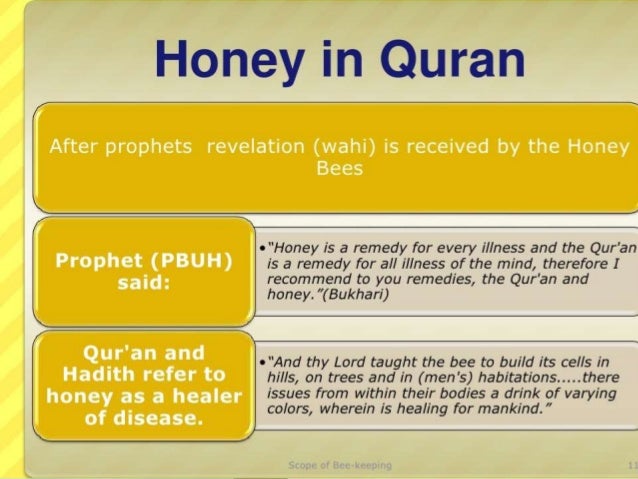
disease. In fact, the Quran only mentions one item dealing
with medical treatment, and it is not in dispute by anyone.
It states that in honey there is healing. And certainly, I do
not think that there is anyone who will argue with that!

Image result for Honey in quran

Charity, the healer of hearts and the joy of both worlds

charities-as-a-vehicle-for-a-social-enterprise-1

It is said in the Qur’an:

And spend out of what We have given you before death comes to any of you, so that he should say: My Lord! why did You not respite me to a near term, so that I should have given alms and been among the doers of good deeds? (Munafiqun, 63/10).

Inspired by this verse, Hadrat Mawlana (Alaihi Rahma) said:

• “Unfortunate souls are like dwellers in a house full of smoke. Give ear to their cries and respond by opening a window for ventilation. That will refine your soul!”

• “What have you got? What have you treasured up? What kind of pearl did you draw from the bottom of the sea? All this will be clear on the day of your death.”

• “Visiting friends without a present is like going to the mill without wheat.”

“One should pay back what one owes before death takes it by force.”

The following couplet by Necip Fazil puts this point elo- quently:

O stingy jeweler, get another purse!

Save up a currency valid in the grave…

Wise advice is fundamental to the revival of hearts. Those who appreciate the treasures of wisdom become wise themselves. Those who follow wisdom rightly will surely perfect faith.

May our Lord give us the opportunity to live in an atmosphere of wisdom and to perceive the mysteries of reality. May He help us to comprehend the meaning of the Qur’an, of the universe, and of being human.

Amin…

  • Excerpt from the book, “Such a mercy he is”