

Assalamu alaikum wa rahmatullahi wa barakatuh,
I pray that you are well, insha’Allah.
The Friday prayer (salat al-jumu`ah) is held on Fridays due to the explicit Qur’anic command to do so, ‘O ye who believe! When the call is heard for the prayer of the day of congregation, haste unto remembrance of Allah and leave your trading. That is better for you if ye did but know’ [62:9]
The ‘day of congregation’, here, refers to Friday.
The Prohibition of Trading at the time of the Friday Prayer
Imam Abu Bakr al-Jassas mentions, in his commentary of the Mukhtasar al-Tahawi, trade, specifically, is not intended here, rather, anything else which busies one from attending the Friday prayer would also take the same ruling.
Moreover, trading was specifically mentioned here because of the fact that Friday noon was a busy time for traders; so it is as if they are being told, hasten to the trade of the hereafter (akhirah), leave the trading of this world (dunya) and hurry unto the remembrance of God. [Nasafi, Madarik al-Tanzil wa Haqa’iq al-Ta’wil]
The Virtue of Fridays
It is related from the Messenger of God (Allah bless him and give him peace), that he said: “Verily the most virtuous, of your days, is Friday. Send abundant blessings upon me on Fridays because they are presented to me on that day.” [Abu Dawud]
In summary, Fridays are singled out, more emphatically, as days for sending blessings upon the Messenger of God (Allah bless him and give him peace) specifically because the blessings (salawat) are presented to him, accepted. [Abadi, `Awn al-Ma`bud Sharh Sunan Abi Dawud]
And Allah knows best.
Month: April 2019
Hazrat Sakhi Lal Shahbaz Qalandar

The End of Times: Isolating Oneself, Sticking to the Majority, and Protection from the Dajjal
Question: What is the meaning of the following hadiths:
“There will come a time when the best property of a Muslim will be sheep which he will take to the tops of mountains and the places of rainfall so as to flee with his religion from the afflictions”
Hudhayfah – radiallâhu ’anhu – said:
The people used to ask the Messenger of Allâh sallallâhu ’alayhi wa sallam about the good, but I used to ask him about the evil from fear that it would overtake me, so I said: O Messenger of Allâh! We used to be in jâhiliyyah (ignorance) and evil, then Allâh brought this good to us, so is there any evil after this good? He said: “Yes.” I said: And is there any good after that evil? He said: “Yes, but it will be tainted.” I asked: What will taint it? He said: “A people guiding others with other than my Sunnah, you will approve of some (of their actions) and disapprove of others.” I asked: Then is there any evil after that good? He said: “Yes! Callers to the Gates of Hell-Fire, whoever responds to them in that will be thrown into it.” I said: O Messenger of Allâh! Describe them to us. He said: “They will be from our own people and speak our language.” I said: What do you order me to do if that should happen in my own lifetime? He said: “Stick to the Jamâ’ah (united body) of the Muslims and their Imâm.” I said: What if they do not have a united-body nor an Imâm? He said: “Then keep away from all those sects even if you have to bite upon the root of a tree, until death overtakes you and you are in that state.”
Do these hadiths refer to the end of times during the trial of Dajjal? Does this mean that during the trials of Dajjal the believers MUST withdraw from society and move to rural areas? What is expected of the believers during those upcoming trials .
Answer: Assalamu alaikum wa rahmatullah,
I pray this finds you in the best of health and faith.
Both hadiths you mention are found in Sahih Bukhari.
Isolation versus Community
Regarding the first hadith, Ibn Hajar al-Asqalani (rah) mentions that it would seem to refer to the end of time, and that it indicates the merit of isolation in times of tribulation.
However, he also states that, in general, the preference of isolation versus remaining within the community is situation specific: there are some scenarios when isolation is preferred, such as in difficult times so as to protect one’s religious practice; and there are other situations when remaining within the community is better, so as to fulfill communal obligations and rights. [Fath al-Bari]
However, we do not know if this tribulation is specifically at the time of Dajjal’s emergence or beforehand.

Adhering to the Way of the Majority
Regarding the second hadith, Ibn Hajar (rah) mentions the general ruling that if there are many factions among the Muslims, then as per this hadith, one should avoid the disputation and stick to the majority, as well as adhere to the Noble Sunnah. Some defined the “majority” as the Sahaba, and others defined them as the religious scholars in every age, since neither of these two groups will agree on misguidance. [Fath al-Bari]
Badr al-Din al-Ayni also mentions that the “majority” could either be the Sahaba or the community of scholars in any time period. He adds that the basis of interpreting the majority as the community of scholars is that they are the ones whom Allah has made a proof (hujja) against the evil among creation, and to them do the general laity turn when there is tribulation in their religious practice, such as heretical sects, reprehensible innovations, and the like.
With respect to the first “time of evil” mentioned in the hadith, some commentators said it refers to the time of fitna when our Master Uthman (Allah be well pleased with him) was killed. The subsequent “time of good” then would be the caliphate of our Master Ali (Allah ennoble his face), and the “tainted” aspect of that time would refer to the Khawarij and similar groups that caused tribulation. [Umdat al-Qari]
What is the Way of the Mainstream?
Another key hadith, also found in Sahih Bukhari, helps us understand the way of the mainstream.
Our Prophet (Allah bless him and grant him peace) said, “There will remain a group from my nation manifest [on truth and upholding the Sacred Law], until the matter of Allah comes [the Day of Judgment], while they are manifest.”
And in the next narration in Bukhari, there is the additional phrase “Anyone who betrays or opposes them will not harm them.”
Traditionally, this manifest group was understood to be the righteous scholars of The People of the Sunnah and Majority (Ahl al-Sunna wal-Jama’a), the methodology of which is to adhere to one of the four schools of jurisprudence (Hanafi, Shafi’i, Maliki, and Hanbali), as well as one of the two schools of theology (Ash’ari and Maturidi).
Yet along with such legal and theological diversity comes an appreciation and respect of valid difference of opinion, which is key in avoiding internal discord. Sunni orthodoxy is predicated upon unity and respect, not necessarily uniformity; this is essential to the strength of its methodology.
For detailed explanations of Sunni Orthodoxy, please see the following articles by Shaykh Nuh Keller, Shaykh Abdul Hakim Murad:
What is a Madhhab? Why is it necessary to follow one?
Understanding the Four Madhhabs
Social Implications of Remaining with the Majority
Our Prophet (Allah bless him and grant him peace) highlighted the importance of remaining with the group in several hadiths:
He (Allah bless him and grant him peace) said, “Stick to the group, and beware of being separate. For indeed, Satan is with the one who is alone, yet further from two together. Whoever wishes to live in the best part of Paradise, at its center, then let him stick to the group.” [Tirmidhi]
He (Allah bless him and grant him peace) is also reported to have said, “The group is a mercy, while separation is torment.” [Musnad Shihab]
Allah Most High has placed a very special mercy in the hearts of believers united for Allah. He Most High states, “The believers are but brethren,” (49:10) and our Prophet (Allah bless him and grant him peace) explained the brotherhood of believers when he said, “The example of believers in their mutual love, mercy and compassion is like a single body: if one limb complains of pain, the rest of the body’s limbs call one another [to react], with fever and insomnia.” [Bukhari, Muslim]
What to do if Dajjal Comes?
Linguistically, “dajjal” means “imposter” (kadhdhab), or literally “one who covers over,” since he covers the truth with falsehood, to the extent that he claims divinity. He is also called that because he covers the earth with so many of his followers.
He is also called “maseeh,” which has the meaning of “anointed,” since half his face is “anointed,” such that he has no eye on that side. The Dajjal is the one who brings the greatest tribulation of this life. [Misbah Munir; Tahdhib al-Asma’; Lisan al-Arab]
There are many descriptions of him in the hadith literature, such as, “Verily, your Lord is not one-eyed. Verily, the Masih Dajjal is one-eyed: his right eye is like a floating grape,” and “Between his two eyes is written: Kafir.” [Sahih Bukhari]
The sunna is to seek refuge from the tribulation of Dajjal. The dua of the Messenger (Allah bless him and grant him peace)—which he recited at the end of the prayer and which he taught the Companions the way he would teach them a surah of the Qur’an—was:
“O Allah, I seek refuge with You from the torment of Jahannam; I seek refuge with You from the torment of the grave; I seek refuge with You from the False Messiah (dajjal); and I seek refuge with You from the tribulations of life and death.” [Sahih Muslim]
اللّهُمَّ إِنَّي أَعُوْذُ بِكَ مِنْ عَذَابِ جَهَنَّم وَأَعُوْذُ بِكَ مِنْ عَذَابِ الْقَبْر وَأَعُوْذُ بِكَ مِنْ فِتْنَةِ الْمَسِيْحِ الدَّجَّال وَأَعُوْذُ بِكَ مِنْ فِتْنَةِ الْمَحْيَا وَالْمَمَات
The sunna is also to recite Surah Kahf, specifically the first ten verses. Our Prophet (Allah bless him and grant him peace) said, “Whoever memorizes ten verses from the beginning of Surah Kahf will be safe from Dajjal,” and in another narration, “So whoever among you encounters him [Dajjal], let him recite the opening verses of Surah Kahf.” [Sahih Muslim]
Lastly, if the Dajjal does come during one’s life, then one should do what one should always do: turn wholeheartedly to Allah, and continue to serve Allah’s religion. The Prophet (Allah bless him and grant him peace) said that if a person is planting a seed and the Day of Judgment suddenly begins, he should continue planting the seed. [Musnad Ahmed]
Whether it is the end of the world or not, there is much work to be done, so as to serve this ummah and gain the pleasure of Allah Most High.
And Allah knows best.
wassalam
Shaykh Faraz Rabbani

How to Perform Salat al Istikhara | The Prayer of Guidance
Salat al Istikhara is a prayer of guidance recited during times of uncertainty or doubt. Whenever a Muslim is making a decision, he/she should seek Allah’s guidance and wisdom in every matter of life. “Istikhara” means to seek rightness from Allah (SWT), meaning when one intends to do an important task, they do Istikhara before starting the task. Muslims have strongconviction that no one is as Knowledgeable in Knowing things as Allah SWT, Allah alone knows what is best for them, and there may be good in what they perceive as bad, and bad in what they perceive as good as mentioned in the Holy Quran:
“….. But perhaps you hate a thing and it is good for you; and perhaps you love a thing and it is bad for you. And Allah Knows, while you know not.” (Quran, 2:216)
The above-mentioned Ayah described that in terms of making our decisions based on rightful judgment which is only possible through the Help of the Creator of the universe we should seek guidance from Almighty Allah. We can get closer to Allah (SWT) through prayers and get His guidance in solving the complex issues of our lives. Istikhara prayer is the prayer of guidance through which we seek Allah’s guidance while taking important decisions of our lives.
Salat al Istikhara or prayer of guidance is a powerful tool that Allah Almighty has given us to ask His guidance in all matters of life. We should not hesitate to perform this prayer with sincerity, knowing in our hearts that only Allah Almighty can give us the guidance we seek, and resolved to follow the guidance He gives us, even if it against our desires.
Jabir Ibn Abdullah Al Salami (RA) narrated that “The Messenger of Allah Prophet Muhammad (SAW) used to teach His companions to make Istikhara in all things, just as He (PBUH) used to teach them surahs from the Holy Quran. He (SAW) said: ‘If any one of you is concerned about a decision he has to make, then let him pray two Rakats of non-obligatory prayer, then say (translation):
“I seek Your guidance [in making a choice] by virtue of Your knowledge, and I seek ability by virtue of Your power, and I ask You of Your great bounty. You have power, I have none. And You know, I know not. You are the Knower of hidden things. O Allah, if in Your knowledge, this matter (then it should be mentioned by name) is good for me both in this world and in the Hereafter (or: in my religion, my livelihood and my affairs), then ordain it for me, make it easy for me, and bless it for me. And if in Your knowledge it is bad for me and for my religion, my livelihood and my affairs (or: for me both in this world and the next), then turn me away from it, [and turn it away from me], and ordain for me the good wherever it may be and make me pleased with it.”” (Bukhari)

Method of Performing Salat al Istikhara
To perform Salat al Istikhara, one should first be cleansed, so perform Wudu (ablution) if necessary. After that, one has to perform two Nafl Rakats of Salah with the intention of Istikhara. In first cycle (Rakat), after Surah Fatiha, recite Surah Al-Kafirun, and in the second, read Surah Ikhlas, having similar format in the remaining prayer as is found in normal Namaz. After that, one has to read out the above mentioned Dua e Istikhara in Arabic.
It is always advisable to send blessings on the Holy Prophet (PBUH) in the form of Durood before and after any request to the Almighty Allah for instant completion of prayers. One should also sleep in the state of Ablution and keep its face towards Qibla as it has been the way of Prophet Muhammad (PBUH). There is no general compulsion in performing Salat al Istikhara at particular time, but according to the traditions final third of a night is the best time for fulfillment of one`s supplications. Abu Hurairah (RA) described:
Allah’s Messenger Prophet Muhammad (PBUH) said, “When it is the last third of the night, our Lord, The Blessed, The Superior, Descends every night to the nearest heaven of the world and Declares, ‘Is there anyone who invokes Me that I may respond to his invocation; is there anyone who asks Me for something that I may give (it to) him; is there anyone who asks My forgiveness that I may forgive him?’” (Bukhari)
One needs to be patient in terms of receiving the answer to their prayers. Always be patient and remember the words of our beloved Prophet Muhammad (SAW), “The supplication of everyone is granted as long as he does not show haste and does not say that he made a supplication but it was not accepted.” (Tirmidhi)
Istikhara or prayer of guidance is a great from supplication, which does not only result in Allah`s guidance and supervision in the accomplishment of a task, but also purifies one`s heart and soul by bringing it near to the Almighty Allah. May Allah SWT give us will and desire to understand the great significance of this prayer and benefit from it in the most meaningful manner. Ameen!

Evolution and Islam’s Quantum Question
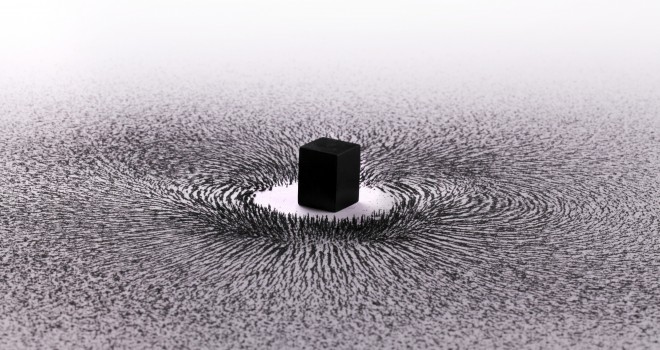
The apparent contradictory relationship between Islam and evolution is important because it has been cited as an example of contradiction between religion and science by both thinkers in the West and Muslims. Muslim scholars and scientists mainly disagree with evolution’s legitimacy. Islam’s Quantum Question by Nidhal Guessoum is a unique narrative providing in one of its first chapters an overview of evolution from neo-Darwinists to creationists, including the views of scholars throughout Islamic history. Guessoum then proceeds to advocate for evolution. Drawing from Nidhal Guessoum’s work, I highlight the reasons why there is an apparent contradiction between Islam and science—and, in particular, Islam and evolution—which include lack of freedom of thought and misinterpretation of the Qur’an. In doing so, I suggest setting the stage for a new Einsteinian theory of evolution, which involves the dimension of time and human cognition.
Download full article here
 Aal-e-Qutub Aal-e-Syed Abdullah Shah Ghazi