

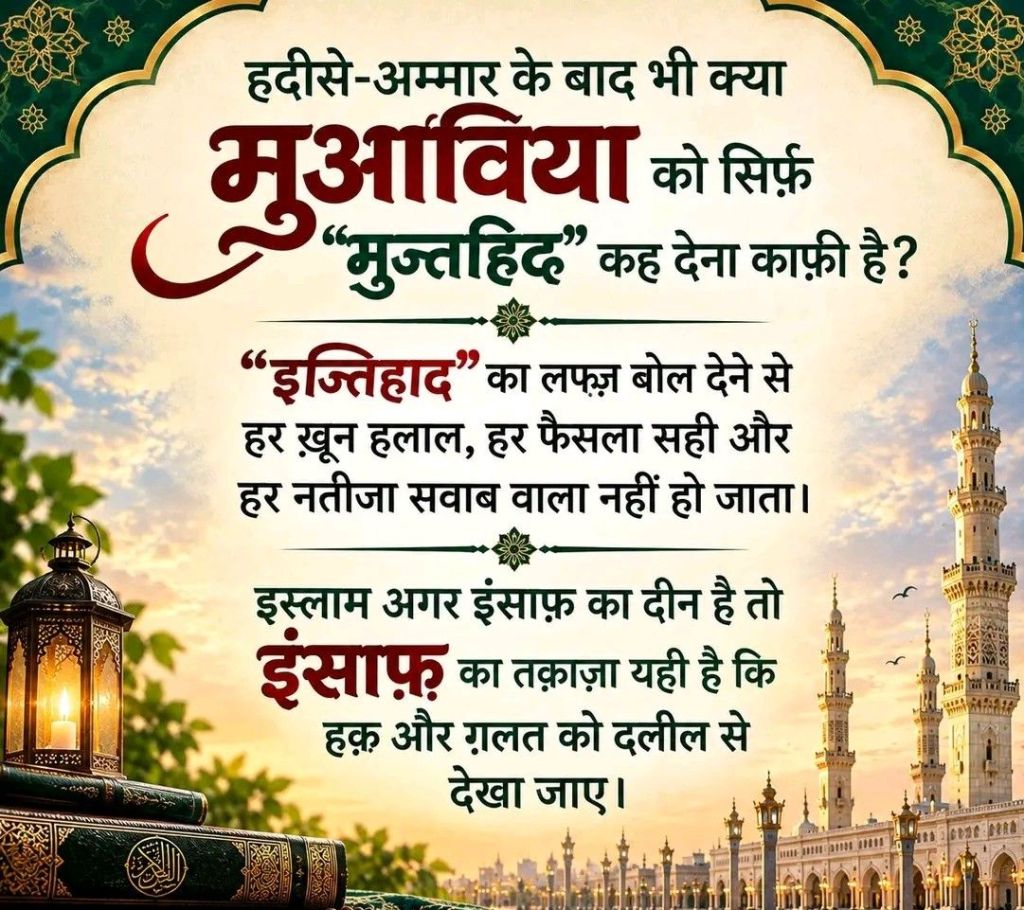
हदीसे-अम्मार के बाद भी क्या मुआविया को सिर्फ़ “मुज्तहिद” कह देना काफ़ी है?
तारीख़-ए-इस्लाम में कुछ वाक़ियात ऐसे हैं जिन पर जितना पर्दा डालने की कोशिश की जाए, उतना ही सवाल और ज़्यादा नुमायाँ होकर सामने आता है।
जंगे-सिफ़्फ़ीन भी उन्हीं वाक़ियात में से एक है।
मसला सिर्फ़ ये नहीं कि दो मुसलमान जमाअतें आमने-सामने आ गईं।
मसला ये है कि उस जंग के बारे में रसूलुल्लाह ﷺ की पेशगी ख़बर मौजूद थी।
मसला ये है कि हज़रत अम्मार बिन यासिर रज़ियल्लाहु तआला अन्हु के बारे में नबी-ए-करीम ﷺ ने फ़रमाया कि उन्हें एक बाग़ी जमाअत क़त्ल करेगी।
फिर अम्मार रज़ियल्लाहु तआला अन्हु जंगे-सिफ़्फ़ीन में शहीद हुए।
और इसके बाद भी अगर कोई यह कहे कि:
“मुआविया ने इज्तिहाद किया था, इसलिए उनका अमल भी दुरुस्त था और उन्हें अज्र मिलेगा।”
तो फिर सवाल करना ज़रूरी है:
इस इज्तिहाद की दलील क्या है?
—
पहले हदीसे-अम्मार को समझिए
हदीसे-अम्मार कोई बाद के दौर की बनाई हुई बहस नहीं।
ये रसूलुल्लाह ﷺ की वो मशहूर पेशगोई है जिसमें हज़रत अम्मार रज़ियल्लाहु अन्हु के बारे में बताया गया कि उन्हें एक बाग़ी जमाअत क़त्ल करेगी।
अब ज़रा इस हदीस को सामने रखकर जंगे-सिफ़्फ़ीन को देखिए।
हज़रत अली रज़ियल्लाहु अन्हु उस वक़्त ख़लीफ़ा थे।
मुआविया के साथ एक अलग लश्कर था।
दोनों के बीच जंग हुई।
और उसी जंग में हज़रत अम्मार रज़ियल्लाहु अन्हु शहीद हुए।
तो फिर वो सवाल पैदा हुआ जिसे किसी “जज़्बाती मोहब्बत” के पर्दे में छिपाया नहीं जा सकता:
हदीस में जिस बाग़ी जमाअत की निशानदेही की गई थी, वो बागी जमाअत कौन थी?
यही असल सवाल है।
—
अब उन लोगों के लिए ये बात ख़ास तौर पर क़ाबिले-ग़ौर है जो हर हालत में मुआविया के अमल को “इज्तिहाद” कहकर ख़त्म कर देना चाहते हैं।
इमाम मुल्ला अली क़ारी रहमतुल्लाहि अलैह ने मिरक़ातुल-मफ़ातीह में हदीस नंबर 5878 की शरह मे इतना सख़्त कलाम किया कि इस पूरे मसले को सिर्फ़ “इज्तिहादी ख़ता” कहकर टालना मुश्किल हो जाता है।
इमाम मुल्ला अली कारी ने ‘मिरकातुल मफातेह’ में हदीस नंबर 5878 के सरह में लिखा है-
मैं (मुल्ला अली कारी) कहता हूं कि जब मुआविया पर वाजिब था [हदीसे अम्मार सुनने के बाद] कि वो खलीफा की इताआत करके अपनी बागियाना सरगर्मियों से रुजु करते और खलीफा की ये मनफी-खिलाफत की तलब व ख्वाहिश को तरक कर [यानि छोड़] देते [मगर उन्होंने ये काम नहीं किया] तो जाहिर हो गया कि वो बातिन [हकीकत] में बागी थे और जाहिरी तौर पर उन्होंने किसासे-उस्मान का लिबादा अपनी हिफाजत के लिए रियाकाराना-तौर [यानि मक्कारी, फरेब, धोखा देने की नियत से] ओढ़ रखा था। चुनांचे ये हदीस [यानि हदीसे अम्मार] इनके गुनाह को जाहिर करने और इनके [यानि मुआविया के] ऐब का ऐलान करने और इनके अमले-बगावत से रोकने के लिए आ गयी लेकिन ये सब कुछ मुकद्दर हो चुका था। चुनांचे कुरान और हदीस दोनों मुआविया के नजदीक मतरूक हो गये। सो अल्लाह रहम करे उस शख्स पर जिसने तास्सुब ना किया और ना ही जुल्म किया और ऐतिक़ाद में मियाना-रवी [यानि किफायत, हद से ना बढ़ना] इख्तियार की ताकि सिराते-मुस्तकीम से हटकर राफजियत और नासबियत में ना जा पड़े और तमाम आल व असहाब से मोहब्बत रखे।’
📕मिरक़ातुल-मफ़ातीह में रकम नंबर: 5878
अब सवाल कीजिए:
अगर मुल्ला अली क़ारी के फरमान को सामने रखा जाए, तो फिर मुआविया के लिए “इज्तिहाद” का नारा किस हद तक बचता है?
क्या सिर्फ़ यह कह देना काफ़ी है कि:
“वो मुज्तहिद थे।”
नहीं!
इल्म में सिर्फ़ दावा नहीं होता, दलील होती है।
—
इसी तरह इमाम बदरुद्दीन ऐनी ने अपनि किताब 📕’उम्दतुल-कारी फी सरह सहीह बुखारी शरीफ’ के किताबुल फितन में रकम नंबर 7083 की सरह में लिखते हैं कि-
ये कैसे कह दिया जाता है कि मुआविया की खताए इज्तिहादी थी? मैं (बदरुद्दीन ऐनी) पूछता हूं कि मुआविया के इज्तिहाद पर क्या दलील है.? जबकि मुआविया को ये हदीस पहुंच चुकी थी कि अम्मार को एक बागी जमाआत कत्ल करेगी और अम्मार को मुआविया की जमाआत ने कत्ल किया। मैं कहता हूं मुआविया के लिए यही काफी है कि वो इस [अम्मार के] मामले में अल्लाह से बच जाए, [मुआविया को] अज्र-सवाब मिलना तो दूर की बात है।’
“मुआविया के इज्तिहाद पर क्या दलील है?”
यही तो सवाल है!
दलील कहाँ है?
अगर इज्तिहाद था तो उसका शरई आधार क्या था?
अगर ख़ता-ए-इज्तिहादी थी तो उसके लिए नस की मौजूदगी में क्या वजह थी?
और अगर हदीसे-अम्मार पहले से मालूम थी तो फिर उस हदीस की तात्बीक़ क्या हुई?
इमाम बदरुद्दीन ऐनी के कोल के मुताबिक तो हजरत अम्मार के मामले में मुआविया के लिए अल्लाह से डरना ही काफ़ी है, अज्र-सवाब की बात बाद की है।
तो फिर सवाल ये नहीं कि हम आज मुआविया के बारे में क्या सोचते हैं।
सवाल ये है कि पुराने उलमा ने खुद इस मामले को किस नज़र से देखा?
—
शाह नक़ी अली ख़ाँ बरेलवी का हवाला
अब आइए उस हवाले की तरफ़ जो इस बहस को और भी वाज़ेह करता है।
इमाम अहमद रज़ा ख़ाँ फ़ाज़िले-बरेलवी के वालिद मौलाना शाह नक़ी अली ख़ाँ बरेलवी की किताब
📕अनवार-ए-जमाल-ए-मुस्तफ़ा के सफ़हा 263 पर मौलाना नकी अली खान लिखते है की : हज़रत अम्मार बिन यासिर रज़ियल्लाहु अन्हु को मुआविया के गिरोह ने शहीद कीया है|
तो फिर ज़रा सोचिए:
एक तरफ़—
हदीसे-अम्मार।
दूसरी तरफ़—
अम्मार की शहादत।
तीसरी तरफ़—
उलमा की शरहें।
और चौथी तरफ़—
“इज्तिहाद था” का दावा।
अब बताइए:
दावे के पीछे दलील कहाँ है?
—
इज्तिहाद की आड़ कब तक?
यहाँ एक बात बिल्कुल साफ़ समझ लेने की ज़रूरत है।
इज्तिहाद का मतलब ये नहीं कि इंसान जो चाहे करे और बाद में अपने अमल को इज्तिहाद का नाम दे दे।
इज्तिहाद शरीअत के दायरे में होता है।
इज्तिहाद का अपना उसूल है।
इज्तिहाद का अपना इल्मी निज़ाम है।
इज्तिहाद का मतलब ये नहीं कि नबी ﷺ की हदीस को एक तरफ़ रखकर तलवार उठा ली जाए और बाद में कहा जाए:
“हमने इज्तिहाद किया था।”
अगर ये उसूल मान लिया जाए तो फिर दुनिया की हर बड़ी ग़लती को “इज्तिहाद” का नाम दिया जा सकता है।
फिर ज़ुल्म और इंसाफ़ का फ़र्क़ क्या रहेगा?
फिर बग़ावत और इताअत का फ़र्क़ क्या रहेगा?
फिर मज़लूम और ज़ालिम के बीच इम्तियाज़ कैसे होगा?
—
सिर्फ़ ये कह देना कि दोनों मुसलमान थे—जवाब नहीं
कुछ लोग कहते हैं:
“दोनों तरफ़ सहाबा थे, इसलिए किसी को ग़लत नहीं कह सकते।”
लेकिन ये दलील अपने आप में काफ़ी नहीं।
क़ुरआन मजीद ने मुसलमानों के दो गिरोहों में क़िताल की सूरत में भी एक गिरोह के बग़ावत करने का तसव्वुर पेश किया है।
यानी सिर्फ़ सहाबा होना किसी गलत अमल को अपने आप सही नहीं बना देता।
अगर दो मुसलमानों के बीच लड़ाई हो जाए तो क़ुरआन ने ये नहीं कहा कि:
“दोनों मुसलमान हैं, इसलिए दोनों बराबर सही हैं।”
बल्कि इस्लाह, इंसाफ़ और बाग़ी गिरोह के मुक़ाबले का उसूल बयान किया।
तो फिर सिफ़्फ़ीन के मामले में ये सवाल क्यों नहीं पूछा जा सकता?
—
हज़रत अली रज़ियल्लाहु अन्हु कौन थे?
ये भी भूलना नहीं चाहिए कि ये लड़ाई किसी आम शख़्स और किसी आम शख़्स के बीच नहीं थी।
एक तरफ़ वो शख़्सियत थी जिसे मुसलमानों ने ख़लीफ़ा बनाया था:
हज़रत अली कर्रमल्लाहु वजहहू।
और दूसरी तरफ़ शाम की ताक़त थी जिसकी क़ियादत मुआविया कर रहे थे।
तो सवाल सिर्फ़ “ हजरते उस्मान के क़िसास” का नहीं रह जाता।
सवाल ये भी है कि:
ख़लीफ़ा की इताअत का शरई उसूल क्या है?
अगर हर ताक़तवर सूबा अपनी शर्तों पर ख़लीफ़ा से टकराने लगे और अपने सियासी मक़सद को “क़िसास” का नाम दे दे, तो फिर ख़िलाफ़त का निज़ाम किस तरह क़ायम रहेगा?
—
क़िसासे-उस्मान या सियासी नारा?
हज़रत उस्मान रज़ियल्लाहु अन्हु की शहादत यक़ीनन एक बहुत बड़ा और दर्दनाक हादसा था।
लेकिन सवाल ये है:
क्या उस हादसे का क़िसास लेने का तरीक़ा ख़लीफ़ा के मुक़ाबिल एक अलग लश्कर खड़ा करना था?
क्या अदालत और हुकूमत के उसूलों को छोड़कर तलवार उठा लेना सही तरीक़ा था?
क्या हर मुतालबा अपनी ज़ात में शरई दलील बन जाता है?
और अगर ये कहा जाए कि यह सब इज्तिहाद था, तो फिर वही सवाल:
दलील कहाँ है?
—
अम्मार की शहादत को हल्का मत कीजिए
हज़रत अम्मार रज़ियल्लाहु अन्हु की शहादत को सिर्फ़ एक जंग में हुई मौत कहकर आगे बढ़ जाना हदीस की रूह को नज़रअंदाज़ करना है।
नबी ﷺ ने उनके बारे में पहले से ख़बर दी।
वो शहीद हुए।
और उनकी शहादत उसी जंग में हुई जहाँ मुसलमानों के दो लश्कर आमने-सामने थे।
तो फिर हदीसे-अम्मार सिर्फ़ एक फ़ज़ीलत की हदीस नहीं रह जाती।
ये उस जंग के बारे में नबवी पैमाना बन जाती है।
और जब नबवी पैमाना सामने हो तो फिर हमारी पसंद-नापसंद की कोई हैसियत नहीं।
—
क्या क़ातिल को भी अज्र मिलेगा?
यहाँ सबसे सख़्त सवाल सामने आता है।
अगर कोई शख़्स कहे कि:
“मुआविया का इज्तिहाद था, इसलिए इस क़िताल में भी उन्हें अज्र मिलेगा।”
तो फिर पूछा जाएगा:
क्या अम्मार रज़ियल्लाहु अन्हु की शहादत भी उसी इज्तिहाद का हिस्सा थी?
अगर जवाब “हाँ” है तो फिर हदीसे-अम्मार की बाग़ी जमाअत का मतलब क्या हुआ?
और अगर जवाब “नहीं” है तो फिर मुआविया की पूरी क़ियादत और उस जंग के फ़ैसले को किस बुनियाद पर सही ठहराया जाएगा?
यही वो गिरह है जिसे “इज्तिहाद” का एक लफ़्ज़ खोल नहीं सकता और ना ही उसकी बगावत पर परदा डाल सकता है।
—
सहाबा की मोहब्बत अपनी जगह, इंसाफ़ अपनी जगह
हम सहाबा-ए-किराम की अज़मत के क़ाइल हैं।
लेकिन किसी सहाबी से मोहब्बत का मतलब ये नहीं कि तारीख़ की हर बहस को बंद कर दिया जाए।
और न ही किसी सहाबी के अमल पर इल्मी सवाल उठाना अपने आप में तौहीन बन जाता है।
अगर बड़े-बड़े उलमा ने इस वाक़िये पर बहस की है, तो हमें भी दलील पढ़ने का हक़ है।
हमें ये नहीं कहा जा सकता कि:
“सवाल मत करो, बस इज्तिहाद मान लो।”
नहीं!
हम पूछेंगे।
हम पढ़ेंगे।
हम हवाले देखेंगे।
हम क़ुरआन देखेंगे।
हम हदीस देखेंगे।
और फिर जो बात दलील से साबित होगी, उसे मानेंगे।
—
मुआविया की शख़्सियत नहीं—उनके अमल पर बहस है
यहाँ भी फर्क़ समझना ज़रूरी है।
किसी तारीखी शख़्सियत के अमल पर सख़्त तनक़ीद करना और गाली-गलौज करना एक चीज़ नहीं।
हम गाली नहीं चाहते।
हमें गाली की ज़रूरत नहीं।
हमारे पास सवाल है।
हमारे पास हदीस है।
हमारे पास उलमा के हवाले हैं।
हमारे पास क़ुरआनी उसूल हैं।
इसलिए किसी को गाली देने की नहीं—
दलील देने की ज़रूरत है।
—
और अब आख़िरी सवाल
अगर हदीसे-अम्मार सामने है,
अगर अम्मार रज़ियल्लाहु अन्हु की शहादत सामने है,
अगर मुल्ला अली क़ारी जैसे इमाम की शरह में मुआविया के अमल पर इतनी सख़्त तनक़ीद मौजूद है,
अगर बदरुद्दीन ऐनी इज्तिहाद की दलील पर सवाल उठा रहे हैं,
और अगर शाह नक़ी अली ख़ाँ बरेलवी की तरफ़ से भी अम्मार की शहादत को मुआविया के गिरोह से जोड़े जाने का हवाला मौजूद है—
तो फिर भी अगर कोई कहे:
“नहीं, सब ठीक था। ये सिर्फ़ इज्तिहाद था और क़ातिल को अज्र मिलेगा।”
तो फिर उससे सिर्फ़ एक सवाल कीजिए:
“इस फ़ैसले की दलील क्या है?”
क्योंकि किसी शख़्सियत को बचाने के लिए हदीस को पीछे नहीं किया जा सकता।
किसी तारीखी किरदार की हैसियत बचाने के लिए क़ुरआन के उसूल को नज़रअंदाज़ नहीं किया जा सकता।
और “इज्तिहाद” का लफ़्ज़ बोल देने से हर ख़ून हलाल, हर फ़ैसला सही और हर नतीजा सवाब वाला नहीं हो जाता।
—
हमारा सवाल इस्लाम से नहीं है।
हमारा सवाल उस तौजीह से है जो ख़ूरेज़ी को सिर्फ़ एक लफ़्ज़ “इज्तिहाद” के ज़रिए पाक-साफ़ करने की कोशिश करे।
इस्लाम अगर इंसाफ़ का दीन है तो इंसाफ़ का तक़ाज़ा यही है कि हक़ और ग़लत को दलील से देखा जाए।
इस्लाम अगर हदीस का दीन है तो नबी ﷺ की ख़बर को अपनी पसंदीदा शख़्सियतों की ख़ातिर नज़रअंदाज़ नहीं किया जा सकता।
और इस्लाम अगर क़ुरआन का दीन है तो क़ुरआन के बताए हुए बग़ावत और इंसाफ़ के उसूल को भी सामने रखना होगा।
इसलिए सवाल से मत भागिए।
अम्मार की हदीस पढ़िए।
सिफ़्फ़ीन पढ़िए।
फिर बताइए—
क्या हर चीज़ को “इज्तिहाद” कहकर सही साबित किया जा सकता है?
और अगर नहीं—
तो फिर मुआविया के अमल को बचाने के लिए इज्तिहाद की ढाल कब तक इस्तेमाल की जाएगी?
हक़ को शख़्सियत की ज़रूरत नहीं होती।
हक़, हक़ होता है—चाहे उसके सामने कोई भी नाम क्यों न हो।
✍️ शोएब वारसी


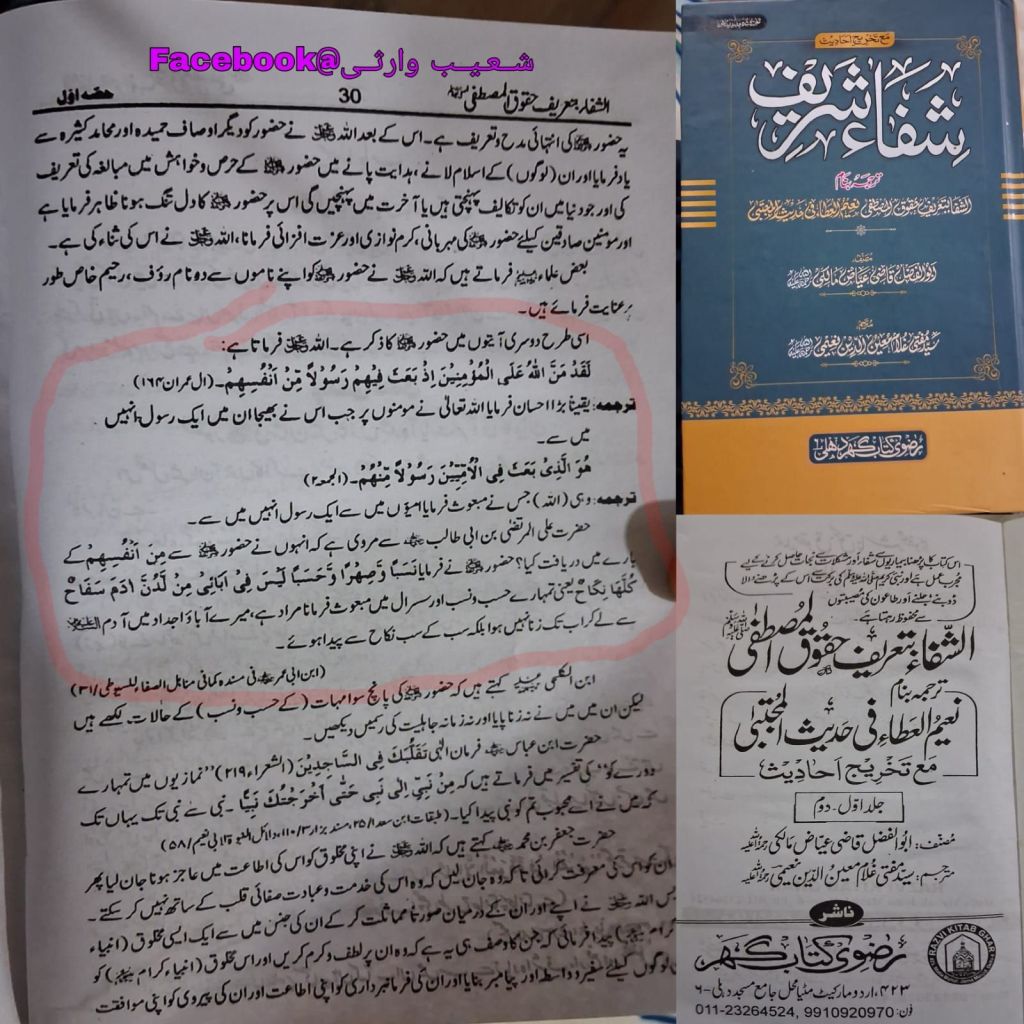
सूरह आले इमरान (आयत 164):
तर्जुमा: यक़ीनन बड़ा एहसान फ़रमाया अल्लाह तआला ने मोमिनों पर जब इस ने भेजा उनमें एक रसूल उन्हीं में से।
सूरह जुमुआ (आयत 2):
तर्जुमा: वही (अल्लाह) जिस ने मबूस फ़रमाया उमियों में से एक रसूल उन्हीं में से।
हज़रत अली बिन अबी तालिब (कर्रम अल्लाहु वजहुलकरीम) से रिवायत है कि उन्होंने हुज़ूर ﷺ के नसब (वंश) के बारे में दरियाफ़्त किया। तो हुज़ूर ﷺ ने फ़रमाया: “नसबन व हसबन लैसा फ़ी आबाई मिन आदम सिफ़ाहुन कुल्लुहा निकाहुन” यानी तुम्हारे हसब, नसब और ससुराल में मबूस फ़रमाना मुराद है, मेरे आबा व अजदाद में आदम अलैहिस्सलाम से लेकर कब तक जिना नहीं हुआ बल्कि सब के सब निकाह से पैदा हुए हैं।
📕 शिफ़ा शरीफ़ जिल्द: 1 सफाह नं: 30
मुसन्निफ (लेखक): अबू अल-फ़ज़ल क़ाज़ी इयाज़ मालिकी रहमतुल्लाह अलैह
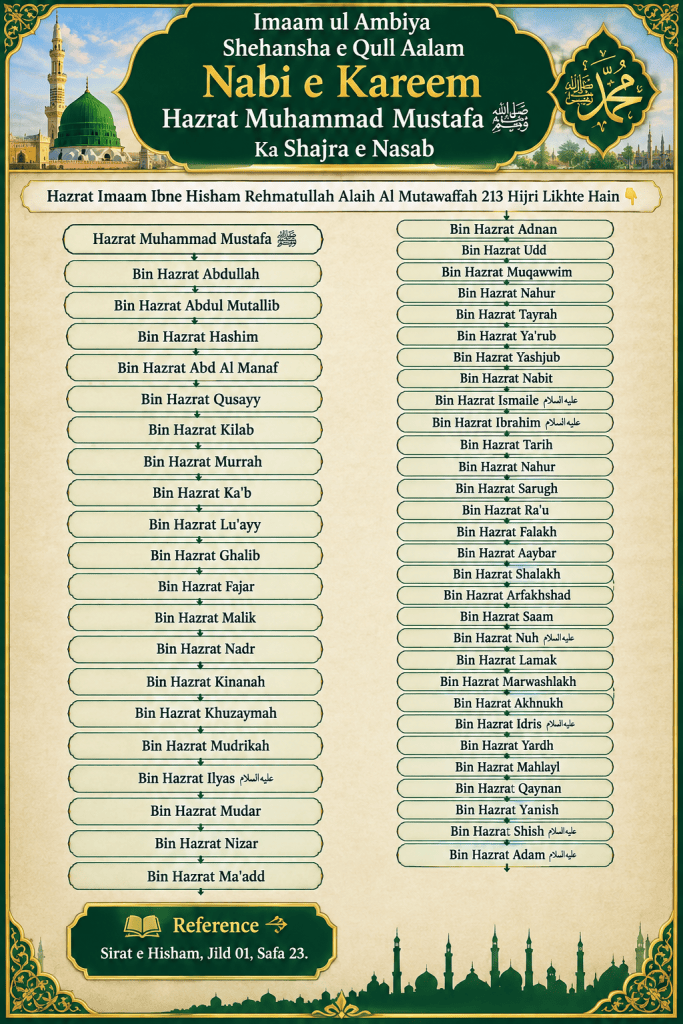
*Imaam ul Ambiya Shehansha e Qull Aalam Nabi e Kareem Hazrat Muhammad Mustafa Sallallahu Alaihi wa Aala Aalehi wa Sallam Ka Shajra e Nasab*
Hazrat Imaam Ibne Hisham Rehmatullah Alaih Al Mutawaffah 213 Hijri Likhte Hain 👇
Hazrat Muhammad Mustafa Bin Hazrat Abdullah Bin Hazrat Abdul Mutallib Bin Hazrat Hashim Bin Hazrat Abd Al Manaf Bin Hazrat Qusayy Bin Hazrat Kilab Bin Hazrat Murrah Bin Hazrat Ka’b Bin Hazrat Lu’ayy Bin Hazrat Ghalib Bin Hazrat Fajar Bin Hazrat Malik Bin Hazrat Nadr Bin Hazrat Kinanah Bin Hazrat Khuzaymah Bin Hazrat Mudrikah Bin Hazrat Ilyas Alahis Salam Bin Hazrat Mudar Bin Hazrat Nizar Bin Hazrat Ma’add Bin Hazrat Adnan Bin Hazrat Udd Bin Hazrat Muqawwim Bin Hazrat Nahur Bin Hazrat Tayrah Bin Hazrat Ya’rub Bin Hazrat Yashjub Bin Hazrat Nabit Bin Hazrat Ismaile Alahis Salam Bin Hazrat Ibrahim Alahis Salam Bin Hazrat Tarih Bin Hazrat Nahur Bin Hazrat Sarugh Bin Hazrat Ra’u Bin Hazrat Falakh Bin Hazrat Aaybar Bin Hazrat Shalakh Bin Hazrat Arfakhshad Bin Hazrat Saam Bin Hazrat Nuh Alahis Salam Bin Hazrat Lamak Bin Hazrat Marwashlakh Bin Hazrat Akhnukh Bin Hazrat Idris Alahis Salam Bin Hazrat Yardh Bin Hazrat Mahlayl Bin Hazrat Qaynan Bin Hazrat Yanish Bin Hazrat Shish Alahis Salam Bin Hazrat Adam Alahis Salam.
📚 *Reference* 📚
Sirat e Hisham, Jild 01, Safa 23.