Bibi Zuleikha’s father, Khwaja Arab, was a man of riches in Bukhara when the Mongol Chinghiz Khan eyed the riches of the city. He sacked Bukhara, looted its wealth and murdered thousands.
Bibi Zuleikha, Khwaja Arab and their family escaped the bloodbath and fled Bukhara, leaving behind all their wealth. Khwaja Ali, a friend of Khwaja Arab, also survived the mass murder. They travelled to Lahore and settled in Badaon, a quiet city, free of political intrigues.
Khwaja Arab gave his daughter, Zuleikha, in marriage to Khwaja Ali’s son, Ahmad. They had a daughter, Zainab, and a son, Mohammad. Ahmad passed away soon after Mohammad was born in 1244. Mohammad would later be known as Nizamuddin. Zainab told Nizamuddin how their father had died.
One night, their mother, Bibi Zuleikha, heard a voice in her dream, saying she should choose between her husband or son as one of them was destined to die. She said Nizamuddin should live. Khwaja Ahmad fell ill soon after and passed away.
The child Nizamuddin was different. He was a diligent student, but destiny would take him on a journey, a Path travelled by Chishti dervishes before him.
Destiny was also playing another hand. A little away in Patiali, around 1253, Saifuddin Shamsi, a Turk, was celebrating the birth of his second son.
The Mongols had driven thousands out of Central Asia. Saifuddin joined the army of the sultans of Delhi. He married, Daulat Naz, the daughter of Imad-ul-Mulk, the army minister of the sultan.
Abul Hassan Yameen Al Deen was born to Saifuddin and Daulat Naz. He was born into riches and a milieu where brother killed brother and nephew his uncle to sit on the throne. The sultan’s court was a cauldron of intrigue, deceit, and murder. Abul Hassan’s father, Saifuddin, was the sultan’s soldier, his grandfather, Imad-ul-Mulk, a key member of the royal court, the epicentre of political deception. Abul Hassan was cradled in this air of evil design, distrust and conspiracy.
Abul Hassan would grow up to be known as Amir Khusro — the master poet and musician; the confidante of sultans; and the favourite disciple of Nizamuddin — the dervish who despised politics, who shunned sultans.
Nizamuddin studied hard. But Badaon could not cure his thirst for knowledge. He wanted to move to Delhi, the seat of education at that time. It was 1260. Bibi Zuleikha agreed. The family left Badaon.
The Turkish aristocracy held sway in Delhi. The politics was cutthroat. Sixteen-year-old Nizamuddin’s strength was his mother, Bibi Zuleikha. The family was poor: they had no money to find a roof to shelter, no money to buy bread.
The family found an inn, which only allowed women to stay. Bibi Zuleikha and Nizamuddin’s sister, Zainab, moved there. The sultan’s army minister, Imad-ul-Mulk, gave Nizamuddin shelter in one of his homes close by.
Saifuddin Shamsi, Imad-ul-Mulk’s son-in-law, had been killed in battle. Imad-ul-Mulk was bringing up his grandson, Amir Khusro. Nizamuddin and Khusro lived in the same house. A Sufi ascetic, Najeebuddin Mutawakil, lived next door. Resigned to the Will of his Maker and lost in His devotion, Najeebuddin was so poor that even during Eid, when feasting is the norm, all he could offer guests was a glass of water.
Grandeur and opulence lived side by side with poverty and penitence. Nizamuddin saw both worlds. He lived in one and had no desire for the other. He was content being hungry. His mother had shown him other riches: trust in the Maker and His ways.
Ever since he was a boy, Nizamuddin had one longing — he wanted to place his head at the feet of Baba Farid, a dervish, who lived in Ajodhan, now Pakpattan in Pakistan.
Nizamuddin was 12 when a wandering minstrel, Abu Bakr Kharrat, came to Badaon, to see his teacher. He praised Bahauddin Zakariya, a Sufi master of the Suhrawardi sect in Multan, and then spoke of his visit to Baba Farid. For some inexplicable reason, Baba Farid lived in Nizamuddin’s soul.
Destiny had brought Nizamuddin to Delhi and to Najeebuddin Mutawakil, Baba Farid’s brother. His poverty was abject, but it did not shake his faith. Bibi Fatima Sam, a neighbour, would send the family bread when they were on the edge of starvation. Like Bibi Zuleikha, Najeebuddin extended his hands only before his Maker.
Nizamuddin completed his education and wanted to be a judge. He ran to Najeebuddin asking him to read the Surat Al Fatiha as a blessing for his success. He said nothing. Nizamuddin asked again. And Najeebuddin said: “Don’t be a judge, be something else.”
This changed Nizamuddin’s life.
Nizamuddin was at the mosque one night. When morning broke, the muezzinrecited this verse from the Quran:
“Has not the time arrived
For the Believers that
Their hearts in all humility
Should engage in the remembrance of God.”
That was a sign. Nizamuddin was 20. “I have to go to Shaikh Farid,” he told his mother.
Nizamuddin was nervous when he travelled to Ajodhan. Baba Farid knew he was coming. It was destined.
The 90-year-old Shaikh realised Nizamuddin was trembling with awe. He welcomed Nizamuddin with these words: “The fire of your separation has burnt many hearts. The storm of desire to meet you has ravaged many lives.”
Nizamuddin mustered up the courage to say he wanted to kiss his feet. Baba Farid knew he was tense. “Every newcomer is nervous,” he said as he calmed Nizamuddin’s mind.
Lessons of a dervish
Nizamuddin returned to Delhi from Ajodhan after spending time with Baba Farid, learning the life and ways of Chishti Sufis.
The creed was simple: Devote your life to God, serve the poor and the needy to realise the Maker. Do not till the land as it will make you beholden to the tax collector. Once you are beholden to the tax collector, your soul will be preoccupied with worry and material want. And once the tax collector has your soul, there is no time for the Almighty. Do not indulge in shughl or government service — the sultan is not your master, the Maker is. Never meet a sultan, stay away from the court. Eat frugally when food comes as futuh or unasked for gifts. Distribute everything that comes as futuhamong the poor, never keep anything for the next day because God will provide. Storing food proves you have no trust in your Maker. Bring happiness to the human heart — it is more important than ritualistic prayer.
Moinuddin Chishti, the mystic who introduced Chishti Sufism to the Indian subcontinent, lived by one principle: Be as generous as the river, warm as the Sun and as hospitable as the earth. The river gives water to everyone; the sun showers warmth without discrimination; and the earth provides its bounty despite us stamping on it.
This was the Chishti mystic’s life: Serve the poor. But first you had to conquer all your primal fears: You had no source of food — you had to rely solely on God to provide; you had no home — you lived in a mosque or trusted in God to provide a shelter; you had a simple tunic that you washed and wore. You had to obliterate the desire for man’s basic needs for survival: food, shelter and clothing. There was nothing. And in that nothingness, there was God because there was trust. There was resignation to His Will — a creed so simple that it defies human instinct. A creed that would make kings knock on the doors of dervishes because there was no fear; no want; no expectation; no self. There was only God.
Taste of hunger
Nizamuddin lived the life of a dervish in poverty and prayer. Oncethree days had passed and there was nothing to eat. Someone knocked on his door and handed him a bowl of khichri. “Nothing in life tasted better,” Nizamuddin would reminisce.
Baba Farid’s teachings and the principles of the Chishti mystics were ingrained in Nizamuddin. He had surrendered himself to the Will of the Maker. He had no source of food, he wore a simple Sufi tunic and he had no shelter. He returned to Delhi from Ajodhan and found refuge in Amir Khusro’s uncle’s house. Adjacent to the palatial buildings of courtiers, Bibi Zuleikha and Baba Farid’s brother, Najeebuddin Mutawakil, lived in run down houses, in present day Mehrauli.
Bibi Zuleikha had passed, entrusting Nizamuddin to the care of his Maker. Nizamuddin had nothing. But he felt secure. “If my mother had left me a house full of gold and jewels, it would not have given me any pleasure and consolation. This bereaved heart was consoled when she said she had entrusted me to God,” Nizamuddin would recall years later. Her words comforted him. They calmed his soul. He trusted in his Maker and cared for little else.
Nizamuddin soon found a home in Ghiyaspur, but food was still a scarcity. He had to starve for days. When he could not take the hunger any longer, Nizamuddin would put a tablecloth at the door. People could leave anything to eat. He would end his fast with whatever he was given. Once a beggar walked past and saw food outside Nizamuddin’s door. He thought they were left overs. Nizamuddin had not eaten. The beggar took the food away. Nizamuddin smiled. “It appears that there is still imperfection in our work and for that reason we are being kept in hunger.”
Nizamuddin had a few disciples by now and all went hungry when there was nothing to eat. There was a woman in the neighbourhood who earned a living by spinning thread. She would bake bread at iftar. She once heard that Nizamuddin and his disciples had been starving for four days straight. The woman sent them some flour she had saved. Nizamuddin asked one of his disciples to mix it with water and put it to boil. It had not been fully baked when a dervish suddenly appeared and shouted: “If you have anything to eat, do not hold it from me.”
Nizamuddin asked him to wait because the bread had not baked. The dervish grew impatient, and Nizamuddin, rolling his sleeves, brought the boiling pot before the dervish. He picked up the pot and smashed it to the ground. “Shaikh Farid has bestowed spiritual blessings on Shaikh Nizamuddin. I break the vessel of his material poverty,” the dervish said as he left.
From that day on, futuh or unasked for gifts, flooded Nizamuddin’s khanqah. His disciples grew and the poor came in hundreds every day. No one left hungry from his khanqah in Ghiyaspur. Nizamuddin knew poverty well. He had gone hungry too.
Nizamuddin had visited his master thrice in his lifetime. Baba Farid had granted him the right to enroll disciples in 1265. While conferring the right or Khilafat Namah, Baba Farid said this to Nizamuddin: “You will be a tree under whose soothing shade people will find comfort.” He predicted Nizamuddin would not be present when he would pass.
Nizamuddin was taken aback. This was a massive responsibility he could not shoulder. “You have bestowed a great honour on me and have nominated me your successor. This is a great treasure for me. But I am a student and dislike any worldly connection. I have looked at it with disdain. This position is very high and beyond my capacity to shoulder. For me, your kindness and favour are enough,” he said.
Baba Farid understood Nizamuddin was hesitant and said he would do well in his task. Nizamuddin was still concerned, and his master reassured him with conviction: “Nizam! Take it from me, though I do not know if I will be honoured before the Almighty or not, I promise not to enter Paradise without your disciples in my company.”
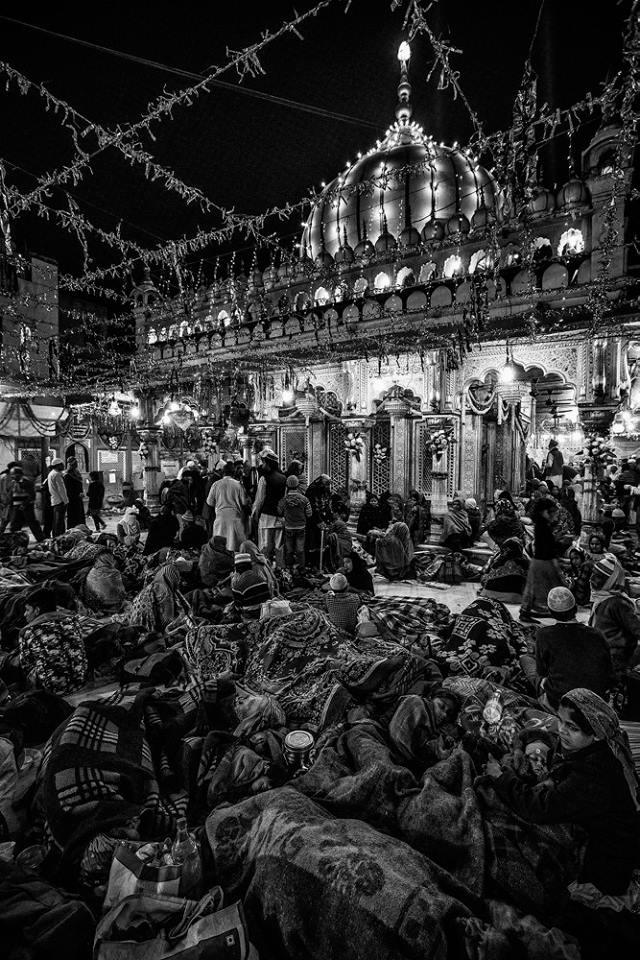
The poor, the hungry, the rich and those thirsting for spiritual comfort began thronging Nizamuddin’s khanqah in Ghiyaspur. He had become a force. The people needed him. Sultan Jalaluddin Khilji too decided to pay Nizamuddin a visit. The sultan did not know of his aversion to kings and politics.
Nizamuddin declined his request. Jalaluddin was not taking no for an answer. He would come to see him anyway.
“My house has two doors. If the sultan enters through one, I will exit through the other,” Nizamuddin said. Jalaluddin was adamant. He had to see the Shaikh. The sultan planned a surprise visit. Amir Khusro, who was employed at the sultan’s court, knew his master, Nizamuddin, would be upset should the sultan enter his house. He told Nizamuddin, who left for Ajodhan to see his master, Baba Farid.
Jalaluddin was incensed when he heard that Khusro had betrayed him. Khusro was brought before the sultan. “In disobeying the sultan, I stand to lose my life, but in being false to my master, I stood in danger of losing my faith,” Khusro said.
The mighty Alauddin Khilji, the sultan, who everyone feared, was wary of one man, tucked away in a corner of Ghiyaspur, the epicentre of faith in Delhi: Nizamuddin. His khanqah was pulsating with life. Futuh flowed into his khanqah like the Jamuna River adjacent. It never ebbed. Food was served to people who came to see him from early in the morning to late into the night. The roads to his house were packed with people: the atmosphere was that of a fair. Nizamuddin fasted all day, and even when he was served food at dawn before he started his fast, morsels would stick to his throat. He could not eat because someone had gone hungry somewhere in Delhi.
The poor, the scholar, the rich and the noble would come to Ghiyaspur in search of food, knowledge, spiritual sustenance and security. No one left Nizamuddin’s house with an empty soul. The trouble-mongers in Alauddin’s court tried to sow intrigue in the sultan’s mind. Nizamuddin, they said, was a threat to Alauddin Khilji. A Sufi fakir, who had nothing in this world, who fed hundreds daily, who lived in the trust of his Maker, was a potential usurper. The irony — a powerful emperor would have to spend sleepless nights because of God’s beggar.
Khilji thought of a ruse to gauge Nizamuddin’s designs. He wrote him a letter seeking advice on matters of the state. The sultan’s son, Khizr Khan, delivered the letter. Nizamuddin did not open it. He said: “We dervishes have nothing to do with the affairs of the state. I have settled in one corner away from the men of the city and spend my time praying. If the sultan doesn’t like this, let him tell me so. I will go and live elsewhere. God’s earth is extensive enough.”
Khilji, though calm with Nizamuddin’s declaration, was still not feeling snug. The sultan ran a successful empire because he had a sophisticated spy network. Alauddin did not tolerate two people gathered in a street corner. The fact that hundreds were sitting and eating together in Nizamuddin’s khanqah was loathsome. Conspiracy would be born in a gathering so large. Alauddin posted his spies in Nizamuddin’s khanqah. He needed to know what was transpiring behind the walls of his khanqah, which otherwise seemed lost in prayer and helping the less fortunate.
Nizamuddin realised he was being watched. He asked his disciples to add a rice dish to the menu that was served to the people who came to the khanqah. The sultan was incensed at this festival of food that played out every day in the dervish’s home. Nizamuddin was told about his rage. He added some more dishes to the menu — halwaand samosas. The sultan was dumbstruck.
Amir Khusro, the court poet of sultans, turned to Nizamuddin when the intrigues of the court and the blood-letting became too much to bear. He found sanctuary at the khanqah.
“What do you desire?” Nizamuddin once asked Amir Khusro. “The sweetness of verse,” he replied. “Go and bring that bowl of sugar from under the cot. Eat some and sprinkle the rest over your head,” Nizamuddin said.
“Repeat my prayer, for your permanence is dependent on my permanence. They should bury you next to me,” Nizamuddin would often tell Khusro.
When his master would retire for the night, no one would be allowed to enter his chamber, only Khusro could. “What news Turk?” Nizamuddin would ask. And the poet would tell his master what had transpired in the treacherous court and the kingdom that day.
When Khusro would leave, Nizamuddin would close the door. A candle would be seen burning in his room. Nizamuddin was immersed in prayer. He would recite this couplet: “Come sometimes and have a glimpse of me and the candle. When breath leaves me, the flame goes out of the candle.”
He remained like that for most of the night. Nizamuddin would emerge in the morning with an ecstatic glow around him. His eyes would be red. Khusro would ask in whose embrace had Nizamuddin spent the night because his eyes were so red, yet his face was radiant. But even Amir Khusro, the courtier, who played sultans like a violin, could not sit in the same room as Nizamuddin for too long. He would tremble and run out of the room ever so often. When one of Nizamuddin’s devoted disciples, Burhanuddin Garib, asked Khusro why he was running out of the room constantly, he replied: “When a mirror is placed before a Sun, how can one see his face in it?”
The bond of destiny
Nizamuddin suffered from extreme depression when his young nephew, Taqiuddin Nuh, his sister, Zainab’s son, passed away. He became withdrawn. His disciples were worried. They had never seen their master this way. Khusro did not have the magic up his sleeve to cure the depression until one day he saw a group of women, dressed in yellow, dancing and singing their way to a temple. He stopped them and asked what they were doing. Celebrating Basant, they replied. The courtier dressed up like a woman in yellow and went dancing and singing to his master. Nizamuddin smiled. Every year, Basant is celebrated at Nizamuddin’s shrine to mark the day Khusro got the master’s smile back from the depths of grief and depression.
If the sultan Jalaluddin Khilji pampered Khusro, Nizamuddin cradled him like a child, never letting go of his hand. Nizamuddin fondly called Khusro TurkAllah, the Turk of God. “I am weary of everyone, but I am never weary of you. I get weary of everyone, even weary of myself, but I am never weary of you,” the master would say. The slave, God Almighty willing, would be next to the master even in Paradise.
Once in a dream, Nizamuddin saw at the end of Manda bridge, near the gate in front of the house where Najeebuddin Mutawakil stayed, water flowing, serene and pure. Mutawakil was sitting on a high place. It was an exhilarating experience, he would recall. Nizamuddin thought of asking God to bless Khusro. The master knew his prayer would be answered.
Khusro would pray most of the night himself. Once Nizamuddin asked him: “Turk, what is the state of being occupied?” “There are times at the end of the night when one is overcome by weeping,” he replied. “Praise be to God, bit by bit is being manifest,” Nizamuddin said.
Nizamuddin loved Sama, it was a path to the Divine. Khusro transformed Sama into Qawwali for his master.
And Khusro’s couplet sums up what his master Nizamuddin stood for: tolerance.
“Oh you who sneer at the idolatry of the Hindu,
Learn also from him how worship is done.”
The master would often quote this line by Shaikh Abu Said Abul Khair. “There are as many Paths to The One as there are grains of sand.”
And, perhaps, love embodied in Nizamuddin, is best reflected by these couplets he would recite:
“May God befriend all those who are my foes,
May all who hurt me gain increased repose.
May all who in my path place thorns from spite
Lead lives that flower like a thorn-less rose.”
Nizamuddin was much ahead of his times in thought and outlook. When women were being treated as nothing but menial servants of the house, he held them in the highest respect. There was never a question of discrimination. “When a tiger comes out of its forest den, nobody ever asked if it’s a male or female,” was his argument. The wisdom of a woman had shaped his master, Baba Farid’s life. Baba Farid’s mother was his anchor. Mai Sahiba, Nizamuddin’s mother, meant the world to him. She instilled in him unwavering trust in the Maker and patience in times of distress. She was his life.
Nizamuddin’s disciple and Amir Khusro’s close friend, Amir Hasan Sijzi, had a slave named Malih, who he freed on his master’s advice. Malih once brought a number of daughters to see Nizamuddin. One of them had just married. On seeing the daughters, Nizamuddin asked: “What is this? Everyone who has one daughter enjoys a barrier against Hell, and you have four! The father of four daughters is well endowed.”
All the Chishti Sufis before him — Shaikh Moinuddin Chishti, Qutbuddin Bakhtiyar Kaki and Baba Farid — married and had families as was incumbent according to religion, but Nizamuddin did not have time for love and family. For him, there was just one love and his heart had space for none else.
The many years of fasting, penitence and poverty had started to tell on Nizamuddin. It was 1325, Nizamuddin now 81 was ailing, but the sultan Ghiyasuddin Tughluq was still hounding him. He thought Nizamuddin was a threat, but there were more serious issues in his empire. There was trouble brewing in Bengal and Avadh. The generals were at it again, mismanaging affairs. Off the sultan went, taking Amir Khusro with him to put things right.
The sultan’s son Ulugh Khan headed straight to Nizamuddin’s khanqah. The master asked him to sit on his cot, but the prince refused out of respect. “We asked you to sit on the cot. Sit.” He asked his attendant Lalla to bring a chair for Ulugh Khan’s general Jahan. Ulugh Khan said: “The Shaikh has given the throne to me and wazir (prime minister) to you.”
The prince’s father was battling in Bengal. The mission over, he started his journey back home, sending word ahead that Nizamuddin should leave Delhi before he made an entrance. “Hunooz Dilli door ast (Delhi is still far away),” Nizamuddin said.
Ulugh Khan, meanwhile, prepared for his father’s arrival and ordered that Delhi be dressed up for the occasion. Fearing that the arrangements wouldn’t be complete on time, Ulugh Khan got a pavilion erected in Afghanpur a short distance from Tughluqabad.
Father and son met, food was served and the feasting began. Ulugh Khan left the pavilion to bring some elephants he had captured in war to be paraded before his father, the sultan Ghiyasuddin. The son had barely left the pavilion, when it collapsed, burying Ghiyasuddin and his trusted nobles. By the time the rubble was removed the sultan was dead.
Ulugh Khan was crowned sultan and he took the name of Mohammad Bin Tughluq. Amir Khusro was still journeying back from Bengal. His master, Nizamuddin’s health was fading away quickly. They say Khusro was uneasy in Bengal and wanted to return to Delhi. He didn’t want to leave his master’s side in the first place. He felt something was wrong. Khusro hastened home.
Ghiyaspur knew it was just a matter of time that the master would be reunited with his Love. As Amir Khusro galloped towards Delhi from Bengal, Nizamuddin went to the mosque to offer Friday prayers. He entered into a state of ecstasy. He kept bowing and prostrating repeatedly. Nizamuddin returned home and fell unconscious. When Nizamuddin recovered, he asked whether he had offered his prayers. “Today is Friday. Have I offered my prayers?” He prayed repeatedly as tears flowed down his cheeks. “It is time, it is time,” he whispered.
But in that state of ecstasy, Nizamuddin summoned all his relatives and disciples. “Be a witness that if this man (Lalla) holds back anything instead of distributing among the needy, he will be responsible before God.”
He ordered Lalla to give everything away. Lalla followed his master’s orders, but kept a bit of corn so that residents of the khanqah would get to eat something. Nizamuddin heard what his attendant had done and was upset. “Why have you kept this sand?” he asked Lalla. He called the needy and gave everything away.
The Dervish reunites with his Love
Grief gripped Nizamuddin’s khanqah. The man who filled their hearts with warmth and grace would no longer walk the halls comforting the needy, making them smile again. It was hard to imagine.
But there was another very basic need: how would they get food? For decades people donated to the khanqah out of their love and respect for Nizamuddin and the needy, but the days of starvation were long gone. These were days of plenty.
Nizamuddin was extremely weak now, but he heard their worries. “Those of you who live at my tomb will get enough to eat. No one will go hungry,” the master said.
Amir Khusro was still journeying back from Bengal. The master went home. It was 1325.
Lalla was called. Did he know where the master wanted to lie? “Yes, under an orange tree in a garden,” he replied. The master would walk to the garden about two kilometres from his khanqah and sit under the orange tree. Sultan Mohammad Bin Tughluq was among the pallbearers. The patched cloak that Baba Farid had given the master covered him. His prayer mat was put under his head.
But this was too big a void to fill. Who could have that compassion? Who could have that sense of humour? Who could have that balm of comfort?
The emptiness set in.
Khusro once said: “The Khwaja is not made of water and clay. The lives of Khizr and Jesus have been mixed to form his being. Wherever his breath reached, mountains of grief gave way.”
There was no breath to cure this grief. Instead, it seemed the mountains of grief could — and would — take life away. Khusro was reunited with his master six months later.
When Nizamuddin was a young boy, he would go bounding to his mother, asking for food. And she would say: “Nizam, today we are the guests of God.” He knew what that meant, there was no food at home, but he would long to hear those words.
Nizamuddin is no longer the Guest of God, he is Mehbob-e-Ilahi, Beloved of God. For he lived only for one Love.
The highest point on Earth is in the Himalayas at Mount Everest 8.8 km high. It turned out that this mountain has roots about 250 km deep.
The larger Asian plate forced the Indian plate deep into the mantle – a process called subduction – sinking it at least 155 miles (250 kilometers) down under the surface, a new study in the May edition of the journal Geology suggests. This plunge is double the depth of previous estimates. Live Science, Depth of Himalayan Mountain Roots Revealed, 2010
This is correctly portrayed in the Quran by describing mountains as pegs:
The Muslim epoch in Indian History was in fact, heralded by the Sufi divines, particularly by Khwaja Moinuddin Ajmeri who also laid the foundations here of the Chistiya Order of Islamic mysticism. From the earliest days the rich vied with the poor and the high with the low to do homage to these elevated self-denying men of God till the whole sub-continent was lit with a thick cluster of spiritual luminaries and their religious establishments.
Apart from the more important towns, there was hardly a Muslim hamlet which was left without a moral teacher or a spiritual guide. The enthusiastic devotion of the people to the Sufi saints and their overwhelming responsiveness to religious emotion can well be imagined by the following facts:
The daily average of votaries staying at the Khanqah (Spritual Seminary) of Syed Adam Bannuri (d. 1643) was one thousand. They took their meals at the Khanqah. A great throng of men, including hundreds of theological doctors, followed the saint wherever he went. It is stated in Tazkira-i-Adamiya that 10,000 persons formed his entourage during the visit to Lahore in 1642. Seeing the phenomenal popularity of Syed Bannuri, Emperor Shahjehan became so apprehensive that he thought of a plan to send him out of India. He sent to him a large sum of money and then suggested that as the possession of sufficient money makes the Haj pilgrimage obligatory for a Muslim, therefore Syed Bannuri should not waste any time in proceeding to the Haj to discharge his duty. The saint thereupon migrated from India.
Hazrat Mujaddid’s celebrated son and spiritual deputy, Khwaja Mohammad Masoom(d. 1668) had as many as 9,00,000 disciples who did the Bai’at (here it means the oath taken by a person at the time of becoming disciple the of a saint.) and repentance at his hand. Among the huge number of his disciples, 7000 rose to become his Khalifas(Spiritual Deputies).
It is recorded about Shah Ghulam Ali in Sir Syed Ahmad Khan’s Aasar-us-Sanadeedthat “not less than 500 destitute persons used to live in his Khanqah all of whom were fed and clothed by him.”
Unprecedented scenes of popular enthusiasm were witnessed during the missionary tours of the famous divine and spiritual leader of the 19th century, Syed Ahmad Shaheed, as also during his journey to Calcutta while on the way to Arabia for the Haj. In many of the towns that fell on Syed Shaheed’s route few persons were left who did not offer bai’at and repentance at his hand. At Allahabad, Mirzapur, Varanasi, Ghazipur, Azimabad, (Patna) and Calcutta, specially, his disciples must have run into lakhs. The limit was that at Varanasi the indoor patients of the Sadar Hospital sent to him a petition begging that since they were unable to move out he might condescend to visit them in the hospital so that they could take the bai’at. About a thousand persons became his disciples every day during his two months stay at Calcutta. From morning till late at night a stream of men and women would pour in where he was staying. There was hardly any time left for Syed Saheb to attend to his personal needs. When it became impossible to administer the vow to everyone individually, it was arranged for the aspirants to collect in a large house where Syed Saheb went and initiated them into the fold. Seven or eight turbans were unrolled on the ground when he went there and the aspirants were told to hold them at different places, while one end of them was held by Syed Saheb himself. He then taught them the fundamentals of the Faith and read out the oath in a loud voice like Azaan (muslim call to prayer) which they repeated, and thus the ritual was completed. This was done seventeen or eighteen times each day.
============= · इब्न ए बतूता ने अपने सफरनामे में लिखा है कि बुखारा के बाजार में एक दिन एक फ़क़ीर का गुजर हुआ, बाजार में एक छोटे कद का बहुत ही बदसूरत गुलाम भी बिकने के लिए खड़ा था। फकी र ने उस गुलाम को देखते ही उसकी बदसूरती पर तुर्कण्ड जैसे लफ्ज से बहुत ही तकलीफदेह तंज की जिसके जवाब में उस गुलाम ने ” हाजिर ऐ खुदावंद” कहा। फकीर को बहुत अच्छा लगा और उन्होंने गुलाम से फिर कहा कि मुझे बगल वाले दुकान से अनार लेकर आ, गुलाम ने फिर उस फकीर की हुक्म बजा लाई और अपने जेब में पड़े कुछ पैसों से अनार लेकर उस फकीर को दे दिया।
फकीर ने खुश होकर दुआ दी की जा इसके एवज में मैंने तुझे हिन्द की हुकूमत दी। गुलाम ने उस फकीर का हाथ चूमा और एक दूसरे से विदा हो गए। बात आई गयी हो गयी की कुछ दिनों के बाद दिल्ली सल्तनत के हुक्मरान शमशुद्दीन अल्तमश ने एक ताजिर को हुक्म दिया की बुखारा जाओ और वहां से सौ गुलामों को खरीद लाओ। ताजिर बुखारा गया और सौ गुलाम खरीद लिए जिसमे एक वो गुलाम भी था जिसने फकीर को अनार खरीद कर दी थी। जब गुलाम दरबार में पहुंचे तो बादशाह ने निन्यानवे गुलामों को अपने पास रख लिया और वो गुलाम जो बदसूरत था उसे अपने पास रखने से मना कर दिया। इतने पर उस गुलाम ने बादशाह से सवाल किया कि आपने इन निन्यानवे गुलामो को किसके लिए खरीदा है? जवाब में बादशाह ने कहा- अपने लिए। फिर उस गुलाम ने कहा कि जब निन्यानवे को अपने लिए खरीदा है तो मुझे खुदा के लिए रख लो। बादशाह उसकी बात सुनकर हंसने लगा और उसे भी अपने पास रखकर पानी लाने का काम दे दिया।
इधर दरबार के कुछ नजूमी बादशाह को रोज कहते की एक दिन आपका कोई गुलाम आपके गद्दी पर बैठ जायेगा लेकिन बादशाह उनकी बातों पर गौर नही करता। आखिर बहुत जोर देने पर बादशाह ने उनसे कहा कि क्या तुम उस गुलाम को पहचान सकते हो ? नजूमियों ने हाँ में जवाब दिया तो सारे गुलामों को दरबार में लाया गया। खुशकिस्मती से वो बदसूरत गुलाम एकदम पीछे खड़ा था और उसका नम्बर आते आते जोहर का वक़्त हो गया। नजूमियों ने बादशाह से खाने की फरमाइश करते हुए कहा कि बाजार से ही कोई चीज खाने के लिए मंगा लें। कुछ पैसा देकर उसी गुलाम को बाजार भेज दिया गया। नजदीक के बाजार में कुछ नही मिला तो वो दूसरे बाजार में चला गया जो थोड़ा दूर था । इधर उसके जगह पर दूसरे बच्चे को खड़ा कर दिया गया । जब उस बदसूरत गुलाम का नम्बर आया तो उसके जगह पर दूसरा वाला लड़का गया और इस तरह किसी भी गुलाम की शिनाख्त नही हो पाई।
वक़्त बीतता गया उस गुलाम के होशियारी की वजह से तरक्की होती रही। पहले उसे सारे गुलामों का हेड बना दिया गया फिर फ़ौज में भर्ती हुआ और सरदार के ओहदे तक पहुंच गया। उसकी शादी रजिया सुल्तान के भाई और शमसुद्दीन अल्तमश के बेटे नसीरुद्दीन ने अपने बेटी से करदी। जब नसीरुद्दीन राजा बना तो उसे नायब बना दिया ।20 साल नायब रहने के बाद एक दिन ऐसा भी आया की वो गुलाम जो बुखारा के बाजारों में बिकने के लिए खड़ा था अब नसीरुद्दीन का कत्ल कर दिल्ली का बादशाह गयासुद्दीन बलबन बन गया।
बलबन ने 20 साल हुकूमत की। अपने दौर ए हुकूमत में उसने एक इमारत की तामीर करायी जिसका नाम दारुल अमन रखा जिसकी खाशियत ये थी की अगर उसमे कोई कर्जदार आ जाता तो उसका कर्ज बलबल खुद चूका देता या कोई कातिल और मकतूल आ जाते तो उनके बीच समझौता करवा दिया करता। मरने के बाद बलबन को भी उसी दारुल अमन में दफना दिया गया।
=============
जानिए कौन थे गयासुद्दीन बलबन
इतिहास के कुछ पन्नों को अगर उठाकर देखा जाएं, तो भारत पर कई शासकों द्वारा राज किया गया था। इन शासकों में एक नाम बलबन का भी था। जिनका मकबरा आज खंडरो में तब्दील हो चुका है या यूं कहें इसे आस पास के स्थानीय लोग भूतिया अड्डा कहकर पुकारते है। यह मकबरा भारत और इस्लामिक वास्तुशास्त्र का मिला जुला रुप है। लेकिन वर्तमान स्थिती कुछ और ही बयां करती है।
कौन थे बलबन बलबन एक तुर्किश विद्वान का बेटा था, लेकिन बचपन में मंगोलों ने उसे बेच दिया। कुतुबुद्दीन ऐबक ने उसे आजाद कराया। उसने गुलाम वंश के ही शासक नासिरुद्दीन महमूद की बेटी से शादी की। नासिरुद्दीन का कोई बेटा न होने की वजह से उसकी मौत के बाद बलबन ने खुद को गुलाम वंश का शासक घोषित कर दिया। 1266 में गयसुद्दीन की पदवी के साथ उसने भारत की राजगद्दी संभाली और 1287 तक राज किया।
गयासुद्दीन बलबन का बचपन गयासुद्दीन बलबन जाति से इलबारी तुर्क था, उनके पिता उच्च श्रेणी के सरदार थे। बचपन में ही मंगोलों ने बलबन को पकड़कर बगदाद के बाजार में दास के रुप में बेच दिया था। बलबन की किस्मत का चक्र ऐसा घुमा कि वह भारत पहुंच गया। सुल्तान इलतुत्मिश ने बलबन पर दया कर उसे खरीद लिया। बलबन अपने स्वाभाव और सुल्तान की सेवा करने की वज़ह से लगातार उन्नति करता गया। जिसके बाद सुल्तान ने बलबन को चेहलगन के दल में भी शामिल कर लिया था।
बलबन की मंगोलो पर विजय बलबन का बचपन मंगोलों द्वारा ही तहस नहस किया गया। मंगोलों ने ही बलबन को बाजार में बेचकर उसे दास बनाकर छोड़ दिया था। लेकिन शायद बलबन की किस्मत में कुछ और ही लिखा गया। दास होने के बावजूद उसे भारत में शासन करने का मौका मिला।
इतिहासकारों के मुताबिक बलबन की उन्नति के साथ ही उन्हें रज़िया के राज्यकाल में अमीरे शिकार पद सौंपा गया था। बहराम ने बलबन को रेवाड़ी और हांसी के कुछ क्षेत्र दिए। कहा जाता है कि सन् 1245 के दौरान बलबन ने मंगोलों से लोहा लेकर अपने सामरिक गुण का भी प्रमाण दिया था।
बलबन जटिल समस्याओं में भी रहे खड़ जिस तहर बलबन उन्नति कर रहे थे उन्हें इस दौरान कई जटिल समस्याओं का भी सामना करना पड़ा था। उन्हें कई अवसर पर अपमानित किया गया लेकिन फिर भी उनमें साहस भरा हुआ था, वह सुनते थे लेकिन रुकते नहीं थे। अपने संकल्प के मुताबिक आगे बढ़ते रहते और इस समय उन्होंने आंतरिक विद्रोहों का सफ़ाया भी किया और साथ ही बाहर के आक्रमणों को असफल करते गए।
नासिरुद्दीन महमूद के बाद मिला सिंहासन नासिरुद्दीन महमूद की मुत्यु के बाद बलबन ने बिना किसी विरोध के मुकुट धारण कर लिया। एक शासक के तौर पर बलबन ने 20 वर्ष तक राजपाठ संभाला। इस दौरान उन्होंने अपनी बुद्दिमत्ता, कार्यकुशलता और नैतिकता का शानदार परिचय दिया। उनका न्याय पक्षपात रहित और कठोर था। शायद यहीं वज़ह है कि उनके शासन को लोह रक्त व्यवस्था कहकर संबोधित किया जाता है।
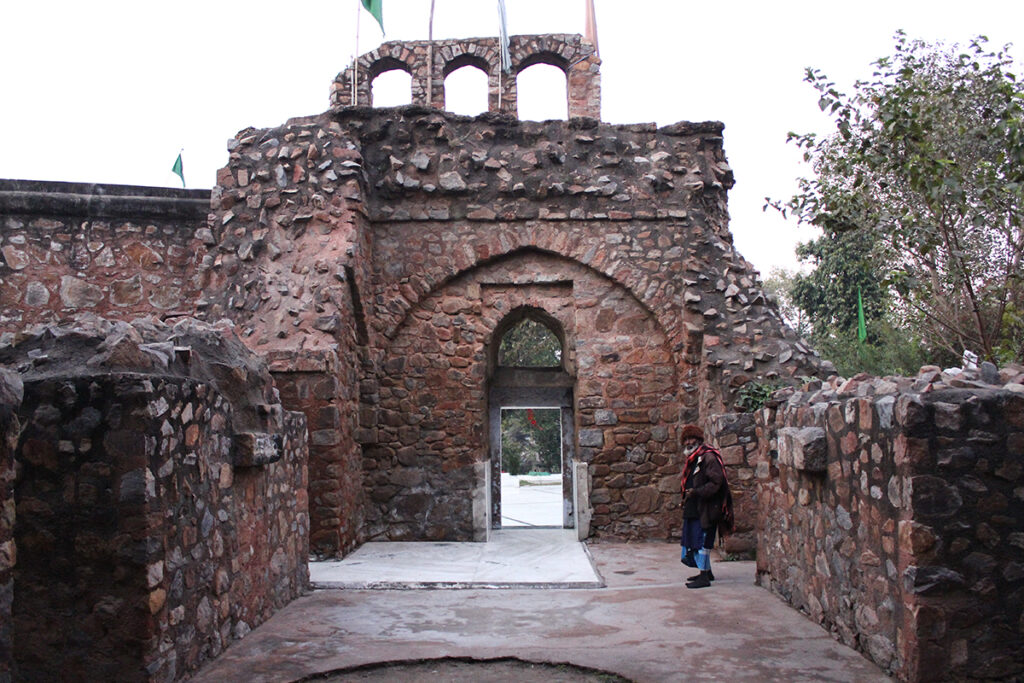
वर्तमान स्थिति महरौली आर्कियोलॉजिकल पार्क स्थित गयासुद्दीन बलबन का मकबरा खंडहर में तब्दील हो चुका है। वह गुलाम वंश का शासक था। गुलाम वंश 1206-1290 तक सक्रिय रहा। दिल्ली सल्तनत पर बलबन ने 1266 से लेकर 1287 तक शासन किया। मकबरे के संरक्षण की जिम्मेदारी आर्कियोजिकल सर्वे ऑफ इंडिया के पास है। ऑर्कियोलॉजिकल पार्क, कुतुबमीनार के पास है। गुलाम वंश का पहला शासक कुतुबुद्दीन ऐबक था।
Abu Zaid Abdurrahman bin Muhammad bin Khaldun Waliyuddin Hadhrami, known as Ibn Khaldun, was born in Tunis 1st Ramadhan 732 H/ 27 Mei 1332 M from an influential family who emigrated from Seville to Spain. His descendant came from Yaman who lived in Spain in the beginning of Muslim administration in 8th century, but after the fall of Seville they move to Tunisia.[1]
Ibn Khaldun received good education in sharia, logics, philosophy, Arabic grammar and poetry; all contributing to his capability of a statesman. No doubt if his role is vital in politics in North Africa and Spain, where he had an opportunity to write an analysis and valuation for what was happened. He worked for the ruler of Tunis, Fez, Granada and Biaja. Finally he worked in Egypt for 24 years in a high level position, namely as Rais Qadhi (chief judge) of Maliki school and as lecturer in Al-Azhar University. Political intrigue and jealousy for his position cause him expelled from high court position for five times.[2]
Ibn Khaldun is known as Father of Social Sciences.[3] In his famous book, Muqaddima, he writes on dynamics of civilization or umran, which is considered as foundation of Sociology. However, one can find foundation of other sciences in the book as well, such as economics [4] and alchemy. He is considered to complement foundations of alchemy that was written by Jabir ibn Hayyan through his dialogue with the famous alchemist Ibn Bishrun, student of Maslamah Al-Majriti, a greatest alchemist from Spain. [5]
His book Al-Ibar is unique source of historical analysis in his time, while other work, Tarikh al-Barbar, provides basic introduction in understanding Arab and Barbar tribes in Maroko, and history of medieval time.
Ibn Khaldun died in Cairo at 25th Ramadhan 808 AH/ 19th March 1406 AD.
II. CONTRIBUTION IN ECONOMICS
Like other scientist in 14th century, who are usually generalist (in the sense that their expertise covers many disciplines), Ibn Khaldun wrote his work by explaining various foundations of science. His book Muqaddima is written to describe how a civilization (umran)begins, strengthens and finally falls. For that purpose he elaborates various constructing elements that finally become its foundation.
However, Ibn Khaldun represents a generation of scholars who wrote their books using positive-rational approach. This approach diverts from scholars tradition in previous century, and even centuries afterwards, which is usually embedded with legal-normative method in their writing. This uniqueness in approach seemed unpopular in his time since only few scholars who wrote book using this style, even after some centuries later. Positive-rational approach might have been extensively used in science books such as astronomy, medicine and alike but to apply such new approach in history and sociology was really a new invention.
In economics, Ibn Khaldun’s writing covers almost every foundation of modern economic thought, ranging from microeconomics to international trade. It is not a surprise when one finds almost one third of his Muqaddima consists of socio-economic concepts. He wrote the concepts in such a way that they are interconnected to one another, that one will not understand a concept without knowing basic ideas about others. Due to scope limitation, this paper will only discuss element of microeconomics (supply, demand and prices) in Ibn Khaldun writing.
1. Labor Theory of Value
According to Ibn Khaldun, labor is source of value. He explains in details about his theory of labor value and presents it for the first time in the history.[6 ]According to him, “…everything in the world is purchased with labor.[7] What is purchased with money or other good is purchased by labor, inasmuch as gained by labor from our body. Money or commodities indeed save us. They contain certain quantity value of labor that we exchange for what it should be, when it contains the same quantity. The value of a commodity for those who own it, and those who do not use it for himself, but exchange it with other commodity, therefore, equal to labor quantity that enable him purchasing or, directing it. Labor, therefore is a real measure of exchangeable value of all commodities.[8]” “Labor is necessary for revenues and capital accumulation. This is obvious in the case of manufacture (craft). Even if revenue generated from something other than manufacture, the value of generated profit (and capital) should cover labor value by which the commodity is obtained. Without labor, all other things will not be acquired.”
Khaldun divides all revenues into two categories: ribh (gross revenue) and kasb (life revenue). Ribh is secured when man works for himself and sells his product to others. In this context the value should contain cost of raw material and natural resources. Kasb is achieved when man works for himself. Therefore ribh means profit or gross revenue, depending on the context. In this instance, ribh means gross revenue because raw material cost and natural resources are included in selling price of an object.
Whether ribh or kasb, revenue is the value realized from man’s labor i.e. all that is obtained through human effort. According to Ibn Khaldun, although commodity value comprises of cost from raw material and natural resources, it is through labor that value become increasing and hence, wealth grows. Without man’s effort, the opposite will occur. Ibn Khaldun underlines the role of extra effort that later known as marginal productivity, in the welfare of a society. His theory on labor give the reason for the increase of cities, such as one indicated by his historical analysis, that becomes major element of civilization.
If we can interprete Ibn Khaldun’s idea on work, it is clear that labor is necessary and sufficient condition for revenue and natural resources is only necessary condition. Labor and effort tend to produce which in turn will be used against an exchange through barter, or through the use of money, namely gold and silver. The process hence generates revenue and profit that is acquired by man from a manufacture/commodity as value of his labor, after deducting cost of raw material. Ibn Khaldun also explains causes of different labor revenue.[10] They might be caused by different in skill, market size, location, expertise (craftsmanship) or work, and in how far the authority and governors purchase final products. When a certain kind of labor become more expensive, namely if the demand exceeds available supply, the revenue must increase.
High return in a manufacture will attract other players. This is a dynamic phenomenon that finally increase available supply, and bring to lower profit. This principle explains how original Ibn Khaldun idea was, in adjusting long term of the labor, and between certain profession and others.[11]
Ibn Khaldun precisely observes how income may differ in one place to another, even for similar profession. Income for judges, crafters even burglars, for instance, is directly related with welfare level and living standard in every city, achieved through labor result and crystallization of productive society. Adam Smith explains the difference in labor income by comparing between England and Bangladesh, similar to what Ibn Khaldun did four centuries before, when he compares income in Fez and Tlemcen.[12] It is Ibn Khaldun, not Adam Smith who presents, for the first time, labor contribution as wealth creation for a nation, by stating that labor increases productivity, and that product exchange in a large market is the prime reason of wealth (and prosperity) of a nation. On the contrary, decrease in productivity may lead to decrease in economy and income of its society. In his words, “a civilization generates large profit (income) due to large number of labor force that is the cause of profit.”[13]
A large market means consisting a high demand (D1) compared to small market. (D0) even in different price level. This also causes large investment, causing high supply (S1). Through cost and return function, a large market generate large income as well.
Source: Koutsoyiannis, Modern Microeconomics
It is Ibn Khaldun, who asserts on the need of free economy and free choice. Quoted from his Muqaddima,
Among suppressive action, and very perilous measure to the people is to compel someone to do forced work injustice. Because labor is a commodity, like the one we will show later, in income and profit, representing work value of its recipient… unfortunately most people do not have income source other than his own labor. Therefore, if they are forced to work for what they achieved through training, or compelled to do work in their own field, they will lose the result of their work, and pulled out of the greatest part of, even all, their income. [14] To maximize revenue and utility level, man should be free to do what is led by their talent and ability. Through natural talent and learnt ability man can freely produce high quality objects, and often more work-unit per hour.
2. Demand, Supply, Price and Profit.
Other original contribution to economics of labor is that Ibn Khaldun introduces and analyses the relationship of some economic instrument analysis such as demand, supply, price and profit
a. Demand
Demand for a commodity is based on utility to gain it, and not always based on the need for it. Hence satisfaction is the motive behind the demand. It creates incentive for a customer to purchase in market. Ibn Khaldun therefore planted the firs seed of demand theory that later on developed by Thomas Robert Malthus, Alfred Marshall, John Hicks and others. If a commodity demanded attract more customer purchase, either price or quantity sold will increase. On the other hand, if the demand for manufacture (craft) decreases, the sale will goes down and therefore the price will decrease.
Demand for certain commodities depends also on how far they will be purchased by state. Sultan (king) and ruling elite buy more quantity than the people can buy individually. A manufacture develops when state purchase its products. By his analytical and genius thinking, Ibn Khaldun has found a concept that is known in modern economic literature as “derived demand”. He said: “Manufacture increases and goes up when demand for its products increases.” Demand for a manufacture worker is also derived from the demand for this product in the market.
b. Supply theory
As generally accepted, modern price theory states that cost is the backbone of supply theory. It is Ibn Khaldun who for the first time explores analytically the role of production cost in supply and price. In searching differences between food price produced in fertile land and the less fertile one, he finds the difference among others merely in production cost. In coast and hill areas, where the land is not suitable for agriculture, the inhabitants are forced to uplift the area condition and its plantation. They undertook it by giving additional work and things that need cost. All of them increases cost in agriculture product, which they include them in determining its sale price. And since then Andalusia is known for the high price…Its position is in opposite with land of Berber. Their land is very rich and fertile so that they do not need to add any cost in agriculture; therefore in that country the food price become low. [15]
Besides personal and state demand, and production cost, Ibn Khaldun introduces other factors that influence the cost of commodity or service, namely (a) welfare and prosperity level of a region, (b) wealth concentration rate and tax level imposed to intermediaries and traders. Direct functional relationship between income and consumption provided by Ibn Khaldun opens the way for consumption function theory as the cornerstone of Keynesian economics.
c. Profit
Ibn Khaldun also gives original contribution about concept of “profit“. In economic literature, a theory stating profit as a reward for uncertainty risk in the future generally refers to Frank Knight, who published his idea in 1921. Undoubtedly it is Frank Knight who substantially forwards a profit theory in a well established form. However, it is Ibn Khaldun, not Knight, who put the cornerstone of this theory.
Business (commerce) means to buy commodities, store them and wait for a market fluctuation brings about an increase in price (of these commodities). This is called “ribh” (profit).[16] In other context Ibn Khaldun states again the same thought: The clever and experienced people in the city know that to hoard and wait for high price is not good, and its profit can reduce or lost through this hoarding.[17] The concept of profit hence becomes a reward for facing a risk. In undertaking uncertainty in the future, one who bears the risk may lose instead profit. Similarly, profit or loss may occur as a result of speculation by profit seekers in the market.
To maximize profit, Ibn Khaldun introduces magical word of traders: “Buy low and sell high.” [18]
d. Price
If Ibn Khaldun’s magical word is applied in cost analysis, it will be clear that profit may increase, even for a price of final product, when someone reduces raw material and other input used in production. It can be done by the means of purchasing them with discount -or in general- at low price even from distant market, as indicated in his explanation about benefit of foreign trade. However, Ibn Khaldun concludes that both excessive low price and excessive high price will potentially destroy the market.
Therefore, it is advised to a country not to bring prices artificially low through subsidy or other method of intervention. Such a policy is economically perilous because low price commodities will disappear from market, and increase disincentive for suppliers to produce whenever their profit is directly affected.
Ibn Khaldun also concludes that excessive high price will not be appropriate with market expansion. When high-price commodities are few in the market, high price policy becomes counterproductive and damage goods flow in the market. Ibn Khaldun hence put the basis of thought that afterward lead to formulation of disequilibrium analysis. He also mentions some factors that influence the increase in general price level, such as increase in demand, supply limitation and increase in production cost that includes sale tax as one component of total cost. After his analysis about what creates overall demand in a growing economy, Ibn Khaldun states the following:
Because demand for luxury goods finally becomes habits and then becomes necessity. In addition, all labor become expensive in the city, convenience becomes expensive because there exist many purpose that also become demand of luxury, and also because the government impose tax in the market and business transaction. This is reflected in sale price. Convenience tools, food and labor hence become expensive. As a result, expenditure increase drastically, proportionate to the culture (city). A big sum of money is spent. In this situation, people need big amount of money to acquire necessities for themselves and their family, and other need as well. [19] And he therefore concludes: When goods are less, its price increases.
By reading carefully both quotations above, it is clear that Ibn Khaldun finds what is known now as cost-push inflation and demand pull inflation (see Box 4 for comparison). In fact, he is the first philosopher in the history who systematically identifies factors that influence both commodity price and general price level.
e. Role of Government in State’s Economy
What make Ibn Khaldun differs from his western successor, especially Classicalist writer is that Ibn Khaldun believes that government plays a critical role in the economy. Government plays important role in growth and in country’s economy in general through the purchase of goods and services through fiscal policy, namely tax and expenditure. Government may also provide an incentive environment for work and prosperity, or the opposite, an oppressive system that finally become self-defeating. Although Ibn Khaldun considers government as inefficient (too many calculation is done by those what is called today as cost and benefit) they still play important role in country’s economy through purchase in big scale. Government expenditure stimulates economy using income that increases through multiplier effect. However if Sultan (king, government) accumulates income from tax, business becomes slow and country’s economic activities will be affected significantly through multiplier effect.[20] In addition, welfare program to reduce poverty, help widows, orphans and blinds should be launched (if not become heavy burden to state treasury). Government should spend its tax income wisely to raise their condition in order to maintain their rights and save them from danger.[21]
f. Macroeconomy and Theory on Money
In macroeconomics, Ibn Khaldun also gives contribution in theory of money. According to him, money is not the real form of wealth, but an instrument where the wealth may be obtained. He is the first writer who present prime function of money as measure of value, store of value and numerairie. Mines, gold and silver as (measure of) value for capital formation…considered as wealth and property. Even in a certain situation, everything is obtained, the final purpose only to acquire them. Everything depends on the fluctuation from which (gold and silver) are exempted. They are basis for profit, property and wealth.[22] The real form of wealth is not money. The wealth is created or transformed through labor in the form of capital formation in the real measure. Hence it is Ibn Khaldun who the first time differentiate between money and real wealth; although he realizes that the later is obtained by the former. However, money plays more efficient role than barter in business transaction in a society, where man exchanges to each other the result of his labor, both in the form of goods and services, to fulfill the need that cannot be fulfilled individually. Money can also facilitate goods flowing from one market to other, even across the country’s border.
III. CRITICISM TO IBN KHALDUN
Criticism to Ibn Khaldun comes from modern Islamic economic thinker, among other, Masudul Alam Choudury.[23] In analyzing political economic thought in Islamic perspective in classical Islamic literature, Choudhury compares Ibn Khaldun, AlGhazali, Ibn Taimiyya and Shah Waliyullah Dahlawi. According to him, Ibn Khaldun
….. had equally failed to present a Quranic philosophy of history to show the rise and decline of civilizations owes to the primal condition of the believers’ commitment or otherwise to the observance of Shari’a and Sunna Allah in the midst of society and self. These were the undertakings of Al-Ghazzali and Ibn Taimiyya. Hence, no philosophy of history could be afforded by Ibn Khaldun. He thus remained to be merely an empiricist without the greater depth of epistemological-analytical vision that sways permanence of historical explanation. In the Western world, we find this attempt being made for Occidentalism by Hegel. In the Islamic world, a better and deeper study of the philosophy of history was given by Shah Waliullah.
According to Choudhury, only empirical theory of political economy, not Islamic political economic theory, that can be derived from Ibn Khaldun’s book, Muqaddima. Hence for those who believe in the reductionist philosophy of rationalism as the controller of destinies, and for those who treat the Divine Reality as outside the determining life of history as an endogenous force, will continue to take stock of Ibn Khaldun’s work. Thus has Ibn Khaldun become popular in the West today, but not so Shah Waliullah, Imam Ghazzali and Ibn Taimiyya. That is because, Ibn Khaldun championed his Greek leanage along with the Hellenic philosophers like, Ibn Sina, Ibn Rushd, Razi and others. That was the fashion of intellectual of the time when Ibn Khaldun wrote and it was the very kind of inquiry that gained the privileges with the elites and rulers of the time.[24]
Choudhury himself concedes that, It is true that Ibn Khaldun thought of the pure economic functions of urban life — division of labour, economic development and public finance — long before Adam Smith and Keynes. He also argues that the transition from the state of dynasty to the state of towns and cities is a costly one, but he also promotes the importance of government functions. From Ibn Taimiyya to Ibn Khaldun, the importance of government in the economy has increased albeit not without cost. However, Choudhury does not agree with development transformation of society with excessive role of government. Consequently, the capitalistic and elitist tend will arise in the society who lost their freedom to the state.
Ibn Khaldun’s taxes for the state have become increasingly onerous. In the above paragraphs, he is in a way defending the taxing powers of the state in spite of the costs that he recognizes in this state function. Thus, what can be concluded from these is the seemingly costly processes involved in the recommended transitions from basic needs regimes of development to industrial states of development with great degree of government presence in this transformation.[25] It has taken off the human freedom to participate in development and has individuals have lost it to the overweening states. If Ibn Khaldun’s ideas are taken first, as a prescription of development, it is a socially and economically costly way to develop in the face of capitalistic and elitist claim over the resources of development, ownership and empowerment of elitism. kings and rulers. This sorrowfully has happened in the Arab world contrary to the Islamic precepts of governance.[26]
Finally, Choudhury sees that the idea of development model by Ibn Khaldun leads to disequilibrium, and contrary to Islamic methodology on development of socio-economy, political economy and history.
….if Ibn Khaldun’s ideas are taken as dynamics of the historical process of change, there is no relevance in all of these of the Islamic view to development, wealth and progress, growth and industrial advance while keeping the moral precepts in tact as was delineated by Ibn Taimiyya and Imam Ghazzali. Likewise, while the great Shari’a scholars described their politico-economic universe in the midst of equilibrium, Ibn Khaldun described it in terms of a disequilibrium dynamics. Economic development as an evolutionary process leading to the destruction of dynasties and the rise of cities and nation states as costly entities, means that this inevitable development must be increasingly costly in Ibn Khaldun’s framework of political economy. Taken in this perspective, Ibn Khaldun’s prescription and message of history are both contrary to the essentially Islamic methodology of socioeconomic development, political economy and historicism.[27] From this criticism it appears that Choudhury tries to understand Ibn Khaldun as an intellectual who is separated from spirit of Islamic epistemology, something that actually may become perilous. This can be understood if the ideas in Ibn Khaldun’s work are not viewed in a unified concept. It is undenied that a large part of Ibn Khaldun’s writing in Muqaddima contains empirical explanation on contemporary phenomena that goes on around him in his age. It is because Ibn Khaldun’s career path walked in the midst of political situations, which contain dynamic intrigues and interests of different rulers. However, to place Ibn Khaldun as an intellectual who does not have any methodology that leads to Islamic epistemology is clearly a misconception. Furthermore, it should be noted that Choudhury‘s criticism is merely based on Muqaddima (translated by Franz Rosenthal), a book written by Ibn Khaldun as introduction to a planned bigger book called Kitab al-Ibar.
A small part of the book has been written and never been completed aftermath, because of his death. Choudhury seems ignore some details that may cause his criticism unnecessary. When discussing political decision-making, for instance, Ibn Khaldun clearly refers to Wilaya al-‘Ahd that is practiced during Prophet Muhammad’s companions era (Part III, Chapter 30); and the role of government head in religious matter (Chapter 31); also his dislike toward the replacement caliph institution to kingdom (Chapter 28) or his appreciation to the letter of Tahir bin Husein (Chapter 51) –a senior minister in Abbasid era who is also a literalist, philosopher and brave man- to his son on a method to manage a government so as to be the way toward the pleasure of Allah. Ibn Khaldun’s fond of this letter made him quotes fully in his Muqaddima.
Similar misconception is found in Ibn Khaldun’s socio-economic analysis. Choudhury is trapped with Western intellectual analysis that confines Ibn Khaldun on empiricism without examining details given him to lead them to Islamic perspective. In discussing monopoly (Ihtikar, Part IV, Chapter 13) for instance, can be seen how Ibn Khaldun explain it according to sharia and from psychological perspective, or his criticism against the ruler who applies pricing regulation policy, quoting Quranic verse 58 of Sura Azzariyat (Part IV, chapter 15). With this verse, Ibn Khaldun seems suggesting to the ruler that price regulation will have negative effect for development of their society and that the policy is against Islamic aqida (ideology, theology). Beside that, like other Islamic scholars and intellectuals in term of ethics (akhlaq) Ibn Khaldun always ends his writing by reminding the reader that there is He Who knows more than everyone in this world.
It is then can be concluded that Choudhury has a fractional view on Ibn Khaldun, namely form merely empirical approach. He may not realized that what Ibn Khaldun has done is to explain scientifically what is already laid by the Almighty in the dynamics of human civilization, from the perspective of power, socio-economy and knowledge. Furthermore, Ibn Khaldun wants to teach his Muslim brother an important lesson that to achieve a success in the world (and the hereafter) a nation cannot ignore Sunnatullah through empirical description. If a nation deviates from it, then the disaster will be the logical consequence.






 Aal-e-Qutub Aal-e-Syed Abdullah Shah Ghazi