Hazrat Abdul Muttalib RA

Zamzam_Abraha_elephantarmy

https://youtu.be/iiYou_Kzqs8

Abdul Muttalib RA URS – the Grandfather of Holy Prophet (SWS), is in the month of Jumada al-Awwal, although the exact date is not openly known.

Abdul Muttalib (RA) not only was the grandfather and guardian of the Holy Prophet (SWS), whilst he was alive, but he also faced Abraha, from Yemen, and his army of elephants who attempted to attack the Holy Kaaba in Mecca in 570 AD but was defeated by Allah Almighty’s army of birds (Ababeel, Holy Quran, Surah al-Fil) and he was given holy dreams to rediscover the Zamzam well left covered by the Jurhum tribe.

His father was Hāshim ibn `Abd Manāf, the chief of the distinguished Hāshim clan, a subgroup of the Quraysh tribe of Mecca. They descend from Sayydina Ismail (AS) and Ibrahim (AS). His mother was Salmah bint Amr from the Banu Najjar, a clan of the Khazraj tribe in Yathrib (later called Medinah). Hashim died while doing business in Gaza, before ‘Abdul-Muṭṭalib was born.

He was given the name “Shaybah” meaning ‘the ancient one’ or ‘white-haired’ because of the streak of white through his jet-black hair, and is sometimes also calledShaybat al-Ḥamd (“The white streak of praise”). After his father’s death he was raised in Yathrib with his mother and her family until about the age of eight, when his uncle Muṭṭalib went to see him and asked his mother Salmah to entrust Shaybah to his care. Salmah was unwilling to let her son go and Shaybah refused to leave his mother without her consent. Muṭṭalib then pointed out that the possibilities Yathrib had to offer were incomparable to Mecca. Salmah was impressed with his arguments, so she agreed to let him go. Upon first arriving in Mecca, the people assumed the unknown child was Muttalib’s slave, giving him the name ‘Abdul-Muṭṭalib (slave of Muṭṭalib).


History Before the Prophet (SWS)

There were a few significant people that came before the holy Prophet (SWS), which are worth mentioning. Qusay was one of the main chiefs of Makkah, who was from the tribe of Quraish. He was a handsome fellow and the leadership of Makkah fell to him after a bitter war. War was common amongst the Arabs. The Quraish were considered amongst the noblest tribes because they were direct descendents of Ismael.

Qusay ruled Makkah like a king. He would collect the taxes from the people, to provide for the pilgrims who still visited Makkah and performed the Hajj. Qusay built himself a big spacious house close to the sanctuary. He also encouraged his tribesmen to build themselves houses. Previously the people had lived in tents, camping close to the Kaabah.

Qusay had many sons, the most prominent and famous was Hashim. He was very gifted and provided water and food for the pilgrims, when they came to Makkah. He was a great merchant and established the two great trade routes through Makkah. Both the trade routes passed through Yathrib, which was a small oasis town which lay on the ancient incense route. The winter trade route was between Makkah and Yemen whilst the summer trade route went into northern Arabia going into Palestine and Syria.

Through this trade, Makkah began to prosper and became a major city which attracted much wealth. Hashim married Salma, the daughter of Amr, from the clan of Khazraj. Salma and Hashim had one son whom they named Shaybah. Both Salma and Shaybah remained in Yathrib and were often visited by Hashim on his trade journeys. However, Hashim wasn’t granted a long life and he passed away in the Gaza in Palestine. Shaybah remained with Salma in Yathrib, until Shaybah was about 14 years of age.

Abdul Muttalib (RA), the brother of Hashim took over the role of looking after the affairs of the pilgrims. However, he had great love for his brother, Hashim, who had passed away at such a young age. He also heard a lot of good things said about Hashim’s son, Shaybah. Shaybah had continued to live in Yathrib with his mother Salma after his father had passed away. He was growing into a pleasant youngster with a kind nature.

Abdul Mutallib (RA) decided to visit Salma and Shaybah in Yathrib. On reaching Yathrib he spoke to his nephew and Salma. He explained to them that since Shaybah was a son of Hashim, he should come and live in Makkah. Makkah was a great city and had a lot more to offer than Yathrib. This was especially true because Shaybah was from the tribe of Quraish, the most respected and honoured tribe in Arabia. He also had the possibility of taking over the sacred and noble duties at Hajj, which his father fulfilled so well.

Salma, reluctantly at first, decided to let Shaybah travel to and live in Makkah with his uncle Muttalib. Both Uncle and nephew set off for Makkah, leaving behind Yathrib. When they reached Makkah, the people were amused at the sight of seeing Muttalib and this young boy, whom they assumed to be the slave of Muttalib. They referred to him as Abdul Muttalib (RA), which means the slave of Muttalib. After Muttalib corrected them and told them that he was his nephew, they lovingly continued to call Shaybah by the name of Abdul Muttalib (RA).

After Abdul Muttalib (RA) came to Mecca, he came to be loved by the people, He managed to secure his rights from his family and lived happily in Mecca. After Muttalib passed away, Abdul Muttalib (RA) took over in the duties of proving food and water for the pilgrims. He excelled in this, which further enhanced his reputation for leadership and fairness.


Discovery of Zamzam Well

One of the first events which took place at the time of Abdul Muttalib (RA) was the rediscovery of the blessing of Zamzam. The Zamzam had been taken away from the people when they had strayed from tawheed. The Zamzam was a great blessing of Allah which had been gifted to the people many hundreds of years earlier by Prophet Ismail (AS) and lady Hajar (AS). The people had gradually moved away from the truth and became more wicked and unjust. They began to worship idols, which is such a grave sin. Allah took the Zamzam away from the people and this blessing had been lost for many years.

The story begins when Abdul Muttalib (RA) was sleeping under the shade of the Kaaba, at a place near the Hijr Ismael. This was a common occurrence for people to see Abdul Mutallib (RA) sleeping there. On one occasion, he had a dream which repeated itself three times and in the last dream, he heard a voice asking him to dig in a certain place near the Kaaba.

Abdul Muttalib (RA) was initially stunned by the dreams but then decided he would listen to this voice in the dream. Abdul Muttalib (RA), in the company of his son Hashim, took two pick axes and began to dig near the Kaaba. It was at the place where animals were sacrificed, between the two idols. Before long a crowd gathered to see what was happening. He was asked to stop by some of the people but he continued to dig with his son Harith watching over him.
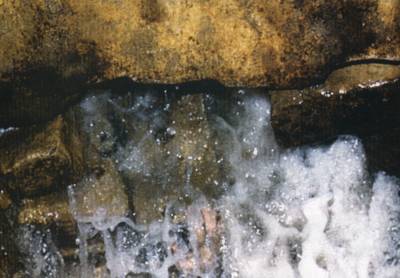
Zamzam water

Zamzam-SultanAbdulhamidII

Before long he came to some well stones where he found some treasures the tribe of Juram had buried. This included swords, armours and the two gold statues. He also found the well of Zamzam that had been lost and forgotten about for so many years. When he unearthed it, the water gushed forth and others tried to join Abdul Muttalib (RA) in this blessed work. However, he lay claim to the finding and the tradition of providing Zamzam fell exclusively to him.

After this Abdul Muttalib (RA) gained lots of respect from the Arabs. He did a prayer that may Allah provide him with ten sons and promised that if they all grew up into young men he would sacrifice one of them. Little did he know that Allah would soon bless him with ten sons and he would need to fulfill this promise.

Over time he had ten sons and with regret he remembered his promise to sacrifice one of them. For such a long time he dreaded this day but he knew in his heart that he would need to. Abdul Mutallib (RA) decided to fulfil his promise but which son would he choose? Abdul Muttalib (RA) drew lots and the fate of the sacrifice fell on Abdullah (RA), the youngest and his most beloved son. He was very sad but he knew that he must fulfill this promise.

Abdul Muttalib (RA) went to the Kaaba with his son Abdullah intending to sacrifice him. When the people saw this they stopped him asking him where he was going with this handsome young boy and the knife. The people learned that he was going to sacrifice him so they told him to sacrifice some camels instead.

After listening to their advice he decided to consult a wise woman from Yathrib. Adbul Mutallib (RA) told the whole story to the wise woman and she advised him to sacrifice ten camels at a time until the promise was fulfilled. He would know that the promise was fulfilled when the divining arrow would point at the camels instead of his son. The divining arrows was a way of deciding a matter in the days of ignorance.

He would sacrifice ten camels and the arrow would point towards his son. He would sacrifice another ten camels and would check with the arrow each time. He sacrificed a total of a hundred camels (ten at a time) until he knew that this was acceptable to fulfill his promise.

Abdul Muttalib (RA) arranged for his son, Abdullah (RA), to marry a lady by the name of Amina (RA) from a tribe in Yathrib,daughter of Wahab bin ‘Abd Munaf, the chief of Bani Zuhrah. She was a noble and respected lady from a good family. Abdullah was only a young man of twenty-five, was very handsome and a noor filled his face when he was going to get married. They were a well-matched couple and everyone celebrated with great happiness and joy.

Amina (RA) and Abdullah (RA) started their life together and after a few months he was asked to go on a trade journey to Syria. Amina (RA) was upset because they had only been married for a few months and now Abdullah (RA) was going to leave. Deep down she knew that they would be together soon when he returned from the journey. Little was she to know that he would not return to her alive.


Year of the Elephant

Year of the elephant


After a few months of marriage, Abdul Muttalib (RA) sent Abdullah (RA) on a trade journey to Syria. On his return journey from Syria, Abdullah (RA) became very ill and passed away. He was buried near Yathrib. This was a particularly sad occasion for Abdul Mutallib (RA) because he loved Abdullah (RA) very much and Allah had taken his life at such a young age of twenty five. Amina was also extremely sad at the death of her husband with whom she had spent such little time. Amina thought about Abdullah’s (RA) child, who wasn’t born yet and had already been orphaned.

However, to add to this burden, another storm was brewing in the form of an army of sixty thousand soldiers with Abraha as their chief. They were coming from Yemen with the intent of destroying the Kaaba. The Arabs had never seen such a big army before and knew deep down that they would never be able to fight such a force. This army was fully equipped and trained for war. It was commanded by the Yemeni King, Abraha and was led by a number of powerful elephants.

The army was gradually moving towards Makkah and was only a matter of time before it had arrived. The people of Makkah, had no intention of defending the Ka’bahand fighting this huge army. They had already decided in their hearts that they would retreat to the mountains until the army had left.

The Surah al-Fil talks about this incident. The Surah is translated below and followed by some commentary on the Surah.

Al-Feel (the Elephant)
Have you not seen how your Lord dealt with the people of the Elephant?
Did he not render their treacherous plan futile?
He let loose against them flights of birds
Which pelted them with stone of Baked clay
Thus he made them like chewed dry Grass.

This is Surah number 105 in the Holy Qu’ran. The Qu’ran has a total of 114 surahs which are of different lengths. Allah revealed the Qu’ran over a period of 23 years. The surahs have been put under two headings – the Makki Surahs and the Madni Surahs. The Makki Surah were revealed before the Hijra (the migration from Makkah to Madina by the holy Prophet (SWS)). The Madni Surah were revealed after the Hijra. All the scholars agree that Surah al-feel is a Makki Surah.

This Surah is addressing the Arabs at the time of the prophet and remind them of the great favours Allah has done for them. It reminds them of an incidents which they had witnessed with their own eyes. It talks about the mighty army of Abraha which was too powerful for all Arabia to fight. Allah has destroyed the entire army swiftly when it attacked the Kaaba.

The Kaaba had become a place of pilgrimage drawing people from all over the Arabian Peninsula. It became very busy and a lot of trade and business took place there. Some other countries saw this success and tried to create their own building, which could be used to attract people and let them make pilgrimage. Allah, however, did not grant any of them success.

Abraha, the king of Yemen, was an Abyssinian Christian who built a magnificent cathedral in the capital of Yemen, Sanah. After building this Cathedral and decorating it with gold, he wrote to the Negus saying he would not rest until he had diverted the Arab’s pilgrimage to it. He publicly announced this in Yemen so that everyone new about this.

He was trying to provoke the Arabs into some form of retaliation, giving him an excuse to attack Makkah and destroy the Kaaba. An enraged Arab defiles the Cathedral and a group of Quraysh set fire to it. This was all the excuse Abraha was looking for, so in 571 AD he took his army and set march towards Makkah. His army included sixty thousand troops and thirteen elephants.

Yemen was a super power in its time. No way could anyone fight against such a vast and powerful army – most had never seen such a big army in their lives! On the way, Abraha had some minor retaliation from the tribes but gradually headed towards Makkah. He also got some guides on the way to give him the best and safest route.

Near the outskirts of Makkah, Abraha captured two hundred camels that belonged to Abdul-Muttalib (RA). He then sent an envoy of his to Makkah to tell them that he had no intention to fight the Arabs but to destroy the Kaabah. If they offered no resistance then there would be no cause for bloodshed. He also instructed them that if they wanted to negotiate with him then they should return with their chief. The chief of Makkah at that time was Abdul-Muttalib (RA).

Abdul Muttalib (RA) was taken to Abraha, who asked him what he wanted. Abdul Muttalib (RA) replied that he wanted the camels that Abraha had taken to be returned to him. Abraha returns the camels and said that you only demand your camels but you say nothing about this house which is your sanctuary and the sanctuary of your forefathers.

Abdul Muttalib (RA) replied that I am the owner of the camels and as for the house, it has its own owner and he will defend it. With this Abdul Muttalib (RA) left and went back to Makkah.

Abdul Muttalib (RA) told the people to take their families and go to the mountains on the outskirts of Makkah. Abdul Muttalib (RA) went to the Kaaba and prayed to Allah to protect his house. He did not pray to any of the idols that were in the Ka’bahbut to Allah himself. After this Abdul-Muttalib and his companions left and headed for the mountains to join the rest of the Makkans.

The next morning Abraha prepared to enter Makkah with his special elephant, Mahmood, leading the army. Mahmood stopped and knelt down refusing to move. It was coaxed and then beaten with iron bats trying to get it to move forward. When it was made to face any other direction, it would immediately start off but when they made it face Makkah it would again stop.

Suddenly swarms of birds appeared with stones in their beaks and claws and showered the army with them. Whoever the stones hit would start to disintegrate until the whole army was destroyed. In the confusion they tried to retreat to Yemen but the whole army was destroyed. This incident became famous and the story reached all corners of Arabia. After this the Makkans started to worship Allah for a few years then they returned to worshiping idols.

This year became known as the year of the elephant. It was in this year, 571 AD, that an even greater event took place which would change the course of world history. A special child was born in Makkah to the lady Amina (RA) and her husband Abdullah (RA), who had recently passed away. The birth of this child was celebrated in the heavens above and foretold in books of history and religion throughout the world. He would bring justice and the knowledge of the almighty creator to the Earth. He would enlighten the world, removing the shackles of ignorance and subservience. This child was born to an ignorant and decedent society which would be transformed into the most knowledgeable and just society.

This child would grow and become a role model for many billions of humans from all parts of the world. His words and actions would be spoken about and studied for thousands of years afterwards. This child would grow to become the Holy Prophet Muhammad (SWS) and Last Messenger of Allah Almighty (God).

Bir hurmati Habib bir hurmati anzalta alayhi Surat al-Fatiha.

Amazing Mechanical Devices from Muslim Civilisation

During the Golden Age of Muslim Civilisation creative new innovative ideas travelled across the land from southern Spain to China – innovations in medicine, astronomy, trade, navigation, architecture, technology, industry, agriculture and much more were common place. In the field of agriculture, innovation meant that farmers were planting new crops, developing state-of-the-art irrigation techniques, using organic fertilisers, harnessing global knowledge in local areas, and basing their agronomy on scientific findings. This all led to an agricultural revolution, harnessing clean energy sources, making fresh food available to more people.

“It is admitted with difficulty that a nation in majority of nomads could have had known any form of agricultural techniques other than sowing wheat and barley. The misconceptions derive from the rarity of works on the subject… If we bothered to open and consult the old manuscripts, so many views will be changed, so many prejudices will be demolished…” 
A. Cherbonneau

Farmers and engineers in the Golden Age inherited existing techniques of irrigation, preserving some while modifying, improving and constructing others. It was common across the Muslim world to see hundreds of windmills and waterwheels busily irrigating crops. However, they did not have the capacity to supply every town and village. Engineers like Al-Jazari designed water-raising machinery aimed to bring water supplies directly to local people and enhance the farming capacity.

Here we look at a few innovative machines that powered the agricultural revolution in Muslim Civilisation.

Double Suction Pump of Al-Jazari, Early 12th century


(Left) A manuscript shows Al-Jazari’s reciprocating pump. This was the first time an illustration of a crank appeared in a manuscript* – (Right)3D animated image of reciprocating pump

A chapter of Al-Jazari’s book was devoted to water raising machines. It also included  sophisticated machines  powered by water and gravity, simulating the principle of the balance (see the video below). As the water fills one bucket and as it spills into the large cylindrical tank, a siphon sets into action, generating air pressure through a flute and resulting in a sound at controlled intervals. The interval is controlled by the rate at which the water flows from the tap.

It is impossible to over-emphasize the importance of al-Jazari’s work in the history of engineering. Until modern times there is no other document from any cultural area that provides a comparable wealth of instructions for the design, manufacture and assembly of machines… Al-Jazari did not only assimilate the techniques of his non-Arab and Arab predecessors, he was also creative. He added several mechanical and hydraulic devices. The impact of these inventions can be seen in the later designing of steam engines and internal combustion engines, paving the way for automatic control and other modern machinery. The impact of al-Jazari’s inventions is still felt in modern contemporary mechanical engineering…”
Donald R. Hill

This is a water-driven twin-cylinder pump. The important features embodied in this pump are the double-acting principle, the conversion of rotary into reciprocating motion, and the use of two suction pipes. The hand-driven pumps of classical and Hellenistic times had vertical cylinders, these stood directly in the water which entered them through plate-valves in the bottoms of cylinders on the suction strokes. The pumps could not, therefore, be positioned above the water level. This pump of Al-lazari could be considered as the origin of the suction pump. The assumption that Taccola (c. 1450) was the first to describe a suction pump is not substantiated. The only explanation for the sudden appearance of the suction pump in the writings of the Renaissance engineers in Europe is that the idea was inherited from Muslim Civilisation, whose engineers were familiar with piston pumps for a long time throughout the Middle Ages.

***

The Six-Cylinder Water Pump of Taqi al-Din, 16th century


(Left) Third page of the section devoted to the six-cylinder pump in the Chester Beatty MS (p. 38) of Al-Turuq al-Saniya. – (Right) 3D animated image of six-cylinder pump

Among the original machines described in the corpus of technology from Muslim Civilisation, the six-cylinder “monobloc” piston pump designed by Taqi al-Din Ibn Ma’ruf in the late 16th century holds a special place. Working as a suction pump, this complex machine included components that are often associated with modern technology, such as a camshaft, a cylinder block, pistons, and non-return valves. In this article, Joseph Vera, an expert in re-engineering ancient inventions, describes how he created a SolidWorks CAD model of this remarkable pump, that he completed with a motion simulation. The conclusion he drew after creating the model and the simulation is that the engineers of the Muslim tradition, represented by Taqi al-Din, had a very solid grasp of kinematics, dynamics and fluid mechanics. He notes also that Taqi al-Din’s “monobloc” pump is a remarkable example of a machine using renewable energy, a topic that is currently of utmost importance…

Taqi al-Din… completes the Islamic Era’s most crucial phase in mechanical engineering…”
Ragheb El-Sergany

Vertical Windmills, 6th century onward


(Left) A 14th-century manuscript by Al-Dimashqi shows a cross-section of a typical windmill whose vertical vanes rotate around a vertical shaft*, (Right) Windmills in the Iranian region of Nishtafun Right (Source)

[Most historians believe that it was the Crusaders who introduced windmills to Europe in the 12th century. A Persian had come to the second Caliph Umar, who reigned for ten years from 634, and claimed he could build a mill operated by wind, so the caliph ordered him to have one built. After this, wind power became widely used to run millstones for grinding corn, and also to draw up water for irrigation. This was done first in Seistan, and Al-Masudi, a geographer who lived in the tenth century, described the region as a “country of wind and sand.” He also wrote, “[A] characteristic of the area is that the power of the wind is used to drive pumps for watering gardens.”]*

Joseph Needham, in his multivolume work on Science and Civilization in China, notes that ‘the history of windmills really begins with Islamic culture, and in Iran’. The Banu Musa mention windmills in their Book on Mechanical Devices, where they say that they ‘are commonly used by the people’. These windmills were of the horizontal type and came into common use in Europe in the sixteenth century. According to Needham, `this must surely have been a westward transmission from Iberian culture originally derived from Muslim Spain’. Needham believes that the vertical windmill was a European invention, stimulated by the horizontal type that had been acquired from al-Andalus…
John Freely

[A thousand years ago, geographer Al-Istakhri wrote of seeing windmills used to provide power, running mills that were built everywhere. Unlike the traditional European design, Central Asian windmills had vertical vanes to catch the wind. Built on top of castles or at the crest of hills, the windmills had two stories. In one story were the millstones, one connected to a vertical wooden shaft. This shaft extended into the other story, where six to twelve windmill sails were mounted vertically, covered in cloth or palm leaves. The structure of the windmill was open to catch the wind on the northeast side.]*

Large Waterwheels (Norias), Early 7th century onward


These norias, which raise water from the Orontes River, are in Hama, Syria*

[Large waterwheels, or norias, have raised water from fast-flowing waterways to higher land since 100 b.c.e. Vitruvius, the Roman writer, architect, and engineer, mentioned this simple yet powerful device. Like any waterwheel, it was turned by the force of flowing water against paddle compartments on its rim. These filled with water and took it to the top, where they emptied into a head tank connected to an aqueduct. Already used by the Romans and Persians, they were adapted and redeveloped by the Muslims.]*

“The norias were widespread in the land of Islam, the water wheels of Hama, according to Sarton, being some of its great glories”
Al-Djazairi, S.E

“It has been claimed that water-wheels were brought back to Europe by the Crusaders. Some water-wheels must have existed in Europe before this time (cf. e.g., Gregory of Tours), but it is probable that the Crusaders saw more of them and better ones in the East and brought back home that improved type or at least a clearer conception of their usefulness. Moreover the enormous economic expansion which took place in Western Europe in the twelfth and thirteenth centuries must have brought into being a great number of water-wheels, whether of the Western or of the Eastern type….”
George Sarton

[The first Muslim mention of norias refers to the excavation of a canal in the Basra region in the late seventh century. The wheels at Hama, on the river Orontes in Syria, called by Sarton: Hama’s Great Glories, still exist, although they are no longer in use. They were big wheels and the largest was about 20 meters (65.6 feet) in diameter, with its rim being divided into 120 compartments. The noria at Murcia in Spain, LaNora, is still in operation, although the original wheel has been replaced by a steel one. Apart from this, the ‘Moorish’ system is otherwise virtually unchanged. There are still many norias in various parts of the world, and they are often able to compete successfully with modern pumps.]*

Arnold Pacey for instance, notes how mechanical techniques reached a high level of sophistication in the Muslim civilization as well as in China, notably with respect to the application of water wheels to generate power…

Third Water-Raising Device of Al-Jazari, 12th century


(Left) Page from a 13th-century manuscript depict a water-raising machine designed by Al-Jazari. Water-raising machines are driven by a water turbine through geared shafts, which turn a sindi wheel carrying a long belt of buckets. Al-Jazari made a wooden animal and placed it on the rotating disc on the machine so maybe people would not think the automatic machine was driven by “magic”; they thought it was driven by an animal, operating multiple gears with partial teeth to produce a sequence of motion in four scoops that took water from the river one scoop at a time. This design included a camshaft, which controlled the mechanism – (Right) 3D Animated Image of the device
“1001 Inventions: The Enduring Legacy of Muslim Civilization”
Market Zone, 04 Water Supply, Page 122-126

The Third Water-Raising Device was intended as a decorative attraction near an ornamental lake, with an element of mystification about it. Thence an ornamental lake erects an elegant open structure, with only its automata working parts visible to spectators, thus leaving the spectators curious on how the device is powered (see image). Consider the nature of Al-Jazari’s working environment, it is most likely erected in the King’s garden, where it caused wonder and aesthetic pleasure to courtly circles and raised water for irrigation to the garden at the same time. It was however, simply an elegant development of a utilitarian device that was used for supplying water for irrigation and domestic purposes. A development of the Saqiya, having the main difference of the device being powered by waterpower instead of animal power. The structure itself is quite small, being divided into 2 sections; the lower chamber whereby the water driven mechanism is ‘hidden’ under the ground and upper chamber whereby the automated mechanism above the pool was made visible

Al Jami’ Bainal Al I’lm wal A’mal al Nafi’ fi Sina’at al Hiyal  (A Compendium on the Theory and Useful Practice of the Mechanical Arts) also referred to as Kitab ilm al-Hiyal (The Book of Knowledge of Ingenious Mechanical Devices). Al-Jazari narrates his experience: “I was in [Sultan Nasir ad-Din’s] presence one day and had brought him something which he had ordered me to make. He looked at me and he looked at what I had made and thought about it, without my noticing. He guessed what I had been thinking about, and unveiled unerringly what I had concealed. He said, “You have made peerless devices, and through strength have brought them forth as works, so do not lose what you have wearied yourself with and have plainly constructed. I wish you to compose for me a book which assembles what you have created separately, and brings together a selection of individual items and pictures…”
And so Al-Jazari completed his treatise, which, according to Sarton, saw ‘the climax of this line of Muslim achievement.”

***

Further Information

There are multiple other mechanical devices. Of these, Al-Jazari has designed three more water-raising machines and many additional ingenius devices like clocks, some of them feature in our previous story entitled Top 7 ingenious Clocksfrom Muslim Civilisation that defied the Middle Ages”. Others include those developed by Taqi al-Din, Al-Muradi and Ridhwan al-Sa’ati. The Banu Musa brothers also produced fascinating machines such as the Hydraulic Organ, wudu’ (ablution) water machine, The Self Changing Fountain and a drinking device for animals (right figure). They also produced trick devices like a drinking bull and tea-making lady robots (See 1001 Inventions book, Trick Devices) and let’s not forget to mention Al-Muradi’s “Book of Secrets“. Other devices and tools invented or improved upon from scholars from Muslim Civilisation include a paper-glass-ceramic-pottery making machine, various musical, astronomical, medical, military, agricultural and alchemy instruments. These will be mentioned in our forthcoming stories.

For nearly eight centuries, under the Mohammedan rulers, Spain set to all Europe a shining example of a civilised and enlightened state. Her fertile provinces, rendered doubly prolific by the industry and engineering skill of her conquerors, bore fruit a hundredfold. Cities innumerable sprang up in the rich valleys of the Guadelquivir and the Guadiana, whose names, and names only, still commemorate the vanished glories of their past…” 
S. Lane-Poole

“Muslim devices were used for many practical ends such as pearl fishing, protection in polluted wells, clepsydre used to regulate irrigation time with extreme accuracy through the year, and telling time. With regard to bulky machinery, the same concern for practicality was also in force; water lifting devices, for instance, were used for irrigation, whilst other machinery was used for crushing sugar cane and for extracting vegetable oils. Al-Hassan, in his edition of Taqi al-Din (Taqi Eddin), also points out that the Muslim engineer, from the early days of Islamic civilisation, used his skills and knowledge to build cities and dams, projects for irrigation, and in making machinery that had a wider public use. Colish also notes: There is another dimension to Muslim science that must be noted along with the indubitable creative achievements of its golden age. The Muslims were interested in selected fields and in particular problems… In each case, the subject was appealing because it had practical applications. Pure scientific theory, the lure of scientific knowledge for its own sake that had animated ancient Greeks, was not.” (Al-Djazairi, S.E.)

The use of the crank and connecting it to what we call a cam-shaft, this had revolutionized machinery and engines like the steam engines and the diesel engines and the petrol engines…
This simple mechanical component allows the conversion of continuous rotary motion into a reciprocating one. Hand-operated cranks had been known for centuries but the incorporation of a crank connecting rod system in a rotating machine was an incredible innovation. Modern engineers who have studied Al-Jazari design have discovered the horizontal axel of the machine is turned by gears and at the end of the cranks slides in the hinged connecting rod causing it to possibly around its hinge and thus causing the water bucket to rise and fall; until modern scholars decoded Al-Jazari’s design it was believed that this system was an invention a 15th century Europe, but remarkably Al-Jazari was using this crank device in his machines two centuries earlier…”

Ancient Discoveries – The Machines of the East (History Channel)


Hydropowered water-raising machine in the book of Al-Jazari on mechanical devices


A 3D model of the wudu’ (ablution) water machine constructed from Banu Musa’s manuscripts


A 3D graphic model of the gun powder propelled Torpedo constructed from the manuscript of Hasan al-Rammah.


The Self Changing Fountain of Banu Musa bin Shakir

An artist’s whimsical ideas about a 12th century method of increasing hydro-power train by 1.0 ox-power, for a water bucket elevator for water supply (Source)


The Albolafia noria, or waterwheel, is the last vestige of an array of mills and dams built on the Guadalquivir River in Cordoba between the 8th and 10th centuries as it appears in its present condition. (Source) and below is a picture of a noria in Hadith Bayadh wa Riyadh (The Story of Bayad and Riyad) , an Andalusian love story, 13th-century (Source) Outside the palace an agricultural setting is suggested by the depiction of water and the water wheel. (Source)

The Instruments of Istanbul Observatory

by: 
Sevim Tekeli

In this article, Professor Sevim Tekeli, an outstanding scholar in the history of Ottoman science, describes the instruments built by Taqî al-Dîn Ibn Ma’ruf and his team at the Istanbul observatory (was in activity between 1577 and 1580), and points out in particular the close resemblances between them and those used in Western Europe by Tycho Brahe, at the same time, in his observatory at Uraniborg Castle.

by Prof. Sevim Tekeli*

Contents

Introduction

“Astronomical Instruments of Tycho Brahe and Taqi al-Din” by Sevim Tekeli.

Four hundred years ago, an observatory located at Tophane, on the European side of Bosporus, famous as Istanbul Observatory, was founded by Taqî al-Dîn al-Râsid, under the sponsorship of Sultan Murad III (r. 1574-1595).

An unknown author gives the following information about the plan of constructing such an institution in Istanbul:

“Thus during the glorious days of our Great King [Murad III] with the help of the Grand-vizier [Soqullu Muhammad Pasha] the foundation of a new observatory was being organised (…)

“While he [Sa’d al-Dîn] was making the necessary arrangements, suddenly our Master Taqî al-Dîn, who was the greatest scientist on earth, came to Istanbul to enter the felicitous Court of the King. When he was presented to the Emperor and received by him, he was promoted and decorated with a large fief, because he was truly cognizant of sciences. Also the necessary expenses for his work were given from the Imperial treasury. In order to start the work with the help of God, European Castle [Frenk Sarayi] above the great and prosperous buildings of Tophane in Istanbul, God may increase its beautiful buildings, was assigned and the activities were started. To put in verse the quality of the necessary instruments in the Imperial poetry, firstly this text depending on the statements of Taqî al-Dîn, is composed and named Alât al rasâdiya li-zîj-i Shâhin-shâhîya [1].”

It is stated in certain other sources, on the other hand, that it was Taqî al-Dîn who took the initiative in this matter, and that he suggested to Sultan Murad III to found an observatory. Taqî al-Dîn wished to have an observatory founded in Istanbul, and the Grand-vizier Soqullu Muhammad Pasha and Khwaja Sa’d al-Dîn became interested in the matter and supported him. He prepared a report, to present to the Sultan, explaining the necessity of founding a new observatory. In this report Taqî al-Dîn explained that the available astronomical tables had grown outdated and new tables based on fresh observations had to be compiled [2].

In this short article I am going to dwell on only the first part, that is to say the instruments built in this institution.

As a matter of fact, the recent researches showed that this observatory had been accomplished as one of the largest of the observatories built in 16th century, comparable to Tycho Brahe’s Uroniborg observatory (in 16thcentury) as well as Ulug Bey’s Samarqand observatory (in 15th century) and Nâsir al-Dîn Tûsî’s Maragha observatory (in 13th century).

As it is known, the importance of an observatory depends on:

1) the preciseness of its instruments,

2) the importance of the work done in it, and

3) the quality of the astronomers connected with it.

The available sources that give information about the instruments constructed in Taqî Dîn’s observatory are:

1. Alât-i Rasadîya li Zîj-i Shahinshâhîya (Astronomical instruments for the Zij of Emperor) [3];

2. Sidrat Muntahâ al afkâr of Taqî al-Dîn [4];

3. ‘Âlâ al-Dîn al Mansûr’s Poem [5].

Generally, observational instruments in an observatory can be divided into two groups: fixed and portable. In enumerating the instruments, Taqî al-Dîn does not say anything concerning the portable instruments. From the above mentioned documents we lean that the following fixed instruments were built:

1. An armillary sphere (dhât al-halaq) with six rings for the measurement of latitudes and longitudes. The radius of the rings is more then four meters. All the rings are placed on a base called the horizon, and the horizon is placed on six columns, the lower ends of which are attached to another stool like the horizon. This form of base is generally used in 16th century in Europe (see Figures 1 a-b).

Figure 1a: Armillary sphere (dhât al-halaq) of Taqî al-Dîn. Source: Istanbul Topkapi Library, Hazine 452, f. 89 [6].

Figure 1b: Armillary sphere of Tycho Brahe. (Source).

2. A mural quadrant (Libna) for the observations of the declinations of the sun and the stars. It is said that Taqî al-Dîn preferred the above mentioned quadrant instead of the suds-i Fakhrî [7] and two rings used by the previous astronomers. It is two brass quadrants with a radius of six meters placed on a wall and erected on the meridian (see Figures 2 a-b).

Figure 2a: Mural quadrant (libna) of Taqî al-Dîn. Source: Istanbul Topkapi Library, Hazine 452, f. 9a.

Figure 2b: Mural quadrant of Tycho Brahe. (Source).

3. An azimuthal semicircle (dhât al-samt wa-‘l-irtifâ’) for the measurement of the altitudes and the azimuths of the stars. This instrument composed of a copper ring representing the horizon and a semi circle perpendicular to the horizon (see Figures 3 a-b).

Figure 3a: Azimuthal semicircle (dhât al-samt wa-‘l-irtifâ’) of Taqî al-Dîn. Source: Istanbul Topkapi Library, Hazine 452, f. 10a.

Figure 3b: Azimuthal semicircle of Tycho Brahe. (Source).

4. Parallactic ruler or triquetrum. Generally the parallax of the moon is observed with this instrument. It is made of three long pieces of wood. The first is perpendicular to the horizon; the second is connected at the head of the first with an axis. The third which has the chord division is nailed near the base (see Figures 4 a-b).

Figure 4a: Parallactic instrument of Taqî al-Dîn. Source: Istanbul Topkapi Library, Hazine 452, f. 11ba.

Figure 4b: Parallactic instrument of Tycho Brahe. (Source).

5. The wooden quadrant (Rub‘). It is a quarter of a circle made of wooden rulers. The altitudes of -the stars and even their distances to zenith are measured by this instrument (see Figures 5 a-b).

Figure 5a: Wooden quadrant of Taqî al-Dîn.

Figure 5b: Wooden quadrant of Tycho Brahe. (Source).

6. Dioptra (dhât al-thuqbatayn), generally called the instrument with two holes for the measurement of the apparent diameters of the heavenly bodies and eclipses (see Figure 6).

Figure 6: Diopra (dhât al-thuqbatayn).

7. The instrument with cords (dhât al-awtâr) for the determination of equinoxes. This instrument is composed of a rectangular base, the side of which is equal to the radius and the sine of the latitude and two columns equal to the latitude and erected on the base. A string is stretched. With this, the equinoxes of fall and spring are designated (see Figure 7).

Figure 7: Instrument with cords (dhât al-awtâr).

8. Sextant (mushabbaha bi’l manâtiq) used to measure the distances between the stars (Figures 8 a-b).

Figure 8a: Sextant (mushabbaha bi’l-manâtiq) of Taqî al-Dîn. Source: Istanbul Topkapi Library, Hazine 452, f. 14b.

Figure 8b: Sextant of Tycho Brahe. (Source).

9. Observational clocks (see Figure 9).

Figure 9: Observational clock.

Let us put, for the present, here a point and turn our eyes to Europe. Tycho Brahe built an observatory under the sponsorship of king Frederic II of Denmark in 1576 he equipped this observatory with the best possible instruments of his time, succeeded to become one of the great astronomers of all history by building these refined instruments and making accurate observations and helping the discoveries of Kepler.

The recent researches showed that there is an exact identity between most of the instruments of Tycho Brahe’s and Taqî al-Dîn’s observatories.

I am going to compare the instruments of these observatories in three groups. The first group includes the instruments known and built by earlier astronomers since Ptolemy. They are armillary sphere, triquetrum or parallatic instrument and dioptra. In both observatories they were built as large as possible in order to show the minutes (see Figures 1 a-b).

The second group of instruments includes the instruments discovered later, that is to say in Islam. They are mural quadrant (libna) and azimuthal semicircle (dhât al-samt wa-‘l-irtifâ) (see Figures 2 and 3.)

1. The mural quadrant (libna) is fixed upon a wall erected in the meridian built in both observatories. The radius of Tycho’s instrument was about 2 meters whereas Taqî al-Dîn’s six meters. Tycho’s quadrant was divided by means of transversal points so that five seconds of arc could be read on it [8]. We have no record showing whether Taqî al-Dîn knew the transversal divisions or not. Only we must make a remark that Abd al-Mun’im al ‘Âmilî (16th century), contemporary of Taqî al-Dîn, gives a picture on which the transversal divisions are obvious, in his Kitâb al-ta’lîm âlât-i zîj (see Figures 10 a-b) [9].

Figure 10a: Transversal divisions of Al-‘Âmilî.

Figure 10b: Transversal divisions of Tycho Brahe.

In the west, the mural quadrant, whose discovery had been the greatest incident in the sixteenth century was built first by Tycho Brahe and called Tychonicus, whereas this was built by Nâsir al-Dîn al Tûsî in Maragha in 13th century (see Figures 2 a-b.)

2. Azimuthal quadrant or azimuthal semicircle, predecessor of theodoilt used to determine altitudes and azimuths are founded in both observatories. In the Islamic world this instrument which was reached its perfection in Nâsir al-Dîn al Tûsî, was used since Ibn Sinâ (d. 1037) (see Figures 3, 11, 12) [10].

Figure 11: Azimuthal quadrant of Nâsir al-Din Tûsî.

Figure 12: Azimuthal Instrument of Ibn Sînâ.

Small and portable quadrants, made of wood were in use in medieval times, but large and fixed ones are used later. Taqî al-Dîn and Tycho Brahe built wooden quadrants. The radius of Taqî al-Dîn’s was 4.5 meters, whereas Tycho’s was 5.5 meters (see Figures 5 a-b).

It is known that the right ascensions of the stars can be measured by taking the sidereal time elapsed between the sun or the stars. This needed very accurate clocks. When Burgi (1552-1632) was appointed the clock maker of Landgraf William IV of Hesse, the clocks were not available for this purpose. At last, he succeeded in making such a clock. Landgraf William IV of Hesse, writing to Tycho Brahe on April 14th 1586, says: “Recently the accurate longitude of Orion, Canis Minor and Major have been observed by Burgi’s clocks indicating minutes and seconds, with such accuracy that between two culminations they deviate less than one minute [11].” Tycho Brahe in his Astronomiae Instauratae Mechanica says the following, while mentioning his mural quadrant: “In order that the time of observation, and the very moment of transit over the meridian, may also be noted, the clocks mentioned are constructed in such a way that they give not only the single minutes, but also the seconds with the greatest possible accuracy, and imitating the uniform rotation of the heavens [12].”

The third group of instruments includes contemporary discoveries. Tycho Brahe and Taqî al-Dîn were not satisfied with the instruments of the previous astronomers. They made new discoveries. These are the sextant, the wooden quadrant and the astronomical clock.

Taqî al-Dîn’s mushabbaha bi’l manâtiq and Tycho Brahe’s sextant should be considered among the great achievements of the 16th century. Mushabbaha bi’l manâtiq is composed of three rulers. Two of them are attached as the rulers of the triquetrum. An arc is attached at the end of one of the rulers. This instrument is used to determine the distances between the stars [13].

In Astronomiae instauratas Mechanica, Tycho Brahe says: “I now come to the explanation of the astronomical sextant, since this is particularly suited for the determination of distances in the sky between the stars. For, having found the experience of many years that the astronomical radius by no means sufficed for the solution of the problem with reasonable certainty and accuracy, I devised, driven by necessity, some sextants of different forms which solved this problem accurately and without uncertainty” [14] (see Figures 8 a-b).

Taqî al-Dîn also made and used an observational clock. The following is said in The Astronomical Instruments for the Emperor’s Table: “The ninth instrument is an astronomical clock. The following statement recorded from Ptolemy, I could have freedom of action if I was able to measure the time precisely. Now our master Taqî al-Dîn planned the astronomical clock [15].” Thus he was able to do what Ptolemy had failed. In addition to that, in Sidrat al Muntahâ, he says: “We constructed a mechanical clock with three dials which shows the hours, the degrees and the minutes. We divided each minute into five seconds [16].”

Despite the resemblance and the parallelism between these two observatories, we can say that, in respect of the quantity of the instruments of Tycho Brahe’s observatory, it was clearly superior to Taqî al-Dîn’s. We can say that with Tycho Brahe Europe not only reached but also surpassed Islam in the field of constructing observational instruments.

End Notes

[1] Sevim Tekeli, “Mechul Bir Yazarin Istanbul Rasathanesinin Aletlerinin Tasvirini Veren “Alât-i Rasadiye Li Zic-i Sehinsahiye” Adli Makalesi”, Arastirma, vol. I, p. 91.

[2] Nawîzâda ibn Yahyâ Âtâî, Dhayl al-Shaqâ’iq , vol. I, 1268 H, p. 268.

[3] S. Tekeli, “Mechul Bir yazarin”, Arastirma, vol. I, op. cit., pp. 71-122.

[4] Sevim Tekeli, “Takiyuddin’in Sidret ul-Munteha’sinda Aletler Bahsi”, Belleten, vol. 25. p. 213-38.

[5] Aydin Sayili, “Alâ al-din al Mansur’s Poems on the Istanbul Observatory”, Belleten, vol. 20, 1956.

[6] Images of all the instruments of Istanbul observatory ca be found in the article published by Sevim in the proceedings of The International Symposium on the Observatories in Islam (Istanbul, 1980), on pp. 39-44 (the Chief Editor).

[7] Abû Mahmûd Hâmîd ibn al Khidr al Khujandi (10th century) constructed an instrument, made of an arc of a sixty-degree of the meridian, and called it al-Suds al-Fakhri, for the measurement of the obliquity of the ecliptic. It has a radius of about twenty meters, and surpassed all previous ones in size. This arc is placed on a wall, erected on the meridian. Sevim Tekeli, “Nasiruddin, Takiyuddin ve Tycho Brahe’nin Rasat Aletlerinin mukayesesi”, Ankara Universitesi, Dil ve Tarih-Cografya Fakultesi Dergisi, vol. 16, No. 34, p. 319.

[8] Tycho Brahe, Description of His Instruments and Scientific Work: Astronomiae Instauratae Mechanical, edited and translated by H. Raeder, E. Stromgen, and E. Stromgen, Copenhagen: Munksgaard,1946, pp. 28-31.

[9] British Museum, Pers. Add. 7702, p. 4b.

[10] Sevim Tekeli, Nasiruddin, Takiyuddin ve Tycho Brahe’nin Rasat Aletlerinin, op. cit., pp. 328-329.

[11] Sevim Tekeli, 16’inci Asirda Osmanlilarda Saat ve Takiyuddin’in “Mekanik Saat Konstruksuyonuna Dair En Parlak Yildizlar” adli Eseri. (The Clocks in Ottoman Empire in 16th Century and Taqî al-Dîn’s” The Brightest Stars for the Construction of the Mechanical Clocks”. Ankara 1966, pp. 8-9.

[12] Tycho Brahe, Description of His Instruments and Scientific Work: Astronomiae Instauratae Mechanical, op. cit., pp. 29-30.

[13] Sevim Tekeli, “Takiyuddin’in Sidret ul Muntehasinda”, op. cit, p. 224.

[14] Tycho Brahe, Description, op. cit., p. 73.

[15] Sevim Tekeli, Mechul bir Yazarin, op. cit., p. 97.

[16] Sevim Tekeli, “Takiyuddin’in Sidret ul Muntehasinda, op. cit., p. 226.

* Emeritus Professor, Ankara University, Ankara, Turkey. See: Professor Sevim Tekeli: A Short Autobiography.

This article was first published in the proceedings of “The International Symposium on the Observatories in Islam (19-23 September 1977).” Edited by Muammer Dizer. Istanbul: Milli Egitim Basimevi, 1980, pp. 33-43. We thank Professor Sevim Tekeli and Professor Muammer Dizer for permitting us to reproduce it for the benefit of our readers.