सादात का नसब का ताना न दो

हदीस सहीह में है जैसा कि बहुत से एहले सुनन ने बयान किया है:

जब (हुज़ूर पाक के चचा) अबु लहब (जिसके कुफ्र में पूरी सूर: नाज़िल हुई) की बेटी हिजरत करके मदीना तैयबा तश्रीफ लाई तो उन से कहा गया कि तुम्हारी हिजरत तुम्हें बेनियाज़ नहीं करेगी, तुम तो जहन्नम के ईंधन की बेटी हो । उन्होंने यह बात ‘नबी अकरम से अर्ज़ की तो आप सख्त नाराज हुए और बरसरे मिंबर फरमाया: का क्या हाल है जो मुझे मेरे नसब और रिश्तेदारों

इन लोगों के बारे में अज़ियत देते हैं! ख़बरदार ! जिसने मेरे नसब और रिश्तेदारों को अज़ियत दी हैं उसने मुझे अज़ियत दी और जिसने मुझे अज़ियतदी उसने अल्लाह को अज़ियत दी । ” ( बरकात आले रसूलुल्लाह स. 257 )

MOSES (MUSA) Alahissalam part 2

Miracles of Moses during Exodus

Moses and his people were sand witched between the army of the Pharaoh and the Red Sea. The Pharaoh laughed at the situation and said that the God of Moses was not a very clever strategist and clearly they were at his mercy. He ordered them to return or be killed on the spot. The faith of Bani Israel wavered and they started to blame Moses for their plight, Moses prayed for help from God and hit the waters of Red Sea which created a dry passage between two walls of water. He ordered his people to quickly cross over to the other side. When they were half way down the path, the Pharaoh descended down the same path in hot pursuit of the fugitives. However, man’s actions are no match to those of God. As soon as the last of the fugitives had crossed over to the other side, the waters returned to fill the gap and drowned the defiant Pharaoh, his army, his swift chariot and all their fast horses. Moses prayed to God and thanked Him for His Divine Assistance to him and his people.

Arrival at Mount Sinai

Moses led the large caravan through the hot desert of Sinai and arrived at the foothills of Mount Sinai. The caravan was extremely short of water. They started to moan and blame Moses for having dragged them from the comfort of their homes into the desert with no water or shelter. Having been exposed to the style of idol worship under Egyptian subjugation for generations, they irked to make idols for worship in the old fashion. Moses scolded them on their absurd desire. He prayed to God for help and hit a nearby rock with his stick. A spring of sparkling water gushed out from it. They all drank from the spring and washed themselves and their clothing with the plentiful water.

Moses told his people that he was going up the mountain for a few days and Aaron would act as his deputy in his absence. They should consider Aaron to be their overlord just as he himself was to them and that they should be obedient to him just as they were to Moses himself. Having given them these
instructions, he left for the heights of Mount Sinai.

Revelation of Torah to Moses

Moses returned to the spot where he had first received his miracles from God. He took off his shoes as before and went down into subjugation to The Creator and The Sustainer of the universe. He prayed to God for His guidance. He was given the Ten Commandments at this session. Before leaving, he begged God to he revealed to him. God told him that it would not be possible for him’ set his eye on His Divine Radiance. He would shower just a little of this over the mighty mountain so that he may derive his satisfaction. No sooner the communication had ended than a blinding pure white radiance struck the mighty mountain and instantaneously turned it into ashes. Moses lost consciousness from the roar that accompanied the lightening. When he recovered, he went down in total submission and asked forgiveness of God.

Having thus received the Torah for his people, Moses came down from the mountain and headed for the camp.

Samry and the Golden Bull

In the absence of Moses from the camp, the Israelites defied Aaron. Misguided by Samry, a pagan, they collected their golden jewellery and quickly wrought a golden colt from it, as they had done for the temples of the Pharaoh for years. They said that the God of Moses was nowhere to be seen and Moses had abandoned them in the wilderness. They started worshipping the Samry’s colt, danced around it in sinful pursuits and indulged in unmoral acts.

When Moses arrived at the camp, he was infuriated to see his people in clear defiance of his specific orders. He was very angry with his brother for letting them indulge in blatant heathenism (Kuffar). Aaron told him that they would not listen to him. Moses admonished Samry and broke and burn his golden colt. As a punishment, the sinning people were ordained to kill one another for atonement of sin.

Bani Israel demand to see God of Moses

After the commotion settled, the elders in the camp insisted upon meeting with God. Moses told them that no one could see God but they were adamant. So Moses took seventy selected elders to Mount Sinai. They were not even close to the mountain than a thundering lightening stuck in their path. The entire group of insolent people fell to their knees. Moses begged God for their forgiveness and brought them back to the camp. Here they stayed for many days and Moses and his brother Aaron educated the people on the Oneness of God and taught them the method of worship prescribed in the Torah. They sanctified one tent and dedicated it for worship only. They kept this congregational tent with them for worship until they came back to the land of Canaan where they built the first permanent Holy House (Bait-ul-Muqaddas).

The Gift of Meat & Sweet (Mann-o-Salwa)

The caravan had exhausted their food supply in the desert and had cause to grumble. They again blamed Moses for all their difficulties. In his prayers, Moses begged God for their relief. God sent the gift of Mann-o-Salwa (the heavenly meals consisting of meat and sweets) to feed the crowd. They were happy for a short time but started grumbling about the monotonous diet. Now they wanted the traditional diet of lentils garnished with garlic etc. Moses admonished them for their thanklessness. By this time they had reached Palestine, on the border of Canaan, where they erected their tents in the desert.

The Promised Land

Canaan was the land that God had promised Moses at the end of their journey, the land of their forefathers. They could see the land from their high perch in the desert. Moses sent Jashua (Yusha bin Nun) to gather information. It was here that
Mary (Maryam) the sister of Moses passed away.

Jashua came back and reported that the valley was very fertile with fruit groves and vineyards. The people were very tall and strong. Bani Israel refused to go down to claim the territory and face a strong people in combat.

Moses became very disheartened at the defiance and insolence of the people and prayed to God for guidance. God. ordered Moses to take them back to the desert where they would roam in wretchedness for forty years and they would never see the Promised Land. Hearing this, they agreed to go down to the valley. However Moses advised them to refrain from doing so since God had decreed their renewed toils in the desert. They would not listen and a large group from amongst them went up the hills. They were attacked by the inhabitants of the valley and many of them were killed in their attempt to gain control of the valley. They had no recourse but to return to the desert and aimlessly roam there.

Moses took his people and travelled south. When he arrived at Mount Toor, Aaron, his brother passed away. Moses continued to lead his people for the duration of this suffering. Jashua assisted Moses in the tasks that were previously carried out by Aaron.

Forty Years in the Desert

Moses continued the journeys in the desert for forty years as ordained. During this time many of the older folks who had originated in Egypt died and a new generation of Bani Israel was raised with belief in God that following orders inscribed in the Torah. They were now eager to carry out the biddings of God and seek their destiny in the land of Canaan, the land of their forefathers.

Return to the Promised Land

Moses led them north once again and camped on the opposite banks of River Jordan. He showed them the Promised Land which their parents had rejected forty years earlier. He told

them that he would not be accompanying them beyond the banks of the river. He left them in the camp in the care of Jashua and went up the hill for his prayers.

The Death of Moses

Moses went up the mountain but never came back. He died there and nobody found him or his grave.

(Musa is known as Moses in the Torah.)

References: His story has been told in several forms and contexts in the Qur’an. The relevant Suras are as follows: Baqarah, Ale Imran, Nisaa’, Maidah, An’am, Anfaal, Yunus. Hud, Ra’ad, Ibrahim, Nahl, Bani Israel, Kahaf, Maryam, Taha, Anbiya, Mo’min, Furqan, Shu’ra’, Qasas. A’nkaboot, Sajdah, Ahzab, Sa’ffat, Haa meem Sajdah, Dukhan, Mujadelah. Ja’thiyah, Zariyat. Qamar, Tahreem. Ha’qah, Muzammil, Naz’at and Fajar.

ALI, THE MAGNIFICENT part 26

MISSIONARY ACTIVITIES IN YEMEN

In 632 A.D. the Holy Prophet deputed Ali to undertake the task of propagating Islam in Yemen. For six months Khalid bin Walid laboured in vain to bring the Yemenites to accept Islam. These people were proud of their heritage and culture, and took the greatest pride in their traditions and institutions. The Jewish and Christian colonies around Yemen were notable for their scholars who were well read in the scriptures and were an authority in matters of religion.

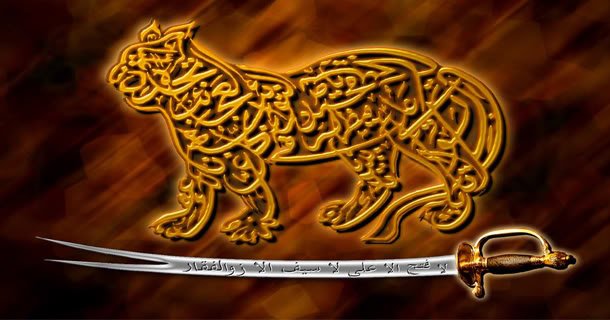
Before Ali left, the Holy Prophet personally inspected the three hundred Mujahirs and Ansar volunteers, who had gathered at Qoba, near Medina, to accompany Ali, and presented “The Lion of God” with a black Standard. He then tied a turban on Ali’s head with his own hands. saying to him, “Now proceed to Yemen and preach among its inhabitants the divine laws of Islam. You have to

enlighten the people in the Commandments of God as revealed in the Holy Quran, to teach them the methods of prayers and extend to them the invitation to accept Islam.” As Ali made ready to leave, the Holy Prophet said, “I swear by God that one conversion at your hands is far nobler and better for Islam than all the wonders of nature on which the Sun rises and sets.”

Ali proceeded to Yemen, and there read the Prophet’s letter to the people and delivered his sermon according to the dictates of the Prophet, preaching the doctrines of Islam to the multitudes, with the result that the entire tribe of Hamadanis embraced Islam in a single day. (Ibn Athir. Kamil V. II).

Ali proved as good a preacher as he was a swordsman, and his Mission to Yemen saw his emergence as a religious scholar of the first order. The Christian priests and the Jewish Rabbis who had settled in Yemen held daily discourses with him on religious doctrines and dogmas, and Ali’s illuminating sermons on the Unity of God and the Islamic exposition of the values of life made a great impression on those who heard him. After one of his sermons, the Christian priest Ka’b accepted Islam. Ka’b was a distinguished scholar and critic, renowned for his piety. and learning. His example was soon followed by many others and soon many Rabbis followed suit. Other neighbouring tribes also embraced Islam, and it clearly proved that “The exposition of Islam and the tongue of Ali were co-related like hand and glove, or like a soul in a body.”

Why Does Fasting Purify the Soul, but Overeating Corrupts It?

■ Why Does Fasting Purify the Soul, but Overeating Corrupts It?

Bismillah. Let’s open about something we all struggle with—eating.

Sufis say:

❝If you want to control your heart, first control your stomach.❞

Ever noticed how overeating makes you feel lazy, heavy, and distracted?

And how hunger makes you feel lighter, sharper, and more spiritual?

There’s a secret in this.

The less you feed your body, the more your soul awakens.

The more you indulge in food, the more your spiritual senses dull.

Food is a weakness for most of us.

But did you know overeating isn’t just bad for your body—it’s bad for your soul?

It makes you lazy in worship.

It feeds your desires, making sins easier.

It creates arrogance, greed, and impatience.

It dulls your ability to cry before Allah.

And the worst part?

It increases heedlessness (Ghaflah)—making your heart forget Allah.

Ok now compare how Prophet Muhammad ﷺ ate vs. how we eat today.

He ate little.
He never filled his stomach completely.
He taught that ⅓ of the stomach should be for food, ⅓ for water, and ⅓ for air.

But today?

We eat until we can’t move.
We eat snacks before we even feel hunger.
We eat out of boredom, not necessity.

And then we wonder why our hearts feel heavy and disconnected from Allah.

Islamic scholars like Imam Ghazali (ر) and Imam Ibn Abi Dunya (ر) warned about the dangers of excessive eating.

Here’s what they say happens when you overeat:

📌 It causes physical problems
❌ Indigestion
❌ Fatigue
❌ Increased blood sugar
❌ Obesity
❌ Bad breath after death (yes, even the body suffers later!)

📌 It causes spiritual problems
❌ Increases greed
❌ Hardens the heart
❌ Weakens faith
❌ Makes a person lazy in worship
❌ Increases lust and bad desires

Sufis say:

❝The more you feed the body, the weaker the soul becomes.❞

And let’s be honest—when do sins feel most tempting?

When the stomach is full!

Ever noticed how fasting makes you feel purer, calmer, and less interested in sins?

That’s because hunger humbles the ego, but overeating feeds arrogance.

Now You might think, “Okay, but how serious is this really?”

Did you know over 50 verses in the Qur’an warn about the dangers of chasing worldly pleasures, including excessive food?

And the Prophet ﷺ warned:

❝The worst container a man can fill is his stomach.❞

(Tirmidhi)

Sufis intentionally reduce food to keep their hearts soft.

Why?

Because hunger creates:

✔️ Clarity of mind
✔️ Lightness of soul
✔️ More sincerity in Dua
✔️ More gratitude for little things
✔️ More reliance on Allah, less reliance on the Dunya

This is why many Aulia Allah would fast regularly and eat just enough to survive.

Ok Now Why Do People Still Overeat If They Know This?

Here’s the most shocking part.

People KNOW that food is temporary.
They KNOW that the Dunya is an illusion.
They KNOW that excessive comfort leads to heedlessness.

Yet, they ignore all the warnings and continue indulging.

It’s strange, isn’t it?

Imagine a person saying:

🗣️ “I know fire burns, but let me touch it anyway.”

That’s exactly what we do.

We read warnings in the Qur’an and Hadith, but still choose to indulge.

Sufis say:

❝It’s not that people don’t know. It’s that they don’t care enough to act.❞

So, how do we fix this?

1. Stop eating before you feel full.

2. Eat with the consciousness that Allah is watching.

3. Fast more, even outside Ramadan.

4. Make Dua for control over your desires.

5. Follow the Sunnah of simple eating.

Sufis say:

🌿 “Eat to survive, don’t survive to eat.”

The greatest people lived simply—not because they couldn’t afford more, but because they valued their souls more than their stomachs.