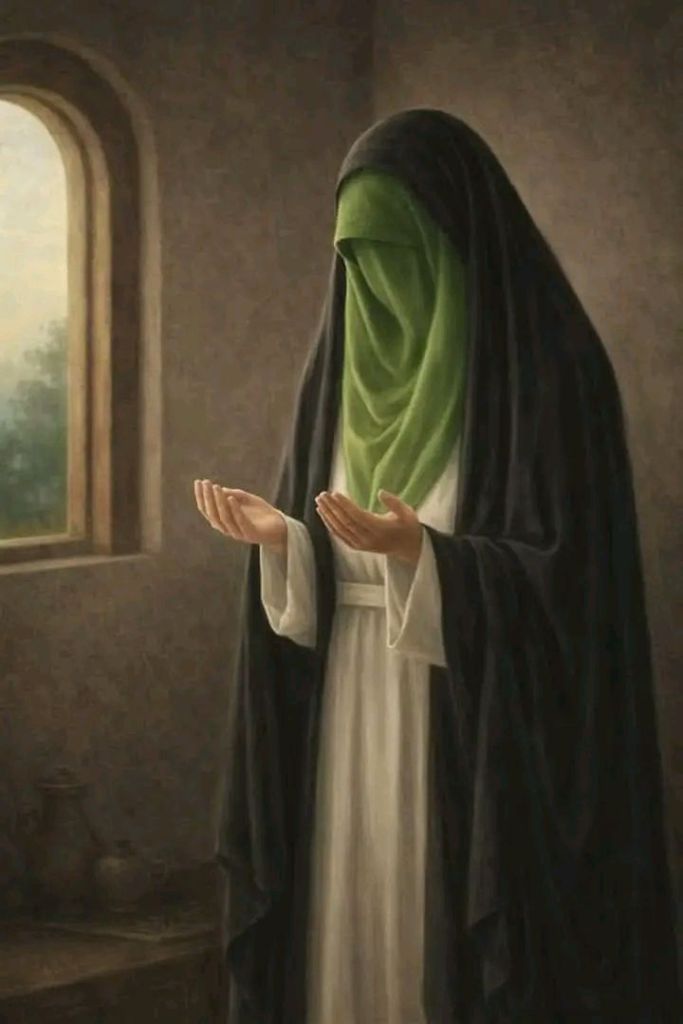
Hazrat  Durrah bint Abi Lahb R.A

Abu Lahab had a daughter named Durrah.
Yes—she is the noble companion Durrah bint Abi Lahab (may Allah be pleased with her), the cousin of the Messenger of Allah ﷺ.

She accepted Islam…

Her father was Abu Lahab, and her mother was Umm Jamil, the carrier of firewood.

Her two brothers, Utbah and Utaybah, were among the fiercest in disbelief.

She migrated to Madinah, fleeing the harm of her own family. She had been married in the pre-Islamic period to one of the polytheists who was killed at the Battle of Badr—Al-Harith ibn ‘Amir ibn Nawfal ibn ‘Abd Manaf—and she bore him three children.

After embracing Islam, Allah replaced him for her with someone better. She married the noble companion Dihyah al-Kalbi, who was among the most handsome of people. It is said that Jibreel (Gabriel), peace be upon him, would sometimes come down from the heavens in his form.

What an honor Allah granted to Durrah, the cousin of the Messenger of Allah ﷺ.

One day, some women said to her: “You are the daughter of Abu Lahab—the one about whom Allah said: ‘Perish the hands of Abu Lahab, and perish he…’

So what benefit has your migration brought you?”

Durrah then went to the Prophet ﷺ and told him what they had said.

He told her: “Sit.”

Then he led the people in the Dhuhr prayer in the mosque, and afterward he sat upon the pulpit and said:

“What is the matter with people who harm me regarding my relatives?

Whoever harms my family and kin has harmed me,
and whoever harms me has harmed Allah.”

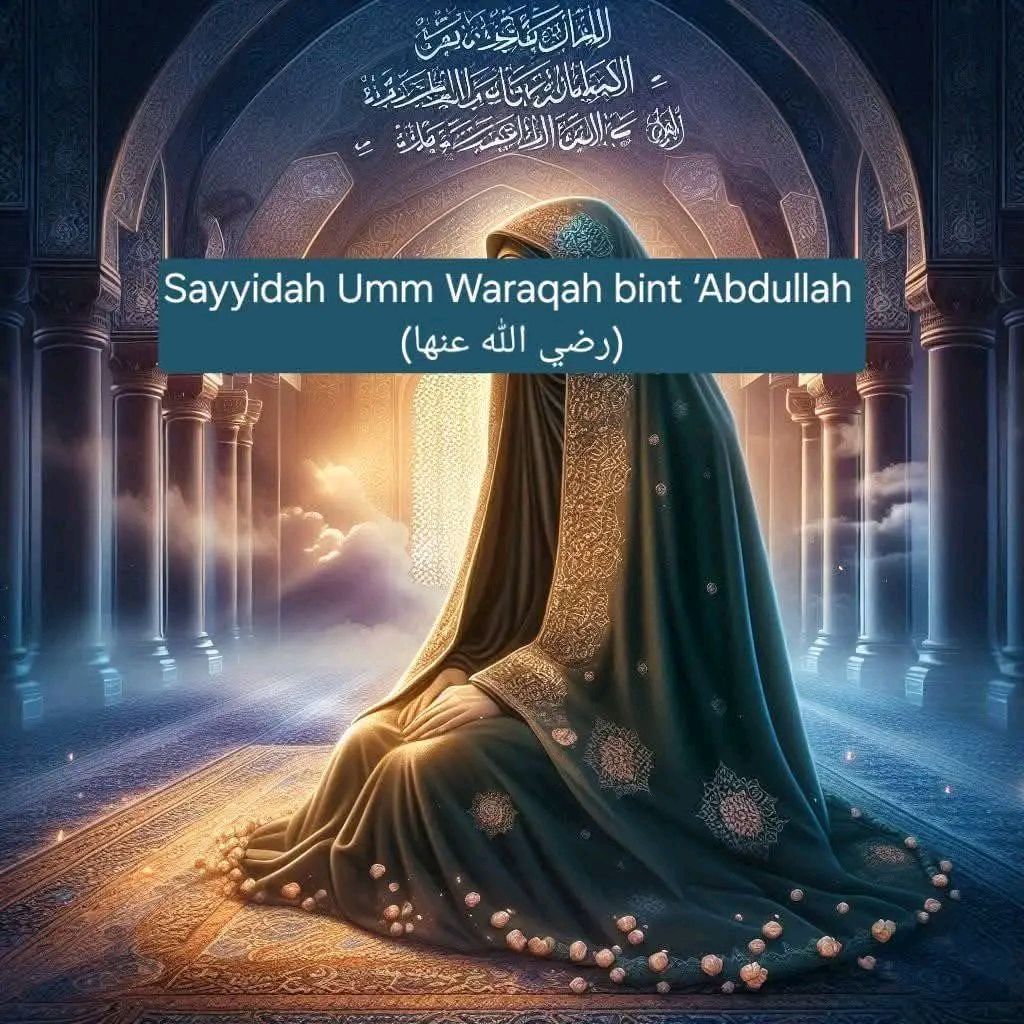
Sayyidah Umm Waraqah bint Abdullah R.A

Who Was the Woman M*rtyred at Home—Just as the Prophet ﷺ Had Foretold?
Sayyidah Umm Waraqah bint ‘Abdullah رضي الله عنها

Her real name? We don’t know it. But just like a true lover of the Qur’an, her identity became her relationship with it. She was known simply as Umm Waraqah, a noble woman from the Ansar — those blessed souls of Madinah who gave their homes and hearts to the Prophet Muhammad ﷺ.

When the Battle of Badr was announced, her heart raced with longing. But not for war or glory — she wanted to serve the wounded, nurse the injured, and maybe, d*e in the path of Allah ﷻ. She went to the Prophet Muhammad ﷺ with that deep desire glowing in her heart.

The Prophet ﷺ looked at her and said:

❝Stay in your home. Allah ﷻ will grant you m*rtyrdom there.❞

A strange promise, isn’t it? A s*aheed, but without a sword? A m*rtyr, but not on the battlefield?

Sayyidah Umm Waraqah رضي الله عنها wasn’t just any woman — she was a Hafizah of the Qur’an, someone who would stand in prayer at night, reciting the Divine words when the world slept.

Because of her knowledge, the Prophet ﷺ allowed her to lead the women of her area in prayer. She even asked to have a Mu’azzin — someone to call the adhan at her home — and the Prophet ﷺ granted her this too.

Imagine her home…

A woman’s voice echoing the Qur’an at night.

A soft adhan calling others to prayer.

A house full of light, yet fated for a dark twist.

She had a male slave and a female maid. Out of kindness, she had promised to free them after her death. But their hearts were dark. They couldn’t wait.

One night, when Madinah was asleep and she was likely immersed in Qur’an — they wrapped a cloth around her body and smothered her to d*ath.

The next morning, Sayyidina Umar ibn Al-Khattab رضي الله عنه said something that startled those around him:

❝I didn’t hear my aunt’s voice today — the voice we always hear. Let’s go check on her.❞

When they entered her home, they found her lifeless body wrapped in cloth — exactly as the Prophet ﷺ had said:

❝Allah ﷻ will grant you m*rtyrdom at home.❞

Sayyidina Umar رضي الله عنه quickly had the two m*rderers arrested. When they confessed, they became the first people ever h*nged for m*rder in Madinah.

But her story?

It wasn’t about m*rder.

It was about maqam — her spiritual status.

She didn’t need a sword to be a m*rtyr. Her devotion, her Qur’an, her niyyah, and the du’a of the Prophet ﷺ carved her place among the shuhada’.

This was the woman whom the Prophet ﷺ called “my aunt” — and whose voice Sayyidina Umar رضي الله عنه missed like a family member.

Some m*rtyrs fall on battlefields,

But others are carried to Allah ﷻ in silence,

While the Qur’an still echoes in their homes