



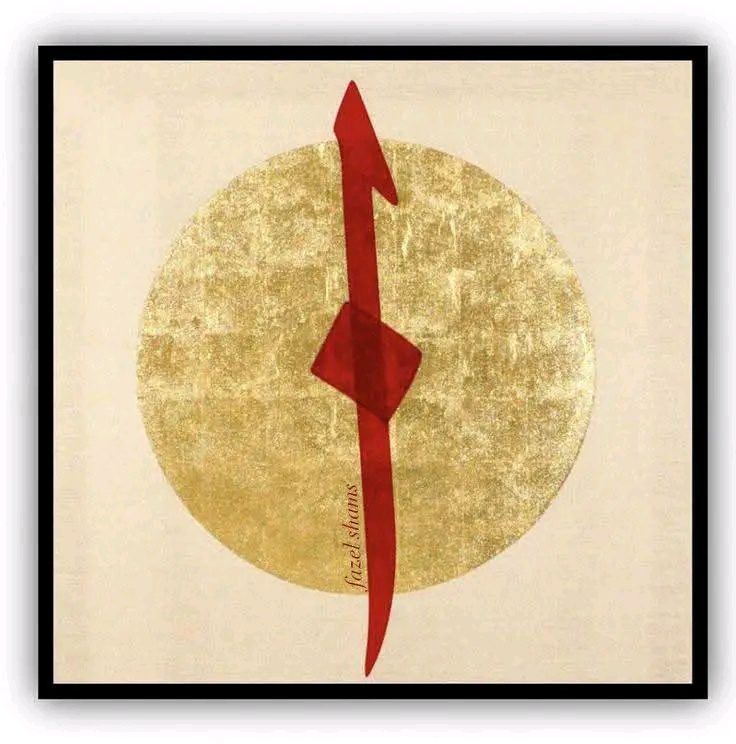
The Divine Revelation: Alif, Meem, and the Reality of Prophet Muhammad (Sallallahu Alayhi Wasalam)
In the mystical tradition of Sufism, the Arabic letters are not just simple characters; they carry profound spiritual meanings, connecting the seeker to divine truths that transcend the intellectual realm. Among these letters, Alif (ا) and Meem (م) hold a special significance, representing the Divine Unity, the essence of creation, and the manifestation of mercy. These letters serve as spiritual symbols that lead the seeker closer to the Divine, unveiling the ultimate reality beyond material existence.
Alif (ا) and Meem (م): The Letters of Creation and Mercy
1. Alif (ا): Alif represents Unity, the Beginning, and the Essence of God. It is the first letter in the Arabic alphabet and symbolizes the singularity of the Divine. The straight, unbroken line of Alif is symbolic of the eternal and unchanging nature of God. It stands as the foundational reality from which all of creation emanates. In its purity and simplicity, Alif represents the oneness of existence, the single source from which everything flows. It is a reminder of the unbroken connection between the Creator and the creation.
2. Meem (م): Meem represents Mercy and Manifestation. In spiritual metaphysics, Meem is often seen as a circle, symbolizing the encompassing mercy of God. This circle extends infinitely, reflecting how Divine mercy surrounds all of creation, embracing every being, and offering endless compassion. The circle of Meem represents the completeness of Divine love, a love that binds everything together in the cosmic order. It is a reminder that no part of creation is beyond the reach of Divine mercy.
Alif and Meem: The Spiritual Connection to Prophet Muhammad (Sallallahu Alayhi Wasalam)
The name Ahmed is closely tied to the letters Alif and Meem, for it is in Prophet Muhammad (Sallallahu Alayhi Wasalam) that the Divine qualities represented by these letters are fully embodied. The Prophet’s life, teachings, and mission were a manifestation of Divine mercy and unity. Through him, the mercy of God was brought to the world, and through his example, the seeker could learn how to return to the Divine Source.
In the Sufi tradition, Alif symbolizes the initial state of unity, the primordial connection between the seeker and God. Meem represents the process of manifestation, where the Divine mercy unfolds and envelops creation. Together, these letters reflect the journey of the soul: beginning in the unity of the Divine and progressing toward the manifestation of that unity in the world.
Sufi Reflections on Alif, Meem, and Divine Knowledge
The letters Alif and Meem are frequently invoked in the poetry of Sufi saints as symbols of Divine Truth and spiritual enlightenment. In Sufism, the journey of the seeker is one of progressing from Unity (Alif) to the experience of Divine Mercy (Meem), ultimately leading to the full realization of the Divine.
Hazrat Sultan Bahu (RA): Unity and Divine Knowledge
Hazrat Sultan Bahu (RA), a renowned Sufi master, speaks of the importance of moving beyond intellectual knowledge and embracing the direct experience of the Divine. In his poetry, he emphasizes that Divine knowledge cannot be captured through intellectual effort alone, but must be experienced through the annihilation of the self.
> “Unity is the secret of Divine Glory, no place for intellect and thought there HU!”
– Hazrat Sultan Bahu (RA)
This line speaks to the limitation of the intellect in understanding the Divine. The Divine Glory transcends human reasoning, and true spiritual knowledge is only accessible through direct communion with the Divine.
Annihilation and the Arrival of Ahmed (Sallallahu Alayhi Wasalam)
> “We were annihilated fully when Ahmed came to be seen as Ahad HU!”
– Hazrat Sultan Bahu (RA)
Sultan Bahu here explains that spiritual annihilation occurs when the seeker recognizes the Prophet Muhammad (Sallallahu Alayhi Wasalam) as the manifestation of Divine Unity. The name Ahmed, symbolizing the Oneness of God (Ahad), marks the moment when the seeker dissolves into the Divine and attains spiritual realization.
The Essence of Divine Mercy
Another crucial concept explored by Sultan Bahu is the role of Divine Mercy in the spiritual journey. The letter Meem symbolizes this encompassing mercy, which reaches all corners of creation. The following verse reflects the idea that true knowledge comes not from books or intellect, but through experience and devotion:
> “We achieved perfection in knowledge says Bahu when we had closed the books and scriptures HU!”
– Hazrat Sultan Bahu (RA)
This emphasizes that Divine knowledge is not found in written texts but in the direct experience of God’s presence, which leads the seeker to a deeper understanding of Divine Mercy.
The Circle of Meem and Divine Mercy
The circle inherent in Meem is not just a geometric shape; it is a spiritual symbol of the Divine mercy that encompasses everything. In the hadith, it is said:
> “My mercy encompasses My wrath.”
– Hadith Qudsi
This statement speaks of the infinite nature of Divine Mercy, which envelops all creation. The letter Meem symbolizes this unlimited mercy, which surrounds the entire cosmos, touching every part of creation. Through Prophet Muhammad (Sallallahu Alayhi Wasalam), this mercy was brought to humanity.
The Union of Alif, Meem, and Divine Mercy
The mysticism of Alif and Meem is beautifully expressed in Urdu poetry, where Sufi saints have captured the Divine unity and mercy through the poetic form. These verses serve as powerful reminders of the seeker’s path toward realizing the Oneness of God and the mercy that envelops all of creation.
Bulleh Shah’s Reflection on Divine Unity
Bulleh Shah, a famous Punjabi Sufi poet, articulates the essence of Alif and Meem in his poetry, highlighting the unity between the lover and the beloved, which reflects the Divine connection between the seeker and God:
> “Alif Ahmed vich farq na bhaliya,
Ik rati Meem modri da”
(There is no difference between the lover and the beloved,
As Ahad means one, and Ahmed (pbuh) is the name of Allah. Meem is the form of the circle of mercy.)
Bulleh Shah expresses that the oneness of God is reflected in the relationship between the lover (the seeker) and the beloved (God). The love between them is a reflection of the Divine Unity.
Peer Mehr Ali Shah (RA) and the Manifestation of Mercy
The spiritual teachings of Peer Mehr Ali Shah (RA), a prominent Chishti Qadri Sufi, also reflect the connection between Alif and Meem, emphasizing Divine Mercy:
> “Kun Faya Koon te kul di gal ae,
Asan aagey teldi preet lagayi.”
(The reality is expressed as ‘Be and it is’,
We have infused love into the Divine path ahead of us.)
These lines illustrate that through Divine Love (Ishq) and Mercy, the seeker is guided on the path to Divine Union.
Sultan Bahu (RA) on Divine Knowledge
In his “Abyat-e-Bahu”, Hazrat Sultan Bahu (RA) emphasizes that true spiritual knowledge can only be attained through annihilation in the Divine Presence:
> “Aqal fikar dee jaa na kaayee,
Jit wahadat sirr subhaanee hoo.”
(There is no room for intellect and thought,
Only in the union of Divine truth is the secret revealed.)
This verse highlights that true knowledge is beyond the intellect, and the seeker must merge into the Divine to truly understand the nature of God’s Unity.
The Divine Journey through Alif, Meem, and the Prophet Muhammad (Sallallahu Alayhi Wasalam)
The letters Alif and Meem are more than mere symbols in the Arabic alphabet; they are portals to the Divine. Through the name Ahmed and the embodiment of the Prophet Muhammad (Sallallahu Alayhi Wasalam), these letters represent the journey from Unity to manifestation, leading the seeker to the ultimate truth of Divine Oneness. The path of the seeker is a progression from the realization of Alif (Oneness) to the experience of Meem (Mercy), culminating in the full embodiment of Divine Mercy and Knowledge.
Written by Sufi shah

 Aal-e-Qutub Aal-e-Syed Abdullah Shah Ghazi