
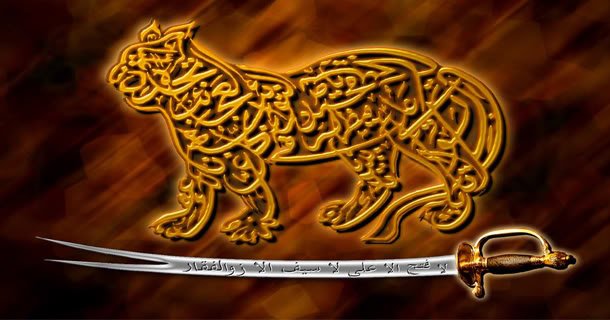


Ali’s Views on Annual Pilgrimage
Along with the offering of prayers and the observance of fasts Ali attached great importance to the Annual Pilgrimage to the Kab’ah in Mecca. Ali is said to have performed ten ‘Hajs’ in company with the Holy Prophet, a fact which contributed to his having the epithets “Quibla t’ Ullah” and “Kaba t’Ullah” added to his name.
In many of his addresses he urged the people to be zealous in paying a visit to the House of God. During his reign, carvans used to travel to Mecca from many distant parts and he issued instructions to his officials to see that the pilgrims lacked nothing for their comfort and convenience. Free food was provided at every halt, also dispensaries were established to distribute free medicines to the sick. Travellers on business other that of the Lord could also count on free food, water and medicine.
Ali, in another such sermon, exhorted the Believers thus: “Whatever hardship one bears in the trials of life and endeavours to fulfil the will of God, one acquires goodness and righteousness by them. God, for the examination of his men, has built His House of stones, the pilgrimage to which is a pillar of strength for the Believers. God has built His House in a sandy and stony desert the soil of which is the hardest, the most unproductive and barren. It is a place where you cannot find water for miles, the roads and tracks of which have been made with utmost difficulty between the impassable barren rocks. The soil of this sandy desert is further remarkable for having no verdure and vegetation. Its suburbs are nothing short of wilderness. Agriculture there is none, on which its inhabitants may live. It lacks miserably in pastures on which the quadrupeds may live. The sheep and the cows remain lean and horses and camels there are none.
It was on some such ground that God selected the site of His House and ordered men to come here to pay Him homage from the distant parts of the earth. At long last such a barren, sandy and stony place soon became the rendezvous of mankind. People from abroad and afar, after having crossed the oceans and traversing the long rocky paths on foot (dismounting from their horses and camels) came here to have a glimpse of the Lord’s house. O what untold privations they bear and put up with! They busy themselves in praising their Lord and offering Him prayers. In their fervour not to lag behind the others, the people heedless of their economic conditions, hurry to present themselves before God. With dust and sand in their dishevelled hair, their torn and shabby clothes, their uncut long nails, their wounded feet, their unsewn pilgrim garments in which they clad themselves, these pilgrims display their religious zeal and fervour. Herein, is the examination of all. God has strictly ordained the followers of Islam to bearthese hardships cheerfully so that these very privations may ultimately become a source of salvation. O thou men! The pilgrimage is near at hand, let us all go and participate in it.”
Ali’s Views on Charity
Ali was always extremely poor yet he was as renowned for his charity as he was for his piety) Because he never owned any money or goods of his own he had to be exempted from the Zakah, the obligatory alms tax levied on every male and female Muslim of means, but whenever his share of the “Ghanima” (booty) or “Fay” came into his hands, he immediately distributed it amongst the poor and destitute, giving not a proportion of it but all till nothing remained for himself or his family. Tales of Ali’s outstanding charitableness were on the lips of every one, such as the story, already related in a previous chapter, (of the beggar receiving a ring while Ali lay prostrate on his prayer-mat. Shi’ite tradition alleges that the angel Gabriel appeared to the Holy Prophet at that time and revealed the following verse of the Qur’an:-
**55. Your friend is only Allah and His Messenger and the Believers who observe prayers and Zakah, even in prostration when worshipping God alone” (5:55)
Another story relates how somebody presented 300 gold coins to the Holy Prophet who made a present of them to Ali. Ali immediately decided to give them away in three instalments of 100 pieces. On his way home, after finishing his night prayers, he saw a harlot, to whom he gave the first one hundred coins. Early next morning the whole town was gossiping about Ali’s misplaced charity and how he had squandered money on a woman of ill repute. Ali was highly offended and decided to give the next instalment of 100 pieces to a worthier soul. Returning home the next night, afterprayers he met a man, who was to all intents and purposes a thief, yet he gave him the money. Again the gossips tattled, saying that this time Ali had given the money to a worthless and good-for-nothing fellow, a rumour which determined Ali to dispense the remaining 100 pieces more wisely and to a truly deserving person.. On the third night he met a rich man to whom he gave the remainder of the money. At this the people again murmured against Ali saying that he had wasted the money on a worthless miser.) Now no money was left and Ali repaired to the Holy Prophet, to whom he related. what had transpired. The Holy Prophet told Ali that the angel Gabriel had visited him and informed him that God had accepted Ali’s charity on all three ccasions. The harlot after getting the money had given up prostitution and had resolved to lead a chaste life; the thief after getting the money had resolved to give up larceny and had entered into honest business and the rich man had been so shamed at receiving alms from someone as poor as Ali that he had decided to cease hoarding wealth and give all he possessed to the poor.
(That Ali’s charity had proved acceptable to Almighty God was also revealed in the following Quranic Verse:-
“Men, whom neither merchandise nor business diverts from the remembrance of Allah and the observance of the prayers and the giving of alms. They fear a day in which hearts and eyes will be agitated. (24:37)
Not only did Ali practise charity himself but he preached it to others. A great many of his sermons stress the importance of alms giving. In one of these he said, “Of the various meritorious acts of a Believer, one of the most acceptable is “Zakah”. It behoves every one to give charity because from amongst the acts of worship this is the one most pleasing to God. (In another sermon he emphasised that God had sent men in this world only to test them. When a man dies his relatives ask how much wealth he has left, while theangels look to see how much he had given in charity, in the path of God.) O thou people! Send a part of your wealth to God so that it may stand you in good stead in the next world. Do not leave your entire wealth here so as to be a source of annoyance to you (in the world. to come).”
Whenever Ali learned that someone was hungry or thirsty, naked or in debt, he would provide food, drink, clothes and money for him. He would go to the houses of the sick, nurse them and give them money and medicines. Although Ali’s shirts, wearing apparel and shoes were full of patches, yet he felt the greatest pleasure in clothing other. Whenever Ali used to visit the bazars of Kufa, he would help the travellers, the aged and the infirm. He was particularly kind to the elderly who could not support themselves and the widows who were left destitute.)
(Once Ali saw a woman who was carrying on her shoulders a water-skin which was too heavy a load for her feeble body. Ali took the load on to his Own shoulder and accompanied her to her house. She had a number of children who awaited her arrival anxiously. In the course of talk, Ali came to know. that her husband was a Kharajite who had fallen in a battle fighting against him (Ali). The widow tended. the destitute children and earned her living by doing odd jobs and working for others. The next day Ali again repaired to the hut of the widow, with a basketful of eatables. On his way towards her home, Ali met a number of people, who wanted to carry the basket for him but the Caliph refused to take any one’s help saying, “You will share my burden today but who will be there to share it on the Day of Judgment.” Thus carrying the basket on his shoulders the Caliph reached the widow’s house, knocked at her door and put the provisions before her. The poor woman was overjoyed and in great excitement said, “May God bless you. Let the Almighty decide between me and Ali.” At this Ali said, this flour
“Either let me bake you some bread withthat I have brought you or you bake it and I will play with your children and try to cheer them up.” The woman replied, “I will do the baking if you will light the oven for me.” Ali, who had been distributing dates to the children immediately apologised for his discourtesy in not having offered to light the fire. When it flamed up and he felt the heat of the oven scorching his face he said, “Taste the heat of this fire: imagine what punishment awaits one who had neglected the widows and orphans.” In the meantime the next door neighbour had come in and had recognised Ali as the Caliph. “Cursed be thou”, she said, reprimanding the widow, “How dare you talk so insolently to the Commander of the Faithful? “The widow in great shame fell prostrate to the ground, begging forgiveness but Ali said, “It is Ali who must feel ashamed at having neglected you.”
Ali’s love of Children
Ali always showed a great affection for children. Towards the end of his reign, a baby girl was born to him who brought much joy to him at a period of deep depression. He would take her in his lap and her prattle beguiled many a wearisome hours for him. The mother of this child belonged to the tribe of the Banu Kilab and Ali in jest would ask the little one to which tribe she belonged. The child had a lisp which prevented her pronouncing in certain letters. Being unable to say “Kilab” correctly she would imitate the bark of a dog (Kilab being the plural of “Kelb” meaning “dog”). This never failed to put Ali into a jovial mood. He loved all children and was at all times a devoted family man.
Ali’s wives and children
Until the death of Fatima, Ali took no other woman to wife. After her death (and he never ceased to mourn her loss), according to the custom of his time he took in all eleven wives, by whom he had fifteen sons and eighteen daughters.
His various wives were:- 1. Fatima’tul-Zuhra, (daughter of the Holy Prophet) who had been
justly called “the pride of the fair sex.” She gave birth to two daughters and two sons who became the progenitors of the race of Sayyids, the flower of Islamic nobility. (a) Imam Hasan, (b) Imam Hussain, (c) Zaynib, a daughter who was married to Abdullah bin Jafar, and (d) Um Kulthum, who was married to Aun bin Jafar.
2. Uma-1-Bun ian, daughter of Kharam hin Khalid, who gave birth to five sons (a) Abdullah, (b) Jafar Akbar, (c) Abbas, (d) Uthmanand (e) Umar 3. Khulah bint Jafar who gave birth to one son Muhammad Akbar nicknamed Abdull Qasim who became famous in history as Muhammad Hanfia. 4. Um Habib daughter of Rabi’a who gave birth to a son Umar and a daughter named Ruqiyia..
of Hazrat Jafar). 5. Usma daughter of Um’mis (the widow After the death of Jafar, she married the Caliph Abu Bakr and gave birth to a son named Muhammad bin Abu Bakr. When Abu Bakar died, she married Ali and gave birth to two sons Yahya and Muhammad Asghar.
8. Um Saced daughter of Urwa who gave birth Nafisa, (b) Zaynib Sughra (the younger Zaynib), (c) Ruqiyia Kubra (the elder Ruqiya). (d) 1m-ul-Karam, (e) Humara, (1) Um Salma, (g) Ruqiyin Sughra (younger Ruqivia)
to seven daughters (
7. Um Shai’ab Mukhzoma’ia who gave birth to two daughters (a) Um- U-Hasan, and (b) Rum’ la. sons (a) Abu Bakr
8. Humla daughter of Musco’q who gave birth to two and (b) Abdullah.
a)
9. Usama daughter of Abi-ul-A’s who gave birth to a son, Muhammad. 10. Muhyata daughter of Umra-ul-Qais, who gave birth to five daughters. (a) Khadija, (b) Imam Hani, (c) Tamima, (d) Ma’mun’a, and (c) Fatima. 11. Leile daughter of Masud Urmey’s who gave birth to two sons (a) Muhammad Asghar and Abu Abdullah. (b)

 Aal-e-Qutub Aal-e-Syed Abdullah Shah Ghazi