


THE BACKGROUND
Strides in Science
Ours is an age in which tremendous strides have been made in the realm of science. This increase in scientific knowledge has been so rapid and so vast in scope, that it has staggered the imagination of man, leaving him bewildered in a world of constantly changing values. With bewilderment has also come fear, for the applica- tion of scientific discoveries to modern warfare threaten to destroy not only the familiar ways of life but life itself. The twentieth century has seen, among other inventions, the development of atomic weapons and of the hydrogen bombs, each with its attendant horror of radio active fall-out. It is now known that radio active dust in suffi- cient quantities could destroy all life on the globe, yet the imperialist powers still continue in mad competition, vying with one another, to produce ever bigger and more lethal weapons. Nor is the horror limited to the potential use of the weapons themselves; each new test carries with it the threat of total annihilation. Humanity lives in constant dread that the world, as we know it, will cease to be.
This struggle for the ascendancy between the great powers has been carried still further, into the realm of outer space. Here, too, each new triumph of scientific research serves only to increase human anxiety; so terri- ble are the implications of these discoveries when applied to modern warfare. Due to the development in flying devices, unmanned missiles are expected, by 1964 or 1965, to achieve a circular velocity of 17,500 miles per hour. A similar surprise is expected in the domain of the velocity of light with thermal-atomic, ionic, field- quantum and photon rockets making flights to the moon and other fixed stars only a question of time. With the appearance of ram-jet transport planes we can expect to jot down space stations in the universe from where, with the help of stationary ultraviolet searchlights exerting a radiation pressure of many tons, we shall be capable of destroying flying objects several hundred miles away, in the fraction of a second. Thus, aerodynamics, statics, electronics, theories of combustion and fuel chemistry and all the ramifications of modern science, combine at once to exhilarate, baffle and terrify human beings. Here, too, honest pride in human intellectual achieve- ment is forced to give way to a fearful contemplation of the increased areas of human responsibility.
The Background
The Darkest Age
The progress made by humanity in the Near East and Europe suffered a severe set-back after the fall of the Roman Empire and the sixth century A.D. saw Europe relapse into barbarianism once again. Hardly could any Christian read or write; the priestly class, enforcing on their followers the motto of Pope Gregory that “ignorance is the mother of devotion,” demanded blind obedience to their dogmas.
Similarly in Asia, Hinduism, Buddhism, and other religions had deteriorated, becoming mere bundles of outward forms and ceremonial worship. Here, too, class-ridden societies presented sad spectacles of human misery, ignorance and decay.
It was at this juncture that the greatest reformer and revolutionary Muhammad (may peace be upon him) arose. Through his love of knowledge and reverence for learning, mediaeval Europe was once more to be- come acquainted with art and science and the way was to be paved for the Renaissance.
Nabi Pak Muhammad, ﷺ the Greatest Reformer of all Time
Once again it was Arabia that gave birth to this greatest of world-reformers. Muhammad ﷺ (may peace be upon him), who traced his descent from the Prophet Abraham, was also born in that country of Prophets and there heﷺ was destined, not only to found a new religion, but also to establish a new system of ethics and polity. Under him ﷺ the warring Arab tribes were to be welded into one composite nation, monotheistic, law-abiding and peace-loving. Carlyle, speaking of Muhammad’s ﷺappearance observes:
“To the Arab Nation it was as a birth from darkness into light; Arabia first became alive by means of it. A poor shepherd people, roaming unnoticed in its deserts
1. Thomas Caryle, Heroes and Hero-worship, Oxford University Press,. London, 1850, p. 101.
since the creation of the world: a Hero-Prophet was sent down to them with a word they could believe: sce, the unnoticed becomes world-notable, the small has grown world-great; within one century afterwards, Arabia is at Grenada on this hand, at Delhi on that; glancing in valour and splendour and the light of genius, Arabia shines through long ages over a great section of the world. Belief is great, life-giving. The history of a Nation becomes fruitful, soul-elevating, great, so soon as it believes. These Arabs, the man Mahomet, and that one century, is it not as if a spark had fallen, one spark, on a world of what seemed black unnoticeable sand; but lo, the sand proves explosive powder, blazes heaven- high from Delhi to Grenada! I said, the Great Man was always as lightning out of heaven; the rest of the men waited for him like fuel, and then they too would flame.”
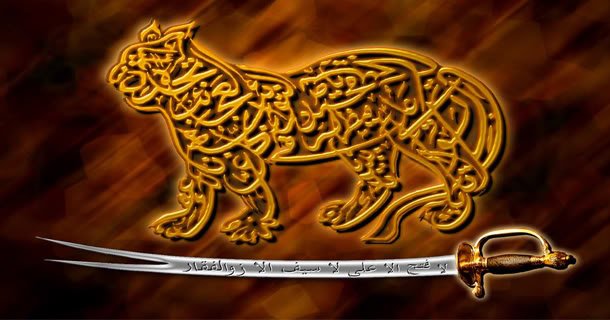
Ali, AlaihisSalam the Foremost of True Believers
After Muhammad ﷺ, his first cousin and son-in-law, Ali, is one of the greatest of world-reformers. His life has been considered as an ideal to follow and his achieve- ments have been consecrated and sanctified by his many admirers. The great English historian Edward Gibbon writes of him as “the first of the true believers, the most devout of all the followers of the Holy Prophet “Ali the first of true believers might aspire to march before them in this world and the next; and if some were of a graver and more rigid cast, the zeal and virtue of Ali were never outstripped by any recent pro- selyte. He united the qualifications of a poet, a soldier and a saint. His wisdom still breathes in a collection of moral and religious sayings, and every antagonist in the combat of the tongue or sword was subdued by his eloquence and valour. From the first hour of his mission to the last rites of his funeral the Apostle (Muhammad ﷺ) was never forsaken by a generous friend whom he delighted to name his brother, his viceregent and the faithful Aaron of a Second Moses.”
1. Edward Gibbon, The Decline and Fall of the Roman Empire, Frederick Warne & Co., London, p. 518,

 Aal-e-Qutub Aal-e-Syed Abdullah Shah Ghazi